Thursday, February 5, 2026
Home Blog Page 556

Reliance-owned Hamleys expands reach with new outlet launch in Mohali

0
Hamleys
Hamleys

Reliance-owned multinational toy retailer Hamleys has launched a new outlet in Mohali, Punjab, as per a recent social media post by a company official.

Dhiraj Singh, General Manager – Real Estate and Business Development at Reliance Brands Ltd., announced in a LinkedIn post, “Hamleys is now open at CP67 Mall, Mohali.”

Snackfax had previously reported the opening of its first store in Italy on Corso Vittorio Emanuele in Milan.

Continue Exploring: Hamleys expands presence in Italy with grand opening of flagship store in Rome

Founded in 1760 by William Hamley, Hamleys was acquired by Reliance Brands Limited (RBL) in 2019. With more than 189 stores, the brand now operates in 16 countries.

Reliance Brands Limited (RBL), a subsidiary of Reliance Retail Ventures Ltd., was established in 2007. The company’s diverse portfolio of brand partnerships includes renowned names such as Armani Exchange, Balenciaga, Bally, Bottega Veneta, Brooks Brothers, Burberry, Canali, Coach, Diesel, Dune, EA7, Emporio Armani, G-Star Raw, Gas, Giorgio Armani, Hamleys, Hugo Boss, Hunkemoller, Iconix, Jimmy Choo, Kate Spade, La Martina, Lenscrafters, Manish Malhotra, Michael Kors, Mothercare, Muji, Paul & Shark, Paul Smith, Pottery Barn, Pret A Manger, Steve Madden, Superdry, West Elm, and Zegna.

Currently, RBL operates 2,212 sales points, consisting of 919 standalone stores and 1,293 shop-in-shops across India.

Over the last five years, RBL has not only focused on developing and managing indigenous designer brands but has also acquired the renowned British toy retailer, Hamleys. Hamleys boasts a global presence with 189 stores spread across 16 countries.

Continue Exploring: Ace Turtle inaugurates third Toys“R”Us store in India, plans 12 new stores in 2024

Advertisement

India’s sunflower oil imports skyrocket by 51% in March, pushing palm oil to lowest levels since 2023

0
Sunflower Oil
Sunflower oil

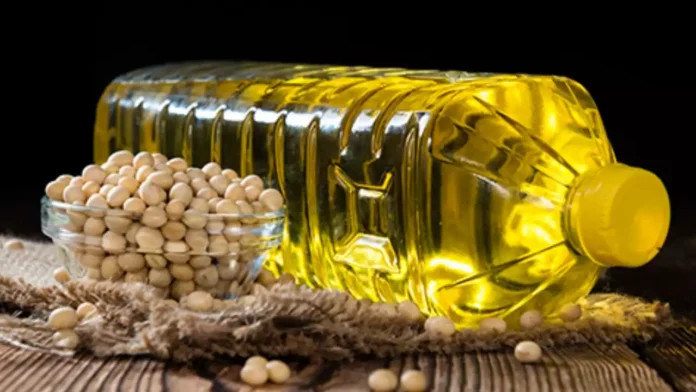
In March, India’s imports of sunflower oil surged by 51% compared to the previous month, marking the second-highest level on record. Lower prices prompted refiners to boost their sunflower oil purchases and reduce their procurement of competing palm oil, according to five dealers.

Reduced palm oil imports by India, the world’s largest vegetable oil importer, could limit the upward momentum in benchmark Malaysian palm oil futures, which are currently trading close to their highest level in a year.

Rising sunflower oil imports are expected to decrease sunflower oil stockpiles in the Black Sea region.

According to estimates from dealers, sunflower oil imports in March jumped 51% from the previous month to 448,000 metric tons, marking the second-highest level on record.

Continue Exploring: India set to boost soyoil imports in 2024, palm oil purchases expected to decline

They reported that palm oil imports dropped by 3.3% to 481,000 tons, reaching the lowest level since May 2023.

“Sandeep Bajoria, CEO of Sunvin Group, a vegetable oil brokerage, stated, “Sunflower oil imports are increasing as a substitute for palm oil. Production challenges are maintaining firm palm oil prices, leading buyers to shift towards sunflower oil.”

Dealers indicated that crude palm oil (CPO) imports are available for approximately $1,020 per metric ton, inclusive of cost, insurance, and freight (CIF), for May delivery in India. Meanwhile, soyoil and sunflower oil are being offered at approximately $1,000 and $960 per ton, respectively.

Typically, palm oil is priced lower than its competitors, soyoil and sunflower oil. However, due to decreasing stocks, its prices have surpassed those of the rival oils, which currently have ample supplies.

“Sunflower oil prices are highly competitive, which is expected to drive increased imports even during April and May,” stated Rajesh Patel, managing partner at the edible oil trading and brokerage firm, GGN Research.

Dealers estimated that soyoil imports surged by 27% to 220,000 tons in March compared to the previous month. However, this figure is considerably lower than the monthly average imports of 306,000 tons recorded in the last marketing year that ended on October 31.

The Solvent Extractors’ Association of India (SEA) is expected to release its data on March imports by mid-April.

Continue Exploring: India’s palm oil imports reach four-month high in December, fueled by competitive prices and increased demand for refined variants

Dealers reported that increased imports of sunflower oil and soyoil boosted India’s total edible oil imports to the highest level in six months, reaching 1.149 million tons in March. This marked an 18.7% rise from the previous month.

India primarily purchases palm oil from Indonesia, Malaysia, and Thailand, while sourcing soyoil and sunflower oil from Argentina, Brazil, Russia, and Ukraine.

Advertisement

Accor bullish on India, plans to launch 30 new luxury hotels with 5,500 rooms over next 3-5 years

0
Accor
Accor

India should expect the opening of more luxury hotels from renowned brands like Fairmont, Raffles, and Sofitel, as stated by Sébastien Bazin, the group chairman and CEO of Accor, Europe’s largest hotel chain. He further mentioned that other brands from Accor’s luxury and lifestyle division are also expected to establish their presence in the country in the coming years.

Accor plans to open 30 new hotels in India over the next three to five years, adding approximately 5,500 rooms. Despite the fact that Sébastien Bazin already operates 62 hotels in India, totaling approximately 11,000 rooms, he believes this is insufficient.

“I have always had great faith in India. However, while we operate 2,000 hotels in France, we have fewer than 100 hotels in India. Considering the vast size of the country, we should ideally have over 1,000 hotels here. I understand this will take time, but it’s a vision for the future that will be worthwhile. As we expand, we will require more Accor employees across various levels and will need to empower them with greater decision-making authority,” he elaborated.

Bazin emphasized that India is a country that cannot be overlooked.

Continue Exploring: Accor to double room capacity in India, plans weekly hotel openings across PME segments in Asia

“We are fortunate to have the best partner anyone could hope for in Rahul Bhatia of IndiGo airline. I should be visiting here every quarter to deepen my understanding of the country and to address any existing challenges,” he commented.

“It’s uncommon to find a country with the world’s largest population that has been the fastest-growing for the past five years, and likely to maintain this pace for the next five years, coupled with a burgeoning middle class, improved access to education, and advancements in technology and telecom. India boasts rich heritage, archaeology, and diverse geography stretching from the Himalayas to the Indian Ocean. It offers everything one could desire, backed by a visionary government,” he remarked.

Bazin mentioned that Accor, set to introduce its Raffles Jaipur hotel this year, is also contemplating bringing luxury brands like Orient Express to India. However, he acknowledged that challenges in hotel development timelines persist, despite a more favorable fiscal environment.

“It is likely the most historic brand in the hospitality sector, with a legacy of about 140 years. It’s more than just a product; it embodies a sentiment. We are expanding into trains, yachts, and hotels under this brand. Orient Express holds significant potential in India. Raffles, on the other hand, represents elegance, heritage, and palatial luxury, making it one of our most promising brands,” he remarked.

Accor established its luxury and lifestyle division about 18 months ago, boasting around 550 hotels and 24 brands, including notable names like 25hours, Delano, Mondrian, Mama Shelter, and MGallery. Last year, in partnership with the Hinduja Group, Accor unveiled Raffles London at The OWO, which stands as London’s most lavish hotel.

“We currently hold the second position globally in luxury lifestyle, just behind Marriott. It will take time, but our ambition is to claim the top spot,” he commented. Accor added 291 hotels with 41,000 rooms to its portfolio last year. Bazin stated that the company plans to open a comparable number of hotels, amounting to around 48,000-50,000 rooms, this year. Additionally, the company recruited 120,000 new employees last year.

Continue Exploring: Indian hospitality industry set for a record-breaking 2024: Surge in new hotel rooms expected

“We currently hold the second position globally in luxury lifestyle, just behind Marriott. It will take time, but our ambition is to claim the top spot,” he commented. Accor added 291 hotels with 41,000 rooms to its portfolio last year. Bazin stated that the company plans to open a comparable number of hotels, amounting to around 48,000-50,000 rooms, this year. Additionally, the company recruited 120,000 new employees last year.

“In America, American chains dominate. In China, the likes of Jin Jiang and Huazhu are in control. However, outside of these regions, Accor holds sway. Apart from Europe, we are the leading operator in the Middle East, South America, and Asia Pacific, including key markets like Australia, Korea, and Japan,” Bazin explained.

Accor announced its intention to return approximately 3 billion Euros to shareholders between 2023 and 2027 through dividends and share buybacks. Bazin has committed to shareholders and analysts to achieve a growth rate of 9-12% annually for the next four years. “I’ve made this commitment to ensure disciplined delivery of results. With each passing year, our strength will increase. The travel and tourism industry is flourishing, expected to grow at about 5% annually for the next 20 years. We are fortunate to witness such high demand in travel,” he remarked.

Advertisement

FSSAI directs e-commerce companies to stop labeling dairy and cereal-based beverages as ‘health’ or ‘energy’ drinks

0
FSSAI beverages
(Representative Image)

The Food Safety and Standards Authority of India (FSSAI) has instructed all e-commerce companies not to label dairy-based beverages, cereal-based beverages, or malt-based beverages as ‘health drink’ or ‘energy drink‘. The term ‘health drink’ is not defined under the country’s food laws, and ‘energy drink’ specifically refers to carbonated and non-carbonated water-based flavored drinks as per the regulations.

Using incorrect terms may lead to “misleading” consumers. Therefore, the Food Safety and Standards Authority of India (FSSAI) has recommended that all e-commerce Food Business Operators (FBOs) promptly correct this misclassification by removing or delinking such drinks or beverages from the categories of ‘Health Drinks / Energy Drinks,’ as stated by the food regulator in a statement.

FSSAI has clarified that the term ‘Health Drink’ is neither defined nor standardized under the FSS Act 2006 or the rules and regulations governing the food industry.

The term ‘Energy Drinks’ is allowed to be used only for products such as carbonated and non-carbonated water-based flavored drinks.

Snackfax previously reported that FSSAI is considering stricter regulations for caffeine energy drinks due to their increasing sales.

Continue Exploring: Govt eyes stricter regulations as energy drink consumption surges among teens and athletes

“The corrective action is intended to improve clarity and transparency regarding the nature and functional properties of the products, ensuring that consumers can make informed choices without being misled,” the statement added.

Companies like PepsiCo, Coca-Cola, and Hell are selling energy drinks at approximately one-fourth the price of global category leaders like Red Bull and Monster. They have also popularized these drinks by selling them in grocery stores. According to company executives citing data from NielsenIQ, energy drink sales are growing at a rate of 50-55% per year.

However, the increasing consumption of these drinks, especially among young people, is a concern, as studies indicate potential health risks from excessive intake.

Continue Exploring: Controversy surrounds influencer-backed energy drink PRIME as lawmakers and experts question alarming caffeine levels

Advertisement

Rural FMCG sales outpace urban growth for first time in three years, signaling demand recovery

0
retail
(Representative Image)

For the first time in nearly three years, the growth in sales of fast-moving consumer goods (FMCG) in villages has outpaced that in cities. This signals an early indication of demand recovery, supported by a lower baseline and price adjustments to mitigate hyperlocal competition.

According to executives referencing NielsenIQ data, rural markets saw a volume growth of 6.5% in both December and January, and a growth of 11.1% in February. In contrast, urban markets grew by 6.1% in December, 4.7% in January, and 8.7% in February, as per the data.

Until November 2023, rural demand, along with underperforming urban markets, had been dampening overall growth for the past few years. The last time villages surpassed cities in FMCG sales expansion was in March 2021.

Continue Exploring: FMCG manufacturers revamp packaging for e-commerce as online sales surge

“During the third quarter, we observed a return to growth trajectory in the hinterland demand,” stated Dabur CEO Mohit Malhotra.

Malhotra mentioned that in October-December, rural demand surpassed urban demand by 200 basis points. He also noted that Dabur’s rural distribution had seen the most growth compared to other FMCG companies.

“We have been investing ahead of the schedule in growing our rural footprint, increasing it from 1-1.2 lakh to 17,000 villages in the current financial year,” he stated.

Before the pandemic, rural demand had been growing at double the rate of urban areas. However, last year, rural growth either declined or lagged behind urban growth until the December quarter, reaching 5.8%. In contrast, urban areas saw an expansion of 6.8%.

“Rural markets were boosted by a favorable harvest this season and also had a lower base from the previous year,” commented Krishnarao Buddha, Senior Category Head for Marketing at Parle Products, India’s largest food company. “Following price reductions by many firms, we observe major national players reclaiming market share from regional and local competitors, easing concerns, particularly in rural areas.”

Over the past two years, most consumer goods companies increased prices by over 25% to counter the escalation in costs of raw materials, supply chain, and energy. The inflationary pressures began during the pandemic and were further intensified by Russia’s invasion of Ukraine. However, in the last three quarters, companies have been reducing prices due to reduced inflation and consumers shifting to more affordable products.

Continue Exploring: FMCG growth to remain sluggish in current year: Emkay Global Report

Companies stated that there has been a gradual overall recovery, with promising signs emerging in rural markets too. However, they emphasize the necessity of observing a longer-term trend to evaluate the sustainability of demand.

“Rural demand has shown some improvement. However, we need to witness consistent growth over several quarters to confirm that demand recovery or green shoots are on the horizon,” commented Sudhir Sitapati, Managing Director at Godrej Consumer Products, in February.

During the year leading up to December, villages, constituting almost 40% of the total FMCG market, experienced a decline in demand ranging from 3% to 5%, attributed to inflationary pressures and an unpredictable monsoon season.

“We are noticing that the growth rate differences between urban and rural areas are decreasing, narrowing from 4-6% to 1%,” stated Roosevelt Dsouza, Head of Customer Success, India, at NielsenIQ.

Continue Exploring: FMCG companies and Kirana stores gear up for summer: Dairy and beverage sales spike across India

Advertisement

United Spirits faces INR 5.51 Crore tax demand over non-submission of statutory forms

0
United Spirits
United Spirits

United Spirits Ltd has stated that it has received a tax demand of INR 5.51 crore, including interest, for the non-submission of certain statutory declaration forms and delivery proofs. According to a regulatory filing, the Deputy Commissioner of State Tax in Nanded has imposed this demand on the company for its failure to submit specific statutory declaration forms and delivery proofs related to Pioneer Distilleries Ltd. United Spirits Ltd. and Pioneer Distilleries Ltd. amalgamated on December 30, 2023.

The demand amount totals INR 5.51 crore, which includes an interest component of INR 2.99 crore, the company added.

Continue Exploring: United Spirits hit with INR 4.47 Crore tax demand by Maharashtra State Authorities

United Spirits stated, “The company plans to challenge the issue by submitting a rectification application or appeal to higher authorities.”

Based on its risk-assessment process, the company stated, “It believes it has a strong case and anticipates no significant financial impact.”

Continue Exploring: Tax troubles continue for Zomato as INR 92 Cr demand notice adds to mounting woes

Advertisement

Jadeblue expands its presence with the opening of its 40th store in Rajasthan

0
Jadeblue
Jadeblue

Jadeblue, the Ahmedabad-based men’s clothing retailer, has opened its 40th store in Rajasthan, as announced by a company official on social media.

“Our 40th store in India and 6th in Rajasthan is now open at Mittal Mall, Ajmer. This luxury space offers a diverse selection of formals, casuals, clubwear, festive attire, and occasional wear for men, including the iconic Modi Kurta and Jacket,” stated Vrudang Parikh, General Manager of Finance and Accounts at Jadeblue Lifestyle India Ltd., in a LinkedIn post.

Continue Exploring: California lifestyle apparel brand Dockers makes big bet on Indian market, plans five store openings in first year

This will mark the sixth store for Jadeblue in Rajasthan, following two in Jaipur and one each in Jodhpur, Kota, and Udaipur.

Apart from Rajasthan, Jadeblue has established its presence in Gujarat, Madhya Pradesh, Telangana, Maharashtra, and Chhattisgarh.

Founded in 1995, Jadeblue provides a wide array of collections including Modi kurtas and jackets, loungewear, ethnic wear, casual wear, and formal attire. The company has expanded to 40 men’s clothing stores and boasts a satisfied client base of over 1,000,000, as per information from its website.

Continue Exploring: Apparel brand Bombay Shirt Company raises $3.2 Million in bridge funding round led by Singularity Ventures

Advertisement

Ikea unveils first-ever B2B furniture collection with launch of Mittzon

0
Ikea
Ikea B2B furniture

Ikea, the well-known Swedish home products and furniture company, has unveiled its first B2B (business-to-business) furniture line, Mittzon.

The latest collection comprises 56 products tailored to the needs of today’s workforce, featuring adjustable desks and sound-proof screens among its offerings.

“Our new office system, Mittzon, is designed with flexibility as its cornerstone to accommodate various working preferences and tasks. The outcome is an office system that fosters collaboration, comfort, and productivity,” stated Sumit Parthi, Country B2B Manager at Ikea India.

“B2B in India is experiencing rapid growth, and our solutions, informed by comprehensive research on both global and Indian trends, aim to expand our market share. Currently, Ikea B2B accounts for 15–20% of total Ikea sales in India. With this new collection, we aim to enhance our presence and sales in the upcoming years,” Parthi commented.

Continue Exploring: India tops Ikea’s investment priority list, says CEO Jesper Brodin, highlighting rapid development and market potential

The collection integrates biophilic design elements, taking inspiration from nature in its shapes, colors, and materials. It is designed to enhance wellness by reducing stress and increasing productivity.

The materials utilized, such as fade-resistant wood veneer and high-strength steel, guarantee durability and longevity, backed by a 10-year warranty.

The products are accessible online, via the app, and at all Ikea stores globally.

In 2018, the Ingka Group-owned Ikea made its Indian debut with a 13-acre property in Hyderabad. The company currently has two city stores in Mumbai and three big-format stores in Hyderabad, Navi Mumbai, and Bengaluru. It can be found online in Bengaluru, Hyderabad, Pune, Mumbai, Gujarat, and Hyderabad.

Continue Exploring: Ikea India streamlines operations, set to close R-City Mumbai store by mid-2024

Advertisement

Westside strengthens South India presence with three new store openings

0
Westside
Westside

Westside, a fashion and lifestyle brand owned by Tata, has launched three new stores in South India across Kerala, Karnataka, and Tamil Nadu, as stated by a company official on social media.

The shops are located in Hesaraghatta, Bengaluru (Karnataka), Velachery, Chennai (Tamil Nadu), and Kalamassery, Kochi (Kerala).

“We are excited to announce the grand opening of three new Westside stores in the South. These exquisite stores are your premier fashion destinations, designed to satisfy all your style desires,” stated Raja Kasim, regional head at Trent Ltd., in a LinkedIn post.

The stores feature Westside’s 22 in-house designed brands, spanning categories including womenswear, menswear, kidswear, footwear, lingerie, cosmetics, perfumes, accessories, and home furniture.

Its in-house brands encompass Bombay Paisley (fusion wear), Vark (ethnic wear), Noun (party wear), L.O.V (subtle-wear), Gia (curvy women’s line), Noun Men (streetwear), E.T.A. (urban-wear), Studio West (beauty), Westside kidswear, Westside footwear, and Westside Home.

Continue Exploring: Westside to amp up beauty portfolio and strengthen e-commerce presence

Westside operates under Trent Ltd., a subsidiary of the Tata Group, established in 1998.

In April 2022, Westside achieved the milestone of 200 stores. Currently, the brand operates 231 stores across the country.

In addition to Westside, Tata Trent manages apparel brands Zudio, Utsa, and Samoh; beauty, accessories, and decor brand Misbu; and the hypermarket and supermarket chain named Star. The company also has two joint ventures with Spain’s Inditex SA to operate the Zara and Massimo Dutti labels in India.

Advertisement

Nao Spirits unveils Punk Gin, a fresh and authentic addition to their annual limited-edition collection

0
Punk Gin
Punk Gin

Nao Spirits, the creators of Greater Than and Hapusa Gin, are successfully progressing towards their objective of introducing a new limited-edition gin every year. Each gin boasts a unique flavor, compelling story, and features only the freshest ingredients.

Their Pink Gin goes by the name “Punk Gin”. Embodying the essence of punk—an ethos of anti-establishment—this gin boldly defies the conventions set by commercial gin producers. Crafted with integrity, the distillers of Punk Gin abstained from artificial colorants, flavors, or sweeteners. Instead, they opted for the freshest strawberries sourced from Mahabaleshwar, a picturesque hill station nestled in the Western Ghats of Maharashtra renowned as India’s premier strawberry destination.

The strawberries are cleaned, diced, and allowed to steep in a vat of their signature London Dry Gin for 48 hours. Adding a unique twist, they incorporate dried hibiscus flowers to infuse a hint of acidity and vibrancy into the gin. The outcome is a sparkling pink gin with a delightful freshness, making it an ideal companion for the approaching summer season.

Continue Exploring: Broken Bat Gin by Nao Spirits hits a home run, named ‘Best Gin in Asia’ at The Gin Guide Awards 2023

Anand Virmani, co-founder and CEO of Nao Spirits, comments, “While pink gins are currently trending, many are laden with artificial flavors, colors, and excessive sugar, deviating significantly from authentic gin. As India’s leading craft gin brand, we seize every chance to elevate the category and exemplify true ‘craftsmanship’. This is precisely our approach with Punk Gin—adhering to our principles in a rapidly expanding and competitive market by utilizing fresh ingredients and reverting Pink Gin to its roots, highlighting its genuine essence.”

Punk Gin is ideally paired with tonic water, a fresh strawberry slice, and either a basil leaf or a sprig of rosemary. Due to its natural ingredients, it’s recommended to refrigerate the gin to maintain its freshness. This gin will be launched annually during the strawberry season in Mahabaleshwar, which spans from December to March.

Punk Gin is now available in Goa and Karnataka, and will soon be introduced in Haryana as well.

Continue Exploring: Greater Than Gin expands reach with introduction of GT Minis in six new locations, aiming to make quality gin more accessible

Advertisement