Thursday, January 29, 2026
Home Blog Page 548

India’s Ayurveda product market on track to hit INR 1.2 Lakh Crore by FY28: NirogStreet Study

0
Ayurveda
(Representative Image)

India’s Ayurveda product market is expected to grow from its current value of USD 7 billion (INR 57,450 crore) to USD 16.27 billion (INR 1.2 lakh crore) by FY28, according to a study by NirogStreet. This significant growth is driven by the increasing demand for natural and herbal remedies both domestically and internationally, a rise in the number of ayurvedic medical practitioners, government initiatives, and the emergence of new entrepreneurs in the Ayurveda tech sector.

According to a survey cited by NirogStreet, the Ayurveda product market in India is anticipated to experience substantial growth. Projections suggest that the market value will reach INR 1,20,660 crore (USD 16.27 billion) by FY28.

Continue Exploring: Soma – India’s first Ayurvedic restaurant in Delhi serves tailored meals post health check-ups

The Ayurveda products and services market is expected to grow at a compound annual growth rate (CAGR) of 15% from FY23 to FY28, according to the NirogStreet survey. Specifically, the product sector is projected to expand at a CAGR of 16%, while the service sector is anticipated to grow at a CAGR of 12.4%.

The survey further assessed the value of the nation’s Ayurvedic manufacturing to be INR 89,750 crore (USD 11 billion) in FY22. This amount encompasses export values of approximately INR 40,900 crore (USD 5 billion), while imports are estimated at INR 8,600 crore (USD 1 billion).

The NirogStreet survey involved approximately 7,500 manufacturers from 10 states: Uttar Pradesh, Bihar, Madhya Pradesh, Delhi, Haryana, Rajasthan, Punjab, Maharashtra, Jammu and Kashmir, and Kerala.

Continue Exploring: India’s first Ayurveda-inspired functional chocolate brand Awsum makes sky-high debut on Akasa Air

At a recent CII AYUSH Conclave, Padmashri Vaidya Rajesh Kotecha, Secretary of the Ministry of AYUSH, emphasized the importance of promoting AYUSH products in international markets and fostering greater innovation within the ecosystem.

The secretary mentioned that the AYUSH sector has seen a significant growth, reaching USD 24 billion within a span of 10 years.

NirogStreet stated that this rapid growth trajectory underscores the vast potential of the Ayurveda product market in India to emerge as a major contributor to the country’s economy.

Continue Exploring: D2C brand The Ayurveda Experience raises $27 Million in Series C funding led by Jungle Ventures

Advertisement

Kraft Heinz unveils ‘Creamy Sauces’ – The first in a new lineup of rebranded sauces, spreads, and dressings

0
Kraft Heinz Creamy Sauces

Kraft Heinz has broadened its product lineup by launching a new collection of aiolis and sauces called Creamy Sauces.

According to the company, Creamy Sauces marks the first product line introduced as part of the new Kraft sauces rebrand, bringing together all sauces, spreads, and salad dressings under a unified family.

Continue Exploring: Kraft Heinz sees 7.1% decline in Q4 net sales despite pricing uptick; CEO remains optimistic for 2024 growth

The range features five flavors: Smoky Hickory Bacon aioli, Chipotle aioli, Garlic aioli, Burger aioli, and Buffalo-style mayonnaise dressing.

Kaitlin Roe, brand director for Kraft, stated, “In today’s world, we recognize that the kitchen can be intimidating for home cooks, as societal expectations often set impossibly high standards. Kraft Sauces is committed to demonstrating that you don’t need to be a professional chef to create tasty and satisfying meals.”

Continue Exploring: Kraft Heinz and NotCo team up to introduce innovative plant-based hot dog alternative

“In addition to our cherished current selection, Kraft Sauces’ new Creamy Sauces range allows consumers to unleash their inner culinary creativity by bringing restaurant-caliber depth, tang, and spice straight to the fridge.”

Continue Exploring: Taco Bell and Kraft Heinz unveil craving kits, allowing fans to recreate iconic fast-food flavors at home

Advertisement

McDonald’s to buy back Israeli franchise amid controversy over support for Israeli soldiers

0
McDonald's
McDonald's

McDonald’s Corporation has reached an agreement with Alonyal, the franchise owner in Israel, to repurchase all of its restaurants in the country.

Since Alonyal announced last year that it would provide free meals to Israeli soldiers, the fast-food chain has come under fire. This has sparked protests and calls for a boycott due to the perceived backing of Israel during the Israel-Gaza conflict.

Continue Exploring: McDonald’s faces intensifying backlash over alleged support for Israel amid Gaza conflict, #BoycottMcDonalds trend gains momentum

Although McDonald’s is a global corporation, its franchises are frequently locally owned and operate independently. Following the criticism, McDonald’s franchises in various countries, such as Pakistan and Malaysia, issued public statements emphasizing their autonomy and distancing themselves from the Israeli operations.

McDonald’s president and CEO, Chris Kempczinski, recognized that the war has had a “significant business impact” on several markets in the Middle East and beyond. He also expressed that he finds the “misinformation affecting the brand” to be “disheartening and unfounded.”

After finalizing the transaction, the details of which were not disclosed, McDonald’s will assume ownership of Alonyal’s 225 restaurants in Israel, while also maintaining a workforce of over 5,000 employees.

Continue Exploring: McDonald’s faces challenges in Middle East markets amid Israel-Hamas strife

Jo Sempels, the president of international development for licensed markets at McDonald’s Corporation, commented, “We appreciate Alonyal Limited’s efforts in establishing and growing the McDonald’s brand in Israel over the last 30 years. McDonald’s continues to be dedicated to the Israeli market and is committed to maintaining a positive experience for both employees and customers moving forward.”

Alonyal’s CEO and owner, Omri Padan, said, “Alonyal Limited has taken pride in serving our communities and bringing the Golden Arches to Israel for over three decades.” Thanks to the efforts of our management, staff, suppliers, and patrons, we have grown the brand to become the most well-known and successful restaurant chain in Israel. Regarding what is ahead, we have optimism.

Continue Exploring: McDonald’s ends partnership with Sri Lankan franchisee over compliance issues, shuts down all 12 outlets

Advertisement

Sarovar Hotels accelerates expansion drive, aims for 150 properties by 2025

Sarovar Hotels
Sarovar Hotels

Sarovar Hotels aims to expand its portfolio to 150 hotels by 2025, representing a nearly 30% increase from the current count in the coming months. The company anticipates an annual growth rate of around 16% in its Average Room Rates (ARRs).

“Our pipeline is exceptionally strong. By 2025, we aim to achieve a total of 150 hotels. Additionally, in 2024, we anticipate having 125 operational hotels, marking an increase of 10 from our current count,” stated Ajay Bakaya, Managing Director of Sarovar Hotels.

With 111 hotels in 2023, the company currently boasts 120 hotels spread over 75 locations in 2024.

Continue Exploring: Hotel giants bet big on India: Radisson, Marriott, Hilton, IHG, and Wyndham compete in intense race for expansion

“We’ve witnessed a 16 percent increase in Average Room Rates (ARRs) during the first quarter of this calendar year, compared to 8-9 percent last year. We anticipate maintaining and stabilizing ARRs within this range. Additionally, our occupancy rates have surpassed those of last year,” commented Bakaya.

Regarding the international portfolio, Bakaya mentioned that the company is set to unveil three new properties in Nepal this year, with an additional three in the pipeline for Africa.

On Wednesday, Sarovar Hotels announced the opening of three new hotels: Sarovar Portico Sonipat, Grand Continent Malleshwaram, and Grand Continent Anjuna Goa. With these additions, Sarovar has achieved a total of seven openings in 2024, solidifying its position as the fastest-growing hotel chain in the country.

Sarovar Hotels, a subsidiary of the Paris-based Group Du Louvre, oversees the operation and management of hotels spanning various brands such as Sarovar Premiere, Sarovar Portico, Hometel, and Golden Tulip. These brands collectively cater to the 3, 4, and 5-star segments.

The Group Du Louvre, ranked as Europe’s second largest hotel group, holds a prominent position in the global hospitality sector, boasting a portfolio of over 1,700 hotels across 60 countries. In India, Sarovar now oversees the management of Golden Tulip hotels, a segment under the umbrella of Group Du Louvre.

Continue Exploring: Accor bullish on India, plans to launch 30 new luxury hotels with 5,500 rooms over next 3-5 years

Advertisement

Kalyan Jewellers reports 34% revenue surge in Q4 FY2024; plans aggressive expansion for FY2025

0
Kalyan Jewellers
Kalyan Jewellers

Despite a sharp rise in gold prices during the second half of the quarter, Kalyan Jewellers, a prominent jewellery player, reported a robust 34 percent increase in its consolidated revenue during the fourth quarter of FY2024, as per its quarterly update on the BSE.

For the entire fiscal year FY2024, the jewellery retailer experienced a 31 percent growth in its consolidated revenue compared to the previous year.

Regarding the India market, the company noted that its business revenue in India surged by 38 percent in the quarter, driven by strong operational performance and healthy growth in same-store sales.

Continue Exploring: Warburg Pincus offloads 8.4% stake in Kalyan Jewellers for INR 2,937 Crore

For its digital-first brand, Candere, the company experienced a 12 percent revenue growth in the March quarter.

“We continue to observe positive trends in our already established physical showrooms. However, for the full fiscal year FY2024, Candere reported a revenue decline of approximately 17% compared to the previous year,” stated the filing.

In 2024, Kalyan inaugurated 71 new showrooms, bringing the total count to 253 across India and the Middle East. For FY2025, the company aims to open at least 130 showrooms in India (80 under Kalyan and 50 under Candere) and an additional 6 showrooms in the Middle East and USA.

Continue Exploring: Kalyan Jewellers unveils first Ayodhya showroom, inaugurated by Amitabh Bachchan

Advertisement

Marico expects gradual uptick in growth of core categories following positive Q4 performance

0
Marico
Marico

Marico Ltd, a leading Indian FMCG company, anticipates a steady increase in the growth of its primary product categories. This growth is expected to be driven by ongoing efforts to boost the profitability of its general trade channel partners and by investments aimed at expanding its presence in both urban and rural markets over the next few years.

In its quarterly report to the Bombay Stock Exchange (BSE), Marico noted that the demand sentiment for FMCG products remained stable in the fourth quarter of FY24. Consumption trends in urban and rural areas largely align with those of previous quarters.

In the fourth quarter, consolidated revenue experienced a modest single-digit growth, returning to positive territory after three consecutive quarters of decline, the company reported. Additionally, the company anticipates a “low double-digit operating profit growth, supported by a healthy expansion in the operating margin.”

“The company reported a marginal increase in volume growth for its domestic business in Q4 compared to the previous quarter, attributed to stabilizing trends across the majority of its portfolios,” the statement read.

Continue Exploring: D2C brands biggest disruptions to FMCG players, says Marico Founder Harsh Mariwala

Against the backdrop of improving macro-indicators, Marico stated, “We anticipate a gradual increase in the growth of our core categories. This will be driven by our ongoing efforts to boost the profitability of our General Trade (GT) channel partners and targeted investments aimed at significantly expanding our direct reach in both urban and rural outlets over the next few years.”

The company further stated that it will persist in its efforts to achieve differential growth in urban-centric and premium portfolios by leveraging organized retail and e-commerce channels.

“We will continue to actively diversify our portfolio by accelerating the growth of our food and digital-first brands, while also enhancing profitability in accordance with our medium-term strategic objectives,” Marico said.

Continue Exploring: Marico’s digital-first brands on track to achieve ‘meaningful profitability’ by 2027, CEO Saugata Gupta sets ambitious goal

Regarding the Q4 performance, the company reported that its Parachute coconut oil saw a modest single-digit volume growth. This was attributed to an ongoing shift from loose to branded products, coupled with the expected increase in copra prices.

“Saffola oils achieved mid-single-digit volume growth, benefiting from reduced trade-related challenges and stability in input and consumer pricing. However, value-added hair oils experienced a comparatively weak quarter, declining from a high base due to ongoing sluggishness in the bottom of the pyramid segment,” Marico observed.

The Foods segment maintained its consistent performance, ending the year at four times its scale in FY20. Additionally, digital-first brands continued to show robust growth, aligning with the company’s stated objective of portfolio diversification for the year, according to the update.

The international business resumed its double-digit constant currency growth, driven by Bangladesh rebounding from temporary challenges, while the remaining markets sustained their positive momentum, the company added.

“After three quarters of negative growth, consolidated revenue saw moderate single-digit growth, mostly as a result of the incremental anniversary of pricing reductions in important domestic portfolios. In the following quarters, we expect consolidated revenue growth to continue to improve, with domestic revenue growth topping volume growth,” said Marico.

Regarding input costs, Marico mentioned that copra prices slightly increased as predicted, while prices for edible oil and crude oil derivatives remained steady.

Continue Exploring: Marico’s Saffola introduces four exciting gourmet flavors to its oats range, catering to diverse palates and preferences

“In this situation, we anticipate significant annual growth in gross margin. In keeping with our strategy goal to consistently increase the long-term equity of both the core and new brands, we also continued to invest in brand creation,” the business stated.

As a result, Marico stated, “We anticipate low double-digit operating profit growth on the back of a healthy expansion in our operating margin, thus staying on track to deliver on the margin guidance for the full year.”

The company reaffirmed its commitment to ” accomplishing profitable and sustainable volume-led growth in the medium term, supported by strengthening the brand equity of its core franchises and scaling up new growth engines.”

Advertisement

Reliance Retail unveils 12th Pret A Manger outlet in Mumbai’s historic Horniman Circle

0
Pret A Manger
Pret A Manger

Reliance Retail has launched the 12th outlet of Pret A Manger, a UK-based freshly made food and organic coffee chain, in India, as shared by a company official on social media. Situated at Brady House, Horniman Circle, Fort, Mumbai, this new establishment marks the seventh Pret A Manger store in the city.

“I am excited to announce the long-awaited opening of our latest Pret A Manger at Brady House, Fort, Mumbai,” stated Chandramohan Ramadasan, the business head of Pret A Manger at Reliance Brands Ltd., in a LinkedIn post.

Horniman Circle is renowned for hosting some of India’s pioneering retail ventures. In October 2012, the American coffeehouse chain Starbucks launched its inaugural store in India at Elphinstone Building, Horniman Circle. Additionally, Zara, the leading brand of the Spanish fashion retailer Inditex, inaugurated its largest store in India, spanning 51,300 sq. ft., in Mumbai’s heritage-listed 110-year-old Ismail Building situated in Horniman Circle.

Continue Exploring: Pret A Manger expands in India with the launch of its 10th outlet in Mumbai

In India, Pret A Manger outlets feature a selection of sandwiches, baguettes, salads, and soups, along with an assortment of organic coffee, tea, shakes, and smoothies.

“Setting a global benchmark, our Brady House location offers our clients a unique set of solutions. “Every aspect of this business has been thoughtfully designed to improve your dining experience, from plated service and an unusual dessert option to a transparent kitchen,” Ramadasan stated.

Pret A Manger has made its entry into India in collaboration with Reliance Brands, the retail arm of Reliance Industries.

Continue Exploring: Reliance ventures into the coffee industry with the opening of Pret A Manger’s first shop in Mumbai

In April, Reliance unveiled its first Pret A Manger cafe at Maker Maxity in Mumbai. Spanning 2,567 square feet, the outlet faithfully recreated the ambiance of the brand’s renowned London establishments. Subsequently, later that month, Pret A Manger launched its second Mumbai outlet at Phoenix Palladium Mall.

Currently, the cafe chain operates stores in various cities, including Mumbai, Gurgaon, and Delhi.

Reliance Brands, a subsidiary of Reliance Retail Ventures Ltd, commenced its operations in 2007 with the objective of introducing and developing global brands in the luxury to premium segments within the fashion and lifestyle sectors.

The company has established enduring exclusive partnerships across various sectors with both global and Indian brands, including Ritu Kumar, Bottega Veneta, Tiffany & Co., Valentino, Versace, Rahul Mishra, Armani, Balenciaga, Boss, and Zegna, among others.

Continue Exploring: Swiggy and Pret A Manger team up to offer online delivery of freshly made delights and organic coffees

Advertisement

Beauty ecommerce giant Purplle sets sights on brick-and-mortar expansion, eyes $100M investment from ADIA

0
Purplle
Purplle

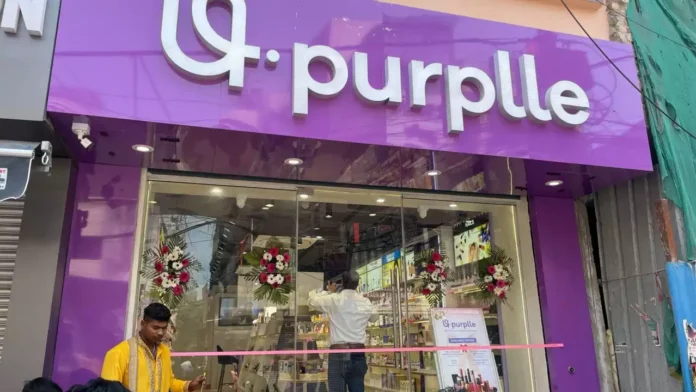
Purplle, the beauty ecommerce marketplace, aims to expand its presence by opening additional brick-and-mortar stores this year. Additionally, the company is in early talks with the Abu Dhabi Investment Authority (ADIA) regarding a potential $100 million investment.

Mint reported, citing sources familiar with the matter, that the primary infusion is anticipated to take place predominantly via a secondary transaction, facilitating the exit of certain early investors.

According to the report, Purplle’s sought-after valuation remains undisclosed at present. The fundraising endeavor is anticipated to unfold in the upcoming months, possibly constituting a segment of the company’s pre-IPO round.

CEO Manish Taneja disclosed to Mint that Purplle intends to access the public markets sometime between the second half of next year and early 2026.

Continue Exploring: Billionaire Ranjan Pai eyes major stake in beauty e-commerce giant Purplle

In May last year, ADIA invested $50-60 million in Purplle at a $1.1 billion valuation, which remained unchanged from its previous valuation following a $33 million investment from Paramark Ventures in June 2022.

Based on Tracxn data, the company has secured a total of $387 million through 16 funding rounds.

Additional investors in Purplle comprise Peak XV Partners, Blume Ventures, and Premji Invest.

Taneja continued, stating that rising expenditure on beauty items and a growing inclination towards hybrid buying are the company’s driving forces for its entry into offline channels.

He also mentioned that the company currently operates only two offline stores but intends to open 5-10 more in the coming months.

Over the past two years, consumers have transitioned back to offline shopping as they resume pre-pandemic routines. This shift has prompted online beauty and personal care companies such as Nykaa, Mamaearth, and now Purplle to contemplate expanding their offline presence.

In February, Mamaearth’s co-founder Ghazal Alagh revealed plans to expand its omni-channel distribution, aiming to reach 17,000 retail touchpoints. This represents a notable 37% increase from the previous year.

Continue Exploring: Honasa Consumer expands offline presence with multi-brand outlet in Bengaluru

In the third quarter of fiscal year 2024, the startup expanded its offline footprint, extending to 177,366 FMCG retail outlets across India and incorporating approximately 8,000 additional stores.

Moreover, the company has established collaborations with Purplle and other entities to serve the needs of tier-2 and tier-3 segments.

In the meantime, media reports indicate that Nykaa’s store count surged to approximately 150 by FY23 from 72 stores two years earlier. However, according to Mint, Purplle intends to uphold its emphasis on online operations, which currently generate roughly 99% of its revenue, as stated by Taneja. He further mentioned that the launch of their stores is likely in an experimental phase, with intentions to assess their performance gradually.

Continue Exploring: Purplle achieves rapid growth in FY23, edging closer to the INR 500 Cr revenue mark

Advertisement

Yum Brands goes high-tech: AI set to reshape operations at Pizza Hut, KFC, and Taco Bell

KFC
KFC and Pizza Hut

Pizza Hut, KFC, and Taco Bell are set to significantly enhance their operations through the integration of artificial intelligence. Yum Brands, the parent company of these beloved fast-food chains, is fully embracing AI technology and intends to incorporate it into nearly every facet of their restaurant operations.

According to Yum’s Chief Digital and Technology Officer Joe Park, “our perspective on quick-service restaurants is centred around an AI-first approach throughout every process,” he said in a Wall Street Journal interview. “When assessing the important facets of restaurant operations that may gain benefit from AI, we see endless potential.”

AI technology is on its way to your local drive-thru, where voice AI systems are undergoing trials to handle order-taking duties instead of human employees. Additionally, there’s a pilot program for an AI-driven “SuperApp” designed for staff, enabling them to easily inquire about menu preparation methods instead of relying on cumbersome training manuals.

“You can achieve this with generative AI,” Park commented on the AI chatbot features being trialed for the SuperApp, which is utilized in over 8,700 Pizza Hut and KFC outlets.

Continue Exploring: From smart kiosks to AI-powered chefs: How artificial intelligence stirred up the food business and restaurants in 2023

The SuperApp is conceived as a comprehensive “coach in your pocket,” as described by Park, for franchisees. From adjusting oven temperatures and scheduling shifts to ordering ingredients, this AI assistant has the potential to handle crucial tasks typically managed by human supervisors. Does this mean the end of the need for human managers?

The integration of AI might raise concerns for the employees crafting your Crunchwrap Supremes and Original Recipe chicken. Nonetheless, Yum asserts that its human workforce will continue to be essential, referring to the AI technology as an “opportunity to enhance the experiences of restaurant team members.”

A spokesperson from Yum informed The Journal that employees “will always play an essential role,” even with the extensive AI initiatives in place.

For the consumer, Yum’s AI initiatives could lead to a more personalized experience. The company has aggregated data from its various brands to formulate comprehensive customer profiles. This integrated data, the “secret sauce,” could enable AI systems to offer customized promotions and anticipate your cravings for your next meal.

Continue Exploring: Yum! Brands reports robust Q2 performance in India: KFC sales jump 22%, Pizza Hut 11%

“We recognize that loyalty will be a crucial aspect of Yum’s future,” stated Park. “Each time we increase our digital sales, it brings along valuable customer data.”

However, not everyone is enthusiastic about AI being responsible for their fast food preparation. Some experts caution that existing generative AI could produce unsafe cooking instructions or mix ingredients in ways that could be potentially harmful.

However, for Yum, the benefits of boosting digital sales and reducing labor costs seem to outweigh the risks of AI potentially mishandling the fryer (at least for the time being). Since the pandemic, Yum has nearly doubled its digital sales to approximately $30 billion, accounting for 45% of total sales, as reported by Park. These online ordering figures provide Yum with even more motivation to intensify its focus on AI and automation to continue driving digital growth.

Continue Exploring: Yum Restaurants India exits Devyani International, sells entire stake for INR 871 Crore

Advertisement

Food delivery app Thrive hits record highs in consumer numbers and orders, unveils ‘Faves’ loyalty program and expands restaurant portfolio

Thrive

Thrive, the popular food discovery and delivery app, is celebrating a promising start to the new financial year, FY24-25. Dhruv Dewan, Co-Founder of Thrive, recently shared an update on the company’s performance and future plans via a LinkedIn post.

Over the past weekend (from Friday to Sunday), Thrive registered its highest-ever consumer numbers. Furthermore, March marked the month with the highest number of orders in the company’s history. Dewan expressed optimism about the company’s growth potential, stating, “Lots of growth left to capitalize on, but this gives us the push we need that we’re on the right path.”

Continue Exploring: Snacking continues to rise: Mondelēz International’s latest report reveals global surge in consumer snacking behaviors

Thrive’s consumer app now features a unique loyalty program called ‘faves’. Customers can select their five favorite restaurants and avail discounts of up to INR 125 off on every order placed through Thrive. Unlike typical aggregator loyalty programs, ‘faves’ aims to drive more value for the restaurants rather than solely benefiting Thrive.

A fascinating insight shared by Dhruv Dewan revealed that a popular ice cream brand observed a 46.5% higher repeat purchase frequency among consumers who selected their brand as part of their ‘faves’ compared to regular consumers.

Moreover, Thrive is also expanding its restaurant portfolio with the addition of marquee brands like Tiger Yaki, Mainland China, GetAWay, and Amar Juice Centre. Additionally, a crowd favorite legacy brand will soon be available for order on the app.

Continue Exploring: From scoops to sundaes: Ice cream sales set to soar 15-20% this summe

Dewan also highlighted the ongoing collaboration between Thrive and Coca-Cola. As part of this partnership, restaurants can list Coca-Cola items on Thrive and will receive a differential commission. They will also be included in marketing activities and campaigns, benefiting from the brand’s loyal customer base.

In addition to these developments, Thrive is collaborating with a diverse group of creators who are passionate about food and culinary experiences. Through ‘Thrive Spotlight’, the app will feature content from these creators, offering users unique insights and recommendations.

With these new initiatives and milestones, Thrive is poised for continued growth and aims to further solidify its position as a leading food discovery and delivery app in the coming fiscal year.

Continue Exploring: Zomato pilots new last-mile delivery service for office goers in corporate parks

Advertisement