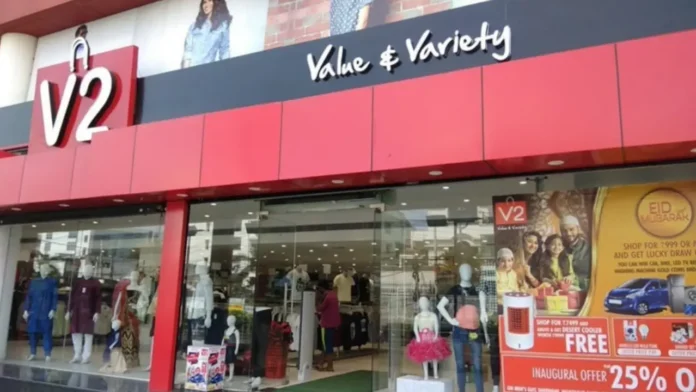
Value retail chain V2 Retail has plans to open 35-40 new stores, each covering an area of 4 lakh square feet. Additionally, it intends to invest INR 90-100 crore in store expansion and bolstering inventory.
The retailer also intends to hire over 1500 people across various sectors such as sales, marketing, operations, and customer service, aiming to propel expansion and support the nation’s Skill India initiative.
“Our vision resonates with the enthusiasm and dedication of our latest team members,” remarked Akash Agarwal, Director at V2 Retail. Underscoring the importance of these new additions, Agarwal emphasized, “Their contributions will be instrumental as we continue to expand.”
V2 Retail offers an extensive selection of apparel spanning various categories, all conveniently available under one roof. With a presence in 17 states, the brand operates 96 stores in both major cities and smaller towns.
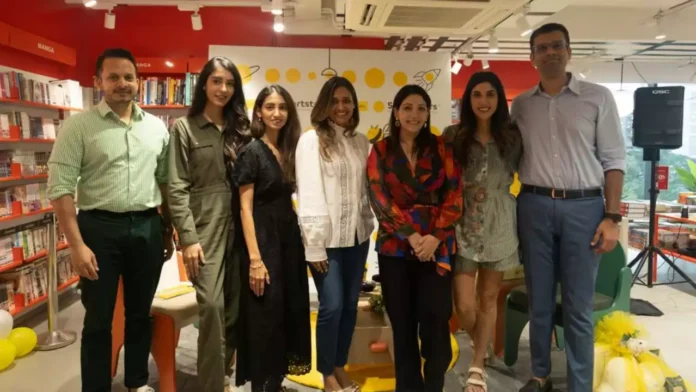
Smartsters, the renowned children’s furniture brand, unveiled its 35th store at Linking Road, Juhu in Mumbai on Tuesday. The latest addition is housed within a shop-in-shop concept at Crossword Bookstore.
This marks a significant step in the brand’s efforts to extend its presence into key emerging markets.
Smartsters provides high-quality furniture tailored for children, spanning from toddlers to teenagers.
Ashni Biyani, Co-Founder of Smartsters, expressed, “Teaming up with Crossword was a logical decision for us, given our mutual dedication to enhancing lives and crafting spaces that foster development and creativity.”
The launch event featured a panel discussion comprising experts from academia, child development, and design. They delved into the importance of well-designed furniture in nurturing children’s development and providing them with environments conducive to flourishing.
Aditya Patil, Founder and CEO of Ascend International School, psychologist Payal Narang, certified parent coach and educator Piya Marker, Farheen Nanji and Naazish Reshamwala, founders of FN Design Studio, and Bikram Mittra, Head of Design at Smartsters, were among the panellists. The panel discussion was succeeded by Amar Chitra Katha’s storytelling session.
Smartsters presents a diverse array of children’s furniture and accessories, spanning from lively bunk beds and study desks to decorative accents and storage solutions. Additionally, a forthcoming collection will feature beds, study desks, cots, and cribs.
The brand has established its presence in more than 20 locations through shop-in-shops across major cities such as Delhi, Mumbai, Chennai, Goa, Pune, Ahmedabad, and Noida, complemented by an exclusive brand store in Pune.
Collaborating with prominent names such as Crossword, Hamleys, and HT Interiors, Smartsters extends its reach. Moreover, it maintains a presence on various platforms including Amazon, Pepperfry, Firstcry, Myntra, Nykaa, and its own website.
Feier, a Mumbai-based lifestyle brand, has ventured into the activewear market.
The latest activewear collection from the brand includes leggings, remix sets, and a range of innerwear, all starting at INR 1,199.
Natasha Vora, Founder of Feier, expressed, “We’ve utilized seamless technology and dynamic design to create distinctive activewear, on par with international brands. Our ethos centers on embracing individuality and empowering customers to feel fantastic, regardless of the occasion.”
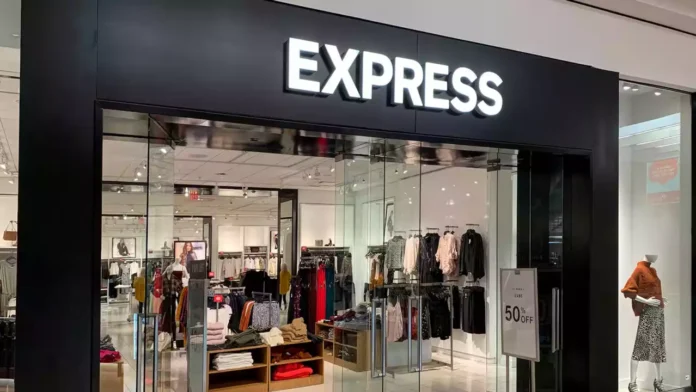
Express Inc, a prominent fashion retailer, has initiated Chapter 11 bankruptcy proceedings in the United States and plans to shutter over 100 of its stores.
The retailer, encompassing brands like Express, Bonobos, and UpWest Express, disclosed assets and liabilities ranging from $1 billion to $10 billion in a filing submitted to the bankruptcy court in Delaware.
The company has appointed Mark Still as its new CFO, with immediate effect. Still has been serving as the interim CFO since November 2023.
As part of the bankruptcy proceedings, the company will initiate the closure of approximately 95 Express retail outlets and all of its UpWest stores, starting Tuesday. It refrained from specifying the exact locations.
According to its website, the company runs approximately 530 Express retail and Express Factory Outlet stores across the United States and Puerto Rico, along with roughly 12 UpWest retail stores.
Since its inception in 1980, Express has grappled with subdued consumer demand stemming from slowed spending habits and heightened price sensitivity in discretionary product categories.
Express announced that it has secured a commitment of $35 million in new financing from certain existing lenders.
The multi-brand fashion retailer expects to conduct business as usual as it initiates a court-supervised process to facilitate a formal sale process.
On Monday, the company announced it had received a non-binding letter of intent from a consortium led by WHP Global regarding the sale of a significant majority of its retail stores and operations.
Last year, WHP Global, a brand management firm with ownership of Toys “R” Us and fashion labels like Anne Klein, acquired a 7.4% stake in Express.
Subway Canada has broadened its culinary offerings by unveiling five fresh Globally Inspired Subs and a new Bowl option.
The company highlighted that its recent launch introduces Canadians to a variety of international flavors, incorporating new sauces, proteins, and toppings inspired by global destinations.
The latest menu features a range of options including the Tandoori Twist, Cuban Crunch, Nashville-Style Hot Chicken, Chimichurri Steak & Cheese, and Little Sicily subs.
Drawing inspiration from the classic Indian cuisine, the Tandoori Twist showcases a Tandoori-spiced pork cutlet paired with Monterey cheddar cheese, spinach, tomato, banana peppers, crispy onions, all enveloped in a zesty Tandoori-spiced sauce.
Conversely, the Cuban Crunch presents a fresh interpretation of the traditional Cubano sandwich. It layers deli-style ham, porchetta, habanero cheese, crispy onions, pickles, lettuce, Cuban-style sauce, and smoky mustard, as highlighted by the company.
The Nashville-Style Hot Chicken sandwich showcases rotisserie-style chicken, Nashville-style hot sauce, lettuce, tomato, pickles, crispy onions, habanero jack cheese, and Peppercorn Ranch dressing.
The Chimichurri Steak & Cheese celebrates Argentina’s passion for beef, highlighting thinly sliced steak, spinach, green pepper, red onion, tomatoes, melted cheese, and a flavorful Chimichurri sauce.
Drawing from Italian flavors, the Little Sicily sub harmonizes capicola, pepperoni, fresh vegetables, creamy mozzarella, garlic aioli, house sandwich sauce, and parmesan cheese, all nestled within Italian Herb and Cheese bread.
Moreover, the Shawarma Chicken Rice Bowl brings a Middle Eastern flair, featuring seasoned rotisserie-style chicken, a blend of wild rice, vegetables, Monterey Jack cheese, tahini, and hot sauce.
The company also mentioned that Subway Canada’s culinary manager and chef, John Botelho, embarked on a personal culinary journey to craft the Globally Inspired menu, conducting thorough research and taste testing to guarantee authenticity and satisfaction.
The menu also accommodates vegetarians with the debut of two new subs – The Big Veggie and Tandoori-Mozza – both boasting a veggie patty, creamy mozzarella, and an array of fresh vegetables.
Over the past year, Myntra has seen a surge of nearly 75 million new users, with 65 percent hailing from non-metro areas, as per the latest trend report from the fashion and beauty e-retailer.
According to the Myntra Trend Index, the platform reached an impressive peak of 60 million monthly active users, with an average of six million customers making 30 visits per month.
Furthermore, the platform’s social media engagement reflects its popularity, with top customers visiting around 35 times per month, while Myntra Minis captivate audiences with 100 hours of monthly viewership.
Exploring fashion preferences, the report highlights prominent color choices. Men are drawn to versatile shades like white, grey, teal, and olive, while women embrace the enchanting appeal of pastel hues such as beige, peach, and lavender. Gen Z preferences lean towards bold and metallic tones, echoing their impact on modern style.
Premiumization appears as a major trend, with significant development observed in categories such as Indian wear, luxury selections, and even premium home decoration goods, indicating a growing taste for indulgence among customers. The luxury luggage segment increased by 55 percent year on year. Demand for Luxe selection increased by 150 percent year on year, indicating a growing taste for luxury items.
Bengaluru has surfaced as a hub of Gen Z’s fashion influence, as varsity jackets, bling dresses, and oversized blazers captivate the imagination of this trendsetting cohort.
In the meantime, traditional attire receives a contemporary update, as monochromatic lehengas and metallic sarees gain momentum alongside Bollywood-inspired styles. Accessories play a crucial role in perfecting outfits, with vintage watches and monogram bags imparting a sense of sophistication.
The beauty and grooming scene experience a surge in the demand for science-backed skincare and detailed hair care routines, highlighting a nationwide embrace of self-care and personal grooming.
“Myntra Trend Index sheds light on some of the most notable consumer trends spanning fashion, beauty, personal care, and lifestyle segments in India. The report’s findings strongly indicate that the country is undergoing a shift towards premiumization, with a noticeable increase in trend adoption across different demographics. In the realm of fashion, India has become increasingly experimental in its choices, while also embracing self-care and personal grooming on a significant scale,” stated Sharon Pais, Chief Business Officer of Myntra.
Despite experiencing sequential declines in profit and revenue, Reliance Retail, the retail segment of Reliance Industries Ltd (RIL), reported robust growth in seller additions for its digital commerce arm, JioMart, in the quarter that ended March 2024.
RIL’s quarterly financial report revealed that JioMart experienced a significant 94% year-on-year increase in its merchant base. However, specific figures for the merchant base were not disclosed.
Following the similar trends, the conglomerate also reported a 20% year-over-year growth in the number of merchants selling consumer electronics via its new commerce platform, although specific figures were not disclosed.
The statement notably omitted any reference to the contribution of digital and new commerce ventures to Reliance Retail’s overall revenue. In the third quarter (Q3) of the fiscal year 2023-24 (FY24), the company had previously indicated that these sectors constituted 19% of the retail giant’s total income.
In the quarter ended March 2024, Reliance Retail saw a 9.8% year-over-year increase in operating revenue, reaching INR 67,610 Cr compared to INR 61,559 Cr in the same period last year. However, revenue declined by over 9% sequentially from INR 74,373 Cr.
Meanwhile, Reliance Retail achieved a net profit of INR 2,698 Cr in Q4 FY24, marking an 11.7% year-over-year increase but a 14.7% quarter-on-quarter decline.
Reliance Retail Ventures Limited’s (RRVL’s) Executive Director, Isha Ambani, emphasized, “Our ongoing investments and innovations across formats and products aim to enhance our customer value proposition and cater to changing consumer demands. The strong expansion and growth of our retail business reflect our dedication to customer-centric strategies and our confidence in India’s consumption potential.”
Additionally, the conglomerate announced an increase in its investments in digital news and entertainment sectors during the quarter, resulting in significant growth for the OTT streaming platform JioCinema.
The 2024 edition of the Women’s Premier League (WPL) streamed on JioCinema reportedly experienced a threefold increase in watch-time and a 70% increase in “reach” compared to the previous season.
“JioCinema also achieved unprecedented reach and engagement for TV network shows. Bigg Boss Hindi experienced a 2.7-fold increase in viewership, 1.3-fold increase in watch-time, and 1.6-fold increase in views, while Bigg Boss Kannada saw a 5.6-fold increase in viewership, 3.5-fold increase in watch-time, and 4.2-fold increase in views compared to the previous season,” the statement noted.
Meanwhile, RIL’s digital subsidiary, Jio Platforms, recorded a 12% increase in its consolidated net profit to INR 5,583 Cr in the March quarter, up from INR 4,984 Cr in the corresponding period last year. Similarly, operating revenue surged 13.4% year-over-year to INR 28,871 Cr during the quarter in question.
Overall, RIL’s net profit held steady at INR 21,243 Cr in Q4 FY24, mirroring the INR 21,227 figure reported in Q4 FY23.
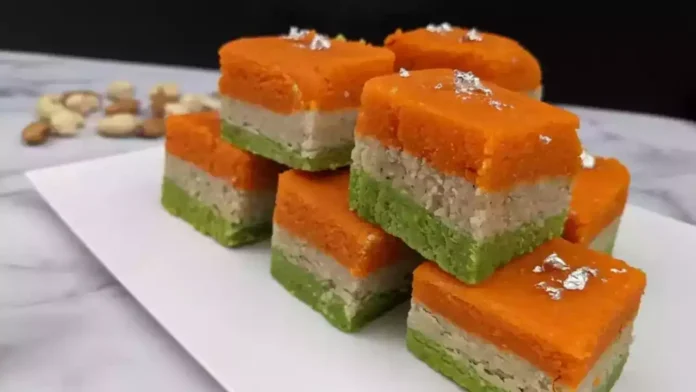
Varanasi’s iconic tiranga barfi was officially granted Geographical Indication (GI) tag on April 16, 2024, joining the esteemed ranks of protected regional products. Crafted from premium cashews for its white layer, pistachios for green, almonds for saffron, and enriched with mawa, this legendary confection remains an essential delicacy in the heartland of Kashi.
Dating back to the 1850s, tiranga barfi was crafted by Shri Raghunath Das Gupta, the proprietor of Ram Bhandar, a quaint sweet shop nestled in Varanasi’s Thatheri Bazaar. Though modest in origin, this delectable treat made a noteworthy contribution to the vitality of the Indian independence movement.
During the era of the freedom movement, when British authorities imposed censorship on newspapers, a delectable treat originally named Rashtriya barfi emerged, doubling as a medium for conveying patriotic slogans. Adorned with the three hues of the tricolour flag, this barfi swiftly became a cherished dessert among freedom fighters. Even today, during Independence and Republic Day celebrations, tiranga barfi continues to be distributed in schools and various institutions across the nation.
Additionally, alongside the tri-colour delicacy, Ram Bhandar shop introduced other sweets paying homage to renowned freedom fighters, such as Jawahar Laddoo, Moti Pak, Madan Mohan, and Gandhi Gaurav, as a gesture of solidarity with the freedom movement. Legend has it that through enthusiastic word-of-mouth, these sweets, along with tiranga barfi, gained immense popularity throughout the city, eventually finding their way into the kitchens of local British government officers.
Today, the original recipe has undergone slight modifications to streamline its preparation, considering the time and cost constraints. However, the profound sentiment and connection to the sacrifices of the freedom fighters remain intact. Presently, the key ingredients of this sweet include mawa (khoya) and edible food colors representing saffron and green.
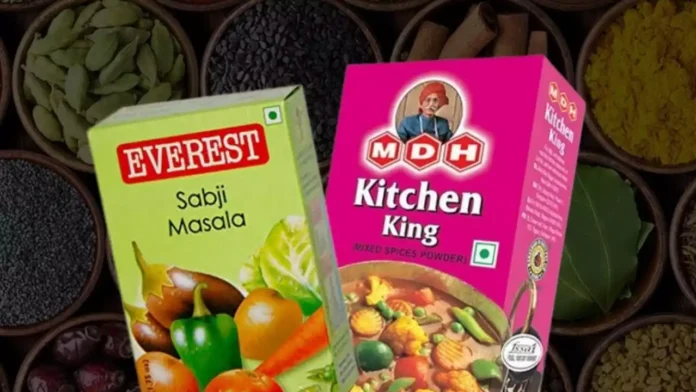
MDH and Everest Spice Mixes (Representative Image)
The food regulatory body, the Food Safety and Standards Authority of India (FSSAI), has initiated quality checks on MDH and Everest products. This move comes in response to complaints alleging that several popular spice mixes from these leading brands contain traces of ethylene oxide exceeding permissible levels, as reported by official sources.
This move comes after variants of the products from the two major masala brands were recalled in Hong Kong and Singapore.
Sources indicate that during the quality checks, FSSAI will also evaluate whether the products sold by MDH and Everest comply with the chemical residue standards mandated by Indian law.
Sources indicated that when it comes to exports, the regulator might have a limited role since it falls upon the importing country to conduct product testing and authorize entry.
Ethylene oxide and ethylene glycol serve as preservatives in spices and millets, prolonging their shelf life. Additionally, they function as stabilizing agents in pesticides.
According to scientists, exceeding the permissible level of consumption of these chemicals may pose a risk of carcinogenicity.
In the meantime, sources have indicated that the food regulator has initiated sample collection to examine whether ethylene oxide levels in spices exceed the permissible limits.
On April 5, the Centre for Food Safety (CFS) of the Food and Environmental Hygiene Department in Hong Kong issued a recall for MDH and Everest spice mixes. Subsequently, the Singapore Food Agency (SFA) also recalled Everest Masala. Both agencies stated in their press releases that the premixes contained the pesticide ethylene oxide.
In its statement, the CFS Hong Kong announced the recall of MDH Madras Curry Powder, Curry Powder Mixed Masala Powder, Sambhar Masala Mixed Masala Powder, and Everest Fish Curry Masala.
Following the release by CFS on April 5, SFA also issued a recall for Everest Fish Curry Masala on April 18.
In its statement, a spokesperson for the CFS mentioned, “The samples mentioned above were collected from three retail outlets in Tsim Sha Tsui as part of our routine Food Surveillance Programme. Test results revealed the presence of the pesticide ethylene oxide.”
Furthermore, it stated, “The CFS has notified the relevant vendors of these irregularities and directed them to halt sales and withdraw the affected products from circulation. In accordance with the CFS’s directives, the distributors/importers involved have commenced recalls for the affected products.”
It further emphasized that members of the public should refrain from consuming the affected products. Additionally, the trade sector is urged to cease the usage or sale of the affected products promptly if they are in possession of any.
SFA stated that since the implicated products were imported into Singapore, it has instructed the importer, Sp Muthiah & Sons Pte., to initiate a recall of the products. It noted that the recall process is currently underway.
SFA stated in its release, “Ethylene oxide, a pesticide unauthorized for food use, is permitted for sterilizing spices under Singapore’s food regulations. It is commonly employed to fumigate agricultural products to thwart microbial contamination.”
Furthermore, it highlighted that while there’s no immediate danger associated with consuming food contaminated with low levels of ethylene oxide, prolonged exposure could result in health complications.
SFA also mentioned in its statement, “The International Agency for Research on Cancer has categorized ethylene oxide as a Group 1 carcinogen.”
This isn’t the first instance where Everest has faced scrutiny from an overseas food regulatory body.
In 2023, the US Food & Drug Administration recalled Everest Sambhar Masala and Garam Masala after samples tested positive for Salmonella. Consumers were advised not to consume the products and to dispose of them.
Reliance Retail has reported a net profit of INR 11,101 crore for the financial year ended on March 31, 2024 (FY24), marking the first time its annual profit has crossed the INR 10,000 crore threshold. Notably, the grocery business recorded the highest growth in FY24 at 31 percent. According to Dinesh Taluja, Chief Financial Officer (CFO) of Reliance Retail, the fashion and lifestyle segment saw a growth of about 23 percent, while consumer electronics grew by 18 percent.
The company recorded a 11.7 per cent year-on-year (YoY) growth in net profit at INR 2,698 crore in the quarter ended March 31, 2024 (Q4FY24).
The company’s profit before interest, depreciation, and tax surged by 18.1 percent year-on-year (Y-o-Y) to INR 5,632 crore. Additionally, the nation’s largest retailer witnessed a 9.8 percent Y-o-Y revenue growth in Q4, reaching INR 67,610 crore.
Depreciation also rose due to the higher asset base resulting from the addition of new stores and supply chain infrastructure enhancements. Similarly, the finance cost increased due to higher borrowings for business expansion.
The company’s gross revenue from operations for the quarter reached INR 76,627 crore, marking a 10.6 percent increase. This growth was attributed by the company to its consumer electronics and fashion & lifestyle businesses.
In FY24, its gross revenue reached INR 3.06 trillion, marking a 17.8 percent increase compared to the previous year.
Mukesh Ambani, the chairman and managing director of Reliance Industries, discussed the retail business’s omni-channel presence, product differentiation, and focus on providing a “superior offline experience through store remodeling and layout revamping.”
In the quarter, the company expanded its footprint by adding 562 stores and recorded a total of 272 million footfalls across various formats.
Isha Ambani, Executive Director of Reliance Retail Ventures, said, “The strong expansion and growth of our retail business underscore our dedication to customer-centricity and our confidence in India’s consumption narrative.”
During FY24, Reliance Retail raised equity funds totaling INR 17,814 crore, with RIL contributing INR 2,500 crore during the quarter.
In the quarter, it acquired the Indian operations of Kiko Milano and obtained the intellectual property, including trademarks and recipes, of sugar-boiled confectionery from Ravalgaon.
We use cookies to ensure that we give you the best experience on our website. If you continue to use this site we will assume that you are happy with it.