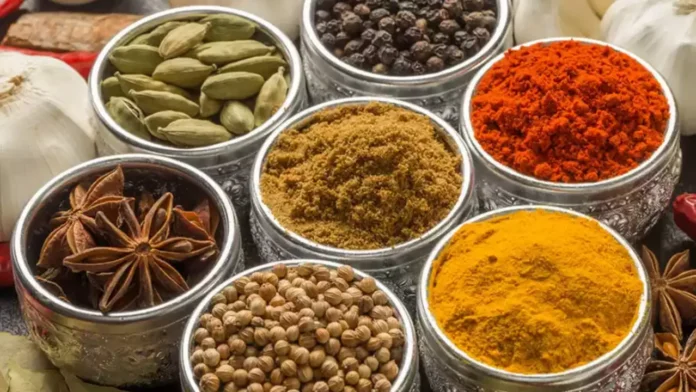
The government on Wednesday said that it will implement mandatory testing for ethylene oxide (ETO) contamination in its spice exports to Singapore and Hong Kong.
Ethylene oxide (ETO) is categorized as a carcinogenic pesticide.
The decision comes after Singapore and Hong Kong imposed bans on specific spices exported by Indian brands MDH and Everest, alleging the presence of ethylene oxide (ETO). The government further stated that spice shipments to other nations will also undergo rigorous scrutiny for ETO presence.
According to officials, the decision was made following meetings between the commerce and industry ministry, the Spices Board, and industry stakeholders.
Currently, spice exports to these nations require compulsory testing for Aflatoxin, a carcinogen, and Sudan I-IV, a dye. However, for consignments bound for the EU and the UK, mandatory ETO testing is in place. An official stated, “We have established protocols for obligatory ETO testing in spice shipments bound for Singapore and Hong Kong. Before implementing these mandatory standards, we engaged with the industry and sought the views of exporters.”
The action was initiated following Singapore’s allegation of the presence of ethylene oxide (ETO) exceeding permissible limits in Everest’s Fish Curry Masala, while Hong Kong claimed to have detected the pesticide in three MDH products—Madras Curry Powder, Mixed Masala Powder, and Sambhar Masala—alongside Everest’s Fish Curry Masala.
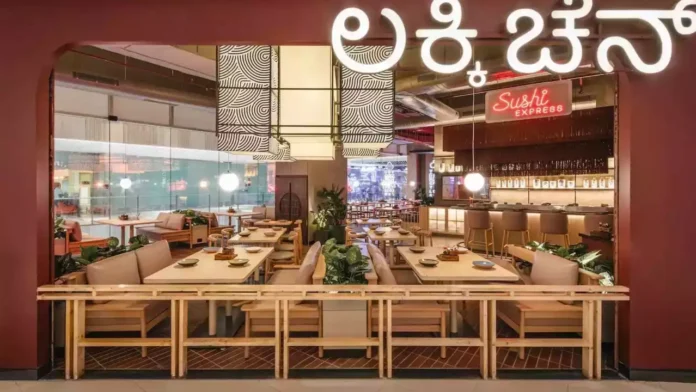
Lucky Chan has opened its third outlet, strategically positioned in the bustling Forum South Bangalore mall. This expansion stands as a pivotal moment for the brand, reinforcing its dedication to sharing its signature blend of comfort food and vibrant ambiance with an even broader audience.
From its inception, Lucky Chan has distinguished itself as a unique culinary hotspot. Leading the way with India’s inaugural Sushi Belt, the brand continually sets new standards for inventive Asian fare. Its expansive menu caters to a range of tastes, boasting a delightful selection of non-vegetarian, vegetarian, and vegan dishes. With a steadfast commitment to excellence and guest delight, Lucky Chan has firmly entrenched itself as a beloved fixture in the local dining scene.
Situated strategically within the Forum South Bangalore mall, this new outlet caters to a vibrant market teeming with culinary enthusiasts. Its prime location, combined with the brand’s dedication to delivering an unmatched dining experience, sets the stage for a flourishing Lucky Chan community. More than just meals, it aims to foster a sense of unity and culinary zeal among its patrons. Featuring a mix of beloved signature dishes and enticing new additions, the menu promises something for everyone to enjoy.
With a goal of opening 10 outlets across Bangalore by the end of the fiscal year, the brand is determined to extend its popularity to every district of the city.
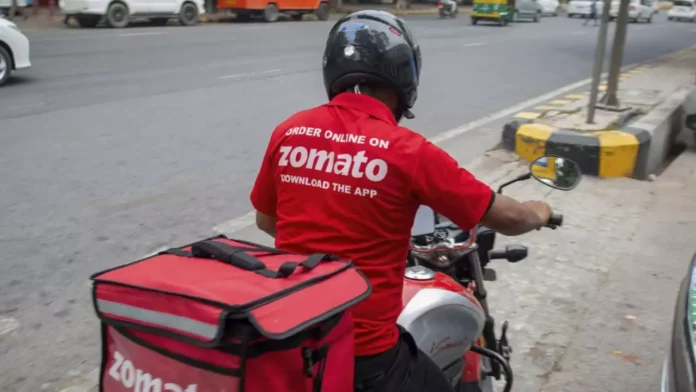
Continuing its streak of experiments, foodtech major Zomato is now testing a new feature in parts of Bengaluru and Mumbai that offers priority deliveries to users at an extra charge.
According to a report by Moneycontrol, a user in Bengaluru was offered food delivery within 16-21 minutes by paying an additional INR 29. The standard delivery time for the same order was displayed as 21 minutes on the app.
The company is charging an additional fee for priority deliveries from Zomato Gold users as well, according to the report.
Sources within the company have confirmed the development and stated that the offering is being piloted in select areas in Bengaluru and Mumbai.
The newly introduced feature will support the foodtech major’s profitability by providing an additional source of income.
This development comes at a time when Zomato has been experimenting with a range of new offerings to boost its revenue. Earlier this month, reports emerged that Zomato was piloting last-mile delivery services for office-goers within corporate parks. Last week, it also unveiled an all-electric “large order fleet” designed to handle orders for up to 50 people at once.
In addition, last month, it introduced a “Pure Veg Fleet,” complete with green uniforms and a new mode on its app catering to customers with 100% vegetarian dietary preferences. However, the decision to outfit the delivery executives of the new fleet with green uniforms was swiftly reversed after facing criticism online.
Just this week, the foodtech giant raised its platform fee by 25% to INR 5 per order in its key markets, including Delhi-NCR, Bengaluru, Mumbai, Hyderabad, and Lucknow. Adding to this adjustment, the company also made the decision to suspend its intercity delivery service, ‘Intercity Legends,’ as part of its efforts to streamline and consolidate operations.
Zomato’s shares have been soaring on the stock exchanges, fueled by the company’s robust financial performance and increasing profitability. In the quarter that ended in December 2023 (Q3 FY24), Zomato saw its net profit surge to INR 138 Cr, quadrupling from INR 36 Cr in the previous quarter.
In Q3 FY24, operating revenue increased to INR 3,288 crore from INR 2,848 crore in Q2 FY24.
Consequently, Zomato’s shares have surged by over 200% in the past 12 months and by nearly 50% on a year-to-date (YTD) basis.
Moreover, brokerages have expressed confidence in the foodtech giant. Kotak Institutional Equities maintained a ‘BUY’ rating on Zomato and raised the price target (PT) to INR 210, while Motilal Oswal identified the stock as one of its top picks.
Zomato’s shares concluded Wednesday’s (April 24) trading session down by 1.68% at INR 184.4 on the BSE.
Heineken sold more beer than anticipated in the first quarter, marking its first quarterly year-on-year growth in volumes in a year, while also adhering to its forecast for profit growth in 2024.
On Wednesday, the world’s second-largest brewer announced that beer volumes experienced a 4.7% organic increase during the January-March period. This surpasses the 2.5% growth anticipated by analysts in a poll provided by the company.
Its shares climbed by up to 1.6%, but later trimmed some of the gains, trading 0.4% higher by 0805 GMT.
Heineken’s primary focus this year is on reviving volume growth, which took a hit in 2023 due to price hikes aimed at offsetting escalating costs spanning from energy to barley.
In a statement, CEO Dolf van den Brink highlighted that all regions experienced increased volume and net revenue.
He further noted that the quarter benefitted from an earlier Easter and one-time effects.
Nevertheless, the brewery indicated that it still perceives the economic environment as “challenging and uncertain.”
“While we had a strong beginning to the year, we caution against extrapolating the reported top-line growth for the remainder of the year,” the company stated.
In February, Heineken disappointed investors by providing a broad forecast range for operating profit growth, suggesting it could fall anywhere between low to high single-digit percentages for the year.
Its cautious outlook at the beginning of the year was partly influenced by uncertainty in two crucial markets, Vietnam and Nigeria, where economic conditions had weighed on its performance the previous year.
Heineken reported that total volume in Nigeria increased by nearly 20%. In Vietnam, where destocking was necessary last year, volume saw a low-teens growth.
Analyst Laurence Whyatt from Barclays highlighted a rebound in the high-margin market of Vietnam, along with promising performances in Mexico and Brazil.
“In our assessment, it’s undeniable that the underlying business seems to have turned a corner, and we anticipate further improvements throughout the year,” he stated in a note.
Heineken reported that its namesake brand claimed the top position by value in the quarter in Brazil, with beer volume experiencing a high-single-digit growth.
Before considering one-time items, net revenue increased organically by 9.4% to 6.85 billion euros ($7.33 billion), surpassing analysts’ expectations of 7.2% growth. However, currency translation decreased this figure by 4.6%, according to Heineken.
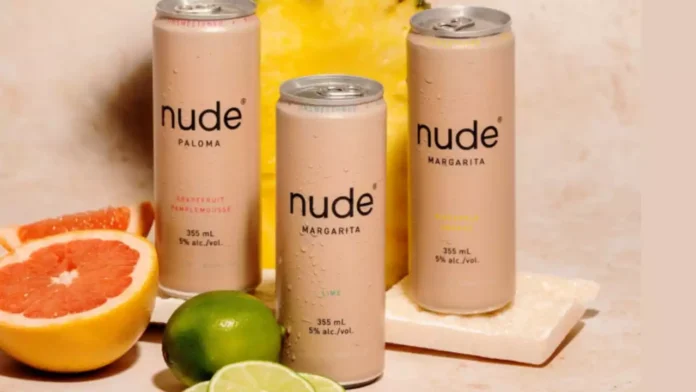
Majority owned by Pernod Ricard, the company is set to pay C$11 million ($8 million) for the acquisition of the Nude brand from MXM Beverages. The transaction was conducted via Corby Spirit and Wine’s subsidiary, Ace Beverage Group.
Established in 2017 and based in Vancouver, Nude Beverages specializes in ready-to-drink beverages that are free from sugar and sweeteners. Their inaugural product, a 5% sugar-free vodka soda, debuted in the same year. Among their offerings are the brands Los Flamingos and Slappy’s.
Ace Beverage Group CEO Cam McDonald stated, “Nude’s significant presence as a leading player in the western Canadian ready-to-drink market aligns seamlessly with our established position in Ontario, providing a solid foundation for a nationwide platform to introduce innovative ready-to-drink products to consumers across the country.”
The completion of the deal is contingent upon meeting closing conditions and obtaining approval from the Supreme Court of British Columbia. Corby Spirit and Wine anticipates finalizing the acquisition in the latter half of 2024.
Since 2005, Pernod Ricard has maintained a 51% ownership stake in Corby Spirit and Wine.
Last year, Corby Spirit and Wine obtained a 90% ownership interest in Canadian ready-to-drink producer Ace Beverage Group.
The agreement, valued at C$185.5 million ($111 million), incorporated an opportunity for Corby to acquire the entire ready-to-drink manufacturer by exercising call options on the remaining shares, which can be executed in 2025 and 2028.
Formed in 2020 through the merger of Cottage Springs and Ace Hill, Ace Beverage Group emerged as one of Canada’s leading independent producers of ready-to-drink beverages. Its primary brands include Cottage Springs vodka soda and vodka water, Ace Hill, and Tequila soda.
In 2022, Pernod Ricard allocated $22 million towards enhancing its ready-to-drink cocktail production capabilities in North America by investing in a production facility in Fort Smith, Arkansas. This investment encompassed the installation of a high-speed canning line along with eight 50,000-gallon (190,000-liter) tanks.
Starbucks has introduced its latest array of summer drinks in Latin America and the Caribbean (LAC).
The selection includes the Retro Pink Frappuccino, Iced Retro Pink Starbucks Matcha, and a range of lemonade-infused beverages.
Starbucks stated that the Retro Pink Frappuccino combines cold milk, vanilla syrup, and a creamy Frappuccino base, alongside frozen red dragon fruit pieces, all topped with vanilla whipped cream.
The Iced Retro Pink Starbucks Matcha merges matcha green tea powder with chilled milk and ice, finished with Red Dragon Fruit Cold Foam, presenting a fresh take on the traditional iced matcha.
The company’s fresh lemonade selections feature the Strawberry Frozen Lemonade and Dragonfruit Frozen Lemonade, alongside the Iced Pink Berries Shaken Lemonade and Iced Strawberry Shaken Lemonade.
Alongside the matcha and lemonade beverages, Starbucks is reintroducing the Mocha Cookie Crumble Frappuccino and the Caramel Ribbon Crunch Frappuccino.
The Mocha Cookie Crumble Frappuccino combines Frappuccino chips and mocha sauce with milk and ice, finished with whipped cream and chocolate cookie crumble on top.
The Caramel Ribbon Crunch Frappuccino delivers a caramel scent and a rich roasted coffee flavor.
Starbucks is also reintroducing two coffee selections: the Sun-Dried Brazil Carmo De Minas, characterized by its caramel and hazelnut notes, and the Papua New Guinea Highlands coffee, renowned for its herbal nuances accompanied by hints of sugarcane and black cardamom.
In addition to the beverage debut, Starbucks is unveiling a fresh limited-edition drinkware collection at its LAC stores.
Earlier this month, Starbucks introduced the Spicy Lemonade Refreshers beverage and a new Spicy Cream Cold Foam in Canada.
FMCG giant Hindustan Unilever Ltd (HUL) has reported a 1.53% decline in consolidated net profit to INR 2,561 crore for the fourth quarter ending on March 31. The company had a net profit of INR 2,601 crore during a similar period in the previous fiscal year, according to a BSE filing.
Nevertheless, according to the regulatory filing, the total income for the quarter rose to INR 15,441 crore, compared to INR 15,375 crore during the corresponding quarter of the previous year.
For the fiscal year ended March 31, 2024, the company’s consolidated net profit stood at INR 10,282 crore. It had posted a net profit of INR 10,143 crore in the fiscal year 2022-23.
In FY24, its total income increased to INR 62,707 crore compared to INR 61,092 crore in FY23.
Regarding the company’s financial performance, Rohit Jawa, CEO and managing director, stated, “In FY24, we achieved a resilient performance with a 3% USG and surpassed the INR 10,000 crores Net Profit milestone. Our focus remains on enhancing operational excellence, restoring gross margins, and increasing investments in brands and long-term capabilities.”
Jawa also expressed, “Moving ahead, I am optimistic about the gradual improvement in consumer demand, driven by a normal monsoon and enhanced macro-economic indicators. With increasing affluence, relatively lower FMCG consumption, and robust digital infrastructure, I maintain a high level of confidence in the medium to long-term prospects of the Indian FMCG sector.”
Jawa added, “To meet the evolving aspirations of Indian consumers, we have initiated a ‘Transform to Outperform’ journey. Our primary focuses include enhancing our core through unmatched brand superiority, market expansion, premiumization, portfolio optimization for high-growth areas, and leadership in future channels. Leveraging our unique capabilities, we are poised to sustain success in the Indian FMCG sector.”
The company’s shares ended 0.16% down at INR 2,259.15 apiece on the BSE.
IHG Hotels & Resorts plans to double its presence in India in the next five years, aiming to have 100 operating hotels by then.
In 2023, the company reported robust signing performance, sealing 13 deals across its luxury, premium, and essentials brands. It notably expanded its presence in key markets like Gurgaon, Jim Corbett, Mumbai, Amritsar, and Goa.
The chain reported that nearly 70% of the signings occurred within the midscale and upper midscale segments, which remain pivotal growth drivers for the company in India, with premium and luxury segments following suit.
IHG’s development pipeline encompasses a variety of brands, including InterContinental Hotels and Resorts, Crowne Plaza, voco, Holiday Inn, Holiday Inn Express, and Staybridge Suites. The chain expressed its intention to not only focus on established destinations but also to target rapidly growing secondary markets like Amritsar, Lucknow, Zirakpur, Kasauli, and Katra, while also revitalizing its presence in popular tourist destinations.
Over the past year, IHG has also announced the debut of its premium conversion brand, voco, in India with a signing in Gurgaon. Subsequently, the brand has seen four additional signings in 2023 across key leisure and business destinations such as Jim Corbett, Mumbai, Amritsar, and Goa, IHG reported.
Haitham Mattar, Managing Director for India, Middle East, and Africa at IHG Hotels & Resorts, emphasized the chain’s enduring history in India and reiterated its dedication to expanding its presence throughout the country.
“India’s hospitality industry is experiencing a dynamic transition driven by a number of factors including higher spending power, a growing middle class that enjoys travelling, and the opening of new tourist destinations,” he said. In addition to allowing us to satisfy this growing demand, our strategic development plan places IHG in a key position to influence the direction of hospitality in India.”
He added, “Through harnessing our diverse brand portfolio and unwavering dedication to guest satisfaction, we aim to provide travelers with an expanded array of lodging choices, thereby fostering the growth and liveliness of the Indian tourism scene.”
Sudeep Jain, Managing Director for South-West Asia at the chain, expressed pride in IHG’s robust signing performance last year and affirmed the company’s trajectory towards another prosperous year.
He remarked, “The ongoing trust of our owners in IHG’s varied portfolio, spanning from the cherished Holiday Inn brand family to our luxurious and lifestyle selections, places us ideally to meet the changing preferences of both local and global travelers.”
“We harbor ambitious expansion strategies aimed at bolstering our portfolio across all brand segments in India. Our Essentials portfolio has proven highly successful in this market, primarily fueled by domestic tourism. Additionally, we hold a positive outlook for our growth in the luxury and lifestyle segment. We firmly believe that laying a robust foundation and platform is pivotal for advancing our luxury brands further. This approach enables us to meticulously choose the right partners in the right locales, ensuring the delivery of extraordinary experiences that resonate with the discerning expectations of luxury travelers,” he elaborated.
In 2023, IHG reported that hotel occupancy rates surpassed pre-pandemic levels by a considerable margin. Additionally, revenue per available room experienced a notable increase of over 30% compared to figures from both 2019 and 2022.
IHG operates in India through six of its key brands, spanning various market segments: Six Senses and InterContinental Hotels and Resorts cater to the luxury and lifestyle segment, Crowne Plaza Hotels & Resorts and voco serve the premium segment, while Holiday Inn and Holiday Inn Express target the midscale and upper midscale segments.
At present, the group boasts 51 hotels in South West Asia, totaling over 8,500 rooms, with India hosting 46 of these hotels, offering over 7,800 rooms.
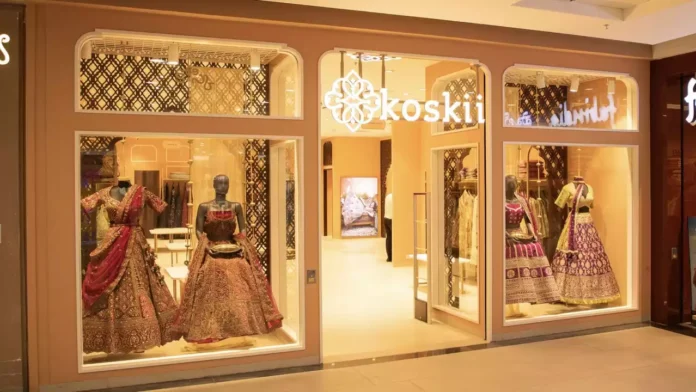
Koskii, the ethnic wear brand, has just unveiled its fourth store in Hyderabad, as announced by a company representative on social media. Situated on the second floor of Nexus Mall, Kukatpally, this new establishment marks the 19th addition to Koskii’s nationwide network of stores.
“Adaab, Hyderabad! Within a mere 12 months, we’ve introduced four stunning additions to the Koskii family, each serving as a tribute to our affection for Hyderabad and its fashion-forward community,” remarked Umar Akhter, CEO of Koskii, in a LinkedIn update.
Additional Koskii outlets within the city can be found in Jubilee Hills, Banjara Hills, and Sarath City Mall.
“As our adventure continues, our attachment with Hyderabad grows stronger. “Here’s to countless more accomplishments, endless fashion narratives, & numerous cherished moments with Koskii in Nizams,” Akhter wrote.
Established in 2016, Koskii provides a diverse selection of products tailored for women, featuring lehengas, sarees, and salwars. Its offerings are designed to cater specifically to women aged between 18 and 35.
Koskii’s online retail platform has successfully fulfilled orders across more than 10,000 pin codes, and its dedicated app has garnered over 100,000 downloads.
Presently, the fashion brand has established its presence in cities like Chennai, Bengaluru, Hyderabad, Coimbatore, New Delhi, and Kochi.
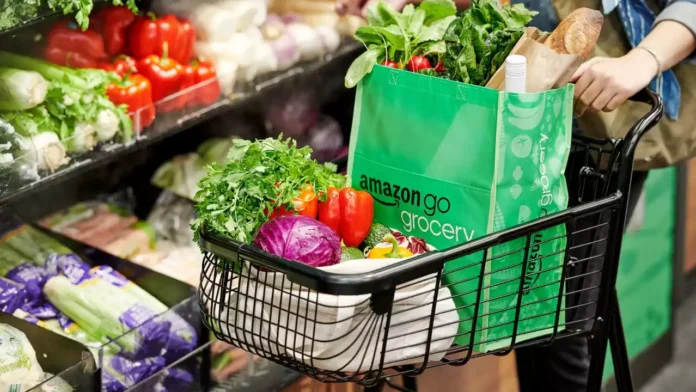
Amazon, the e-commerce giant, has launched a new low-cost grocery delivery subscription service targeted at Prime members and customers with a registered Electronic Benefit Transfer (EBT).
The service, accessible in over 3,500 cities and towns throughout the US, carries a monthly fee of $9.99 for Prime members.
It offers unlimited grocery delivery for orders over $35 from Amazon Fresh, Whole Foods Market, and a variety of local and specialty retailers on Amazon.com.
EBT cardholders can access the same benefits without a Prime membership for $4.99 per month, which also includes a complimentary 30-day trial.
Prime members who subscribe to this new service will also retain exclusive savings at Amazon Fresh and Whole Foods Market outlets, alongside other Prime perks.
The subscription encompasses convenient delivery and pickup time slots, complimentary one-hour delivery windows where accessible, unrestricted 30-minute pickup for orders of any magnitude, and priority access to Recurring Reservations for weekly grocery orders.
The grocery delivery subscription additionally encompasses local and specialty retailers including Cardenas Markets, Save Mart, Bartell Drugs, Rite Aid, Pet Food Express, Mission Wine & Spirits, and other participating stores.
Tony Hoggett, Senior Vice President of Amazon’s global grocery stores, commented, “This new grocery subscription benefit offers enhanced value and savings on delivery fees for customers who frequently order groceries from Amazon New, Whole Foods Market, and the diverse array of local grocery and specialty retailers on Amazon.com.”
“Our goal is to establish an exceptional online and in-store shopping experience where Amazon is the go-to option for variety, affordability, and ease of use. Our objective is to continuously save our wide range of clients—all with different demands and time constraints—time and money when they shop for food.”
Amazon tested this grocery subscription in Columbus, Ohio; Denver, Colorado; and Sacramento, California, USA, in late 2023.
A survey conducted among subscribers showed that over 85% of respondents expressed extremely or very high satisfaction with the unlimited free delivery benefit.
Recently, Amazon announced its plans to launch a drone delivery service in Arizona, USA, later this year.
We use cookies to ensure that we give you the best experience on our website. If you continue to use this site we will assume that you are happy with it.