Barista, a trailblazer in fostering coffee culture in India, has just unveiled its Mango Festival, an ode to the exuberance of the revered king of fruits during the summertime.
Barista has brought forth two irresistible treats designed to tantalize your taste buds and invigorate your senses: the Alphonso Thick Shake and the Alphonso Delight Gateau.
The Alphonso Delight Gateau tantalizes with its luscious blend of fresh Alphonso mangoes encased within a sumptuous gateau pastry, promising a harmonious fusion of flavors and textures.
Accompanying the Gateau is the Alphonso Thick Shake, a revitalizing drink that marries Alphonso mangoes with Barista’s exclusive recipe, offering a delightful explosion of tropical flavors in every sip. Guaranteed to win over mango aficionados, the Alphonso Thick Shake is set to be a crowd favorite.
Rajat Agarwal, CEO of Barista Coffee, expressed, “The Mango Festival showcases Barista’s commitment to innovation and excellence, providing customers with a one-of-a-kind and delightful experience. Mangoes are quintessential to Indian summers, and we’re thrilled to unveil these new mango delights that authentically encapsulate their essence.”
Both the Alphonso Thick Shake and Alphonso Delight Gateau will be accessible at every Barista establishment across India.
Founded in 2000, Barista Coffee Company stands as India’s trailblazer in cultivating coffee culture. The Barista Café chain offers an authentic coffee experience within a welcoming, convivial atmosphere, fostering a cozy space for patrons to unwind amidst engaging discussions and a steaming cup of coffee. Apart from India, Barista cafés are also situated across the enchanting landscapes of Sri Lanka and the Maldives.
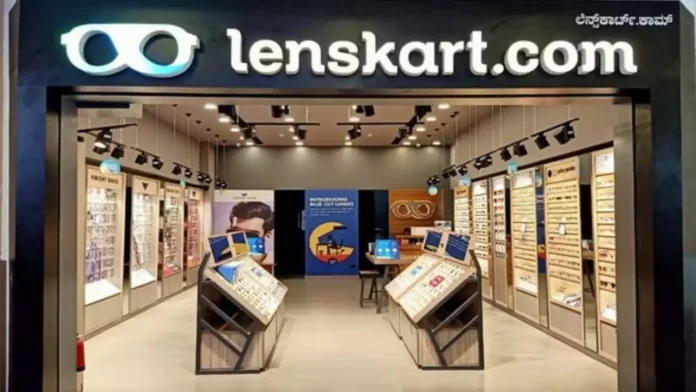
Blinkit, the quick commerce company under Zomato‘s umbrella, is now offering delivery of eyewear items from Lenskart in less than 10 minutes, according to a LinkedIn post by Blinkit founder Albinder Dhindsa on Friday.
The post mentioned, “Blinkit customers can now receive Lenskart.com products within 10 minutes. Kicking off with the delivery of sunglasses and their Hustlr range (Computer Glasses). It will be intriguing to witness the evolution of Hustlr as a brand over time.”
Quick commerce companies are broadening their offerings beyond groceries. Categories like beauty, toys, health, and electronics are experiencing strong sales growth on quick-commerce platforms.
Arindam Paul, a founding member and CBO at Atomberg, announced in a LinkedIn post on Thursday that the company has initiated sales of its products on a quick commerce platform. He emphasized that the prices remain consistent with those offered on other e-commerce platforms.
Last week, Blinkit made waves when it announced that it would be launching the PS 5 on its platform. “Blinkit customers residing in Delhi-NCR, Mumbai, & Bengaluru will be able to have the latest PS 5 & controllers delivered within 10 minutes,” Dhindsa wrote.
A week after the launch, he went on LinkedIn to reassure customers that the company is actively replenishing PlayStation 5 stock at its stores, as the product sold out within a week.
Mahesh Chopra, Founder of Mom's Kitchen with Kewal Ashwini Ahuja, Founder of SGF India
In a notable development within the culinary realm, SGF India (Spice Grill Flame) has announced the acquisition of Mom’s Kitchen, a Chandigarh-based food chain, recognized for its authentic home-cooked flavors and warm hospitality in Indian cuisine. This strategic move signals a new chapter for both entities, as they join forces to elevate the culinary experience to new heights.
The brand has accomplished the feat of establishing over 100 outlets nationwide, standing as proof of the dedication demonstrated by SGF India and Mom’s Kitchen.
SGF acquired Mom’s Kitchen for its unique commitment to providing healthy, flavorful home-cooked meals tailored to individuals living away from home, such as students and working professionals. This acquisition has broadened the reach of Mom’s Kitchen’s flavors, leveraging SGF India’s network for strategic outlet expansion. It has also facilitated new marketing initiatives, leading to higher foot traffic, customer engagement, and revenue generation, showcasing their mutual dedication to delivering exceptional culinary experiences.
“We are delighted to embark on this journey with Mom’s Kitchen, as we both share a mutual commitment to delivering unmatched culinary experiences. Our partnership highlights the transformative impact of collaboration in the culinary world. Surpassing the milestone of 100+ outlets speaks volumes about our steadfast dedication to excellence. Together, we are positioned for ongoing success, fueled by innovation and a shared love for gastronomy,” stated Kewal Ashwini Ahuja, Founder of SGF India.
Moving forward, Mom’s Kitchen and SGF India have devised thorough growth strategies encompassing intelligent location selection, franchise model enhancement, menu innovation, digital presence, and strategic partnerships. These endeavors are geared towards enhancing their culinary offerings and bolstering their presence in the flourishing food industry.
Established in 2017 by Mahesh Chopra, Mom’s Kitchen specializes in offering nutritious meals, addressing a significant gap in the market. With a presence in over 20 outlets nationwide, Mom’s Kitchen’s focus on providing healthy home-cooked meals resonated with a diverse customer base, positioning it as a valuable asset within SGF’s portfolio.
In the past decade, the share of vanaspati in the assortment of cooking oils preferred by Indians has nearly halved to 2.88%. Nonetheless, it still commands the second-highest weightage in the wholesale price index (WPI) at 14.35%, following palm oil. In contrast, sunflower and soybean oils, now more commonly consumed, receive lower weightages in the 2011-12 WPI, potentially leading to flawed inflation data.
Recently, the Solvent Extractors’ Association of India (SEA) penned a letter to the Centre, advocating for an adjustment in the weightage of various oils in the WPI to accurately mirror current consumption patterns.
The weightage of edible oils within the food articles category of the WPI stands at 2.64293%, determined by both consumption levels and average prices.
“In recent years, there has been a complete shift in the consumption pattern of edible oils,” stated the association in a letter addressed to the consumer affairs ministry.
The association highlighted that price sensitivity and availability are the primary factors driving the shift in cooking oil consumption patterns, with health considerations following closely behind.
While regional preferences exist, with mustard oil favored in northern India and copra oil in Kerala, industry veterans note that groundnut oil held sway as the predominant choice across most regions of the country until five to six decades ago.
Atul Chaturvedi, chairman of the Asian Palm Oil Alliance, mentioned that during the 1960s and 1970s, groundnut oil dominated as the primary cooking oil across much of the country. Moreover, it served as a key ingredient in vanaspati production. However, while groundnut production remains steady, a considerable portion is now being directed towards exports. Simultaneously, the demand for groundnuts as a snack has surged, resulting in diminished availability for cooking oil.
This shift has led to groundnut oil becoming one of the most expensive cooking oils in the country over the past decade. Palm oil has largely taken over the role previously held by vanaspati.
Not only have Indians altered their oil preferences, but they’re also consuming more oil per person.
Chaturvedi said, “The per capita consumption of cooking oils increased from 7 kg in the early 1980s to 18 kg today.”
As per the SEA, the consumption of specific edible oils referenced in the WPI during 2022-23 stood at approximately 26.03 million tonnes. Among these, vanaspati consumption accounted for about 750,000 tonnes or 2.88%. However, according to the WPI 2011-12, its weightage was 14.35%.
The past year has witnessed a notable increase in the consumption of soybean and sunflower oils, largely attributed to their comparatively lower prices in international markets originating from Ukraine and the Russian region around the Black Sea, when contrasted with palm oil.
Although soybean oil constitutes nearly 20.15% of total consumption, its weightage in the WPI is only 12.96%. The consumption of soybean oil surged, doubling from 2.67 million tonnes in 2011-12 to 5.25 million tonnes in 2022-23.
In WPI 2011-12, sunflower oil was assigned a weightage of 8.75%, whereas its current share in total consumption stands at 11.16%. Sunflower oil consumption has risen to 2.9 million tonnes in 2022-23 from 1.05 million tonnes in 2010-11.
Chaturvedi pointed out, “The stagnant production of palm oil in Indonesia and Malaysia, coupled with its increasing diversion for biodiesel, has made palm oil more expensive compared to relatively premium oils like sunflower and soybean oil.”
The share of palm oil in total cooking oil use has dropped to 36% from 44.7% in 2014–15 (it was 39.9% in 2010–11).
Beyond Snack, the brand known for its banana chips, is aiming to enter the tier 2 and 3 regions of India and extend its global reach to 12 countries with its latest products, according to Manas Madhu, the Co-Founder of the company.
The brand has predominantly focused on tier 1 and metropolitan cities, solidifying its presence in 21 cities and 10 states across India. Additionally, it has already made inroads into several countries such as the U.S., UAE, Australia, Sweden, Qatar, Nepal, Singapore, and Mauritius.
Madhu stated that in the current fiscal year, the brand aims to double its retail touch points across India, expanding to reach 40,000 outlets.
Recently, the brand unveiled coconut oil-based banana chips, offering both rock salt-infused and wavy-style variations. The focus is on introducing trade-compatible innovations that bring meaningful additions to the category.
Madhu remarked, “Consumers are increasingly trusting Beyond Snack as a brand, which makes them more willing to try out new market innovations from the same brand.”
Therefore, the brand intends to introduce additional innovations in FY25.
With ambitious expansion and product release strategies, the company aims to reach the INR 100 crore revenue milestone this fiscal year. Madhu emphasized, “Given that our product is often an impulse buy, our prominent placement on retail shelves significantly enhances its value. Therefore, distribution and retail visibility will be paramount in attaining our revenue targets.”
“This fiscal year, we anticipate a shift in sales contributions between online and offline channels,” Madhu explained. “As we prioritize aggressive expansion in offline channels, we expect offline sales to surpass online sales.”
Speaking more about the cash burn, he said that organisational spending is still in the single digits. “Our main priority is on sustainable growth instead of excessive spending,” Madhu said.
The brand is steadily advancing its online marketing efforts while also assisting offline partners through Below-the-line (BTL) activities. This year, it aims to explore fresh marketing avenues and contemplate above-the-line (ATL) initiatives to bolster distribution, emphasizing the synergy between online and offline endeavors.
Blue Tokai Co-Founders: Shivam Shahi, Namrata Asthana, Matt Chitharanjan
Blue Tokai, the specialty coffee chain, is reportedly in advanced talks to close a new fundraise at a valuation between USD 180 – 200 million, ET reported, citing sources familiar with the matter.
Although the size of the fundraising has not been disclosed, the upcoming round is expected to more than double the company’s valuation. In January of last year, Blue Tokai secured USD 30 million in a Series B round, reportedly valuing the company at around INR 650 crore.
Queries directed at Blue Tokai went unanswered.
According to a report by The Arc, the company is in the process of raising approximately USD 40 million.
Earlier this week, 12 Flags Group, the consumer fund established by Rakesh Kapoor, former global chief of Reckitt Benckiser, announced its investment in Blue Tokai Coffee Roasters through a LinkedIn post. However, the company refrained from disclosing the size of the investment.
Besides 12 Flags Group, the upcoming fundraise for Blue Tokai may also involve participation from its current investors. Whether a new investor will join the fray remains to be seen.
The company’s investor roster includes A91 Partners, Anicut Capital, 8i Ventures, DSP Blackrock, Negen Capital, Mauryan Capital, and White Whale Ventures. Additionally, Bollywood actor Deepika Padukone invested an undisclosed amount in the startup last year.
Blue Tokai recorded a revenue of INR 129 crore in FY23, while reporting a loss of INR 42 crore during the same period. The coffee chain operates more than 100 outlets across Delhi-NCR, Mumbai, Bengaluru, Hyderabad, Kolkata, Chandigarh, Mohali, and Pune.
Investors have been showing keen interest in the coffee market. Recently, Subko, a specialty coffee roaster and craft bakehouse, secured USD 10 million in funding from Zerodha co-founder Nikhil Kamath, Blume Founders Fund, The Gauri Khan Family Trust, and actor John Abraham.
abCoffee, a food service company, successfully raised USD 3.4 million in a Series A round, with Nexus Venture Partners and Tanglin Venture Partners taking the lead.
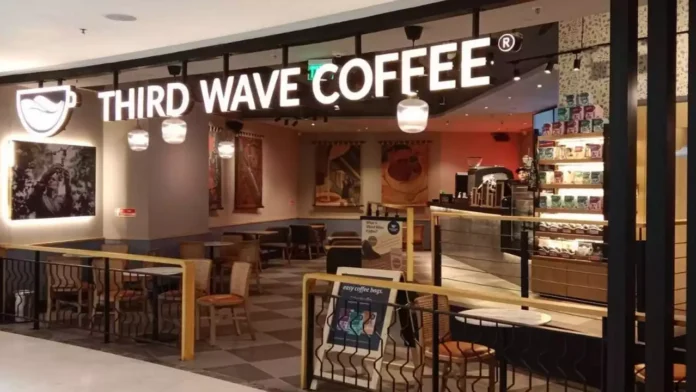
Last year, Bengaluru-based Third Wave Coffee, another significant player in the specialty coffee industry, secured USD 35 million in funding. The investment came from private equity firm Creaegis and existing investors, including WestBridge Capital and Udaan co-founder Sujeet Kumar. This round of funding reportedly valued the firm at approximately USD 150 million.
Reliance Retail‘s youth-centric fashion brand, Yousta, has opened its first high street outlet in Mumbai, according to a recent update shared by a company representative on social media.
The store is located at Satyam Pride in New Panvel.
It provides trendy high-fashion items at budget-friendly rates tailored for younger consumers. Every product falls below the INR 999 mark, with most items priced under INR 499.
“We are thrilled to announce the grand opening of our first high street YOUSTA store in Mumbai, which is situated in Satyam Pride, New Panvel. Discover our Exciting Thursday Collection, which features weekly new arrivals. Come check out our new store’, Reliance Retail’s Property Acquisition Manager, Amit Kumar Rout, wrote on LinkedIn.
Yousta recently unveiled its second store in Pune, situated at Phoenix Marketcity, Viman Nagar.
In August 2023, Reliance Retail introduced its youth-centric fashion label, Yousta, inaugurating its first store at Sarath City Mall in Hyderabad. Presently, the brand boasts over 19 outlets spanning 15 states nationwide.
The Coca-Cola Company is introducing newly designed, lighter PET bottles across its range of sparkling beverages in the U.S. and Canada, demonstrating a broader dedication to fostering a circular economy for its packaging.
For the first time in a decade, the 12-, 16.9-, and 20-ounce bottles of Coca-Cola, Sprite, and Fanta, alongside Minute Maid Refreshments and Minute Maid Aguas Frescas, showcase fresh designs that demand reduced raw materials for manufacturing.
Alejandro Santamaria, Senior Director for Global Packaging Development and Innovation, stated, “We’ve been continuously refining the weight of our bottles, gradually decreasing from 27 to 21 grams over the past decade. However, our previous designs had reached their minimum weight. Our recent advancements in modeling technology have enabled us to further reduce the weight of our bottles to 18.5 grams, marking a significant stride in minimizing material usage while maintaining the durability, functionality, and, crucially, the quality and taste integrity of our beverages.”
PET bottles are crafted by injecting heated liquid resin into tube-shaped “preforms,” which are subsequently expanded into bottle molds to achieve their desired final shape.
Santamaria elaborates, emphasizing the importance of identifying the optimal preform design and bottle shape features to enable lightweighting without sacrificing quality. He highlights that these designs are applicable to both virgin and 100% recycled plastic bottles (excluding cap and label). He underscores the significance of this process, particularly for sparkling beverages, where maintaining precise carbonation levels upon opening is crucial to preserving taste.
The new bottles, slated for gradual introduction across the United States and Canada in 2024, promise significant sustainability benefits for The Coca-Cola Company and its bottling partners. This transition is forecasted to slash the use of new plastic by roughly 800 million bottles in 2025 compared to 2024. Additionally, the shift in packaging is estimated to curtail carbon emissions in 2025 by an amount equivalent to removing over 17,000 cars from the road for one year compared to 2024.
This initiative aligns with the company’s World Without Waste objectives, aiming to ensure that all packaging is recyclable by 2025, incorporate 50% recycled content by 2030, achieve a one-to-one collection ratio of bottles or cans for each one produced by 2030, and diminish the use of virgin plastic sourced from nonrenewable origins. These collective efforts foster a circular economy for packaging materials, thereby curtailing waste and emissions.
Currently, testing is in progress to explore the feasibility of implementing the new lightweight designs for larger multi-serve 2-liter and 24-oz. PET bottles. Moreover, a considerable portion of the Coca-Cola North America’s range of still beverages, encompassing sports drinks, enhanced waters, and teas, will shift from hot fill to aseptic processing. This transition involves filling beverages into pre-sterilized containers, resulting in reduced plastic usage and energy consumption.
Santamaria concluded, “We deliberately began with our top-selling SKUs, and we are leaving no stone unturned in our efforts to minimize the amount of PET material used per package.”
Sleepyhead, the direct-to-consumer (D2C) brand specializing in sleep solutions, has launched its first brick-and-mortar retail store in India. Situated in Banaswadi, Karnataka, this marks Sleepyhead’s entry into offline retail.
The new store offers a variety of sleep products, such as mattresses, pillows, bedding accessories, alongside a selection of sofas, recliners, and storage solutions tailored for living spaces.
“Our expansion into the offline realm with our inaugural store signifies a significant milestone in Sleepyhead’s brand evolution. While e-commerce has played a vital role in connecting with our predominantly youthful consumer base nationwide, our physical presence provides a distinctive avenue for direct engagement with our brand,” stated Sridhar Balakrishnan, CEO of Duroflex Group.
He further added, “By merging the convenience of online shopping with the hands-on experience of in-store exploration, our goal is to offer customers a fully immersive shopping journey, ensuring they discover the ideal sleep solution customized to their requirements.”
The store showcases interactive displays and offers personalized assistance from sleep experts, complemented by promotional activities and events.
Established in 2017, Sleepyhead, headquartered in Bengaluru, operates as a subsidiary of the mattress brand Duroflex.
Reliance Retail‘s upscale fashion and lifestyle chain, Azorte, has unveiled its second outlet in Bengaluru, as announced in a social media post by a company representative. The new store occupies a spacious 19,000 square feet at Phoenix Mall of Asia, Hebbal.
“On the auspicious occasion of the Ugadi festival, Azorte, India’s premier fashion neostore, returns to Bengaluru with its second store at Phoenix Mall of Asia,” stated Rakesh Jallipally, Azorte’s business head, in a LinkedIn post on Thursday.
The technologically advanced store caters to the fashion and lifestyle needs of women, men, and children. It includes intelligent fitting rooms, self-service checkout kiosks, interactive displays, and mobile scan-and-pay capabilities.
Azorte was launched in September 2022 by Reliance Retail, with its first physical store in Bengaluru. The brand currently operates 13 retail outlets across the country, such as Mumbai, Hyderabad, Gurugram, Delhi, Ahmedabad, Bengaluru, & Pune.
The retail behemoth is also pursuing an aggressive expansion strategy for Azorte, with ambitions to open as many as 250 stores within the next two to three years.
Reliance Retail, the retail company of Reliance Industries Ltd., oversees a varied portfolio of fashion and leisure brands, including Reliance Trends, Avantra by Trends, Azorte & Centro. Furthermore, the company has a strong portfolio of over 50 respected worldwide brands, including Armani, Burberry, Diesel, Marks & Spencer, and Superdry, among others.
We use cookies to ensure that we give you the best experience on our website. If you continue to use this site we will assume that you are happy with it.