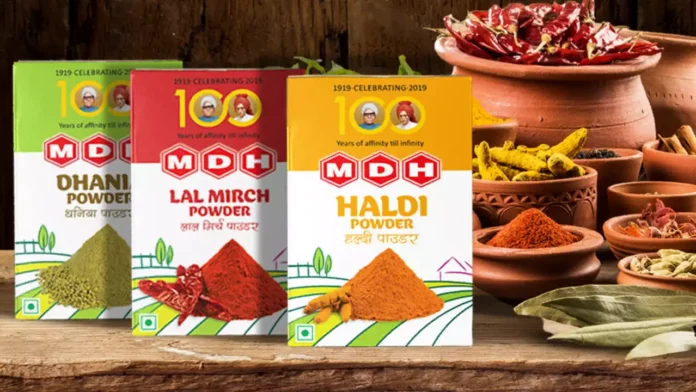
Spices company MDH Group affirmed the safety of its products, stating that it abstains from using ethylene oxide (ETO) in any stage of spice storage, processing, or packaging. Additionally, the company emphasized that it has not received any communication from regulatory authorities in Hong Kong or Singapore concerning its products.
Earlier this month, the food safety regulator in Hong Kong suspended the sale of three spice products from the company due to alleged traces of ethylene oxide (ETO). Additionally, one product under the Everest brand was also suspended from sale. Subsequently, the Singaporean food regulator initiated a recall of one Everest product.
MDH Group stated in a release that the allegations regarding the presence of ethylene oxide (ETO) in its products are “unfounded and lack substantial evidence.” The company reassured its customers that it does not utilize ethylene oxide at any point during the storage, processing, or packaging of its spices. Furthermore, MDH emphasized its 105-year legacy of delivering premium-quality spices, underscoring its commitment to upholding the trust of its clientele.
The company underscored its commitment to upholding health and safety standards, both domestically and internationally, assuring consumers of MDH’s adherence to quality. It further noted that MDH’s tagline “Asli Masale Sach Sach, MDH MDH” and “Real Spices of India” epitomize the company’s dedication to delivering authentic, premium-quality spices to its customers.
After Hong Kong and Singapore initiated recalls of certain spice products, the Food Safety and Standards Authority of India has initiated a sampling and testing campaign for spice products from major brands, including MDH and Everest, within India.
The Spices Board of India has requested technical information from authorities in Hong Kong and Singapore regarding the recall. Additionally, it has commenced compulsory testing for ethylene oxide (ETO) in spice shipments bound for Hong Kong, Singapore, and other nations. Such mandatory ETO testing for spices is already enforced for exports to the EU and the UK.
In the meantime, MDH asserted that neither the FSSAI nor the Spices Board of India has received any communication or test reports from Hong Kong and Singapore. The statement further emphasized that these facts reinforce the baseless and unsubstantiated nature of the allegations against MDH, which lack concrete evidence.
Earlier, Everest Food Products Pvt Ltd had also affirmed that its products are safe for consumption and undergo rigorous quality checks.
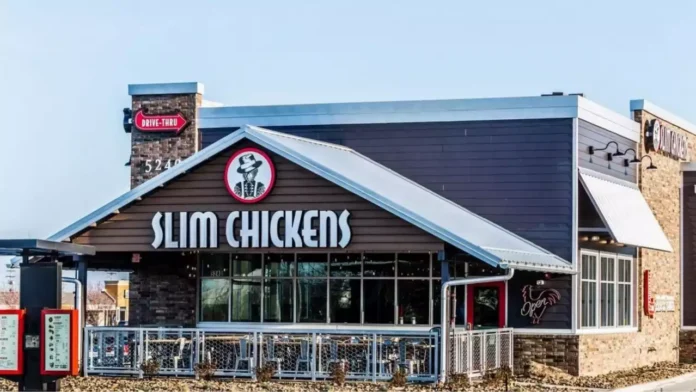
Slim Chickens has inked a fresh multi-unit agreement with Slims Southern Boys, a seasoned franchise operator, aiming to broaden its footprint across Alabama and Georgia in the United States.
The deal will lead to the launch of four or more Slim Chickens establishments spanning Russell, Coweta, Carroll, and Troup counties.
This initiative aligns with the broader expansion strategy of the American fast-casual restaurant chain.
The company presently runs over 265 establishments in both the US and the UK, with over 1,200 agreements already in the pipeline.
Led by Johnny Griggs, Slims Southern Boys brings a 35-year track record of owning and operating various businesses, including 11 convenience stores, two Culver’s, and 15 Firehouse Subs across Alabama and Georgia.
The franchisee is set to debut its first Slim Chickens venue in Russell County by early 2025.
Slim Chickens is renowned for its selection of 17 house-made dipping sauces, providing customers with a diverse array of flavor profiles to choose from.
The brand’s menu features an array of options including chicken tenders, fresh salads, sandwiches, chicken and waffles, chicken wings, and distinctive side items.
Additionally, Slim Chickens has experienced a 70% increase in restaurant growth over the past three years and has undergone significant expansion over the last five years.
The company is also aiming to penetrate various markets across the US, such as Ohio, Illinois, Pennsylvania, Virginia, New York, and Massachusetts, in addition to international markets spanning Europe, Asia, and beyond.
Jackie Lobdell, Vice President of Franchise Development at Slim Chickens, expressed, “Slims Southern Boys is the perfect operator to extend Slims’ presence across Alabama and Georgia.”
“Their extensive experience in the restaurant industry, managing and owning multi-unit locations in Alabama, equips them with the skills necessary to expand Slims in their market.”
“Our team is excited to partner with Slims Southern Boys, celebrating their growth and success, and eagerly anticipate witnessing their dedication to service, quality food, and community flourish in the years ahead.”
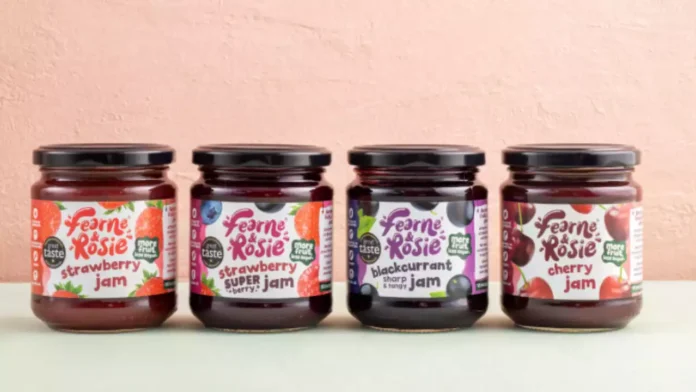
Fearne & Rosie, a UK-based better-for-you jam start-up, aims to achieve a revenue of around £5 million ($6.2 million) by the end of its 2026 fiscal year.
Founder Rachel Kettlewell stated that Fearne & Rosie is on track to achieve a 150% year-on-year growth in revenue for the company’s latest full financial year, which concludes at the end of the month.
Kettlewell, who established the business in 2019, refrained from disclosing a specific figure for the anticipated sales in its 2023/24 financial year, which is scheduled to conclude next week.
However, she anticipates revenue of approximately £2 million in the upcoming 2024/25 fiscal year, starting in May, followed by an expected figure of around £5 million by the conclusion of the 2025/26 period.
“There’s a swiftly growing demographic of health-conscious customers, and they’re making decisions aligned with that ethos,” she remarked, expressing the company’s ambition to become the leading player in the UK’s market segment.
“Our products were initially aimed at children, but consumer research revealed that 40% of Fearne & Rosie customers are without children,” she explained.
Kettlewell mentioned that the company is revamping its packaging to cater to adults, aligning with the growing trend toward better-for-you options, particularly low-sugar choices.
“We anticipate the new packaging will significantly enhance our appeal to the secondary market. Our primary target audience is families, followed by health-conscious individuals, and then contemporary adults,” she explained.
“There are numerous micro- and macro-trends in the food industry that Fearne & Rosie can tap into. We’re compliant with HFSS regulations, meeting the demand for lower sugar products. Additionally, there’s a growing awareness of good health, with consumers seeking products rich in healthy fibers,” she elaborated.
Kettlewell announced the addition of a new flavor to the company’s super berries range in September. “I believe one of Fearne & Rosie’s strengths lies in bringing innovation to the category,” she remarked.
She pointed out that jam is a “particularly intriguing category” in the UK, especially when compared to products like honey and peanut butter. Fearne & Rosie, she noted, can draw inspiration from innovations within the latter segment.
“We’re emphasizing the diversification of usage occasions, demonstrating that jam isn’t limited to just being spread on toast. It can be utilized in a multitude of exciting ways,” she highlighted.
In April, the North Yorkshire-headquartered jam maker expanded its distribution across the UK by introducing its products into 407 Asda stores with two available SKUs. These are priced at £3.20 for a 310-gram jar.
The company aims to ramp up growth across various sales channels, including expanding its wholesale options. Presently, its UK retail clientele includes outlets such as Ocado and Waitrose in Yorkshire.
Kettlewell mentioned that the company will also be entering The Co-op starting from May 20th.
The company has secured its inaugural export agreement in Dubai with the online grocer Spinneys, encompassing all five flavors: strawberry, raspberry, blackcurrant, cherry, and “Superberry,” a blend of the first three.
Ireland is also in the pipeline, scheduled for September. Fearne & Rosie will prioritize this market, along with the UK and the UAE, for the next 12 months instead of venturing into new territories.
“Our main goal is to become one of the most beloved and trustworthy family brands, thus the UK is our main priority. Before we consider rolling out any further, we really need to test, learn, and ensure that everything is operating as we want it to within the UK,” she said.
Fearne & Rosie also provides products to 40 cafes at the UK broadcaster BBC and is set to enter Center Parcs holiday outlets in May.
“We aim to expand our distribution and enhance our product offerings to drive growth within retailers,” Kettlewell stated, emphasizing a goal to elevate the category’s premium status.
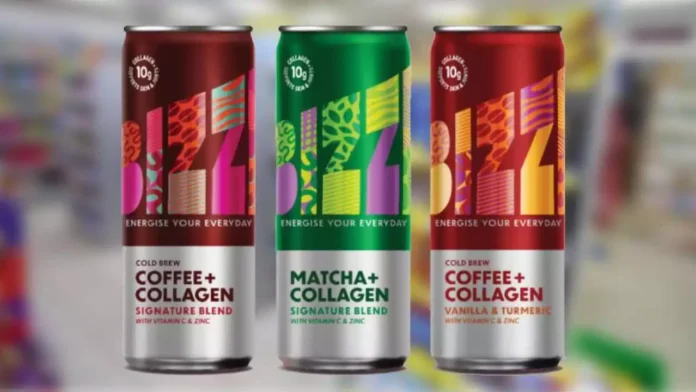
Bizzi, the new energy drink brand, has launched into the market featuring a range of ready-to-drink beverages blending caffeine and collagen.
The trio of options—Coffee + Collagen Signature Blend, Matcha + Collagen Signature Blend, and Coffee + Collagen Vanilla & Turmeric—are crafted to cater to health-conscious consumers in search of convenient wellness choices.
The Bizzi Coffee + Collagen Signature Blend showcases Ugandan cold-brew coffee infused with 10g of bovine collagen, complemented by 100% of the recommended daily allowance of vitamin C and zinc. This blend promotes joint, muscle, skin, and immune health.
Bizzi Coffee + Collagen with Vanilla & Turmeric maintains the same foundation but introduces vanilla and turmeric notes. With 10g of bovine collagen and 100% of the recommended daily allowance of vitamin C and zinc, this variant brings a fruity twist to the caffeine boost.
On the other hand, catering to those preferring a non-coffee alternative, the Matcha + Collagen Signature Blend blends Japanese ceremonial-grade matcha tea with 10g of bovine collagen, supplemented with 100% of the recommended daily allowance of vitamin C and zinc.
Ashley Verma, the creator of Bizzi, expressed, “I’m thrilled for individuals to try Bizzi’s cold brew and matcha RTDs and introduce this unique blend of collagen and coffee to the UK market. As a dedicated coffee enthusiast myself, I developed Bizzi not only to enhance busy lifestyles and promote wellness but also to deliver an exceptionally delicious taste.”
“I think Bizzi fits perfectly into what consumers have been searching for in the highly vibrant and ever-evolving UK drinks market.”
Bizzi’s collagen-infused drinks can be purchased on the company’s website and through Amazon.
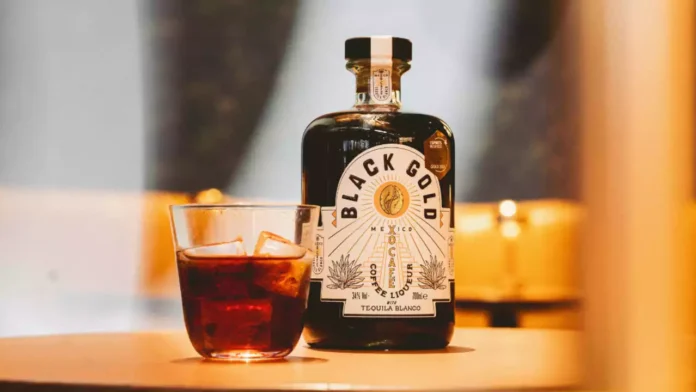
In an effort to bridge the void left by Patron XO Café’s exit from the UK market, LWC Drinks recently introduced Black Gold XO Café, a new coffee tequila brand.
The British independent drinks wholesaler endeavors to deliver a top-tier coffee tequila, promising consumers a comparable flavor profile and a “luxury experience” akin to the beloved Patron XO Café, all at the same price point. Bacardi-owned Patron XO Café ceased production in 2021 and was recently reintroduced in the US earlier this month.
According to LWC, Black Gold XO Café has been meticulously crafted, boasting a “silky smooth, rich, and full-bodied” profile with a subtle note of roasted coffee beans and a “warm, lingering finish.”
Now accessible at all LWC depots, this 34% ABV beverage comes adorned in a striking gold, amber, and black color scheme, exuding a “luxurious” visual appeal. The bottles are crafted from post-consumer recycled glass and boast a biodegradable closure along with a stopper fashioned from recycled materials.
Nic Ponticakis, spirits category manager at LWC Drinks, remarked, “Recognizing the clamor on social media and petitions urging the return of Café Patron, we understand the lingering void in the UK coffee tequila market. With Black Gold XO Café, we’re confident we’ve successfully addressed this demand.”
He further stated, “We’re also optimistic about the market’s direction, as CGA data indicates that sales of coffee-flavored spirits reached £20.9 million in the fourth quarter of 2022, marking a 54% increase compared to the same period in 2019. We anticipate this upward trend to persist.”
Sainsbury’s, the UK supermarket chain, saw a 6.8% increase in retail sales for the fiscal year 2023/2024, reaching £30.61 billion ($38.24 billion) compared with £28.66 billion in FY 2022/2023.
The company’s grocery sector spearheaded growth with a 9.4% increase in sales, while general merchandise saw a modest 1.2% rise. Conversely, clothing sales witnessed a 6.4% decline over the year.
The retailer’s underlying operating profit for the 52 weeks ending on March 2, 2024, stood at £966 million, reflecting a 4.3% increase from £926 million in the previous year.
This profit surge was fueled by the growth in grocery profits and cost savings, although it was partly counterbalanced by weaker General Merchandise profits.
Sainsbury’s underlying profit before tax reached £701 million for FY 2023/24, marking a marginal 1.6% increase from £690 million in 2022/2023.
However, the statutory profit before tax fell by 15.3% to £277 million from £327 million a year earlier.
The basic earnings per share for the fiscal year were 5.9p, marking a 34.4% decline from 9.0p in 2022/2023.
The company managed to reduce its net debt, including leases, by £790 million to £5,554 million through robust cash generation and a significant property transaction.
Sainsbury’s CEO Simon Roberts emphasized, “We committed to reinstating food as the focal point of Sainsbury’s, and we’ve delivered on that promise. Our food business is performing exceptionally well. With a winning blend of value and quality, we’re attracting customers from across our main competitors, leading to consistent growth in volume market share. More customers are choosing us for their regular shopping needs as well as special occasions.”
The retailer anticipates robust profit growth in the upcoming year and aims to surpass market growth in grocery volumes, capitalizing on profit expansion.
Augmented by additional contributions from Nectar and a steadfast performance from Argos, complemented by continuous cost-saving measures, Sainsbury’s foresees a retail underlying operating profit ranging from £1.01 billion to £1.060 billion, reflecting a growth of 5% to 10%.
After three Indian delicacies secured spots on the Taste Atlas global ranking of the top 10 rice puddings, the spotlight now shifts to the latest evaluation of the finest stews globally. In the most recent update for April 2024, the renowned food guide incorporated nine Indian culinary delights into its compilation of the top 50 stews. While this marks the most extensive representation from a single country, it’s worth noting that Taste Atlas encompasses various dishes under the category of “stews,” some of which may deviate from the traditional understanding of the term.
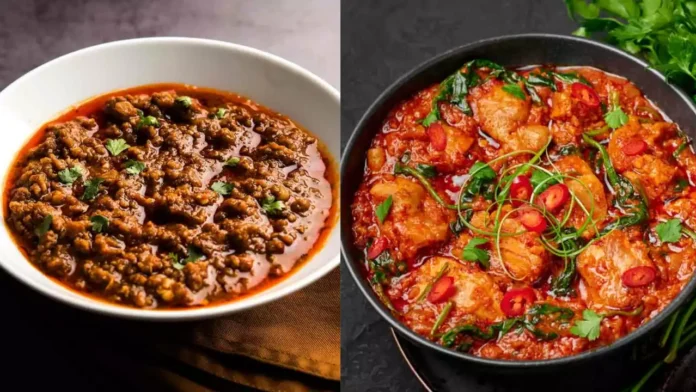
The beloved keema, a savory dish crafted from minced meat, has earned its place in the top 10, securing the 6th position. Another Indian culinary gem featured in the roster of ‘Best Stews In The World’ is chingri malai curry from Bengal, claiming the 18th spot. Additionally, korma, comprising meat or vegetables simmered with yogurt, water, or stock, has clinched the 22nd position.
Another entrant into the top 30 is vindaloo, a famed Goan specialty celebrated for its fiery flavor, claiming the 26th position. Among them is dal tadka, a comforting lentil-based dish seasoned with a fragrant tempering, securing the 30th spot. Saag paneer takes the 32nd rank, while shahi paneer follows closely at 34th. Maharashtra’s misal, often enjoyed with pav, earns the 38th position, with Indian dal (collectively) rounding off the list.
What’s remarkable about the list is its representation of dishes from various corners of the country – North, South, East, and West – highlighting the diverse spectrum of Indian cuisine. Leading the lineup is phanaeng curry from Thailand, crafted with dried red chili peppers, galangal, lemongrass, coriander root, shrimp paste, and an array of other aromatic ingredients.
Costa Coffee, the UK-based coffee chain, is bringing back its Iced Whipped Latte selection, now featuring fresh flavors just in time for the approaching summer season.
Starting May 2nd, the chain will introduce its range of refreshing beverages, featuring enticing flavors such as salted caramel and Choco, along with the latest addition of white chocolate.
The renowned Iced Whipped Latte selection, distinguished by its velvety whipped coffee topping, offers the option to personalize your drink with either dairy milk or a plant-based alternative.
According to the company, each flavor is elevated with a selection of sauces, such as creamy white chocolate, indulgent salted caramel, or a tempting chocolate option.
Costa Coffee’s summer menu isn’t just about the Iced Whipped Latte lineup; it also showcases a mix of both new and returning beverages.
Among them are the recently introduced Raspberry Mini-Bubble Frappe and Blueberry Burst Bubble Tea, alongside familiar favorites like the Blueberry Bubble Frappe, Tropical Mango Bubble Frappe, Mango Berry Bubble Tea, and an array of refreshing lemonades and refreshers.
Sandra Ferreira, the Beverage Innovation Director at Costa Coffee, expressed, “Responding to the desires of our customers, we’re thrilled to reintroduce our Iced Whipped Latte range, now featuring the delightful addition of white chocolate flavor.”
“We’re certain that our customers will rediscover their affection for this range once more. With anticipation building, we’re thrilled to reintroduce these iconic drinks just in time for the sunny days ahead,” stated Ferreira confidently.
In February, the coffee chain broadened its selection by introducing a new menu for Spring 2024, featuring the revival of the popular Kit Kat-themed drinks range.
The Spring lineup featured the Kit Kat Frappé, Kit Kat Mocha, and Kit Kat Hot Chocolate, each garnished with Light Whip and Kit Kat morsels.
A recent study published this week in the peer-reviewed journal Science Advances pinpointed some of the major brands responsible for plastic pollution across six continents.
The researchers, employing a team of over 100,000 volunteers, documented over 1.8 million pieces of plastic waste. Within the study, 28,570 brand names were identified on plastic debris collected from various locations, spanning beaches, rivers, and parks across 84 countries.
They discovered that the leading five companies accounted for 24% of the branded plastic, while a total of 56 companies were accountable for more than 50% of the branded plastic.
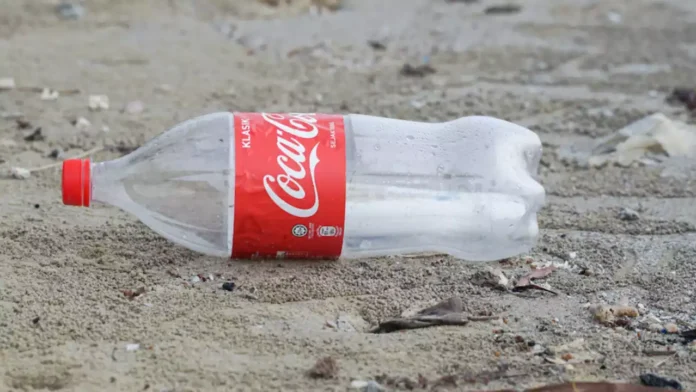
As per the research, thirteen companies have contributed at least 1% of the total branded plastic seen in the audit events. Each of the 13 businesses manufactures tobacco, beverage, or food products. The Coca-Cola Company, the world’s largest corporation, was accountable for 11%, which was significantly higher than any other company.
Following Coca-Cola in the top ten plastic polluters were other F&B giants such as PepsiCo, Nestlé, Danone, Bakhresa Group, Unilever, Wings, Mayora Indah, Mondelēz, Mars, and Salim Group. PepsiCo accounted for 5% of the identified plastic goods, while Nestlé and Danone each contributed 3% with their products.
The report emphasized, “It’s crucial to acknowledge that the contributions of the top companies could be underestimated due to unattributed brands and numerous unbranded items.” This statement was made in light of the fact that over 50% of the plastic waste discovered was unbranded.
Food and beverage products “tend to have a shorter duration of use before disposal, including a higher percent of single-use items,” according to the researchers.
The report additionally pointed out that “food and beverage products are more likely to be consumed on-the-go” compared to household and retail products, which are “more commonly consumed within buildings, reducing the likelihood of escaping materials management infrastructure and leaking into the environment.”
The researchers indicated that the findings imply a need for a “paradigm shift” in how companies report their plastic production. They emphasized that whether voluntarily or mandated by governments or international agreements, such reporting can effectively address the issue. They urged producer brand managers and policymakers to prioritize solutions aimed at reducing plastic production.
The study reached the conclusion that to tackle global plastic pollution effectively, corporate producers of plastic waste should take several key actions. These include phasing out nonessential and avoidable single-use products, adopting safe and sustainable product designs to reduce global demand for new items while enhancing reusability, repairability, and recyclability. Additionally, investing in non-plastic alternatives with superior safety and environmental profiles is essential. Lastly, supporting alternative distribution models, like refill-reuse systems, can significantly reduce pollution.
Nestlé provided a statement saying, “Over the past five years, we have reduced our use of new (virgin) plastic by 14.9%. Since initiating our voluntary commitments to tackle plastic waste five years ago, we have notably surpassed the industry average in reducing virgin plastic usage and enhancing recyclability, as per the latest report from the Ellen Macarthur Foundation.”
The statement continued, “We are in Ottawa this week for the UN Treaty discussions and we support a globally enforceable legal regulation on plastic waste. Nestlé has over 220 initiatives aimed at creating efficient garbage collection, sorting, and recycling programmes throughout North America, South America, Asia, Europe, and Africa. Our efforts to maintain packaging materials out of the environment and within the circular economy will not stop.
A representative from Coca-Cola’s UK division conveyed, “We prioritize minimizing the environmental impact of every beverage we offer, actively striving to decrease our reliance on plastic packaging. Our ambitious objective is to retrieve and recycle a bottle or can for each one sold by 2030. Furthermore, we endorse well-structured ‘Deposit Return Schemes’ throughout Europe, recognizing their potential to facilitate the return of our packaging.”
Danone also issued a statement, expressing, “Packaging plays a crucial role in delivering convenient, high-quality food and beverages to people worldwide while maintaining the integrity and safety of the contents. Across the entire Danone family of companies, we are firmly committed to initiatives aimed at curbing plastic waste by advancing recycling and reuse efforts. We remain dedicated to reducing our own plastic footprint, achieving an 8% reduction in plastic usage between 2018 and 2023, amounting to 62,000 tons, and enhancing the recyclability of our packaging (currently at 84% recyclable, reusable, or compostable).”
Danone echoed the sentiments expressed by both the researchers and Nestlé, underscoring the necessity of collaborative action. The dairy company stated, “While we persist in supporting and advocating for enhanced collection and recycling systems to facilitate consumer recycling, it’s imperative to address systemic obstacles hindering plastic waste reduction. These challenges include the underdevelopment of reuse, collection, and recycling infrastructures, as well as the limited availability of recycled materials. Therefore, Danone has been a staunch advocate for an ambitious and binding UN Global Plastic Treaty, which presents a significant opportunity to catalyze and expedite progress toward circularity in plastics.”
Domino’s Pizza, the American multinational pizza restaurant chain, has introduced a fresh program called ‘You Tip, We Tip’, designed to incentivize customers who tip their delivery drivers.
Customers showing appreciation to their delivery drivers with online tips will be rewarded with a $3 discount on their next online delivery purchase. This promotion kicks off on April 29th.
However, this promotion exclusively applies to customers who tip $3 or more.
The ‘You Tip, We Tip’ campaign is valid only when ordering through Domino’s channels.
In July 2023, Domino’s inked a deal with Uber, enabling US customers to place orders via its platforms Uber Eats and Postmates.
With this new initiative, Domino’s takes the lead as the first quick-service restaurant to enable customers to tip their drivers.
Kate Trumbull, Domino’s senior vice president and chief brand officer, expressed, “Domino’s drivers have been dedicated to delivering hot, delicious pizzas since 1960, and we appreciate customers tipping them for their exceptional service since day one.”
“Nowadays, tip screens seem to pop up everywhere you go. The expectation to tip is tangible, even without any additional service. Thus, we’ve chosen to change the narrative and express our gratitude by tipping customers in return.”
Supporting its delivery drivers is one of the key focuses of this promotion.
Domino’s has encountered difficulties in maintaining adequate levels of labor, especially within its driver workforce. This tipping incentive is a component of a larger initiative aimed at enhancing employee support and retention.
Domino’s has been actively creating tools to improve its management of the workforce.
In late 2023, the company disclosed intentions to unveil a new labor tool, as reported by Nation’s Restaurant News. This tool is set to complement an existing forecasting tool, aiming to enhance scheduling and flexibility for its employees.
We use cookies to ensure that we give you the best experience on our website. If you continue to use this site we will assume that you are happy with it.