On Thursday, the Food Safety and Standards Authority of India (FSSAI) stated that it is currently collecting samples of Nestle’s Cerelac baby cereals from various regions across India. This action follows a global report alleging an increase in the sugar content of the product.
“We are in the process of gathering samples of Nestle’s Cerelac baby cereals from various regions of the country. The entire procedure is expected to span 15-20 days,” shared G Kamala Vardhana Rao, CEO of the Food Safety and Standards Authority (FSSAI), during an Assocham event on food fortification.
FSSAI operates as a statutory body within the jurisdiction of the Ministry of Health and Family Welfare.
The decision was made in response to concerns voiced by the consumer affairs ministry as well as the National Commission for Protection of Child Rights (NCPCR) following the publication of a global report by Swiss non-governmental organisation Public Eye.
The global report alleges that Nestle marketed baby products with higher sugar content in less developed regions of South Asia, such as India, as well as in Africa and Latin American countries, in contrast to its practices in European markets.
Nonetheless, Nestle India asserts its unwavering commitment to compliance, affirming that it has decreased the added sugar content in its baby food products by up to 30% across various variants over the last five years.
Earlier, at the Assocham event, the CEO of FSSAI highlighted the importance of food fortification for human health and called for fortification beyond rice to include millets and other alternative foods.
He added that FMCG firms have introduced various millet-based products in recent years and can continue to broaden the range of nutritious foods available in the country.
The CEO also took the opportunity to unveil an Assocham knowledge report titled “Fortifying India’s Future: The Importance of Food Fortification and Nutrition.”
LT Foods Global Branded Business CEO Vivek Chandra, Shariqua Yunus from the World Food Programme, Fortify Health CEO Tony Senanyake, and Farm to Fork Solutions CEO Umesh Kamble also shared insights on food fortification.
Pallav Bihani, the Chief Executive Officer of Boldfit, expressed excitement about the partnership with Royal Challengers Bengaluru, stating, “We are delighted to become the official fitness equipment partner of RCB.”
“We, at Boldfit, are ardent supporters of RCB, and it was a natural decision to collaborate with the team we’ve supported and respected from the beginning. We’re thrilled to introduce our exclusive RCB collection, which we believe fans nationwide will proudly showcase,” he elaborated.
Established in 2019, Boldfit is a Bengaluru-based startup offering products across various categories including yoga, nutrition, health, and wellness.
The company plans to provide complimentary fitness equipment for both RCB players and fans, crafted to elevate their training routines and enhance performance both on and off the field.
Nestle, the largest packaged food company globally, stated that commodity prices are encountering unparalleled challenges in both coffee and cocoa, with prices reaching all-time highs amid a continuous upward rally.
The producer of Maggi noodles, Nescafe coffee, and KitKat chocolate wafer bars anticipates a rise in milk prices owing to the expected harsh summer conditions.
The FMCG major stated that cereals and grains are experiencing a structural cost increase supported by MSP.
Nestle India revealed plans to establish a joint venture company with Dr. Reddy’s, with the latter group holding a 51% stake and Nestlé India owning the remaining 49%.
The joint venture is anticipated to commence operations in the second quarter of the fiscal year 2024-25.
Nestle India will retain the right to enhance its shareholding up to 60% after six years at a Fair Market Value. Dr. Reddy’s commitment includes maintaining a minimum 40% shareholding even after Nestle exercises its call option.
Furthermore, Nestle is poised to introduce Nespresso in India by the end of 2024. Following the approved launch of Nespresso in the country, the company plans to roll out its products, including machines and capsules, by the end of the same year.
Nestle India reported a larger-than-expected gain in quarterly profit on Thursday, boosted by higher product prices as well as demand for its packaged food goods.
Nestle’s Indian arm posted a net profit of 9.34 billion rupees ($112.03 million) for the three months that ended March 31, compared to 7.37 billion rupees a year earlier.
The Kerala government is considering putting an end to the ‘dry days’ tradition observed in the state on the first day of each month, during which the sale of alcohol is strictly prohibited.
Discussions on this matter took place during a meeting of departmental secretaries chaired by the chief secretary last month. At the meeting, concerns were raised about the negative impact of ‘dry days’ on tourism. Officials highlighted that this practice might be deterring Kerala from being chosen as a venue for national and international conferences. Recommendations have been requested from the tourism secretary on this issue.
Further discussions are underway about auctioning off various beverage outlets and encouraging the establishment of micro wineries. The potential for crafting beverages such as masala blended wines will be looked into. The agricultural department secretary has been tasked with drafting recommendations. Horticulture and other types of wine production will be encouraged in order to increase revenue.
Additionally, support will be provided for the production of alcoholic beverages used in baking cakes.
Furthermore, discussions are underway regarding the feasibility of leasing out retail liquor stores.
These measures are expected to enhance government revenues. Likewise, regulations pertaining to the labeling of alcohol for export will be reviewed, considering both national and international viewpoints.
Hindustan Unilever (HUL), a prominent FMCG manufacturer, anticipates a gradual increase in overall demand without any imminent price hikes in the near future, according to CFO Ritesh Tiwari.
Additionally, he noted that the collective demand for fast-moving consumer goods (FMCG) from rural areas, which had been dwindling, has begun to show sequential growth and is poised to gain further momentum in the upcoming quarter.
Tiwari expressed optimism, stating, “We anticipate a gradual improvement in FMCG demand. Forecasts of above-normal monsoons and strengthening macroeconomic indicators bode well. We project a low single-digit decline in price growth for the first half of FY24,” during the earnings call.
Regarding prices, he mentioned that if commodity prices stay stable, they will “level off in the medium term and show positive growth at low single-digit rates by the conclusion of this fiscal year.”
He anticipates a slight uptick in prices in the low single digits for the latter half of FY 2024-25.
In the past few quarters, HUL has successfully implemented price adjustments across all its portfolios.
During the March quarter, HUL experienced a reduction in prices for its Home Care and Personal Care products due to deflationary pressures on commodity prices.
“We have successfully adjusted our prices to reflect the benefits of commodity deflation across all sectors of HUL,” he stated, emphasizing, “Furthermore, there is no justification for any further sequential price increases.”
If commodity prices remain unchanged, their year-on-year impact will persist.
“Which means in short term, we will see a slight decline in low single digit numbers in our UVG,” he said.
Regarding rural demand, Tiwari noted that it has begun to increase alongside a gradual recovery in demand.
Tiwari expressed optimism, stating, “With the favorable monsoon forecast and improving macroeconomic conditions, I am hopeful that this recovery will persist and gain further momentum.”
Meanwhile, HUL also announced top-level changes in the company, with BP Biddappa joining its Management Committee as Executive Director of Human Resources for South Asia.
It said, “Subject to shareholder approval, Biddappa will soon join the Board as a Whole Time Director.”
Anuradha Razdan, Executive Director, Human Resources, HUL, and Chief HR Officer, South Asia, will be named Unilever’s Global Chief Reward & Organisation Development Officer.
It further stated that this adjustment will take effect from June 1, 2024.
Foodtech giant Swiggy has secured approval from its shareholders for its initial public offering (IPO), as disclosed in regulatory filings. The company intends to raise up to INR 3,750 crore ($450 million) in fresh capital, alongside an offer-for-sale (OFS) component of up to INR 6,664 crore ($800 million), as per submissions to the Registrar of Companies.
Swiggy, yet to submit its IPO paperwork to India’s capital markets regulator, the Securities and Exchange Board of India (Sebi), aims to raise approximately INR 750 crore from anchor investors in a pre-IPO round. Swiggy’s IPO is part of a cohort of emerging startups preparing to go public this year, joining companies like omnichannel retailer Firstcry, Ola Electric, and Awfis, among others.
The filing stated that, “the shareholders of the company have granted consent and approval for the creation, issuance, offering, allocation, and/or transfer of its equity shares, amounting to a total of INR 37,501 million through a fresh issue of equity shares. Furthermore, certain existing shareholders are authorized to offer for sale equity shares up to an aggregate amount of INR 66,640 million.”
The special resolution was approved during an extraordinary general meeting (EGM) of Swiggy’s shareholders held on April 23.
Dutch-listed Prosus holds the largest stake in Swiggy at 33%, followed by SoftBank. Additional shareholders include Accel, Elevation Capital, Meituan, Norwest Venture Partners, Tencent, DST Global, Qatar Investment Authority, Coatue, Alpha Wave Global, Invesco, Hillhouse Capital Group, and GIC.
According to data platform Tracxn, the company’s cofounders Sriharsha Majety, Nandan Reddy, and Rahul Jaimini hold stakes of 4%, 1.6%, and 1.2%, respectively. Jaimini transitioned from his operational role in 2020 to join another venture, Pesto Tech.
During the April 23 EGM, Majety and Reddy were appointed as executive directors of the company. Majety assumed the role of managing director and group CEO, while Reddy was designated as a whole-time director and head of innovation.
Queries directed to a Swiggy spokesperson remained unanswered.
In the fiscal year that ended in March 2023, Swiggy reported revenue from operations of INR 8,265 crore, a 45% jump from FY22, while its net loss also increased 15% to INR 4,179 crore.
On April 9, Snackfax reported that Invesco, the lead investor in Swiggy’s $700 million round in January 2022, raised the company’s valuation to $12.7 billion. Additionally, Baron Capital, another investor in Swiggy, increased the company’s fair value to $12.1 billion in its recent accounting cycle.
In response to recent regulatory shifts in the health drinks sector, Hindustan Unilever (HUL) executed a notable rebranding strategy. The company has opted to relabel its ‘health food drinks’ category as ‘functional nutritional drinks’ (FND) and has removed the ‘health’ label from Horlicks.
During the earnings press conference on April 24, Ritesh Tiwari, the Chief Financial Officer of Hindustan Unilever, unveiled the change. Tiwari stressed that the transition to the FND label offers a more precise and transparent portrayal of the category. He underscored the untapped potential of the FND market, signaling substantial avenues for growth.
The Food Safety and Standards Authority of India (FSSAI) recently directed e-commerce platforms to refrain from classifying dairy, cereal, and malt-based beverages as ‘health drinks’ or ‘energy drinks‘ due to the lack of legal clarity. This measure aims to prevent consumer confusion and misleading advertising practices. The regulators are closely monitoring the health drinks category because the Food Safety and Standards Act 2006 lacks a definition of ‘health drinks’ effectively.
This move comes after concerns were raised about high sugar levels in beverages, as evidenced by Mondalez India-owned Bournvita‘s investigation a few days ago.
Recently, the government instructed ecommerce platforms that beverages such as Bournvita shouldn’t be termed as health drinks due to the absence of such categorization in the country’s food laws.
“All ecommerce companies/portals are hereby advised to remove drinks/beverages, including Bournvita, from the category of ‘health drinks’ on their sites/portals,” stated the commerce and industry ministry in a notification.
Last year, Cadbury Bournvita, India’s most popular malted drink, became embroiled in controversy when a social media influencer claimed that the beverage contained high sugar levels.
Mondelez India, the owner of Bournvita, issued a legal notice to the influencer, compelling them to remove the video. However, the situation escalated into a controversy, prompting the National Commission for Protection of Child Rights (NCPCR) to demand the brand to retract all deceptive packaging, advertising, and labels.
Earlier this month, the Food Safety and Standards Authority of India (FSSAI) directed ecommerce platforms to refrain from categorizing dairy-based or malt-based beverages as ‘health drinks’.
The latest directive from the commerce and industry ministry comes in response to an inquiry by NCPCR — a statutory body constituted under the Commission for Protection of Child Rights Act, 2005.
As per the notification dated April 10, it was noted that there is no definition for ‘health drink’ under the FSS Act 2006, rules, and regulations, as submitted by FSSAI and Mondelez India Food Pvt Ltd.
Nestle faced scrutiny when reports emerged that the brand includes sugar in infant milk sold in less affluent countries such as India, while not doing so in its main markets like Europe or the UK.
The revelation surfaced when “Public Eye,” a Swiss investigative organization, and IBFAN (International Baby Food Action Network), sent samples of the company’s baby food products marketed in Asia, Africa, and Latin America to a Belgian laboratory for analysis.
Subsequently, the Food Safety and Standards Authority of India (FSSAI) launched an investigation into the sugar content controversy surrounding Nestle’s Cerelac products.
In light of the allegations, FSSAI reiterated its dedication to conducting a comprehensive investigation into the matter. Should Nestle be found culpable, the regulatory authority has pledged to take rigorous measures against the brand. As part of the inquiry, a committee will be convened to scrutinize the particulars of the case.
In swift response to the controversy, the brand issued a clarification. ANI quoted the company stating, “We want to assure you that our Infant Cereal products are manufactured to provide the essential nutritional elements, including Protein, Carbohydrates, Vitamins, Minerals, Iron, etc., necessary for early childhood.”
“We maintain an unwavering commitment to the nutritional quality of our products, both now and in the future. Utilizing our expansive Global Research and Development network, we continuously strive to enhance the nutritional profile of our products,” the statement emphasized.
The government on Wednesday said that it will implement mandatory testing for ethylene oxide (ETO) contamination in its spice exports to Singapore and Hong Kong.
Ethylene oxide (ETO) is categorized as a carcinogenic pesticide.
The decision comes after Singapore and Hong Kong imposed bans on specific spices exported by Indian brands MDH and Everest, alleging the presence of ethylene oxide (ETO). The government further stated that spice shipments to other nations will also undergo rigorous scrutiny for ETO presence.
According to officials, the decision was made following meetings between the commerce and industry ministry, the Spices Board, and industry stakeholders.
Currently, spice exports to these nations require compulsory testing for Aflatoxin, a carcinogen, and Sudan I-IV, a dye. However, for consignments bound for the EU and the UK, mandatory ETO testing is in place. An official stated, “We have established protocols for obligatory ETO testing in spice shipments bound for Singapore and Hong Kong. Before implementing these mandatory standards, we engaged with the industry and sought the views of exporters.”
The action was initiated following Singapore’s allegation of the presence of ethylene oxide (ETO) exceeding permissible limits in Everest’s Fish Curry Masala, while Hong Kong claimed to have detected the pesticide in three MDH products—Madras Curry Powder, Mixed Masala Powder, and Sambhar Masala—alongside Everest’s Fish Curry Masala.
Lucky Chan has opened its third outlet, strategically positioned in the bustling Forum South Bangalore mall. This expansion stands as a pivotal moment for the brand, reinforcing its dedication to sharing its signature blend of comfort food and vibrant ambiance with an even broader audience.
From its inception, Lucky Chan has distinguished itself as a unique culinary hotspot. Leading the way with India’s inaugural Sushi Belt, the brand continually sets new standards for inventive Asian fare. Its expansive menu caters to a range of tastes, boasting a delightful selection of non-vegetarian, vegetarian, and vegan dishes. With a steadfast commitment to excellence and guest delight, Lucky Chan has firmly entrenched itself as a beloved fixture in the local dining scene.
Situated strategically within the Forum South Bangalore mall, this new outlet caters to a vibrant market teeming with culinary enthusiasts. Its prime location, combined with the brand’s dedication to delivering an unmatched dining experience, sets the stage for a flourishing Lucky Chan community. More than just meals, it aims to foster a sense of unity and culinary zeal among its patrons. Featuring a mix of beloved signature dishes and enticing new additions, the menu promises something for everyone to enjoy.
With a goal of opening 10 outlets across Bangalore by the end of the fiscal year, the brand is determined to extend its popularity to every district of the city.
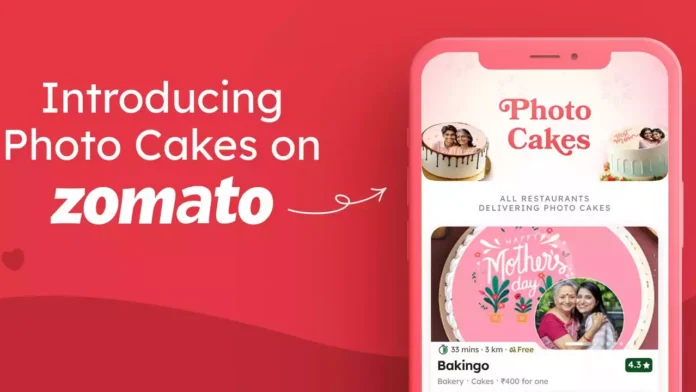
Continuing its streak of experiments, foodtech major Zomato is now testing a new feature in parts of Bengaluru and Mumbai that offers priority deliveries to users at an extra charge.
According to a report by Moneycontrol, a user in Bengaluru was offered food delivery within 16-21 minutes by paying an additional INR 29. The standard delivery time for the same order was displayed as 21 minutes on the app.
The company is charging an additional fee for priority deliveries from Zomato Gold users as well, according to the report.
Sources within the company have confirmed the development and stated that the offering is being piloted in select areas in Bengaluru and Mumbai.
The newly introduced feature will support the foodtech major’s profitability by providing an additional source of income.
This development comes at a time when Zomato has been experimenting with a range of new offerings to boost its revenue. Earlier this month, reports emerged that Zomato was piloting last-mile delivery services for office-goers within corporate parks. Last week, it also unveiled an all-electric “large order fleet” designed to handle orders for up to 50 people at once.
In addition, last month, it introduced a “Pure Veg Fleet,” complete with green uniforms and a new mode on its app catering to customers with 100% vegetarian dietary preferences. However, the decision to outfit the delivery executives of the new fleet with green uniforms was swiftly reversed after facing criticism online.
Just this week, the foodtech giant raised its platform fee by 25% to INR 5 per order in its key markets, including Delhi-NCR, Bengaluru, Mumbai, Hyderabad, and Lucknow. Adding to this adjustment, the company also made the decision to suspend its intercity delivery service, ‘Intercity Legends,’ as part of its efforts to streamline and consolidate operations.
Zomato’s shares have been soaring on the stock exchanges, fueled by the company’s robust financial performance and increasing profitability. In the quarter that ended in December 2023 (Q3 FY24), Zomato saw its net profit surge to INR 138 Cr, quadrupling from INR 36 Cr in the previous quarter.
In Q3 FY24, operating revenue increased to INR 3,288 crore from INR 2,848 crore in Q2 FY24.
Consequently, Zomato’s shares have surged by over 200% in the past 12 months and by nearly 50% on a year-to-date (YTD) basis.
Moreover, brokerages have expressed confidence in the foodtech giant. Kotak Institutional Equities maintained a ‘BUY’ rating on Zomato and raised the price target (PT) to INR 210, while Motilal Oswal identified the stock as one of its top picks.
Zomato’s shares concluded Wednesday’s (April 24) trading session down by 1.68% at INR 184.4 on the BSE.
We use cookies to ensure that we give you the best experience on our website. If you continue to use this site we will assume that you are happy with it.