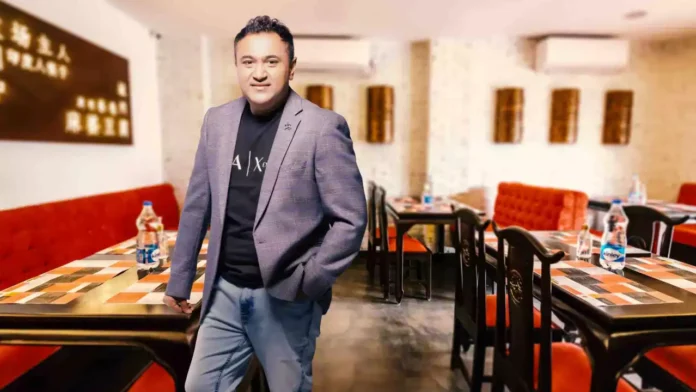
Akshay Bector, Chairman and Managing Director of Cremica Foods Ltd
Cremica Foods Ltd, known for its condiments such as mayonnaise and ketchup, is aiming to secure INR 500 crore, which would peg its valuation at INR 2,000 crore. According to Akshay Bector, chairman and managing director of Cremica Foods Ltd, the company plans to dilute 20-30 percent of its equity for this purpose.
The brand plans to use these funds to enhance operational efficiencies, support working capital needs, expand distribution channels, and venture into new product categories such as frozen items, specialty beverages, and pickles.
“We’re seeking funding to expedite the brand’s growth,” he stated.
Earlier, the brand had plans to raise funds during FY22-23, but the deal fell through due to regulatory issues.
In addition to this, the brand plans to adopt a combined retail and HoReCa strategy for all its businesses in the future.
He affirmed, “We’ll begin with HoReCa for the new product launches, with plans to expand to retail for all products eventually.”
In Una’s Cremica Foodpark, the brand currently operates one manufacturing unit for sauces. Recently, it acquired an additional unit to further expand its sauce manufacturing capabilities.
The brand plans to expand the recently acquired unit by installing an additional production line.
Declining to disclose the acquisition cost, he mentioned, “It was a modest sum. The unit was distressed, and we acquired it. Now, we’re in the process of expanding it. However, the overall equipment cost for the project is estimated to be around INR 20 crore.”
The ongoing expansion is expected to boost capacity by approximately 25-30 percent. Additionally, the new unit within the food park will cater to the brand’s needs for the upcoming year.
“Given the current dynamics in the condiment industry, the situation is somewhat fluid. Hence, we’re gearing up to handle potential increases in volume should opportunities arise. Consequently, some of the capacities we’re constructing are progressing slightly ahead of schedule,” he elaborated.
Presently, the brand’s processing facilities cover an area of 20 acres, encompassing a building space of 300,000 square feet.
This financial year, the brand intends to broaden its distribution network, scaling up from 400 distributors and 20,000 retail touchpoints to 700 distributors and 40,000 retail touchpoints.
“Our goal is to expand our reach to 200,000 retail touchpoints within the next three years,” he stated.
Despite aiming for INR 450 crore in FY 23-24, the brand achieved a revenue of INR 340 crore.
“Our margins have seen a 5-6 percent improvement. However, the revenue growth has been subdued due to a significant decline in HoReCa industry sales. We anticipate slight growth in business this fiscal year, but the substantial downturn in the food service industry has affected our sales. Nevertheless, with the sector showing rapid recovery, the future looks promising for both revenue and profits,” he elaborated.
This fiscal year, the brand expects to achieve an EBITDA of 15-20 percent, based on an expectation of reaching a turnover of INR 400 crore.
“Currently, our B2B operations constitute 15 to 20 percent of our total business, with the remainder being branded products. Meanwhile, HoReCa contributes to 70 percent of our total revenue,” he explained.
The brand remains optimistic about launching an IPO within the next two years.
“We’re steadfast in our IPO plans as margins have notably improved, and we’re committed to upholding our guidance on bottom lines for both this year and the next,” he concluded.
Vedant Fashions, the parent company of Manyavar, has reported a 6.3 percent increase in its combined net earnings, amounting to INR 115.79 crore for the fourth quarter (Q4) that ended in March 2024.
According to the BSE filing, its operational revenue in Q4 FY24 rose to INR 363.15 crore from INR 355.06 crore in Q4 FY23.
In Q3 FY24, the company’s total expenses increased to INR 239.35 crore, up from INR 209.61 crore in the same quarter of the previous fiscal year.
Brookfield Asset Management is planning to list its luxury hotel chain, The Leela Palaces, Hotels & Resorts, and is in talks with bankers for the process, according to people familiar with the matter.
Brookfield had committed to investing over ‘1,500 crore in the hotel chain following its initial deal, which involved an investment of ‘4,500 crore. This represented the largest-ever foreign investment in the Indian hospitality sector.
The Canada-based asset manager chose not to comment on the development.
The Leela’s portfolio presently comprises 13 hotels, both owned and managed.
India’s hospitality sector has experienced a significant rebound following the Covid-19 pandemic, with listed entities like the Tata Group-backed Indian Hotels Company posting record-breaking figures.
Reflecting the trend of increasing demand for premium experiences, luxury operators have been thriving. For instance, approximately 80% of the new deals in India now focus on the luxury and premium segments for Marriott International, a departure from the situation before the pandemic.
In 2023, hotel investments in India surged to $401 million, marking a fourfold increase compared to 2022. According to data provided by JLL, the first quarter of the calendar year 2024 witnessed an 80% year-on-year increase in deals, amounting to $78 million.
JLL reports that 2023 marked the highest number of assets traded in the past decade, with high-net-worth individuals driving most of the transactional activity. The year also witnessed a record number of signings and openings, with 25,176 keys signed and 12,647 keys opened. Additionally, there was a significant increase in greenfield projects, totaling 13,600 keys, compared to 8,000 keys in 2022.
Apeejay Surrendra Park Hotels launched its ‘920-crore initial public offering on February 5 of this year. Additionally, Juniper Hotels, jointly promoted by the Saraf Group and Hyatt Hotels Corporation, made its debut on stock exchanges in the same month. Juniper, the largest owner of Hyatt-affiliated hotels in India with 1,836 keys, is co-owned by Saraf Hotels and Two Seas Holdings, an affiliate of Hyatt Hotels Corp.
In the fast-paced world of restaurant management, streamlining processes and embracing technology can make or break success. Kumar Kushang, the Co-Founder of SupplyNote, sits at the forefront of this revolution, offering digital solutions to digitize supply chains and procurement processes for restaurants. In a recent interview, he shared insights into SupplyNote’s role in reshaping the industry landscape and navigating the evolving demands of modern consumers. And talks about the company roadmap for Q2 with focus on credit for restaurants.
According to Kushang, SupplyNote’s mission is clear: to help restaurants digitize their supply chains and procurement processes. Kushang emphasized that they provide an end-to-end digital procurement stack, integrating seamlessly with various POS systems. This integration automates inventory management and streamlines ordering processes, offering efficiency and convenience to restaurant owners.
The impact of SupplyNote’s services extends beyond mere digitization. They assist both emerging and established brands in optimizing their supply chains, scaling faster, and standardizing sourcing practices. For growth-oriented brands, Supply Note becomes a strategic partner, enabling them to convert capital expenditure into operational expenditure, facilitating rapid scalability.
“We had a fantastic year last year and expect to do the same this year. We anticipate outstanding performance in the current quarter, with much greater enthusiasm in the next quarters. Our revenue has increased by 150% year on year, resulting in considerable bottom-line gains. We intend to achieve pack-level profitability in Q2 and estimate total annual revenue of roughly INR 150 to 160 crores,” he stated.
Talking about the company’s performance, Kushang anticipated a substantial portion of company’s revenue to come from commerce business, with a focus on expanding internationally, particularly in the Middle East market.
“The global food rush offers exciting prospects, and we’re looking into joint ventures to capitalise on them. I believe this is going to be a huge quarter for us.”
So far, SupplyNote has serviced over 7,000 restaurants in India. They successfully began next-day delivery last year.
“And now we’re expanding this service to other locations this year, with Bombay and Bangalore being our top concentrations. Last year there were a lot of NCR firms. We have some huge brands operating on our stack, such as Cure Foods, Biryani by Kilo, Nationals Ice Cream, Bakingo, and many large coffee companies as well. And other classics, such as Bombay Canteen and Leopold Café,” he said.
The Procurement Software Market is crucial for businesses today. It provides tools to automate and improve procurement and supply chain tasks. This market offers various software solutions to help organizations manage vendor relationships, streamline purchasing, and control costs more effectively.
According to a MarketResearch study, the market is projected to grow significantly, reaching a value of about USD 17.6 billion by 2032, up from USD 7.8 billion in 2022, with a growth rate of 8.7% annually from 2023 to 2032.
With this, Kushang credits technology for the remarkable growth of the food industry, with revenues soaring despite challenges from the COVID-19 pandemic.
“When I started this firm in 2015, the hospitality & food service industry had revenues of roughly $58 billion. Fast forward to present, and the industry has grown to around $80 billion in revenue. That’s a $20 billion increase in just six years, excluding the impact of the epidemic. Notably, digital procurement has grown faster than the sector as a whole. “Previously nonexistent, it now accounts for ~6 to 8% of total procurement expenditure,” he stated.
According to him, this shift reflects a significant transformation in how traditional businesses operate, as they recognize the importance of diversifying supply chains and minimizing reliance on traditional suppliers.
This shift has been accelerated by factors like the rise of online food delivery platforms and the need for streamlined supply chain management. Online platforms like Zomato and Swiggy have reshaped the role of point-of-sale (POS) systems. While POS systems were previously used primarily for queue management and monitoring, they now play a crucial role in reconciling online and offline sales, analyzing customer behavior, and improving overall operational efficiency, he said.
“The restaurant industry has evolved, largely due to the influence of the next generation. So, many young entrepreneurs are on board. They see huge value in their own website, QR ordering, takeout orders and online delivery platforms, which are also used as brand building exercises. This surge is evident during the last two years. That is something I have witnessed directly,” he shared.
Kushang highlighted the government’s 45-day payment rule and the importance of credit in B2B procurement. Traditional credit models face recovery challenges, hindering digital channels’ adoption. SupplyNote addresses this by using a data-driven approach for credit assessment and partnering with financial institutions to offer accessible credit to restaurant owners.
“It’s not an issue to charge for a line of credit. The recuperation process is the issue, and it presents a significant obstacle. And that calls for a lot of relationship-building and ongoing presence. Distributor networks have acted in this manner over the years,” he said.
Traditional distributors have established personal connections and local presence, enabling efficient credit recovery through designated individuals. In contrast, digital channels often lack these relationships and local insights, leading to reliance on unsecured credit and discounts to compete, resulting in unsustainable business models, he elaborated.
Kushang further explained that this approach has resulted in numerous companies operating in the red, with some even going out of business or being acquired. For instance, Zomato relies on its online ordering channel to recover capital, which can sour relationships with restaurants by tying up their revenue capital. These challenges highlight the need for innovative solutions to address credit issues in the B2B procurement space.
“In contrast, there are a few players, including us, who are actively exploring additional solutions to tackle this challenge. At SupplyNote, we’re leveraging our SaaS system to implement interventions at various levels,” he said.
By gaining complete visibility into clients’ wallets through POS systems and understanding their inventory and purchase patterns, SupplyNote can develop credit scoring mechanisms. These mechanisms enable traditional NBFCs and banks to provide loans with confidence, leveraging their existing infrastructure for recovery.
“Through initiatives like MSME escalations and ongoing innovation, we’re building a robust recovery stack that benefits both businesses and financial institutions, ultimately creating a sustainable ecosystem for credit in B2B procurement,” he said.
Further talking about the challenges faced by the restaurant industry in adopting new practices, Kushang feels that the stakeholders, with their unique cash flow dynamics, have not shown significant enthusiasm for these initiatives. They tend to avoid excessive paperwork and prefer to defer such processes, posing a challenge across the board.
“This is our third attempt at tackling this challenge. However, we now approach it with greater confidence, thanks to our increased understanding of our customers, facilitated by our integrated software stack. We acknowledge that determining whom to lend to based solely on data can be challenging. While banks rely heavily on KYC and understand the entrepreneur, we’ve refined our approach by focusing on the last few transactions to determine creditworthiness,” he informs.
SupplyNote’s process is streamlined, requiring only a few clicks and minimal documentation, as they already possess the necessary KYC information and transaction patterns. By doubling down on this approach and emphasizing factors like credit limit, tenure, and recovery timelines, the company aims to mitigate risks and reduce friction for both parties involved.
“We are optimistic that these efforts will lead to fewer defaults and a smoother lending process overall,” he said.
Analyzing the resurgence of offline dining experiences and their impact on the food market, Kushang emphasized the significance of offline presence in building brand trust and enhancing the overall consumer experience. He highlighted SupplyNote’s adaptability to both offline and online models, emphasizing the company’s commitment to facilitating procurement regardless of the sales channel.
“Firstly, the increased mix of offline revenue stabilizes the current revenue pie, which I believe is beneficial for most restaurant brands as it adds a tangible aspect to the brand’s equation. This tangible presence enhances trust among consumers, which is vital for online orders. Therefore, I strongly believe that the offline presence contributes significantly to the overall brand trust,” he said.
Kushang noted that irrespective of the business model, whether offline, online, or a blend of both, their value proposition lies in supply chain management.
“No matter how they operate, we support companies with forecasting, procurement, culinary operations, and decision-making. Being able to maintain our values means that a stronger brand is better for us. Still, things might not be looking good for companies who rely just on internet data and don’t have full wallet visibility. Revenue streams and customer comprehension may provide challenges for them.”
“Most businesses focus on revenue sources and base their models on specific channels. From a technological standpoint, I believe it’s advantageous. Scalability might pose challenges without the right technological solutions, but comprehensive intervention is essential. I agree with the importance of a 360-degree approach,” he elaborated.
Overall, Supply Note’s innovative approach to digitizing restaurant supply chains underscores the transformative potential of technology in the food industry. With their comprehensive suite of services, they are poised to drive efficiency, profitability, and growth for restaurants across the globe.
IndiaMART InterMESH, a B2B marketplace, reported an over 78% increase in its consolidated net profit for the quarter ended March 31, 2024 (Q4 FY24), reaching INR 99.6 Cr from INR 55.8 Cr in the year-ago quarter.
Quarterly, there was a 23% increase in profit from INR 81.9 Cr.
During the quarter under review, operating revenue surged by 17% to INR 314.7 Cr from INR 268.8 Cr in Q4 FY23.
Total expenses during the quarter in question increased by 13% year-on-year and 4% QoQ to INR 241.2 Cr.
IndiaMART reported collections of INR 465 Cr from customers for Q4 FY24. Additionally, it recorded 24 Mn unique business enquiries in the quarter, marking a 14% increase YoY. Moreover, the number of supplier storefronts grew by 5% YoY to reach 7.9 Mn, while paying suppliers increased by 3K to 214K during the quarter.
As of March 31, 2024, the company reported deferred revenue of INR 1,440 Cr, reflecting a 24% year-on-year growth.
In the fiscal year 2023-24 (FY24), the B2B marketplace saw its consolidated net profit climb by almost 18% to INR 334 Cr from INR 283.8 Cr in FY23. Additionally, its operating revenue for FY24 reached INR 1,196.8 Cr, marking a growth of over 21% from INR 985.4 Cr in FY23.
The company’s board also sanctioned a dividend of INR 20 per share for the fiscal year 2023-24 (FY24).
Reflecting on the financial performance for the quarter and the fiscal year ending March 2024, Dinesh Agarwal, CEO of IndiaMART, stated, “We have concluded the financial year with consistent growth in revenue, deferred revenue, profits, and cash flows. Our priority continues to be empowering more businesses to thrive online by delivering exceptional products and customer experiences… We are confident in maintaining sustained profitable growth, especially with the increasing adoption of the internet among businesses.”
IndiaMART unveiled its financial results post-market closure. The company’s shares concluded yesterday’s trading session 0.88% higher at INR 2,648.20 on the BSE.
FirstCry, a kids-focused omnichannel retailer, has made slight changes in the way it plans to utilize the capital raised from the fresh issuance of shares as part of its initial public offering (IPO), according to the unicorn’s updated DRHP filed with the Securities and Exchange Board of India.
The IPO offering, consisting of fresh shares valued at INR 1,816 Cr and an offer-for-sale (OFS) component of 5.4 Cr equity shares, remains consistent with the previous DRHP filed by the unicorn.
The company now plans to allocate the largest portion of the proceeds, totaling INR 388.2 Cr, for investment in its subsidiary Digital Age Retail, which is into multi-brand retailing and operates FirstCry’s online platform and mobile application.
Out of the INR 388.2 Cr, GlobalBees, the parent company of FirstCry, intends to allocate INR 222.2 Cr for the establishment of new modern stores under the FirstCry brand and other company brands. Additionally, INR 166 Cr will be directed towards lease payments for existing stores owned and managed by Digital Age.
According to the company’s previous DRHP, FirstCry had proposed to utilize INR 648 Cr from the IPO proceeds for the establishment of modern stores and warehouses, as well as for lease payments for existing stores.
Nevertheless, the investment strategy for overseas expansion, totaling INR 155.6 Cr, remains unaltered. The startup will continue to allocate INR 83 Cr for establishing new warehouses in Saudi Arabia, along with INR 72.6 Cr for setting up modern stores in the country. However, specific details regarding the number of stores and warehouses planned for establishment were not provided.
Another investment that has experienced a minor adjustment from its previous IPO documents is directed towards its subsidiary Globalbees Brands’ acquisition of additional stake in the company’s step-down subsidiaries. The company will now invest INR 173.59 Cr, compared to the previously stated INR 170.5 Cr in the earlier DRHP.
It will allocate INR 150 Cr towards investment in sales and marketing initiatives, marking a 50% increase from the previously earmarked INR 100 Cr as per the earlier DRHP. Concurrently, INR 57.6 Cr will be allocated for technology and data science expenses.
Additionally, the company will designate INR 140.7 Cr for establishing new modern stores and warehouses for its brand ‘BabyHug’. Under the BabyHug brand, FirstCry offers a range of products including clothing, baby gear, nursery items, diapering essentials, toys, and more, catering to the needs of babies.
As stated in the DRHP, the remaining IPO proceeds will be utilized to finance inorganic growth initiatives and other corporate purposes.
It’s worth noting that the startup resubmitted its DRHP following SEBI’s queries regarding the key metrics disclosed by FirstCry in its initial draft documents.
In the updated DRHP, the unicorn also revealed its financial figures for the first nine months of FY24. The omnichannel retailer recorded a net loss of INR 278.2 Cr for the nine-month period ending December 2023, with revenue totaling INR 4,814 Cr during the same duration.
Following years of negotiations, the Godrej family announced a family settlement. In this arrangement, Adi Godrej and Nadir Godrej will take charge of the listed companies in the group, while Jamshyd Godrej and Nyrika Holkar will be responsible for overseeing Godrej Enterprises, which includes Godrej & Boyce and its affiliates.
In a statement released late on Tuesday, the group expressed, “The realignment has been achieved with respect and consideration to uphold harmony and to more closely align ownership, recognizing the diverse visions among the members of the Godrej family. This will enhance strategic direction, focus, agility, and expedite the creation of long-term value for shareholders and all stakeholders involved.”
The listed companies within the Godrej Industries Group (GIG) include Godrej Industries, Godrej Consumer Products, Godrej Properties, Godrej Agrovet, and Astec Lifesciences. Nadir Godrej will serve as the chairperson, with Pirojsha Godrej appointed as the Executive Vice Chairperson of GIG. Pirojsha Godrej is slated to take over as Chairperson from Nadir Godrej in August 2026.
Jamshyd Godrej, serving as the chairperson and managing director of Godrej Enterprises, along with Nyrika Holkar, the executive director, will oversee a diverse portfolio of businesses covering Aerospace, Aviation, Defence, Engines and Motors, Energy, Security, Building Materials, Construction, Green Building Consulting, EPC Services, Intralogistics, Healthcare Equipment, Durables, Furniture, Interior Design, Architectural Fittings, IT, Software, and Infrastructure Solutions.
“In our journey since 1897, Godrej & Boyce has consistently pursued the noble purpose of nation-building. With the establishment of this forward-looking family agreement, we are poised to pursue our growth objectives with greater clarity and concentrate on harnessing our fundamental strengths in cutting-edge engineering and design-driven innovation across our robust array of strategic, consumer, and emerging ventures,” remarked Jamshyd Godrej in the statement.
As per the statement, both factions remain dedicated to utilizing the Godrej brand and are steadfast in their resolve to nurture and enhance their common legacy.
Nadir Godrej stated that the group will persist in advancing its legacy with precision and adaptability.
In a filing with the exchange, Godrej Industries explained the settlement’s rationale, stating, “The third and fourth generations of the Family Branches hold differing interests and perspectives regarding various aspects such as strategic direction, growth, and governance across the entities of the Godrej Group, including the company. To maintain mutual respect, goodwill, harmony, and to address the diverse expectations and strategic preferences of each Family Branch, an arrangement settlement has been agreed upon…”
Following the settlement, Adi Godrej and Nadir Godrej members will extend an open offer to the public shareholders of Astec Lifesciences due to an indirect change in Astec’s shareholding.
The settlement explicitly states that shares held by either group in any of the companies will not be transferred to competitors without prior permission from the other group.
The Coca-Cola Company, a leading global player in soft drinks, has generated USD 290 million (around INR 2,420 crore) from India in the March quarter through the strategic move of refranchising its bottling operations to its established bottlers in three significant markets. Earlier this year, in January, HCCB, Coca-Cola’s bottling arm in India, announced its decision to divest company-owned bottling operations in Rajasthan, Bihar, Northeast India, and certain regions of West Bengal to its current bottlers.
Coca-Cola stated in its earnings statement on Tuesday that during the three months ended March 29, 2024, the company reported net gains of USD 599 million and USD 293 million from the refranchising of its bottling operations in the Philippines and specific territories in India, respectively.
India stands as the fifth largest market for the Atlanta-based company, renowned for its brands such as Coca-Cola, Coke, Thums UP, Maaza, Sprite, Fanta, Minute Maid, and more, operating extensively within the nation.
Hindustan Coca-Cola Beverages (HCCB) had delegated bottling operations to its current partners in these three regions: Kandhari Global Beverages, SLMG Beverages, and Moon Beverages, respectively.
This move was part of Coca-Cola’s strategy to divest assets on a global scale, transitioning regional operations to local partners through franchising.
In the India market, the Coca-Cola company reported “growth” in unit case volume during the first quarter of 2024, according to its statement.
However, in the Asia Pacific market zone, which includes India, unit case volume has declined by 2 percent in the first quarter due to decreases in water, sports drinks, coffee, and tea.
“Growth in the Philippines, India, Vietnam, and Indonesia outpaced declines in China,” the report highlighted.
On a global scale, the Coca-Cola company experienced a 1 percent increase in unit case volume in 2024.
Unit case volume refers to the quantity of unit cases of company beverages sold directly or indirectly by the company and its bottling partners to customers.
In the March quarter, The Coca-Cola Company’s net revenue increased by 2.9 percent to USD 11.3 billion, with organic revenues (non-GAAP) experiencing an 11 percent growth.
James Quincey, Chairman and CEO of Coca-Cola Company, expressed, “We are pleased with our performance in early 2024, achieving growth in volume, revenue, and earnings despite a challenging environment.”
Regarding the outlook, the company anticipates achieving organic revenue (non-GAAP) growth of 8-9 percent. This projection comprises robust operational performance aligning with the company’s long-term growth model, as well as the expected pricing effects in several markets grappling with significant inflation.
Packaged mineral water brand Mount Kailash has appointed Pallavi Saha as its new chief executive officer.
Saha recently took on the role to support the company’s growth and expansion efforts.
Bringing more than twenty years of expertise, she has worked with renowned brands such as Apple, Whirlpool, and Chobani. She is also recognised for her leadership in developing new product lines in the United States, Europe, as well as the Asia-Pacific region.
Leveraging her profound grasp of global trends and their impact on industries, she will be instrumental in shaping the company’s strategies to synchronize with India’s anticipated economic growth.
Commenting on the same, Saha remarked, “I am deeply honored to be affiliated with a brand that epitomizes the noble cause of elevating humanity. Continuing this esteemed legacy is both humbling and motivating.”
She will spearhead Mount Kailash’s strategic expansion initiatives, starting with the Delhi National Capital Region (NCR). The company aims to fortify its foothold in this area initially and envisions extending its influence gradually across the northern region. This ensures that a wider audience can avail themselves of its premium hydration solutions.
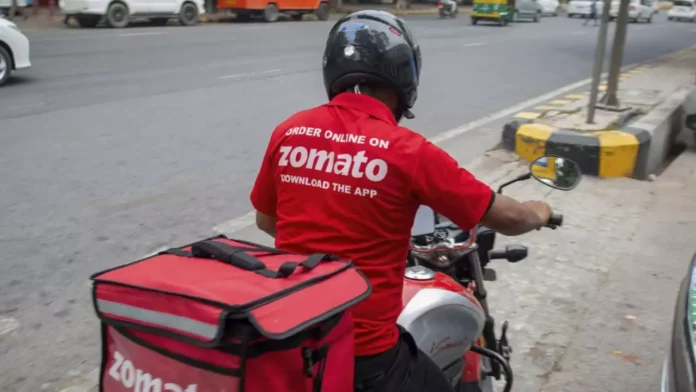
Zomato, the foodtech giant, has received approval from the Indonesian government to liquidate its subsidiary in the Southeast Asian country.
According to a regulatory filing, the company announced that it obtained the final decree from Indonesia’s Ministry of Law on April 29, approving the liquidation of Zomato Media Indonesia.
The company stated, “We would like to inform that on April 29, 2024, the Indonesian Ministry of Law issued a final decree letter approving the liquidation of PT. Zomato Media Indonesia (“PTZMI”), a wholly owned subsidiary of Zomato Limited with effect from March 21, 2024.”
The approval comes a year after the company initiated the liquidation process of the subsidiary. According to Zomato’s red herring prospectus filed in July 2021, the Indonesian arm did not have active business operations.
In the same document, Zomato stated that PTZMI’s net worth stood at approximately INR 1.5 Cr, constituting a mere 0.01% of its overall net worth.
The foodtech giant ventured into Indonesia nearly a decade ago, in 2013. Nonetheless, it seems to have struggled to gain traction in the country. The decisive setback occurred in late-2020 amidst the Covid-19 pandemic, prompting the company to terminate all its employees in Indonesia.
In February last year, the company officially ceased its operations in Indonesia. Subsequently, its websites for the country began displaying a message confirming the shutdown of its foodtech services there.
This development comes at a time when Zomato has been actively dissolving its foreign subsidiaries. In February this year, it announced the completion of the liquidation of its subsidiaries in Vietnam and the Czech Republic.
In January, the company also initiated the process of dissolving its Polish step-down subsidiary, Gastronauci SP. Z.O.O. Since 2021, it has liquidated subsidiaries in Slovakia, the Czech Republic, the US, the UK, Ireland, New Zealand, Canada, Australia, Jordan, and Qatar.
While the exact reason remains undisclosed, the spree of shutdowns likely originated from the company’s efforts to streamline operations and close unprofitable subsidiaries that contributed little to its overall revenue.
Nevertheless, it has intensified its focus on its presence in India and has introduced numerous new offerings and pilot programs in the past month. These include an all-electric large order fleet, a ‘Pure Veg’ fleet, last-mile delivery services for office workers within corporate parks, as well as priority deliveries in select areas of Bengaluru and Mumbai.
In terms of finances, the foodtech giant maintains robust profit and revenue growth. Zomato saw its net profit increase more than fourfold sequentially to INR 138 Cr in the quarter ending December 2023. Similarly, its operating revenue surged over 15% quarter-on-quarter (QoQ) to INR 3,288 Cr in Q3 FY24.
Building on this momentum, Zomato’s shares have soared almost 200% in the last 12 months, with the stock rising over 56% year-to-date (YTD). Recently, Goldman Sachs raised its price target (PT) on the stock by more than 40%, increasing it from INR 170 to INR 240.
Zomato’s shares closed yesterday’s trading session down by 0.28% at INR 193.05 on the BSE.
We use cookies to ensure that we give you the best experience on our website. If you continue to use this site we will assume that you are happy with it.