In a strategic maneuver geared towards broadening its market footprint, SLN Coffee has named Sahib Singh as its new CEO.
Bringing a wealth of experience from his tenure at Hindustan Unilever Limited (HUL) and Unilever, Sahib Singh is poised to harness his expertise in bolstering SLN Coffee’s market position and propelling its brand Levista to new heights. Levista’s robust presence in South India, alongside its burgeoning popularity in the Far East and Middle East, highlights its significant global potential.
Sahib Singh expressed his enthusiasm upon joining the SLN Coffee Group, stating, “I am thrilled to be part of the team. Levista has already made remarkable strides in the market, and I am eager to propel this momentum forward. My aim is to guide SLN Coffee Group towards achieving multinational success, emphasizing world-class operations, harnessing the brand’s strengths, and venturing into new avenues for growth.”
SLN Coffee’s decision to appoint Sahib Singh underscores its commitment to harnessing top-tier talent to drive its ambitious growth. SLN Coffee directors, SLN Sathappan and SLN Vishwanath, emphasized Singh’s industry knowledge, strategic acumen, and leadership qualities, citing him as the ideal candidate to lead Levista into its next phase of expansion.
Capitalizing on Levista’s innovative product offerings and cafes, SLN Coffee endeavors to solidify its position as a market leader in shaping the future of coffee consumption.
Amul, the renowned Indian dairy company, will sponsor the USA and South Africa teams in the upcoming T20 World Cup in June, as announced by the cricket boards of the respective nations on Thursday.
The USA will make their tournament debut as co-hosts beginning June 1. Additionally, parts of the event, including the semifinals and finals, will be held in the Caribbean.
Amul has been chosen the Lead Arm Sponsor for both the USA as well as South African squads. On June 1, the United States and Canada will play their World Cup opener.
The Indian dairy giant, known for its global presence, has previously sponsored cricket teams such as the Netherlands, South Africa, and Afghanistan. Additionally, Amul milk is now available for sale in the USA.
The USA recently secured a 4-0 victory over Canada in a bilateral series.
“Inspired by the goodness of Amul Milk, we believe the USA Cricket team will triumph in winning hearts and accolades worldwide. Our heartfelt wishes go out to the team for the forthcoming ICC T20 World Cup 2024,” stated Jayen Mehta, Managing Director of Amul.
Regarding the partnership with the Proteas, he remarked, “Amul has previously collaborated with the South Africa team during the 2019 ODI series and the 2023 ICC Cricket World Cup. We take pride in deepening our bond with the South Africa men’s cricket team and extend our best wishes to them for the T20 World Cup.”
South Africa’s World Cup campaign will kick off with a match against Sri Lanka on June 3rd.
“Amul, one of India’s most iconic and trusted dairy brands, will proudly adorn the primary sleeve of the Proteas’ World Cup playing kit,” stated Cricket South Africa.
Ayush Baid and Riddhima Khandelwal, Co-Founders, Ellementry
Ellementry, a leading brand in homeware and gifting with a dedication to sustainable living, has successfully closed its latest funding round spearheaded by She Capital. This infusion of capital aims to propel the company’s growth initiatives, enhancing its product portfolio, bolstering production capabilities, and expanding its market footprint both domestically in India and abroad.
Founded in 2018 by Ayush Baid and Riddhima Khandelwal, Ellementry swiftly rose to prominence as an innovator in the homeware sector. Their mission to craft top-tier products that seamlessly combine practicality with visual charm has earned them widespread praise. Utilizing in-house manufacturing techniques across a range of materials including terracotta, ceramic, wood, and papier mâché, the brand has garnered acclaim for its dedication to sustainability and designs that prioritize the needs of the consumer.
Ellementry operates through a combination of online and offline channels, boasting a presence in 16 stores across 13 Indian cities, as well as on various online platforms including Amazon, Tata Cliq, and Myntra. Since its establishment, the company has successfully processed over 400,000 orders and cultivated a customer base of over 250,000. Extending its reach to 12 countries across the USA, Europe, and the Middle East, Ellementry has set its sights on doubling its customer base within the next 12 months.
Ayush Baid, Founder and CEO of Ellementry, expressed, “We eagerly anticipate this partnership and the opportunities it presents. Our focus remains on innovation and crafting handcrafted homeware and gifting solutions for people to cherish and enjoy. We’re excited for more individuals to discover all that Ellementry has to offer.”
Anisha Singh, Partner at She Capital, remarked, “Ellementry’s commitment to design, functionality, and ethical standards resonates strongly with the increasing demand for conscious consumerism, especially among women. We believe Ellementry is poised to emerge as the premier choice for individuals seeking to cultivate elegant and sustainable living spaces.”
Looking ahead, Ellementry is set to introduce new products in the textile and home decor segments ahead of Diwali. Leveraging its in-house manufacturing units, the brand can seamlessly expand its product collection, which currently boasts over 1000 SKUs. Despite prevailing market challenges, Ellementry has achieved a double-digit growth percentage in the last financial year, demonstrating its resilience and potential for further expansion in India’s vibrant homeware retail sector.
The newly acquired funds will be directed towards expanding the team, enhancing technology, and introducing new product lines.
Kacholia expressed, “The F3 team is addressing a significant challenge for fresh fruit retailers by managing their sourcing logistics and improving their quality of life. Rohit and his team’s extensive knowledge in this field and their emphasis on unit economics convinced us to invest.”
“Our plans to grow rapidly in New Delhi/NCR are in line with our ambition of becoming the largest Fresh Fruits company in India. By year’s end, we hope to reach an annual recurring rate of INR 100 crore,” said Fresh From Farm Founder Rohit Nagdewani.
Fresh From Farm operates as a fresh fruit demand consolidation service. Presently, the brand delivers to over 300 locations daily, emphasizing waste reduction. F3 manages the entire operational process for retailers, encompassing procurement, handling, sorting, and distribution, thereby allowing them to concentrate on sales.
Inflection Point Ventures partner Vikram Ramasubramanian stated, “F3 bridges the gap between affordability & profitability by empowering retailers to market quality produce at fair prices through transparency and efficiency.”
Inflection Point Ventures is an angel investing platform that unites over 14,000 CXOs, HNIs, and professionals to collectively invest in startups. The platform has announced the introduction of Physis Capital, a $50 million category 2 Alternative Investment Fund, aimed at funding pre-Series A to Series B growth-stage startups.
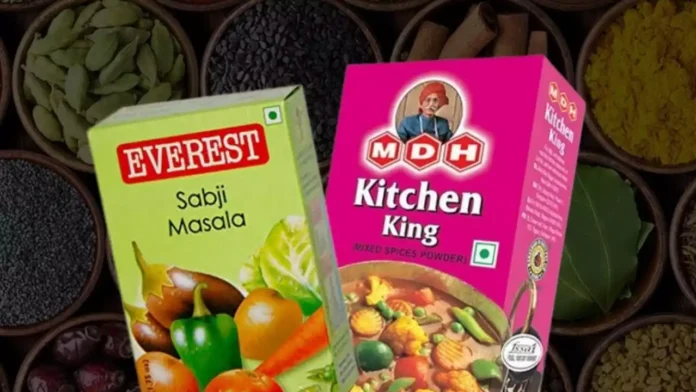
The ongoing controversy involving MDH and Everest spice companies has the potential to jeopardize over half of India’s spice shipments, as per a report. It underscores the urgent need for the country to address the quality issue.
As per the Global Trade Research Initiative (GTRI), an economic think tank, every day, new countries have been raising concerns about the quality of Indian spices.
The report also emphasized the necessity for immediate attention and action to uphold the reputation of India’s spice industry.
The report stated that with nearly USD 700 million worth of exports to crucial markets at risk, and potential losses escalating to over half of India’s total spice exports due to regulatory actions in numerous countries, the integrity and future of India’s spice trade are delicately balanced.
“Swift investigations and the prompt publication of findings are imperative to restore global confidence in Indian spices. Companies found to be in error must face immediate consequences,” it added.
Following the alleged detection of the carcinogenic chemical ethylene oxide in their products, popular Indian spice brands MDH and Everest faced bans on sales in Hong Kong and Singapore. This prompted a mandatory recall from store shelves.
The report highlighted that the primary infractions in these incidents were the discovery of salmonella contamination, a common bacterial source of foodborne illnesses, and ethylene oxide, a carcinogenic substance employed as a fumigating agent.
“If the European Union, which regularly rejects Indian spice shipments over quality concerns, takes similar action, this situation could exacerbate. A rejection across the EU could affect an extra USD 2.5 billion, raising the total potential loss to 58.8 percent of India’s global spice exports,” stated GTRI Co-Founder Ajit Srivastava.
Referring to specific reports, the GTRI indicated that the US, Hong Kong, Singapore, Australia, and now Male have all raised concerns about the quality of spices provided by prominent Indian companies such as MDH and Everest.
“In the fiscal year 2024, India exported spices worth approximately USD 692.5 million to these countries,” Srivastava emphasized, highlighting the high stakes involved.
“If China, guided by steps in Hong Kong & ASEAN based on Singapore’s precedents, decides to enact similar regulations, Indian spice exports may plummet dramatically. The potential consequences might harm exports worth USD 2.17 billion, accounting for 51.1% of India’s global spice exports,” he stated.
Srivastava remarked that thus far, Indian authorities have provided a lukewarm and predictable response.
After facing international criticism, both the Spices Board and the Food Safety and Standards Authority of India (FSSAI) initiated routine sampling. However, according to him, neither these nor any other government agencies have made clear statements regarding the quality of spices.
He expressed disappointment over the absence of transparent communication, particularly considering the extensive laws and protocols established for quality assurance. Despite the assertions of innocence by major companies such as MDH and Everest, their consistent rejections by international entities ought to have alerted both the Spices Board and FSSAI much earlier, he remarked.
He warned that if the quality of products from leading Indian firms is in doubt, it raises concerns about the integrity of spices in the Indian market as a whole.
According to the GTRI report, the current circumstances necessitate a fundamental change in India’s approach to food safety. Transparency, rigorous enforcement, and effective communication are deemed essential for reinstating and upholding the integrity of both its exports and domestic products.
It further emphasized the necessity for fundamental changes in the operations of agencies responsible for regulating quality.
Spices, which encompass dried portions of plants such as seeds, roots, bark, and fruits, are esteemed for their diverse flavors, fragrances, and preservative attributes. Popular examples comprise cloves, cinnamon, ginger, black pepper, cumin, and coriander. Not only do spices enrich taste and imbue dishes with vibrant hues, but they also occasionally mask unpleasant odors, thereby playing a pivotal role in culinary traditions worldwide.
During the fiscal year 2023-24, India’s spice exports reached a sum of USD 4.25 billion, representing a 12 percent slice of the worldwide spice export market.
India’s primary spice exports comprised chili powder leading the roster with USD 1.3 billion in exports, trailed by cumin at USD 550 million, turmeric at USD 220 million, cardamom at USD 130 million, mixed spices at USD 110 million, and spice oils and oleoresins at USD 1 billion.
Aside from cloves and cinnamon, other noteworthy exports were asafoetida, nutmeg and saffron.
India spent USD 1.5 billion on spices imports. The most popular imports were asafoetida ($110 million), coriander and cumin ($210 million), cinnamon and cassia ($270 million), nutmeg ($118 million), and spice oils as well as oleoresins ($354).
India’s main buyers were Bangladesh ($339), the US ($574), and China ($928), which imported spices valued at USD 574 million.
Additional notable purchasers comprised the UAE (USD 256 million), Thailand (USD 193 million), Malaysia (USD 147 million), Indonesia (USD 137 million), UK (USD 122 million), Australia (USD 63 million), Singapore (USD 50 million), and Hong Kong (USD 5.5 million).
The global spice trade reached a value of USD 35 billion in 2023, with China emerging as the leading exporter, boasting exports totaling USD 8 billion in the same year.
According to the GTRI, the top exports include pepper powder (USD 2.4 billion), turmeric, ginger, and fresh and dried garlic (USD 1.6 billion), coriander, as well as cumin seeds (USD 800 million).
Restaurant Brands International (RBI), a multinational fast food corporation, has reported a net income attributable to common shareholders of $230 million for the first quarter (Q1) of 2024, marking a 21.7% increase from $189 million in the same period of 2023.
In the first quarter of 2024, diluted earnings per share amounted to $0.72, compared to $0.61 in Q1 2023.
Revenue surged by 9.4%, reaching $1.74 billion in Q1 2024, up from $1.6 billion in the preceding year.
For the quarter ended on March 31, 2024, income from operations amounted to $544 million, marking a 21.7% increase compared to the $447 million recorded in the prior year. Additionally, adjusted earnings before interest, taxes, depreciation, and amortization (EBITDA) rose by 6.6%, reaching $627 million, up from $588 million.
The company’s presence extended as the consolidated restaurant count reached 31,113 by the end of the March 2024 quarter, a 3.9% increase from 29,956 a year earlier.
Comparable sales for the consolidated entity increased by 4.6% year-on-year, while system-wide sales for the consolidated group expanded by 8.1%.
Restaurant Brands International CEO Josh Kobza expressed pride in the diligent efforts of their teams and franchisees in delivering high-quality products, excellent service, and an attractive value proposition for guests consistently.
“Our performance mirrors their dedication and the robust groundwork we’ve laid, positioning us to advance ongoing enhancements in franchisee profitability and fulfill our long-term vision.”
RBI provided long-term guidance spanning from 2024 to 2028, projecting over 3% growth in comparable sales, over 5% net restaurant expansion, and over 8% growth in system-wide sales.
Additionally, the company revealed its investment in the Burger King brand, allocating an extra $300 million to the Long-Term Royal Reset program in the US.
This investment is part of the broader “Reclaim the Flame” strategy, which commenced with a $250 million investment in September 2022 focused on modernizing Burger King restaurants, encompassing technology installations and kitchen equipment upgrades.
The new funding for Royal Reset 2.0 comes after Burger King’s announcement in January 2024 of its acquisition of Carrols Restaurant Group for $1 billion.
The acquisition entails a renovation initiative for 600 Burger King restaurants, aimed at modernizing their appearance. RBI intends to transition nearly all of these establishments to smaller, local operators through refranchising between 2026 and 2030.
DFM Foods, known for its popular salty snacks brands Crax and Natkhat, has expanded its product range beyond INR 5 packs for the first time. Vipul Prakash, the chief executive of DFM Foods, mentioned that the company is now emphasizing larger pack sizes priced at INR 10 and INR 20 to align with changing consumer preferences.
He said, “This shift towards premiumization is leading us to explore opportunities in larger retail outlets and fast delivery channels.”
Companies in the packaged consumer goods sector are progressively focusing on premiumizing their product portfolios to meet the growing demand in urban areas, driven by both quick-commerce and modern trade channels. Additionally, larger pack sizes are proving to be more profitable due to the rising costs associated with packaging.
Prakash stated that DFM has ramped up its emphasis on operational efficiencies and broadened the reach of its snacking brands, extending beyond the North into recent ventures in the East. Plans are underway to extend this expansion to other territories such as the West and South.
A year ago, DFM Foods withdrew from the stock exchanges, sparking speculation that Advent International, the private equity firm with a stake of over 96% in the snack maker, might be considering an exit from the company.
Regarding the speculation of a possible divestment by Advent, Prakash emphasized that his sole focus is on growing the company’s top and bottom lines. He stated, “We are developing a business that will be highly appealing to strategic buyers, perhaps within the next two to three years.”
Prakash, who previously held leadership roles at MakeMyTrip and PepsiCo, emphasized that the past year has seen increased focus on innovation and the introduction of new products.
According to business intelligence platform Tofler, DFM Foods reported revenues of over INR 500 crore for the financial year ending March 31, 2023.
Prakash emphasized that in FY25, DFM will prioritize innovation and distribution to bolster both its top and bottom lines.
Zomato, a leading player in the foodtech sector, has received a fresh penalty notice for Goods and Services Tax (GST) from Delhi’s sales tax officer, pertaining to fiscal 2018-19.
As per a regulatory filing to the stock exchanges, Zomato has been served with a demand order regarding the excess availment of input tax credit for the year 2018-19. This includes the imposition of applicable interest and penalty charges.
According to the filing, the company has been requested to settle an amount of INR 2,22,91,376 for GST, in addition to further charges for interest and penalties totaling INR 2,31,27,300.
In reply to the show cause notice, the company furnished explanations on all matters, substantiated by pertinent facts and documents. Nonetheless, it seems that these were not comprehensively taken into account by the authorities while issuing the order.
In its filing to the exchange on Thursday (May 1), Zomato stated, “The Company is confident in its ability to present a robust defense before the relevant appellate authority and anticipates no financial repercussions on the Company.”
This development comes days after Zomato received a GST notice of INR 11.8 Cr from the Gurugram GST authority.
Earlier this month, Zomato faced consecutive tax notices, one amounting to INR 23 Cr and the other to INR 92 Cr, from the Karnataka tax authority.
It’s worth noting that Zomato is presently encountering numerous tax-related hurdles. In March, the foodtech giant was served a GST penalty notice by Gujarat’s Deputy Commissioner of State Tax for the fiscal year 2018-19. Furthermore, in December of the previous year, Zomato received a show cause notice totaling INR 401.7 Cr from the Directorate General of GST Intelligence, Pune Zonal Unit.
Meanwhile, on April 20, Zomato obtained approval from the Indonesian government to dissolve its subsidiary in the Southeast Asian nation.
In terms of finances, the foodtech leader maintains robust profit and revenue expansion. Zomato saw its net profit soar more than fourfold sequentially to INR 138 Cr in the quarter ended December 2023. Similarly, its operating revenue surged over 15% quarter-on-quarter (QoQ) to INR 3,288 Cr in Q3 FY24.
Raksha Kothari & Vinay Kothari, Co-Founders, Go DESi
Go DESi, a burgeoning startup specializing in packaged Indian delicacies and sweets, has secured INR 41 crore (around $4.9 million) in a funding round spearheaded by Aavishkaar Capital.
The startup plans to utilize the new capital for expanding into new regions, broadening its range of products, and enhancing its operational capacity.
Founded in 2018 by siblings Vinay Kothari and Raksha Kothari, Go DESi aims to modernize traditional Indian treats and confectionery while simultaneously empowering women in rural areas of the country.
It asserts to have sold over 15 million units, with its products stocked in over 40,000 stores nationwide.
Vinay Kothari expressed, “The funding collaboration with Aavishkaar Capital will bolster Go DESi’s product range, expedite marketing efforts, swiftly expand our geographic reach, and broaden our distribution network. This investment validates Go DESi’s commitment to sustainability and will be instrumental in realizing our vision.”
He also mentioned that the startup maintains an omnichannel presence. In the southern states of India, the products are accessible through both online and offline channels, whereas in cities such as Mumbai and Delhi-NCR, Go DESi products are exclusively available through quick-commerce and online grocery applications.
Regarding the product lineup, he mentioned that the startup intends to expand its offerings within the sweets category.
Kothari stated that all products are exclusively manufactured by women, with plans to further increase female employment opportunities moving forward.
Divya Gupta, investment director at Aavishkaar, remarked, “The company has swiftly established a formidable brand and a resilient distribution network. We perceive the opportunity as highly substantial, and the Go DESi team possesses all the necessary elements to seize the ever-evolving confectionery market in India.”
Yum Brands saw a decline in quarterly global same-store sales, attributed to fluctuating demand for its KFC and Pizza Hut brands among inflation-wary consumers both in the United States and abroad.
As inflation lingers, consumers across the United States are showing a growing preference for value-driven dining options. This trend is prompting fast food chains to intensify their efforts in offering promotions, revamping store layouts, and enhancing ordering experiences.
Yum Brands saw a 3.7% decline in premarket trading as the parent company of Pizza Hut experienced its first decrease in total same-store sales in approximately three years, following in the footsteps of coffee giant Starbucks.
CEO David Gibbs expressed, “As anticipated, same-store sales faced pressure this quarter. However, we find encouragement in robust two-year same-store sales growth and the positive momentum as we conclude the quarter.”
According to LSEG data, Yum Brands’ total revenue for the first quarter ended March 31 decreased by nearly 3% to $1.60 billion, falling short of analysts’ estimates of $1.71 billion.
In the first quarter, the company experienced a 3% decline in worldwide same-store sales, contrary to analysts’ expectations of a 0.04% growth.
Despite the launch of KFC’s first loyalty program in the reported quarter, it didn’t succeed in boosting demand for the fast-food giant. Consumers persisted in seeking more economical options, such as meals prepared at home.
In contrast to these results, pizza chain Domino’s has thrived, benefiting from a revamped loyalty program that has retained consumer loyalty over the past two quarters.
Same-store sales at KFC restaurants globally declined by 2%, while Pizza Hut experienced a 7% drop in the same metric.
Taco Bell’s posted a 1% increase, falling short of estimates by 1.83%.
We use cookies to ensure that we give you the best experience on our website. If you continue to use this site we will assume that you are happy with it.