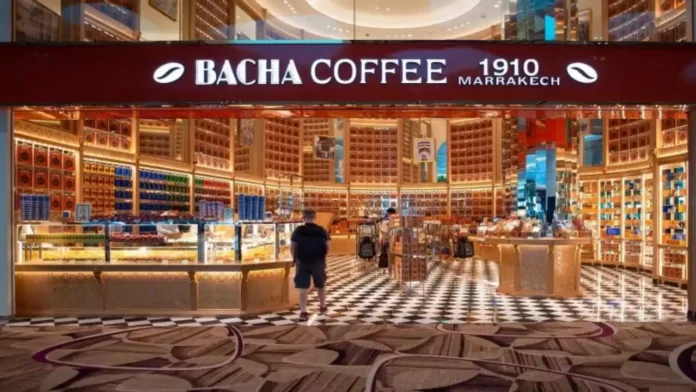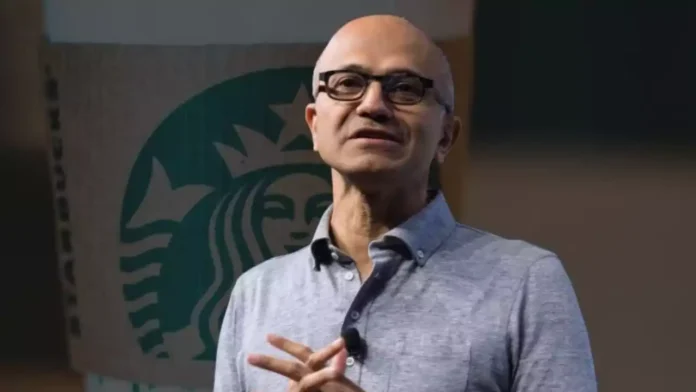
Ranjan expressed, “Our goal is to have over 100 McCafe locations by the year’s end, accelerating the growth of our McCafé presence and continuing to offer our customers delightful, satisfying experiences.”
The comments come on the sidelines of the opening of 50th McCafe.
“We’re thrilled to introduce our 50th McCafé, offering expertly crafted, delicious coffee in a cozy atmosphere at an affordable price. We’re pleased to see the growing popularity and preference for our McCafé offerings among our valued customers.”
The company emphasized McCafe’s ambition to solidify its leadership in the coffee market, maintaining a steadfast dedication to affordability.
Axis Capital, a brokerage firm, has initiated coverage of foodtech giant Zomato with a ‘buy’ rating, noting that the company provides a “compelling investment opportunity” to gain exposure to the country’s rapidly growing ecommerce market.
The brokerage has additionally established a price target (PT) of INR 254 for the stock, suggesting an upside of nearly 36% from its last close on Thursday (May 23).
The price also indicates an enterprise value-to-sales (EV/sales) ratio of 8.3X by June 2026. Axis stated that while the multiple isn’t low-cost, it’s fitting considering Zomato’s growth trajectory, execution, and rarity premium, particularly as it stands as the sole listed player with exposure to India’s broader ecommerce sector.
It’s important to highlight that Zomato achieved its fourth consecutive profitable quarter, reporting a net profit of INR 175 Cr in Q4 FY24, primarily driven by the significant expansion of its quick commerce business, Blinkit.
In March 2024, Blinkit achieved positive adjusted EBITDA. Furthermore, its gross order value (GOV) for Q4 witnessed a notable 97% year-on-year (YoY) and 14% quarter-on-quarter (QoQ) growth, amounting to INR 4,027 Cr.
Conversely, Zomato’s food delivery business experienced a decline in gross order value (GOV) on a quarter-on-quarter (QoQ) basis, dropping to INR 8,439 Cr for the quarter.
Despite the subdued growth in the food delivery sector, Axis anticipates Zomato’s market share in this segment to expand to 54% from the present 50%, leading to a compound annual growth rate (CAGR) of 16% in the sector’s gross order value (GOV) by FY30.
The brokerage observed that Zomato is unlikely to substantially raise the commission it charges restaurants and brands, as they may resist such increases. Nonetheless, Axis suggests that Zomato could boost its revenue through higher platform fees for users and increased advertising revenue from restaurants and brands, thereby bolstering the company’s growth and profitability.
Furthermore, the brokerage highlighted that the food delivery segment remains a significant untapped opportunity.
Regarding quick commerce, Axis forecasts that Blinkit’s gross order value (GOV) will achieve a compound annual growth rate (CAGR) of 38% between FY24 and FY30, reaching $10.5 billion.
The brokerage indicated that Blinkit’s dominant position in the segment is projected to be fortified through effective execution of rapid expansion, a broader range of products, and synergies between Hyperpure and Blinkit, among other factors.
In fact, the brokerage has placed its confidence in Zomato’s robust market dominance in both food delivery and quick commerce, even in the face of Swiggy‘s early advantage in both sectors.
“Analyzing Zomato and Swiggy across different strategic metrics reveals that Zomato’s market leadership in both crucial segments, despite Swiggy’s early advantage, stems from its effective execution,” stated Axis.
Presently, out of the 26 analysts covering Zomato, 22 hold a ‘buy’ or higher rating on the stock, with an average price target (PT) of INR 207.88.
Zomato’s shares closed today’s trading session approximately 0.9% higher at INR 187.15 on the BSE.
Arvind Fashions, a prominent player in the casual and denim sector,has reported a 39.09 percent increase in consolidated net profit to INR 39.67 crore for the March quarter. According to a regulatory filing, the company had posted a net profit of INR 28.52 crore for the January-March period a year ago.
In the last December quarter, Arvind Fashions sold its Sephora business to Reliance Retail. According to AFL, the profit from its continuing business stood at INR 25 crore, marking a 72 percent increase year-on-year.
During the quarter, AFL’s revenue from operations increased by 3.66 percent to INR 1,093.85 crore from INR 1,055.20 crore recorded a year earlier.
In the March quarter, AFL’s total expenses amounted to INR 1,053.26 crore, indicating a 2.19 percent increase.
The company’s total income, which includes revenue from other sources, reached INR 1,106.84 crore, up 3.55 percent in the March quarter.
During a meeting on Tuesday, the AFL board recommended a final dividend of INR 1.25 per equity share of INR 4 each for the fiscal year 2024.
AFL runs retail outlets for renowned global brands like Arrow, Tommy Hilfiger, Calvin Klein, and Flying Machine.
For the financial year ending March 31, 2024, AFL’s net profit surged by 56.31 percent to INR 134.74 crore.
During FY24, its revenue from operations increased by 4.65 percent to INR 4,259.12 crore.
Commenting on the results, MD & CEO Shailesh Chaturvedi stated, “FY24 has been a standout year, with sharper execution leading to improvements in all key financial metrics, despite a subdued market environment. Our continued focus on retail excellence resulted in a healthy 4 percent like-to-like (LTL) growth, contributing to a 120 basis points improvement in the EBITDA margin for the full year.”
Regarding the outlook, he stated, “Moving forward, we anticipate strong growth while maintaining a decisive focus on scaling our existing brands through innovative retail formats and accelerating our store network expansion, which will lead to further improved margins.”
On Tuesday, shares of Arvind Fashions Ltd closed at INR 491 on the BSE, rising by 4.5 percent.
Cigarettes-to-soap major ITC Ltd recorded a standalone net profit of INR 5,020.20 crore in the March 2024 quarter, indicating a 1.3 percent decrease year-on-year (YoY). This figure is slightly lower than the net profit of INR 5,086.86 crore reported in the same period last year. Additionally, on a sequential basis, the bottom line remained almost stagnant, comparing with INR 5,572.07 crore from the December 2023 quarter.
The company’s revenue from operations held steady at INR 17,571.72 crore in the fourth quarter of the financial year 2023-24, reflecting a 1.4 percent decrease year-on-year (YoY). This compares with a revenue of INR 17,506.08 crore in the same quarter of the previous financial year. Additionally, in the quarter ending on December 31, 2023, the company’s revenue reached INR 17,224 crore.
In the quarter, EBITDA stood at INR 6,162.6 crore, marking a 0.8 percent decline, with the EBITDA margin falling 70 basis points year-on-year to 37.2 percent. The company’s earnings were impacted by stagnant cigarette volumes and reduced FMCG margins.
The company has proposed a final dividend of INR 7.50 per share for the financial year ended on March 31, 2024, pending approval by the Members at the upcoming annual general meeting (AGM) scheduled for Friday, July 26, 2024. If approved, the final dividend will be distributed between July 29, 2024, and July 31, 2024.
Breaking down by segments, revenue from the cigarettes business saw a 7 percent year-on-year increase to INR 8,689 crore in the March 2024 quarter, compared to INR 8,092 crore in the corresponding quarter of the previous year. Similarly, the profit before tax (PBT) for the cigarettes business rose by 5 percent year-on-year to INR 5,157 crore in the preceding quarter.
The FMCG-others business recorded revenues of INR 5,308 crore in the fourth quarter, reflecting a 7 percent increase from INR 4,951 crore reported in the same quarter of the previous year. However, the profit before tax (PBT) for this segment declined by 5 percent to INR 480 crore.
Following the quarterly earnings, ITC shares remained largely unchanged on Thursday. The stock was observed at INR 445, a marginal increase of one percent, with a total market capitalization exceeding INR 5.52 lakh crore. This comes after the stock closed at INR 439.75 in the preceding trading session.
Virat Kohli-backed restaurant chain, One8 Commune, is planning to invest approximately INR 35 crore to more than double its outlets by FY25, as shared by Vartik Tihara, Co-Founder of One8 Commune.
At present, the brand operates in six cities – Bengaluru, Hyderabad, Pune, Delhi, Mumbai, and Kolkata – boasting nine outlets. Additionally, it intends to venture into international markets, with its inaugural outlet set to open in Dubai soon.
“Currently, we’re in the process of setting up eight outlets in cities such as Chennai, Indore, Jaipur, Mohali, Ludhiana, Delhi, Goa, and Hyderabad. Over the past two years, we’ve been consistently opening 3-4 new outlets annually,” he stated.
“By the end of FY24, we aim to inaugurate at least five outlets, followed by an additional five outlets by the end of FY25,” he elaborated.
On average, each One8 Commune outlet occupies a 5,000 sq ft area, with a corresponding capital expenditure ranging between INR 2.5-3 crore.
Additionally, by mid FY25, the brand plans to add more verticals, such as a café offering Virat Kohli’s merchandise.”We’re set to provide healthy smoothies, nutritious bowls, and high-protein diet options in the cafes,” he affirmed.
The bootstrapped brand has been experiencing a year-on-year growth of 14-15 percent. Moreover, each of its outlets reaches the breakeven point within two years of operation.
“We closed the previous fiscal year with INR 100 crore in revenue, and for the current fiscal year, we aim to double our revenue, reaching INR 200 crore,” he said.
Organized gold jewellery retailers are set to achieve a 17-19% year-on-year revenue growth in fiscal 2025, according to a CRISIL Ratings analysis of 54 gold jewellery retailers, which account for 32% of the organized jewellery sector revenue. This growth is driven by higher realizations stemming from elevated gold prices, while volume is expected to remain steady.
Retailers are expected to intensify marketing and promotional efforts this fiscal to counter the downturn in demand amidst escalating gold prices. Consequently, operating profitability might see a slight decline of 20-40 basis points year-on-year to 7.7-7.9%. Additionally, there could be an increase in working capital needs due to elevated inventory caused by the significant surge in gold prices and the establishment of new stores. However, it’s anticipated that credit profiles will remain steady.
The organized sector comprises just over one-third of the market, while the remaining portion is dominated by the highly fragmented unorganized sector.
The domestic gold price surged by 15% over fiscal year 2024, reaching INR 67,000 per 10 grams by the end of March 2024. It further rose to approximately INR 73,000 in April 2024, with gold maintaining its allure as a safe investment choice for both central banks worldwide and end consumers amidst geopolitical uncertainties.
Aditya Jhaver, Director at CRISIL Ratings, notes, “In addition to boosting branding and marketing spending, retailers are anticipated to provide increased discounts to customers while expanding their range of product designs to attract buyers in the face of elevated gold prices. We foresee a trend towards lower carat gold jewellery and a sustained promotion of gold exchange programs to bolster sales volume.” Consequently, the proportion of gold exchange schemes is expected to rise, constituting nearly a third of the total volume for most major retailers.
Furthermore, organized retailers are poised to further expand their market share at the expense of unorganized counterparts, buoyed by evolving consumer preferences and the extension of stores into Tier 1 and 2 cities, as well as beyond. Bolstered by robust balance sheets, the expansion of stores, predominantly by major jewelry retailers, has witnessed robust double-digit growth post-pandemic. However, the rate of store additions is anticipated to slow to 10-12% in fiscal 2025, reflecting the relatively stagnant volume.
The rise in gold prices will lead to the replenishment of gold inventory at a higher cost this fiscal year. Alongside the inventory required for new stores, this will result in increased working capital debt. The availability of bank funding for established gold jewellery retailers has improved in recent years, as seen in the steady gross bank credit to the sector, and this trend is expected to continue over the medium term.
According to Himank Sharma, Director at CRISIL Ratings, “Robust cash generation, stemming from healthy revenue growth and satisfactory profitability, will maintain the stable credit profiles of organized gold jewellery retailers, even in the face of anticipated increases in working capital borrowings. Debt indicators are projected to remain reassuring in fiscal 2025, showing only a slight moderation from the levels seen in fiscal 2024. The total outside liabilities to tangible net worth ratio and interest coverage ratios are expected to range between 1.0-1.1 times and 8.0-8.2 times, respectively.”
The sharp fluctuations in gold prices, shifts in government regulations and import duties concerning gold, along with changes in consumer sentiment, will require close monitoring.
N. Chandrasekaran, Chairman of Tata Consumer Products
Tata Consumer has finalized the merger of Tata Coffee and has made substantial strides in streamlining its international legal entities. Additionally, the integration of Tata Soulfull, NourishCo, and Tata SmartFoodz is underway, as highlighted by N. Chandrasekaran, Chairman of Tata Consumer Products, in the company’s 2023-24 annual report. These initiatives are poised to unleash value and enhance operational efficiencies.
Highlighting that the period of 2023-24 marked a significant milestone for Tata Consumer Products, he emphasized that innovation has been a key driver behind the company’s remarkable 5X growth in its India operations over the preceding three years.
Chandrasekaran stated, “In our endeavor to broaden our consumer base, we achieved notable advancements in expanding our sales and distribution network, now encompassing a total of four million outlets. This signifies a remarkable twofold surge compared to figures from 2020.”
Regarding the acquisitions of Capital Foods and Organic India by Tata Consumer in January of this year, Chandrasekaran remarked that both acquisitions significantly broaden the company’s potential market reach into adjacent sectors with high growth and high margins. “We are set to utilise their full potential by employing our robust distribution and sales network, multinational presence, robust backend operations, as well as cutting-edge R&D facilities.”
In January, the company announced its intention to acquire 100% equity shares of Capital Foods, the owner of well-known brands like Ching’s Secret and Smith & Jones, in a phased manner. Initially, 75% of the equity shareholding would be acquired upfront, with the remaining 25% to be acquired over the next three years.
It also announced the acquisition of Organic India for INR 1,900 crore in an all-cash deal.
Chandrasekaran highlighted that a notable achievement during the year was attaining a market capitalization of INR 1 lakh crore.
Tata Consumer reported a revenue of INR 15,206 crore, reflecting a growth of 10%, accompanied by an EBITDA margin of 15.3% for the year. The bottom-line growth was fueled by improved profitability and margins.
The newly acquired funds will be allocated towards expanding marketing efforts, increasing production capacity, and enhancing research and development for new products. The company aims to strengthen its brand presence, meet growing demand, and introduce new teas to its consumers.
Balkirat Singh, the Co-Founder and CEO of Freshleaf, expressed, “At Freshleaf, we are dedicated to revolutionizing the global tea landscape. Our collaboration with IPV underscores the potential we hold together. Our goal is to redefine the tea experience, melding tradition with innovation in every sip.” Singh, leveraging his expertise as a Chartered Accountant and former finance and sales executive, spearheads the company’s expansion and oversees strategic financial and sales initiatives.
Muneet Arora, Co-Founder and CMO, leads the marketing and product development endeavors. She remarked, “We are pushing the envelope with distinctive blends that captivate today’s consumer, offering convenience and unparalleled taste. We believe everyone should have access to premium tea at an affordable price, and we are dedicated to modernizing and enhancing the tea experience for all.”
Founded in 2022, Freshleaf offers a diverse range of flavors in both sparkling and traditional teas, catering to various tastes and preferences. With a strong offline presence, the company has reached over 550 stores across 40 cities in India. Additionally, some products incorporate health-enhancing elements like added vitamins and electrolytes, with prices starting from INR 130.
Vikram Ramasubramanian, Partner at Inflection Point Ventures, said, “Freshleaf perfectly embodies our mission to support innovative businesses focused on quality and health. Their unique approach to creating premium teas with health benefits offers us an exciting opportunity to invest in a startup poised to transform the tea industry. We are confident in Freshleaf’s commitment to promoting a culture of health, wellness, and exceptional taste.”
The startup is also branching out into modern retail and quick commerce, while making inroads into the UAE market. They have rolled out 18 unique products, including sparkling tea, and have increased their brand visibility through strategic marketing efforts like interactive tastings.
In 2023, the Indian tea market was valued at approximately INR 9,277 crores ($11.1 billion) and is projected to reach around INR 12,277 crores ($14.7 billion) by 2032, with an annual growth rate of 3.18%. On a global scale, the tea market was valued at about INR 41,355 crores ($49.53 billion) in 2023 and is expected to grow to around INR 82,094 crores ($98.29 billion) by 2033, with an estimated yearly growth rate of 7.09%.
The hospitality industry in India saw another year of steady growth in the performance during the January-March quarter of this year. This was largely propelled by a notable surge in the average daily rate (ADR) by 8.5% compared to the same period in 2023. Consequently, there was a robust growth of 11.4% in Revenue per Available Room (RevPAR), as indicated by JLL’s Hotel Momentum India (HMI) Q1, 2024 report.
The growth was primarily fueled by a rise in corporate travel, weddings, and demand for Meetings, Incentives, Conferences, and Exhibitions (MICE) towards the end of the fiscal year 2024, according to JLL.
The sector also witnessed a 5.5% quarter-on-quarter growth in RevPAR in Q1 2024, compared to Q4 2023. This surge is credited to increased corporate travel activity during Q1 2024 compared to the holiday season in Q4 2023 (October-December), as outlined in the report.
Throughout the quarter, there was strong demand for hotel rooms in both business and leisure destinations. Occupancy rates in key business markets remained robust, averaging approximately 70%, bolstered by substantial growth in Average Daily Occupancy (ADR) levels.
The favorable momentum experienced in the first quarter is anticipated to persist into the second quarter, propelled by business travel, MICE events, and weddings which typically mark the busy season. Furthermore, the subsequent quarter is poised to witness a surge in leisure travel, particularly during the summer holidays.
During Q1 2024, there were 90 signings of branded hotels, totaling 9,710 rooms. Additionally, 13 of these signings involved conversions from other hotels, making up 12% of the total inventory signed in Q1 2024. The openings of branded hotels amounted to 36, providing 2,316 keys. Notably, 75% of these keys were located in Tier II and III cities such as Jaipur, Indore, Surat, and Ayodhya.
Chennai took the lead in RevPAR growth during Q1 2024, experiencing a notable increase of 21.7% compared to Q1 2023. Following closely were Hyderabad and Delhi, boasting year-on-year growth rates of 21.1% and 19%, respectively.
Jaideep Dang, Managing Director of JLL’s Hotels and Hospitality Group in India, remarked, “The first quarter has initiated a strong performance trend for the hotel sector in 2024. Healthy consumer sentiments and domestic corporate travel will remain pivotal drivers.”
“Key hubs for both business and leisure are experiencing robust demand, leading to an increase in Average Daily Rate (ADR) levels, supported by minimal additions to supply. Overall, the demand trends are promising, suggesting a steady performance for the sector throughout 2024. The only potential setback might occur in the latter part of summer due to heightened outbound travel and a temporary lull following the announcement of general election results,” he remarked.
FMCG firm PoloQueen Industrial and Fintech Ltd. has enlisted Bollywood star Raveena Tandon as the face of its kitchen essentials line.
The collaboration aims to boost sales, broaden the brand’s distribution network in current markets, and introduce exclusive product lines through strategic marketing, promotion, and launches.
“PoloQueen is excited to welcome Raveena Tandon aboard as our brand ambassador. Her warm personality and strong family connections make her an ideal match for PoloQueen’s family-centric customer base. Through this collaboration, we anticipate reaching a broader audience for our kitchen essentials, employing an omnichannel strategy,” stated Udit P Sanghai, Director and CFO of PoloQueen.
“I’m thrilled about having the opportunity to establish a solid and fruitful collaboration with PoloQueen. Tandon stated, “I’m sure PoloQueen will become well-known in the markets it serves as a result of this affiliation.
Raveena Tandon will lead the brand’s promotional efforts to solidify its market presence and drive revenue growth in the kitchen essentials segment, including products like dishwashing liquid, bar, and Slickwrapp, throughout the fiscal year 2024-25.
PoloQueen Industrial and Fintech Ltd, a member of the House of Rajkamal, expands into the FMCG sector through its division, Doan Rajkamal. This brand provides a wide range of household essentials, covering everything from personal care to kitchen maintenance solutions.
The brand also seeks to broaden its product range, capture more market share in current regions, foster brand loyalty, and enhance both its online and offline presence for sustained growth.
We use cookies to ensure that we give you the best experience on our website. If you continue to use this site we will assume that you are happy with it.