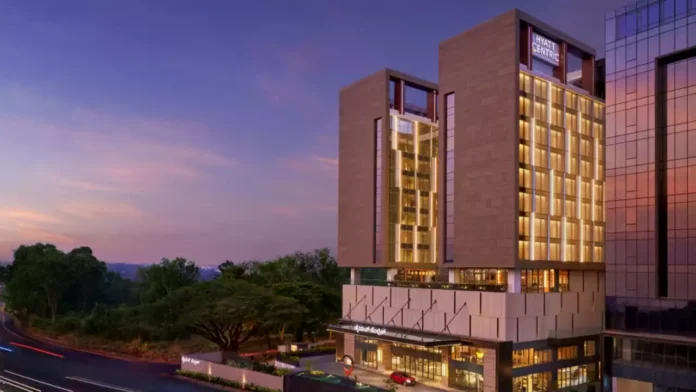
Hyatt Hotels Corporation has opened its latest venture: Hyatt Centric Hebbal Bengaluru, the eighth of its kind in India. This milestone underscores Hyatt’s commitment to expanding its brand presence within the country. Nestled in Bengaluru’s bustling entertainment hub and conveniently located near the airport, this 152-room establishment seamlessly merges contemporary comforts with the rich cultural tapestry of the city. Whether for business or pleasure, it promises an immersive experience for every guest.
It stands as the perfect launching pad for guests keen on exploring Bengaluru’s cultural hotspots, dining scene, and nightlife. Conveniently nestled near major business centers like Kirloskar Business Park and Manyata Tech Park, as well as attractions such as the Mall of Asia, Hyatt Centric Hebbal Bengaluru offers both accessibility and comfort. Additionally, the area boasts numerous bars and pubs, providing ample opportunities for guests to experience the city’s dynamic offerings.
The hotel boasts a total of 152 guest rooms, comprising eight suites, seven long-stay rooms, and one presidential suite complete with terrace gardens that overlook the pool. Designed to offer a serene escape, these rooms showcase views of Hebbal Lake and blend elements of local culture with modern amenities. Dining choices at the hotel encompass Craft and Cosmo. Craft is perfect for those seeking coffee and light bites, whereas Cosmo presents a fusion of global cuisines with a contemporary flair. Highlighting locally inspired flavors, the hotel’s menus cater to the tastes of discerning leisure travelers.
Event Spaces and Facilities
Additionally, Hyatt Centric Hebbal Bengaluru provides ample space for social events and gatherings, offering eight customizable event venues, including a spacious ballroom. Guests can effortlessly maintain their fitness routines with access to state-of-the-art gym facilities, relax by the poolside, and indulge in rejuvenating spa treatments.
Manuj Sawhney, the General Manager of Hyatt Centric Hebbal Bengaluru, expressed, “Hyatt Centric Hebbal Bengaluru goes beyond mere accommodation; it serves as a gateway for travelers seeking seamless integration into the city’s lively culture. We’re excited to craft unforgettable experiences tailored for young millennial travelers and urban explorers hungry for adventure. Whether you’re visiting for business or leisure, our vibrant yet contemporary ambiance promises a memorable journey. With our central location, discover the city effortlessly while relishing the convenience we offer.”
Dhruva Rathore, VP of Development for India and South West Asia at Hyatt, stated, “The opening of Hyatt Centric Hebbal Bengaluru is a key addition to the rapidly expanding Hyatt Centric brand in India, representing our eighth hotel in the country. Hebbal has experienced substantial economic growth in recent years, and we are excited to enter this important destination for our guests.”
The Radisson Group of Hotels, on Tuesday, signed its first hotel in West Bengal, the Radisson Hotel Siliguri, in partnership with the SBM Group. The property is expected to be operational by the second quarter of 2028.
The hotel’s strategic location near Bagdogra International Airport, New Jalpaiguri Railway Station, and Siliguri Junction ensures seamless connectivity for both intercity and intracity travelers. Conveniently situated, it provides easy access to northeastern gems like Darjeeling and Dooras. Moreover, it serves as a gateway to neighboring countries such as Nepal, Bangladesh, and Bhutan.
“Eastern India harbors vast potential for the nation’s hospitality sector, boasting cities and towns rich in natural beauty and industrial resources. The signing of Radisson Hotel Siliguri underscores our strategic dedication to expanding the Group’s presence in this region, aimed at enriching the experiences of our guests and valued partners over the long term. We are excited by this prospect and remain vigilant in seeking the right assets and partners to nurture our portfolio here,” remarked Nikhil Sharma, Managing Director and Area Senior Vice President, South Asia, for Radisson Hotel Group.
Property Features and Amenities
Once operational, the property will boast 150 guest rooms and suites. Its amenities will encompass a fitness center, swimming pool, and spa. Additionally, it will provide various event spaces spanning 18,000 square feet, catering to meetings, incentives, conferences, exhibitions (MICE events), and other gatherings. The hotel will also feature an all-day dining venue, a bar, and a tea lounge.
“We take great pride in being Radisson Hotel Group’s first partner in West Bengal and introducing Radisson Hotel Siliguri to the world. With the Group’s strong brand value and unwavering commitment to delivering exceptional guest experiences, we are confident that this hotel will emerge as the preferred choice for travelers visiting the city,” stated R.K. Goel, Chairman of the SBM Group.
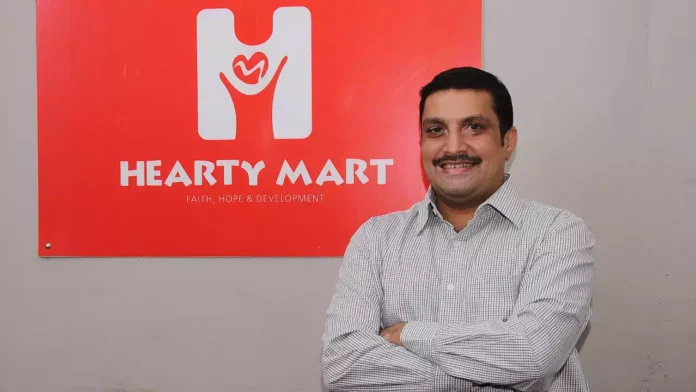
14 retail stores, empowering entrepreneurs and a journey from the hinterlands to going global, Hearty Mart, a Gujarat-based company stands as a testament to the power of entrepreneurial vision and community empowerment. The company what began as a modest venture has now blossomed into a retail empire poised to surpass a staggering turnover of 60 crore. Led by the indefatigable Nadeem Jafri, Hearty Mart has not only transformed the retail landscape but has also become a beacon of hope and prosperity for the local community.
Leap from ad exec to entrepreneur
Nadeem Jafri began his career in the advertising world, working for prominent firms like Dainik Bhaskar and Grey Worldwide. Despite his success, he felt unfulfilled and yearned to create something of his own. This itch led him back to his roots in Juhapura, where he identified a unique market opportunity amidst a predominantly Muslim population with little access to organized retail. He considered other ventures but believed that a supermarket would provide the best returns for investors.
“After finishing my MBA in 1998, I worked with Dainik Bhaskar and then moved to Grey Worldwide,” Jafri recalls. “While working in Mumbai, I was inspired by the Big bazaar store in the same building as my office. It was unlike any hypermarket I had seen before, and it planted the seed for my future venture. And retail was always there in my subconscious mind,” Jafri reflects, “and when I joined advertising, I knew I wanted to do something more impactful.”
In February 2004, amidst the Godhra aftermath in Juhapura, Jafri opened the first Hearty Mart store at Vishala Circle. His vision was clear: to deliver superior products and services to a demographic largely overlooked by prominent retailers, addressing the community’s needs.
“My initial hire hailed from the local community,” Jafri recalls. “He began as a farmer in a nearby village and has since advanced to the position of Retail Inventory Head in our organisation.”
Despite initial struggles, including financial losses and a tough market environment, Jafri’s determination never wavered. “Until 2008, we were not on the positive side of our balance sheet. It was a struggling time, but it taught me invaluable lessons,” he reflects.
From its humble beginnings, Hearty Mart has grown significantly. Today, it operates 14 stores in semi-urban and rural Gujarat, following a unique franchising model that empowers local entrepreneurs rather than centralizing operations. “I have tried nurturing Kirana entrepreneurs to supermarkets, empowering them or upgrading them,” Jafri explains. “We built a back-end retail ecosystem, offered brands, products, and guidance, and charged a royalty for our services,” he adds.
The company launched their franchising model in 2007, which has been instrumental in Hearty Mart’s expansion. The model not only helped in expanding the brand but also fostered local entrepreneurship.
Diversification into Horeca and Manufacturing
Hearty Mart didn’t stop at retail. Partnering up with Wazir Ali and Hussain Abbas, the company ventured into the Horeca (Hotel/Restaurant/Café) sector, supplying more than 1,500 establishments across Gujarat, Maharashtra, and Rajasthan. “Horeca was a natural extension. We realized we could leverage our supply chain to cater to this segment,” says Jafri.
To maintain competitive pricing and quality, Jafri launched the ‘Chef Ki Pasand’ brand of spices, developed through a panel of chefs who tested various recipes. This brand quickly gained popularity, becoming a significant revenue driver with an annual turnover of 15 crore.
“We created a panel of chefs who passed several recipes cooked in those spices,” says Jafri. This initiative led to the successful launch of the brand, which now plays a significant role in their portfolio.
Hearty Mart has also created nine micro-enterprises, each operating independently but under the larger umbrella of Hearty Mart Enterprises. These ventures range from packaging to manufacturing, further solidifying their presence in the market. “We created micro enterprises where we take a holding of 15-20% and give them a captive market,” Jafri explains.
In 2023, Hearty Mart took a significant step by opening an overseas office in Dubai, aiming to increase their turnover from 45 crore to 60 crore. This move marks a new chapter in their journey, highlighting their growth from a local supermarket to an international brand.
Road ahead
Today, Hearty Mart encompasses 14 stores and has a turnover of 45 crore, with ambitions to reach 60 crore. The company continues to innovate, focusing on hybrid models of retail that combine physical stores with e-commerce. “Small format stores and Kirana shops are here to stay in India. They will become more organized and integrate e-commerce to suit local pockets,” predicts Jafri.
As Hearty Mart continues to grow, Jafri remains committed to his vision of empowering communities and creating sustainable business models. “Our transformation from a single store in Juhapura to a chain of supermarkets and a prominent player in the Horeca sector demonstrates the power of vision, resilience, and community trust,” he concludes.
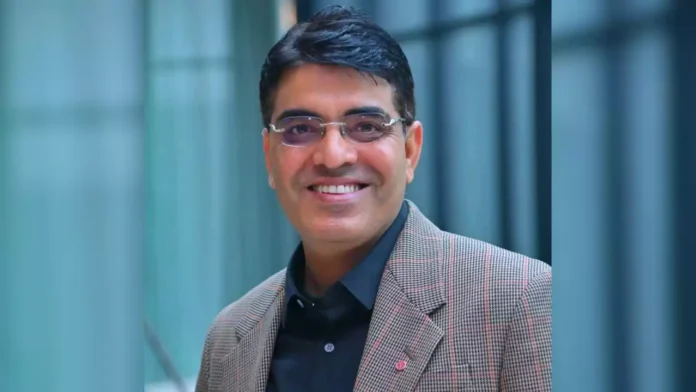
Hisense India, a leading provider of consumer electronics and home appliances, has named Pankaj Rana as its new Chief Executive Officer (CEO).
With over twenty years of expertise in sales and marketing, business development, and general management, Rana brings a wealth of experience to his new role. Before his tenure at Hisense India, he held key leadership positions at LG, Panasonic, BenQ, and Reliance Retail, spanning the mobile phone and television sectors.
“I’m delighted to become a part of Hisense, a company renowned for its longstanding legacy and steadfast dedication to quality. Collaborating with the skilled team at Hisense India, I look forward to spearheading innovation, nurturing expansion, and ensuring unmatched value for our customers,” expressed Rana.
Responsibilities of Pankaj Rana as CEO
At Hisense India, Rana will oversee the expansion of the customer base, bolster the brand’s footprint in the consumer electronics and home appliances industry, and drive the overall growth of the company.
“We’re thrilled to have Pankaj join the Hisense family. His deep industry insights and exceptional leadership skills will be instrumental as we venture into our expansion and growth trajectory in India. With Pankaj leading the way, we’re confident in reaching unprecedented levels of success,” remarked Steven Li, Managing Director of Hisense India.
Hisense stands as a premier global technology pioneer in crafting top-tier televisions. With a presence spanning over 160 countries, it operates 14 manufacturing facilities situated in South Africa, Slovenia, Serbia, Mexico, and the Czech Republic. Additionally, it boasts 18 Research & Development (R&D) hubs worldwide and consistently channels 5% of its revenue back into R&D annually.
Many liquor brands that had disappeared from shelves over the past five years are making a comeback in Andhra Pradesh, as per a report in TOI.
With chief minister-designate N. Chandrababu Naidu signaling that one of the first policies to be revised in the state will be the excise policy, the Andhra Pradesh State Beverages Corporation Limited (APSBCL) has begun placing orders for popular liquor brands.
Although some whiskey and beer brands returned just days before the Model Code of Conduct (MCC) was implemented, most brands remained unavailable due to the previous YSRCP government halting payments to suppliers, including major alcohol beverage companies like AB InBev, Diageo, United Breweries, and United Spirits.
Instead of clearing the pending dues after the supply stoppage, the APSBCL began placing orders with lesser-known companies to supply liquor.
Opposition parties accused the YSRCP government of orchestrating an “organized scam” by bringing retail outlets under the control of the APSBCL.
They also claimed that most of the distilleries in the state were taken over by the proxies of former chief minister YS Jagan Mohan Reddy.
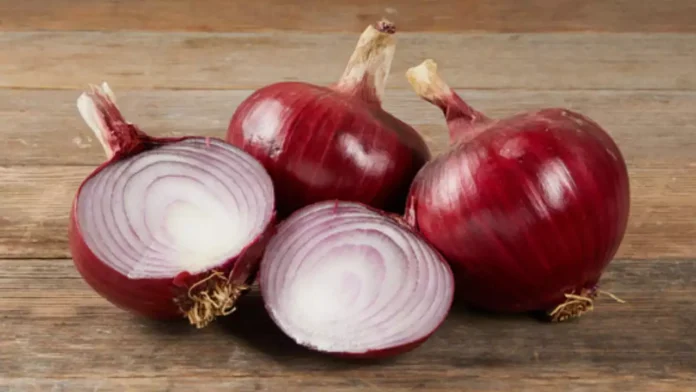
Onion prices have surged by 30-50% over the past two weeks due to a decrease in arrivals coupled with heightened demand in anticipation of Eid-al-Adha (Bakra Eid). Traders are now stockpiling onions, anticipating potential relaxation of government interventions aimed at price control.
Price Trends in Wholesale Markets
On Monday, the average wholesale price of onions at the Lasalgaon mandi in Nashik stood at INR 26 per kg, marking a significant increase from INR 17 recorded on May 25. Furthermore, the price of premium-grade onions, though they constitute a minor portion of the total trade volume, has exceeded INR 30 per kg at numerous wholesale markets across the state.
The recent surge in prices primarily stems from a disparity between supply and demand. Onions entering the market from June onward originate from stocks held by farmers and traders. Farmers are hesitant to sell from their reserves, anticipating a price increase due to projected reductions in the 2023-24 rabi crop.
Impact of Export Duty and Domestic Demand
Despite a 40% export duty causing a slowdown in exports, traders assert that domestic demand for onions remains robust in anticipation of the upcoming Eid-al-Adha on June 17. “Demand for Maharashtra’s onions, particularly from the southern states, is notably high,” stated Vikas Singh, an onion trader hailing from Nashik, Maharashtra.
“The primary factor driving the price surge is the farmers’ and stockists’ optimism regarding the potential removal of export duties by the central government. Operating under this assumption, they are withholding onions in anticipation of price escalation,” stated Ajit Shah, president of the Horticulture Produce Exporters’ Association.
Rahul Mehra, CEO & Co-founder of Third Eye Distillery
Goa-based Third Eye Distillery is poised to broaden its duty-free presence across several domestic and international airports. Additionally, the craft spirits company plans to launch an in-house distillery in the State by the end of the second financial quarter.
Third Eye Distillery, presently retailing at two international airports—Singapore Changi Airport and Dubai—will extend its duty-free reach to include Goa, Hyderabad, Kolkata, and other prominent international travel retail outlets in the forthcoming quarters of this fiscal year. Within India, the brand is already established in duty-free outlets in Mumbai, Delhi, Kochi, Bengaluru, Chennai, Ahmedabad, and Thiruvananthapuram.
“Our goal this year is to enhance our presence in duty-free markets. Currently, we’re present in several Indian airports and aim to expand to approximately 10 more by the next quarter. Internationally, our target is to reach 15 airports by the end of this fiscal year,” revealed Rahul Mehra, CEO & Co-founder of Third Eye Distillery. “Moreover, we’ve made significant investments in our distillery, slated for operation this year. This strategic move is expected to fortify our production capabilities, underpinning our ambitious expansion strategies,” he added. The facility in Goa, spanning approximately 30,000-40,000 sq ft, is slated to be operational by the second financial quarter.
Furthermore, the company intends to further expand into Indian markets this fiscal year, building on the recent introduction of their products into two new American markets: New York and Miami. Presently, the spirits brand operates in approximately 10 markets within India and anticipates reaching 14 within the next two quarters, with their latest addition being West Bengal.
Established in 2019, Third Eye Distillery embarked on its venture with the craft gin, Stranger & Sons. Subsequently, the company partnered with The Bombay Canteen to introduce the bottled cocktail ‘Perry Road Peru’ and collaborated with Australia-based Four Pillars Distillery to unveil two new gins: Trading Tides and Spice Trade Gin. Their most recent addition, the Sherry Cask-Aged gin, debuted in 2023. In late 2022, the company launched its line of white spirits under the brand name Short Story.
“We were confident in our ability to produce exceptionally high-quality spirits in India and consolidate them under one brand. What took us four years to achieve with Stranger & Sons, we accomplished with Short Story in just one year. Our aim is for Short Story to surpass the sales volumes of Stranger & Sons this year,” Mehra remarked.
In addition to its spirits offerings, Third Eye Distillery’s product range features Svami, a non-alcoholic mixer brand in which the company acquired a majority stake in FY23. “Our product lineup, predominantly catering to the premium segment, enables us to attain gross margins exceeding 75 percent, with certain SKUs reaching as high as 82 percent. This stands in stark contrast to the industry norm of 40-50 percent,” remarked the CEO. “We are confident that we have only begun to tap into India’s spirit market.”
With ambitions to broaden its distribution channels and penetrate new markets, the company aims to diversify its brand portfolio by introducing new products in burgeoning spirit categories such as Rum and Whisky. Third Eye Distillery presently operates at an EBITDA positive level at the brand level and anticipates achieving EBITDA positivity at the company level within this fiscal year.
Zomato is set to infuse INR 300 crore of fresh capital into its quick commerce venture, Blinkit, as per a regulatory filing submitted to the Registrar of Companies (RoC).
With this recent investment included, Zomato has now injected a total of INR 2,300 crore into Blinkit since acquiring the company in August 2022, according to the filings. Zomato had acquired Blinkit, previously known as Grofers, in an all-stock transaction valued at INR 4,477 crore.
Apart from Blinkit, Zomato plans to inject INR 100 crore into its subsidiary Zomato Entertainment Pvt Ltd, which oversees the company’s live events and ticketing operations.
This comes at a time when competition in the quick commerce space is intensifying, with Blinkit facing off against contenders like Swiggy Instamart and Zepto.
As Swiggy, a competitor of Zomato in food delivery and dining out, progresses with draft papers for its INR 10,414-crore IPO filing with the markets regulator, Zepto is engaged in talks to secure funding of $300 million (approximately INR 2,500 crore).
The quick delivery sector is anticipated to witness the participation of horizontal e-commerce giants like Flipkart. On April 19, it was reported that Flipkart had engaged in discussions with Zepto regarding a possible agreement, however, the negotiations ultimately did not materialize.
Blinkit’s Financial Performance and Expansion Initiatives
During fiscal year 2024, Blinkit disclosed revenues totaling INR 2,302 crore, marking a significant increase from the INR 1,064 crore recorded in FY23, more than doubling its previous year’s figure.
The company has also seen an enhancement in its financial performance, with its adjusted EBITDA loss decreasing to INR 37 crore in the January-March 2024 quarter, down from INR 203 crore in the corresponding period of the previous year.
In its quarterly earnings report in May, Zomato revealed that Blinkit would embark on a significant expansion initiative, aiming to raise its dark store count to 1,000, up from 562 stores as of March 31.
The quick commerce platform is broadening its range of product categories, branching into segments such as apparel, home decor, consumer electronics, sports goods, and home appliances. These categories are typically associated with larger online marketplaces like Amazon and Flipkart.
For Zomato, the quick commerce platform has emerged as a significant contributor to shareholder value compared to its traditional food delivery business. In April, it was reported that Blinkit’s contribution to Zomato’s overall market value had exceeded that of its food delivery arm, as noted by Goldman Sachs.
According to the April report, Blinkit’s implied value was estimated at INR 119 per share, surpassing the INR 98 per share valuation of Zomato’s food delivery segment. This translated to Blinkit contributing $13 billion to Zomato’s overall value, a significant increase from $2 billion in March 2023, as highlighted by Goldman Sachs.
Market Capitalization and Stock Performance
As of Tuesday morning, Zomato’s market capitalization exceeded $19 billion (approximately INR 1.6 lakh crore). The company’s stock was trading 0.4% higher than the previous day’s close at INR 182.50 during early trading on the BSE.
Before fully acquiring Blinkit in 2022, Zomato held a 9% stake in the company. In June 2021, the grocery delivery platform raised $120 million from Zomato and Tiger Global, achieving unicorn status. In March 2022, Blinkit secured $100 million from Zomato through convertible notes. Additionally, in the same month, Zomato provided a $150 million loan to the delivery startup it would later acquire.
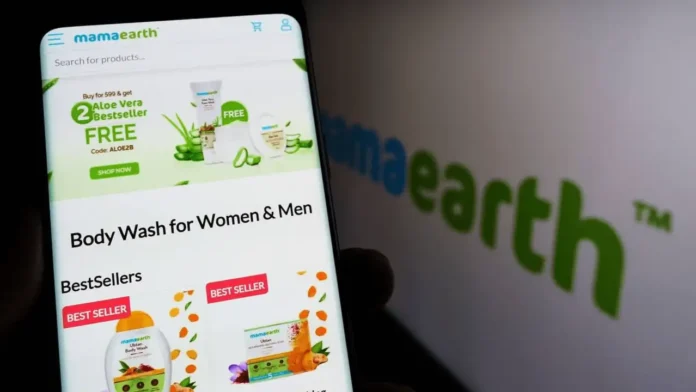
Mamaearth‘s parent company, Honasa Consumer Ltd, saw a nearly 4% drop in its shares during early trading on Tuesday (June 11) due to a significant block deal in the stock.
The shares commenced trading at INR 440.60 each, down from the previous close of INR 457.70. By 10:00 AM on Tuesday, they were trading at INR 441.35.
Block Deal Details
Exchange data reveals that 66.2 lakh shares, equivalent to 2% of the equity, were transacted in a block deal. The shares were traded at an average price of INR 439 each.
This deal is estimated to be worth around INR 291 crore. Currently, the identities of the buyers and sellers participating in the transaction remain undisclosed.
However, according to a CNBC-TV18 report, it is likely that Fireside Ventures and Sofina Ventures were the sellers involved in the deal.
Fireside Ventures and Sofina Ventures aimed to offload up to a 2% stake in Mamaearth’s parent company via a block deal, with a goal of generating earnings amounting to INR 273.2 crore.
The block deal’s floor price was established at INR 421.3 per share, representing an 8% discount compared to Honasa’s closing price on Monday.
According to the shareholding pattern for the March quarter, Fireside Ventures owned a 5.28% stake in the company, whereas Sofina Ventures held a 6.16% stake.
Established in 2016 by husband-wife duo Varun and Ghazal Alagh, Honasa’s product portfolio includes six beauty and personal care brands: Mamaearth, The Derma Co., Aqualogica, Ayuga, BBlunt, and Dr. Sheth’s.
Financial Performance of Honasa Consumer Ltd
The parent company of the direct-to-consumer brand Mamaearth, Honasa Consumer Ltd, recorded a consolidated net profit of INR 30.47 crore in the fourth quarter of the fiscal year 2023-24 (FY24).
In the fourth quarter of FY24, Honasa witnessed a remarkable 21% year-on-year surge in operating revenue, reaching INR 471.09 crore compared to INR 387.8 crore in the corresponding period last year. However, this represented a 3% sequential decrease from the operational revenue of INR 488.2 crore in Q3 FY24.
In the fiscal year FY24, the startup recorded profits of INR 110.52 crore, a significant turnaround from the loss of INR 150.96 crore incurred in the previous fiscal. Honasa also experienced a 30% increase in operating revenue for the fiscal, reaching INR 1,919.6 crore compared to INR 1,492.7 crore.
In a suburban neighborhood of Mumbai, workers at SoftBank-backed Swiggy‘s grocery warehouse, hustle to fulfill orders within a 10-minute window. Their efficiency is monitored by a digital display, which flashes red alerts for any lag in pace.
Out in the scorching heat, Swiggy’s bikers, clad in the company’s distinctive bright orange T-shirts, hurriedly gather packed grocery orders for nearby delivery. Meanwhile, others head back to handle another shipment already assigned on their app and awaiting attention.
“The goal is to ideally complete the entire pickup process within 1 minute and 30 seconds,” warehouse manager Prateek Salunke emphasized.
The Evolution of Indian Shopping Habits
Swiggy’s warehouses are proliferating across India, facilitating the swift delivery of a wide array of items, from milk and bananas to condoms and roses, all within minutes. This business model is fundamentally transforming the way Indians approach shopping.
The rise of Swiggy’s model also poses a threat to the millions of mom-and-pop stores that have traditionally dominated the grocery trade in a country where large supermarkets are few and far between, often found in more affluent neighborhoods or malls.
Before the surge of e-commerce driven by Amazon and Walmart’s Flipkart over the past decade, Indians heavily depended on visits to local neighborhood shops for groceries or enjoyed free deliveries through phone orders.
However, the American behemoths, providing location-dependent same-day or next-day delivery, don’t match the speed of Swiggy and its competitors Zepto and Zomato‘s Blinkit in the realm of groceries. These players are spearheading a “quick commerce” boom.
In April, Goldman Sachs stated that quick deliveries represent $5 billion, comprising 45% of India’s current $11 billion online grocery market. With shoppers increasingly valuing convenience and speed, quick commerce is expected to encompass 70% of the online grocery market, projected to reach $60 billion by 2030.
Infrastructure Expansion and Operational Insights
IPO-bound Swiggy, which began as a restaurant food delivery business in 2014 and is currently valued at $10 billion, is now pivoting its focus towards the “last-minute” grocery sector in India. This move comes as India emerges as the world’s third-largest retail market, following China and the United States, offering immense potential for growth in this segment.
“We are redirecting our efforts towards a market far beyond food,” stated a December 2023 confidential Swiggy strategy document, referencing its Instamart service.
Its aim? “To cater to time-starved urban consumers aged 21-35 who prioritize convenience,” the document outlined.
Swiggy did not provide any response to inquiries regarding the document or its overarching strategy.
The company, as reported by an executive from one of Swiggy’s financial investors, which also include Prosus, Qatar Investment Authority, and Singapore’s GIC, doubled its warehouse count to 500 in 25 cities last year. Plans are underway to further increase this number to 750 by April 2025.
Consumer Behavior and Preferences
On a global scale, the COVID-19 lockdowns provided a boost to fast-delivery startups, facilitating the expansion of companies like Turkey’s Getir. However, this interest dwindled as shoppers gradually reverted to physical outlets following the pandemic. Luxembourg-based Jokr, for instance, scaled back its operations in the U.S. market in 2022.
A distinct trend is unfolding in India.
According to Sumat Chopra, a partner at consultancy Kearney, quick commerce firms are capitalizing on the availability of affordable warehousing space and the entrenched habit among Indian consumers of ordering small quantities from nearby stores over the phone.
Swiggy will accept orders for even a single mango, albeit at a cost roughly double that of purchasing from a nearby shop in person.
Many consumers are willing to pay extra to save time.
Natasha Kavalakkat, a 27-year-old lawyer from Mumbai with a busy daily routine, relies on quick delivery apps such as Swiggy and Zepto to purchase essentials like apples and bread. She highlighted the convenience of having juice packs delivered within minutes, especially just before hosting a party, as a significant game-changer.
“This is incredibly convenient.”
The emergence of quick commerce is placing significant pressure on many smaller retail stores.
Prem Patel, a grocer in suburban Mumbai, had experienced thriving business in recent years, enabling him to renovate his store and add air conditioning. However, he no longer finds satisfaction in his situation.
“Our unique selling point used to be that no one bought milk from malls and supermarkets. However, these apps have completely altered the landscape,” Patel remarked, noting that his daily sales have plummeted by half to approximately 25,000 rupees ($300).
Four retailer associations in four Indian states, representing 90,000 grocery shops out of the country’s estimated 13 million, reported monthly sales declines ranging from 10% to 60% for some, attributed to the surge of quick commerce apps.
Some traditional stores are adapting by embracing technology.
Hiren Gandhi, who heads a retail association in Gujarat state, has advised members to establish WhatsApp groups for swiftly taking orders and delivering goods within a 6.4-km (4-mile) radius.
“Around 500 stores have taken proactive steps to stay ahead and ensure the sustainability of their businesses,” he said.
Financial details of Swiggy’s Instamart quick commerce division are not publicly available. However, according to an internal document, its annualized order value surged from $340 million in December 2021 to $1 billion by September of the following year. Nonetheless, the business remains unprofitable, as indicated by an executive at Swiggy’s investor.
Competitive Landscape and Business Strategies
Swiggy’s main competitor, Zomato, is India’s biggest food delivery business but acquired quick commerce company Blinkit in 2022. Goldman Sachs said Blinkit is more valuable to Zomato than food delivery and is forecast to post orders worth $2.7 billion this year, nearly 60% higher than estimated last year.
In a regulatory disclosure in May, Zomato announced that Blinkit had achieved profitability for the first time. However, it anticipates that its operating profit will remain “around zero” for the next several quarters. Despite this, Zomato did not provide any additional comments upon request.
Analysts caution that relying solely on major urban centers to attract customers and excessive spending on promotional discounts and marketing, which limits profit margins, could pose risks for quick commerce firms operating in the low-margin groceries sector.
However, both Swiggy and Blinkit are already expanding their offerings beyond groceries to include higher-margin products.
Through Swiggy’s app, customers can now purchase fitness products and electronics, including items like the $132 Xiaomi air purifier. Meanwhile, Blinkit reported record-breaking sales of roses, bouquets, and teddy bears on Valentine’s Day in February.
Swiggy’s Instamart was initially introduced as an “Indian version of 7 Eleven (on the cloud),” as per its internal document. However, the company is now adjusting its positioning to that of an “online Supermarket.”
We use cookies to ensure that we give you the best experience on our website. If you continue to use this site we will assume that you are happy with it.