To enhance the pizza experience, Papa John’s has introduced two fresh additions: the Cheesy Burger Papadia, available at $6.99, and the Cheesy Burger Papa Bites, priced at $4.99.
Official Release Date:
Papa Rewards members received exclusive early access to the Cheesy Burger Trio lineup. For all other customers, it will be accessible starting June 13, 2024.
Kimberly Bean, the Vice President of Integrated Marketing and Menu Strategy at Papa John’s, expressed, “The Cheesy Burger Pizza has remained a beloved favorite for over a decade, and our fans have consistently communicated their desire for its return.”
“While competitors focus on the burger, we prioritize pizza and remain steadfast in our dedication to delivering precisely what our fans desire – pizza.”
Taj, the iconic brand under the umbrella of Indian Hotels Company (IHCL), has once again secured its position as the World’s Strongest Hotel Brand, as announced by Brand Finance. According to the ‘Hotels 50 2024’ annual report by the world’s leading brand valuation consultancy, Taj stands out as one of the most formidable and valuable hotel brands globally.
Puneet Chhatwal, Managing Director & Chief Executive Officer of IHCL, expressed his delight, stating, “It is with immense pleasure that we witness the iconic brand Taj being honored once again as the World’s Strongest Hotel Brand, especially in its landmark 120th year. This recognition, marking four consecutive years of acknowledgment and thrice as number one globally, underscores Taj’s century-old legacy of pioneering destinations, establishing global standards, and exemplifying Indian hospitality on a global stage. This achievement is a testament to the unwavering trust and affection of our guests and the dedicated commitment of our colleagues in providing genuine and heartfelt service, which truly embodies the essence of Taj.”
He emphasized, “With a track record of rapid yet mindful expansion, Taj is committed to spearheading the advancement of a sustainable and inclusive future within the hospitality sector.”
Taj’s Remarkable Growth:
According to the Hotel 50 2024 report from Brand Finance, Taj has achieved a remarkable 45% surge in brand value, reaching USD 545 million, solidifying its position as the world’s strongest hotel brand. With an enhanced Brand Strength Index (BSI) score of 92.9 out of 100, Taj earns the prestigious AAA+ rating, the highest accolade for brand strength bestowed by Brand Finance. Additionally, Taj emerges as the world’s second-fastest-growing brand, marked by significant revenue expansion and a notable increase in brand strength. Taj’s BSI score escalated by over three points, showcasing exceptional performance across various brand strength indicators including familiarity, consideration, recommendation, and reputation.
The report highlights the brand’s robust sustainability initiatives under IHCL’s ESG+ framework, Paathya, which delineates both short and long-term objectives aligned with the United Nations Sustainable Development Goals for 2030.
Gargi, the fashion jewellery retailer by P N Gadgil & Sons (PNGS), is gearing up to unveil its 25th shop-in-shop (SiS) outlet within Shoppers Stop in Andhra Pradesh.
The 24th SiS outlet of the retailer will be inaugurated on Thursday in Cyberabad, Hyderabad. Subsequently, the 25th store will be opened on Sunday in Vijayawada, Andhra Pradesh. By the end of the weekend, all 25 SiS stores will be up and running.
Gargi’s Remarkable Growth in FY 2024
The retailer noted a surge in yearly sales, marking a 76.07% increase to INR 50.48 crore in FY 2024.
Gargi is renowned for its fashion jewellery crafted from brass and 92.5 sterling silver. Recently, it introduced its diamond collection. The retailer has a presence in several Shop-in-Shop stores of Shoppers’ Stop in Mumbai, Nashik, and Bengaluru, along with five exclusive outlets in Pune and two franchise stores— one in Nashik and another in Vashi (Mumbai).
In December 2022, the company made its debut on the stock exchange. It showcases a diverse portfolio of over 15,000 stock-keeping units (SKUs) and witnessed remarkable growth in its inaugural year, recording a sixfold surge in revenue. Operating across 24 locations, including twelve major metro cities spanning six states of India, the company has yielded over 1700% returns to its investors over the past 13 months.
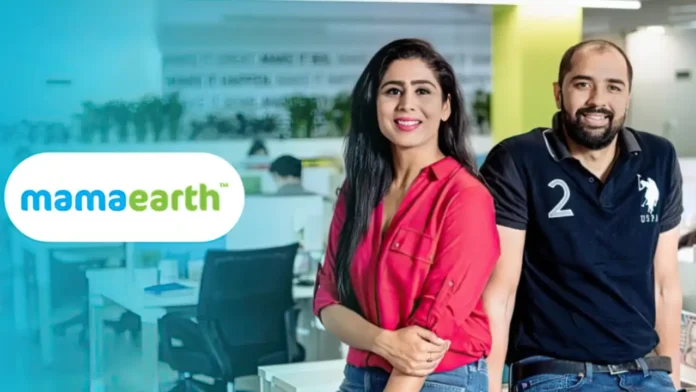
Honasa Consumer Limited, the proprietor of the rapidly expanding personal care label Mamaearth, has announced that its products are now available at over 1,000 Smart Bazaar and Smart Point stores across India. This expansion, achieved through a partnership with Reliance Retail Ventures Ltd., signifies a major advancement for Mamaearth as it strengthens its foothold in brick-and-mortar retail.
Renowned for its dedication to delivering safe, natural, and toxin-free products, Mamaearth has garnered a devoted customer following due to its innovative offerings. The collaboration with Reliance Retail is geared towards expanding the accessibility of Mamaearth’s products to a wider audience.
Varun Alagh, Co-Founder and CEO of Honasa Consumer Limited, expressed, “At Honasa, we strongly believe in being present wherever our consumers prefer to shop for the brand. Our collaboration with Reliance Retail further extends our commitment to making toxin-free, safe products available to a broader spectrum of consumers. With our presence in over 1,000 stores now and the rising demand for Mamaearth products, we aim to sustain growth and expand our reach through this partnership.”
This partnership aims to facilitate consumers’ access to Mamaearth’s diverse range of products, reinforcing the brand’s core promise of providing toxin-free beauty products crafted from natural ingredients.
Nykaa, the beauty e-commerce startup, has informed the stock exchanges that it has passed a special resolution to reappoint Pradeep Parameswaran and Seshashayee Sridhara as non-executive, independent directors for a second consecutive term of three years each, starting from July 15, 2024, and July 26, 2024, respectively.
Additionally, FSN E-Commerce Ventures Limited, the parent company of Nykaa, has passed a special resolution to appoint Santosh Desai as a non-executive independent director for a term of five years, commencing from July 15, 2024.
The exchange filing also disclosed that members can express their agreement or disagreement regarding the aforementioned resolution through e-voting from June 13, 2024, to July 12, 2024. The outcome of the vote will be announced on or before July 15, 2024.
Pradeep Parameswaran, currently serving as the global head of business development at Uber, assumed his position on Nykaa’s board on July 15, 2021. Additionally, he holds a seat on the board of Nykaa E-retail Limited, a subsidiary of FSN E-commerce Ventures Limited.
Seshashayee Sridhara joined Nykaa on July 26 and also serves as a director in Nykaa’s other subsidiaries – FSN Brand Marketing Private Limited and FSN International Limited.
Desai, as indicated by his LinkedIn profile, presently holds the positions of Managing Director and CEO at Futurebrands India. Additionally, he serves as a director in D.B Corp Limited, Bidada Foods Pvt Ltd, Think9 Consumer Technologies Pvt Ltd, among other companies.
This comes after Nykaa announced Desai’s appointment as an independent director nearly two weeks ago. Desai, who previously served as president at the advertising agency McCann, brings over two decades of experience in the advertising industry to his new role.
At the time of the appointment, Nykaa founder and CEO Falguni Nayar remarked, “Santosh’s expertise in grasping the intricate dynamics between culture and brands has contributed to the establishment of numerous iconic brands… We trust that Santosh’s strategic counsel will guide our vision to enhance Nykaa’s brand value and strengthen our current portfolio of brands for sustainable global growth.”
Composition of Nykaa’s Board
The unicorn in e-commerce now has nine directors on its board following Desai’s appointment. The other independent directors on the board are Pradeep Prameshwaram, Anita Ramachandran, Seshashayee Sridhara, and Milind Sarwate.
The appointment and reappointment closely follow the startup’s report of a 1.2X increase in net profit year-on-year (YoY) to INR 9.07 Cr in Q4 FY24, although it experienced a 48% decline on a quarter-on-quarter (QoQ) basis. Operating revenue surged 28% YoY to INR 1,667.9 Cr but saw a 6% sequential decrease.
Palette Brands (earlier White.Inc), a consumer goods company, has raised close to $2 million in a pre-Series A round led by Rockstud Capital.
The round also saw participation from existing investors such as IPV & Dholakia Ventures, alongside angel investors Stoffer Anko Norden and Apurva Salapuria.
The primary focus of this funding will be on the launch of Ember, a cookware brand, given the ripe opportunity for innovation in this category. Consumers are actively seeking to elevate their kitchen experiences while prioritizing healthier choices.
Siddharth Gadodia, the founder of Palette Brands, expressed, “There’s a significant gap in the market for cookware that seamlessly blends form and functionality. Ember is poised to address this by offering a non-toxic cookware brand with exceptional non-stick properties.”
Market Opportunity and Consumer Trends
As per a Goldman Sachs Research report, the number of affluent consumers in India is projected to surge from approximately 60 million in 2023 to 100 million by 2027. Palette is strategically catering to this aspirational affluent demographic, characterized by a preference for exceptional product design and value. This encompasses offerings in the mass premium segment across categories with substantial Total Addressable Market (TAM) and notable unmet consumer demands.
Established in 2022 by Siddharth Gadodia, Young Yun, Himanshi Tandon, and Bret Recor, the startup encompasses a drinkware brand, Unbottle, and an Apple accessories brand, Totem, within its portfolio.
DeHaat, in a statement on Wednesday (June 12), announed that it has already allocated ESOPs totaling over INR 100 Cr to a cohort of over 200 individuals. During its initial ESOP buyback, 153 team members, ranging from senior vice presidents to field teams, benefited from the initiative.
Shashank Kumar, the Cofounder and CEO of DeHaat, remarked, “The unwavering dedication and hard work of our team has enabled DeHaat’s sustained growth and exceptional performance in empowering Indian farmers over the last decade. The ESOP buyback program underscores our commitment to our employees, and we are delighted to create opportunities for wealth generation.”
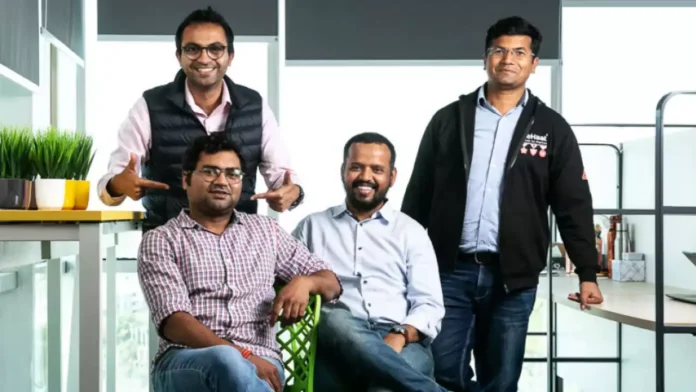
Established in 2012 by Shashank Kumar, Amrendra Singh, Shyam Sundar, and Adarsh Srivastav, Patna and Gurugram-based DeHaat operates as a comprehensive business-to-farmer (B2F) platform. It offers end-to-end agricultural services to farmers, including the distribution of high-quality agri-inputs, customized farm advisory, access to financial services, and market linkages for selling their produce.
DeHaat further announced that its revenue from operations surged by 40% year-on-year (YoY) to INR 2,700 Cr in FY24, accompanied by a 50% YoY reduction in losses.
The startup asserted that its revenue growth was bolstered by operational efficiency and a heightened emphasis on profitability, particularly through lucrative ventures such as exporting sustainably grown farm produce, food processing, and sales of biological agricultural inputs.
Targeting Profitability and Expansion Plans
DeHaat targets attaining full-year profitability within the ongoing fiscal year, FY25.
Since its establishment, the startup asserts to have assisted over 2 million farmers across 11 states in India via its digital network spanning over 11,000 ‘DeHaat Centres’. Additionally, it prides itself on maintaining a network of over 1,500 stock-keeping units, processing over 15,000 orders daily, and catering to more than 15 countries.
Recently, the startup expanded its product line by introducing offerings on modern trade, quick commerce, and ecommerce platforms under the brand name Honest Farms.
In November last year, the startup completed the acquisition of fruit export company Freshtrop Fruits in an all-cash transaction.
Throughout the year, the startup has secured more than $300 million in funding through various rounds. Additionally, the company has garnered support from notable investors such as Sofina Ventures, RTP Global Partners, Prosus, and Lightrock India, among others.
In FY22, DeHaat recorded a net loss of INR 1,563.9 Cr, marking a widening of over 253% year-on-year (YoY), while revenue from operations experienced a significant surge, increasing 2.6 times YoY to INR 1,273.42 Cr.
Reliance Retail’s beauty retail platform, Tira, announced on Wednesday the launch of its new skincare brand, ‘Akind’, co-founded by Mira Kapoor. The brand was unveiled at Tira’s flagship store at Jio World Drive in Mumbai.
Accessibility: Online and Offline Channels
The brand will be accessible at Tira through both online and offline channels.
The brand features three categories of formulations designed to “fulfill specific roles in enhancing skin barrier health.”
Isha Ambani, Executive Director of Reliance Retail Ventures Limited, expressed, “We are thrilled to debut Akind, Tira’s inaugural skincare brand in our portfolio of proprietary brands. This launch marks a noteworthy milestone in Tira’s trajectory. As we advance and grow, our dedication to innovation and excellence remains steadfast.”
Mira Kapoor, Co-Founder of Akind, shared, “My skincare journey truly commenced when I began tuning into my skin’s needs. The Akind range was crafted with meticulous attention, incorporating care, experimentation, and thorough research into potent ingredients tailored to address specific concerns. Partnering with Tira, the premier hub for curated beauty brands, perfectly embodies our vision and brings it to fruition.”
“Through Akind, my aim is to spread the delight of skincare that transcends skin types, prioritizes barrier health, delivers high performance, and remains budget-friendly, empowering everyone to achieve their skin’s optimal state, as I have,” she added.
In a statement, the company emphasized, “The introduction of Akind as its first skincare brand reaffirms Tira’s dedication to offering customers a wide array of top-notch, innovative products spanning beauty and personal care segments.”
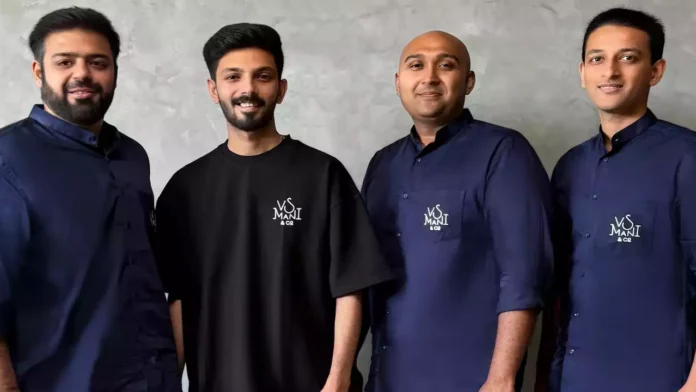
GD Prasad, Yashas Alur and Rahul Bajaj (Co-Founders of VS Mani & Co) with singer Anirudh Ravichander
VS Mani & Co, renowned for its South Indian filter coffee and delectable snacks, has enlisted the renowned singer of “Why This Kolaveri Di,” Anirudh Ravichander, as its co-founder and brand ambassador. This strategic move is geared towards enhancing its footprint and capturing a larger market share in Tamil Nadu and Karnataka. As part of this collaboration, Ravichander will also be a stakeholder in the company, further solidifying his commitment to its success.
Celebrity Endorsements and Investments
For VS Mani & Co, known for its appearance on Shark Tank, this marks another significant celebrity endorsement. Previously, it has received investments from Sobhita Dhulipala, Rana Daggubati, Ranbir Kapoor, Disha Patani, and more. The brand believes that collaborating with celebrities aids in solidifying its status as a household name.
Although it operates in several cities, the company’s focus is on penetrating the South Indian market before pursuing extensive expansion in other regions. This rationale elucidates the decision to bring Ravichander on board as a co-founder. However, the company has not disclosed the specifics of the arrangement with Ravichander.
Anirudh Ravichander, music composer and co-founder of VS Mani & Co, expressed, “VS Mani & Co is revolutionizing the world of filter coffee for my generation. I felt compelled to play a more active role in their journey, beyond being just a consumer. Additionally, I aspire to promote our rich South Indian cuisine and exquisite filter coffee to a global audience.”
The company focuses on consumers aged 27 to 40, as this demographic is inclined towards paying for convenience. Chennai, Bengaluru, Hyderabad, and Mumbai rank as the top cities for the company in terms of revenue contribution.
“We are excited to collaborate with Anirudh as we embark on establishing a premier brand for South Indian filter coffee and snacks. As a prominent figure in the South Indian music industry, he embodies the essence of our food and culture impeccably,” stated the company’s founders.
Established in 2020 by GD Prasad, Yashas Alur, and Rahul Bajaj, VS Mani & Co has secured a cumulative funding of $1.5 million from investors such as Kettleborough VC, Lets Venture, Hyderabad Angels, Supermorpheus, among others.
Founder and CEO Romita Mazumdar revealed that the Mumbai-based startup intends to utilize the new funds to broaden its digital presence and introduce additional categories into its product portfolio.
Foxtale’s Skincare Offerings
Established in 2021, Foxtale specializes in tailored skincare solutions designed to combat a range of skin issues, including acne, aging, and hyperpigmentation, among others.
Foxtale offers an extensive array of skincare items, including serums, masks, moisturizers, face washes, and sunscreens. These products are available for purchase on Foxtale’s website, various online marketplaces, and select offline stores.
Foxtale boasts accessibility to users in over 100 cities throughout India, targeting women aged 23-35 in tier I, tier II, and tier III cities with its products.
Financial Performance and Growth Targets
In FY24, the startup reported a gross merchandise value of INR 172 crore, primarily driven by sales from its official website.
Moreover, it claims a retention rate of over 50% and aims to achieve profitability by FY25.
Foxtale competes with Nykaa, Mamaearth, Purplle, MyGlamm, Plum, and other similar brands.
Foxtale’s Funding History
In March, the startup secured INR 119 crore (approximately $14.4 million) in funding, led by Panthera Growth Partners. Existing investors, including Matrix Partners India and Kae Capital through various entities, also participated in the round.
Before that, in 2022, it secured $4 million in its pre-Series A funding round, spearheaded by Matrix Partners India.
In the thriving D2C segment, beauty and personal care (BPC) products have experienced rapid expansion in recent years. This growth is fueled by robust consumer demand for personalized products designed specifically for their unique skin and body needs.
The changing landscape of the beauty and personal care (BPC) industry has given rise to numerous innovative brands, garnering substantial funding from investors.
Last week, skincare solution startup CHOSEN by Dermatology secured a seed funding of $1.2 million (approximately INR 10 crore) from friends and family.
Earlier reports indicated that Bengaluru-based WOW Skin Science was in discussions with investors to raise between $65 million and $75 million at a valuation of $400 million.
According to a report by IMARC Group, the BPC market in India reached $26.3 billion in 2022 and is expected to reach $38 billion by 2028, with a compound annual growth rate (CAGR) of 6.45% between 2023 and 2028.
We use cookies to ensure that we give you the best experience on our website. If you continue to use this site we will assume that you are happy with it.