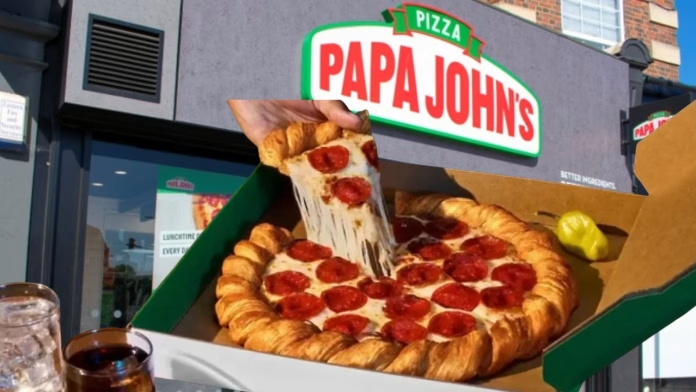
American pizza major Papa Johns is stepping up its India play, setting an ambitious target of 30 outlets by the end of 2026 while preparing to roll out its own delivery service in the coming months. The move marks a shift from its current dine-in and takeaway-only model as the brand looks to tap into India’s delivery-heavy pizza market.
The world’s third-largest pizza chain entered India just over two months ago under master franchisee PJP Foods India, a joint venture between PJP Investments Group and Ambrosia QSR. Bengaluru was chosen as the launch city, with four restaurants currently operational across high-street locations. The company plans to add four more outlets in the city shortly, taking the total to eight before accelerating expansion next year.
Founded in 1984 in the US, Papa Johns today operates over 5,000 restaurants across 45 countries. In India, the brand is positioning itself slightly above the mass market, banking on premium ingredients, larger dine-in formats and a menu adapted to local tastes. While global favourites remain a core offering, nearly a third of the Indian menu features India-specific flavours such as makhani sauce, mint drizzle and paneer-based pizzas.
Quality control has been a key focus ahead of scale-up. Papa Johns operates a 14,000 sq ft central facility in Bengaluru where fresh dough is prepared and slow-rested for 72 hours before being supplied to outlets. Ingredients such as mozzarella, flour and toppings are sourced locally after extensive development and testing.
The company plans to validate its business model in Bengaluru before expanding to Chennai and Hyderabad in 2027, followed by Mumbai and other regions. Over the longer term, Papa Johns is aiming to build a network of around 650 restaurants in India over the next decade.
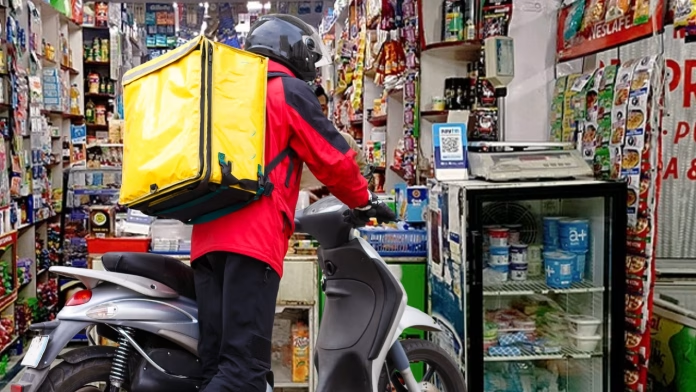
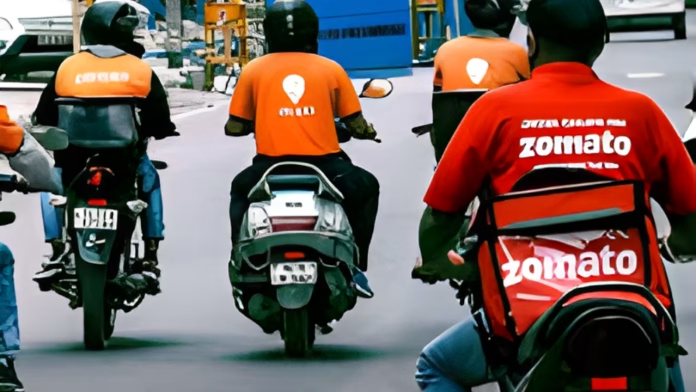
Alongside full-size dine-in outlets, future growth will include smaller delivery and carry-out stores, food court locations and, eventually, cloud kitchens. Delivery operations will begin with an in-house fleet, supported by a proprietary app and website featuring a loyalty programme, as Papa Johns prepares to compete more directly in India’s crowded pizza delivery space.