Monday, December 22, 2025
Home Blog Page 40

Where to Get an FSSAI License in India? Step-by-Step Guide for Restaurants, Cloud Kitchens & Food Startups

0

Starting a food business in India—whether it’s a restaurant, cloud kitchen, bakery, or food truck—comes with one non-negotiable requirement: an FSSAI license. The Food Safety and Standards Authority of India (FSSAI) issues this license to ensure that all food sold in the country meets proper safety and quality standards. Without it, businesses risk heavy penalties, suspension, or even a shutdown.

But the question most first-time entrepreneurs ask is simple: Where can I get an FSSAI license, and how does the process actually work?


Applying for an FSSAI License: Where and How

The good news is that the entire FSSAI registration process is online through the official Food Licensing and Registration System (FLRS) or its upgraded version, FoSCoS (Food Safety Compliance System). Business owners can visit https://foscos.fssai.gov.in and apply directly.

In addition, state food safety departments and regional FSSAI offices also process license applications. However, the centralized FoSCoS portal has made it far easier to apply, track, and renew licenses without physically visiting government offices.


Types of FSSAI Licenses You Can Get

Not every business requires the same license. The FSSAI offers three categories:

  • Basic Registration – For small businesses with turnover up to ₹12 lakh per year (e.g., small caterers, home bakers, petty retailers).
  • State License – For businesses with turnover between ₹12 lakh and ₹20 crore, operating within a single state.
  • Central License – For large food businesses, exporters, importers, or companies operating across multiple states with turnover above ₹20 crore.

Documents Required for FSSAI License

Before applying, food businesses must prepare a standard set of documents, which usually include:

  • Passport-size photographs of the applicant
  • Aadhaar or PAN card
  • Proof of business premises (rental agreement, utility bill, or ownership papers)
  • Food safety management plan
  • List of food products being manufactured or sold
  • NOC from the municipality or local authority

Some businesses, like meat shops or dairy units, may need additional documents such as health certificates or equipment details.


Why FSSAI Matters for Your Food Business

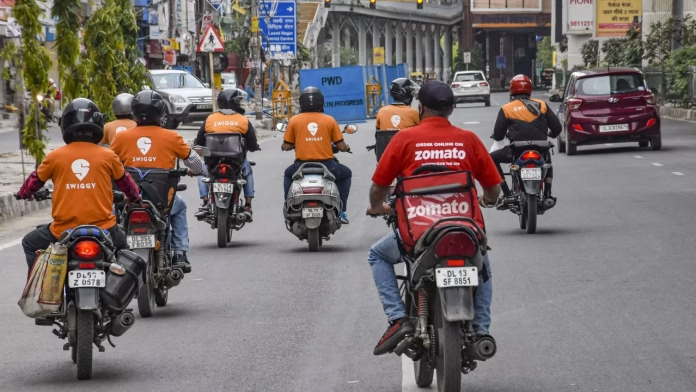
An FSSAI license is not just about legal compliance. It also builds credibility. Platforms like Zomato and Swiggy mandate an FSSAI license for all partner restaurants. Packaged food brands like Paper Boat, Haldiram’s, or Epigamia proudly display their FSSAI license number, reassuring consumers of safety and hygiene.

Moreover, having an FSSAI license can help businesses access loans, expand faster, and establish stronger partnerships with suppliers and aggregators.


The Cost of Getting an FSSAI License

  • Basic Registration: ₹100/year
  • State License: ₹2,000–₹5,000/year (varies by state and business type)
  • Central License: ₹7,500/year

Additional charges may apply for inspections, renewals, or modifications.


Final Word

Whether you’re running a roadside food truck, a neighborhood café, or scaling up to a supermarket chain, getting an FSSAI license is the first step to operating legally and earning customer trust. The application process is streamlined online through FoSCoS, with state and central options depending on your business size.

Advertisement

Food License for Startups: What You Need to Launch the Next Zomato in India

0

The Indian food industry is booming, and platforms like Zomato and Swiggy have changed the way people eat. Instead of walking into restaurants, customers now prefer scrolling through menus online and getting food delivered at their doorstep. But if you’re planning to build a food-tech business like Zomato, one question immediately comes up: Do you need a food license, or is it only for restaurants?

The Role of FSSAI in Food Businesses

In India, the Food Safety and Standards Authority of India (FSSAI) regulates everything related to food safety, hygiene, and quality. Typically, restaurants, cafes, food trucks, cloud kitchens, and even home-based food sellers require an FSSAI license or registration before selling food.

But what about aggregators like Zomato? Since Zomato itself doesn’t cook or sell food, it operates differently from a restaurant. It acts as a technology aggregator that connects customers with licensed food outlets.

Does Zomato Need an FSSAI License?

Yes and no. Here’s the breakdown:

  • Restaurants & Food Sellers on Zomato: Must have a valid FSSAI license to be listed. Zomato won’t allow a food partner on its platform without one.
  • Zomato as a Platform: Since it facilitates food delivery and doesn’t prepare food directly, Zomato doesn’t need a traditional food license like restaurants. However, it must comply with e-commerce food business regulations under FSSAI and ensure that every listed seller has the required license.

In fact, FSSAI issued specific guidelines for online food aggregators in 2018, making it mandatory for Zomato, Swiggy, and similar apps to verify and onboard only licensed food businesses.

What If You’re Building Your Own “Mini Zomato”?

If you’re starting a food delivery platform or aggregator, you don’t need an FSSAI license for yourself (unless you’re also running a kitchen). But you must:

  • Register your business as an e-commerce food aggregator with FSSAI.
  • Onboard only FSSAI-licensed food outlets.
  • Maintain proper records of your partners’ licenses for audits.

If you also plan to run your own cloud kitchen or dark kitchen, then yes—you will need an FSSAI license for that kitchen.

Why It Still Matters for Entrepreneurs

Even if you’re not cooking, working in the food space means trust and compliance. Customers often check whether restaurants and delivery platforms are FSSAI-compliant before placing orders. If you’re building a business like Zomato, having transparency about licenses will make your platform more credible and attract more restaurant partners.

Final Word

So, do you need a food license to start a business like Zomato? Not directly—unless you’re cooking or selling food yourself. But you must comply with FSSAI’s e-commerce guidelines and ensure that every restaurant or food partner on your platform has the proper license.

In short, if you’re the next food-tech disruptor, focus on building technology, logistics, and partnerships—but don’t ignore food safety laws.

Advertisement

NEXT Expands India Footprint With Pune Debut; Plans 50+ Stores and Shop-in-Shops Across Delhi, Mumbai, Bengaluru by 2030

0
Image of next
NEXT Expands India Footprint With Pune Debut; Plans 50+ Stores and Shop-in-Shops Across Delhi, Mumbai, Bengaluru by 2030

British fashion retailer NEXT has officially entered the Indian offline retail market, opening its first exclusive brand outlet at Pavilion Mall in Pune. The launch is part of the brand’s strategic partnership with Myntra Jabong India Pvt. Ltd. (MJIPL), the wholesale arm of Myntra, which holds the licensed rights to distribute NEXT products in the country.

NEXT, known for its women’s, men’s, and children’s apparel, is betting on a mix of standalone outlets and shop-in-shop formats to build scale. The retailer has set a goal of reaching more than 50 points of sale nationwide by 2030. Currently, it operates 10 shop-in-shops inside Shoppers Stop stores, with upcoming standalone locations planned in Delhi, Mumbai, Bengaluru, and Hyderabad.

Speaking on the launch, Venu Nair, Chief of Strategic Partnerships and Omni-Channel at Myntra, said the brand has helped address consumer gaps in multiple categories. “In children’s wear particularly, India’s premium segment remains underserved. NEXT brings global-quality fashion that appeals to style-conscious parents,” he said.

A NEXT spokesperson called the Pune store opening “a pivotal moment” in the collaboration, adding that Indian shoppers would now have direct access to the company’s newest collections through an in-store experience.

NEXT has been present on the Myntra platform since 2023 and has witnessed consistent growth in demand, the companies said. Industry observers believe NEXT’s offline expansion will allow it to capture a larger share of India’s growing premium fashion market, valued at more than ₹1.2 trillion.

The push into physical retail comes at a time when several international brands are deepening their India presence through franchise and partnership-led models, with NEXT positioning itself to compete directly in the country’s expanding urban markets.

Advertisement

Starbucks Faces Backlash After Barista Refuses to Write Charlie Kirk’s Name, Issues Clarification on Customer Policy

0

Starbucks has moved to clarify its customer name policy after a California store employee refused to write “Charlie Kirk” on a cup, triggering a viral backlash online. The incident, involving the conservative commentator’s name, spread rapidly on TikTok and reignited debate around the coffee chain’s handling of politically sensitive requests.

The controversy began when a customer ordered Kirk’s usual drink, a Mint Majesty tea, and asked for his name to be written on the cup. The barista declined, citing what was described as a company policy against “political names.” A video recounting the exchange drew thousands of views within hours, sparking arguments across social media.

In an official statement, Starbucks said its decades-old practice of writing names on cups was meant to foster human connection and had never been intended to exclude real names. The company emphasized that customers may use their own names or another preferred name of choice, as long as the request does not include offensive language or explicit political slogans. Starbucks added that guidance has been issued to employees to avoid future confusion and confirmed that names such as “Charlie Kirk” should not be rejected when used in good faith.

The clarification comes at a time when Starbucks is already navigating leadership changes, with Brian Niccol recently taking over as CEO. The brand, which operates more than 38,000 outlets globally, has faced heightened scrutiny in recent years over its customer service practices and workplace policies.

The Kirk incident has divided opinion online. Supporters accused Starbucks of silencing political voices, while others argued that frontline staff should not be placed in difficult political situations. The company hopes its clarification will put the matter to rest while reinforcing its commitment to inclusivity and customer choice.

Advertisement

HomeEssentials Expands Beyond Digital, Launches Flagship Store in Gurugram to Tap India’s ₹30,000-Crore Home Solutions Market

0

HomeEssentials, a fast-growing home solutions brand, has announced the opening of its first offline retail store at Elan Miracle Mall, Gurugram, marking a significant milestone in its two-year journey.

Launched with the vision of making homes more functional and aesthetically designed, HomeEssentials has built a strong digital presence and developed a loyal customer base across India. The decision to step into offline retail comes on the back of rising consumer demand for innovative, affordable, and design-first home products.

The flagship store, located at one of Gurugram’s busiest retail hubs, will offer a curated range of products spanning storage solutions, kitchen essentials, décor, and other categories designed to combine utility with style. The brand aims to leverage the offline format to give customers a hands-on shopping experience, complementing its digital-first strategy.

Founder of HomeEssentials said the milestone reflects the effort and persistence behind the brand’s journey. “This store is not just about retail expansion. It represents the countless nights of planning, learning, and building something that adds real value to people’s homes,” the founder noted.

The offline foray is seen as the next step in HomeEssentials’ larger ambition of expanding across India. The brand plans to scale aggressively, with an eye on establishing multiple stores in metro and non-metro cities over the next few years.

Investor Madhukar Sinha of IndiaQuotient, who has backed HomeEssentials since its early days, said the move into offline retail is a natural progression. “HomeEssentials has tapped into a space where Indian households are actively looking for better design and functionality at the right price point. This store is just the beginning,” Sinha said.

With its first offline outlet now operational, HomeEssentials is positioning itself to become a household name in the evolving home solutions market.

Advertisement

Wow! Momo Bags ₹75 Crore in Fresh Series D Tranche from 360 ONE and Kyrush, Valuation Nears $320 Million

0

Quick service restaurant operator Wow! Momo Foods has raised ₹75 crore in a new tranche of its ongoing Series D round, according to regulatory filings. The funding is led by 360 ONE, which is contributing ₹70 crore, while Kyrush Investments is adding nearly ₹5 crore.

The Kolkata-headquartered company, founded in 2008 by Sagar Daryani and Binod Homagai, has already attracted more than ₹650 crore in Series D capital, including ₹85 crore raised through debt financing from Stride Ventures earlier this year. With the fresh allotment of 7,837 Series D6 compulsorily convertible preference shares priced at ₹95,699 each, Wow! Momo’s valuation is pegged between $315 million and $320 million, according to Entrackr estimates.

Filings show that 360 ONE will now hold a 2.53 percent stake, while Kyrush Investments will own 0.18 percent in the company. The board has earmarked the new funds for capital expansion, working capital needs and general corporate purposes.

Wow! Momo currently operates more than 700 outlets across 70 cities, spanning brands such as Wow! Momo, Wow! China, Wow! Chicken and Wow! Kulfi. The company has outlined plans to double its presence to 1,500 outlets across 100 cities within three years. It is also betting on scaling its FMCG vertical to ₹100 crore in revenue and building a stronger HORECA business.

According to TheKredible, Wow! Momo reported revenue from operations of ₹470 crore in FY24, up 13 percent from ₹413 crore in FY23. Net loss for FY24 stood at ₹114 crore, broadly unchanged from the previous year.

The latest investment underlines investor confidence in India’s fast-growing QSR market, where homegrown chains are competing aggressively with global brands for share of wallet and real estate.

Advertisement

Jerry Greenfield Quits Ben & Jerry’s After 47 Years, Slams Unilever for Killing Brand Independence Over $326M Takeover Promise

0

Jerry Greenfield, who co-founded Ben & Jerry’s in 1978 with childhood friend Ben Cohen, has stepped down from the company after nearly five decades, citing an irreconcilable clash with Unilever over brand independence. His resignation marks the end of an era for the Vermont-based ice cream maker, long recognized for blending quirky flavors with a strong activist voice.

The breaking point traces back to a bitter dispute over sales in Israeli settlements. In 2022, Ben & Jerry’s sought to block its parent company from distributing products in the West Bank, arguing that doing so violated its mission-driven values. A US court sided with Unilever, which had owned Ben & Jerry’s since acquiring it for $326 million in 2000. For Greenfield, the ruling signaled the erosion of the independence that had been promised under the takeover agreement.

In a statement posted by Cohen, Greenfield said he could no longer remain part of a company that has been “silenced and sidelined for fear of upsetting those in power.” He noted that the brand’s commitment to progressive causes such as civil rights and climate activism has been overshadowed by corporate priorities.

Ben & Jerry’s now sits within Magnum Ice Cream Company, a Unilever subsidiary that generated more than €3 billion in sales last year. A spokesperson for Magnum disputed Greenfield’s account, saying the company continues to uphold the brand’s values while expanding its global reach. Unilever is preparing to spin off Magnum into an independent business by mid-November, a move that may further redefine Ben & Jerry’s role.

Greenfield’s exit follows months of heightened scrutiny of the founders. Earlier this year, Cohen was ejected from a US Senate hearing for protesting American military aid to Israel. Together, their activism has long shaped Ben & Jerry’s identity, a legacy now in question as the brand faces its next chapter under Unilever’s tightening control.

Advertisement

FSSAI License Made Easy: Online Registration, Costs, and Documents You Need

0

If you’re planning to start a restaurant, cloud kitchen, bakery, food truck, or even a home-based food business, one of the first legal requirements you’ll hear about is the FSSAI license. Issued by the Food Safety and Standards Authority of India (FSSAI), this license ensures your business complies with food safety and hygiene regulations. But the big question many entrepreneurs ask is: Where can I get an FSSAI license, and how do I apply?

Where to Apply for FSSAI License

The process is completely online. You can apply through the FSSAI’s official websitehttps://foscos.fssai.gov.in.

Depending on your business size, you’ll need one of the following:

  • FSSAI Basic Registration – For small businesses with turnover below ₹12 lakh per year.
  • FSSAI State License – For medium businesses with turnover between ₹12 lakh and ₹20 crore, operating within a single state.
  • FSSAI Central License – For large businesses with turnover above ₹20 crore, or those operating in multiple states.

Documents Required

When applying, you’ll need:

  • PAN card of the business owner
  • Aadhaar card
  • Passport-size photo
  • Business constitution certificate (Partnership deed, Incorporation certificate, etc.)
  • Address proof (electricity bill/rent agreement)
  • Food safety management plan
  • For manufacturers: list of food products and processing details

Step-by-Step Process

  1. Visit the FSSAI portal (FoSCoS).
  2. Create an account and select the type of license you need.
  3. Fill in your business details, upload documents, and pay the application fee (ranges from ₹100 to ₹7,500 depending on license type).
  4. Submit the application.
  5. The FSSAI authority may inspect your premises before approval.
  6. Once verified, your license is issued, usually within 7–60 days depending on the license category.

Offline Options

If you prefer offline help, you can:

  • Apply through your State Food Safety Office.
  • Approach licensed consultants or CA firms that handle FSSAI applications.
  • Contact facilitation centers run by FSSAI in major cities.

Why It’s Important

Running a food business without an FSSAI license can lead to penalties of up to ₹5 lakh and business closure. Beyond compliance, an FSSAI number on your packaging or restaurant certificate builds consumer trust, making customers confident about food quality.

The Bottom Line

So, where can you get an FSSAI license? The simplest way is through the official FoSCoS portal, though many businesses also use consultants to avoid paperwork hassles. Whether you’re a small home baker or a national food chain, this license isn’t just mandatory—it’s a stamp of credibility.

Advertisement

How to Tie Up with Zomato and Swiggy: A Complete Guide for Restaurants & Cloud Kitchens

0

In India’s fast-growing food delivery market, Zomato and Swiggy dominate with over 80% market share. For restaurants, cloud kitchens, and even home chefs, getting listed on these platforms is no longer optional—it’s often the fastest way to boost orders and brand visibility. But how exactly do you tie up with Zomato and Swiggy? Let’s break it down.

Why Partner with Zomato and Swiggy?

  • Massive reach: Both platforms serve millions of daily users across metro cities and small towns.
  • Boost sales: Restaurants often report 30–60% higher orders after going live.
  • Marketing edge: Visibility through app banners, ratings, and reviews builds credibility.
  • Logistics handled: Delivery is managed by Zomato/Swiggy riders, saving you overhead.

Eligibility Requirements

Before applying, ensure your food business meets basic requirements:

  • FSSAI License (mandatory for any food business in India)
  • GST Registration (if turnover exceeds ₹40 lakh for goods or ₹20 lakh for services, or if you want to claim ITC)
  • PAN card and Aadhaar card of the business owner
  • Bank account details for payments
  • Shop/Trade license from your local municipality
  • Proper kitchen setup (for cloud kitchens/home kitchens, hygiene inspections may apply)

How to Partner with Zomato

  1. Visit the official partner website: Zomato Partner Registration.
  2. Fill in details about your restaurant name, location, cuisine, and contact information.
  3. Upload required documents (FSSAI, PAN, GST, bank details, and menu).
  4. Zomato representatives will verify documents and inspect your kitchen, if necessary.
  5. Once approved, your restaurant will go live on the Zomato app.

Onboarding time: Typically 7–15 days.

How to Partner with Swiggy

  1. Go to Swiggy Partner Registration.
  2. Submit restaurant/business details along with required documents.
  3. Upload your menu with item descriptions and pricing.
  4. Swiggy verifies your documents and may conduct a kitchen check.
  5. After approval, your business profile goes live on the app.

Onboarding time: Usually 7–10 days.

Costs and Commissions

Both Zomato and Swiggy charge a commission per order (15%–30%), plus applicable GST. This varies depending on city, cuisine type, and your negotiation. Some additional charges may include:

  • Onboarding fees (₹500–₹2,000 in some cases)
  • Advertisement costs if you choose paid promotions for better visibility

Tips for Success After Listing

  • Maintain food quality and hygiene – customer reviews directly affect your ranking.
  • Offer smart pricing – factor in commissions while setting menu prices.
  • Use platform promotions – discounts and banner ads can drive early visibility.
  • Engage with reviews – responding to customer feedback builds trust.
  • Ensure quick prep time – faster orders improve ratings and visibility in search.

The Bottom Line

Tying up with Zomato and Swiggy is more than just a listing—it’s about positioning your brand in India’s competitive food delivery ecosystem. With the right licenses, quality control, and smart pricing, restaurants and cloud kitchens can scale rapidly using these platforms.

Advertisement

Mandatory Licenses for Food Businesses in India: From FSSAI to GST, Everything You Need

0

Starting a food business in India—whether it’s a restaurant, cloud kitchen, bakery, or packaged food brand—sounds exciting, but it comes with legal responsibilities. Before you serve your first meal or sell your first packet, you need the right licenses. Not having them can result in heavy fines or even closure. So, what are the mandatory licenses for a food business in India? Let’s break it down.

1. FSSAI License (Food Safety and Standards Authority of India)

The most important license for any food business is the FSSAI license. It ensures that your food meets safety and hygiene standards.

  • Who needs it? Every food business operator—restaurants, hotels, cloud kitchens, caterers, street vendors, and packaged food manufacturers.
  • Types:
    • FSSAI Registration (turnover below ₹12 lakh)
    • State License (turnover ₹12 lakh–₹20 crore)
    • Central License (turnover above ₹20 crore or businesses operating in multiple states)

Without an FSSAI number, you cannot legally sell food.

2. GST Registration

If your annual turnover exceeds ₹40 lakh (₹20 lakh for services) or you sell via Swiggy, Zomato, or Amazon, GST registration is mandatory. It allows you to collect and pay Goods and Services Tax and issue GST invoices.

3. Shop and Establishment License

Issued by the local municipal corporation, this license is required for all shops, hotels, and restaurants to legally operate within city limits. It covers employee rights, working hours, and basic compliance.

4. Trade License from Municipality

A trade license ensures that your food business complies with local safety, hygiene, and structural guidelines. Restaurants, bakeries, and food stalls must apply through the local municipal authority.

5. Fire and Safety License

For restaurants, cafes, and hotels, a Fire Safety Certificate from the Fire Department is mandatory. It ensures that the premises follow fire safety measures and equipment installation.

6. Health and Trade License

This license, issued by the Municipal Health Department, certifies that your food establishment follows hygiene and sanitation standards.

7. Liquor License (If Applicable)

If your restaurant or hotel plans to serve alcohol, a liquor license from the State Excise Department is mandatory. This comes with strict rules and high compliance.

8. Environmental Clearance (For Large Units)

Food factories, processing plants, or large restaurants may require pollution clearance from the State Pollution Control Board to manage waste and emissions.

9. Additional Licenses (Case Specific)

  • Music License if you play recorded music in your restaurant.
  • Weights and Measures Certificate for packaged food businesses.
  • NOC from Society/Building Owner if you’re running from rented premises.

The Bottom Line

Running a food business in India is more than just cooking delicious meals—it’s about being compliant. At the very least, FSSAI registration, GST, and a local trade license are non-negotiable. Skipping these can lead to penalties, but getting them builds trust with customers, platforms, and investors.

Advertisement