Monday, December 22, 2025
Home Blog Page 39

Handcrafted Metalware Brand P•TAL Raises $3 Million in Series A Led by VC Grid and Zerodha’s Rainmatter, Eyes ₹150 Crore ARR and Global Expansion

0

Handcrafted copper, brass and bronze brand P•TAL has secured 3 million US dollars (about ₹25 crore) in a Series A round led by VC Grid and Rainmatter, the venture fund backed by Zerodha cofounder Nithin Kamath. The round also saw participation from Connecticut Innovations, marking the US-based firm’s first investment in an Indian company.

Other investors joining the round include Anicut Capital, Zero Pearl VC, Jaipur Rugs Family Office, Livspace cofounder Ramakant Sharma, Genesis Luxury’s Sanjay Kapoor, CaratLane cofounder Avnish Anand, Atomberg’s Shibam Das, Innov8’s Ritesh Malik, Ekamya Ventures, the Salarpuria Group and LNB Group.

The company, which appeared on Shark Tank India and secured an all-sharks deal in Season 3, has scaled rapidly over the past two years. Revenues have jumped from ₹5 crore annual run rate (ARR) to ₹50 crore, and P•TAL now targets ₹150 crore ARR within the next 12 months.

Exports currently contribute over 55 percent of its sales, spanning the United States, United Kingdom, Europe and the Middle East. The brand expects international revenue share to climb to 75 percent in the next three to five years as it strengthens distribution abroad.

Co-founder and chief executive Aditya Agrawal said the fresh capital will be channelled into product development, technology-led supply chain efficiencies and community initiatives for its artisan base. “We want to redefine what Made in India means — craft rooted in tradition but designed for the future. Our goal is to build a brand that makes India proud on the global stage,” he said.

P•TAL, short for Punjab Thathera Art Legacy, works with traditional artisans in north India to create modern handcrafted metalware, blending design innovation with heritage techniques.

Advertisement

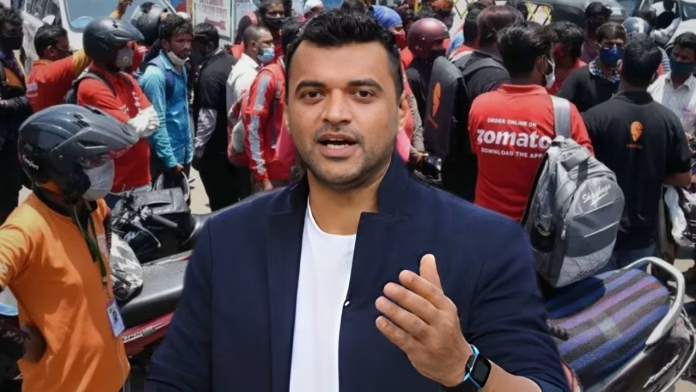
Deepinder Goyal Bets on Moving Billboards: Zomato in Talks to Sell Ads on Riders’ T-Shirts and Bags Across 5 Lakh Fleet, 47 Lakh Orders Daily

0

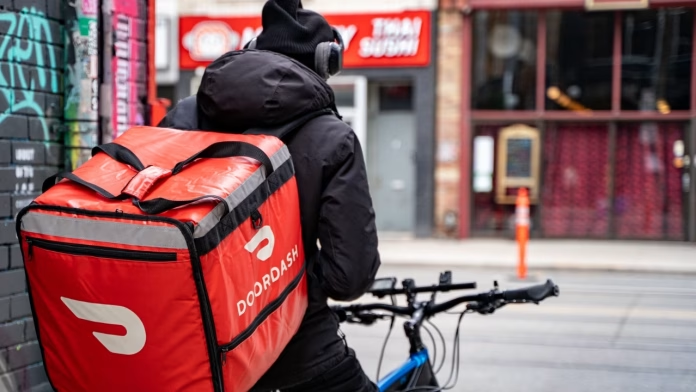
Online food delivery major Zomato is preparing to open up a fresh revenue channel by monetising its most visible assets — its delivery partners and the bags they carry. According to people familiar with the development, the company is in talks with advertisers to explore how rider uniforms and delivery bags could be redesigned to carry brand advertisements.

The idea mirrors sports sponsorship models where jerseys double up as prime ad real estate. For Zomato, the scale is significant. The company has about 5.09 lakh active delivery partners who collectively fulfill more than 25 lakh food orders every day. Its quick commerce arm Blinkit, which Zomato acquired in 2022, delivers another 22 lakh daily orders. Combined, that’s nearly 50 lakh doorstep interactions daily, giving advertisers unparalleled visibility in Indian neighbourhoods.

“If executed across food delivery and Blinkit, this could emerge as an entirely new revenue line item for Zomato,” a person aware of the discussions told Indian Startup News.

For Zomato, the timing is strategic. The company turned profitable earlier this year, overtaking rival Swiggy in terms of order volumes and market share. By layering in ad revenues, Zomato can further strengthen its balance sheet while also giving delivery partners potential upside if incentives are tied to ad campaigns.

Industry watchers note that while brand advertising on delivery fleets is not new in India, Zomato’s scale could make it commercially viable in a way smaller pilots could not. With half a million riders covering every major metro and Tier-II city, advertisers can tap into a hyperlocal, mobile media network unmatched by television or digital campaigns.

Zomato did not respond to queries on the matter. If rolled out, the move could reshape the familiar red Zomato uniform into a walking advertisement, while intensifying its battle with Swiggy, Zepto, and others in India’s fast-growing delivery economy.

Advertisement

Rapido Hits $2.3 Billion Valuation as Swiggy Exits With ₹2,400 Crore Payout

0

Bengaluru-based ride-hailing startup Rapido is in advanced talks to raise between $500 million and $550 million through a mix of primary and secondary share sales, with food delivery major Swiggy set to offload its holding. The round, among the largest venture financings this year, values Rapido at about $2.3 billion, more than double its $1.1 billion mark in February.

People familiar with the matter said the primary infusion is pegged at $300 million, led by Prosus with $240–250 million, and WestBridge Capital bringing in the remainder. The secondary leg will see Swiggy exit its 11.8 per cent stake for $270 million (₹2,400 crore), with Prosus and WestBridge absorbing the shares. Both investors already count among Rapido’s top backers, with WestBridge holding nearly 19 per cent and Prosus also the largest shareholder in Swiggy at 23 per cent.

For Swiggy, which invested close to ₹1,000 crore in Rapido in 2022, the exit delivers a 2.4x return. The move comes amid a cash crunch at its quick commerce arm Instamart, where it spent over ₹1,050 crore in the June quarter. As of June 30, Swiggy reported ₹5,354 crore in cash reserves, significantly lower than Blinkit parent Eternal, which had more than ₹18,000 crore on hand. Analysts say the Rapido sale will add some cushion but may not eliminate the need for further fundraising.

Rapido, meanwhile, will use the fresh capital to expand its ride-hailing footprint and strengthen food delivery offshoot Ownly. The company claims leadership in the overall ride-hailing market, though it trails Uber in the four-wheeler category. Rapido reported FY24 operating revenue of ₹648 crore, up 46 per cent year-on-year, while trimming losses by 45 per cent to ₹371 crore. Growth in FY25 is estimated at over 40 per cent, according to people aware of internal numbers.

Advertisement

Patanjali Wins Partial Relief: Court Says ‘Ordinary Chyawanprash’ Tag Allowed, Dabur’s 61.6% Market Share Still Under Spotlight

0

The Delhi High Court on Tuesday delivered its ruling in an advertising tussle between Patanjali Ayurved and Dabur India, allowing Patanjali to continue using the phrase “why settle for ordinary chyawanprash” but directing the company to withdraw references that specifically target Dabur’s 40-herb formulation.

A division bench of Justices C Hari Shankar and Om Prakash Shukla held that while comparative advertising and “puffery” are permissible, Patanjali’s direct claim that rival chyawanprash is made with only 40 herbs unfairly singled out Dabur. The court observed that modern advertising permits a brand to say “I am the best and others are not as good,” but drew a line at statements that could mislead consumers about product composition.

The ruling came in response to Patanjali’s appeal against a July interim order of a single judge, which had restrained the company from airing parts of its commercials alleged to disparage Dabur.

Dabur, which commands an estimated 61.6 percent share of India’s chyawanprash market, argued that Patanjali’s advertisements not only belittled its product but also spread misinformation. Dabur said Patanjali falsely claimed its chyawanprash was prepared with 51 herbs, when in reality it used 47. It also objected to the “ordinary chyawanprash with 40 herbs” line, contending this was a direct swipe at Dabur’s flagship formulation.

The company further accused Patanjali of suggesting that other manufacturers lacked the Ayurvedic knowledge or Vedic traditions required to make authentic chyawanprash, creating a perception that only Patanjali’s variant was genuine.

While the bench dismissed Dabur’s contention that consumers would abandon its product because of Patanjali’s puffery, it ruled that factual inaccuracies about ingredients must be corrected.

Advertisement

Myntra Steps Into B2B: Opens 40 Lakh SKUs and 10,000 Brands for Businesses With GST Benefits Ahead of Festive Season

0

Fashion and lifestyle e-commerce major Myntra has launched a new business-to-business (B2B) vertical on its platform, enabling registered enterprises to directly procure fashion, beauty, and lifestyle products. The move, announced on Monday, is aimed at bridging gaps in traditional wholesale supply chains and comes weeks before India’s festive shopping season begins.

The B2B offering provides companies with access to over 10,000 brands and more than 40 lakh stock keeping units (SKUs) available on Myntra. The platform will issue GST-compliant invoices and ensure quality verification, allowing registered buyers to claim input tax credits. Businesses can now place both bulk and small-volume orders, with the flexibility to purchase even a single unit if required.

By reducing multiple supply chain layers, Myntra aims to make procurement more transparent, cost-effective, and reliable. This is expected to benefit retailers, boutique owners, and service providers who previously relied on fragmented offline distribution networks.

“The initiative strengthens the ecosystem by solving two critical challenges—credibility and transparency for our brand partners, and supply reliability for business shoppers,” said Bharath Kumar BS, Senior Director, Revenue and Growth at Myntra. “This will empower our B2B buyers to serve their customers better, particularly during the high-demand festive period.”

The rollout is being executed in two phases. The first phase, already active, includes GSTIN validation at checkout for eligible buyers. The second phase, expected in the coming months, will introduce bulk-order handling, brand-level order requests, and a dedicated supply chain support system designed for business customers.

With the launch, Myntra is positioning itself as more than just a consumer marketplace, extending its platform to serve as a procurement partner for India’s growing retail and services sector.

Advertisement

Molson Coors Names Rahul Goyal as CEO Effective Oct 1; Veteran Executive Takes Charge Amid Beer Demand Slump and 50% U.S. Tariff Pressure on Aluminum

0

Molson Coors Beverage Company on Monday announced the appointment of Rahul Goyal as its next chief executive officer, effective October 1, as the global brewer faces declining beer consumption and rising input costs in its largest market, the United States. Goyal, who currently serves as chief strategy officer, will succeed Gavin Hattersley, the outgoing CEO who is set to retire at the end of the year after six years at the helm.

A veteran of more than two decades with Molson Coors, Goyal has worked across geographies and functions, including a stint as finance chief for the company’s India operations. His elevation marks a continuation of the company’s recent focus on developing non-beer categories, including flavored alcoholic beverages and energy drinks, as U.S. beer volumes shrink. According to industry estimates, alcohol consumption among American adults fell to its lowest level on record in 2024, with traditional beer brands taking the sharpest hit.

Molson Coors itself warned in August of lower annual profit, citing tariff-related headwinds on aluminum imports. The U.S. government’s decision to impose a 50% duty on foreign aluminum has pushed up Midwest premium prices, inflating packaging costs for beverage makers. With nearly all of its portfolio reliant on cans, the brewer expects margin pressure through the rest of FY25.

Analysts say Goyal’s long association with the company and his role in shaping Molson Coors’ diversification strategy position him to manage the turbulence. “Few executives know Molson Coors better than Rahul Goyal,” said Zak Stambor, analyst at eMarketer. “But with younger consumers increasingly rejecting beer and alcohol altogether, the challenge is steep.”

Hattersley will continue to serve in an advisory capacity until the end of 2025 to ensure a smooth leadership transition, the company said. Shares of Molson Coors were down about 1% in early trading on Monday following the announcement.

Advertisement

V2 Retail Crosses 250-Store Landmark with Six New Openings Across West Bengal, MP, Punjab, Jharkhand, UP and Bihar; Q1 FY26 Revenue Surges 52% to ₹632 Crore

0

Value fashion and lifestyle chain V2 Retail has crossed a major milestone, expanding its store network to 250 outlets across India with the inauguration of six new outlets on Monday. The expansion comes just weeks before the festive shopping season, a critical period for retailers, and reflects the company’s sharpened focus on Tier II and Tier III cities.

The newly launched stores are spread across six states: Kanchrapara in West Bengal’s North 24 Parganas district, Ujjain in Madhya Pradesh, Zirakpur in Punjab, Godda in Jharkhand, Muzaffarnagar in Uttar Pradesh and Bangla Sahib in Bihar. The Kanchrapara outlet, in particular, has been timed to coincide with Durga Puja celebrations, a peak demand season in eastern India.

Chairman and Managing Director Ram Chandra Agarwal, who began his retail journey with a small outlet in Kolkata’s Lalbazar market, called the 250-store landmark “a proud achievement” for the homegrown chain. “Reaching 250 stores is a significant step for us. Opening six stores on the same day makes it even more memorable. Our focus continues to be on emerging India, where aspirational shoppers are driving demand for affordable fashion and lifestyle products,” he said.

The expansion comes on the back of strong quarterly results. V2 Retail reported consolidated revenue of ₹632 crore in the April–June quarter of FY26, marking a 52 percent year-on-year jump, driven largely by higher footfalls and improved consumer spending in smaller towns.

Industry analysts note that value-focused retailers are well positioned to capture the next leg of consumption growth in India, particularly as discretionary spending in smaller cities is outpacing metros. For V2 Retail, the festive season push is expected to further strengthen topline growth while reinforcing its stronghold in high-potential regional markets.

Advertisement

Millet Snacks Go Mainstream: ITC, PepsiCo’s Kurkure, and Wholsum Foods Lead India’s Rs 5,000 Cr Better-for-You Snacking Revolution

0

India’s snack aisles are witnessing a quiet revolution as millets transition from niche health foods to mainstream munchies. FMCG giants, multinational corporations, and startups alike are experimenting with nutrient-rich twists on familiar snacks, offering consumers options that are both tasty and wholesome. Products such as ragi crisps, foxtail-millet nachos, and choco-millet bars are becoming increasingly common, reflecting the growing appetite for better-for-you alternatives.

PepsiCo India’s homegrown Kurkure brand has joined the millet bandwagon, marking its 25th anniversary with the launch of Kurkure Jowar Puffs. Saakshi Verma Menon, chief marketing officer for foods at PepsiCo India, said the move combines the traditional appeal of jowar with the signature chatpata taste, aligning with changing consumer preferences while driving innovation in the snacking segment.

Two years ago, millet-based offerings were largely confined to health aisles in modern retail stores. That has changed as value growth returned to FMCG in 2024–25, with rural markets outpacing urban consumption. Consumers are increasingly willing to explore healthier options, integrating millet into everyday snacking and quick-service restaurant menus.

ITC has expanded its Mission Millets portfolio to include atta, cookies, noodles, and snacks, reinforcing its broader ‘Help India Eat Better’ strategy. Executive director Hemant Malik noted that digital and quick commerce platforms are helping accelerate consumption by making millet products more accessible to urban and rural consumers alike.

Startups like Wholsum Foods, which operates Slurrp Farm and Mille, are also riding the trend. Co-founder Meghana Narayan said demand is largely driven by digital-first shoppers seeking nutritious alternatives, and the company continues to broaden its “better-for-you” offerings while keeping millets at the core.

Analysts say the growing adoption of millet-based snacks reflects a broader evolution in India’s food culture. Traditional grains, once relegated to niche segments, are now fueling innovation across mainstream packaged foods, catering to health-conscious, convenience-oriented consumers across cities and small towns alike.

Advertisement

Reliance Retail Strengthens Premium Food Offerings, Introduces Curated South African Range Amid $1.3 Billion Indian Gourmet Market Growth

0

Reliance Retail has struck a new partnership with Wesgro, the official trade and investment promotion agency for South Africa’s Western Cape, to introduce premium South African food and beverage products to India. The launch took place in Mumbai, where Reliance rolled out the initiative across its Freshpik and Go Fresh outlets, reinforcing its ambition to position these formats as destinations for global gourmet products.

The inauguration was marked by the presence of South African cricketing star Herschelle Gibbs and Gidian Labane, Consul General of South Africa in Mumbai, underscoring the growing cultural and trade links between the two countries. Damodar Mall, Chief Executive of Reliance Retail’s grocery division, said the collaboration was designed to strengthen Reliance’s international sourcing strategy and widen access to authentic global tastes for Indian consumers.

The Western Cape region, often described as South Africa’s food and wine capital, is known for its premium agricultural exports. The curated selection now available in India spans packaged foods, beverages, and gourmet staples that are increasingly sought after by a rising segment of urban shoppers.

India’s appetite for international food products has been expanding rapidly. According to industry estimates, the gourmet food market in India is valued at over USD 1.3 billion and is growing at a compound annual rate of around 20 percent. Reliance Retail, which operates more than 19,000 stores across the country, has been steadily expanding its premium formats to capture this demand.

For Wesgro, the partnership opens a significant retail channel in one of the world’s fastest-growing consumer markets. For Reliance, it is another step in building a differentiated portfolio that blends domestic staples with global premium brands.

Advertisement

Kurnool to Get Reliance’s First Food Park with ₹768 Crore Investment; Project to Produce 1.2 Million Tonnes of Atta, 36,500 Tonnes of Rice, and 32,900 Tonnes of Chocolates

0

Reliance Consumer Products Ltd (RCPL), the fast-moving consumer goods arm of Reliance Industries, is preparing to establish its first food park in Andhra Pradesh with an initial investment of ₹768 crore. The facility will be located in Brahmanapalli village of Orvakal, Kurnool district, and forms part of RCPL’s larger plan to invest ₹40,000 crore in integrated food parks across India over the next three years.

According to officials familiar with the project, the Andhra Pradesh State Investment Promotion Committee has cleared the allotment of 120 acres for the food park. The site lies within three hours of Hyderabad and five hours of Bengaluru by road, offering strategic access to two major consumption hubs. In addition, RCPL has been allotted another 80 acres nearby for a proposed beverages manufacturing unit. The state cabinet is expected to give its final nod within two weeks.

The Kurnool project will be developed in phases. The first phase will include facilities to produce around 23,000 tonnes of spices, 14,400 tonnes of noodles and pasta, and 3,800 tonnes of snacks annually. The second phase will focus on larger categories such as rice with a proposed annual output of 36,500 tonnes, atta at 1.2 million tonnes, and 32,900 tonnes of chocolates and confectionery. Together, the two phases are expected to generate at least 500 direct jobs in the region.

Reliance has also signed an MoU with the Maharashtra government to build a food and beverage hub in Nagpur, though Andhra Pradesh is moving ahead as the company’s first operational food park. At Reliance’s annual general meeting last month, Isha Ambani, executive director of Reliance Retail Ventures, outlined the group’s ambition of scaling RCPL into a ₹1 lakh crore consumer goods powerhouse within five years.

Advertisement