Thursday, December 18, 2025
Home Blog Page 28

Lenskart Delivers ₹62 Crore Q1 Profit as Revenue Climbs 25% Ahead of Stock Market Debut

0

Eyewear retailer Lenskart Solutions Ltd has posted a strong first-quarter performance ahead of its much-anticipated initial public offering, with the company swinging to a net profit of Rs 61.2 crore in the April–June period of FY26. This marks a turnaround from a loss of Rs 11 crore in the same quarter last year, according to its Red Herring Prospectus (RHP).

The company’s operating revenue climbed 25% year-on-year to Rs 1,894 crore, up from Rs 1,520 crore in Q1 FY25, driven by growth across both domestic and international markets.

Founded by Peyush Bansal and Amit Chaudhary, Lenskart had already closed FY25 on a high note, reporting a net profit of Rs 297 crore, reversing a Rs 10 crore loss in FY24. Full-year revenue rose 22% to Rs 6,652 crore, compared with Rs 5,428 crore in the previous fiscal.

Lenskart’s overseas operations continue to play a major role, contributing nearly 40% of its Q1 FY26 revenue, led by markets such as Taiwan, Australia, Japan, South Korea, Thailand, and the Middle East. International revenue rose to Rs 736 crore, up from Rs 584 crore a year earlier.

The company operates more than 2,800 stores globally, including 2,137 in India. Its India business generated Rs 1,169 crore in revenue in Q1 FY26, compared with Rs 936 crore a year ago.

The upcoming IPO, opening on October 31 and closing on November 4, includes a fresh issue of Rs 2,150 crore and an offer for sale worth Rs 5,128 crore, pegging Lenskart’s valuation at around Rs 70,000 crore. Proceeds from the issue will fund new store expansion (Rs 272 crore) and leasing, rentals, and operational costs (Rs 591 crore).

EBITDA surged to Rs 336.6 crore from Rs 183.4 crore last year, reflecting better operating leverage and efficiency gains.

Advertisement

EatFit & CakeZone Parent Curefoods to Hit Dalal Street with ₹800 Crore IPO; Early Investors Eye Big Payouts

0

Cloud kitchen operator Curefoods, the company behind popular food brands such as EatFit, CakeZone, and Krispy Kreme (India), has received approval from the Securities and Exchange Board of India (SEBI) to launch its ₹800 crore initial public offering (IPO), as reported by Moneycontrol.

The public issue will consist of a fresh equity issue along with an offer-for-sale (OFS) of up to 4.85 crore shares, giving several early investors a chance to either trim down or fully exit their stakes.

Ankit Nagori, founder and CEO of Curefoods, will retain his entire holding and has confirmed that he will not be selling any of his shares in the IPO.

Investors planning to offload part of their holdings include Iron Pillar, Crimson Winter, Accel, Chiratae Ventures, and Curefit Healthcare — the last of which was co-founded by Mukesh Bansal and Ankit Nagori.

According to the report, Iron Pillar PCC will be the largest seller, offering around 1.91 crore shares. Crimson Winter will sell roughly 97.6 lakh shares, followed by Accel (45.7 lakh shares), Chiratae Ventures (36.6 lakh shares), and Curefit Healthcare (12.8 lakh shares).

Iron Pillar is also set to be the biggest beneficiary of the IPO, with its estimated exit value projected to be 2.6 times higher than that of Accel and Chiratae, based on the weighted average acquisition cost.

With this move, Curefoods is poised to strengthen its presence in India’s rapidly growing cloud kitchen space while rewarding early backers who bet on its multi-brand food ecosystem early on.

Advertisement

India’s FMCG Market Sees Slowdown as GST Changes and Rainfall Disrupt Sales

0

India’s fast-moving consumer goods (FMCG) sector faced a turbulent September quarter as erratic monsoons and the rollout of revised GST slabs weighed on sales for global majors across categories. Companies ranging from Hindustan Unilever and Reckitt to PepsiCo, Coca-Cola, and Heineken reported muted growth or temporary declines, even as they maintained confidence in India’s long-term consumption potential.

Unilever’s chief executive Fernando Fernandez said the company saw short-term disruption due to GST adjustments but believes the reform will benefit nearly 40% of its product portfolio by making prices about 10% lower. He added that India remains among the company’s strongest growth markets in the medium term.

At Reckitt, net revenue growth was affected by the GST transition, although its flagship hygiene brand Dettol continued to post volume-led gains. Chief financial officer Shannon Eisenhardt told investors that the third-quarter impact from GST phasing was in the “low to mid-single digits,” with India’s like-for-like growth staying marginally positive.

Beer maker Heineken, which controls United Breweries, cited heavy rains in several states for a mid-single-digit decline in volumes during the quarter. The unusual monsoon, which hit beverage consumption in both on-trade and off-trade channels, also dented sales for soft drink giants Coca-Cola and PepsiCo.

Despite these challenges, FMCG executives remain upbeat. Coca-Cola CEO James Quincey said India continues to represent “huge potential for long-term volume growth,” supported by a young consumer base and expanding rural penetration, though at lower price points compared with mature markets.

Industry analysts say the September quarter marks a temporary correction rather than a trend reversal. With rural demand improving, inflation easing, and logistics stabilizing post-GST, FMCG players are expected to regain momentum in the coming months, reinforcing India’s status as one of the most dynamic consumer markets globally.

Advertisement

India’s Beauty Industry Lures Global Brands with Cost Benefits and Rising Luxury Demand

0

India is fast emerging as the world’s next beauty manufacturing hub, attracting global cosmetics giants eager to tap into a market projected to quadruple over the next decade. Japanese luxury skincare and cosmetics company Shiseido is the latest to confirm plans to manufacture in India as it scales operations, joining peers Estée Lauder and The Body Shop, which are in advanced talks with local partners to produce domestically.

“Local manufacturing offers inherent advantages, including lower duties and faster access to consumers,” said Sanjay Sharma, country head of Shiseido India. The company, which currently imports its entire portfolio, said the move is part of a long-term global plan contingent on business scale.

According to a joint report by Kearney and LuxAsia, India’s luxury beauty market—currently valued at $800 million—is expected to reach $4 billion by 2035, driven by rising incomes, urbanization, and aspirational consumption. With China’s luxury demand slowing, India is fast becoming the next big growth story for global beauty brands.

In recent months, high-end and celebrity-led labels such as Rare Beauty, Fenty Beauty, Anomaly, H&M Beauty, and Huda Beauty have made their India debut. Executives at import firms say at least two more celebrity-owned brands are scouting exclusive Indian manufacturing partners to produce locally at mid-tier price points.

Estée Lauder, which operates nine global production sites, has already rolled out limited-edition products made in India through a third-party partner. Its CEO Stéphane de La Faverie recently confirmed “massive investments” in India, highlighting strategies like smaller pack sizes and affordable luxury offerings to appeal to a broader base of consumers.

With import duties currently totaling nearly 48%, local manufacturing is becoming not just an efficiency move but a competitive necessity. As global beauty giants invest, India is fast cementing its status as the next powerhouse in global cosmetics production.

Advertisement

UPI Payments Rise 34% as Indians Spend More on Eating Out and Food Delivery

0
Image of upi
UPI Payments Rise 34% as Indians Spend More on Eating Out and Food Delivery

India’s appetite for dining out is reshaping the country’s spending habits, with restaurant payments recording a sharp surge this year. Unified Payments Interface (UPI) transactions for eating places jumped 34% to 14 billion in the six months to September, compared with 10.4 billion in the same period last year. The value of these payments rose to ₹1.9 lakh crore from ₹1.5 lakh crore, signalling strong consumer momentum despite inflationary pressures.

Data indicates that Indians spent an average of ₹1,056 crore daily on dining out during the first half of FY26, up from ₹810 crore a year ago. Restaurant payments now account for nearly one-fifth of total UPI transactions. The shift aligns with a broader trend in household expenditure — the share of restaurants and hotels in total consumption spending touched a decade-high of 2.3% in FY24.

Industry executives say the recent GST rate cuts have further lifted sentiment. “The October–December quarter will be the strongest of the year, with industry growth expected at 18–20%,” said Sagar Daryani, president of the National Restaurant Association of India and cofounder of Wow! Momo. His brand has seen 21% annual growth, ahead of the industry average of 12–19%.

The momentum extends beyond metros, with tier-2 and tier-3 cities contributing significantly to growth. Brands like Daryaganj Hospitality and Speciality Restaurants are witnessing record sales during the festive season. “Eating out has become the biggest form of entertainment in India,” said Amit Bagga, CEO of Daryaganj Hospitality.

Experts note that dining is evolving from a functional activity to an experiential one. “Guests now choose experiences that make them feel special,” said Divya Aggarwal of Impresario Entertainment. With inflation in cooked snacks up to 4.1% this fiscal and UPI usage rising 10%, India’s food service industry appears set for a historic year.

Advertisement

MTR Foods Parent Orkla India Eyes ₹10,000 Crore Valuation with IPO Launch on October 29

0

Orkla India, the parent company of popular packaged food maker MTR Foods, has announced a price band of Rs 695 to Rs 730 per share for its upcoming initial public offering (IPO), aiming for a market valuation of around Rs 10,000 crore at the upper end. The IPO will open for retail investors on October 29, while anchor investors can place their bids a day earlier, on October 28.

The public issue is entirely an offer for sale (OFS), with no new shares being issued. Orkla Asia Pacific, the company’s largest shareholder and part of the promoter group, will offload 20.6 million shares. Other existing investors, including Navas Meeran and Feroz Meeran of the Meeran Group, will sell 1.1 million shares each. The move marks a key milestone for the India arm of Norway’s Orkla ASA, which has steadily expanded its presence in the country’s fast-growing packaged food sector.

Orkla India, which owns well-known brands such as MTR, Eastern, Rasoi Mix and Laban, offers a diverse portfolio that spans breakfast mixes, ready-to-eat meals, condiments and confectionery. The company’s consolidated profit rose 13% year-on-year to Rs 256 crore in FY25, while revenue inched up 1.6% to Rs 2,395 crore.

Industry watchers say the IPO comes at a time when the packaged food and convenience meal categories are witnessing renewed demand in India’s urban markets. The listing will also provide investors a chance to gain exposure to a strong domestic consumption story, with Orkla India competing against established players like Tata Consumer Products and Dabur India.

With the IPO launch just days away, Orkla India is positioning itself as a growth-driven FMCG player with deep roots in Indian households and a clear focus on expanding its footprint across categories.

Advertisement

Colgate-Palmolive India Maintains Margins Despite GST Impact; Net Sales at ₹1,507 Crore

0
Image of colgate.
Colgate-Palmolive India Maintains Margins Despite GST Impact; Net Sales at ₹1,507 Crore

Colgate-Palmolive India reported a muted second quarter for FY26 as the recent goods and services tax (GST) cut on oral care products disrupted its trade channels, leading to a dip in sales. Net revenue for the quarter stood at ₹1,507 crore, down 6.3% year-on-year, while net profit fell to ₹328 crore from ₹395 crore a year earlier. Sequentially, revenue rose 6.1% from ₹1,421 crore in the previous quarter.

The government’s decision to reduce GST on toothpaste and other oral care items from 18% to 5% came as a relief for consumers but caused temporary disruptions for distributors and retailers as they adjusted to new pricing structures. “We welcome this progressive move as it boosts consumer confidence and recognises oral health as a national priority,” said Prabha Narasimhan, Managing Director and CEO of Colgate-Palmolive India. She added that while the GST change affected the quarter’s performance, the company expects a steady rebound in the second half of the fiscal year.

Despite the sales dip, Colgate maintained its operating margins, supported by its cost-efficiency initiative, Funding The Growth. The company continued to invest in innovation and premiumisation with launches such as Colgate Visible White Purple and Palmolive Moments body wash range featuring natural extracts and signature fragrances. It also intensified marketing efforts for Colgate Strong Teeth through the “Cavity-Proof” campaign, promoting its 24-hour anti-cavity Arginine + Calcium Boost technology for children.

The board of directors declared a first interim dividend of ₹24 per share for FY26.

While the GST cut temporarily slowed trade activity, analysts expect benefits to emerge in the coming quarters as lower prices drive higher consumer offtake. Colgate said it remains focused on long-term brand building and premium growth within India’s expanding oral care market.

Advertisement

Nestle’s India Business Hits Record ₹5,411 Crore Quarterly Sales, Reckitt Stays Strong

0
Image of nestle
Nestle’s India Business Hits Record ₹5,411 Crore Quarterly Sales, Reckitt Stays Strong

India has emerged as a rare bright spot for global consumer goods giants Nestle SA and Reckitt Benckiser, even as both companies grapple with slowing growth and operational turbulence across major international markets.

For the first time, Nestle SA spotlighted India in its post-earnings call as a high-performing market with strong growth momentum. The company’s global CFO, Anna Manz, credited continued investment in strategic emerging markets such as India, Malaysia, Indonesia, and Pakistan for offsetting weakness elsewhere. Nestle India, which manufactures popular brands like Maggi and Purina, reported a 10.8 percent year-on-year rise in domestic sales to ₹5,411 crore for the September quarter—its highest-ever quarterly revenue—driven by broad-based volume growth.

Globally, however, Nestle SA faced a challenging nine months, with sales slipping 1.9 percent year-on-year to $82.8 billion. The Swiss food major also underwent major leadership changes, including the exit of its chairman and two chief executives within a year. Newly appointed CEO Philipp Navratil announced plans to cut 16,000 jobs worldwide, calling the move a “hard but necessary decision” to realign operations.

Meanwhile, Reckitt Benckiser also highlighted India as a standout market, despite short-term disruptions caused by recent Goods and Services Tax (GST) adjustments. The company reported strong sell-out performance across its hygiene and health portfolio, including Dettol and Lysol, but noted that revenue growth was temporarily affected by the GST transition. Reckitt’s emerging markets segment grew 15.5 percent during the quarter, led by robust demand in India and China.

CFO Shannon Eisenhardt confirmed that India’s low single-digit growth in the September quarter was a result of GST-related phasing, with expectations of a rebound in the following months. Other FMCG majors such as Hindustan Unilever, Dabur, and Godrej Consumer Products have also flagged similar short-term disruptions linked to the GST overhaul.

India’s sustained consumer demand and expanding retail ecosystem, however, continue to anchor optimism for multinational players betting on emerging markets for future growth.

Advertisement

Zomato, Blinkit Parent Eternal Under GST Lens Again, Faces ₹128 Crore Demand from UP

0

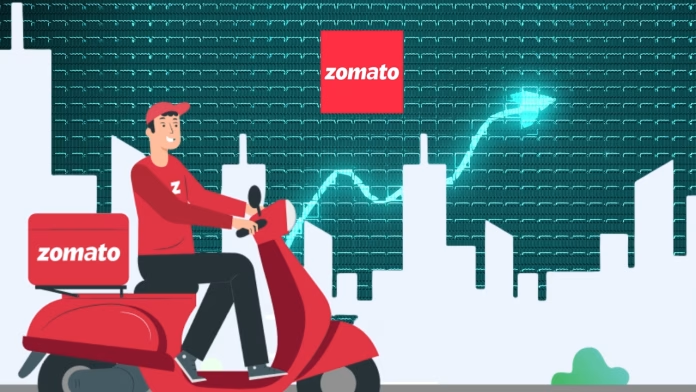
Adding to its growing list of tax disputes, Zomato and Blinkit’s parent company, Eternal, has been served a goods and services tax (GST) demand order worth ₹128.4 crore by the Uttar Pradesh State Tax Department. The order, issued by the Deputy Commissioner of State Tax in Lucknow, covers the financial period between April 2023 and March 2024. It includes a GST demand of ₹64.2 crore along with an equivalent penalty, citing short payment of output tax and excess input tax credit claims.

The company confirmed the development in a stock exchange filing dated October 18. “The company has received an order confirming a demand of ₹64.2 crore with applicable interest and a penalty of ₹64.2 crore. We believe we have a strong case on merits and plan to appeal before the appropriate authority,” Eternal stated.

This latest notice adds to a series of tax demands faced by the company across several states in recent years. Eternal has previously received GST-related notices of ₹401.7 crore from Maharashtra in 2023, ₹2.2 crore from Delhi, ₹4.6 crore from Tamil Nadu, ₹17.7 crore from West Bengal, ₹803.4 crore again from Maharashtra, ₹1.3 crore from Uttar Pradesh, and ₹40 crore from Karnataka in 2024–25.

The latest order follows the company’s Q2 FY26 results, where Eternal reported a sharp 63% year-on-year drop in consolidated net profit to ₹65 crore. However, revenue surged 183% to ₹13,590 crore, led by Blinkit’s rapid expansion. Blinkit’s revenue jumped nearly nine times year-on-year to ₹9,891 crore, after the platform adopted an inventory-led model, increasing control over product assortment.

Meanwhile, Zomato’s food delivery business continues to face slower growth amid weak discretionary spending and rising competition in quick commerce. Eternal, which rebranded from Zomato in March 2025, also noted that new GST 2.0 rules have impacted delivery margins, as services by non-registered partners now attract an 18% tax passed on to customers.

Advertisement

Reliance Retail Posts ₹3,457 Crore Profit in Q2, Sees Strong Gains Across Grocery and Fashion

0

Reliance Retail Ventures Ltd (RRVL), the retail arm of Reliance Industries Ltd, reported a 22% year-on-year rise in consolidated net profit to ₹3,457 crore for the quarter ended September 2025, supported by strong festive consumption and continued network expansion across formats.

Revenue from operations increased 19% to ₹79,128 crore compared with the same period last year, while earnings before interest, tax, depreciation, and amortisation (Ebitda) grew 16.5% to ₹6,816 crore. The Ebitda margin narrowed slightly to 8.6% as the company absorbed higher operating costs and discounts tied to festive promotions.

Isha M. Ambani, Executive Director of Reliance Retail Ventures, said the results reflect the company’s commitment to operational excellence and long-term growth investments. “Our strong performance this quarter reflects festive momentum across categories, strategic investments in digital platforms, and continued focus on curating collections that resonate with the modern Indian shopper,” she said.

Category performance and growth drivers
The grocery and fashion & lifestyle businesses led the growth, rising 23% and 22% year-on-year, respectively. Consumer electronics grew 18%, driven by robust sales of televisions and air conditioners under the Reliance Digital brand. Packaged food sales were up 20%, staples rose 18%, and home and personal care products grew 13%. Fresh produce volumes surged 62% from a year earlier.

Reliance Retail added 412 new stores during the quarter, bringing its total to 19,821 outlets across India. The retail footprint stood at 77.8 million sq. ft, marginally lower than a year ago due to the company’s format optimisation strategy.

FMCG business restructuring
Reliance confirmed that its fast-moving consumer goods arm will be spun off into a new entity, New Reliance Consumer Products Ltd (New RCPL), ahead of RRVL’s planned IPO. The FMCG division posted gross revenue of ₹5,400 crore in the quarter, with its Campa beverage brand maintaining a double-digit market share.

At its annual general meeting earlier this year, Reliance reiterated its ₹1 trillion revenue target for RCPL within five years, as it strengthens its consumer products portfolio alongside its retail and digital ventures.

Advertisement