A Legacy of Innovation: Epigamia Co-Founder Rohan Mirchandani Passes Away at 42
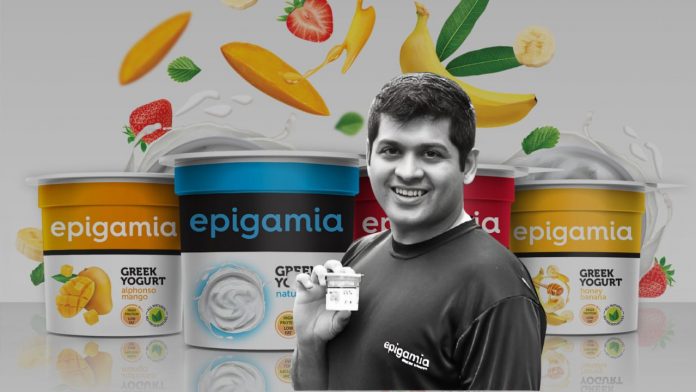
Rohan Mirchandani, the co-founder of Epigamia, a prominent Greek yogurt brand in India, passed away on December 21 at the age of 42 after suffering a cardiac arrest.
Drums Food International, the company behind Epigamia, confirmed the news in an official statement.
Rohan Mirchandani was an Entrepreneur Par Excellence
A graduate of NYU Stern and The Wharton School, Mirchandani established Drums Food International in 2013. What started as Hoki Poki, an ice cream brand, evolved under his guidance into Epigamia, a well-recognized name in the Indian dairy industry. Today, the brand boasts a presence in over 20,000 stores across 30 cities and had been eyeing expansion into the Middle East by 2025-26.
The company’s senior leadership, including Ankur Goel (COO and founding member) and Uday Thakker (co-founder and director), will continue to steer the organization with support from the board, investors such as Verlinvest and DSG Consumer Partners, and Mirchandani’s family.
“Rohan was not just our leader but a mentor and a friend,” Goel and Thakker shared in a heartfelt joint statement. “We are committed to honoring his vision and taking his dream forward with determination.” The board of directors described Mirchandani as a “trailblazer” whose passion and innovative mindset shaped the company’s identity. “We will collaborate closely with the leadership team to ensure his legacy continues to thrive,” they stated.
Amazon Faces Historic Strike as Workers Walk Off Amid Contract Dispute
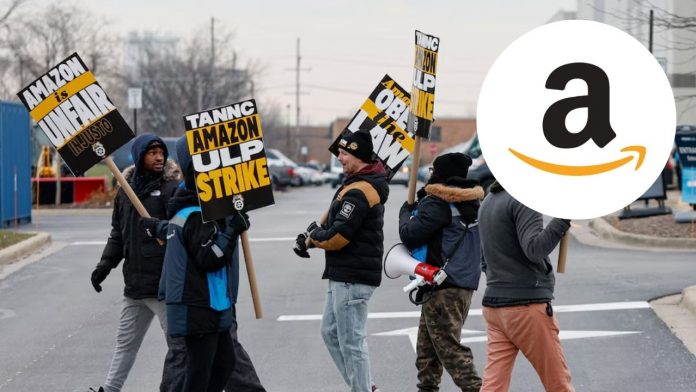
Amazon is facing a massive strike after the company missed a key deadline to start negotiations for a union contract.
As of December 19, approximately 10,000 workers have walked off the job, with picket lines forming in cities such as New York, Atlanta, Southern California, San Francisco, and Skokie, IL.
Union Takes on Amazon
The Teamsters union, which represents the workers, announced that additional employees at other Amazon facilities have authorized strikes as well. Local unions have set up picket lines at fulfillment centers across the country, potentially leading to delays in package deliveries as the holiday season approaches.
Teamsters General President Sean M. O’Brien expressed frustration, saying, “If your holiday package is delayed, it’s because Amazon refused to negotiate in good faith. We gave them a clear deadline, and they ignored it. Their greed has pushed us to this point.” He criticized Amazon executives for failing to respect workers who, according to him, are the backbone of the company’s enormous profits. “Now, they’re facing the consequences of their actions.”
A Significant Strike that has Broken Major Records
The Teamsters have labeled this the largest strike against Amazon in U.S. history. Despite the disruption, Amazon has stated that it does not anticipate the strike will have a significant impact on its operations, citing its vast workforce of 1.5 million employees across warehouses and corporate offices.
Bollywood Star Sharvari Becomes First Brand Ambassador for Godrej Professional
Godrej Professional has tapped Bollywood actress Sharvari as its inaugural brand ambassador, marking a major step forward for the brand in the hair and beauty sector.
Announcement of this Partnership Happened at a Special Event
The announcement took place at the grand finale of Godrej Professional Spotlight, an event that honors talented hairstylists from across India. Sharvari, known for her roles in films like Munjya, Maharaj, and Vedaa, was chosen for her stylish presence and her alignment with Godrej Professional’s core values of confidence and empowerment. With her influence as a fashion icon and connection to a wide fan base, she was seen as the perfect fit for the brand.
Speaking about her new role, Sharvari shared, “Being chosen as the first-ever ambassador for Godrej Professional is truly special. Godrej has been a trusted name in Indian households for over 120 years, and their contribution to revolutionizing the hair color category is remarkable. Hair has always been central to my style—whether on screen or at glamorous events—so partnering with Godrej Professional feels like a natural fit for me.”
Abhinav Grandhi, General Manager at Godrej Consumer Products Limited, added, “We are thrilled to have Sharvari join us as the first ambassador for Godrej Professional. Her remarkable fashion sense and elegance make her an ideal representative. As we continue to grow our presence in the hair and beauty space, Sharvari’s association comes at a time when our brand is expanding and making its mark in the industry.”
Arata Raises $4 Million to Expand Its Haircare Brand in India
Arata, a direct-to-consumer haircare brand, has raised $4 million (about INR 34 crore) in its Series A funding round, led by Unilever Ventures, with contributions from L’Oréal’s venture arm BOLD and existing investor Skywalker Family Office.
Arata Secures Crucial Funding
Launched in 2018 by Dhruv Bhasin and Dhruv Madhok, Arata has become a prominent name in India’s personal care industry, offering haircare products specifically formulated for Indian hair types. The brand caters to various needs, such as hair growth, dandruff control, styling, and maintenance for different hair textures including straight, wavy, and curly.
Arata plans to use this new investment to fuel product development, conduct consumer research, and expand its distribution channels. The brand’s products are already available through its website, quick-commerce platforms like Zepto, Blinkit, and Instamart, as well as major e-commerce sites such as Amazon, Nykaa, and Flipkart.
Arata Has a Thriving Business
Serving over 1.5 million customers annually, Arata has achieved an annual revenue run rate (ARR) of INR 72 crore, marking a threefold increase in the last year. Co-founders Bhasin and Madhok expressed their commitment to continuing their focus on innovation, consumer insights, and broader distribution to strengthen their position as one of India’s most beloved haircare brands.
Pawan Chaturvedi, partner and head of Asia at Unilever Ventures, shared his excitement about the partnership, stating, “With a robust innovation pipeline and a solid foundation, Arata is well-positioned for even greater success in the years to come, and we’re thrilled to be a part of this journey.”
From Bengaluru to Beyond: Namma Yatri Charts Growth in Indian Cities
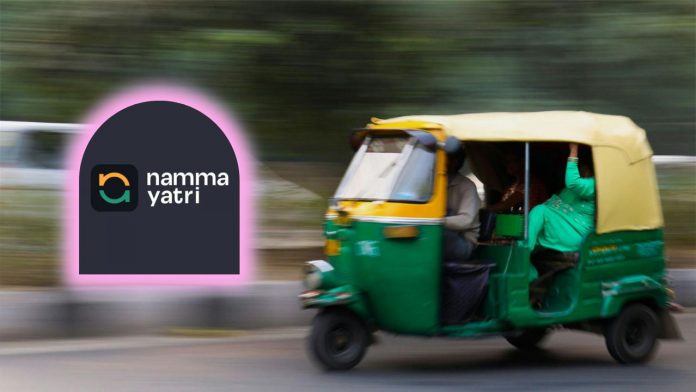
Namma Yatri, the zero-commission ride-hailing platform, is gearing up to expand its reach to five or six additional cities within the next quarter.
“With this expansion, we are confident in scaling our operations while continuing to provide unparalleled value to both drivers and riders,” said Shan M.S., COO and Co-founder, during a virtual media briefing.
Enhanced Connectivity and New Features
The platform is also set to introduce integrated services for auto-rickshaws and metro systems in cities like Bengaluru. This includes further development of its “MetroWarrior” feature, which facilitates seamless last-mile connectivity between metro stations and auto services.
Additionally, the company plans to enhance ride-batching and shared mobility options, addressing issues such as drivers avoiding short-distance trips during peak hours. “These innovations aim to resolve longstanding structural challenges in urban transportation,” Shan explained.
Economic Impact and Open Network Model
Namma Yatri’s open network approach is expected to generate significant economic benefits. According to company estimates, it could contribute an additional ₹51,000 crore to ₹67,000 crore in annual economic activity and boost GST revenues by ₹1,000 crore each year.
“By scaling our zero-commission model and integrating public transport systems, we’re building an inclusive and future-ready mobility ecosystem,” Shan emphasized.
Sarovar Hotels Expands Vision with 80 New Highway and Resort Properties in the Pipeline
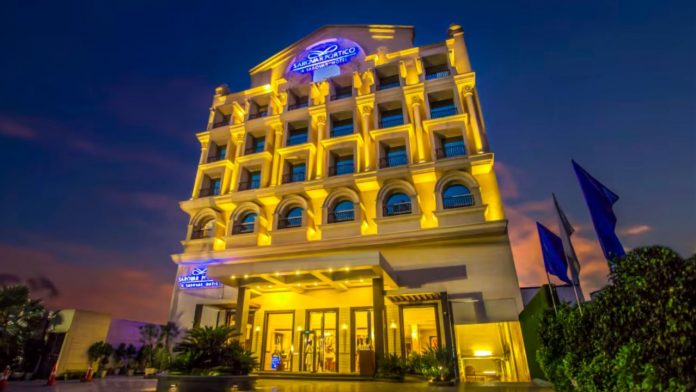
Sarovar Hotels is shifting its strategy to tap into the growing demand for highway hotels and resorts located near major cities, taking advantage of India’s expanding road network.
According to Ajay K. Bakaya, Chairman of Sarovar Hotels, the company has an ambitious plan with 80 projects in the works for the coming years.
Top Executive Explains New Strategy
Bakaya explained in an interview that highway hotels and resorts located within a few hours’ drive from urban centers are emerging as a high-growth area for the hospitality industry, especially as competition in city hotels intensifies. The company sees this as an opportunity to meet the rising demand for convenient and accessible accommodations.
“This shift comes at a time when the country’s road infrastructure is rapidly improving. The development of highways is creating new opportunities for both leisure and business travel,” Bakaya said. He noted that with around 10,000 kilometers of national highways being constructed annually, the road system is connecting more places, thus opening up new prospects for properties along major highways.
About Sarovar Hotels
While Sarovar Hotels currently operates 135 properties across 85 locations, only a small fraction—around four or five—are specifically highway and resort-focused. The company plans to expand this segment to meet the growing demand for high-quality, easily accessible accommodations.
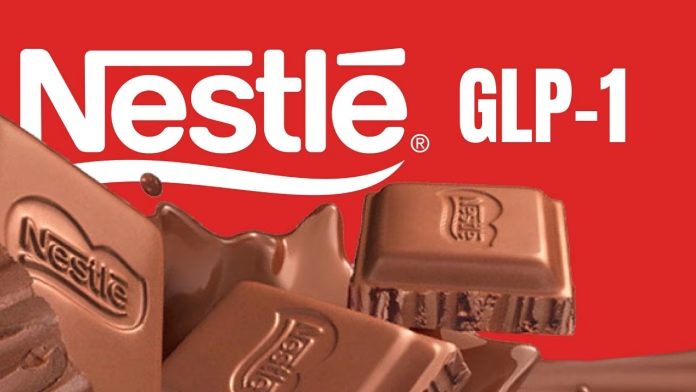
Nestlé Takes on Weight-Loss Market with New GLP-1 Boosting Protein Shots
Nestlé is introducing a new product in the U.S. aimed at helping people control their appetite, particularly those working to lose weight.
The new protein shots, which are part of the company’s expanding presence in the weight-loss market, are designed to suppress hunger naturally, offering an alternative to popular weight-loss medications.
Boost Pre-Meal Hunger Support Shots are Super Innovative
The shots, called Boost Pre-Meal Hunger Support, contain 10 grams of whey protein, and are intended to be consumed up to 30 minutes before a meal. They target the same appetite-regulating mechanism as certain prescription weight-loss drugs, such as Novo Nordisk’s Wegovy and Eli Lilly’s Zepbound, though in a much milder form.
These drugs mimic a natural hormone called GLP-1, which reduces appetite by promoting feelings of fullness. Nestlé’s drink is formulated to boost this GLP-1 response, which may help curb hunger without the use of pharmaceutical injections.
New Product Offers Fascinating Benefits
According to Stefan Palzer, Nestlé’s chief technology officer, the product helps trigger the body’s natural GLP-1 response, making it easier for consumers to manage hunger before meals. The shots are priced at $10.99 for a pack of four and are available for purchase on Amazon and in some CVS stores.
While the shots are marketed as a tool to enhance satiety, experts are cautious about their long-term impact. Lora Heisler, a human nutrition expert, noted that while the protein shots might stimulate the release of GLP-1, the same effect could potentially be achieved by drinking a glass of milk, suggesting the overall efficacy may be limited.
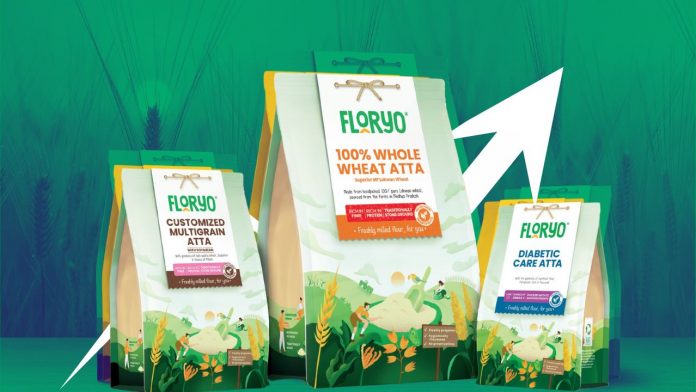
With 40 types of flour and 75% app adoption, D2C brand Floryo aims to double its reach in 2025
Disrupting a category as commoditized as staples might seem improbable, but Floryo, a Bengaluru-based direct-to-consumer (D2C) brand, is proving otherwise. Founded by Manohar Kumar, a seasoned professional with a background in FMCG and food, Floryo is reimagining how Indians consume staples like wheat flour. With a focus on freshness, customization, and nutrition, the company aims to reshape the way Indian households approach their daily diet.
Floryo’s Origins: A Quest for Freshness
Manohar Kumar’s journey to founding Floryo stems from a deeply personal realization during his tenure at Licious. “COVID-19 made us all rethink what we consume,” Kumar shared. “India has become the diabetes and obesity capital of the world. A key reason for this is the shift from freshly processed to heavily processed food. What our grandparents consumed was far fresher and more natural.”
Floryo was born out of this insight, focusing on providing freshly processed staples without preservatives or additives. “Staples, like atta, masalas, and oils, were once inherently fresh,” Kumar explained. “But post-1991 liberalization, packaged foods dominated the market. Today, many believe this is the norm. At Floryo, we’re here to challenge that narrative.”
A Fresh Take on a Competitive Market
The Indian staples market, valued at $23 billion, is dominated by legacy players such as ITC and General Mills. Yet, Kumar sees immense potential. “This category is 80% unorganized. It’s fragmented, but culturally, India values fresh staples. Our aim is to bring back that freshness using modern technology,” he said.
Floryo’s unique selling proposition lies in its tech-first, made-to-order model. Orders are processed daily, ensuring maximum freshness. “If you place an order at 1 PM, our system batches it, and by 7 PM, we start processing. By the next morning, the product is ready for dispatch. It’s fresher than anything else in the market,” Kumar emphasized.
Customization is another key differentiator. “We allow consumers to choose their grains, fiber levels, and even textures,” Kumar noted. “For instance, a North Indian might want coarse wheat flour for rotis, while someone in the South may prefer a finer texture. We empower consumers to decide.”
Innovating in Staples
Kumar believes staples have been overlooked in terms of innovation. “When you think of atta, innovation doesn’t usually come to mind,” he remarked. But Floryo is breaking this mold with products like methi-plus wheat and spinach-plus wheat flours.
“Why shouldn’t staples be exciting?” Kumar asked. “We’ve introduced atta blended with spinach, methi, and even cheese and garlic. These aren’t just novel but nutritionally rich, catering to modern dietary needs.”
Building Consumer Loyalty
In its two-year journey, Floryo has cultivated a loyal customer base. “We have customers with over 35 repeat transactions in the last 24 months,” Kumar shared. The brand’s focus on addressing specific dietary requirements has played a significant role in this loyalty.
“One customer, allergic to soybean, couldn’t find suitable multigrain options elsewhere. We allowed him to customize his flour mix to exclude soybean and include grains like jowar and bajra. That’s the power of our platform,” he said.
Seeing the customer stickiness, the brand has also introduced their app to make it more convenient for customers to come back on the platform. “Since we launched the app, we’ve noticed that nearly 75% of our consumers are now using the app.”
The Road Ahead
Floryo’s six-month plan is ambitious. “We’re focused on scaling operations, enhancing our technology, and launching new product lines,” Kumar revealed. The company aims to expand its customer base while staying true to its ethos of freshness and customization. “Over the next six months, we aim to expand offline into modern retail, starting with large-format gourmet and friendly outlets before eventually branching into general trade,” he said.
Currently, the company operate in Bengaluru and Hyderabad, but plans to expand to multiple cities like Chennai, Delhi, Pune and West Mumbai. “This will happen in the next two quarters,” he said.
Kumar also hinted, that they will be launching an innovative product soon. “Our in-house innovation team is consistently working on new products within and beyond the atta category. While we can’t disclose specifics yet, I can only tell you that upcoming innovation is in adjacent category to atta and we’re excited about it,”
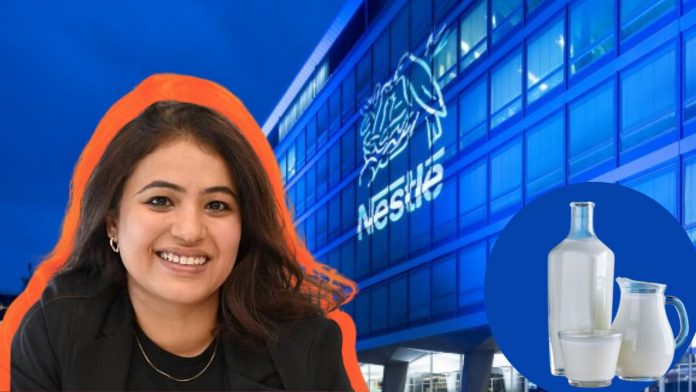
Nestlé Welcomes Neha Gulati as Marketing Head for Dairy Division
Neha Gulati has stepped into her new role as Marketing Head – Dairy at Nestlé, marking the next chapter in her impressive career journey.
She announced the move on LinkedIn, expressing her excitement about joining the global FMCG giant after a five-year stint at Coca-Cola.
Neha Gulati Reflects on her Stint at Coca-Cola
Reflecting on her time at Coca-Cola, Gulati shared, “It’s been an incredible five years filled with challenging projects, rewarding experiences, and the privilege of collaborating with some truly inspiring leaders and colleagues.”
She added, “I’m thrilled to begin this new chapter at Nestlé, where I aim to take on new challenges, foster growth, and drive innovation in the Dairy RTD category. Here’s to new beginnings!”
Neha Gulati has had a Phenomenal Corporate Career
Neha’s career spans over a decade, with expertise in brand marketing, customer insights, product innovation, and sales strategy. Before Coca-Cola, where she most recently served as Senior Brand Manager, she honed her skills at Airtel and Reliance Industries, building a diverse portfolio of experiences across multiple sectors.
Velocity Commits ₹200 Crore to Boost India’s F&B Ecosystem in 2025
Velocity, a platform specializing in cash-flow-based financing, has committed ₹200 crore in 2025 to fuel the growth of restaurants and cloud kitchens across India.
This Venture Aims to Solve a Major Market Issue
This initiative aims to address the financial hurdles faced by food and beverage (F&B) businesses, offering them a hassle-free alternative to traditional funding sources like banks and NBFCs. With Velocity’s tailored financing, restaurants and cloud kitchens can fund key needs such as expanding outlets, purchasing equipment, boosting working capital, and launching new brands—all without eating into their operational profits.
The Indian food delivery and dining-out market, valued at $66 billion, is expected to grow to $108 billion by 2030, according to a report by Swiggy and Bain & Company. Velocity’s funding plan aligns with this trajectory, focusing on empowering modern F&B brands that thrive on aggregator platforms like Zomato and Swiggy.
By providing scalable and fast financing solutions, Velocity is helping innovative restaurants and cloud kitchens seize emerging opportunities, scale their operations, and meet growing consumer demand.
We use cookies to ensure that we give you the best experience on our website. If you continue to use this site we will assume that you are happy with it.