Kevan Parekh becomes new CFO of Apple, Succeeds Luca Maestri
With the start of this year one more Indian-origin name has been added in top Industrial leaders, Kevan Parekh has officially assumed the role of Apple’s Senior Vice President and Chief Financial Officer (CFO).
Succeeding Luna Maestri who served as Apple’s CFO for a decade, Parekh has held key leadership roles, including the role of Vice President of Financial Planning and Analysis and Vice President of Finance for Sales, Marketing, and Retail in the company.
Announcing Parekh’s appointment in August 2024, Apple has highlighted his 11-year experience at the company since his joining in 2013.
Before joining Apple, Parekh also held senior roles at Thomson Reuters and General Motors, bringing extensive experience in corporate finance and strategic planning. His expertise has been instrumental in strengthening Apple’s financial planning and operational efficiency.
Tim Cook, Apple’s CEO, praised Parekh’s deep understanding of the company, stating, “For more than a decade, Kevan has been an indispensable member of Apple’s finance leadership team. His sharp intellect, wise judgment, and financial brilliance make him the perfect choice to be Apple’s next CFO.”
As per reports, the new CFO will earn an annual salary of $1 million (Rs 8.57 crore) and will be eligible for performance-based incentives under Apple’s Executive Cash Incentive Plan for fiscal year 2025. Additionally, Parekh has been granted restricted stock units (RSUs) scheduled to vest in 2027.
Parekh’s appointment comes as Apple continues to expand its footprint in India as the company plans to assemble 32% of global iPhone production volume in India by 2026-27.
Apple is set to open four new retail stores in Bengaluru, Pune, Delhi NCR, and Mumbai, capitalising on growing sales in one of its most promising markets.
Additionally, the company has recently established a new subsidiary, Apple Operations India, to focus on research, design, and support for local manufacturing partners.
Table Space CEO Amit Banerji passes away at 44, startup community mourns
Leaving the startup community in shock, The co-founder and CEO of managed workspace operator Table Space, Amit Banerji has passed away. At an early age of 44 CEO died of an heart attack on Monday.
The news was confirmed by the company via statement, “With deep sadness we announce the passing of Mr. Amit Banerji, our Founder, Chairman, and CEO… His impact on the company, its people, and the industry will be lasting, and he will be profoundly missed.”
Banerjee’s expertise in technology and real estate helped scale Table Space into a leading provider of managed workspaces.
The company was also aiming for a IPO this year with a target valuation exceeding $2.5 billion. Its last funding round in August 2024 valued Table Space at $480 million, with Axis reportedly engaged as the book runner for the public listing.
After working 13 years as Managing Director of Corporate Real Estate at Accenture, Banerji co-founded Table Space in 2017 with Karan Chopra and other key leaders.
Rise in Revenue
In FY24, the company reported a 35% revenue increase to Rs 919 crore, fueled by rising occupancy and expanded leasable areas. Under his leadership, Table Space also raised $330 million, including a $300 million investment from Hillhouse Capital.
According to a report by Tracxn, a private market data providing firm, his business acumen and leadership earned him an estimated Rs 866.8 crore in unrealized shares in Table Space.
His untimely demise is a sobering reminder of other recent losses in the startup world, including Epigamia’s Rohan Mirchandani and Pepperfry’s Ambareesh Murty.
Apurva Chamaria, Global Head of Venture Capital & Startups at Google, urged entrepreneurs and investors to take care of their lifestyles and mental health after confirming the news by a X post.
Women Entrepreneurs Drive India’s Startup Surge with $930 Million in Funding
With the rapid evolution India’s startup landscape are all set to see women entrepreneurs playing even bigger role in shaping its future.
A startup funding report of 2024 by Inc42 claims that startups founded or co-founded by women raised $930 million (approximately Rs 7,900 crore) across 136 deals in 2024, marking a 93.75% jump from the previous year.
This report has definitely proven women to be a major emerging force in India’s startup ecosystem. Highlighting women growing impact in the business sector, the report further states that nearly half of the 1.57 lakh startups were recognised under the Startup India initiative having women in leadership roles.
Topping the chart, the fintech industry secured $266.91 million worth of funding across 17 deals, followed by e-commerce with $212 million across 53 deals.
Enterprise tech claimed third place, attracting $130 million in funding. Healthtech and cleantech also made significant contributions, raising $102.3 million and $130.93 million, respectively. Industry experts attribute this rise to the increasing adoption of digital services and the growing sophistication of enterprise solutions.
Rise in Female Investors
Adding to this, the year also saw a rise in female investors, who are strategically backing women-led ventures. Initiatives like the Women in Digital Economy Fund (WiDEF), launched in 2024 with a $10 million commitment, aim to close the gender gap by providing better access to capital, tools, and mentorship.
Leading female investors such as Divya Anand and Ghazal Alagh have been instrumental in driving this momentum. Prominent female entrepreneurs are leveraging technology and consumer insights to scale their businesses, drawing strong investor interest.
Additionally, 2024 also witnessed 13 startups launching initial public offerings (IPOs), collectively raising over Rs 29,200 crore from the stock market.
Companies like TAC Security, MobiKwik, and Ola Electric led the charge, with 10 mainboard and three SME IPOs. While women-led startups are yet to dominate IPOs, experts foresee their growing presence in public markets as they continue to attract substantial funding and scale new heights.
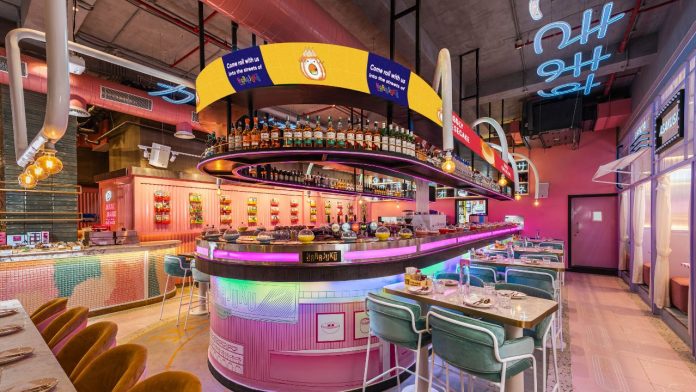
Harajuku Tokyo Café, the Japanese quick-service restaurant (QSR) brand redefining the culinary landscape in India, is gearing up to raise its first funding round to fuel an ambitious expansion. With a vision to scale to 90 outlets and achieve ₹200+ crore in annual revenue by 2027, the brand is positioning itself as a frontrunner in India’s evolving food and beverage market.
“This journey has been about learning, adapting, and innovating to bring authentic yet approachable Japanese cuisine to the Indian market. By 2027, we’re targeting 90 outlets and ₹200+ crore in revenue,” said Gaurav Kanwar, Founder of Harajuku Tokyo Café.
Aggressive Expansion Plans
Harajuku Tokyo Café plans to open 15 new outlets in 2025, focusing on high-growth regions like Delhi-NCR, Mumbai, and Punjab. This will be followed by expansion into Tier 1 and Tier 2 cities such as Bangalore, Pune, Hyderabad, and Kolkata. Among its key upcoming launches is an outlet at Mumbai’s Jio World Drive, BKC, scheduled for February 2025. By December 2025, the brand aims to hit an ARR of ₹72 crore.
The café operates with a dual sales focus, achieving an impressive Average Order Value (AOV) of ₹800 to ₹1200 per person. “We’re strategically targeting new markets, including Chandigarh, Ludhiana, and Ahmedabad, to complete 15 operational outlets by the end of 2025,” Kanwar said.
The expansion strategy includes clustering multiple outlets in urban hubs, with each flagship outlet serving as a feeder for smaller QSR formats and delivery-only kitchens. This approach ensures efficiency and proximity to customers while maintaining operational control.
A Journey of Passion and Perseverance
Kanwar, a first-generation food entrepreneur, began his venture in 2019, inspired by his time in the UK and a growing passion for Japanese cuisine. “Back then, Japanese food was mostly confined to fine dining. My goal was to make it casual, accessible, and offer a more immersive experience for the Indian market,” he shared.
His transformative trip to Japan became a 40-day immersion into its culinary traditions, where he collaborated with two renowned Japanese chefs. Harajuku Tokyo Café launched its first outlet in Delhi in 2021, receiving an overwhelming response. “We were sold out every day in our first month,” Kanwar recalled.
Today, Kanwar continues to emphasize authenticity and innovation, ensuring Harajuku stands out in the crowded QSR space.
Scaling with Purpose
From a humble 580-square-foot café to a growing network of outlets across Delhi-NCR and Mumbai, Harajuku Tokyo Café has laid a strong foundation for rapid scaling. Its central kitchen in Noida plays a pivotal role in maintaining consistent quality and standardization across outlets.
“We’re operating like a Japanese McDonald’s,” Kanwar said, highlighting the brand’s ability to deliver consistent quality through a scalable, streamlined model.
The brand’s operations are built around two verticals:
● Harajuku Tokyo Café: A casual dine-in concept offering a full Japanese culinary experience.
● Harajuku Bakehouse: A scalable QSR format specializing in bakery and pastry offerings for takeaway and delivery.
These dual formats enable the brand to cater to diverse customer preferences while maximizing market penetration.
Riding Consumer Trends
The Indian palate is evolving at an unprecedented pace, driving Harajuku’s growth. “It’s amazing to see children enjoying sushi and ramen, which was unimaginable a few years ago. Japanese and Korean cuisines are set to become mainstream,” Kanwar noted.
Even smaller cities are embracing Japanese cuisine, with premiumization becoming a dominant trend. “Consumers are willing to pay for quality, and this shift isn’t confined to metros. We’re seeing widespread acceptance across Tier 2 and Tier 3 cities,” he added.
Harajuku’s menu showcases a blend of authenticity and creativity, featuring dishes like Naruto Ramen, inspired by the popular anime series Naruto, and Korean-inspired Corn Dogs, which are also iconic on Japanese streets. “The influence of manga and anime culture is immense, and India is now the second-largest consumer of manga and anime globally, after China,” Kanwar said.
The FMCG Vision
Harajuku Tokyo Café is gearing up to venture into the FMCG space, leveraging its expertise in sauces, curries, and frozen foods. “We’re working on ready-to-eat Japanese products that reflect our culinary philosophy. It’s a small step today, but we’re dreaming big,” Kanwar shared.
This initiative aligns with the brand’s long-term vision of becoming a household name in Japanese cuisine while tapping into the rapidly growing FMCG market.
A Transformative Journey Ahead
With its innovative formats, aggressive expansion plans, and deep understanding of evolving consumer tastes, Harajuku Tokyo Café is not just scaling but leading a cultural shift in India’s food scene. “We’re setting the stage for a Japanese food revolution in India, and this is just the beginning,” Kanwar concluded, brimming with confidence about the road ahead.
Funds Tight, Salaries Late: The Good Glamm Group’s Pay Peril
The Good Glamm Group is facing financial hurdles as it navigates a funding shortfall, leading to delays in salary payments for some employees. During a town hall on January 2, the management informed staff that a planned funding round had fallen through, causing the salary delay.
According to The Arc, the company clarified that most employees, excluding the top brass, will receive their salaries in installments starting from January 6.
Internal Email Offers Clarification
An internal email to employees further outlined the situation: “We want to inform you that salary disbursements will be processed between January 6 and January 31, 2025. Our goal is to ensure payments are made as soon as possible, and the HR team will provide regular updates.”
Sources informed Inc42 that by January 2, 85% of the company’s workforce had already received their full salaries. Those earning INR 50,000 or less had their full payments processed, while higher earners received only half of their salary, with the remainder expected by the end of the month. Top-level employees, making up 15% of the company’s total workforce, will be paid last.
In addition to salary delays, the company is reportedly considering mass layoffs. The leadership team indicated in the town hall that a restructuring effort, including downsizing, may be on the cards to address ongoing cash flow issues. CEO and co-founder Darpan Sangvi, who was present at the meeting, outlined several strategies to secure funding, such as bringing in a strategic investor and possibly selling off one of the company’s acquired brands, including Sirona, The Mom’s Co, or Organic Harvest.
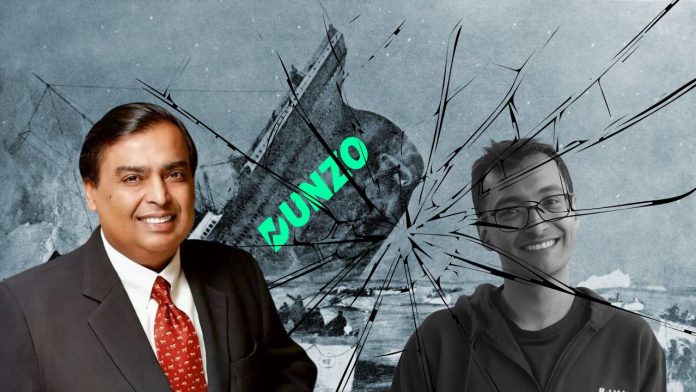
Reliance Retail Writes Off $200 Million in Dunzo Investment, Cuts Ties
Reliance Retail, the largest stakeholder in the struggling hyperlocal startup Dunzo, has reportedly written off its $200 million investment in the company, according to multiple sources familiar with the matter.
Despite once being heavily invested in Dunzo, Reliance is no longer in discussions about either injecting new funds into the company or acquiring it in a distress sale. This comes after Dunzo’s ongoing financial troubles and its retreat from the quick commerce sector over the last two years.
Co Founder in High Level Talks
In the meantime, Dunzo’s co-founder and CEO, Kabeer Biswas, is in talks with high-net-worth individuals and family offices for a potential acquisition, with the startup’s current valuation estimated between INR 300 crore ($25 million to $30 million).
“Reliance has assured Kabeer that they will back him in efforts to salvage Dunzo, but they have no interest in buying it. A few years ago, they made an offer to purchase Dunzo at a near unicorn valuation, but Kabeer turned it down. However, after quick commerce companies dominated the sector and Dunzo struggled to scale beyond a handful of cities, Reliance lost all interest,” one insider shared.
Additionally, senior executives from Reliance Retail, including Ashwin Khagiwala and Rajendra Kamath, along with representatives from other investors like Lightrock and Lightbox, stepped down from Dunzo’s board in 2023.
Ecom Express Appoints Kammal Daas to Revamp Last-Mile Operations
Ecom Express Limited, a leading provider of B2C e-commerce logistics solutions in India, has announced the appointment of Kammal Daas as the new Vice President of Operations for Last Mile. In this key role, Kammal will focus on optimizing the company’s last-mile delivery operations, bringing a wealth of experience to improve efficiency and strengthen operational performance.
Kammal Das Brings a Huge Wealth of Experience
With over 18 years of expertise in logistics, operations, and supply chain management, Kammal has an impressive track record. Most recently, he served as Vice President of Operations at Licious, where he led mid-mile delivery operations and managed procurement logistics. Before that, Kammal held senior roles at Flipkart and Walmart India, where he was instrumental in enhancing third-party logistics and improving supply chain functions.
Vishwachetan Nadamani, Chief Operating Officer of Ecom Express, expressed excitement about Kammal’s appointment, saying, “We’re thrilled to have Kammal on board. His deep knowledge of using technology to enhance customer experience will play a crucial role in improving our last-mile delivery capabilities. His strategic mindset will help us stay agile and efficient as we adapt to the growing demands of our business.”
In his new position, Kammal will lead the charge in fine-tuning last-mile operations, with a focus on boosting customer satisfaction and operational excellence. He will work to streamline delivery strategies and ensure reliability, all while fostering a culture of high performance within his team by utilizing cutting-edge technology for seamless delivery tracking and process optimization.
Zimyo’s New Power Trio: Key Execs Promoted to Accelerate Growth
SaaS platform Zimyo has made key leadership changes as it ramps up its global expansion plans. Naresh Gupta, the company’s VP of Finance, has been promoted to Co-Founder and Chief Finance Officer (CFO).
Meanwhile, Mayank Singh has stepped into the role of Chief Business Officer (CBO), and Vinay Kumar has been appointed Chief Technology Officer (CTO).
Zimyo’s Broader Mission
These strategic appointments are part of Zimyo’s broader mission to strengthen its presence internationally while maintaining a strong foothold in the Indian market, where the company is eyeing an IPO in the SMB segment by 2027.
Founder and CEO Kumar Mayank explained, “These promotions are a part of our ongoing effort to solidify our position in global markets, while also ensuring continued success in transforming workforce management solutions worldwide.”
Top Executive Opines on this Change
Gupta, now a Co-Founder and CFO, has played a crucial role in shaping Zimyo’s financial strategy, including fundraising. In his expanded role, he will continue driving operational efficiency and revenue growth, now with added responsibility for Customer Success alongside Finance.
Kumar, promoted to CTO, has been at the forefront of driving technological advancements at Zimyo. His focus will now be on enhancing the company’s offerings with cutting-edge AI features to stay ahead in the competitive market. Singh, who has led Zimyo’s international growth efforts since its expansion, will now focus on accelerating the company’s market penetration globally, ensuring that Zimyo’s business development strategy aligns with its long-term goals.
Cocoa’s Stunning Rise Beats Bitcoin in 2024 Performance
Cocoa has emerged as the top performer of the year, surpassing even Bitcoin, according to Bloomberg. While Bitcoin captured widespread attention, especially after crossing the long-awaited $100,000 mark in December, cocoa prices saw an even more remarkable surge.
As of early 2024, cocoa prices have more than doubled, driven by a significant shortage in supply from West Africa, the world’s largest cocoa-producing region. Bloomberg cites exchange data to explain that this disruption in production has been a major factor in the price spike.
By early January, cocoa futures were trading at nearly $4,000 per tonne. Prices peaked in mid-December, hitting an astounding $12,700 per tonne, as reported by Trading Economics.
In comparison, Bitcoin’s gains seem modest. The popular cryptocurrency, which remains the largest by market cap, saw an increase of around 128%. Bitcoin rose from just over $41,000 at the start of the year to a peak of $106,500 in December. Its rebound has been fueled by investor optimism surrounding potential crypto-friendly policies under the incoming Trump administration, according to MarketWatch.
Abhishek Bachchan Invests in the European T20 League, Boosting Cricket’s Global Appeal
Abhishek Bachchan, known for his versatility as an actor, his entrepreneurial spirit, and his love for sports, has taken a significant step in the world of cricket.
He has invested in the European T20 Premier League (ETPL), a private franchise tournament recognized by the International Cricket Council (ICC). Set to take place from July 15 to August 3, 2025, the tournament will feature teams from Ireland, Scotland, and the Netherlands, along with a host of international players.
The European T 20 League
The ETPL’s development is being overseen by a working group consisting of representatives from the participating cricket boards and Rules Sport Tech, a strategic partner handling funding and operational details. The group is currently wrapping up the organizational framework and operational planning for the event.
In a statement about his involvement with the European T20 Premier League, Bachchan shared, “Cricket is more than just a game—it brings people together in ways few other things can. The ETPL provides a brilliant platform to highlight the expanding global reach of cricket. With the sport’s inclusion in the 2028 Olympics, its global appeal is only set to grow. I am thrilled to be part of this collaboration between the cricket boards of Ireland, Scotland, and the Netherlands.
“I have full confidence in our team and their efforts to make this tournament a success. I’d like to thank the ICC and the boards for their tireless work, and I’m eager to roll up my sleeves alongside everyone involved to ensure the ETPL reaches its full potential, bringing cricket closer to fans all across Europe.”
Warren Deutrom, CEO of Cricket Ireland and Chair of the ETPL, expressed enthusiasm over Bachchan’s involvement: “It’s fantastic to have Abhishek Bachchan join us as a co-owner of the ETPL. His passion for sports, coupled with his business expertise, will be invaluable in raising the profile of European cricket.”
We use cookies to ensure that we give you the best experience on our website. If you continue to use this site we will assume that you are happy with it.