Tuesday, December 23, 2025
Home Blog Page 214

Zomato introduces ‘District’ App, enabling customers to book tables, tickets, and events

0
Image of district app
Zomato introduces 'District' App, Enabling Customers to Book Tables, Tickets, and Events

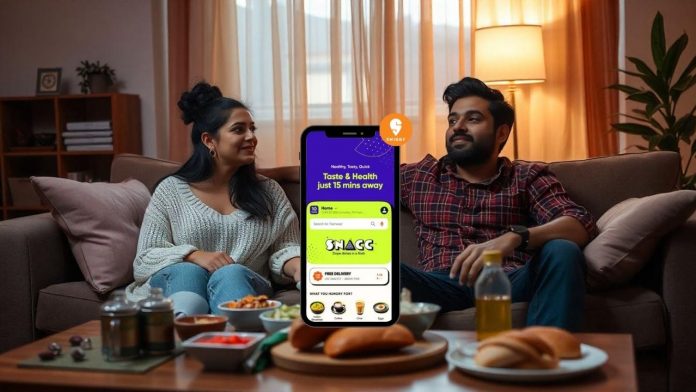
Food delivery platform, Zomato has rolled out its ‘District’ app on iOS and Android platforms, three months after announcing its launch. The app enables customers to discover and reserve tables at restaurants, book movie tickets, sports events, and live performances.

District to be 3rd largest B2C business – CEO Deepinder Goyal

According to Zomato CEO Deepinder Goyal, the company aims to build its going-out segment as its third-largest B2C business. “Our dine-out business is operating at a run-rate of over $500 million annualised gross order value,” Goyal said.

Continue Exploring: Zomato introduces ‘Book Now, Sell Anytime’, allows users to resell event tickets

Notably, the ‘District’ app is part of Zomato’s strategy to stay ahead of competitors through innovative features. Recently, the company launched “Book Now, Sell Anytime,” allowing users to buy event tickets in advance and re-sell them on the app. Additionally, Zomato introduced “Food Rescue,” enabling users to purchase cancelled food orders from nearby areas to reduce food wastage.

The company previously announced that it will move all its going-out businesses from Zomato’s main app, the Insider app, and Paytm‘s app to District. Ticketing services will remain on Paytm’s app until August next year.

Continue Exploring: Fragrance sales defy economic downturn; grow 12% in 2024, outpacing FMCG

Zomato to raise INR 8,500 Cr via QIP

Meanwhile, the company plans to raise up to INR 8,500 crore through a qualified institutional placement.

Further, the food tech giant’s financial performance has been impressive, with a 389% surge in net profit to INR 176 Cr in Q2 FY25, up from INR 36 Cr in the year-ago period. Operating revenue jumped 68.5% to INR 4,799 Cr in Q2 FY25, compared to INR 2,848 Cr in Q2 FY24.

Advertisement

ED launches probe against Amazon and Flipkart following seller investigations

0
Image of flipkart & amazon
ED launches probe against Amazon and Flipkart following seller investigations

The Enforcement Directorate (ED) has shifted its focus to investigating Amazon and Flipkart, after sellers, for allegedly violating foreign direct investment norms through their arrangements with vendors.

ED investigates violations under FEMA

According to ET, the Enforcement Directorate (ED) is investigating potential violations under the Foreign Exchange Management Act (FEMA). The agency, which was previously looking into the sellers, is now checking if the e-commerce companies had control over their vendors, even though they are supposed to act only as platforms.

Continue Exploring: Colgate faces temporary slowdown in urban growth; shifts focus to per capita consumption – Colgate MD

Previously in November, the Enforcement Directorate (ED) raided the offices of some sellers linked with Amazon and Flipkart. “The sellers covered during the searches were summoned and have been questioned to explain certain transactions and arrangements. Documents are being studied thoroughly,” a source mentioned to ET.

ED summons executive from Amazon & Flipkart

After searching sellers’ offices in Delhi NCR, Mumbai, Bengaluru, Gurugram, and Hyderabad, the Enforcement Directorate (ED) may summon executives from Amazon and Flipkart.

“The main focus is to ascertain whether Amazon and Flipkart operated through a preferred set of sellers, which were invariably controlled by them but disguised as independent vendors, thus violating FDI norms,” said a source.

Continue Exploring: Ranveer Singh acquires 50% of Kishore Biyani’s foods startup Elite Mindset

This happens as Amazon and Flipkart face legal issues. Recently, the Competition Commission of India (CCI) found them guilty of breaking competition laws by favouring certain sellers on their platforms.

Further, the reports stated that Amazon’s preferred sellers got an “advantage in the online listing,” making their products more noticeable to customers during searches.

For Flipkart, the Commission noted that preferred sellers received services like marketing and delivery at a very low cost. Now, the CCI is considering taking the case to the Supreme Court.

Advertisement

Colgate faces temporary slowdown in urban growth; shifts focus to per capita consumption – Colgate MD

0
Image-of-prabha-narasimhan
Colgate faces temporary slowdown in urban growth; shifts focus to per capita consumption - Colgate MD

Colgate-Palmolive India‘s managing director, Prabha Narasimhan, attributes the slowdown in the FMCG sector to consumers delaying purchases or extending product usage.

“Consumers tend to titrate or delay their usage of things…when they feel the pressure,” she said, while talking to ET.

Colgate-Palmolive registers 10% growth in Q2

Despite this, Colgate-Palmolive India outpaced the market with 10% growth in the quarter ended September. The company dominates the oral care segment with a 50% market share.

Continue Exploring: Fragrance sales defy economic downturn; grow 12% in 2024, outpacing FMCG

Narasimhan noted, “Oral care consumption is very low in India…even markets like the Philippines consume 1.8 times and Brazil 3.1 times more than India.” Colgate aims to increase consumption through awareness and innovation.

Meanwhile, the company has introduced an AI-powered oral health screening initiative and partnered with the Indian Dental Association to provide free check-ups. “We’re marrying the idea of 800 million-plus smartphones with technology to give people access to dental health reports,” Narasimhan explained.

Colgate expenses jumps 18%, launches new product

Further, Colgate has also launched new products, including Colgate Visible White Purple, and invested in advertising, resulting in an 18% jump in spends. “Our focus is on building new segments, like whitening and gum health, and adjuncts to toothpaste,” Narasimhan said.

Continue Exploring: Converse announces Harsh Varrdhan Kapoor, Khushi Kapoor as new brand ambassador

Despite temporary urban growth slowdown, Narasimhan remains optimistic. “We have so much headroom to go in terms of moving per capita consumption…our focus really needs to be on that.”

NielsenIQ reports urban demand grew 2.8% year-on-year, while rural demand grew 6%. The FMCG sector grew 5.7% by value and 4.1% by volume.

Narasimhan further stressed, “We’re back to driving consumption…with technology.” Colgate’s global technology hub in India enables innovation for key markets.

“Over the years, the company has focused on getting universal penetration…now we’re back to driving consumption,” Narasimhan said. With its science-based approach, Colgate aims to leverage clinically proven technology to improve oral health in India.

As Narasimhan concluded, “As a science-based company, we spend a lot on oral care…we want to bring effective technology into the country.”

Advertisement

Ranveer Singh acquires 50% of Kishore Biyani’s foods startup Elite Mindset

0
Image of elite mindset with Ranveer Singh
Ranveer Singh acquires 50% of Kishore Biyani’s foods startup Elite Mindset

Bollywood actor Ranveer Singh has acquired a 50% stake in Elite Mindset, a packaged foods startup backed by Kishore Biyani. Nikunj Biyani, Singh’s nephew, and Think9 Consumer Technologies own the remaining stake.

Elite Mindset to expand into biscuits, protein powder

“We see an opportunity to build a brand in the better-for-you packaged foods space with accessible and affordable protein-based products,” Nikunj Biyani said, while talking to ET. Elite Mindset will focus on protein bars under the label SuperYou, expanding into biscuits, protein powders, and breakfast cereals.

Continue Exploring: Fragrance sales defy economic downturn; grow 12% in 2024, outpacing FMCG

The venture has received an initial seed investment of INR 50 crore. Ranveer Singh stated, “I wanted to enable protein consumption in simple and affordable ways for Indian consumers.” This investment adds to Singh’s portfolio, including Sugar Cosmetics, BoAt, and Epigamia.

Healthy snacking market grows 1.2X faster

India’s healthy snacking market is growing rapidly, with “smart snacking” increasing 1.2 times faster than traditional snacks, according to NielsenIQ. Sonika Gupta, executive director, said, “One in five snacks now has a health connotation in India; health-conscious consumption growth is fueled by innovations in small, affordable, and nutrient-rich products.”

Meanwhile, the trend of celebrities investing in companies is gaining momentum. Recent examples include Alia Bhatt in SuperBottoms, Sachin Tendulkar in Spinny, and MS Dhoni in Shaka Harry.

Continue Exploring: DCGI to meet cosmetic brands’ representatives over regulatory issues

Some investments have yielded significant returns. Ayushmann Khurrana’s angel investment in The Man Company saw a 400% return after Emami acquired full ownership.

Ranveer Singh’s investment in Elite Mindset reflects the growing demand for healthy and affordable food options in India. As Nikunj Biyani noted, “We’re excited to build a brand that makes a difference in people’s lives.”

With Think9‘s existing portfolio including Sorrentina, Smartsters, Kingdom of White, Beauty in Everything, and The Good Bug, Elite Mindset is poised for growth in the packaged foods market.

The development highlights the increasing focus on health-conscious consumption and the role of celebrity endorsements in shaping consumer preferences. As Sonika Gupta emphasised, “63% of consumers surveyed said they would opt for healthy snacking, while 50% read ingredient labels to understand nutritional values.”

Advertisement

Fragrance sales defy economic downturn; grow 12% in 2024, outpacing FMCG

0
Image of fragrances
Fragrance sales defy economic downturn; grow 12% in 2024, outpacing FMCG

Despite a sluggish economy, the fragrance market in India has shown remarkable resilience, with major players like Godrej Consumer Products, Emami, ITC, and Shoppers Stop reporting robust sales growth.

Fragrance sales crosses personal care segment’s 6.2% growth

According to NielsenIQ data, the fragrance segment grew 12% year-on-year from January to September 2024, outpacing the overall personal care segment’s 6.2% growth and the FMCG industry’s 5.7% expansion, ET reported.

Continue Exploring: DCGI to meet cosmetic brands’ representatives over regulatory issues

“Fragrance still has some gas left in the tanks since it has always been underdeveloped,” said Santosh Desai, a social commentator and brand expert. “It is a late bloomer, catching up with the rest of the beauty portfolio.”

Roll-on deodorants drove this growth, with a 26% increase in sales. “A rapid expansion in distribution and increased interest in personal grooming led to the surge in sales,” explained Roosevelt Dsouza, head of commercial, India, at NielsenIQ.

Godrej reported growth in double-digit, Shoppers Stop jumps 17%

Godrej Consumer Products managing director Sudhir Sitapati reported “doubledigit” volume growth in fragrances, while Shoppers Stop saw a 17% increase in fragrance sales, its highest quarterly turnover yet.

Continue Exploring: Morgan Stanley ups Zomato’s target price to INR 355, sees 31.7% upside potential

Further, Emami vice-chairman Mohan Goenka said the company has launched a portfolio of fragrance products, including eau de toilette perfumes for urban consumers.

Reportedly, the Indian fragrance industry, valued at ₹4,771 crore, has significant room for growth due to low penetration rates. “There is a lot of headroom for growth,” Desai noted.

Meanwhile, Reliance Retail‘s new luxury beauty store, Tira, features a ‘scent room’ offering international fragrances and limited-edition collections.

As Sitapati observed, “Deodorants are doing very well in organised trade.” With expanding distribution networks and innovative products, the fragrance market is poised for continued growth.

“This robust growth in the category is due to the hitherto low penetration rates,” Desai concluded. “Fragrance is catching up with the rest of the beauty portfolio, whose sales have gone up in the last couple of years.”

Advertisement

DCGI to meet cosmetic brands’ representatives over regulatory issues

0
Image of cosmetics
DCGI to meet cosmetic brands’ representatives over regulatory issues

India’s drug regulator, the Drugs Controller General of India (DCGI), will meet with cosmetics industry representatives on Tuesday, November 19 to discuss regulatory issues.

DCGI to address concerns surrounding Schedule M

The meeting aims to address concerns surrounding the government’s newly notified Schedule M.

Continue Exploring: Morgan Stanley ups Zomato’s target price to INR 355, sees 31.7% upside potential

“The industry has been facing various issues,” said an industry expert, according to ET. “Earlier it had raised concerns regarding the government’s newly notified schedule M that proposed blanket ban on manufacture of any other article or product apart from drugs in the units licensed for drug manufacture. This requirement would mean setting up a new plant exclusively for cosmetic manufacturing.”


Licence before Dec 11, 2001 to manufacture

Further, he mentioned that units licensed before December 11, 2001, were allowed to manufacture related items like nutraceuticals and ayurvedic medicines in the same plant, as an exception to the rule that no manufacturing activity should take place there.

Continue Exploring: Kolkata’s Gariahat Hawkers opt for Digital amid rise of e-commerce to boost sales

“We have asked for permitting the manufacture of cosmetics in the area dedicated for manufacture of topical products,” the expert added. “We will discuss this issue during the meeting.”

Advertisement

Morgan Stanley ups Zomato’s target price to INR 355, sees 31.7% upside potential

0
Image of zomato
Morgan Stanley ups Zomato's target price to INR 355, sees 31.7% upside potential

Global brokerage firm Morgan Stanley has increased its target price for Zomato to INR 355 from INR 278, citing the company’s potential to benefit from the growing quick commerce (QC) market in India. 

This represents a 31.7% upside potential from Thursday’s closing price.

Continue Exploring: Zomato to raise INR 8,500 Cr via QIP in December

Large profit pool by 2030 keep us overweight on Zomato – Morgan Stanley

“Rising share of quick commerce in India’s retail market, strong execution in food delivery/quick commerce, deep balance sheet, and large profit pool by 2030 keep us overweight on Zomato,” said Morgan Stanley in its report, according to ET Retail.

Morgan Stanley’s overweight rating is based on food tech giant’s favourable industry structure, market leadership, and superior unit economics in food delivery. The firm expects Zomato’s QC business, led by Blinkit, to outperform despite intense competition.

“We build in adjusted EBITDA breakeven for the next two to four quarters, implying substantial investments in aggressive expansion,” said Gaurav Rateria, Equity Analyst at Morgan Stanley. “We assume margins of 2.2% by F2027 and 5.1% by F2031, implying an annual profit pool of close to $1 billion for this business.”

Continue Exploring: Blinkit’s growth is not affecting kirana stores: Zomato CEO Deepinder Goyal

India’s q-commerce to reach $42 Bn in 20230

Further, Morgan Stanley estimates the Indian QC market to be worth $42 billion by 2030 in a base case scenario and $55 billion in a bull case. The firm believes Zomato will maintain its 40% market share despite rising competition.

To be noted that Zomato’s ability to solve for convenience, pricing, and selection will drive growth. Key catalysts for the stock include consistent top-line beats, adjusted EBITDA breakeven, and better monetization in food delivery.

However, risks include aggressive competition in QC, unit economics deterioration, regulatory risks around gig workers’ social security, and slowing top-line growth due to macroeconomic slowdown in urban consumption.

As Rateria stated, “Zomato’s current business model solves for convenience but is evolving rapidly to solve for both pricing and selection.”

Zomato’s shares closed 4.3% higher at Rs 269.60 on the BSE this Thursday.

Advertisement

Kolkata’s Gariahat Hawkers opt for Digital amid rise of e-commerce to boost sales

0
Image of gariahat hawkers
Kolkata's Gariahat Hawkers opt for Digital amid rise of e-commerce to boost sales

Gariahat hawkers in Kolkata are embracing the online marketplace to regain lost business due to the rise of e-commerce. The Gariahat Indira Hawkers’ Union, representing around 1,500 of the 2,000 hawkers, has hired a professional agency to create YouTube videos showcasing products from 100 stalls.

Before 2020, daily turnover was INR 7,500 – Debraj Ghosh 

“Before 2020, the average daily turnover of a stall was around INR 7,500. It’s now INR 2,500,” said Debraj Ghosh, the union’s general secretary. “This is mainly because many who moved to online shopping during the pandemic continue to shop online.” Ghosh emphasised that going online is crucial for survival.

Continue Exploring: Asia-Pacific region tackles food waste crisis with sustainability initiatives – Report

The initiative aims to reach potential customers through YouTube videos, allowing interested buyers to place orders via telephone and receive goods via courier. Seven videos will be released in December, covering various product categories, including apparel, home goods, and accessories. Each video will feature around a dozen stalls, including product details and contact numbers.

“We realised that unless we go to the customers as well, it would be difficult to survive,” Ghosh added. The union hopes to eventually cover all hawkers. Ajay De, a stall owner, welcomed the initiative, saying, “If we manage to sell our goods online, we can soon reclaim lost business.”

Continue Exploring: Rise of quick commerce is challenge to retailers, will become political issue – Uday Kotak

Quick commerce market to reach $40 Bn by 2030

Meanwhile, quick commerce companies are surpassing traditional retailers, with 46% of consumers reducing purchases from Kirana shops. The quick commerce market is expected to reach $40 billion by 2030, up from $6.1 billion in 2024, reveals a recent report by Datum Intelligence.

“Nearly half (46%) of respondents report reduced spending at Kirana shops, indicating a shift in customer behaviour towards quick commerce platforms,” the report notes. Top quick commerce platforms in India include Blinkit, Zepto, Swiggy Instamart, and Flipkart Minutes.

Advertisement

India’s spice export market set to reach $10 billion by 2030 – WSO

0
Image of spice export
India's spice export market set to reach $10 billion by 2030 - WSO

India aims to hit $10 billion in spice exports by 2030. To reach this goal, the industry is growing its presence in Africa, South America, and Eastern Europe, says Ramkumar Menon, Chairman of the World Spice Organisation (WSO).

Seasonings sector holds value at $14.2 bn globally

“Besides exploring new markets, we’re focusing on emerging sectors like health and wellness, nutraceuticals, and pharma, where spices are key ingredients due to their health benefits,” Menon said, according to ET Retail. The Covid pandemic saw a significant increase in ginger and turmeric exports.

Continue Exploring: SOM Distilleries and Breweries Ltd reports 26.8% surge in income in H1 FY25

Reportedly, the seasonings sector also holds great potential, with a global market valued at $14.2 billion. However, India’s share is currently just 0.7% by volume and 0.6% by value. “India should capture a larger share, given its diverse spice portfolio and renowned research institutions,” Menon emphasised.

Further, Menon highlighted the need for flexible government policies to ensure ease of doing business, particularly in the seasoning and nutraceutical sectors. “Regulatory constraints hinder the import of specific ingredients, creating obstacles for exports,” he noted.

Addressing concerns over spice quality, Menon stated, “Total rejections amount to less than 1% of exports. Agricultural commodities are susceptible to climate change and intrinsic quality variations, so minimal rejections are unavoidable.”

Continue Exploring: FirstCry narrows loss to INR 62.85 Cr, revenue jumps 26.7%

India’s spice exports in H1 FY24 at INR 17,488 Cr

Meanwhile, India’s spice exports for the first half of the current financial year (Apr-Sep 2024) reached INR 17,488 crores ( $2.09 billion), an 8.86% increase from the previous year. The export target for the financial year is $4.7 billion, with an expected 6% growth.

The most exported spices include chilli, cumin, mint, and turmeric, with major consuming countries being China, Bangladesh, the USA, Sri Lanka, the Middle East, and the UK. India produces approximately 12.48 million tons of spices annually.

To showcase Indian spices globally, the All India Spices Exporters Forum and the World Spice Organisation host conferences like the International Spice Conference (ISC) and National Spice Conference (NSC). The next ISC is scheduled for February 2025 in Bengaluru, and the NSC will take place on November 15-16 in Ahmedabad.

As Menon concluded, “We’re confident the industry can meet stringent standards and drive growth.”

Advertisement

Asia-Pacific region tackles food waste crisis with sustainability initiatives – Report

0
Image of food waste
Asia-Pacific region tackles food waste crisis with sustainability initiatives - Report

The Asia-Pacific region is facing a severe food waste crisis, prompting the food and beverage industry to adopt sustainable practices. 

Food & Beverage brands launch programs to reduce food waste

According to a GlobalData report, companies are implementing ethical sourcing, reducing food waste, composting programs, and efficient waste management systems, as reported by ET Retail.

Continue Exploring: Zomato launches ‘Food Rescue’—buy cancelled food orders at a discount

“As awareness around sustainability grows, consumers prioritise ethical considerations in their purchasing decisions,” said Shravani Mali, Consumer Analyst at GlobalData. “Consumers are driving restaurants to use recycled materials, reduce waste, and decrease their carbon footprint.”

Notably, the region’s food waste crisis is alarming, with Australia discarding 7.6 million tons of food annually and China accounting for 50% of municipal waste. Governments are taking action, with Australia aiming to halve food waste by 2030 and China introducing the Anti-Food Waste Law.

Food banks can make a significant impact – GlobalData

Further, Tim Hill, Key Account Director at GlobalData, emphasised the need for strategies to reduce food waste. “Using food waste as natural fertilisers and redistributing excess food through nonprofit organisations and food banks can make a significant impact,” Hill suggested.

Continue Exploring: The Montana Group and Bikanervala launch second outlet in Bathinda

Meanwhile, the report urges immediate action and collaboration to establish sustainable practices, enhance resource efficiency, and create a responsible food system.

“Establishing sustainable practices, enhancing resource efficiency, and establishing a resilient and responsible food system requires collective effort,” the report concluded.

Industry experts and governments agree that addressing the food waste crisis requires a multi-faceted approach, involving consumers, businesses, and policymakers.

Advertisement