Goyal Salt ltd registers approx. 60% revenue growth, hits INR 74.82 Cr in H1FY25
Goyal Salt Limited, a FMCG player in the salt industry, has announced its unaudited financial results for the half-year ending September 2024. The company reported a revenue of INR 74.82 crore in H1FY25, marking a 59.67% growth.
Goyal Salt makes INR 46.86 Cr revenue in H1FY24
Last year, in the same period, the company reported INR 46.86 crore overall revenue. Further in H1 this year, EBITDA surged to INR 13.13 crore, recording a 2.2-fold increase from INR 4.11 crore in the previous period, while PAT grew 2.87 times to INR 9.33 crore, compared to INR 2.41 crore in H1FY24.
The company secured a work order worth INR 21.86 crore from the Jharkhand government and achieved a historic procurement of 150,000 tons of raw material in Q1FY25, targeting record-breaking production and sales.
Meanwhile, Pramesh Goyal, Managing Director, Goyal Salt Ltd. said, “We are delighted to report a good set of numbers. The growth in our profitability reflects the strength of the Goyal Salt brand in North India, especially Rajasthan, UP, Bihar, Jammu, and Jharkhand. We have emerged as one of the leading brands in the league of the top three salt brands in India.”
Goyal stressed that the company’s motive is to reach every household in the country. He also announced that the company is setting up a new plant in Gandhidham, Kutch, with an investment of INR 80 crore approx. This plant will be the largest in the salt capital of India and will strengthen the brand in the Western part of the country like Maharashtra and Gujarat.
Quick commerce sees record advertising revenue surge, led by Blinkit, Zepto
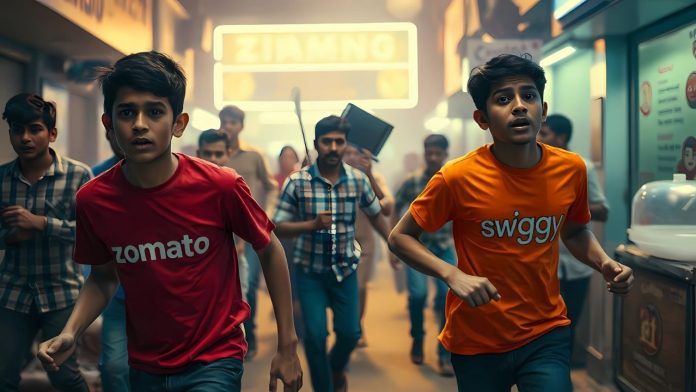
The quick commerce sector in India is witnessing rapid growth, with platforms such as Blinkit, Zepto, and Swiggy‘s Instamart reporting remarkable surges in revenue from advertising.
Blinkit registers fourfold revenue growth from ad
Blinkit, the market leader, reported a nearly fourfold jump in ad revenue to more than INR 400 crore for 2023-24, and is on track to earn more than INR 1,000 crore from ads in this financial year. Zepto is also on a INR 1,000 crore revenue run-rate from advertisement services, which offer higher margins to companies than other revenue lines.
According to ET, “One of the obvious reasons why brands want to advertise on quick commerce increasingly is that the user base on platforms such as Blinkit, Zepto and Instamart is expanding at a rapid pace,” said a quick commerce executive, who did not wish to be identified.
Further, Blinkit’s monthly transacting customers nearly doubled to 8.9 million in the July-September quarter, compared to 4.7 million a year ago. The nature of quick commerce is also such that to achieve inventory offtake quickly, brands tend to spend on ads to stand out for their consumers. Platforms have been investing in technologies for advertising to be more effective for brands.
Flipkart, Amazon reports INR 11,621 Cr ad revenue in FY24
The scale of ad revenue for quick commerce firms is also being achieved faster than e-commerce marketplaces such as Flipkart and Amazon, which together reported INR 11,621 crore in ad revenue for 2023-24. SoftBank-backed ecommerce marketplace Meesho also derives a sizable portion of its operating revenue from advertising income.
For Meesho, it also comes with fatter margins than its logistics services. Overall, Blinkit is clocking an annual gross sales run rate of nearly $3 billion, while Zepto is tracking $2 billion. According to its latest public numbers available, as of June 30, Swiggy Instamart was at an annual gross sales run rate of $1.3 billion.
Industry executives also indicated that income from advertising is highly profitable for consumer internet platforms, with 90-95% of it flowing to profit. “Today we are at an Rs 1,000 crore annualised revenue run-rate (from advertising)… it’s a meaningful driver of the bottomline,” said Zepto founder and CEO Aadit Palicha.
In its initial public offering prospectus, Bengaluru-based Swiggy said, “We plan to increase the contribution of advertising revenue further by enhancing our advertising tools such that our partners can continue to leverage our integrated platform to run unique and customised advertising campaigns, which are backed by rich insights and analytics.”
Hotel brands to add 94,000 rooms across segments by 2028-29
India’s hospitality industry is witnessing a significant surge in branded hotel rooms, with several Indian and global hotel chains expanding their presence in the country.
Data shared by hospitality consultancy Hotelivate showed that at the start of November, about 94,000 branded hotel rooms across segments were to be added by 2028-29. The inventory of existing branded hotel rooms, as per Hotelivate, stands at 192,000.
Branded inventory opens 12,000 rooms since march
According to ET, “Since March and August, the branded inventory that opened is up by about 12,000 rooms, and the new supply pipeline is up by another 5,500 rooms, respectively,” said Manav Thadani, founder chairman of Hotelivate.
As per data gathered from top hotel chains, Tata Group-backed Indian Hotels Company (IHCL) has the maximum number of rooms (17,354) set to open in the next three to four years.
On Tuesday, IHCL announced its new ACCELERATE 2030 strategy, under which it plans to increase its current portfolio of hotels to more than 700 by 2030, from 350 now, besides reaching an enterprise revenue mark of over INR 30,000 crore from the current INR 13,000 crore.
Meanwhile, Marriott International also has ambitious expansion plans, with Kiran Andicot, regional vice president, South Asia, for hotel development at Marriott International, saying that in the next five years, the chain expects to open more than 40 hotels with over 6,500 rooms. Marriott International has an inventory of more than 29,000 rooms across 153 hotels.
To be noted, Radisson Hotel Group has 125 hotels across 13,948 keys and has a pipeline of 81 hotels spanning 7,985 keys. “We are often the only international hotel brand in tier 2 and 3 cities, and many of our pipeline hotels will extend our reach in these markets,” said Nikhil Sharma, managing director and area senior vice president for South Asia at Radisson Hotel Group.
ITC to add 18,000 keys by 2030, Lemon Tree Hotels about 70
Further, ITC Hotels currently has 140 hotels with over 13,000 keys across more than 90 destinations and aims to expand its portfolio to 200 hotels with a total of around 18,000 keys by 2030. “Quality defines us. Quality has been at the epicentre of all experiences and initiatives at ITC Hotels. This growth aligns with our vision to cater to a wider range of travellers across various segments, from luxury to experiential and boutique,” said an ITC Hotels spokesperson.
Reportedly, Lemon Tree Hotels is expected to open around 70 hotels in the next four to five years, adding 4,700 rooms to the inventory. Chains such as Hilton and Accor said 2024 has been the “year of expansion” and a “transformative” year for India. “There has been significant growth momentum led by brand launches, new market entries and marquee openings in key gateway cities,” said Zubin Saxena, senior vice president and regional head, South Asia at Hilton. “Our recent landmark deal with Olive by Embassy to introduce 150 Spark by Hilton hotels across India represents a transformative step in our growth journey.”
“With this, Hilton’s portfolio is set to grow to 200 trading and pipeline hotels over the coming years, surpassing our goal of tripling our India estate to 75 hotels,” he said. This year, Accor signed hotels across locations such as Jaipur, Varanasi, Amritsar, Tirupati and Bengaluru, said Garth Simmons, chief operating officer of Accor’s premium, midscale and economy division in Asia. “These developments reflect Accor’s focus on bringing our global hospitality expertise to diverse locations in India, enhancing our portfolio to meet the needs of travellers in this dynamic market.”
JW Marriott Mumbai to introduce BarQat, eyes restaurant expansion
JW Marriott Mumbai Sahar is set to launch a new Indian restaurant called BarQat, which promises to offer an authentic and traditional Indian dining experience.
JW’s BarQat, an open-air Al Fresco restaurant
Located near the poolside, BarQat is an open-air Al Fresco restaurant that offers a unique ambiance, blending modern aesthetics with timeless tradition. The restaurant takes pride in offering its guests a culinary haven that pays homage to the rich lineage of Indian cuisine, skillfully presented by experienced chefs.
According to the hotel, BarQat is committed to curating an elaborate journey through authentic spices, flavors, ancestral recipes, and traditional cooking techniques with a touch of modern presentation. The restaurant’s objective is to transport its patrons to a realm where every dish whispers tales of tradition, craftsmanship, and an unwavering passion for authentic Indian flavors.
BarQat is to transport our patrons to a realm – Chef, JW
“As a destination known for its culinary prowess, elevated service, our objective at BarQat is to transport our patrons to a realm, where every dish whispers tales of tradition, craftsmanship, and an unwavering passion for authentic Indian flavours. We look forward to welcoming guests for a royal journey through a bygone era that spells old world charm and luxury under the starlit skies at this new Al Fresco restaurant” says chef Prakash Chettiyar, director of culinary, JW Marriott Mumbai Sahar.
The general manager of JW Marriott Mumbai Sahar, Kunal Chauhan, added, “BarQat isn’t just a restaurant, it’s a tribute to the soulful essence of Indian cuisine, where the menu is crafted with passion and reverence for tradition, promising an exquisite dining experience.”
Zomato registers 7.62% shares surge to INR 284 on BSE after Sensex inclusion
Zomato‘s shares surged as much as 7.62% to INR 284.30 apiece on the BSE today (November 25) after the company announced its inclusion in the BSE Sensex.
Zomato replaces JSW Steel in Index
This development comes as part of the upcoming reconstitution of the 30-stock benchmark index, effective December 23. Zomato will replace JSW Steel in the index.
According to INC42, the company’s shareholders have also approved raising INR 8,500 Cr (around $1 Bn) through a qualified institutional placement (QIP). This move is expected to provide a boost to the company’s growth plans. The shares pared some gains to trade 5.47% higher at INR 278.60 at 12:35 PM. This came after the company ended its last three trading sessions in the red.
Morgan Stanley predicts Zomato’s stock to double in 5 years
The company’s inclusion in the BSE Sensex is a significant milestone, and analysts are bullish about its prospects. Global brokerage firm Morgan Stanley has projected that Zomato’s stock has the potential to double in value within five years—or even in less than three years under a bullish scenario.
Further, the brokerage firm maintained an “overweight” rating and a “top pick” status for the stock, underlining Zomato’s rising share of quick commerce in India’s retail market, strong execution in food delivery and quick commerce, a deep balance sheet, and a large profit pool by 2030.
Meanwhile, the food tech giant’s financial performance has also been impressive, with a 68.5% surge in operating revenue to INR 4,799 Cr in Q2 FY25 from INR 2,848 Cr in the September quarter of the previous fiscal. Its Quick commerce business Blinkit’s GOV surged 25% QoQ to INR 6,132 Cr. However, the company’s net profit slumped 30% to INR 176 Cr in the September quarter from INR 253 Cr posted in the preceding June quarter.
KRBL Ltd's India Gate to expand portfolio with mixed spices and rice bran edible oil
KRBL Ltd, the company behind the popular ‘India Gate’ basmati rice brand, is expanding its product portfolio to include mixed spices and rice bran edible oil.
India Gate aims to introduce outlets in FY26
The company has already launched its mixed biriymasala on e-commerce platforms and plans to introduce it in brick-and-mortar stores next financial year.
According to ET, “It is already on e-commerce platforms for a year now. Now we are planning to launch it in brick-and-mortar general stores. Looking at the success of biriyani masala, we are actually creating a range of masalas, for premium market. We will launch it in the first quarter of next financial year. We will be in the spice mix category, because consumer convenience is a factor,” said one of the top management officials.
The company is also entering the edible oil market with the launch of rice bran oil in January. “It is a category where we can add value. In January, we are planning to launch it. We already produce unrefined rice bran oil at our plant, and it is a logical conclusion to process and retail it. Our retail network ecosystem in a way will complement it,” the top management said further.
India Gate has become synonymous to rice provider – KRBL ltd
Further, the company believes that its India Gate brand will work in its favour as it expands into new product categories. “In 30 years, we have made such a strong brand. India Gate has become synonymous to a rice provider… Atta, spices, edible oils, and pulses are all logical extension that we see in the brand India Gate,” the top management stated.
However, KRBL is also optimistic about its basmati rice business, with the government removing the floor price on export of Basmati rice in September this year. The company has set a record paddy procurement target this season and is expecting higher exports compared to last year. “We are looking at higher export as compared to last year,” said Kunal Gupta, Head Dhuri Plant. The company is in the process of procuring about a million tonnes of paddy from farmers and is forecasting a good year.
Baba Ramdev-led Patanjali Ayurved has reported a 23.15% increase in total income to INR 9,335.32 crore in 2023-24. The growth was largely driven by other income, which includes the sale of shares in Patanjali Foods and income from other group entities.
Patanjali’s revenue from operation at INR 2,875 Cr
According to financial data, Patanjali Ayurved’s other income stood at INR 2,875.29 crore in FY24, compared to INR 46.18 crore in the previous year. The company’s revenue from operations, which includes income from net sales, declined 14.25% to INR 6,460.03 crore in FY24.
This was due to the transfer of its food business to Patanjali Foods in July 2022. The food business includes biscuits, ghee, cereals, and nutraceuticals. Despite the decline in revenue from operations, Patanjali Ayurved reported a five-fold jump in its total profit to INR 2,901.10 crore in FY24.
Patanjali shifts home & personal care to Patanjali Foods
Patanjali Ayurved’s advertising and promotional expenses also increased 9.28% to INR 422.33 crore in FY24. The company’s total expenses stood at INR 6,434.22 crore in FY24, compared to INR 6,955.44 crore in the previous year. Earlier this year, the company announced the transfer of its entire home and personal care business from Patanjali Ayurved to Patanjali Foods for a consideration of INR 1,100 crore.
In July 2023, the promoters of Patanjali Foods launched an offer for sale to pare their stake in the company by around 7% to meet the minimum public shareholding requirement. Patanjali Foods, a leading edible oil maker, was acquired by Patanjali Group through an insolvency resolution process. The company posted a total revenue of INR 31,961.62 crore in FY24, compared to INR 31,821.45 crore in the previous year.
India's Gen Z prefers healthy, natural skin over fairness obsession - L'Oreal CEO
L’Oreal global chief executive Nicolas Hieronimus believes that India’s younger generation is no longer obsessed with fair skin. Instead, they prefer brands that offer skin free of blemishes.
“Part of what we call brightening is eliminating spots that create irregularities,” Hieronimus explained to ET. This shift in mindset is a welcome change, as Hieronimus notes, “I think the young generation is changing and it’s good.”
Historically, India has had a complex relationship with skin tone. Hieronimus points out that people working in the fields were often dark-skinned, while the nobles were untanned, leading to the belief that high society had fair skin. However, this mindset is changing, and the younger generation is more focused on achieving healthy, blemish-free skin.
Digitalisation bents perceived trends about beauty
Digitalisation has played a significant role in increasing awareness about beauty trends and products. Hieronimus notes that younger consumers, especially Gen Z, are far more conscious of what they use on their skin compared to millennials and Gen X. “Gen Zs are super experts. They are online and extremely aware of international brands, local brands, and the different routines. So, it’s accelerating,” said Hieronimus.
L’Oreal has been present in India for three decades and has a significant market share in the hair colour segment. The company is now targeting an annual revenue of 1 billion euros in India in the next few years, when it expects the country to rank among its top 10 markets. Hieronimus believes that the stars are perfectly aligned in India, with stable politics, a dynamic economy, and a growing base of affluent middle-class consumers who are highly aware of global beauty trends.
Further, the Indian beauty market is highly competitive, with established firms like HUL and Procter & Gamble, as well as local brands like Minimalist, Sugar Cosmetics, and Plum. However, Hieronimus is confident that L’Oreal has the best cards to play, thanks to its focus on innovation and quality. “Anybody can put an ingredient in a product like salicylic acid or collagen. But consumers are more demanding about products and are not just settling for very basic things. That’s where L’Oreal has the best cards to play, and that’s where we really thrive,” he said.
L’Oreal achieves 1% annual sales growth in India
Currently, India accounts for just over 1% of L’Oreal’s annual sales of over 41 billion euros, making it the 15th largest market for the company worldwide. However, Hieronimus is optimistic about the company’s prospects in India, citing the country’s stable politics, dynamic economy, and growing base of affluent middle-class consumers. “There are 820 million internet users in India, and these people are connected. They are discovering products online in a country that is very stable and are optimistic. For beauty, confidence and optimism are very important drivers,” he said.
Zomato gets shareholders’ approval to secure INR8,500 Cr via QIP
Food delivery platform Zomato‘s shareholders have approved the company’s plan to raise INR 8,500 crore via a qualified institutional placement (QIP).
Zomato receives nod from 99.7% shareholders
According to ET, over 99.7% of the shareholders that voted were in favour of the resolution. The company aims to strengthen its balance sheet with the fresh capital. Zomato’s founder and CEO Deepinder Goyal had said earlier, “While the business is now generating cash (vis-a-vis a loss-making business at the time of IPO), we believe that we need to enhance our cash balance given the competitive landscape and the much larger scale of our business today.”
The company’s CFO Akshant Goyal had pointed out that while the enabling resolution to raise up to INR 8,500 crore was passed by the board, the final size of the fundraise will depend on the market condition and timing of when the QIP is launched.
Zomato holds INR 10,813 Cr cash balance
As of September 30, the company had a cash balance of INR 10,813 crore. The company’s shareholders also approved its plan to set up a trust to implement its employee stock ownership plan (ESOP).
Meanwhile, Zomato’s rivals in the food delivery and quick commerce spaces, Swiggy and Zepto, have also concluded large financing rounds recently. While Swiggy raised INR 4,499 crore through the fresh issue portion of its initial public offering, domestic investors pumped $350 million in 10-minute grocery delivery startup Zepto.
Further, the food tech giant reported a 68% year-on-year (YoY) increase in its operating revenue for the July-September quarter this year at INR 4,799 crore. It reported a five-fold jump in its net profit for the quarter at INR 176 crore.
Amazon India to launch quick commerce delivery service ‘Tez’
Amazon India is gearing up to launch its quick commerce delivery service, code-named Tez, by late December or early next year.
Amazon eyes global debut in q-commerce with Tez
The company plans to start the service with groceries and daily essentials. With the launch of Tez, Amazon will mark its global debut in the quick commerce segment.
Reportedly, the initiative will be discussed during Amazon India’s next monthly review in the first week of December, ahead of its annual Smbhav event. The company is actively working with internal and external stakeholders on the high-priority quick commerce project, sources told ET. The firm is also making fresh hires for this project. Amazon’s India grocery and essentials team described the project as a ‘greenfield, grounds-up initiative for an upcoming and fast-growing ecommerce space in India’, according to a job post.
For now, the final name for the quick commerce service is yet to be decided, sources added. According to ET, a source said, “They (Amazon) want to launch it sooner than the end of first quarter in India. Quick commerce is where all the action is if you are a meaningful consumer internet platform. They are also following the same model as others—setting up dark stores, figuring out the details of stock-keeping units (SKUs) and categories, and putting logistics infrastructure in place.”
Amazon prepares for grocery & essential delivery with Fresh
Further, the e-commerce major is preparing for a big launch by improving its grocery and essentials delivery service, Amazon Fresh. They are now focusing on delivering orders within 20 to 30 minutes. Previously in 2024, Amazon Fresh expanded to 130 cities, including Ambala, Aurangabad, Hoshiarpur, Dharwad, and Una, which is a huge increase from about 50 cities last year.
Meanwhile, the development comes at a time when the quick commerce segment has seen rapid growth in popularity over the last few years. The evidence shows that early players like Blinkit, Swiggy Instamart, and Zepto earned over $1 billion in revenue in FY24. A report also estimates that India’s quick commerce industry grew by 280% in the last two years. Amazon’s competitor Flipkart launched its ‘Minutes’ service. Tata‘s BigBasket is switching to a quick commerce-only model and will soon shift from scheduled deliveries to on-demand service.
We use cookies to ensure that we give you the best experience on our website. If you continue to use this site we will assume that you are happy with it.