Sunday, December 21, 2025
Home Blog Page 208

Zepto raises $350 Mn from Sachin Tendulkar, Amitabh Bachchan led by Motilal Oswal

0
Image of zomato

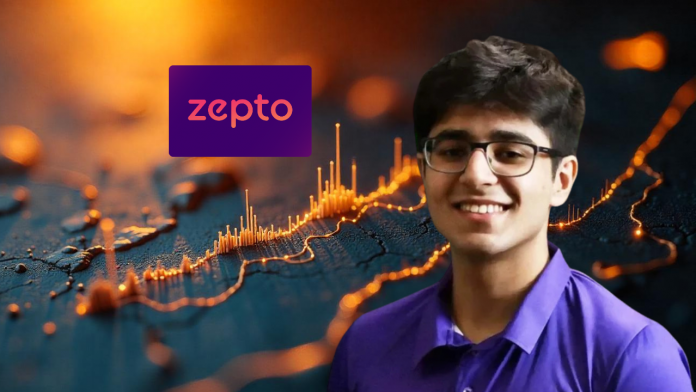
Quick commerce major Zepto has raised $350 million (approximately INR 2,950 crore) in a funding round led by Motilal Oswal‘s private wealth division.

Domestic Investors, HNIs invest into Zepto

The round saw participation from domestic high-net-worth individuals, family offices, and financial institutions, including Taparia Family Office, Mankind Pharma Family Office, and RP Sanjiv Goenka Group.

Continue Exploring: Zomato’s unconventional job posting sparks debate over INR 20 lakh fee

Celebrities Abhishek Bachchan and Sachin Tendulkar also invested in the round. Zepto stated that the round was raised entirely from domestic investors. The company plans to use the funds to expand its 10-minute snacks delivery service, dark store network, and fintech offerings.

Meanwhile, Zepto cofounder and CEO Aadit Palicha said, “When we started this venture, the risk appetite among domestic investors was limited – especially to trust 18-year-olds with their money. Today, we are humbled to have reached a place in India’s economic growth where we’ve not only fostered that trust but also spearheaded a fundraise of this magnitude, which will hopefully set a precedent for the startups that follow ….”

Zepto nets $665 million in June

This funding round comes after Zepto raised $665 million in June at a valuation of $3.6 billion and another $340 million in August at a valuation of $5 billion. The company has raised over $1.3 billion in the past few months.

Continue Exploring: Bingo forges partnership with All India Pickleball Association

Further, the funding round also highlights the growing competition in India’s quick commerce space. Swiggy has allocated a significant portion of its IPO proceeds to fuel its quick commerce vertical, while Zomato-owned Blinkit has rapidly scaled up its operations and product catalogue.

Established in July 2021 by Palicha and Kaivalya Vohra, Zepto claims to deliver groceries and other items within 10 minutes. The company operates in 17 cities, has over 550 dark stores, and processes more than 7 lakh orders daily. Zepto is also eyeing an initial public offering (IPO) in the next couple of years and is in the process of shifting its base to India.

Advertisement

Uniqlo India targets INR 1,000-Cr sales mark in FY25, experiences 30% growth

0
Image of uniqlo store
Uniqlo India targets INR 1,000-Cr sales mark in FY25, experiences 30% growth

Uniqlo India aims to reach INR 1,000-crore sales mark in the current fiscal year, driven by retail expansion and 30% annual growth. 

Chief Operating Officer Kenji Inoue stated, “We have been achieving 30% growth, we feel that the potential of the market is huge.”

Uniqlo aims to triple annual sales to 10 trillion yen

India is a crucial market for Uniqlo’s parent company, Fast Retailing Co., which reported annual sales of 3 trillion yen (nearly $20 billion) and aims to triple it to 10 trillion yen. Inoue added, “Though India is still a small market on a global scale for Uniqlo, its potential is probably one of the biggest and it will change in the future.”

Continue Exploring: Delhi’s Khan Market ranks 22nd globally as most expensive retail street

For now, Uniqlo India operates 13 stores and is opening two new stores in Mumbai and West Delhi, taking the total count to 15 by November-end. Within three years of operations, Uniqlo became profitable in FY ’22, reporting a 31% revenue increase to INR 814.84 crore and a 25% profit increase to INR 85.17 crore.

Inoue said, “We have grown 30% last year (FY ’24) and we are targeting a similar growth ratio. We have not seen any significant drop or any change in people’s consumption behaviour.” On achieving the INR 1,000-crore sales mark, Inoue stated, “We aim for that. It would be dependent on factors such as the opening of new stores.”

Continue Exploring: Wrangler partners with SOCIAL to launch co-branded merchandise line

Uniqlo to surge local sourcing, aims 18%

Meanwhile, Uniqlo India is increasing local sourcing, aiming for 18% by 2025, up from 15.5% currently. Inoue noted, “We commit to expansion and modernisation of production activities in India and are on track to achieve local sourcing requirements.”

The company focuses on quality service and product mix in each region, particularly in South India. Uniqlo also generates 15% of sales from its online store, serving 17,000 pincodes. Inoue emphasised the importance of online sales through the mobile application and website.

Notably, Uniqlo is part of Fast Retailing Co., headquartered in Tokyo, Japan. The company has eight brands, including GU, Theory, and Helmut Lang.

Advertisement

Tata CLiQ rebrands as Tata CLiQ Fashion, shifts focus to fashion and lifestyle

0
Image of TLiQ
Tata CLiQ rebrands as Tata CLiQ Fashion, shifts focus to fashion and lifestyle

Tata CLiQ, an e-commerce platform, has rebranded as Tata CLiQ Fashion, marking its transition from a general marketplace to a specialised platform focused on fashion and lifestyle.

Tata CLiQ gets new logo, redesigned app

The rebranding effort includes a new logo, updated packaging, and a redesigned app and website to improve user experience.

Continue Exploring: Third Wave Coffee’s revenue rises 67%, but losses nearly double

According to Gopal Asthana, CEO of Tata CLiQ, “Our new identity reflects our focus on meeting the changing needs of consumers. This move strengthens our position in the fashion segment and allows us to help customers explore their style. We aim to offer an improved and more tailored shopping experience.”

Meanwhile, Tata CLiQ Fashion will offer a wide range of products, including clothing, footwear, watches, accessories, beauty items, gadgets, and home products. The platform will feature specialised stores such as the Sneaker Store, Indie Finds Store, and Lingerie Store. Additionally, Tata CLiQ Fashion will include Tata CLiQ Palette, a curated selection of beauty products, as well as thematic stores like the Winter Wear Store and the Wedding Store.

Continue Exploring: Nandini Dairy expands to Delhi, posing new challenge for Amul

Tata CLiQ Fashion onboards 6,000 brands

With over 6,000 brands on board, Tata CLiQ Fashion aims to provide a seamless online shopping experience, making it easier for customers to find products that suit their needs. The platform’s curated collections and digital tools are designed to simplify and enhance the shopping experience.

Advertisement

Zomato CEO Deepinder Goyal clarifies controversy over INR 20 Lakh fee job

0
Image of zomato ceo
Zomato's unconventional job posting sparks debate over INR 20 lakh fee

[Updated] Zomato cofounder and CEO Deepinder Goyal issued a clarification regarding the company’s job listing for a chief of staff position, which received criticism for requiring applicants to pay INR 20 lakh. Goyal stated that the company received 18,000 applications for the post and that the requirement was merely a “filter” to find the right candidates.

“As some people pointed out, the ‘you have to pay us 20 lacs’ was merely a filter, to find people who had the power to appreciate the opportunity of a fast track career, without getting bogged down by the constraints in front of them,” said Goyal. He also clarified that charging the fees was “never part of the plan” and that the company will not ask selected candidates to pay the amount.

[Original] Zomato‘s cofounder and CEO, Deepinder Goyal, recently posted an unusual job listing for a chief of staff position. The post went viral, sparking intense debate.

Zomato to donate fee to Feeding India initiative

According to the listing, the selected candidate would receive no salary for the first year but instead pay INR 20 lakh. The fee would be donated to Zomato’s Feeding India initiative. Goyal stated, “We believe that people who apply for this role should do it for the learning opportunity it presents, rather than for a fancy well-paying job… Think of this as a fast-track learning program.”

Continue Exploring: Flipkart-backed fintech startup Super.Money launches fixed deposit offering

The job requirements include “common sense, communication skills, empathy, and not a lot of experience.” The selected person would oversee “anything and everything to build the future of Zomato.” Starting from the second year, the chief of staff would receive a salary exceeding INR 50 lakh.

Netizens react

Reactions varied, with some praising the innovative approach and others criticising the terms. Amit Sachdev, Tata iQ’s chief people officer, said, “The job posting appears to be a really ‘maverick’ way to find the right mindset candidate.” Emmanuel David, Aster DM Healthcare’s independent director, termed it an “alternative MBA.”

Continue Exploring: Beyoung goes global, expands to Middle East through partnership with Noon.com

However, many users expressed concerns about the job listing excluding applicants who cannot afford the INR 20 lakh fee, effectively narrowing the pool to a specific socioeconomic class. Others slammed the Indian startup founders’ “obsession with the demand for free labour” and drew attention to potential labour law violations.

Further, Deepak Shenoy, founder and CEO of CapitalMind, said, “… Not a fan of underpaying young people, or of taking money from them for a job. I used to get offers from people willing to pay us to give them a job, in 2001. Didn’t do it then. Hunger is a driver, but it shouldn’t be the consequence.”

Some users highlighted that banks are unlikely to finance this job role, unlike traditional educational courses. There were also concerns about potential violations of labour laws, such as the Payment of Wages Act, Minimum Wages Act, and Industrial Disputes Act. Many noted that not paying an employee for a year while charging fees could lead to criminal charges, legal actions, and heavy penalties for unfair employment practices.

Nihar Ghosh, former CHRO of Emami Group, added, “Goyal has a good sense of humour. I think more than a job post, it’s a joke and nothing less than that. This, I personally think, is crude and in bad taste.”

Goyal clarified that Zomato is not trying to save money and will contribute NR 50 lakh to the selected person’s chosen charity.

Advertisement

Third Wave Coffee’s revenue rises 67%, but losses nearly double

0
Image of third wave coffee
Third Wave Coffee's revenue rises 67%, but losses nearly double

Bengaluru-based café chain Third Wave Coffee reported a 67% increase in operating revenue to INR 241 crore for the financial year ended March 31. 

Third Wave Coffee losses reaches to INR 110 Cr

However, its net loss nearly doubled to INR 110 crore due to a significant rise in expenses.

According to financial statements sourced from Tofler, total expenses increased to INR 358 crore from INR 201 crore. Employee benefits and cost of materials accounted for INR 97 crore and INR 88 crore, respectively.

Continue Exploring: Delhi’s Khan Market ranks 22nd globally as most expensive retail street

The company had laid off over 100 employees in December last year, following a $35 million funding round led by Creaegis in September 2023. Third Wave has raised $66 million to date.

Expenses on selling and marketing surged to INR 12 crore from INR 2 crore, while rent costs rose 88% to INR 81 crore. Rajat Luthra, former head of KFC India and Nepal, took over as CEO in April, replacing Sushant Goel, who transitioned to a board role.

Third Wave operates 110 outlets

Third Wave competes with Starbucks, Cafe Coffee Day, and Blue Tokai. The company plans to open 50 stores in existing markets and enter new cities like Chennai. With over 110 stores, half of which are in Bengaluru, Third Wave aims to expand its presence.

Continue Exploring: Parle Agro’s net profit plummets 87% due to ‘Sin Tax’ on sparkling drinks

In contrast, Tata Starbucks reported a 12% increase in operating revenue to INR 1,218 crore. Starbucks has introduced low-priced offerings to boost footfall. Other specialty coffee brands, such as Slay Coffee, Sleepy Owl Coffee, and Rage Coffee, have also gained traction.

Recent funding rounds in the specialty coffee segment include First Coffee‘s $1.2 million raise led by Beenext and AbCoffee‘s $3.4 million raise led by Nexus Venture Partners. Subko, a specialty coffee roaster, raised $10 million led by Zerodha cofounder Nikhil Kamath.

Advertisement

Nandini Dairy expands to Delhi, posing new challenge for Amul

0
Image of nandini dairy
Nandini Dairy expands to Delhi, posing new challenge for Amul

Karnataka’s flagship dairy brand, Nandini, is set to expand its presence to North India with its launch in Delhi on November 21.

According to MK Jagadish, Managing Director of Karnataka Milk Federation (KMF), the brand will introduce fresh dairy products, including milk and curd, in the national capital.

Continue Exploring: Delhi’s Khan Market ranks 22nd globally as most expensive retail street

Nandini operates in 6 cities

“Nandini’s entry into Delhi marks our foray into the North Indian market,” Jagadish said. The brand already operates in Karnataka, Maharashtra, Goa, Hyderabad, Chennai, and Kerala.

To support its entry, KMF has floated a tender for transporting milk via insulated tankers from Mandya Milk Union to Delhi. The daily transportation volume is estimated at 100,000 kilograms of milk, requiring approximately three 33-kiloliter tankers daily.

However, Nandini will face stiff competition from established players like Amul, Mother Dairy, Madhusudan, and Namaste India. However, Jagadish is confident about the brand’s prospects.

Continue Exploring: Wrangler partners with SOCIAL to launch co-branded merchandise line

Nandini to introduce idli, dosa in Bengaluru

In addition to its Delhi launch, Nandini will also introduce idli and dosa batter in Bengaluru on November 26.

Earlier in July, Nandini achieved a record 10 million litres of daily milk procurement, surpassing all previous records. The brand is available in parts of India and globally, including Malaysia, Vietnam, Singapore, the UAE, and the US.

For now, Gujarat Cooperative Milk Marketing Federation currently leads with daily procurement of about 26 million litres of milk.

Advertisement

Delhi’s Khan Market ranks 22nd globally as most expensive retail street

0
Image of delhi khan market
Delhi's Khan Market ranks 22nd globally as most expensive retail street

Delhi’s Khan Market has secured the 22nd spot as the most expensive retail street globally, with annual rents reaching $229 per square foot (~INR 19,330), according to Cushman & Wakefield‘s “Main Streets Across the World” report.

Limited availability of retail space pushing rent – MD 

This represents a 7% year-on-year (YoY) growth.

Continue Exploring: Subway aims to double store count in India to 1,700 in six Years

Notably, Khan Market, India’s most expensive retail destination, boasts a curated mix of premium brands and upscale boutiques, attracting affluent shoppers. Saurabh Shatdal, Managing Director, Capital Markets, and Head of Retail-India at Cushman & Wakefield, noted, “Known for its curated mix of premium brands and upscale boutiques, Khan Market attracts affluent shoppers, solidifying its reputation as a high-end retail hotspot. The limited availability of retail space in the area creates intense competition, pushing rental values higher.”

Globally, 79 of 138 tracked locations reported rental increases, with an average rental growth of 4.4%. In India, main streets are thriving, driven by robust demand and strong rental growth. “With malls facing supply constraints, main streets across India are thriving, driven by robust demand and strong rental growth. As of YTD 2024, main streets have recorded leasing of 3.8 msf, marking 11 per cent YoY growth,” Shatdal added.

Continue Exploring: Flipkart to create 600 jobs with new FSC centre in Indore

Bengaluru’s Indiranagar sees strongest rental growth

In the Asia-Pacific region, Bengaluru’s Indiranagar saw the strongest rental growth, while Chennai’s Anna Nagar was noted as the most affordable retail street. Milan’s Via Montenapoleone has surpassed New York’s Upper 5th Avenue as the world’s most expensive retail destination, with rents surging by nearly a third over two years.

Shatdal emphasised, “Globally, super-prime physical retail spaces remain central to retailers’ strategies, highlighting the enduring importance of vibrant shopping destinations like Khan Market. With India’s robust economic growth and evolving consumer preferences, the country’s retail sector is poised for sustained success.”

Advertisement

Wrangler partners with SOCIAL to launch co-branded merchandise line

0
Image of wrangler store
Wrangler partners with SOCIAL to launch co-branded merchandise line

Global denim brand Wrangler has collaborated with Indian neighbourhood café chain SOCIAL to unveil an exclusive co-branded merchandise line. The partnership marks SOCIAL’s debut into co-branded merchandise.

SOCIAL is bold fusion of fashion and urban culture – CEO

“This collaboration with SOCIAL is a bold fusion of fashion and urban culture, bringing together two dynamic brands that celebrate self-expression and creativity,” said Nitin Chhabra, CEO of Ace Turtle, Wrangler’s exclusive licensee in India. “With this exclusive merchandise, we’re curating an experience that embodies the pulse of the city and the spirit of adventurous optimism.”

Continue Exploring: Blue Tokai aims for threefold revenue growth by 2027, eyes IPO

The merchandise line includes oversized tees and sweatshirts for men and cropped tees for women, featuring illustrations that blend Wrangler’s adventurous elements with SOCIAL’s party-ready style.

“Our co-branded merchandise with Wrangler takes this collaboration a step further, blending music, fashion, and culture into a tangible form. Together, we are offering our guests a unique way to celebrate the adventurous spirit and urban creativity that define both brands,” said Divya Aggarwal, Chief Growth Officer at Impresario Entertainment & Hospitality Pvt. Ltd., SOCIAL’s parent company.

Meanwhile, the collection will be available at Wrangler retail stores, select department stores like Lifestyle and Shoppers Stop, and online on Wrangler’s India website. Customers can also order via QR code at SOCIAL outlets.

Continue Exploring: Sanjay Dutt’s The Glenwalk records 6 Lakh bottles sold in seven months

About Wrangler

Established in 1947, Wrangler is an American workwear brand owned by US-based Kontoor Brands Inc., which also owns denim brand Lee. In 2021, Kontoor Brands shifted its Lee and Wrangler business to a franchise model, partnering with Ace Turtle, a retail tech platform that also licences global brands like Toys“R”Us, Babies“R”Us, and Dockers for India and South Asian markets.

Advertisement

Parle Agro’s net profit plummets 87% due to ‘Sin Tax’ on sparkling drinks

0
Image of nadia Chauhan
Parle Agro's net profit plummets 87% due to 'Sin Tax' on sparkling drinks

Parle Agro, the maker of Frooti and Appy Fizz, has reported a steep 87% year-on-year (YoY) decline in net profit for FY24, citing the 40% ‘sin tax’ on sparkling drinks as the primary reason.

GST up from 12% to 40%, had an impact on business – MD

According to ET, Nadia Chauhan, Joint Managing Director at Parle Agro, said, “The decision to place fruit-based, non-caffeinated sparkling drinks in the sin tax category, taking GST on Appy Fizz up by four times from 12% to 40%, had a massive impact on the overall business, which is dependent on specific price points.”

Continue Exploring: E-commerce platforms transforms consumer buying patterns in metro cities – NielsenIQ

The company’s net profit dropped to INR 22 crore for FY24, while revenue declined 12% to INR 3,210 crore. Chauhan attributed the decline to the reduced serving size of Appy Fizz, from 160ml to 125ml, due to the increased tax burden. “When you reduce the serving size, the value to the consumer reduces as well. They were used to 160 ml, which had to go down to 125ml, which impacted sales,” she explained.

However, Parle Agro’s competitors, including Coca-Cola and PepsiCo, also face the same 40% tax on carbonated drinks. An industry analyst noted that consumers are increasingly preferring no-sugar and low-sugar drinks, but Frooti and Appy Fizz have limited options in these categories.

Parle Agro’s INR 600 Cr investment in Dairy, changes growth 

Despite the challenges, Chauhan remains optimistic about Appy Fizz’s growth, stating that its contribution to the company’s portfolio has increased to over 40%. She also highlighted Parle Agro’s significant investment in the dairy category, exceeding INR 600 crore, which is changing the company’s growth trajectory.

Continue Exploring: Mamaearth’s Honasa Consumer faces AICPDF heat over unsold inventory worth INR 300 Cr

Interestingly, Chauhan believes the growing circulation of INR 20 coins will boost Appy Fizz sales, as its price tag of INR 20 becomes ‘small change’ for customers. “We are already seeing growth rates of over 30-40% over the previous year,” she said.

In contrast, rival Hindustan Coca-Cola Beverages reported a 247% increase in net profit for FY24 to INR 2,808.3 crore, with a 9.2% increase in revenue to INR 14,021 crore.

The company’s franchisee business, accounting for 40% of its sales, was not included in the reported numbers. A leading FMCG distributor noted that Parle Agro had to take back significant stocks due to unsold inventories in kirana stores.

Advertisement

E-commerce platforms transforms consumer buying patterns in metro cities – NielsenIQ

0
Image of E-Commerce platform with NielsenlQ
E-commerce platforms transforms consumer buying patterns in metro cities - NielsenIQ

The rise of online platforms has transformed consumer buying patterns, particularly in metro cities, where shoppers now prefer “stock-up” purchases over “top-up” buys, according to Kanaka Bhagwat, Head of e-commerce at NielsenIQ.

Q-commerce, e-commerce sees 30% surge in sales QoQ

In an interview with ET, Bhagwat revealed that quick commerce and e-commerce sales have surged 30% quarter-on-quarter over the last five quarters, driven by consumers seeking convenience and variety. “Quick commerce and ecommerce sales are in high gear, having grown 30% quarter-on-quarter over the last five quarters,” she said.

Continue Exploring: Mamaearth’s Honasa Consumer faces AICPDF heat over unsold inventory worth INR 300 Cr

Meanwhile, the sales volume of ready-to-eat foods has led the growth on quick-commerce channels, expanding 52% in the July-September quarter compared to the previous year. Other fast-growing categories include salty snacks and refined edible oils (41% each), biscuits (40%), and packaged atta (39%).

Nestle, ITC, Unilever and others reports double-digit growth

Major FMCG companies, including Nestle, ITC, Hindustan Unilever, Dabur, and Emami, have reported high double-digit growth on quick-commerce platforms like Zomato-owned Blinkit, Swiggy Instamart, Zepto, Big Basket‘s BBNow, and Flipkart Minutes. FMCG executives noted that consumers are now buying bulk packs of staples like rice, edible oils, and atta on these platforms, driven by convenience.

Continue Exploring: Sanjay Dutt’s The Glenwalk records 6 Lakh bottles sold in seven months

Notably, the shift to e-commerce is pronounced in metro markets, where quick commerce and e-commerce contributed 85% to incremental sales in the quarter ended September 2024. “This dramatic shift in just one year highlights the growing dominance of ecommerce in the metro markets,” Bhagwat added.

While traditional trade remains dominant nationally, accounting for 85% of FMCG sales, urban markets are rapidly transitioning to quick commerce. This has prompted companies like Dabur and Nestle to adjust inventory in general trade channels.

Advertisement