Monday, December 22, 2025
Home Blog Page 205

Flipkart’s Ekart achieves 8x growth in three years, boosts monetization efforts

0
Image of Ekart
Flipkart's Ekart achieves 8x growth in three years, boosts monetization efforts

The in-house logistics arm of ecommerce giant Flipkart, Ekart has scaled its operations and recorded an impressive 8-times growth over three years. 

This growth can be attributed to the company’s efforts to monetise its supply chain. Ekart has emerged as a key logistics partner for several brands, including Snapdeal, Roposo, Libas, Naaptol, Sassafras, and HomeCentre, particularly during the festive season.

Continue Exploring: LT Foods goes global, aims to tap $2 Bn rice market of Saudi Arabia

Ekart delivers 6 million shipments daily

With a daily capacity of over 6 million shipments, Ekart’s last-mile network spans an impressive 98% of Indian postal codes. The company boasts an extensive warehousing capacity of over 50 million cubic feet and a fleet of 7,000 trucks. These capabilities have enabled Ekart to achieve a 30% increase in two-day deliveries and a 40% expansion in zonal coverage for ecommerce brands in India.

While the logistics industry is growing at a rate of 5-10% year-on-year, Ekart has expanded its client base of retail and D2C brands by an impressive 10X. “Ekart’s capabilities reflect the immense potential of India’s logistics industry, and we are proud to contribute to its evolution. We remain committed to developing industry-first technologies and supply chain innovations, with a focus on driving efficiency and scalability,” said Mani Bhushan, Chief Business Officer, Ekart.

Continue Exploring: HUL announces demerger of  ice cream business, cites synergies limitation

Ekart attributes 10% business to E2E supply

Further, Ekart’s end-to-end services, including last-mile deliveries, partial truckload and full truckload movements, and refurbishment, have led 25% of partners to adopt multiple solutions, optimising their supply chain strategies. Today, Ekart attributes over 10% of its business to E2E supply chain solutions, which has helped brands optimise their conversions by 3-4% and optimise supply chain costs by 10-12%.

“At Ekart, we believe our deep understanding of overall supply chains and relentless pursuit of efficiency is a key differentiator and enabler for the brands that we serve as well as India’s logistics ecosystem as a whole. Ekart has become a reliable option for brands looking to unlock supply chain value to scale their topline via extended reach and speed and improve profitability through efficiency and lesser handshakes by working with one trusted partner for end-to-end solutions,” added Bhushan.

Advertisement

LT Foods goes global, aims to tap $2 Bn rice market of Saudi Arabia

0
Image of LT Foods
LT Foods goes global, aims to tap $2 Bn rice market of Saudi Arabia

LT Foods Limited, a global FMCG company, has entered the Saudi Arabian retail market with the opening of a new office in Riyadh. This move aims to tap into the Kingdom’s $2 billion rice and rice-based food market, reflecting the company’s strategy to expand its global footprint.

LT Foods registers 18% revenue growth, 21% profit surge

For now, LT Foods generates $1 billion in global revenue and has sustained 18 years of revenue growth at 18% and profit growth at 21%.

Continue Exploring: Goyal Salt ltd registers approx. 60% revenue growth, hits INR 74.82 Cr in H1FY25

However, the Riyadh office will address the growing demand for authentic rice and rice-based products among Saudi consumers. This office will also serve as a hub for LT Foods’ regional operations, leveraging its expertise to cater to the local culinary preferences. 

Meanwhile, LT Foods is set to invest SAR 185 million in warehousing, inventory, and personnel over the next five years, targeting a revenue of SAR 435 million during the same period.

Further, the company, with Saudi Agricultural and Livestock Investment Company (SALIC) as a strategic shareholder, is also preparing to establish local manufacturing facilities in Saudi Arabia. 

DAAWAT, Hadeel, and Mufaddal, part of Saudi Arabia – MD

“We have built successful businesses in every market where we have set up our operations. We have provided quality products and premium food offerings to consumers. LT Foods has also added significant value to the economy and to its operations. We are now very excited to expand our footprint in Saudi Arabia. Our trusted brands, DAAWAT, Hadeel, and Mufaddal, have long been a part of the Kingdom of Saudi Arabia (KSA). With SALIC being a strategic shareholder in LT Foods, we are now expanding our footprint in the KSA with warehouses and are prepared to establish local manufacturing,” said Vijay Arora, Chairman and Managing Director, LT Foods.

Continue Exploring: Western Railways announces launch of Mumbai’s first open-air Restaurant on wheels

Adding further, Gursajan Arora, CEO – Middle East Business, LT Foods, stated, “Saudi Arabia is one of the largest importers of rice and a key market for us. We see tremendous potential for growth in the market and are excited to bring our legacy of quality, innovation, and trust to the region. With our Riyadh office, we aim to deepen our connections with local consumers and partners, tailoring our offerings to meet their specific preferences. We are confident in our ability to strengthen our market presence, drive sustainable growth, and continue delivering exceptional value to all our stakeholders.”

Advertisement

HUL announces demerger of  ice cream business, cites synergies limitation

0
Image of Hindustan unilever
HUL announces demerger of  ice cream business, cites synergies limitation

Hindustan Unilever Ltd (HUL) has announced that its board has approved the demerger of its ice cream business into an independent listed entity.

HUL owns Kwality Wall’s, Cornetto, and Magnum

The ice cream business owns popular brands such as Kwality Wall’s, Cornetto, and Magnum. As per the plan, existing shareholders of HUL will receive shares in the new entity in proportion to their shareholding in HUL.The demerger process will be subject to necessary approvals and procedures in accordance with applicable laws.

Continue Exploring: Zomato CEO Deepinder Goyal gives up approx. $2 million salary: More than meets the eye?

Earlier, HUL had stated that it was exploring options to separate its ice cream business, which contributes around 3% to the company’s topline. The company had formed an Independent Committee to evaluate the best mode of separation.

Board has accorded in-principle approval to demerge – HUL

“The Board considered different modes of separation of the Ice Cream business and after due consideration, with a view to maximising value for all the shareholders, the Board has accorded in-principle approval to demerge the business,” said HUL. The company has also authorized its management to undertake preparatory steps required for the demerger of the Ice Cream business.

Continue Exploring: Brokerages’ ‘Buy’ ratings on Swiggy’s IPO amid capitalization loss concerns

With intention to separate its global ice cream business, the decision to demerge the ice cream business is in line with HUL’s parent entity, Unilever PLC’s. The Independent Committee had noted that the Ice Cream business has a different operating model, including cold chain infrastructure, and a distinct channel landscape, which limits synergies with the rest of the company’s business. 

For the financial year ended March 2024, HUL’s revenue from the sale of products was INR 59,579 crore.

Advertisement

Zomato CEO Deepinder Goyal gives up approx. $2 million salary: More than meets the eye?

0
Image of zomato CEO
Zomato CEO Deepinder Goyal gives up approx. $2 million salary: More than meets the eye?

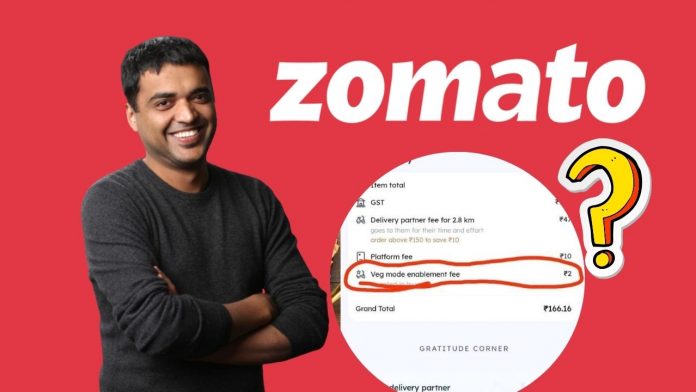
Zomato founder and CEO Deepinder Goyal has voluntarily waived his base salary of INR 3.5 Cr per annum till March 31, 2026. Goyal hasn’t taken the base salary since April 1, 2021.

Deepinder Goyal foregoes salary since 2021

As per the company’s filing for its INR 8,500 Cr qualified institutional placement (QIP), “… vide letters dated March 24, 2021 and April 1, 2024, addressed to our board, Deepinder Goyal has voluntarily waived his salary for a period starting from April 1, 2021 till March 31, 2026, and shall continue to discharge his roles and duties as managing director and chief executive officer during this period.”

Continue Exploring: Zomato launches INR 8,500 Cr QIP at floor price of INR 266 per share

Besides his base salary, Goyal is entitled to a variable pay, which is at the discretion of the company’s board, and statutory benefits. The founder, who holds a 4.18% stake in Zomato, will also be entitled to a cash payment of INR 1.75 Cr within a month of cessation of employment.

Zomato’s QIP and expenses

Meanwhile, the company’s QIP opened on Monday (November 25) and they set a floor price of INR 265.91 per share for it. Zomato said it may offer a discount of up to 5% on the floor price.

The QIP issue is expected to see participation from qualified institutional investors in India, as well as Europe and the US. The bidders will feature alternate investment funds registered with SEBI, eligible FPIs, mutual funds registered with SEBI, venture capital (VC) funds registered with SEBI, foreign VC investors, among others.

Continue Exploring: Flipkart guilty of unfair trade practice! Consumer Commission’s action 

Further, the company plans to use the QIP funds for various initiatives, including setting up Blinkit’s dark stores and warehouses. Zomato has reserved INR 2,137 Cr for this purpose and proposes to open additional dark stores in order to scale up its existing network across cities as well as expand into new cities in India.

Reportedly, the company will also use INR 2,492 Cr for brand building and advertising initiatives. It plans to ramp up its ad expenses in the near future, expecting to deploy INR 2,492 Cr towards advertising activities on or before March 31, 2028. 

Additionally, Zomato will invest INR 1,769 Cr to build its cloud infrastructure and tech capabilities. The rest of the funds will be reserved for general corporate purposes.

Zomato’s Qatar business closure

In a separate development, Zomato has informed about the closure of its operations in Qatar. The company’s step-down subsidiary, Zomato Internet LLC (ZIL), didn’t have active business operations and was under the process of liquidation since the time of its filing its red herring prospectus (RHP) in July 2021.

Advertisement

Brokerages’ ‘Buy’ ratings on Swiggy’s IPO amid capitalization loss concerns

0
Image of swiggy IPO
Brokerages' 'Buy' ratings on Swiggy's IPO amid capitalization loss concerns

UBS, a global brokerage firm, has started covering Swiggy, a major food delivery platform company, and given it a ‘Buy’ rating. They have set a target price of INR 515 for the next 12 months.

UBS set target price of INR 515, 19% uptick

This represents an over 19% upside from the stock’s last closing price of INR 431.25. UBS believes that there is “plenty of room at the table” and Swiggy is well-positioned to benefit from the rapid growth in India’s food delivery and quick commerce markets.

Continue Exploring: Zomato launches INR 8,500 Cr QIP at floor price of INR 266 per share

Meanwhile, the brokerage firm noted that while Swiggy lost market capitalization in the previous year, data shows signs of market share stabilization. This is visible in the company’s Q1 FY25 results as well. On the quick commerce vertical, UBS said that Swiggy lost market share to peers despite being the pioneer in the segment.

Swiggy Instamart’s order count sees 41% jump

However, the company has made infrastructure changes to adapt to changing trends, including expanding the size of dark stores and densifying the dark store footprint in urban areas. These changes have shown results, with Swiggy Instamart’s order count jumping 41% in Q1 FY25 and average order value increasing by 10%. Despite this, Instamart needs to narrow the gap with Blinkit.

Continue Exploring: Tata Group launches Neu Flash q-commerce delivery amid intensifying competition

Further, UBS expects Swiggy’s quick commerce vertical to achieve adjusted EBITDA breakeven in FY29. The brokerage firm believes that Swiggy’s stock price is at a 35-40% discount to Zomato and sees room for this valuation discount to narrow as the company demonstrates stabilizing market share.

Notably, UBS has become the latest brokerage firm to initiate coverage on Swiggy after its listing earlier this month. Other brokerage firms, including JM Financial and Motilal Oswal, have also initiated coverage on Swiggy with ‘Buy’ and ‘Neutral’ ratings, respectively.

Advertisement

Flipkart guilty of unfair trade practice! Consumer Commission’s action 

0
Image of flipkart
Flipkart guilty of unfair trade practice! Consumer Commission’s action 

Flipkart, the ecommerce giant, has been held guilty of unfair trade practice by the District Consumer Disputes Redressal Commission in Mumbai.

Flipkart’s “no return policy” results INR 4,641 loss

The commission’s decision came after a consumer complaint about receiving inferior-quality food products from Flipkart, which cited its “no return policy” and refused to replace the items. The consumer had purchased 13 containers of a health drink mix from the e-commerce platform in October 2023 for INR 4,641. However, the products were found to be of abnormal color and texture, lacked a QR code on the label, and were likely fake.

Continue Exploring: Tata Group launches Neu Flash q-commerce delivery amid intensifying competition

Meanwhile, the commission ordered Flipkart and the seller to refund the product’s cost with interest and pay INR 10,000 as compensation to the complainant. This is not the first time Flipkart has faced action for unfair trade practices. In March this year, a consumer disputes redressal commission in Mumbai ordered the company to pay INR 10,000 to a customer for cancelling his iPhone order.

CCI finds Amazon and Flipkart guilty

Reportedly, Flipkart and its rival Amazon were recently found guilty of violating competition laws by the Competition Commission of India. Meanwhile, the Enforcement Directorate (ED) is also investigating the two ecommerce players for violation of foreign direct investment laws. 

Continue Exploring: Tata Consumer foresees continued volume growth, sees food inflation as ‘short-term blip’

On the financial front, Flipkart continues to be a loss-making entity. Flipkart’s marketplace arm, Flipkart Internet, reported a 41% year-on-year decline in its net loss to INR 2,358 Cr in the financial year 2023-24. Operating revenue zoomed 21% to INR 17,907.3 Cr.

Amid all these challenges, Flipkart also launched its quick commerce service earlier this year due to the rising popularity of the segment. The company has been working to enhance its customer experience, with initiatives like same-day delivery services in 20 major Indian cities. 

Further, Flipkart’s parent Walmart reported 8% year-on-year growth in its international sales in Q3 FY25, driven by the ecommerce company’s solid sales growth during its flagship sale, The Big Billion Days.

Advertisement

Zomato launches INR 8,500 Cr QIP at floor price of INR 266 per share

0
Image of zomato ceo
Zomato launches INR 8,500 Cr QIP at floor price of INR 266 per share

Zomato, a leading foodtech company, has opened its INR 8,500 Cr qualified institutions placement (QIP) and set a floor price of INR 265.91 per equity share, a discount of 2.8% from its closing price today.

Zomato receives shareholders nod

In an exchange filing, the company said that the fund raising committee of its board approved the opening of the QIP on Monday (November 25). Zomato said that the QIP issue price would be decided in consultation with the book running lead manager and it may offer a discount of not more than 5% on the floor price.

Continue Exploring: Zomato gets shareholders’ approval to secure INR 8,500 Cr via QIP

This development comes about two days after Zomato received approval from its shareholders to raise INR 8,500 Cr (around $1 Bn) through the QIP. The company had disclosed its plans to undertake its first fundraise post listing in October this year. 

In its shareholders’ letter for the second quarter of the fiscal year, founder and CEO Deepinder Goyal said that the capital will enhance Zomato’s cash reserves. 

“We believe that we need to enhance our cash balance given the competitive landscape and the much larger scale of our business today. We believe that capital by itself does not give anyone the right to win, but we want to ensure that we are on a level playing field with our competitors, who continue to raise additional capital,” he said.

Continue Exploring: Tata Consumer foresees continued volume growth, sees food inflation as ‘short-term blip’

Swiggy releases IPO 

Since October, the company’s major competitors, Swiggy in the food delivery and quick commerce segment and Zepto in the 10-minute delivery space, have seen a significant capital infusion. Earlier this month, Swiggy turned into a publicly listed company and raised INR 11327.43 Cr from issuance of fresh shares in its initial public offering (IPO). 

Meanwhile, quick commerce unicorn Zepto raised another $350 Mn last week. With this, it became the most heavily funded startup this year, raising over $1.3 Bn in 2024 alone.

Advertisement

Tata Group launches Neu Flash q-commerce delivery amid intensifying competition

0
Image of tata new
Tata Group launches Neu Flash q-commerce delivery amid intensifying competition

Tata group‘s ecommerce venture, Neu, is piloting a quick commerce delivery service under Neu Flash, as demand for instant deliveries picks up pace in India.

Tata’s Neu Flash now operates in 20 cities

According to the sources, the 15-minute delivery service is now active in more than 20 cities across India, including major metros like Delhi NCR, Mumbai, Bengaluru, Hyderabad, Pune, Chennai, as well as several tier-II cities.

Continue Exploring: Tata Consumer foresees continued volume growth, sees food inflation as ‘short-term blip’

The rollout is currently limited to select pin codes within these cities, with a curated selection of products available during the initial phase. Neu Flash offers delivery of products ranging from groceries and electronics to apparel and beauty items. The app, which is built upon Tata’s existing digital infrastructure, offers quick delivery across multiple categories, including groceries, electronics, apparel, and beauty products.

However, Neu Flash leverages BigBasket‘s existing hyperlocal network for grocery deliveries, while Croma manages electronics deliveries and Tata Cliq handles fashion and lifestyle products. This expansion comes as Tata Digital works to strengthen Neu’s market position, following its earlier challenges in the superapp space.

For now, the quick commerce expansion follows substantial backend improvements to Neu’s platform over the past year, including a revamped user interface and enhanced integration of Tata’s digital assets.

Continue Exploring: abCoffee introduces coconut-based, non-dairy beverages across 75-plus outlets in India

India’s q-commerce sees 280% growth 

Meanwhile, Industry data shows that India’s quick commerce sector has grown by 280% in the last two years, with market leaders Blinkit, Zepto, and Swiggy Instamart collectively reporting over $1 Bn in revenue for FY24. This comes at a time when companies in India are intensifying their quick commerce offerings.

Recently, Myntra has introduced M-Now, offering deliveries in 30 minutes to 2 hours. Amazon India is getting ready to launch its own quick delivery service called Tez. Zepto’s recent $350 million funding, led by Motilal Oswal‘s Private Wealth division, shows how fierce the competition is in the quick commerce market.

Advertisement

Tata Consumer foresees continued volume growth, sees food inflation as ‘short-term blip’

0
Image of tata consumer product with CEO
Tata Consumer foresees continued volume growth, sees food inflation as ‘short-term blip’

Tata Consumer Products Ltd (TCPL) is viewing the current food inflation as a “short-term blip” and expects it to moderate in the next two quarters, along with a revival in consumer demand, according to its Managing Director & CEO Sunil D’Souza.

TCPL rules out price hike amid pressure

TCPL, the FMCG arm of the Tata Group, has ruled out any immediate price hike despite margins being under pressure, as it wants to “continue the volume momentum” as part of its growth ambitions.

Continue Exploring: abCoffee introduces coconut-based, non-dairy beverages across 75-plus outlets in India

“We are a growth company, and we will target double-digit top-line growth (revenue) and bottom line (margins) ahead of the top line, accepting for the right short term, which is the next two quarters,” D’Souza stated, as per ET. He also stated that food inflation remains high and in October, it was almost at double-digit, impacting urban consumption to a bit. However, the good news is the vast majority of India lives in the villages and the rural demand has started to come back after being under pressure for some quarters.

“In the short term, probably for a quarter, or maybe two quarters, you would see a pressure on margins. But I do expect momentum on top line and market share to continue,” he said.

FMCG majors experience sluggish growth in urban markets

Recently, several listed FMCG makers in their latest September quarter results reported an impact on their earnings due to high food inflation, which slowed down the pace of urban consumption. “Food inflation is a short-term blip and over the next two quarters, I do see that moderating and when that moderates, we do see demand coming back,” he added.

Continue Exploring: Western Railways announces launch of Mumbai’s first open-air Restaurant on wheels

In segments like tea, in which TCPL is a leading branded player, the company saw an increase of about 25-30 per cent in raw material prices but it did not pass on the price hike to end consumers. “We don’t want a demand shock coming in. So we have to be comparative. We have to make sure the category continues to be chugging along. So we have translated bit by bit, and we will be taking gradual price increases,” he further said. 

According to D’Souza, he is a “firm believer” that margins will come back if structural costs are right, but if you lose on market share, “getting it back is a very expensive and tiring climb back”.

“Structurally, in the last five years, we had a 12 per cent top line, 14 per cent EBITDA growth and close to 20-23 per cent of net profit. We aim to continue that trajectory going forward,” he mentioned. When asked about the price hike, D’souza said besides the tea and salt category, he did not see “any significant increase”. “Pulses (Tata Sampann) did have inflation in the first six months, and there, we calibrated the prices very quickly,” he said, adding that “gradual price increases in tea and salt have already taken it and the balance would be minimal”.

Advertisement

Health Minister Rane announces revamped hygiene rating for Goa’s eateries

Image of restaurant
Health Minister Rane announces revamped hygiene rating for Goa's eateries

Goa’s restaurant industry is set for a major overhaul as the Food and Drugs Administration (FDA) gears up to conduct hygiene inspections across the state.

FDA to ensure hygiene standards for Restaurants

This move comes after the FDA received multiple complaints about unsanitary conditions in several restaurants, particularly in the coastal belt. As per ET, Health Minister Vishwajit Rane stated that the FDA will be conducting these inspections to ensure that restaurants adhere to proper hygiene standards.

Continue Exploring: Western Railways announces launch of Mumbai’s first open-air Restaurant on wheels

An FDA official revealed that they receive around 10-12 complaints every month about unhygienic restaurants from both locals and tourists. “We then inspect the premises and issue necessary directions to the food business operator to improve hygiene,” the official said. To conduct these inspections, the FDA will be roping in FSSAI-empanelled third-party auditors. 

Health Minister Vishwajit Rane further said, “These comprehensive audits will evaluate adherence to FSSAI food safety standards, maintenance of proper sanitation protocols, staff hygiene training practices, and waste management systems.”

Non-compliant Restaurant owners may face action

Meanwhile, Restaurant owners are expected to comply fully with these requirements, as non-compliance may result in strict action under Food Safety and Standards Regulation. Furthermore, every restaurant is required to obtain and display an official hygiene rating certificate on their premises. This hygiene rating system was initiated by FSSAI to ensure that consumers make informed choices while eating out and to encourage food businesses to improve their food hygiene standards.

Continue Exploring: Goyal Salt ltd registers approx. 60% revenue growth, hits INR 74.82 Cr in H1FY25 

“The primary objective of this initiative is to enhance food safety standards and restore public confidence in Goa’s restaurant industry,” concluded Health Minister Rane. The FDA official also mentioned that hygiene rating was launched in Goa a year ago but received a poor response from food business owners, prompting them to consider re-launching the initiative.

Advertisement