Lay’s in Hot Water: FDA Warns Undeclared Milk in 6,300+ Bags Could Lead to Allergic Reactions
If you have a milk allergy, you’ll want to think twice before reaching for a bag of Lay’s. The FDA has just escalated a recall of Lay’s Classic Potato Chips to its most serious classification—Class I—meaning consuming the affected product could lead to severe illness or even death.
FDA Issues Highest-Level Recall for Lay’s Potato Chips Due to Life-Threatening Allergy Risk
The issue? Some batches of 13-ounce Lay’s bags contain undeclared milk, a major allergen that wasn’t listed on the label. For those with a milk allergy, even a small amount can trigger dangerous reactions, including hives, facial swelling, breathing difficulties, and severe gastrointestinal distress. In extreme cases, it can cause anaphylaxis, which can be fatal without immediate medical attention.
This recall isn’t nationwide—it only affects select Lay’s bags distributed in Oregon and Washington. The impacted chips were sold in stores starting in November 2024. PepsiCo, the parent company of Lay’s, is urging customers to check their bags and throw them out immediately
It’s important to note that a milk allergy is not the same as lactose intolerance. While lactose-intolerant individuals may experience discomfort when consuming dairy, those with a true milk allergy can have severe reactions.
98% of Consumers Don’t Know Where Their Food Comes From—Satyajit Hange’s Solution is Changing That
How Two Brothers Organic Farms Is Pushing Beyond Organic Labels With Farm-to-Fork Traceability
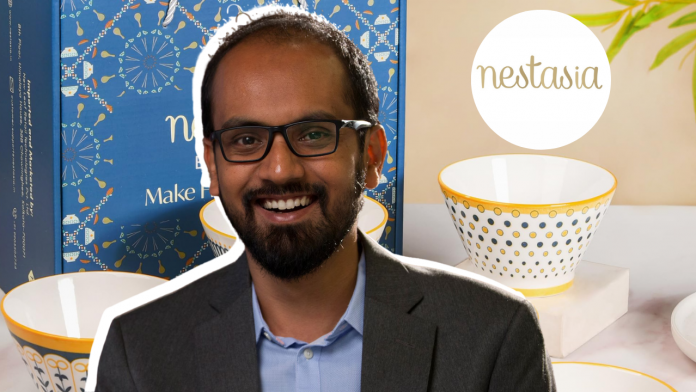
Satyajit Hange, co-founder of Two Brothers Organic Farms, recently took to LinkedIn to challenge a growing issue in the organic food industry—over-reliance on certifications. In his post, Hange stated, “Just being certified as an organic brand is not enough in 2025. Certifications are just labels.”
He emphasized that while certifications help establish credibility, they don’t tell the full story. According to him, what truly matters is transparency and traceability—ensuring consumers know exactly where their food comes from and how it’s produced.
Bridging the Gap Between Farmers and Consumers
To address this, Two Brothers Organic Farms has introduced a Dynamic Farm-to-Fork Traceability Solution. This innovative system allows consumers to trace their food’s journey from farm to table before making a purchase. By simply scanning a QR code on the product, buyers can access crucial details, including:
The farmer who cultivated the crop
The farming practices and fertilizers used
The harvest timeline and storage conditions
The goal, Hange explained, is to empower consumers with knowledge. “You deserve to know what you’re consuming. You deserve to know where it comes from, how it’s grown, and who makes it possible.”
Food Pharmer’s Review: A Deep Dive Into Transparency
Before its official rollout, Two Brothers Organic Farms provided early access to the system to Revant Himatsingka, popularly known as Food Pharmer. He scanned the QR code on one of their products and was able to view everything—from the exact farmer to the fertigation methods and the shelf life of the product.
This level of radical transparency is rare in the organic food industry, where many brands rely on labels without offering real proof of sourcing and sustainability.
Hange believes that this traceability system benefits both consumers and farmers. When consumers have access to such detailed information, it not only builds trust but also ensures accountability at every step of the supply chain.
“When you see all these details, our farmers know there’s someone out there watching, appreciating, and trusting their hard work from day one until harvest.”
By making their entire backend operations visible to the public, Two Brothers Organic Farms is placing itself under “positive pressure”—a term Hange uses to describe the responsibility they feel to uphold their promises.
A New Standard for Organic Food
This approach is set to disrupt the organic food industry, where certifications often act as a marketing tool rather than a guarantee of purity. Two Brothers Organic Farms is calling for a new era of transparency, where consumers no longer have to take brands at their word—they can verify the truth for themselves.
Hange ended his post with an invitation for feedback, saying, “Your thoughts can help us shape this into a crowd-sourced solution—one that truly works for you and for our farmers.”
As consumers become more conscious of their food choices, innovations like this could set a new gold standard for ethical, transparent, and truly organic food production.
Zomato ‘Quick’ Enters the 10-Minute Food Fight – Can It Beat Swiggy’s Bolt and Zepto Cafe?
Zomato is set to launch pilots for its 10-minute food delivery programme under the name ‘Quick’ in the NCR region next week, according to sources.
“Zomato has reached out to restaurant partners to initiate its 10-minute food delivery program, Quick starting with restaurant with consistent ratings across hygiene, kitchen prep time and quality,” Kawaljeet Singh, CEO and Co-founder of Harsukh Foods which operates over 50 restaurant outlets in NCR-region told Yourstory.
Another founder in the F&B space said that the Deepinder Goyal-led company sent emails to restaurant partners to deliver select dishes from their menu under the new programme. YourStory has reviewed the mail.
Zomato declined to comment on the queries shared by Yourstory and instead reiterated its plans from the third-quarter shareholder letter. Last week, Zomato said its 10-minute delivery feature would be enabled by curated items from the menu of restaurant partners and through a dedicated delivery fleet.
Quick will compete with Swiggy’s food delivery model Bolt, which has seen a spurt in popularity accounting for 5% of the platform’s orders as per Swiggy’s September quarter earnings.
”Bolt is a very high-focus programme for Swiggy so they give a lot of visibility and entry points for Bolt brands. The “Bolt” nugget is visible on the landing page as well as on the top of their “Food” page. These things activate multiple entry points for brands leading to an increase in top of the funnel, impressions and menu opens. Restaurants are pushing for higher menu penetration of Bolt items so that they don’t lose on these entry points,” said Karan Tanna, Founder & CEO of Ghost Kitchens, which runs brands like Starboy Pizzas and Speak Burgers.
While it is still early days and January is a slow month for the industry, there has been no incremental growth in restaurant’s business with the 10-minute food delivery service. The same customer is now ordering through Bolt and others,” noted Singh.
The 10-minute food delivery space has new and incumbent players. Zepto Cafe, an early player in the segment, has already established itself as a standalone offering out of the company’s quick commerce ecosystem. Within a month of launch, the offering was completing over 50,000 orders a day, CEO Aadit Palicha shared in a post on X in January.
Upcoming startups like Accel-backed Swish and NCR-based Zing are also targeting the 10-minute cloud kitchen delivery model. Quick commerce players like BB Now and Zomato’s Blinkit, under Bistro are also looking to scale 10-minute food delivery under private label. Earlier this month, Swiggy also launched a separate app under the name Snacc to offer 10-minute food options under its private label.
CityMall Races Ahead with ₹427 Crore Revenue in FY24—Meanwhile, Rival DealShare Shrinks by 75%
CityMall, a social e-commerce startup focused on serving smaller cities and towns, posted strong financial growth in the fiscal year ending March 2024, with its gross revenue crossing ₹420 crore. The company recorded a 23% year-on-year increase, with gross merchandise value (GMV) reaching ₹427 crore in FY24, up from ₹346.4 crore in FY23, as per its financial filings with the Registrar of Companies (RoC).
Operating on a community reseller model, CityMall enables local sellers in Tier II and III cities to distribute lifestyle products, groceries, and daily essentials. Product sales remained the company’s primary revenue driver, contributing 91.62% of total operating revenue. The revenue from product sales rose 17.1% to ₹391.5 crore, while the remaining ₹35.8 crore came from logistics and marketing services.
Beyond its core operations, CityMall generated ₹32 crore in additional income from interest on deposits and investments, bringing its total income to ₹459 crore for the year—an improvement from ₹378 crore in FY23.
Rising Costs and Increased Losses
CityMall’s procurement costs formed its largest expenditure, increasing 20.4% to ₹390 crore. Meanwhile, employee benefit expenses rose 7.7% to ₹91 crore, and transportation costs saw a sharp 45.5% spike to ₹56 crore. In total, CityMall’s overall expenses climbed 17.7%, reaching ₹615.2 crore, compared to ₹522.7 crore in the previous fiscal year.
Despite revenue growth, the company reported a wider loss of ₹159 crore, up 10% from ₹145 crore in FY23. CityMall’s Return on Capital Employed (ROCE) stood at -36.18%, while its EBITDA margin was -30.34%. On a per-unit basis, the company spent ₹1.44 to earn ₹1 in operating revenue.
As of March 2024, CityMall’s total current assets stood at ₹427 crore, which included ₹187 crore in cash and bank balance.
Competitive Landscape
CityMall has raised over $110 million in funding so far, including a $75 million Series C round led by Norwest Venture Partners in March 2022. Elevation Capital is currently its largest external stakeholder, followed by Accel and Jungle Ventures, according to startup data platform TheKredible.
In comparison, DealShare, one of CityMall’s biggest competitors, faced a 75% drop in gross revenue in FY24, though its losses shrank by 66% during the same period.
With rising operational costs but steady revenue growth, CityMall continues to navigate the challenging yet expanding social commerce market in India’s smaller cities.
India’s Food Service Industry Set to Hit $150 Billion by 2030 – Here’s Why Multi-Brand Giants and Cloud Kitchens Are Winning
The Indian food services industry is undergoing a rapid transformation, with its market size projected to nearly double from $80 billion in 2024 to $144-152 billion by 2030, growing at a CAGR of 10-11%, according to a report by Redseer Strategy Consultants.
Organized Players Are Winning the Race
Half of the industry is now dominated by organized food service brands, which are outpacing unorganized businesses. The rise of online food delivery, brand expansion, and changing consumer habits is driving this shift, particularly in metro and tier-1 cities. More people are choosing to dine out or order in—not just for convenience but as a social experience fueled by pop culture, social media, and a growing appetite for niche cuisines.
Multi-Brand Strategies & Cloud Kitchens Are Reshaping the Industry
The report highlights a major trend: multi-brand strategies are becoming the key to success. By operating multiple brands under one umbrella, companies can target different customer segments, optimize resources, and scale faster while reducing risk. This approach has already proven successful in global markets, with major players expanding their portfolios through acquisitions and strategic partnerships.
Cloud kitchens are a major disruptor, challenging traditional dine-in restaurants by cutting operational costs, improving efficiency, and generating higher revenue per kitchen. Brands operating under this model can scale 2-3 times faster than conventional restaurants, leveraging shared infrastructure.
“The plug-and-play nature of cloud kitchens allows new brands to hit ₹100 crore revenue in just 2-3 years—compared to the 6-10 years it takes for dine-in brands,” says Rohan Agarwal, Partner at Redseer Strategy Consultants. He further emphasizes that agility, operational excellence, and innovation are essential for brands looking to thrive in the competitive F&B space.
Traditional Single-Brand Chains Are Struggling to Keep Up
The report warns that single-brand restaurant models are facing stagnation as customers demand more variety and unique experiences. Multi-brand businesses, especially those leveraging cloud kitchens, collaborations, and acquisitions, are in a better position to dominate the market.
Interestingly, only 1-2% of food service companies in India have scaled beyond ₹500 crore, with most of them relying on a multi-brand approach to get there. However, Redseer cautions that rapid store expansion alone is no longer a guaranteed formula for success. With the industry diversifying into new cuisines and service formats, companies must adapt quickly to stay ahead.
Starbucks’ $9.4 Billion Gamble: Brian Niccol’s Bold Plan to Revive Café Culture and Win Back Gen Z
To stay relevant today, a coffee shop has to be much more than just a place to grab a basic cup of black coffee. With the explosion of café culture and remote work, customers now expect a variety of food options, trendy seasonal drinks, and—just as crucially—fast, reliable WiFi.
During Starbucks’ latest earnings call, CEO Brian Niccol spoke about the company’s efforts to recapture its appeal and reconnect with customers. “We’re going to, once again, be loved for our coffee, loved for the warmth, loved for the welcoming coffeehouse… that we have,” he said. The brand is betting on cozy, inviting spaces and picture-perfect latte art to bring back that classic café experience.
One major focus of the call was menu simplification—trimming down food and drink offerings while improving how they’re presented on in-store digital displays. With a planned 30% reduction in menu options, Niccol explained that the new digital boards will make it easier to highlight different drinks and food items depending on the time of day, all while reinforcing the coffeehouse vibe and making the menu more intuitive for customers.
Starbucks is also making a concerted push to attract more Gen Z consumers. Along with the updated menu displays, Niccol highlighted moves like eliminating extra charges for non-dairy milk and expanding the selection of cold drinks—especially teas, refreshers, iced coffees, and cold brews. “If we bring smart flavors with tea, refreshers, cold beverages… we continue to see progress with the younger customers,” he noted.
Here are some key takeaways from the call, followed by the full earnings transcript:
Q1 revenue remained flat at $9.4 billion
The company is shifting strategy to address underlying challenges and build long-term growth
Plans to double U.S. store count
Major investments in employees, including a new scheduling system, increased paid parental leave, and a commitment to promoting 90% of retail leadership from within
Indulge Global Bags $1M Funding: How This Shark Tank-Famous Startup is Catering to India’s Super-Rich
Indulge Global, a luxury concierge startup, has secured a $1 million (approximately ₹8.6 crore) investment from Gautham Pai and angel investor Nikhil Shettar.
Based in Goa, the company plans to channel this fresh funding into expanding its reach, hiring more talent, and upgrading its technology infrastructure.
Founded in 2022 by Karan Bhangay and Advita Bihani, Indulge Global caters to ultra-high-net-worth individuals (UHNIs) with exclusive lifestyle management services. The company gained significant attention after appearing on Shark Tank India Season 4.
Its offerings range from custom travel planning and VIP event access to personal shopping and rare experiences. What started as a service for just three UHNI families has now grown to a client base of over 180, including prominent industrialists, Bollywood celebrities, and entrepreneurs like Kunal Shah, cricketer Washington Sundar, and actor Arjun Kapoor.
Indulge Global has ambitious goals—to serve 12,000 UHNI families worldwide by 2025 by blending human expertise with cutting-edge technology to redefine luxury.
The company operates on a subscription-based model, offering two tiers of membership: Indulge Blue at ₹50,000 per year and Indulge Global at ₹4 lakh per year. Members gain access to a dedicated team—known as “Genies”—who fulfill extravagant requests, from securing last-minute Michelin-starred dining reservations to obtaining VIP passes for elite global events like Wimbledon and Tomorrowland.
Recently, Indulge launched what it claims to be the “world’s most expensive app,” designed to keep members updated on the latest luxury trends while offering a marketplace for high-end products such as rare watches, designer handbags, private jets, and opulent real estate.
The luxury concierge market in India is heating up, with players like Quintessentially Lifestyle, Red Beryl, and A La Concierge catering to the country’s expanding class of the ultra-wealthy. Even food delivery
Shark Tank India Pitcher Accused of ‘Disrespecting Cash’ After Spent ₹14 Crore of Husband’s Money on Kids’ Brand Tikitoro!"
In the latest episode of Shark Tank India, an entrepreneur from Chennai, Prasanna, pitched her children’s healthcare brand Tikitoro, sparking a fiery exchange with the sharks. Prasanna, a mother and former homemaker, presented her company as a solution to a gap in the market—products like shampoos and lotions tailored specifically for kids aged 3 to 16. She shared her personal inspiration for the brand, revealing that after noticing the lack of products catering to older children, she was driven to create Tikitoro.
Asserting that while the market was flooded with baby care products, there were few options for older children, Prasanna asked for ₹25 lakh in exchange for just 0.5% equity, valuing her brand at ₹50 crore. The panel of sharks, including Namita Thapar, Anupam Mittal, Vineeta Singh, Kunal Bahl, and Peyush Bansal, listened intently as Prasanna outlined her journey.
Before launching Tikitoro, Prasanna spent 14 years as a homemaker, which she believes shaped her understanding of business management. Armed with degrees in engineering and business, she highlighted how her personal challenges—having battled infertility for seven years—drove her entrepreneurial spirit. She shared that her company made ₹6 lakh in revenue in its first year, and the following year, the numbers soared by an impressive 3000%. This sharp increase in growth led Prasanna to project ₹17 crore in revenue for the current year.
However, things took a tense turn when Prasanna revealed her financial history. She confessed that she had spent a whopping ₹14 crore of her husband’s money on the business, which raised eyebrows among the sharks. Vineeta Singh, in particular, was visibly shocked and accused Prasanna of “disrespecting cash.” She pointed out that while the growth was impressive, burning through such a large amount of money without a sustainable plan was a red flag.
Prasanna defended her approach, arguing that while the brand was still in its growth phase and burning cash, it had substantial potential. She acknowledged the need for further investment to scale the operations and optimize the brand’s cost structure. Despite the high-risk approach, Prasanna was confident that Tikitoro could achieve even greater success with the right backing.
While the entrepreneurs on the panel were impressed by Prasanna’s drive and the brand’s growth potential, the concerns over her financial management led to a mixed response. Vineeta’s critical remarks about the high cash burn and lack of profitability didn’t deter Prasanna, who remained resolute in her vision for Tikitoro.
In the end, the episode highlighted the fine line entrepreneurs must walk between ambition and financial discipline, showcasing the challenges that come with building a business from scratch—especially when substantial personal resources are involved. Prasanna’s bold pitch and the fiery feedback from the sharks offered a glimpse into the tough decisions that entrepreneurs face on their journey to success.
Indian Startups Dominate Funding Landscape: $250 Million Raised in Just One Week, Infra.Market Leads with $125 Million Series Funding.
In a remarkable surge of investor confidence, 30 Indian startups collectively raised a staggering $250 million in funding during the week ending January 25, 2025, according to a report by Entrackr. The week witnessed a diverse range of growth-stage deals, with several startups securing substantial investments to fuel their expansion plans and technological innovations.
Among the most notable deals, building material platform Infra.Market raised a massive $125 million in a Series F round, marking a key milestone in its mission to disrupt India’s construction industry. The platform, which is transforming the way construction materials are sourced and delivered, has seen strong demand across sectors, making it one of the top-funded companies this week.
Agritech startup Arya.ag also attracted significant attention, securing $30 million in debt funding from HSBC. The platform, which empowers farmers with access to better storage and financial services, has seen rapid growth, positioning itself as a leader in the agritech sector. This funding will help Arya.ag expand its reach and build out more infrastructure for rural communities.
Industrial robotics company Ati Motors raised $20 million in a Series B round led by Walden Catalyst Ventures and NGP Capital. Ati Motors, which is revolutionizing the manufacturing process with autonomous mobile robots, has been making waves in the robotics industry, and this new funding will help accelerate product development and market penetration.
Several other startups also made headlines with their successful funding rounds. B2B e-commerce platform Aris Infra Solutions and SaaS company VuNet Systems secured crucial investments, further boosting their operational capabilities. Both startups are focused on solving significant challenges within their respective sectors and are poised for rapid scaling.
In addition to the growth-stage deals, 24 early-stage startups raised a total of $57.66 million during the same week. D2C skincare brand Deconstruct was among the leaders in early-stage funding, followed by beer brand Medusa, which is looking to disrupt the alcohol market with its unique products. Other standout early-stage startups included home service marketplace Snabbit, real estate document search platform Landeed, agritech startup KisanKonnect, and deeptech company CapGrid, which is working on next-generation technology solutions.
Fintech startup Spare8 also raised undisclosed funding, highlighting the growing investor interest in India’s fintech ecosystem. The platform, which offers tailored financial services, is rapidly gaining traction and is expected to use the new funds to scale its offerings.
City-wise data from the report shows that Bengaluru continues to be the epicenter of startup funding, with eight startups from the city securing investments. Delhi-NCR followed closely with seven, while Mumbai had five startups raising funds. Ahmedabad and Bhubaneswar each had two startups making successful funding rounds.
With investor confidence reaching new heights, this week’s funding rounds showcase the vibrant and fast-evolving startup ecosystem in India. The continued inflow of capital is a testament to the innovation and entrepreneurial spirit driving the nation’s economic growth.
Advent Nears Acquisition of Orra for Rs 1,750 Crore, Eyes Major Stake in Iconic Jewelry Brand
In a high-stakes move signaling consolidation in the jewelry industry, US private equity giant Advent International is reportedly set to acquire a significant 51-75% stake in Orra, the luxury jewelry retailer owned by Rosy Blue Group. The deal, estimated to be worth around Rs 1,750 crore, is expected to be announced soon, according to sources familiar with the matter.
Strategic Investment to Drive Growth
Orra, known for its exquisite diamond and gold jewelry collections, has been actively seeking partners to support its expansion plans. The investment from Advent International is expected to infuse fresh capital into the brand, enabling it to scale operations both in India and international markets.
“Orra has been looking for a strategic partner to accelerate its growth amid a rapidly evolving jewelry market disrupted by new-age brands and lab-grown diamonds,” a source stated.
Advent’s Foray into the Jewelry Market
This acquisition marks Advent International’s strategic entry into the Indian jewelry segment, a market known for its steady growth and evolving consumer preferences. The firm’s focus on acquiring a controlling stake aligns with its broader investment strategy of backing high-potential consumer brands.
“India’s jewelry sector is ripe for disruption, and Advent’s expertise in scaling consumer-focused businesses could provide Orra with the edge it needs to stay ahead of competitors,” an industry expert commented.
Navigating Disruption: Lab-Grown Diamonds and Digital Brands
The jewelry market has undergone significant transformation in recent years, with lab-grown diamonds and digital-first brands reshaping the landscape. Traditional players like Orra are under pressure to adapt to changing consumer demands for sustainable, modern designs.
Sources indicate that Orra plans to use Advent’s capital to enhance its product portfolio, invest in cutting-edge technology, and strengthen its online and offline presence.
Growth Plans on the Horizon
The infusion of funds is also expected to fuel Orra’s ambitions of expanding its footprint in key international markets. With rising global demand for Indian jewelry, the brand aims to capitalize on its reputation for high-quality craftsmanship.
“Orra’s growth strategy is rooted in blending tradition with innovation. This partnership will help us push boundaries while staying true to our legacy,” an insider noted.
Market Outlook
The deal is a testament to the lucrative potential of India’s luxury jewelry market, which is projected to grow at a compound annual growth rate (CAGR) of over 10% in the coming years. With Advent’s backing, Orra is well-positioned to not only navigate industry challenges but also emerge as a global leader.
While official statements from both parties are awaited, the acquisition is poised to be a game-changer for Orra and the Indian jewelry sector. The collaboration could set a precedent for further investments in the industry, signaling strong investor confidence in the growth of this timeless market.
We use cookies to ensure that we give you the best experience on our website. If you continue to use this site we will assume that you are happy with it.