Thekua is a traditional Indian sweet that originates from the state of Bihar, and it’s the perfect treat to satisfy your sweet cravings. Just thinking about its aromatic and crispy texture is enough to make your mouth water!
Thekua is made from a dough that is kneaded with whole wheat flour, ghee, sugar, and other aromatic spices such as cardamom and fennel seeds. The dough is then rolled out into small discs, which are then deep-fried in ghee until they turn golden brown and crispy. The result is a mouth-watering sweet that is both crispy and chewy, with a rich and aromatic flavor that is sure to leave you wanting more.
Here’s a simple recipe for making Thekua at home:
Ingredients:
2 cups whole wheat flour
1/2 cup ghee
1 cup powdered jaggery or sugar
1/2 teaspoon cardamom powder
1/2 teaspoon fennel seeds
Water as needed
Ghee for deep-frying
Instructions:
In a mixing bowl, combine the whole wheat flour, jaggery or sugar, cardamom powder, and fennel seeds. Mix well to combine.
Add ghee to the mixture and mix well until it resembles coarse crumbs.
Slowly add water and knead the mixture into a firm dough.
Cover the dough with a cloth and let it rest for 30 minutes.
Preheat ghee for deep frying in a pan or kadhai over medium heat.
Divide the dough into small lemon-sized balls and flatten them into discs.
Make small impressions on the surface of each disc using a fork or a toothpick.
Gently slide the discs into the hot ghee and deep-fry until golden brown and crispy.
Remove the Thekua from the ghee using a slotted spoon and place them on a paper towel to remove any excess oil.
Repeat the process with the remaining discs.
Let the Thekua cool down completely before storing in an airtight container.
This sweet is often enjoyed during festive occasions and celebrations in India, making it a perfect treat to share with family and friends. Its unique and delicious taste is sure to leave everyone craving for more. So go ahead, treat yourself to a delicious Thekua and satisfy your sweet cravings in the most wholesome and delightful way!
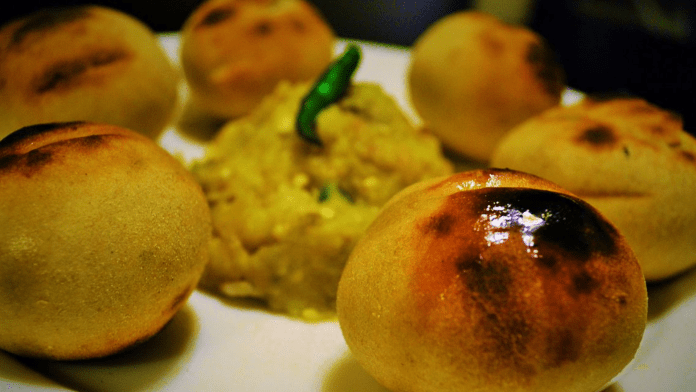
Oh, Litti Chokha, the irresistible and hearty dish from the state of Bihar! Just the thought of biting into a crispy, golden-brown Litti, stuffed with flavorful sattu filling, and pairing it with the smoky and spicy Chokha is enough to make your mouth water.
If it were upto us, we will definitely vouch for litti and chokha as the best pair in this world!
Because when you pair the Litti with the smoky and spicy Chokha, made with roasted eggplant, tomatoes, onions, and green chilies, it’s a match made in heaven.The smokiness of the roasted vegetables, combined with the heat of the chilies and the sweetness of the tomatoes, creates a complex and addictive taste.
Made with natural and wholesome ingredients such as whole wheat flour, roasted gram flour, vegetables, and spices. Whole wheat flour is a good source of fiber, vitamins, and minerals, and can help regulate blood sugar levels and support digestive health. Roasted gram flour, or sattu, is a good source of protein, fiber, and minerals, and can help boost energy levels and aid in weight management. Even the Chokha component of the dish is made with roasted vegetables such as eggplant and tomatoes, which are rich in antioxidants, vitamins, and minerals. The dish is also typically cooked with mustard oil, which is a good source of healthy fats and contains anti-inflammatory properties.
However, it is essential to stick to the traditional method of baking or grilling the littis instead of frying them like how most people do these days to preserve their nutritional content and balancing out the spices with milder ingredients such as yogurt or mint chutney.
Here’s a simple recipe for making Litti Chokha at home:
Ingredients:
2 cups whole wheat flour
1 cup sattu (roasted gram flour)
1/2 cup finely chopped onions
1/4 cup chopped coriander leaves
1 tablespoon grated ginger
1 tablespoon chopped garlic
2-3 green chilies, finely chopped
1 teaspoon carom seeds
1/2 teaspoon turmeric powder
1 teaspoon red chili powder
Salt to taste
2 tablespoons mustard oil
Water as needed
Ghee for brushing
2 large eggplants
4 medium-sized tomatoes
2 onions, finely chopped
2 green chilies, finely chopped
1/4 cup chopped coriander leaves
1 tablespoon grated ginger
1 tablespoon chopped garlic
2 tablespoons mustard oil
Salt to taste
Instructions:
To make the Litti, combine the whole wheat flour, sattu, onions, coriander leaves, ginger, garlic, green chilies, carom seeds, turmeric powder, red chili powder, salt, and mustard oil in a large mixing bowl. Mix well and add water as needed to make a smooth dough.
Divide the dough into small lemon-sized balls and flatten each one slightly. Place a small portion of ghee in the center of each flattened ball and bring the edges together to seal it. Roll the ball gently between your palms to form a smooth ball.
Preheat your oven to 350°F (180°C). Place the Littis on a baking sheet lined with parchment paper and brush them with some ghee. Bake in the oven for 20-25 minutes until they are golden brown and cooked through.
To make the Chokha, pierce the eggplants with a fork and roast them directly over a gas flame or on a grill until they are charred on the outside and soft on the inside. Let them cool slightly, then peel off the charred skin and mash the flesh with a fork.
Chop the tomatoes and mix them with the mashed eggplant. Add the chopped onions, green chilies, coriander leaves, ginger, garlic, mustard oil, and salt. Mix well to combine.
Serve the hot Littis with a generous spoonful of Chokha on top. Enjoy!
One of the most delicious sweets in the underrated world is ‘Pitha’. Hailing from north-east India, this pitha has a unique taste which is generally mild sweet and its variants can be found throughout South-East Asia.
Pati Shapta, however, is a delicate, crepe-like dessert that is enough to make your mouth water. This thin, golden-brown crepe that’s filled with a rich, creamy filling made with coconut, jaggery, and cardamom. The aroma of the cardamom, combined with the sweetness of the jaggery and the nutty flavor of the coconut, creates a heavenly taste that lingers on your tongue.
The soft and silky texture of the filling is perfectly complemented by the slightly crispy and chewy texture of the crepe, making each bite an explosion of flavor and texture in your mouth. The sweet syrup that’s drizzled on top adds a touch of extra sweetness, making this dessert the perfect balance of flavors.
It is made with all-natural ingredients such as all-purpose flour, semolina, milk, coconut, and jaggery, which are all good sources of energy, protein, fiber, vitamins, and minerals. Coconut, in particular, is rich in healthy fats, fiber, and antioxidants, and is known to support heart health, brain function, and weight management. However, it’s worth noting that Pati Shapta Pitha is also high in sugar and calories, which can be a concern for those with diabetes or watching their weight.
So, here’s a recipe for Pati Shapta Pitha:
Ingredients:
1 cup of all-purpose flour
1/2 cup of semolina
2 cups of milk
1 cup of grated coconut
1 cup of jaggery
2-3 cardamom pods, crushed
1 tablespoon of ghee
Oil for cooking
Instructions:
In a mixing bowl, combine the all-purpose flour and semolina.
Slowly add the milk and whisk until you have a smooth batter with no lumps. Let it sit for 30 minutes.
In a pan, melt the jaggery over low heat until it turns into a syrup.
Add the grated coconut and crushed cardamom pods to the pan and stir until the mixture is well combined. Set aside.
Heat a non-stick pan or crepe pan over medium heat and brush with a little oil or ghee.
Pour a ladleful of the batter onto the pan and swirl it around to form a thin crepe.
Cook the crepe for about 1-2 minutes until the edges start to curl up and the bottom turns golden brown.
Spoon a tablespoon of the coconut-jaggery filling onto the center of the crepe and fold it into a roll or envelope.
Cook the filled crepe for another 1-2 minutes until the filling is heated through and the crepe turns golden brown.
Repeat with the remaining batter and filling until you’ve made all the Pati Shapta.
Drizzle with extra jaggery syrup or honey and serve hot.
Whether you’re celebrating a special occasion or simply treating yourself to a delicious dessert, Pati Shapta Pitha is the perfect choice. Its delicate and complex flavors will leave you wanting more, and its comforting and satisfying texture will warm your heart and soul. So go ahead and indulge yourself in the decadent and unforgettable taste of Pati Shapta Pitha!
Diabetes is a condition characterized by an increase in the level of blood sugar. It is caused by a lack of insulin production or an inability to effectively use the insulin produced. It is estimated that approximately 422 million people worldwide had diabetes in 2014 and that this number is projected to grow to 642 million by 2040.
While sugar is one of the main causes of diabetes, there are other foods that can increase the risk of developing the condition. This article provides an overview of eight foods that lead to diabetes, other than sugar.
1. Processed Meats
Processed meats like bacon, hot dogs, and sausage contain high levels of sodium, saturated fat, and preservatives, which can all contribute to the development of diabetes. Processed meats also contain nitrates and nitrites, which can increase the risk of developing type 2 diabetes.
2. Trans Fats
Trans fats are created when liquid oils are turned into solid fats during the hydrogenation process. These fats are found in many processed foods and fast food, and are linked to an increased risk of diabetes.
3. White Bread and Pasta
White bread and pasta are highly processed, contain a lot of simple carbohydrates, and lack the nutritional value of whole grain products. Eating a lot of white bread and pasta can cause blood sugar levels to spike, leading to an increased risk of diabetes.
4. High-Fat Dairy Products
High-fat dairy products, such as whole milk, cheese, and ice cream, can lead to an increase in the risk of developing diabetes. These foods contain saturated fats, which can cause an increase in the level of cholesterol in the body, which in turn can lead to an increased risk of diabetes.
5. Fried Foods
Fried foods are high in fat and calories, and they can cause a spike in blood sugar levels. Eating a lot of fried foods can increase the risk of developing diabetes.
6. Alcohol
Drinking large amounts of alcohol can interfere with the body’s ability to use insulin, leading to an increased risk of diabetes. Regularly drinking large amounts of alcohol can also increase the risk of developing other conditions, such as high blood pressure, which can in turn increase the risk of diabetes.
7. Refined Sugars
Refined sugars, such as those found in candy, cakes, pastries, and ice cream, can also cause an increase in the risk of developing diabetes. These foods are high in calories, and eating a lot of them can cause weight gain, which can in turn lead to an increased risk of diabetes.
8. High-Fructose Corn Syrup
High-fructose corn syrup is a sweetener that is found in many processed foods, including soft drinks, candy, and processed fruits. This type of sugar can cause a spike in blood sugar levels, leading to an increased risk of developing diabetes.
These eight foods can all lead to an increased risk of developing diabetes, so it is important to limit their consumption. Eating a balanced, nutritious diet is the best way to reduce the risk of developing diabetes. Eating plenty of fruits, vegetables, whole grains, and healthy fats can help to keep blood sugar levels under control and reduce the risk of developing diabetes.
Breakfast is an important meal that provides your body with the energy and nutrients it needs to function optimally throughout the day. Eating a healthy breakfast can help regulate blood sugar levels, provide important nutrients for mental clarity and physical performance, and improve overall mood and productivity.
There is a good reason why breakfast is considered the most important meal of the day. It provides your body with the energy and nutrients it needs to function optimally throughout the day. Eating a healthy breakfast can help improve mood, cognitive function, and physical performance, making it easier to get into an active mood and be productive throughout the day.
1. Blood Sugar Regulation
One of the primary ways that breakfast helps you get into an active mood is by regulating your blood sugar levels. When you sleep, your body goes into a fasting state, which means that your blood sugar levels drop. Eating breakfast helps to restore your blood sugar levels and provides your body with the glucose it needs for energy.
Skipping breakfast can lead to low blood sugar levels, which can cause fatigue, dizziness, and difficulty concentrating. This can make it harder to get into an active mood and stay focused throughout the day. Eating a healthy breakfast can help prevent these symptoms and provide you with the energy you need to be active and productive.
2. Nutrient Intake
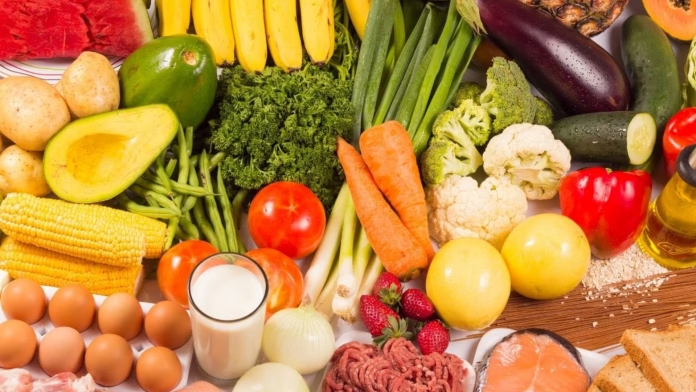
Breakfast is also an important opportunity to provide your body with the nutrients it needs to function optimally. A healthy breakfast should include a variety of nutrient-dense foods, including whole grains, fruits, vegetables, lean proteins, and healthy fats.
Whole grains provide complex carbohydrates, which are a great source of energy for the body. Fruits and vegetables are rich in vitamins, minerals, and antioxidants, which help to support immune function, cognitive function, and overall health. Lean proteins, such as eggs, yogurt, or lean meats, provide amino acids that help to build and repair muscles. Several types of healthy fats are found in nuts, seeds, and avocados, which provide energy and support brain function.
When you consume a balanced breakfast that includes a variety of nutrient-dense foods, you’re providing your body with the fuel it needs to function optimally. This can help improve your mood, cognitive function, and physical performance, making it easier to get into an active mood and be productive throughout the day.
3. Mental Clarity
Eating a healthy breakfast can also help improve mental clarity, which is important for getting into an active mood. When you wake up in the morning, your brain may still be in a foggy state from sleep. Eating breakfast helps to provide your brain with the glucose it needs to function optimally and can help clear the mental fog.
Additionally, breakfast provides important nutrients that support cognitive function, including B vitamins and omega-3 fatty acids. B vitamins are important for energy production and nerve function, while omega-3 fatty acids are important for brain health and cognitive function. Consuming these nutrients through a healthy breakfast can help improve mental clarity and focus, making it easier to get into an active mood and be productive throughout the day.
4. Physical Performance
Eating breakfast can also help improve physical performance, which is important for getting into an active mood. When you eat breakfast, you’re providing your body with the energy it needs to perform physical activities. This can help improve endurance, strength, and overall physical performance.
Additionally, consuming lean proteins at breakfast can help improve muscle protein synthesis, which is the process by which the body builds new muscle tissue. IT can help improve muscle mass, strength, and overall physical performance.
5. Creating a Healthy Breakfast Routine
To create a healthy breakfast routine that helps you get into an active mood, it’s important to prioritize nutrient-dense foods and avoid processed and sugary foods.
To make your breakfast routine healthier, follow these tips:
Incorporate whole grains: Whole grains are a great source of complex carbohydrates, which provide sustained energy throughout the day. Examples include oatmeal, whole wheat bread, and quinoa.
Include fruits and vegetables: Fruits and vegetables are rich in vitamins, minerals, and antioxidants, which help to support immune function, cognitive function, and overall health. Try adding some berries to your oatmeal or a side of spinach to your eggs.
Choose lean proteins: Lean proteins provide amino acids that help to build and repair muscles. Some good options include eggs, Greek yogurt, turkey sausage, or tofu.
Add healthy fats: Healthy fats provide energy and support brain function. Examples include nuts, seeds, avocados, and nut butter.
Avoid processed and sugary foods: Processed and sugary foods can lead to a spike in blood sugar levels, followed by a crash, which can leave you feeling fatigued and sluggish. Instead, opt for whole, nutrient-dense foods.
Plan: Planning your breakfast the night before can help ensure that you have a healthy meal ready to go in the morning, even if you’re short on time.
Experiment with new recipes: Trying new recipes can help keep your breakfast routine interesting and prevent boredom. Look for healthy breakfast recipes online or in cookbooks.
By prioritizing nutrient-dense foods and avoiding processed and sugary foods, you can create a healthy breakfast routine that helps you get into an active mood and stay productive throughout the day.
Celebrities have always been influential figures in popular culture. With the rise of social media and the internet, their impact has expanded to various areas, including the food industry. Celebrity chefs, food bloggers, and social media influencers have a massive following that can affect food trends and consumption patterns. In this article, we will explore how celebrities are influencing food trends and the reasons behind their impact.
Celebrity Endorsements Celebrity endorsements have been a popular marketing tool for many years. Food companies often hire celebrities to promote their products, and this can have a significant impact on food trends. For example, when Oprah Winfrey endorsed Weight Watchers in 2015, the company’s stock increased by 20%. Similarly, when Beyonce launched her vegan meal delivery service, 22 Days Nutrition, in 2015, interest in veganism increased.
Social Media Influencers Social media influencers have become a significant force in the food industry. Many food bloggers and Instagram influencers have amassed massive followings, and their recommendations can have a significant impact on food trends. For example, when Chrissy Teigen shared her recipe for miso butter pasta on Instagram, it went viral, and many people started making it at home.
Celebrity Chefs Celebrity chefs have also had a significant impact on food trends. Chefs like Gordon Ramsay and Jamie Oliver have become household names and have influenced people’s cooking habits. For example, Jamie Oliver’s focus on healthy eating and cooking from scratch has inspired many people to cook at home and choose healthier ingredients.
Celebrities and Food Culture Celebrities have also played a significant role in shaping food culture. For example, the late Anthony Bourdain’s travel and food show, “Parts Unknown,” had a massive impact on the way people view food and culture. The show introduced viewers to different cuisines and cultures from around the world, and it inspired many people to explore and try new foods.
Similarly, the rise of food documentaries and shows like “Chef’s Table” and “Ugly Delicious” has had a significant impact on the food industry. These shows have introduced viewers to different cooking techniques, ingredients, and cultures, and have inspired many people to try new foods and experiment with their cooking.
The Reasons Behind the Influence
There are several reasons why celebrities have such a significant influence on food trends.
One of the main reasons is their ability to reach a massive audience. Celebrities have millions of followers on social media, and their recommendations can quickly spread to a vast audience. Many people trust and look up to celebrities, and they are more likely to follow their recommendations.
Another reason why celebrities have such an impact is their status as trendsetters. Celebrities are often seen as trendsetters in fashion and lifestyle, and their influence extends to the food industry. Many people want to emulate their favorite celebrities and follow their lifestyle choices, including their food choices.
Celebrities’ influence can also be attributed to their ability to shape cultural norms and values. As celebrities become advocates for certain food trends or lifestyles, they can influence how people view food and health. For example, when Gwyneth Paltrow launched her lifestyle brand, Goop, she advocated for organic and healthy eating, and this influenced many people to adopt similar eating habits.
Celebrities have a significant impact on food trends and the food industry. Whether through endorsements, social media influence, or cultural influence, their ability to shape public opinion can have a significant impact on food trends and consumption patterns. As the food industry continues to evolve, it will be interesting to see how celebrities continue to influence and shape the way we eat and view food.
Searching for the top Indian gym supplements for gaining muscle? Let’s look at some of the most well-known and reliable gym supplements in India so you may improve your athletic and gym performance without any problems.
The top gym supplements are listed below.
1) Whey Protein
Looking to purchase the top whey protein supplement in India? Choose Prorganiq Whey Protein, which provides your body with a high amount of protein, carbs, and good fats. You can work out longer and harder as a result, achieving all of your fitness, bodybuilding, and general well-being goals. If that’s not enough, Prorganiq Whey Protein will ensure that your muscles get bigger and fuller than ever before.
Prorganiq Whey Protein has outstanding mixability, digestion, and absorption properties so you may consistently perform at your peak. Not only that, but Prorganiq’s highly nourishing whey protein also aids in bringing out the indomitable Hulk and Alpha Male within you.
2) Mass Gainer
Mass Gainer, a high-calorie supplement, is a great option for hard-gainers and skinny people to enhance their overall look and physique. Prorganiq Mass Gainer contains a lot of macronutrients, including healthy fats, proteins, minerals, and vitamins. This bulk gainer supports metabolism, digestion, and intestinal health while refuelling your body’s glycogen levels.
Prorganiq Mass Gainer, which is enriched with balanced nutrition, gives you incredible energy, stamina, endurance, and power so you can handle your gym sessions with ease. In order to build strong muscles and strength even while your body is resting, it also aids in reducing muscle breakdown and enhancing muscular growth.
3) Creatine Monohydrate
One of the greatest gym supplements in India if you want to dramatically improve your athletic and gym performance is creatine monohydrate. It provides your body with tremendous energy so that it can easily handle muscle tension and weariness, especially during brief, intense exercise.
Moreover, Prorganiq Creatine Monohydrate enhances the calibre of your workout reps and sets, resulting in higher increases in strength, performance, and muscle mass. It also boosts muscle function and accelerates muscular growth.
4) BCAA
Unquestionably one of the most well-liked gym supplements in India, BCAA is enriched with a great absorption formula. To power your gym exercises like a breeze, this BCAA supplement from Prorganiq has 3000 mg of L-leucine, 1500 mg of L-isoleucine, 1500 mg of L-valine, and 1000 mg of glutamine.
Unparalleled improvements in terms of muscle mass, strength, performance, endurance, and muscular pumps are linked to the use of this entirely safe and simple-to-use BCAA supplement from Prorganiq.
5) L-Arginine
The ability of L-arginine to help the body develop protein, muscle, and tissue is unequalled. Moreover, it increases nitric oxide levels and muscle protein synthesis while enhancing training efficiency and endurance.
L-Arginine also enhances muscular pumps and promotes normal testosterone levels in addition to these benefits. L-Arginine also encourages the transport of nutrients and oxygen to body parts, enabling them to function properly.
6) L-Carnitine
In terms of blood glucose, oxidative stress, inflammation, blood pressure, strength, blood lipids, and insulin sensitivity, L-carnitine is unrivalled. L-Carnitine will always help you burn more fat, speed up your metabolism, and provide more energy before, during, and after your activities at the gym.
In addition to playing a crucial part in energy production and mitochondrial function, it also works as a potent and secure weight reduction supplement to get rid of obstinate visceral and abdominal fat.
7) Pre Workout
Are you prepared to advance your resistance or strength training? If the answer is an emphatic “yes,” then you simply must try Prorganiq Pre-Workout Supplement.
Prorganiq Pre-Workout Supplement, which is regarded by fitness fanatics as one of the best pre-workout supplements in India, is filled with Creatine Monohydrate, Creatine HCL, Beta-Alanine, L-Citrulline, L-Taurine, and Caffeine Anhydrous.
These nutrients are supported by science, ensuring that your body is prepared to benefit fully from your resistance training and gym sessions.
The increase in demand for FMCG products in rural India, particularly in the home care, packaged foods, branded commodities, and personal care categories, has led to a significant boost in rural sales in February 2023. This is a positive sign for the Indian economy, as rural areas account for a significant portion of the country’s population and GDP.
According to data from Bizom, which automates retail execution at 7.5 million kirana stores, rural India is experiencing real growth for the first time since August 2022. This growth is significant, with rural sales expanding by 12.4% compared to the same period last year, while urban sales only grew by 5.5%.
Bizom’s chief (growth & insights) Akshay D’Souza, said, “We’ve seen a double-digit growth in FMCG sales on the back of a strong performance in rural. In five of six categories, we’ve seen rural outperform urban sales in February 2023.”
Dabur India’s COO Adarsh Sharma said, “While rural India has been a key driver of growth for some years now, we have seen rural demand lagging urban in the early part of the current fiscal. We believe this demand slump in rural has bottomed out as we are now seeing some green shoots of revival in the hinterland. Rural demand, for us, has already started showing a recovery.”
The home care category saw the fastest growth rate, expanding over 27% in rural areas compared to 19.5% in urban regions. This is likely due to increased awareness of health and hygiene, as well as the rise in home deliveries and online orders in rural areas. The packaged foods category also saw significant growth in rural areas, with an increase of 16.4% compared to only 2.2% in urban regions.
The branded commodities category, which includes products like beauty and personal care items, also experienced growth in rural India, expanding by 13.3%. In contrast, this category shrank by 4% in urban areas. This may be due to the growing awareness and desire for personal grooming and self-care in rural areas.
Interestingly, the chocolates and confectionery category was the only one to show a different trend, decreasing slightly in rural areas but growing rapidly by 19.5% in urban India. This may be due to increased disposable income and the rise of e-commerce platforms in urban areas.
Looking ahead, companies like Dabur India have already started investing in expanding their rural footprint to capitalize on the growing demand for FMCG products in rural areas. With plans to cover over one lakh villages, these companies are poised to take advantage of the significant growth potential in the rural market. This, in turn, could help boost the overall Indian economy and create new opportunities for businesses and consumers alike.
Pancakes are one of those breakfast or brunch dishes that everyone loves. They’re a classic, fluffy treat that are easy to make and can be enjoyed in countless ways. Whether you prefer your pancakes sweet or savory, there are endless possibilities for toppings and fillings, allowing you to get creative in the kitchen.
One of the best things about pancakes is that they are not only delicious but also quite healthy, filling and satisfying. Made with simple ingredients like flour, eggs, and milk, they are a great source of carbohydrates, protein, and other essential nutrients. Plus, they taste amazing, and there is something about the smell of freshly made pancakes that is just so comforting.
Recently, Bollywood actor Arjun Kapoor made our mouths water when he posted a picture of himself indulging in a plate of fluffy pancakes. Topped with almond, banana slices, and caramel syrup, they looked absolutely delicious. His love for pancakes is not unique, as these treats have been enjoyed by people all over the world for centuries.
If you’re looking for inspiration to create your own delicious pancakes, we’ve got you covered. From classic buttermilk pancakes to unique flavors like pumpkin spice or blueberry lemon, there are countless recipes out there for you to try. You can also get creative with toppings and fillings, like caramelized apples, whipped cream, or even bacon!
In addition to Arjun, his girlfriend Malaika Arora also made us drool with her post-show meal, which featured an array of mouth-watering dishes. Alongside some curry, bread, and crackers, we spotted some pakoras on her dining table, which looked absolutely scrumptious. She was joined by her friends Delnaz and fashion designer Vikram Phadnis, making it a perfect night of food, fun, and friendship.
Chai Sutta Bar, which started its journey in 2016, has become the world’s largest tea franchise with its unique concept of combining traditional Indian chai with contemporary ambiance. The company’s commitment to providing an authentic and memorable tea-drinking experience has resonated with people of all ages and backgrounds, resulting in its rapid expansion across the country.
In just a few years, Chai Sutta Bar has opened more than 450 outlets in over 195 cities, serving millions of customers every day. The brand has become synonymous with quality and affordability, making it a popular choice for people who are looking for a quick and tasty tea fix.
Anubhav Dubey, CEO and Co-founder of Chai Sutta Bar, said, “From humble beginnings, we have seen our business grow rapidly over the past few years. We have opened new outlets in multiple cities and states across the country, and have created hundreds of new jobs. Our menu continues to evolve to offer exciting options for our customers. We are proud to be a part of the communities we serve and strive to provide excellent customer service. As we continue to grow, we will never forget our core values of quality and service. We are also dedicated to expanding in countries like the USA, UK, and Canada and have already registered in these countries. We are excited to see what the future holds and look forward to continuing to provide the highest level of service to our customers.”
Chai Sutta Bar’s menu features a wide range of tea varieties, including masala chai, ginger chai, cardamom chai, lemon chai, and many more. The brand is also known for its traditional kulhads, which are earthen cups that enhance the flavor of the tea and add a rustic charm to the overall experience. In addition to tea, the company offers a variety of snacks and fast food items, making it a one-stop-shop for customers looking for a quick bite.
The success of Chai Sutta Bar has not gone unnoticed, and the brand is now looking to expand beyond the borders of India. With its sights set on the United Kingdom, the United States, and Canada, the company has already established a company in the UK to facilitate its entry into these markets.
Chai Sutta Bar’s mission is to bring the rich culture and heritage of India to every corner of the globe through its unique tea-drinking experience. The company’s commitment to quality, affordability, and authenticity has won the hearts of millions of customers worldwide, and its expansion plans are a testament to its success. As Chai Sutta Bar continues to grow and expand, it is sure to become a household name across the globe.
We use cookies to ensure that we give you the best experience on our website. If you continue to use this site we will assume that you are happy with it.