Saturday, December 20, 2025
Home Blog Page 132

How Pidge is Transforming India’s ₹20 Lakh Crore Logistics Market with Cutting-Edge Tech and Unmatched Efficiency

0
Image of pidge
How Pidge is Transforming India’s ₹20 Lakh Crore Logistics Market with Cutting-Edge Tech and Unmatched Efficiency

In India’s fast-evolving logistics landscape, Pidge has positioned itself as a game-changer, not just another delivery service. Unlike traditional players like Shadowfax and Porter, which are direct supply partners, Pidge operates as a logistics management software and ecosystem, acting as the bridge between demand and supply. This distinction is crucial in understanding how Pidge is rewriting the rules of the industry.

At the heart of Pidge’s success is its AI-driven allocation engine, Pidge Titan. This system functions much like a booking platform for logistics, using real-time data to match brands with the best delivery partners based on cost, speed, and service quality. Just as a traveler might compare hotels on Booking.com, businesses can rely on Pidge to make smart, data-driven choices when selecting logistics providers. This removes the guesswork from supply chain decisions and ensures a consistently high level of service.

Technology as the Core Driver

Pidge isn’t just leveraging technology—it’s built on it. Since its launch in 2019, the company has been ahead of the curve in enabling quick commerce and hyperlocal deliveries. By capturing and normalizing vast amounts of data, Pidge empowers businesses to optimize their logistics operations efficiently.

Continue Exploring: The End of a Retail Era: Neville Noronha Checks Out, Anshul Asawa Checks In

Rushil Mohan, a key leader at Pidge, likens the process to ride-hailing apps. “When you book an Uber, you know your ride is four minutes away. That’s because of data. Now imagine applying that same level of transparency and efficiency to logistics, which operates on a much higher frequency. That’s what Pidge is enabling.”

This data-centric approach is particularly valuable in India, where 87% of the logistics sector remains unorganized. By offering easy-to-use tools alongside its advanced AI capabilities, Pidge is playing a critical role in digitizing and standardizing logistics for businesses of all sizes.

What’s Next for Pidge?

With a 12-18 month lead over competitors in logistics tech, Pidge is focused on deepening its AI capabilities. The company is also heavily involved in ONDC (Open Network for Digital Commerce), which is driving e-commerce penetration into tier-2 and tier-3 cities. As demand for ultra-fast deliveries grows, Pidge is ensuring that businesses outside metro hubs also have access to world-class logistics solutions.

Continue Exploring: NONSTOP launches first flagship store in Mumbai, offering mobility and wellness solutions

The next five years will see exponential growth in logistics digitization, with custom workflows for smaller businesses becoming the norm. As the industry matures, Pidge’s role as a tech-first logistics orchestrator will only become more vital.

Advertisement

FSSAI Cracks Down on Dairy Analogues Amid Festive Rush, Orders Strict Surveillance

0
Image of FSSAI
FSSAI Cracks Down on Dairy Analogues Amid Festive Rush, Orders Strict Surveillance

With the festive season driving up demand for dairy products, the Food Safety and Standards Authority of India (FSSAI) has ordered all states and union territories to intensify surveillance on dairy analogues throughout March. The move is part of the regulator’s ongoing campaign against food adulteration and mislabeling.

What Are Dairy Analogues?

Dairy analogues are products that mimic milk or milk-based items in appearance, texture, and function but do not contain real dairy components—or contain them in altered proportions. These substitutes replace milk fats and proteins with vegetable-based alternatives like plant oils or plant-derived proteins. As per FSSAI’s Food Safety and Standards (Food Products Standards and Food Additives) Regulations, these products cannot be categorized as milk, milk products, or composite milk products and must be clearly labeled to avoid misleading consumers.

Continue Exploring: NONSTOP launches first flagship store in Mumbai, offering mobility and wellness solutions

Festive Season and the Risk of Mislabeling

During festive periods, the demand for dairy-based sweets, ghee, and other milk products surges, increasing the risk of adulteration, substitution, and misleading labeling. To combat this, FSSAI has instructed food safety departments to ramp up testing and label verification on dairy analogues, ensuring manufacturers and retailers do not pass them off as authentic dairy items.

FSSAI’s Broader Food Safety Drive

This crackdown on dairy analogues aligns with FSSAI’s ongoing monthly food surveillance initiative, which targets specific food categories prone to adulteration. The regulator has been conducting product-specific drives to ensure compliance with food safety norms and protect consumers from fraudulent practices.

Continue Exploring: The End of a Retail Era: Neville Noronha Checks Out, Anshul Asawa Checks In

State authorities have been directed to conduct rigorous inspections, laboratory tests, and scrutiny of product labels to prevent any misrepresentation. The goal is to ensure that consumers can confidently purchase genuine dairy products without being misled by misleading packaging or altered compositions.

Advertisement

Swiggy Instamart & Apparel Group Bring Crocs to Quick Commerce: 10-Minute Delivery Rolls Out in 4 Cities

0
Image of crocs
Swiggy Instamart & Apparel Group Bring Crocs to Quick Commerce: 10-Minute Delivery Rolls Out in 4 Cities

Swiggy Instamart has teamed up with Apparel Group to bring Crocs footwear to shoppers at lightning speed. For the first time in India, customers in Mumbai, Bangalore, Delhi, and Gurgaon can order Crocs’ best-selling styles—like the Classic Clog and Classic Sandal—and have them delivered in just 10 minutes. The launch comes just in time for Holi and the hot summer months, making it easier than ever to grab a pair of comfortable, water-friendly footwear without stepping out.

A New Era for Quick Commerce & Fashion

Swiggy Instamart has traditionally focused on groceries and daily essentials, but this move signals a growing push into fashion and lifestyle. Amitesh Jha, CEO of Swiggy Instamart, highlighted the significance of the partnership, saying,

“We’re always looking for ways to expand our offerings and make shopping as effortless as possible. Partnering with a global brand like Crocs brings a whole new dimension to quick commerce. Whether it’s for Holi celebrations or summer vacations, we’re ensuring customers can get their favorite footwear instantly.”

Continue Exploring: NONSTOP launches first flagship store in Mumbai, offering mobility and wellness solutions

Instant Footwear Delivery Begins March 2025

Starting March 2025, select Crocs styles will be available for immediate delivery in Mumbai, Bangalore, Delhi, and Gurgaon, with plans to roll out in more cities soon. Customers will be able to browse a curated selection of sizes and styles, making it easier than ever to get their hands on a pair of Crocs without visiting a store.

Swiggy Instamart’s Growing Footprint

Launched in August 2020, Swiggy Instamart has rapidly expanded, now operating in over 84 cities. Originally focused on groceries, the platform has evolved to include a wide range of categories, from household essentials to electronics—and now, footwear.

Continue Exploring: The End of a Retail Era: Neville Noronha Checks Out, Anshul Asawa Checks In

Swiggy, founded in 2014, is India’s leading on-demand convenience platform, partnering with over 2 lakh restaurants across 680+ cities. With services like Swiggy Food, Swiggy Dineout, Swiggy Genie, and Swiggy One, the company continues to redefine how Indians shop and dine.

With this latest move, Swiggy Instamart is proving that quick commerce isn’t just about food—it’s about delivering convenience in every possible way, including fashion.

Advertisement

Nespresso Enters India: Swiss Coffee Giant Opens First Boutique in Delhi, Eyes Expansion in ₹7,000 Crore Premium Coffee Market

0
Image of nespresso
Nespresso Enters India: Swiss Coffee Giant Opens First Boutique in Delhi, Eyes Expansion in ₹7,000 Crore Premium Coffee Market

Swiss luxury coffee brand Nespresso has officially set foot in India’s retail landscape, unveiling its first boutique at Nexus Select Citywalk in Saket, Delhi. This marks a significant step for the brand as it taps into India’s fast-growing market for high-end coffee, with plans to scale up its retail presence in the coming years.

Sakshi Goel, Associate Executive Director at CBRE, shared her excitement about the launch on LinkedIn: “Bringing Nespresso to India has been a long-standing dream. I remember walking past their boutique on George Street, Sydney, more than a decade ago and hoping to one day work on their India entry. Now, that dream is a reality with the launch of the first Nespresso Boutique in Delhi.”

Continue Exploring: NONSTOP launches first flagship store in Mumbai, offering mobility and wellness solutions

Though Nespresso is new to India’s retail scene, the brand has been sourcing premium green coffee from the country since 2011. Today, Indian coffee is a key ingredient in nearly 20% of Nespresso’s global blends. The company works directly with about 2,000 farmers in Karnataka, ensuring a consistent supply of high-quality beans for its signature coffee capsules.

Continue Exploring: The End of a Retail Era: Neville Noronha Checks Out, Anshul Asawa Checks In

For now, Nespresso’s coffee pods are imported from Switzerland, with a 10-capsule pack priced at ₹950 and a 50-capsule pack at ₹4,750. The brand is keeping a close eye on pricing and import duties, particularly in light of the recently signed free trade agreement between India and the European Free Trade Association (EFTA), which includes Switzerland.

Advertisement

Skinvest’s Big Plans: How Divya Malpani’s ₹76 Lakh Skincare Brand Aims to Hit ₹12 Crore ARR & Expand to UAE

0
Image of skinvest
Skinvest’s Big Plans: How Divya Malpani’s ₹76 Lakh Skincare Brand Aims to Hit ₹12 Crore ARR & Expand to UAE

Launched in 2022 by Divya Malpani, Skinvest is a self-funded skincare brand that’s making waves with its science-backed, affordable, and India-specific formulations. With backing from Girish Malpani of Malpani Group, the brand has quickly carved a niche for itself, offering premium-quality skincare without the luxury price tag.

Skinvest has built a loyal following with its standout products, including the Bomb Bum Cream, Smoothie In-Shower Body Conditioner, and Bye Bye Bumps Exfoliating Mist. These have gained traction for their visible results and fresh take on skincare, helping customers tackle concerns like dryness, bumps, and uneven skin tone.

Continue Exploring: The End of a Retail Era: Neville Noronha Checks Out, Anshul Asawa Checks In

In the 2023-24 financial year, Skinvest recorded ₹76 lakh in total sales and is now ramping up operations to hit a ₹12 crore annual revenue run rate (ARR). The next phase of growth includes the launch of six new products and a debut in the UAE market, marking the brand’s first steps toward international expansion.

Continue Exploring: NONSTOP launches first flagship store in Mumbai, offering mobility and wellness solutions

“Our goal is to simplify skincare and make it effective, accessible, and designed for Indian skin,” says Divya Malpani. “Young Indians deserve solutions that truly work for their climate, pollution levels, and lifestyles, and we’re here to make that happen with dermatologist-tested, problem-solving formulations.”

To scale efficiently, Skinvest relies on a tech-first approach, integrating platforms like Shopify for e-commerce, BIK for customer engagement, Shiprocket for logistics, and Meta & Google Ads for targeted marketing. Data analytics via Google Analytics ensures that every decision is backed by insights, helping the brand fine-tune its growth strategy.

Advertisement

Survival of the Smartest: Jasper Reid on Why Indian Restaurants Fail After 100 Crores

0
Image of Jasper Reid
Survival of the Smartest: Jasper Reid on Why Indian Restaurants Fail After 100 Crores

The Indian restaurant industry is at a crossroads. On one hand, it is one of the largest employers in the country, full of energy and ambition. On the other, it is a fiercely competitive space where survival is becoming increasingly difficult. According to Jasper Reid, an industry veteran, the picture is tough—businesses should be consolidating and adjusting to market realities, but many are instead operating in a “zombie” state, stretching payables and playing for time.

Too Many Slices of the Same Pie

Reid highlights an important challenge: the oversaturation of competition. A decade ago, there were only a handful of gourmet pizza brands in India. Today, every third new restaurant seems to be a high-end pizza joint, making the market incredibly fragmented. While this should ideally lead to natural contraction, many businesses find ways to keep afloat, preventing the industry from balancing itself.

Adding to the pressure is India’s unique business culture, where promoters are often hesitant to let go, instead adopting short-term survival tactics. “India is world-class at playing for time,” Reid notes, explaining how this slows down necessary market corrections.

Continue Exploring: NONSTOP launches first flagship store in Mumbai, offering mobility and wellness solutions

The Illusion of Big Numbers

A major reason many entrepreneurs are drawn to the food business is the perception of quick cash flow and high margins. Reid acknowledges that several local brands have managed to scale past ₹100 crore in revenue. However, the challenge is sustainability. The restaurant business is notorious for being capital-intensive, and many brands struggle to maintain profitability once they expand.

Rentals, a major fixed cost, often make or break a business. While some brands succeed despite high overheads, most falter when their revenue projections don’t match reality. “The difference between a weapons-grade operator and just getting into the business is massive,” Reid points out, emphasizing the need for expertise in operations, marketing, and financial management.

The GST Roadblock and a Call for Reform

One of the biggest financial hurdles for restaurants in India is the removal of input tax credits on GST. Reid argues that if the government were to restore this provision, it would instantly turn many struggling businesses profitable. “It’s a single policy change that could transform the industry,” he says, making a strong appeal to regulators.

Continue Exploring: NONSTOP launches first flagship store in Mumbai, offering mobility and wellness solutions

The Dine-In vs. Delivery Dilemma

Another post-pandemic shift that has disrupted the industry is the rise of food delivery. While platforms like Swiggy and Zomato have made it easier for consumers to order food, they have also squeezed restaurant margins with high commissions. Reid explains that for most operators, delivery is simply not profitable. Meanwhile, dine-in business, which is far more lucrative, hasn’t recovered to pre-pandemic levels.

Looking Ahead: Hope in an Uncertain Future

Despite these challenges, there are signs of optimism. Reid believes that with the right policy changes and market adjustments, the industry can regain momentum. He also foresees that the great restaurant brands of the future will be built in India, for India, by Indian entrepreneurs.

The restaurant business is not for the faint-hearted, but for those who can navigate its complexities, there is still plenty of room to grow.

Advertisement

PepsiCo’s Bold Bet on India: Aiming for ₹17,000 Crore Revenue with Aggressive Expansion Plans

0
Image of pepsico
PepsiCo’s Bold Bet on India: Aiming for ₹17,000 Crore Revenue with Aggressive Expansion Plans

PepsiCo is setting ambitious goals for its India operations, aiming to double its revenue within the next five years. The company sees India as a crucial growth market and is making bold investments to expand its production capacity, according to Jagrut Kotecha, CEO of PepsiCo India & South Asia.

India is emerging as a major revenue driver for the global food and beverage giant, ranking among its top three markets worldwide. With strong double-digit growth, the country is playing a central role in PepsiCo’s global expansion plans, Kotecha told PTI in an exclusive interview.

Continue Exploring: The End of a Retail Era: Neville Noronha Checks Out, Anshul Asawa Checks In

To keep up with rising demand, PepsiCo has already set up new manufacturing plants in Uttar Pradesh and Assam. The company is committed to further investments and has plans to open two more facilities, including one in southern India. “We’re not going to hold back on investments here. India is a high-potential market, and we’re making sure we stay ahead of the curve,” Kotecha said.

He emphasized that while India’s market size isn’t yet on par with North America, the country’s per capita consumption of PepsiCo’s products remains low, leaving plenty of room for growth. “Given the pace at which India is developing, we expect it to be one of our fastest-growing economies,” he noted.

Currently, India is among the top 15 global markets for PepsiCo, but Kotecha expects it to climb even higher. However, he did not disclose specific revenue projections.

PepsiCo, which re-entered India in the 1990s after a 28-year hiatus, considers the country one of its key strategic markets. “We’ve identified around 13 to 15 anchor markets that will drive our next phase of global growth, and India is one of them,” Kotecha said.

Continue Exploring: NONSTOP launches first flagship store in Mumbai, offering mobility and wellness solutions

He also pointed out that PepsiCo aligns well with India’s long-term economic vision. “India is on track to become one of the world’s top three economies by 2030. It’s a stable and growing market, and we’ve built a strong presence here over the past three decades. Now, it’s about scaling up and accelerating our investments,” he added.

PepsiCo is focusing on three core strategies—speed, strength, and sustainability. The company has divided India into nine distinct regions based on consumer taste preferences, ensuring its products cater to local palates. At the same time, it is implementing eco-friendly initiatives to reduce its environmental impact.

Last month, PepsiCo reported strong double-digit organic revenue growth in India, with an increasing market share in both snacks and beverages.

When asked about the timeline for reaching $2 billion (around ₹17,000 crore) in revenue, Kotecha called it an aspiration rather than a fixed target. “We see the opportunity. If we execute well and India’s infrastructure keeps evolving, we believe we can get there,” he said.

In 2023, PepsiCo transitioned to a calendar-year reporting format, posting revenue of approximately ₹5,950 crore for the April-December period. If adjusted for the full year, the total would be closer to ₹8,200 crore.

Meanwhile, Varun Beverages, PepsiCo India’s key bottling partner, recorded ₹12,778.96 crore in standalone revenue last year, contributing significantly to the company’s beverage sales in India.

Advertisement

Wow! Momo’s Bold Bet: ₹100 Crore Target as It Takes on Maggi & Yippee with Wow! Noodles in India’s ₹15,000 Crore Instant Noodles Market

0
Image of wow momos
Wow! Momo’s Bold Bet: ₹100 Crore Target as It Takes on Maggi & Yippee with Wow! Noodles in India’s ₹15,000 Crore Instant Noodles Market

Wow! Momo, India’s popular quick-service restaurant (QSR) chain, is shaking up the instant noodles market with the launch of Wow! Noodles, a new range of cup noodles inspired by both Indian and Asian flavors. The company has set an ambitious revenue target of ₹100 crore within the next 24 months, betting big on the rapidly growing instant noodles segment.

Continue Exploring: NONSTOP launches first flagship store in Mumbai, offering mobility and wellness solutions

With over 700 outlets across 60+ cities, Wow! Momo is now expanding its footprint beyond restaurants and into the fast-moving consumer goods (FMCG) space. The company plans to distribute Wow! Noodles across major e-commerce platforms, quick commerce (Q-Com) services, and modern retail stores in 200 towns and cities. It’s also making a move into airline catering, with plans to feature Wow! Noodles on the inflight menus of Akasa Air, Air India Express, and SpiceJet.

What sets Wow! Noodles apart is its fusion of bold flavors, bringing a mix of street-style Indian and classic Asian influences. The lineup includes varieties like Thukpa, Khao Suey, Manchurian, Korean, and Chinese Bhel, promising an experience that stands out from conventional instant noodles.

Continue Exploring: The End of a Retail Era: Neville Noronha Checks Out, Anshul Asawa Checks In

Speaking about the launch, Sagar Daryani, Group CEO & Founder of Wow! Momo, said, “We’re redefining the cup noodles category by combining desi and Asian flavors in a way that’s exciting, convenient, and unique. This is a major milestone in our journey to make Wow! Momo a household name beyond just QSR.”

The Indian instant noodles market is currently dominated by Nestlé’s Maggi, ITC’s Yippee, and CG Foods’ Wai Wai. However, with the market expected to double from $1.88 billion in 2023 to $3.83 billion by 2028 (CAGR of 15.31%), Wow! Momo sees a massive opportunity to carve out its niche.

Advertisement

Handpickd Turns Profitable in Gurugram, Expands to Bengaluru With a Bold New Approach to Fresh Produce Delivery

0
Image of Handpickd founder
Handpickd Turns Profitable in Gurugram, Expands to Bengaluru With a Bold New Approach to Fresh Produce Delivery

After making a profitable mark in Gurugram, fresh produce delivery platform Handpickd has now set its sights on Bengaluru, promising to revolutionize the way urban households buy fruits and vegetables. Launched in April 2024 by Anant Goel — co-founder of Milkbasket — along with Nitin and Sahil (also former Milkbasket team members), Handpickd is built on a unique premise: giving consumers the freedom to buy exactly what they want, in any quantity, and of any quality, just like they would at a local vegetable market.

The result? Handpickd has turned EBITDA-positive in Gurugram within a short span and is now poised to replicate its success in Bengaluru, a city known for its high-demand grocery market.

Founder Anant Goel believes Handpickd’s approach is fundamentally different from other fresh produce delivery platforms. Rather than dictating quality or quantity to consumers, the platform works on a match-making principle. Every family has its own definition of ‘good quality’ when it comes to fruits and vegetables — some prefer soft, ripe bananas while others want them firm and green. Some households want small, tender bottle gourds while others prefer larger, mature ones. Handpickd allows families to communicate their preferences, and the platform matches those preferences with the freshest available produce, ensuring they get exactly what they like.

Continue Exploring: NONSTOP launches first flagship store in Mumbai, offering mobility and wellness solutions

According to Goel, the platform has already witnessed an incredible response in Gurugram, with families spending an average of ₹4,000 per month on fruits and vegetables — nearly ten times higher than the spending on quick-commerce platforms and five times higher than traditional e-grocers. This shift, Goel believes, is a clear indicator that families are ready to move their fresh produce shopping online if the experience mirrors that of an offline market.

Following its success in Gurugram, Handpickd has now expanded its operations to Bengaluru — a market known for its tech-savvy consumer base and demand for premium-quality groceries. Goel said the decision to enter Bengaluru was strategic, allowing them to test their model in a larger and more diverse market. The platform aims to iron out any operational gaps and further streamline its supply chain in Bengaluru before expanding to other cities.

What sets Handpickd apart is its zero-inventory model. The platform sources fruits and vegetables directly from farmers within hours of harvest, eliminating storage time and reducing wastage. Produce is delivered to families within 7-8 hours of being picked, ensuring freshness while minimizing supply chain inefficiencies. This hyper-efficient model not only maintains superior quality but also helps Handpickd operate with minimal wastage, setting it apart from conventional online grocery platforms.

Continue Exploring: The End of a Retail Era: Neville Noronha Checks Out, Anshul Asawa Checks In

Goel believes that one of the biggest advantages of Handpickd’s model is its ability to capture granular consumer preferences. With every order, the platform learns more about what families like and fine-tunes its sourcing accordingly. This level of personalization has resulted in deep consumer loyalty and a rapidly growing order value, driving profitability in Gurugram within a matter of months.

The company now has ambitious expansion plans. Handpickd aims to scale its presence to 30 micro-markets across key Indian cities by the end of 2025. The team is betting heavily on technology, data-driven insights, and highly optimized supply chains to drive profitability at scale while maintaining the superior quality and customization that has become its hallmark.

As Handpickd enters Bengaluru, the company is keenly observing customer behavior and preferences to see how well its match-making model translates to a new market. If the platform can replicate the same success it saw in Gurugram, it may very well redefine how urban India shops for fresh produce — not just in terms of convenience but also in offering a deeply personalized buying experience that feels as close to an offline market as possible.

Advertisement

Delhi HC Orders Removal of Arshad’s ‘Zepto’ Trademark After 8 Years of Zero Use — Startup Now Gearing Up for $1 Bn IPO

0
Image of zepto
Delhi HC Orders Removal of Arshad’s ‘Zepto’ Trademark After 8 Years of Zero Use — Startup Now Gearing Up for $1 Bn IPO

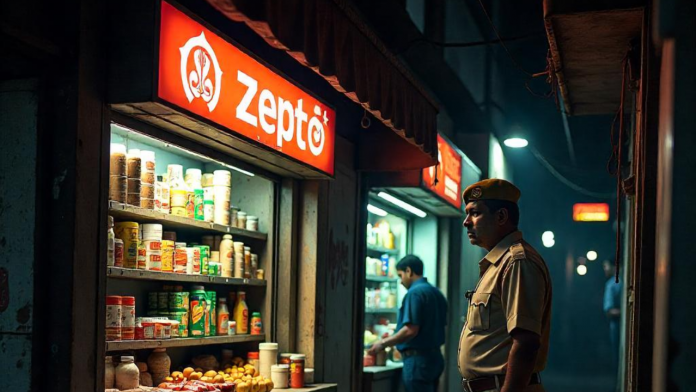
Zepto’s parent company, Kiranakart, recently secured a major legal victory in the Delhi High Court, bringing an end to an almost year-long trademark dispute in its favor.

The court ruled in favor of the four-year-old quick commerce startup, directing the removal of the trademark ‘Zepto,’ which had been registered by Mohammad Arshad on July 14, 2014, from the official Trade Marks Register. Zepto had filed a rectification petition seeking the cancellation of Arshad’s mark, arguing that it had been using the name ‘Zepto’ extensively since July 2021 and had built significant brand recognition around it.

In a judgment passed on March 3, Justice Amit Bansal sided with Zepto, noting that the company had continuously and prominently used the ‘Zepto’ trademark since 2021, resulting in strong brand association among consumers. On the contrary, the court observed that Arshad had never commercially used the trademark in the eight years since registering it, weakening his claim.

“The respondent (Arshad) had no genuine intention to use the trademark for the services claimed in the registration. Over eight years have passed since the mark was registered, yet the respondent has failed to put it to any commercial use under Class 35. Therefore, the trademark serves no real purpose and merely occupies space in the Trade Marks Register,” the court stated.

According to court records, Arshad’s ‘Zepto’ was registered under Class 9 and Class 35 for goods and services related to smartphones, phone accessories, computer software, and telephone instruments. However, there was no evidence to suggest that Arshad had used the trademark for any commercial purpose during this period.

Zepto argued that Arshad’s opposition to its trademark application was a deliberate attempt to delay the registration and harass the company. The startup also revealed that Arshad had approached them in July 2024, proposing an out-of-court settlement. However, Zepto rejected the offer after concluding that Arshad was merely trying to extract money under the pretense of an amicable resolution.

In its ruling, the court also noted that Arshad neither filed a response to the rectification petition nor appeared for the hearings, further strengthening Zepto’s case.

Continue Exploring: NONSTOP launches first flagship store in Mumbai, offering mobility and wellness solutions

Citing Section 47(1)(b) of the Trade Marks Act, the court highlighted that any registered trademark that remains unused for five consecutive years is liable to be removed from the Register of Trade Marks. Given that Arshad had failed to demonstrate any commercial use of the mark since its registration, the court found merit in Zepto’s plea.

During the hearing, Zepto also presented its business scale to underscore the significance of the trademark. The company revealed that it currently operates around 350 delivery hubs (dark stores) across India, employs over 1,000 full-time professionals, and has a network of 40,000 delivery executives. Zepto also stated that it has processed orders for over 8 million customers in more than 10 cities across the country.

Continue Exploring: The End of a Retail Era: Neville Noronha Checks Out, Anshul Asawa Checks In

The startup, which raised $665 million in a funding round last June, had then announced plans to double its dark store count from 350 to 700 by March 2025. However, recent reports suggest that Zepto has already crossed the 900-store mark as of January 2025, surpassing its original target ahead of time. The company is now reportedly aiming to expand its dark store network beyond 1,000 locations in the near future.

In comparison, Zepto’s closest competitor, Blinkit, was operating 1,007 dark stores by the end of the December 2024 quarter. Meanwhile, Swiggy added 96 new dark stores in Q3 FY25, bringing its total count to 705.

Buoyed by its rapid growth, Zepto is now gearing up for a massive public listing. The startup is expected to file for an IPO in the range of $800 million to $1 billion, with roughly $300-400 million worth of shares to be offloaded through an Offer for Sale (OFS) and the remainder raised through new share issuance.

Advertisement