Monday, December 22, 2025
Home Blog Page 1304

What is a Continental Food and Why do we call it so? 

0
Continental Food

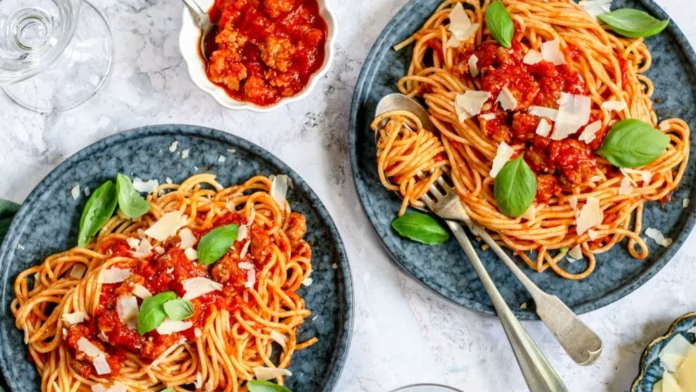
Continental cuisine, also known as European cuisine, refers to the culinary traditions and dishes that originate from countries in Western Europe such as France, Italy, Spain, Germany, and the United Kingdom. The term “continental” is used to differentiate this cuisine from other types of cuisine, such as Asian, African, or American cuisine. In this essay, we will explore the history of continental cuisine, the characteristics that define this cuisine, and how it differs from oriental cuisine.

History of Continental Cuisine

The history of continental cuisine dates back to the ancient civilizations of Greece and Rome, where people developed sophisticated cuisine that used fresh, high-quality ingredients and spices. The cuisine evolved over the centuries, influenced by various factors such as invasions, wars, and the availability of ingredients. The development of trade and exploration in the 15th and 16th centuries also had a significant impact on continental cuisine as it led to the introduction of new ingredients and culinary techniques.

During the Renaissance, culinary arts in Europe saw significant progress as wealthy households and aristocrats began to patronize artists, musicians, and chefs. This led to the development of elaborate banquets and feasts, where chefs competed to create extravagant and innovative dishes. In the 17th and 18th centuries, French cuisine became the epitome of continental cuisine and set the standards for fine dining across Europe.

In the 19th century, the industrial revolution brought about significant changes in European society, and culinary arts were no exception. The introduction of new technologies such as gas stoves, refrigeration, and canning made it easier to prepare and store food, which led to the emergence of new culinary techniques and the creation of new dishes.

Characteristics of Continental Cuisine

Continental cuisine is characterized by several features that distinguish it from other types of cuisine. One of the defining characteristics of continental cuisine is its emphasis on sauces. Many classic continental dishes, such as Coq au Vin, Beef Bourguignon, and Ratatouille, are served with rich, flavorful sauces that are made from cream, butter, and other ingredients. These sauces not only add depth and complexity to the dish but also help to tie together the flavors of the various ingredients.

Another hallmark of continental cuisine is the use of fresh, high-quality ingredients. Continental chefs place great importance on using the freshest herbs, vegetables, and meats available, and they often source these ingredients locally. This focus on quality and freshness is reflected in the rich, complex flavors that are typical of continental cuisine.

In addition to rich sauces and fresh ingredients, continental cuisine is also characterized by elegance and refinement. Continental dishes are often served in multiple courses, with each course carefully crafted to showcase the flavors and textures of the ingredients. This attention to detail and presentation is a key aspect of the continental dining experience.

Continental cuisine is also known for its emphasis on wine as an accompaniment to food. Many classic continental dishes are served with a particular type of wine, which is carefully selected to complement the flavors of the dish. This tradition has led to the development of a rich wine culture in many continental countries, with France and Italy being particularly renowned for their wines.

Advertisement

Common Diet Habits of Billionaires that makes them the ‘Stand on Top’

Billionaires

Billionaires are known for their wealth, power, and success. They have achieved success in various fields, from tech to finance to entertainment. One aspect of their lives that is often overlooked is their diet. Many billionaires have specific dietary habits that they believe contribute to their success. In this article, we will explore what billionaires eat in common to stay on top.

Eating a Healthy and Balanced Diet

One of the most common dietary habits among billionaires is the consumption of a healthy and balanced diet. They understand that their health is essential to their success and prioritize their diet accordingly. This includes eating a variety of fruits and vegetables, lean protein sources, and whole grains. They also limit their intake of processed foods and sugar.

Warren Buffett, one of the richest men in the world, is known for his love of junk food, but he still maintains a healthy diet. He starts his day with a bowl of fruit and a glass of Coca-Cola. He also eats a lot of vegetables and has been a vegetarian in the past.

Intermittent Fasting

Intermittent fasting has gained popularity in recent years, and many billionaires swear by this dietary habit. In intermittent fasting, a person restricts their food intake for a period before resuming normal eating. This can be done in different ways, such as skipping breakfast or fasting for 24 hours once a week.

Jack Dorsey, the CEO of Twitter, follows an extreme form of intermittent fasting known as the OMAD (One Meal A Day) diet. He eats only one meal a day, usually dinner, and fasts for the remaining 23 hours. He believes that this helps him stay focused and productive throughout the day.

Avoiding Alcohol and Smoking

Billionaires understand the importance of taking care of their health, and this includes avoiding alcohol and smoking. Alcohol and smoking have been linked to several health problems, including cancer, heart disease, and liver damage.

Bill Gates, the co-founder of Microsoft, has never smoked a cigarette in his life and rarely drinks alcohol. He believes that avoiding these substances has contributed to his success.

Trying New and Exotic Foods

Billionaires have access to a wide variety of foods from all over the world and often enjoy trying new and exotic dishes. This not only expands their culinary horizons but also helps them understand and appreciate different cultures.

Elon Musk, the CEO of SpaceX and Tesla, has been known to try unusual and exotic foods such as antelope and crocodile. He believes that trying new things helps him stay open-minded and creative.

Supplementing with Vitamins and Minerals

Billionaires understand the importance of getting enough vitamins and minerals to support their health and well-being. They often supplement their diet with vitamins and minerals to ensure that they are getting all the nutrients they need.

Richard Branson, the founder of Virgin Group, takes a variety of supplements, including vitamin C and zinc, to support his immune system. He also takes a daily dose of omega-3s to support brain function.

Eating Breakfast

Breakfast is often referred to as the most important meal of the day, and many billionaires understand the importance of starting their day with a nutritious meal. Eating breakfast provides the body with the energy it needs to tackle the day ahead.

Oprah Winfrey, the media mogul and philanthropist, starts her day with a healthy breakfast consisting of oatmeal, egg whites, and fruit. She believes that eating breakfast sets the tone for the rest of the day.

Following a Specific Diet

Some billionaires follow specific diets that they believe contribute to their success. These diets may be based on personal beliefs or cultural practices.

Mark Zuckerberg, the co-founder of Facebook, follows a mostly vegetarian diet. He has stated that he only eats meat if he kills the animal himself, which aligns with his belief in sustainable and ethical food practices. Similarly, David Chang, the founder of the Momofuku restaurant group, follows a gluten-free and low-carb diet, which he believes helps him maintain focus and energy throughout the day.

While the diets of billionaires may differ in some ways, there are common dietary habits that they follow to stay on top. Eating a healthy and balanced diet, practicing intermittent fasting, avoiding alcohol and smoking, trying new and exotic foods, supplementing with vitamins and minerals, eating breakfast, and following a specific diet are some of the common dietary habits among billionaires. These habits not only support their health and well-being but also contribute to their success in their respective fields.

Advertisement

D2C Wellness Brand The Ayurveda Co raises INR 100 Cr Funding

0
tac

The Ayurveda Co (T.A.C) is a direct-to-consumer ayurvedic beauty and personal care brand that has recently raised INR 100 Cr in its Series A funding round. The funding round was led by Sixth Sense Ventures, a consumer-centric venture fund, and saw participation from startup founders, venture debt funds, and actress Kajal  Agarwal. 

The majority of the funding raised in the round was through equity, although the exact breakdown of equity and debt funding was not disclosed by T.A.C.

T.A.C is planning to use the funds to enhance its product manufacturing, expand its offline presence, accelerate digital awareness around ayurveda and TAC, and improve in-house R&D. The brand manufactures ayurvedic products across categories such as skincare, haircare, natural makeup, wellness products, and more. T.A.C was founded in 2021 by Singh and Param Bhargava.

Shreedha Singh, cofounder and CEO of T.A.C, said, “In the next two years, by FY25, we want to expand to more than 20K touchpoints from the current 5K+ touchpoints We have also made an advent in the international markets with our Dubai launch, and other regions in the UAE are going live shortly, while we are activating our US market.”

The brand has established its physical presence through its own retail stores and by partnering with other retail stores like Health & Glow. Currently, T.A.C has physical touchpoints across more than 18 cities and 15 states in India, including Punjab, Uttar Pradesh, Delhi NCR, and Rajasthan. T.A.C is now aiming to increase its presence in Tier II, III cities in states like Gujarat, West Bengal, Madhya Pradesh, among others.

Besides its own website, T.A.C also sells its products online through ecommerce marketplaces such as Amazon, Nykaa, Purplle, and Flipkart. The brand raised $3 Mn from Wipro Consumer Care Ventures in March last year and has raised around $115 Mn so far.

According to a report, the beauty and personal care (BPC) segment is expected to remain one of the fastest-growing spaces in the ecommerce sector, with a CAGR of 27% in the 2022-2030 period, reaching a market size of $28 Bn by 2030. T.A.C competes with other ayurvedic beauty and personal care brands like Khadi Essentials Healthcare, The Ayurveda Experience, Forest Essentials, and more in the core ayurvedic BPC space, and with beauty D2C brands like IPO-bound Mamaearth, Wow Skin Science, and mCaffeine in the broader BPC market.

T.A.C claims to have seen unprecedented growth over the past 10 months, growing over 300% during the period. The brand has received investment from several high-profile investors, including actress Kajal Agarwal, Tricity Technologies’ Rahul Gupta, and School of Design and Entrepreneurship’s Harsh Gupta. With the fresh funds raised, T.A.C is likely to continue expanding its reach and market share in the rapidly growing ayurvedic and broader BPC markets.

Advertisement

7 Foods to eat that help you Reduce and Fight Acne

0

Acne is a common skin condition that affects people of all ages. It is characterized by red, inflamed, and often painful bumps on the skin. While there are many treatments available to reduce acne, some of the most effective remedies involve dietary changes.

Acne is a common skin condition that affects people of all ages. While there are many treatments available to reduce acne, some of the most effective remedies involve dietary changes. Eating certain foods can help reduce inflammation and improve overall skin health. In this article, we will discuss 8 foods that can help reduce acne.

1. Omega-3 Fatty Acids

Omega-3 fatty acids are essential fatty acids that are found in certain foods such as fish, nuts, and seeds. These fatty acids have anti-inflammatory properties that can help reduce acne. Studies have found that people who consume a diet rich in omega-3 fatty acids are less likely to develop acne.

2. Citrus Fruits

Citrus fruits are a great source of vitamin C, which is an important nutrient for skin health. Vitamin C can help reduce inflammation, reduce the appearance of acne, and improve overall skin health. Citrus fruits are also a good source of antioxidants, which can help protect the skin from damage caused by free radicals.

3. Leafy Greens

Leafy greens are a great source of vitamins, minerals, and fiber. They are also a good source of antioxidants, which can help reduce inflammation and protect the skin from damage. Eating leafy greens can also help reduce the risk of developing acne.

4. Probiotics

Probiotics are beneficial bacteria that can help improve digestive health and reduce inflammation. Studies have found that consuming probiotics can help reduce the frequency and severity of acne. Probiotics are found in fermented foods such as yogurt, kefir, and sauerkraut.

5. Nuts

Nuts are a great source of healthy fats and vitamins that can help improve skin health. Almonds, walnuts, and hazelnuts are particularly good sources of omega-3 fatty acids, which can help reduce inflammation and improve skin health. Nuts are also a good source of zinc, which can help reduce the appearance of acne.

6. Beans

Beans are a great source of protein, fiber, and vitamins that can help improve skin health. Eating beans can help reduce inflammation, improve digestion, and reduce the risk of developing acne. Beans are also a good source of zinc, which can help reduce the appearance of acne.

7. Whole Grains

Whole grains are a great source of fiber, vitamins, and minerals that can help improve skin health. Eating whole grains can help reduce inflammation, improve digestion, and reduce the risk of developing acne. Whole grains are also a good source of antioxidants, which can help protect the skin from damage caused by free radicals.

Eating these foods can help reduce inflammation, improve digestion, and reduce the risk of developing acne.

Advertisement

9 Fruits and Vegetables that help optimal functioning of your Brain

0
fruits
Fruits (Representative Image)

The brain is an incredibly complex and dynamic organ, and it is essential that it is provided with the right nutrients to ensure optimal functioning. Unfortunately, the modern diet often neglects essential nutrition for brain health, leading to a decrease in cognitive performance and mental clarity. 

Eating the right foods is key to rebalancing the body’s nutritional needs and improving overall brain functioning. Fruits and vegetables are essential components of any healthy diet, and there are several that can help to improve brain functioning.

Here are nine fruits and vegetables that are particularly beneficial for the brain and should be included in any diet.

1. Avocados

Avocados are a rich source of monounsaturated fats, which help to improve mental clarity and focus. They are also full of antioxidants, which can help to reduce inflammation in the brain and protect against oxidative damage. Additionally, avocados are rich in folate, which is essential for the production of neurotransmitters that help to regulate mood and improve cognitive performance.

2. Broccoli

Broccoli is one of the most nutrient-dense vegetables and is a great source of vitamins A, C and K, as well as folate and iron. These nutrients are essential for brain health as they help to reduce inflammation and improve cognitive performance. Broccoli is also rich in sulforaphane, an antioxidant that can help to protect the brain from oxidative stress, as well as choline, which is important for memory and learning.

3. Blueberries

Blueberries are one of the best sources of antioxidants, which can help to protect the brain from oxidative damage and reduce inflammation. They are also high in polyphenols, which can help to improve memory and cognitive performance. Additionally, blueberries contain anthocyanins, which can help to improve communication between neurons and reduce age-related cognitive decline.

4. Walnuts

Walnuts are a great source of essential fatty acids, including omega-3 and omega-6, which can help to improve brain functioning and reduce inflammation. They are also rich in antioxidants, which can help to protect the brain from damage. Additionally, walnuts are high in vitamin E, which can help to improve cognitive performance and reduce age-related cognitive decline.

5. Spinach

Spinach is a great source of essential vitamins and minerals, including folate and iron, which are important for brain health. Additionally, spinach is high in vitamin K, which can help to improve cognitive performance and reduce inflammation. It is also a rich source of lutein, an antioxidant that can help to protect the brain from oxidative damage.

6. Garlic

Garlic is a great source of sulfur compounds, which can help to reduce inflammation in the brain and protect against oxidative damage. Additionally, garlic is rich in antioxidants, which can help to improve memory and cognitive performance. It is also a great source of allicin, which can help to reduce age-related cognitive decline.

7. Apples

Apples are a great source of antioxidants, which can help to reduce inflammation and protect the brain from oxidative damage. They are also rich in polyphenols, which can help to improve memory and cognitive performance. Additionally, apples are high in fiber, which can help to regulate blood sugar levels and improve mental clarity.

8. Oranges

Oranges are rich in vitamin C, which can help to reduce inflammation in the brain and protect against oxidative damage. They are also a great source of fiber, which can help to improve digestive health and regulate blood sugar levels. Additionally, oranges are high in folate, which is important for the production of neurotransmitters and can help to improve mental clarity.

9. Beets

Beets are a root vegetable that is rich in nitrates, which help improve blood flow to the brain. Improved blood flow means more oxygen and nutrients are delivered to the brain, which helps enhance cognitive function. Additionally, beets are also a good source of betaine, a compound that helps reduce inflammation and protect against oxidative stress, both of which can damage brain cells.

Fruits and vegetables are an essential component of any healthy diet, and there are several that can help to improve brain functioning. The foods mentioned above are rich in essential vitamins and minerals that can help to reduce inflammation and protect against oxidative damage. 

Incorporating these fruits and vegetables into your diet is an easy and simple way to ensure that your brain is getting the nutrition it needs to function optimally.

Advertisement

Comedian Calls Idli ‘Tasteless White Sponge’, Food-Lovers are not cool with it!

0
Idli 'Tasteless

South Indian cuisine is widely known for its unique blend of spices, flavors, and textures. It has gained a massive following around the globe due to its extensive variety of dishes, which include mouth-watering options such as parotta, dosa, appam, and idlis.

Idlis are a type of savory rice cake that is made from fermented rice and urad dal (split black lentils). They are typically steamed and served hot with various accompaniments, such as sambhar (a lentil-based vegetable stew) and chutney (a dip made from coconut, herbs, and spices). This simple yet delicious breakfast dish has become a staple in South Indian households and is now enjoyed by people from all walks of life.

He wrote “Idli is just a tasteless piece of sponge that has no personality of its own,” he said in the video. He further said that idli has no taste of its own, and only tastes good when dipped in sambhar. Then, he compared idli with Ranbir Kapoor’s acting career. “Sorry for correct opinion.”

However, in recent times, a clip shared by a stand-up comedian named @agovindmenon went viral, where he criticized idlis as a ‘tasteless white sponge’. The video received mixed reactions, with some agreeing with the comedian’s opinion and others defending the dish as a beloved and essential part of South Indian cuisine.

Despite the comedian’s remarks, idlis remain a popular and widely cherished breakfast option among Indians. They are loved for their soft and fluffy texture, which pairs perfectly with the spicy and tangy flavors of sambhar and chutney. Idlis are also a healthy and nutritious choice, as they are low in calories and high in protein, fiber, and essential vitamins and minerals.

In response to the comedian’s criticism, many food enthusiasts took to social media to express their love for idlis and defend its taste and texture. Some even shared their own variations of the dish, such as masala idlis (idlis sautéed with vegetables and spices) and rava idlis (idlis made with semolina or cream of wheat).

South Indian cuisine has become a beloved and cherished cuisine around the world, with idlis being one of its most popular dishes. While some may criticize it as a ‘tasteless white sponge’, it remains a flavorful and nutritious breakfast option that is enjoyed by many.

Advertisement

Oreo Could be the Next Currency in case of a Catastrophe; Global Oreo Vault is keeping them Safe for Future

0
oreo

The Oreo biscuit is undoubtedly one of the most popular treats in the world, with a fan base that spans across all age groups. Its irresistible combination of crunchy chocolate-flavored biscuits and creamy vanilla filling is the stuff of dreams, and it’s not uncommon to find people who can’t resist devouring an entire pack in one sitting.

Given its immense popularity, it’s no surprise that the Oreo has found its way into a plethora of recipes. From mouth-watering Oreo cheesecake to creamy Oreo milkshakes and delectable Oreo fudge, the possibilities are endless when it comes to this iconic biscuit.

Oreo wrote, “Each cookie pack is wrapped in protective Mylar which can keep our cookies safe from temperatures of -80°F to 300°F.”

However, as incredible as it may seem, the Oreo biscuit might just be the currency of the future. In 2020, it was reported that Oreo had built a Global Oreo Vault, which was located next to the Svalbard Global Seed Vault. The Seed Vault was established to store seeds from around the world in case of a catastrophic event, such as a natural disaster or war. Similarly, the Global Oreo Vault was built to withstand both natural and man-made disasters, and could potentially be the last resort for humanity in the event of a global catastrophe.

The idea of using Oreos as currency might seem absurd, but in a world where traditional currencies can lose their value in the blink of an eye, it might not be as far-fetched as it sounds. The Global Oreo Vault is designed to keep the biscuits fresh for years, and the powdered milk and snow can be used to make a makeshift Oreo dipping sauce. In a world where food and water might become scarce, Oreos could become a valuable commodity that people trade to survive.

While the idea of using Oreos as currency might seem like a joke, the fact that a company like Oreo has built a facility to preserve their product in case of a global disaster is a sobering reminder of the fragility of our world. It also highlights the importance of preparing for the worst, even if it seems unlikely. In the end, whether Oreos become the currency of the future or not, the Global Oreo Vault will serve as a testament to human ingenuity and the lengths we will go to survive.

Advertisement

Hrithik Roshan Shares his Fitness Secret and Routine: Votes for a good Diet!

0
hritik roshan

Celebrities’ diets and fitness routines have always been a subject of fascination and curiosity for people all over the world. We are amazed at how they manage to stay in such great shape, despite their hectic schedules, and we often wonder what their secrets are. Fortunately, social media has given us direct access to content from our favorite celebrities, allowing us to learn about their workouts, eating habits, and other fitness-related tips.

One such celebrity who has been in the news recently is Hrithik Roshan, a well-known actor who has won numerous awards for his work in the Indian film industry. Hrithik is known for his chiseled physique and is admired by many for his dedication to fitness. He has often spoken about the importance of leading a healthy lifestyle and maintaining physical and mental well-being.

In a recent post on social media, Hrithik shared a snapshot from his fitness diary and revealed that his three main secrets to staying fit are diet, sleep, and meditation. According to him, these three things are essential for maintaining good health and fitness, even on the toughest of days.

Hrithik wrote ” When the diet and sleep score is on point, it feels so good.”

Hrithik emphasized that following a healthy diet and a regular sleep cycle requires discipline and dedication, which can be challenging for many people. However, he believes that these habits are crucial for achieving and maintaining physical and mental fitness. In addition, Hrithik highly recommends meditation as a means of achieving discipline and cultivating a healthy body and mind.

For those who are curious about Hrithik’s diet, he has previously given his fans a glimpse into his eating habits. In one such instance, he shared a photo of his breakfast, which was prepared by his son Hridhaan. The dish consisted of delicious scrambled eggs served with buttered toast, a perfect combination of protein and carbohydrates to kick-start the day.

Hrithik Roshan’s dedication to fitness is an inspiration to many, and his emphasis on the importance of diet, sleep, and meditation is a valuable lesson for all of us. His commitment to leading a healthy lifestyle serves as a reminder that fitness is not just about looking good but also about feeling good and living a happy and fulfilling life.

Advertisement

Kerala’s Famous Janakeeya hotels on the Verge of Shutting Down. Here’s Why!

0
kerala govt

Janakeeya hotels are a unique feature of Kerala’s food culture. These small eateries serve affordable, home-cooked meals to people from all walks of life. Janakeeya hotels are typically operated by women, many of whom come from disadvantaged backgrounds. They provide a source of income for these women and are an essential part of the local economy.

Unfortunately, the women who run these hotels are facing a challenging situation. The government subsidies that they rely on have dried up, and they are struggling to make ends meet. Many Janakeeya hotel groups are now in debt, and some are considering shutting down their businesses altogether.

Sarojam said, “If we receive subsidies on time, we will be able to make ends meet. We are now in a crisis and that is why we are introducing breakfast.”

Jeena said, “There is nothing left to sell. We need to get around Rs 22 lakhs as subsidy from the government and authorities are not giving us a definite answer.”  

Deepa is one of the many women who are working tirelessly to keep their Janakeeya hotels afloat. Along with two other women, she runs a Janakeeya hotel in Pattom. They pay a daily rent of INR 2,000, and they rely on government subsidies to keep their prices affordable. However, when the subsidies stopped coming, they had to take drastic measures to keep their business going. They extended their working hours, modified their menu, and hired two migrant laborers to help them run the hotel. 

These efforts have helped them stay in business, but it has come at a cost. They have barely enough time to rest, and Deepa has not received a subsidy for lunch in over a year.

Sarojam and her team are facing similar challenges. They operate a Janakeeya hotel at Overbridge and are owed around INR 13 lakhs by the government. This has left them struggling to pay their bills, and they are now borrowing money to keep their business going. They are pleading with people to lend them money so that they can pay their electricity bills and continue to operate.

Despite these challenges, the women who run Janakeeya hotels remain determined to keep their businesses going. They are exploring new ways to increase their revenue, such as by introducing breakfast along with lunch. They are also seeking support from the government and the community. By raising awareness of their struggles, they hope to secure the support they need to continue serving affordable, home-cooked meals to the people of Thiruvananthapuram.

Advertisement

Refections Cafe to expand in and around Delhi NCR and Punjab regions

0
refection cafe

Refections Cafe, a fast-casual restaurant serving American and Continental cuisine, has recently announced its plans to expand its presence in India, particularly in the regions of Delhi and Punjab. The brand was founded by Rohit Adlakha, who has a passion for providing high-quality food in a casual, comfortable environment.

To help with its expansion plans, Refrections Cafe has partnered with Building Brands for Tomorrow (BBFT), a leading restaurant franchising and startup growth consulting firm. Through this partnership, BBFT will assist Refrections Cafe in expanding its franchise network throughout India. This partnership is expected to help the brand leverage BBFT’s wealth of experience and expertise in the industry.

Adlakha, Founder, Refections India said, “Back in 2017 with a lot of naivety and love for good food we launched Refections as a passion project with a need to give the audience a comfy space with delectable food options a place which radiates good vibes, and which has been curated to cater to every person’s taste. The aim is to create a space that brings in the comfort of your home in the most aesthetic environment with not just Food but with great coffee and beverage options too. We truly believe in the concept of everything being better when done together and that’s how the brand identity of ‘Together Tastes Better’ came along.

Rohit Singh, founder and CEO of Building Brands For Tomorrow (BBFT), said, “The Indian franchise industry has been growing at an amazing rate, spurred by the changing lifestyle preferences of the millennials. Millennials are spending about 44 percent of their food budget at restaurants which opens a huge scope of opportunities for brands to grow and investors to invest in the ever-growing sector. The franchising industry in India is growing at 30-35 percent year-on-year and is pegged to touch $100 billion by 2024. India is already the second-largest franchise market in the world, after the US, with over 4,600 active franchisers and nearly 2,00,000 outlets operated by almost 1.7 lakh franchisees”

As part of the collaboration, Refrections Cafe and BBFT have signed a master franchise agreement for the entire province of Punjab. This means that the brand plans to open 14 new locations in Punjab over the next two years, with the help of BBFT.

Refrections Cafe is excited about this partnership, as it believes that BBFT’s guidance will help the brand achieve its business objectives and remain competitive in the fast-paced restaurant industry. This partnership will also help Refrections Cafe foster a culture of continuous improvement, which will enable it to remain at the forefront of the industry.

To mark this partnership, Refrections Cafe is opening new outlets at two iconic markets in Delhi NCR – Lajpat Nagar and Rajouri Garden. In addition, the brand plans to inaugurate four more outlets in the next month, including locations in Mohali and Amritsar, in addition to its existing cafes in Malviya Nagar and Gautam Nagar (near Green Park).

Advertisement