Ninjacart, an agritech startup, saw a sharp reduction in expenses and an increase in margin, leading to a decrease in net loss to INR 1,023 Cr during FY21. Furthermore, the company witnessed a 1.2X surge in operating revenue to INR 967.3 Cr compared to INR 755 Cr in FY21. Additionally, Ninjacart’s EBITDA margin showed improvement from -43% in FY21 to -28.7% in FY22.
Ninjacart, a B2B agritech startup backed by Flipkart, reduced its net loss by 70% to INR 307.9 Cr for the fiscal year ending on March 31, 2022, compared to INR 1,023 Cr for the previous fiscal year, FY21. This remarkable achievement can be attributed to the startup’s efforts to lower its expenses and enhance its margin. Moreover, the Bengaluru-based company not only managed to cut its loss but also witnessed an increase in its top line. Ninjacart’s operating revenue grew 1.2X from INR 755 Cr in FY21 to INR 967.3 Cr.
The startup generates revenue by supplying fruits and vegetables to retailers. In FY22, it earned INR 795.4 Cr by selling vegetables, and the remaining INR 162 Cr was generated through the sale of other products, including staples. By comparison, the startup earned INR 645 Cr by selling vegetables and INR 97.7 Cr from the sale of staples and other products in FY21. Additionally, the startup’s total revenue increased by 27.5% to INR 990.5 Cr in FY22 from INR 776.8 Cr in FY21, which includes earnings from other sources.
Ninjacart’s most significant expense continued to be the procurement of fresh produce, accounting for the majority of its costs. The startup spent INR 916 Cr on purchasing items in FY22, compared to INR 681.5 Cr in FY21.
Interestingly, employee benefit expenses remained almost unchanged. In FY22, Ninjacart spent INR 162.7 Cr on salaries, PF contribution, and other employee benefits, while the amount stood at INR 162 Cr in the previous year. It is worth noting that in late FY22, the startup introduced an employee stock ownership plan (ESOP) worth more than INR 100 Cr.
A significant reason for the decline in total expenses was due to a sharp decrease in fees paid to brokers and transportation costs. In FY22, Ninjacart paid INR 38.7 Cr in fees, while transportation costs were INR 60.8 Cr. In contrast, in FY21, the startup paid INR 74.4 Cr in fees and spent INR 130 Cr on transportation expenses.
Overall, total expenses decreased by 28% to INR 1,298.8 Cr in FY22 from INR 1,799.9 Cr in FY21. The startup had recorded an impairment loss of INR 647 Cr on non-financial assets in FY21, which was absent in FY22.
Ninjacart’s EBITDA margin improved from -43% in FY21 to -28.7% in FY22.
Ninjacart was founded in 2015 by Thirukumaran Nagarajan, Sharath Loganathan, Sachin Jose, Kartheeswaran KK, and Vasudevan Chinnathambi. Initially, the company operated as a B2C business, but later pivoted to a B2B model.
Presently, Ninjacart sources fruits, vegetables, and other groceries from farmers and supplies them to supermarkets, kirana shops, and other retailers. The startup currently operates in over 150 markets. In September 2021, it raised $145 Mn from Flipkart at a valuation of over $800 Mn.
Ninjacart, which is backed by Tiger Global, launched a $25 Mn fund to invest in agritech startups in the previous year. The startup competes with other B2B players like WayCool Foods and Udaan, the latter being a unicorn. While WayCool experienced a 142% increase in losses to INR 360.5 Cr in FY22, Udaan’s losses surged to INR 3,076 Cr.
Minor Hotels, a prominent player in the hospitality industry with expertise in hotel ownership, operation, and investment, has exciting news to share about its upcoming venture in Brazil. The NH Feira de Santana, a new hotel, will be added to its extensive portfolio in May 2023, becoming the first NH Hotel in the Northeast region of Brazil and the second in the country.
With a vast collection of 530 hotels and resorts spread across 56 countries worldwide, including Asia Pacific, Middle East, Europe, the Americas, Africa, and the Indian Ocean, Minor Hotels is a significant presence in the industry.
Feira de Santana, located in the state of Bahia, is popularly known as the “Princess of the Sertão”. The city has a strategic geographic location, which makes it a hub for economic and educational activities, and a hotspot for tourists. As the second-largest city in Bahia, Feira de Santana attracts visitors from different regions of the country and beyond. The city’s events, such as the “Fair Micareta” carnival, held out-of-season, also contribute to its popularity among tourists.
NH Feira de Santana, a new hotel, will offer 210 keys and is situated in the ‘Charmant’ building – a 31-storey mixed-use complex that houses commercial rooms, medical clinics, banking facilities, and shops. The hotel’s strategic location provides guests with easy access to key locations in the city, and it is just a 15-minute drive away from Feira de Santana Airport.
The Charmant building, a stunning architectural project by renowned architect Ivan Smartchevsky, offers incredible views of the city. The hotel’s contemporary and cosmopolitan decor, designed by Sidney Quintela, a well-known Bahian architect, complements the building’s aesthetic. NH Feira de Santana boasts a selection of modern guest rooms and apartments, including disabled access suites, catering to both business and leisure travelers.
The hotel also features flexible amenities such as meeting spaces for corporate and social events, a gym, laundry service, parking, a dedicated children’s area, and a leisure center with a rooftop swimming pool, dry sauna, and whirlpool.
NH Feira de Santana will offer a unique gastronomic experience highlighted by the new SEEN by Olivier restaurant and bar. The brand was created in 2017 by the renowned Portuguese-French restaurateur, Olivier da Costa, in São Paulo. Under the motto ‘SIN and be SEEN,’ SEEN by Olivier offers a cosmopolitan and international concept, tailor-made to connect with the local culture of each city it’s located in. Currently, SEEN by Olivier can be found in São Paulo, Lisbon, Nice, and Bangkok, and new locations will soon launch in Rome, Tenerife, and Dubai.
SEEN by Olivier in Feira de Santana will be situated on the top floor of the hotel, offering guests a breathtaking view. The restaurant’s success is built on three pillars: environment, gastronomy, and entertainment. The architecture, designed by Sidney Quintela, accentuates the panoramic view, while the menu’s diverse cuisine features dishes meant for sharing. A craft cocktail bar and a DJ with a varied playlist complete the cool and relaxed atmosphere of SEEN by Olivier.
“We are pleased to announce this addition to the NH Hotels brand in Brazil and establish the hotel as a key MICE and leisure destination in Feira de Santana. We work alongside partners in Bahia who are also committed to developing and enhancing the valuable tourism sector in the region and we look forward to working together to bring this new hotel to the market,” comments Dillip Rajakarier, group CEO of Minor International and CEO of Minor Hotels.
India has long been obsessed with the Indian Institute of Technology (IIT) as the ultimate destination for bright young minds. Every year, lakhs of students appear for the gruelling entrance exams, hoping to get admission to these prestigious institutions. However, it is important to realize that success in life is not limited to IIT graduates alone. There are many examples of individuals who have made it big in their respective fields without an IIT degree, particularly in the food industry.
The food industry in India has seen tremendous growth in recent years, with a rising middle class and changing consumer preferences. This has created opportunities for entrepreneurs and food enthusiasts to carve out their own niche in the market. From street vendors to high-end restaurants, there are many success stories in the food industry that do not involve an IIT degree.
Given that success in the food industry is often determined by customer satisfaction and loyalty, this is one area and industry where it’s all about creativity and innovation. Having a diverse range of experiences and perspectives can help individuals come up with unique ideas and flavors that set them apart from their competitors but success is not necessarily related to academic achievements. Furthermore, the food industry is not restricted to high-tech gadgets or advanced engineering. It is a field that involves a lot of hard work, dedication, and passion for food. These are qualities that cannot be taught in a classroom and are often developed through hands-on experience.
While an IIT degree may open doors in certain industries, it is not a prerequisite for success in the food industry. Many success stories across the world prove that passion, hard work, and a willingness to innovate can take individuals far in the culinary world. Aspiring food entrepreneurs should focus on developing their skills and knowledge through practical experience, networking, and staying up to date with the latest trends in the industry
Here are some of the key skills that they don’t teach you at IIT, that can help individuals succeed in the food industry:
Culinary skills: The food industry is all about food, and having strong culinary skills is essential. This includes knowledge of different ingredients, techniques, and flavor profiles.
Business acumen: To succeed in the food industry, individuals need to have a solid understanding of business principles such as marketing, finance, and operations. They should be able to develop and execute business strategies, manage finances, and make sound decisions.
Ability to innovate: The food industry is constantly evolving, and successful individuals need to be able to innovate and adapt to changing trends and consumer preferences. This requires creativity and the ability to think outside the box.
Mindset of customer service: In the food industry, customer satisfaction is key. Individuals need to have excellent customer service skills, be able to communicate effectively with customers, and respond to feedback in a timely and effective manner.
Attention to detail: The food industry is highly regulated, and individuals need to pay close attention to details such as food safety, hygiene, and sanitation. This requires meticulous attention to detail and adherence to strict standards.
Teamwork: The food industry often involves working in teams, and individuals need to be able to collaborate effectively with others to achieve common goals. This requires strong interpersonal skills and the ability to work well under pressure.
Passion: Finally, passion is essential in the food industry. Successful individuals are often driven by a love of food and a desire to create high-quality products that satisfy their customers. This passion helps them to stay motivated, overcome challenges, and continually improve their products and services.
There are many examples of super successful Indian entrepreneurs in the food industry who did not come from leading education institutions, but with their grit and hard work created a very large name for themselves in the country.
Today, some of these founders are not only leading entrepreneurs but have also created very significant value for their stakeholders. They have also created an impact on the lives of many unskilled workers and helped them come into the mainstream ecosystem.
Jayaram Banan, the “Dosa King of North India”, is one of the richest persons across the country. At the age of 64 years, Jayaram Banan, known for his humility built from scratch one of the most beloved restaurant chains “Sagar Ratna”.
Sagar Ratna is known for its authentic South Indian dishes such as dosas, idlis, vadas, uttapams and sambar. The chain uses high-quality ingredients and follows traditional cooking methods to prepare its dishes.
Sagar Ratna’s menu is quite extensive, and in addition to South Indian dishes, it also offers North Indian and Chinese dishes. The chain is also popular for its thalis, which are a complete meal consisting of a variety of dishes served on a platter.
Apart from its dine-in and takeaway services, Sagar Ratna also offers catering services for events and parties.
Sagar Ratna has also expanded its operations outside India, with outlets in countries like Canada, Nepal, and the United States. The chain has also won several awards for its food and service, including the “Best South Indian Restaurant Chain” award by the Times Food Awards.
In addition to Sagar Ratna, Banan has also founded several other successful ventures, including Swagath, a seafood restaurant chain, and Moksha, a wellness and yoga center. He is widely regarded as one of the pioneers of the Indian restaurant industry and continues to be an influential figure in the sector.
But do you know how all of this started?
Background:
Born near Udupi District in Karnataka, Jayaram was an avid dreamer who used to dream about being a successful entrepreneur one day. Unfortunately, he had a harsh father who would subject him to brutal punishments, such as rubbing chili powder in his eyes, for not performing well in his studies.
During a particular examination, Jayaram believed that he had performed poorly and feared punishment from his father. This made him realize that he had reached his limit with his father’s behavior, prompting him to decide to leave home.
So, at the age of 13, Harsh was all set for a new life, in Panvel, Navi Mumbai, as a dish-washer in the Hindustan Organic Chemicals (HOC) Canteen. However, he never stopped dreaming and always used to dream about having something of ‘his own’. Despite being mocked by many people he wanted to chase what his heart was craving for.
Other than being a hard working employee, he was a great observer as well and he knew his ways of dealing with people. Hence, he moved from doing the dishes to serving the tables and he knew he was good at it as the customers used to love the waiter with a warm smile and polite attitude.
He quickly rose from doing dishes to managing tables and eventually becoming the head manager at the HOC canteen. Despite his success, he never lost sight of his dream to become an entrepreneur.
After leaving the HOC canteen, he traveled to Bombay and then Delhi. It was during his travels that he discovered the misrepresentation of South Indian cuisine, particularly with regards to dosas, in the North. This realization left him disheartened.
In 1986, Jayaram Banan decided to start his own business, and he founded Sagar Ratna, a vegetarian restaurant in Delhi. The restaurant was an instant success, and soon became a popular destination for food lovers in the city. Jayaram Banan’s vision was to create a restaurant that would serve authentic South Indian food, and he succeeded in doing just that.
He always thought of himself as a people’s person and wanted everyone to try out the delicious south Indian food they were serving at their restaurant. Hence, he kept the prices of his restaurant very moderate and not skyrocketing, because business to him was not only making profits, but for people to try out the food of his native.
And in the end his humility paid off! Over the years, Sagar Ratna expanded rapidly, and today, it has more than 90 restaurants across India and abroad. The restaurant chain has won numerous awards for its quality of food and service, and it has become a household name in the country.
He got successful because he wanted to provide top quality service for his customers and wanted each one of them to leave his restaurant with not just a full belly but full hearts too. He made it a priority to ensure that his restaurants serve only the freshest and highest quality ingredients. This commitment to quality has helped to build a loyal customer base, and has also helped to attract new customers to the restaurant chain.
Apart from being a great observer of people, he was a great observer of market dynamics as well, which made him a truly successful businessman.
He has always been quick to recognize emerging trends in the hospitality industry and has been able to adjust his business strategy accordingly. For example, when the demand for home delivery of food increased in India, Jayaram Banan quickly introduced a home delivery service for Sagar Ratna, which helped to increase the restaurant chain’s reach and customer base.
Today, Mr. Jayaram stands tall with an annual turnover of INR 300 crores, and a food chain that is loved by the North Indians and the South Indians alike!
Jayaram Banan’s success story offers several lessons that entrepreneurs and business leaders can learn from. Here are some of the key lessons that we can take away from his journey:
Believe in your vision: Jayaram Banan had a clear vision of what he wanted to achieve with Sagar Ratna. He believed in his vision and worked tirelessly to make it a reality. As an entrepreneur, it’s essential to have a clear vision of what you want to achieve and believe in it passionately.
Focus on quality: Jayaram Banan always prioritized quality in his restaurants. He believed that offering the best possible experience to customers was essential to building a loyal customer base. As a business leader, it’s important to prioritize quality over everything else to ensure that your business stands out from the competition.
Adapt to changing market conditions: Jayaram Banan was quick to recognize emerging trends in the hospitality industry and adapt his business strategy accordingly. As a business leader, it’s important to stay agile and be open to change to ensure that your business remains relevant and competitive.
Build a strong team: Jayaram Banan understood the importance of building a strong team to achieve his vision. He surrounded himself with skilled and motivated individuals who shared his passion for quality and customer service. As a business leader, it’s crucial to build a team of talented individuals who can help you achieve your goals.
Never give up: Jayaram Banan faced many challenges and setbacks on his journey to success. However, he never gave up and remained focused on his vision. As an entrepreneur, it’s essential to have resilience and determination to overcome obstacles and achieve your goals.
By incorporating these principles into their own businesses, entrepreneurs can increase their chances of success and make a lasting impact in their respective industries.brands
Jayaram is a shining example of how India is evolving, and his success story in the food industry is a testament to the power of determination, hard work, and a commitment to excellence.
Following a ketogenic diet can be challenging for many people, especially when it comes to satisfying cravings for certain foods like pizza. Fortunately, there are ways to indulge in your favorite foods while still adhering to your diet. One such way is to make a keto-friendly pizza casserole that satisfies your pizza craving without compromising your diet.
What is a Ketogenic Diet?
Before diving into the recipe for keto pizza casserole, it’s important to understand what a ketogenic diet is. A ketogenic diet is a high-fat, low-carb diet that focuses on consuming foods that are high in healthy fats, moderate in protein, and low in carbohydrates. The goal of this diet is to shift the body’s metabolism from relying on carbohydrates for energy to using ketones, which are produced from fat, as the primary source of fuel.
Health Benefits of Keto Pizza Casserole
Aside from being delicious and satisfying, keto pizza casserole has several health benefits. Here are some of the benefits:
Low-carb: Since this casserole is low in carbs, it can help you stay in ketosis and burn fat for fuel.
High in healthy fats: The ground beef and cheese used in this recipe are high in healthy fats, which are essential for maintaining ketosis and providing energy to the body.
Rich in protein: This casserole is also rich in protein, which is essential for building and repairing muscles, supporting the immune system, and keeping you feeling full and satisfied.
Low in sugar: Traditional pizza can be loaded with sugar, but this keto pizza casserole is low in sugar, making it a healthier alternative.
Gluten-free: This recipe is gluten-free, making it a great option for those with gluten sensitivities or celiac disease.
Ingredients for Keto Pizza Casserole
The following are the ingredients you will need to make a delicious keto pizza casserole:
1 pound ground beef
1 cup pizza sauce
1 cup shredded mozzarella cheese
1/2 cup chopped green bell pepper
1/2 cup chopped onion
1/2 cup sliced black olives
1 teaspoon dried oregano
1 teaspoon garlic powder
1/2 teaspoon salt
1/2 teaspoon black pepper
Instructions for Making Keto Pizza Casserole
Here are the steps you need to follow to make a tasty and easy keto pizza casserole:
Preheat your oven to 375°F.
In a large skillet, cook the ground beef over medium-high heat until it’s no longer pink.
Add the chopped green bell pepper and onion to the skillet and cook until they are tender.
Add the pizza sauce, garlic powder, salt, black pepper, and dried oregano to the skillet and stir until all the ingredients are well combined.
Transfer the mixture to a 9×13 inch baking dish.
Sprinkle the shredded mozzarella cheese on top of the ground beef mixture.
Finally, sprinkle the sliced black olives on top of the cheese.
Bake the casserole in the preheated oven for 25-30 minutes or until the cheese is melted and bubbly.
Remove the casserole from the oven and let it cool for a few minutes before slicing and serving.
Tips for Making the Best Keto Pizza Casserole
Here are some tips to help you make the best keto pizza casserole:
Use high-quality ingredients: For the best flavor, use high-quality ingredients like grass-fed ground beef and organic pizza sauce.
Customize to your liking: Feel free to customize the recipe by adding your favorite toppings like mushrooms, pepperoni, or sausage.
Double the recipe: If you have a larger family or want to make extra for leftovers, simply double the recipe and bake it in a larger baking dish.
Meal prep: This casserole is a great meal prep option. You can prepare it ahead of time and store it in the refrigerator or freezer for later.
Use a variety of cheeses: To mix things up, try using different types of cheese like cheddar, provolone, or Parmesan.
Craving pizza on a keto diet is no longer a problem with this easy and tasty keto pizza casserole recipe. Not only is it delicious and satisfying, but it’s also low in carbs, high in healthy fats and protein, and gluten-free. You can customize it to your liking and even double the recipe to have leftovers for later. Give it a try and enjoy all the benefits of a keto diet while indulging in your favorite food!
Are you envious of Taylor Swift’s glowing skin? Well, you’re not alone. Her flawless complexion is the envy of many, and it’s no secret that she takes excellent care of her skin. Her fans have been curious about her skincare routine for ages. So here are some tips that can help you achieve flawless skin like Talor Swift:
Hydration is Key
One of Taylor Swift’s skincare secrets is staying hydrated. Drinking plenty of water throughout the day is essential for keeping your skin hydrated from the inside out. Proper hydration helps keep the skin plump, smooth, and radiant.
Consistency is Important
Consistency is essential in any skincare routine, and Taylor Swift’s routine is no different. She ensures that she follows her skincare routine every day, even when she’s on the road. Consistency helps ensure that her skin is always looking its best.
A Gentle Cleanser is Crucial
Taylor Swift’s skincare routine starts with a gentle cleanser. She uses a mild cleanser that doesn’t strip the skin of its natural oils. A gentle cleanser helps remove dirt, oil, and makeup from the skin without causing any irritation.
Exfoliation is Key
Exfoliating helps remove dead skin cells and promote cell turnover. Taylor Swift uses an exfoliating scrub to help keep her skin smooth and glowing. However, it’s important not to overdo it with exfoliation, as it can lead to irritation and dryness.
Sun Protection is Essential
Taylor Swift knows the importance of sun protection. She always wears sunscreen, even on cloudy days. The sun’s harmful UV rays can cause damage to the skin, leading to premature aging, wrinkles, and sunspots.
Moisturizing is a Must
Moisturizing is a crucial step in Taylor Swift’s skincare routine. She uses a moisturizer that is suitable for her skin type to keep her skin hydrated and supple. Moisturizing also helps create a barrier on the skin to protect it from environmental stressors.
Vitamin C is Key
Taylor Swift uses Vitamin C to brighten and even out her skin tone. Vitamin C is a potent antioxidant that helps protect the skin from damage caused by free radicals. That is why Taylore prefers to use serum based on vitamin C.
Here is a step-by-step skincare that Taylor Swift follows:
Step 1: Start with a Clean Canvas
Before you apply any skincare product, it’s essential to start with a clean canvas. Use a gentle cleanser to remove any dirt, oil, or makeup from your skin. This step is crucial because any dirt or impurities left on your skin can prevent the serum from absorbing correctly.
Step 2: Apply WowSkin Care’s Vitamin C Serum for Face
Now that your skin is clean, it’s time to apply WowSkin Care’s Vitamin C Serum for Face. This serum contains 20% Vitamin C, which is a powerful antioxidant that helps brighten and even out skin tone, as well as reduce the appearance of fine lines and wrinkles.
To apply the serum, take a few drops in your palm and massage it into your skin. Make sure to cover your entire face, including your neck and décolletage. The serum is lightweight and absorbs quickly, so you won’t have to wait long before moving on to the next step.
Step 3: Moisturize and Protect
After you’ve applied the serum, it’s time to lock in all of that goodness with a moisturizer. Choose a moisturizer that is appropriate for your skin type, and make sure it contains SPF to protect your skin from the sun’s harmful rays.
Step 4: Repeat Daily
To get the best results, you need to use WowSkin Care’s Vitamin C Serum for Face daily. Consistency is key when it comes to skincare, so make sure to incorporate this serum into your daily routine.
In addition to using the serum, there are a few other things you can do to achieve flawless skin like Taylor Swift. Drink plenty of water to stay hydrated, eat a balanced diet, get enough sleep, and avoid smoking and excessive alcohol consumption.
Weight loss is a major challenge that many people struggle with. One of the biggest obstacles to successful weight loss is hunger. Most people believe that in order to lose weight, they have to starve themselves and feel hungry all the time. However, this is not true. You can lose weight without feeling hungry all the time. In this article, we will discuss some tips on how to lose weight without being hungry all the time.
Understanding the basics of weight loss:
Weight loss is all about creating a calorie deficit. This means that you need to burn more calories than you consume. However, this does not mean that you have to drastically reduce your calorie intake. In fact, this can be counterproductive because when you drastically reduce your calorie intake, your body goes into starvation mode and slows down your metabolism. This makes it harder for you to lose weight.
Eat more protein:
Protein is an important nutrient that can help you feel full and satisfied. It takes longer to digest than carbohydrates and fats, so it can help you feel full for longer. Eating more protein can also help you preserve muscle mass while you are losing weight. This is important because muscle burns more calories than fat, so the more muscle you have, the more calories you will burn.
Choose low-calorie dense foods:
Low-calorie dense foods are foods that are low in calories but high in volume. These foods can help you feel full without consuming too many calories. Examples of low-calorie dense foods include fruits, vegetables, whole grains, and lean protein sources. By eating more low-calorie dense foods, you can increase the volume of food that you eat without consuming too many calories.
Stay hydrated:
Drinking plenty of water can help you lose weight without feeling hungry all the time. Water can help you feel full, so you are less likely to overeat. Additionally, drinking water can help boost your metabolism, which can help you burn more calories. Try to drink at least eight glasses of water per day.
Add fiber to your diet:
Fiber is another nutrient that can help you feel full and satisfied. It takes longer to digest than other nutrients, so it can help you feel full for longer. Additionally, fiber can help regulate your blood sugar levels, which can help prevent cravings. Examples of high-fiber foods include fruits, vegetables, whole grains, and beans.
Get enough sleep:
Getting enough sleep is important for weight loss because it can help regulate your appetite hormones. When you do not get enough sleep, your body produces more of the hormone ghrelin, which stimulates your appetite. Additionally, lack of sleep can cause you to crave high-calorie foods. Aim for at least seven hours of sleep per night.
Practice mindful eating:
Mindful eating is the practice of paying attention to your food and the experience of eating. This can help you avoid overeating and make better food choices. Some tips for mindful eating include:
Eating without distractions (such as watching TV or using your phone)
Eating slowly and savoring each bite
Paying attention to the flavors, textures, and smells of your food
Stopping when you are full
Exercise regularly:
Exercise is important for weight loss because it can help you burn more calories and build muscle mass. Additionally, exercise can help regulate your appetite hormones and reduce your risk of developing chronic diseases. Aim for at least 30 minutes of moderate-intensity exercise per day, such as brisk walking or cycling.
Losing weight does not necessarily mean being hungry all the time. By making some simple lifestyle changes, one can successfully lose weight without experiencing constant hunger. Eating a balanced diet with plenty of fiber, protein, and healthy fats can help keep one full for longer periods, reducing the temptation to overeat.
Additionally, incorporating regular exercise into one’s routine can boost metabolism and increase energy levels, making weight loss easier and more sustainable. Finally, focusing on self-care and stress management can help reduce emotional eating and improve overall well-being. By adopting these healthy habits, anyone can achieve their weight loss goals without constantly feeling hungry.
Rice has been a staple food for many cultures and is widely consumed across the globe. However, with the increasing focus on healthier diets, more and more people are turning to alternative grains. These grains are not only nutritious but also delicious and easy to prepare. In this article, we’ll explore six delicious grain alternatives to rice that you can add to your diet for a healthier and more varied meal plan.
Quinoa:
Quinoa is a grain that originated in the Andean region of South America. It is packed with protein, fiber, vitamins, and minerals, making it an excellent alternative to rice. Quinoa is also gluten-free, making it a great option for people with celiac disease or gluten intolerance.
One of the best things about quinoa is its versatility. You can use it in salads, as a side dish, or even in place of rice in dishes like stir-fries. It has a slightly nutty flavor and a light, fluffy texture. To cook quinoa, simply boil it in water for about 15 minutes, then let it sit for five minutes before fluffing it with a fork.
Bulgar Wheat:
Bulgar wheat is a whole wheat grain that has been cracked and partially pre-cooked. It is commonly used in Middle Eastern and Mediterranean cuisine and is a great alternative to rice in dishes like tabbouleh or pilafs. Bulgar wheat is high in fiber and protein and is also a good source of iron, magnesium, and vitamin B6.
To cook bulgar wheat, boil it in water or broth for about 10-15 minutes, then let it sit for another 10 minutes before fluffing it with a fork. You can also use bulgar wheat in salads, as a stuffing for vegetables, or as a base for grain bowls.
Barley:
Barley is another whole grain that is a great alternative to rice. It is high in fiber, protein, and vitamins, and is a good source of antioxidants. Barley has a slightly nutty flavor and a chewy texture that makes it perfect for soups and stews.
To cook barley, boil it in water or broth for about 45 minutes to an hour, then let it sit for another 10 minutes before fluffing it with a fork. You can also use barley in salads, as a side dish, or as a base for grain bowls.
Millet:
Millet is a small, gluten-free grain that is commonly used in African and Indian cuisine. It is high in protein, fiber, and vitamins, and is also a good source of iron and magnesium. Millet has a mild, slightly sweet flavor and a fluffy texture that makes it a great alternative to rice.
To cook millet, boil it in water or broth for about 20-25 minutes, then let it sit for another 10 minutes before fluffing it with a fork. You can also use millet in porridges, as a side dish, or as a base for grain bowls.
Couscous:
Couscous is a North African dish made from small grains of semolina flour. It is a great alternative to rice in dishes like tagines or as a side dish. Couscous is also very easy to prepare, making it a great option for busy weeknights.
To cook couscous, simply pour boiling water or broth over the grains and let them sit for about five minutes before fluffing them with a fork. You can also use couscous in salads or as a base for grain bowls.
Buckwheat:
Buckwheat is a gluten-free grain that is high in protein, fiber, and minerals. It has a nutty flavor and a slightly crunchy texture that makes it a great substitute for rice in porridges, pilafs, and as a side dish. Buckwheat is also a good source of antioxidants, which can help protect against chronic diseases.
There are plenty of delicious and nutritious grain alternatives to rice that can help you mix up your meals and boost your health. Whether you choose quinoa, bulgar wheat, barley, millet, couscous, or buckwheat, you’ll be getting a healthy dose of fiber, protein, and essential nutrients. So, next time you’re in the mood for a healthy meal, consider swapping out your rice for one of these tasty alternatives.
Incorporating grain alternatives into your diet is a great way to promote a healthier lifestyle. Not only do these alternatives offer a range of essential nutrients, but they also add variety to your meals. Quinoa, bulgar wheat, barley, millet, couscous, and buckwheat are just a few examples of delicious and nutritious grain options that can be used in a variety of dishes. So, if you’re looking to switch up your meals and improve your health, consider giving these alternatives a try.
Tea is an integral part of Indian culture and is enjoyed by millions of people every day. From early morning to late night, tea is an essential beverage that keeps us going. Snack time is one of the most important parts of the day, and a cup of tea makes it all the more enjoyable. If you are looking for the perfect tea to pair with your snacks, look no further than Wagh Bakri Spiced Tea.
Wagh Bakri is a well-known tea brand in India that has been serving the best quality tea for over 100 years. The company started as a small tea shop in Ahmedabad, Gujarat, and over the years, it has grown to become one of the largest tea companies in India. Wagh Bakri is known for its quality tea and is popular among tea drinkers across the country.
Wagh Bakri Spiced Tea is a unique blend of tea leaves and spices, and it has been a popular beverage for over 50 years. The company has a long-standing reputation for creating the best quality tea, and their Spiced Tea is no exception. The blend of spices used in Wagh Bakri Spiced Tea has been passed down for generations and is a closely guarded secret.
What Makes Wagh Bakri Spiced Tea the Best for Snack Time?
1. Rich Flavor and Aroma:
Wagh Bakri Spiced Tea has a rich flavor and aroma that makes it the perfect beverage to enjoy with your snacks. The tea leaves used in Wagh Bakri Spiced Tea are of the highest quality, and they are carefully selected to ensure that the tea has a rich flavor and aroma. The blend of spices used in the tea enhances the flavor and aroma of the tea, making it a delight to drink.
2. Unique Blend of Spices:
Wagh Bakri Spiced Tea has a unique blend of spices that makes it different from other teas in the market. The blend of spices includes ginger, cardamom, cinnamon, cloves, and black pepper. These spices not only enhance the flavor of the tea but also provide health benefits.
Health Benefits:
Wagh Bakri Spiced Tea has several health benefits, and it is a healthier option compared to other beverages. The tea leaves used in the tea contain antioxidants that help in fighting free radicals in the body.
The blend of spices used in the tea has several health benefits. Ginger, for instance, helps in digestion, while cardamom has anti-inflammatory properties. Cinnamon helps in regulating blood sugar levels, and cloves have antibacterial properties.
Wagh Bakri Spiced Tea is the perfect beverage to enjoy with your snacks.Whether you are having a quick snack or enjoying a leisurely meal, Wagh Bakri Spiced Tea is the perfect beverage to accompany your food.
Sugar is a ubiquitous ingredient found in almost every food item that we consume. It’s used in baking, cooking, and added to beverages like tea and coffee. The most commonly used sugars are white and brown sugar.
However, in recent years, brown sugar has gained popularity, mainly due to its perceived health benefits.
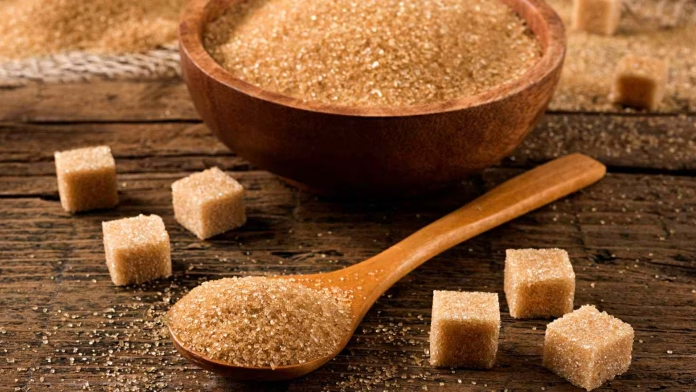
Brown sugar is a type of sugar that is made from sugarcane. It is called brown sugar because of its brown color, which is due to the presence of molasses. Molasses is a byproduct of the sugar-making process and is rich in minerals like calcium, potassium, and iron. Brown sugar is available in different forms like light brown, dark brown, and raw brown sugar.
Brown sugar is a healthier alternative to white sugar and is known to prevent cell damage. Brown sugar is also considered a healthier alternative to white sugar because it contains fewer calories.
Brown sugar has a lower glycemic index compared to white sugar. The glycemic index is a measure of how quickly a food item raises blood sugar levels. Foods with a high glycemic index are quickly absorbed by the body, leading to a spike in blood sugar levels. High blood sugar levels are linked to several health issues like diabetes, heart disease, and obesity. Brown sugar has a lower glycemic index, which means it is absorbed slower by the body, leading to a more sustained release of energy.
How Organic Tattva’s Organic Brown Sugar Prevents Cell Damage
Organic Tattva’s Organic Brown Sugar is a premium quality brown sugar that is made from certified organic sugarcane. The organic certification ensures that the sugar is free from harmful chemicals and pesticides.
It is rich in antioxidants, which prevent cell damage caused by free radicals. Free radicals are unstable molecules that are produced by the body as a result of various metabolic processes. Free radicals can damage cells, leading to several health issues like cancer, heart disease, and premature aging. Antioxidants neutralize free radicals, preventing cell damage and protecting the body from several health issues.
This brown sugar is also rich in minerals like calcium, potassium, and iron. These minerals are essential for bone health, muscle function, and red blood cell production. Calcium is necessary for healthy bones and teeth, while potassium helps regulate blood pressure and supports proper muscle function. Iron is essential for the production of hemoglobin, which is responsible for carrying oxygen in the blood.
Choosing brown sugar over white sugar can have a positive impact on your health. Brown sugar, especially Organic Tattva’s Organic Brown Sugar, can help prevent cell damage, provide essential minerals, and maintain a steady release of energy. By making small changes to our diet, we can take significant steps towards enhancing our overall well-being. Incorporating brown sugar into our daily diet is a simple yet effective way to support a healthy lifestyle.
We use cookies to ensure that we give you the best experience on our website. If you continue to use this site we will assume that you are happy with it.