Dunzo, an Indian online delivery platform, has recently secured $75 million in funding through convertible notes as it embarks on a major revamp of its business model.
This new model will see the company cutting back on about 50% of its dark stores and only running those that are profitable or nearing profitability. To achieve this, the company plans to partner with supermarkets and other merchants.
This restructuring will also entail a significant reduction in the company’s workforce, with over 300 workers expected to be laid off. The decision was announced by Founder and CEO Kabeer Biswas at a town hall meeting held on Wednesday. The restructuring is seen as a necessary step to ensure profitability for the company in the next 18 months.
The funding for this revamp was provided by key backers Reliance Retail and Alphabet Inc, with other existing investors contributing the remainder. However, the company is also in talks with other investors, such as the Abu Dhabi Investment Authority (ADIA), but any additional funding may only come after certain metrics are met and the business stabilizes.
The move by Dunzo comes as demand for quick and efficient delivery of household goods continues to grow, with other players in the market also stepping up their efforts to ensure that orders are delivered in 15 minutes or less. Despite this competitive landscape, Dunzo remains committed to its vision and is taking bold steps to ensure its success.
Ashish Agrawal, a seasoned advisor at ChrysCapital, has expressed his intention to leave his current role and venture into entrepreneurship.
With almost two decades of experience at ChrysCapital, Ashish has successfully led investments in various sectors, including financial services and consumer industries, and has overseen the deployment of more than $1 billion in around 20 investments. Some of the companies he has worked with include Axis Bank, Au Small Finance Bank, Hero Fincorp, National Stock Exchange, and Wow Skincare.
In a recent LinkedIn post, Ashish expressed his gratitude for the learning experience he had while working with ChrysCapital, especially in collaborating with outstanding entrepreneurs and observing the growth of portfolio companies. He mentioned that he had felt the urge to transition to the other side for a while and has finally decided to take the plunge.
Ashish wrote, “I got the opportunity to work alongside many amazing entrepreneurs and witness the growth of multiple portfolio companies over the years. The passion and excitement of these promoters has had a huge rub off effect on me. There has been an urge to jump to the other side for some time and now I have finally decided to take the plunge.”
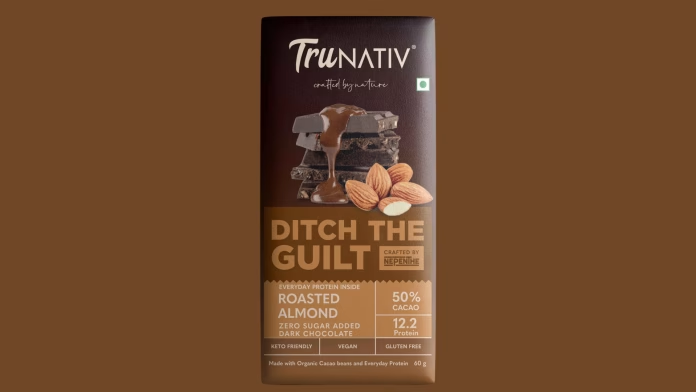
Regarding his new journey, Ashish shared that he is in the process of launching a consumer brand in the packaged snacking sector, with a vision to enable young individuals to enjoy indulgent food without the guilt.
He added in the post, “I am in the process of launching a consumer brand in the packaged snacking space with a vision to enable youngsters to remove the guilt whilst experiencing the joy of consuming indulgent food.
I look forward to continuing my existing relationships as I repivot to a new avatar for my second innings.”
He also expressed his excitement about continuing his relationships with professionals who share his passion for better snacking and have experience in the food industry, specifically in marketing and sales.
Curefoods is a Bengaluru-based cloud kitchen brand that offers a wide range of food options to customers across India. The company has recently raised INR 300 crore in a funding round that included both primary and secondary equity and debt.
The round was led by Three State Capital, which is headed by Binny Bansal, who invested INR 240 crore. Other investors who participated in the funding round included IronPillar, Chiratae Ventures, ASK Finance, and Winter Capital.
The funds raised by Curefoods will be used to expand the company’s geographical reach and diversify its brands into offline formats. Currently, Curefoods operates online-only cloud kitchens, but the company aims to expand its presence into offline formats in the future.
Ankit Nagori, Founder of Curefoods, said,”I am very delighted to have the continued support of all our existing investors, who have a major role to play as we continue to grow and expand our brands and geographical presence. Our investors understand our brand vision very well and are aligned to our long-term goal of creating multiple 500 crore brands.”
He added, “This funding will allow us to reach new customers and markets while also targeting our offline model expansion. We are excited about the future of consumer brands and look forward to innovating and leading brands in this space for India, while delivering authentic and nutritious food to many Indians, according to the Indian taste palette.”
Curefoods has experienced impressive growth in recent years, with a year-on-year growth of over 300% in the last financial year. The company plans to expand its presence in Tier 1 and Tier 2 cities in the North and West of India, where it sees significant growth potential.
Curefoods’ success can be attributed to its popular brands, including Nomad Pizza and Sharief Bhai, which have seen over 50% Quarter-on-Quarter growth. The company’s backend operation includes over 7 food factories and 150+ multi-brand cloud kitchens, servicing more than 200 locations across 15 cities.
In December 2022, Curefoods reached a significant milestone of processing over 1.1 million orders per month, leading to an annual recurring revenue of INR 550 crore.
Previously, the company had raised over INR 800 crore in January 2022 from investors such as Iron Pillar, Chiratae Ventures, Sixteenth Street Capital, Accel Partners, Binny Bansal, Alteria Capital, BlackSoil Capital, Winter Capital, and Trifecta Capital.
Curefoods has set ambitious targets for the future, aiming to achieve an objective annual recurring revenue of INR 1000 crore by the end of 2023. The company also plans to open 50 more locations and handle 2 million orders per month during the same period.
Hershey, the US confectionery giant, has announced its investment in Rob’s Backstage Popcorn, a local snack brand founded by the Jonas Brothers and The Naked Market e-commerce platform.
Hershey participated in a $7 million Series A funding round, which was led by Palm Tree Crew, the venture firm of Norwegian DJ Kygo, and included support from UTA Ventures, the investing arm of United Talent Agency. A number of celebrities, including Priyanka Chopra Jonas, Ryan Tedder, Mindy Kaling, and Joe Haden, also invested in the company.
Harrison Fugman, Co-founder of The Naked Market, said, “Within 12 months since launching [Rob’s], we’ve gone into 8,000 stores. Our core focus is to continue scaling the brand via retail-first strategy, and complementing that with new ways to enhance that unique Rob’s experiences.
“We’ve achieved it through a variety of ways, whether it be Instagram Reels competition, in which participants catch popcorn with their mouths to win a Tesla, to fun engagement with the Jonas Brothers at their MGM residency in Las Vegas.”
This is not the first time that Hershey has invested in a popcorn business. In 2017, Hershey acquired 100% of SkinnyPop for $1.6 billion to “strengthen” its position “in the snacking aisle.”
In April 2022, Hershey also invested in Fulfil, an Irish snack bar maker, and set up a new North America venture with the company’s founder, Barry Connolly. Hershey is a minority shareholder in Fulfil.
Additionally, Hershey has been expanding its range of snacks with deals in savory snacks and low-sugar confectionery. In 2021, the company bought two domestic suppliers of pretzels, Dot’s Homestyle Pretzels, and Pretzels Inc., for a combined $1.2 billion.
Hershey’s investment in Rob’s Backstage Popcorn and other snack brands demonstrates the company’s commitment to expanding its portfolio and presence in the snacking market.
Scuzo, the dessert startup, is targeting a massive expansion plan with a goal of launching 100 outlets throughout India by 2024, aiming to become a dominant player in the dessert segment. With a current store segment profit of approximately 27 percent and a remarkable gross margin of 70 percent, the company is confident in its ability to capitalize on the growth potential of the dessert market.
According to Anand, a representative of Scuzo, the company’s primary objective is to achieve profitability for all of its franchise stores in the upcoming months. Additionally, Scuzo is aiming to increase its revenue to over INR 10 crore in the next fiscal year, more than doubling its current fiscal year earnings of INR 4.60 crore.
With the dessert market experiencing significant growth, Scuzo is determined to establish itself as the leading company in the segment. Boasting a remarkable 27 percent profit in its store segment, Scuzo is also able to maintain an impressive gross margin of 70 percent.
According to the company, Scuzo’s core focus is on producing handmade gelato and utilizing natural ingredients, and processed fruits to ensure consistent taste across all its outlets. Anand added, “We do not use oil and use fresh cream for making popsicles.”
Anand highlighted that the lower costs of food and raw materials facilitate the establishment of operations in foreign countries. Therefore, Scuzo aims to expand into the Canadian, UK, and UAE markets. Presently, the brand has a presence in 15 cities, with roughly 15 franchise stores and three company-owned stores. Furthermore, Scuzo is in discussions with various venture capitalists to raise approximately $1 million in funding to support its expansion plans.
Anand shared, “For starting a store, we do surveys in different regions. And we are already in the concluding stages of adding seven more store locations soon.”
In addition, he mentioned that the company plans to invest INR 2 crore in the upcoming fiscal year to establish its manufacturing units in Guntur, Andhra Pradesh, and Rajkot, Gujarat. The dessert startup has also partnered with Faasos to offer its products through the latter’s cloud kitchens.
A mega food park located at the Industrial Growth Centre in Pallippuram, near Cherthala, is set to be inaugurated on April 11. The park, which spans 84.05 acres of land, has been constructed by the Kerala State Industrial Development Corporation (KSIDC) at a cost of INR 128.49 crore.
The inaugural ceremony will be attended by Chief Minister Pinarayi Vijayan and Union Minister of Food Processing Industries Pashupati Kumar Paras, who will jointly inaugurate the facility at 10.30 a.m.
The project has been funded by the KSIDC/State government, which contributed INR 72.49 crore, as well as a grant-in-aid of INR 50 crore from the Union Ministry of Food Processing Industries under the Mega Food Park Scheme. The remaining funding was provided by a bank loan.
A KSIDC official said, “Twelve units have started operations, providing employment to 600 people.”
The project’s first phase, which covers 68 acres of land, has been completed and includes basic infrastructure and state-of-the-art facilities such as cold storage, deep freezer, deboning centre, waste treatment plant, warehouse, and standard design factory common facility centre. The park’s construction has cost INR 100.84 crore so far.
Officials have stated that work on the second phase of the project, which covers 16 acres of land, is currently underway. The primary processing centres located at Thoppumpady, Vypeen, and Munambam will be connected to the park, with two processing centres already under construction at Vypeen and Thoppumpady.
The park is expected to provide a significant boost to the food-processing sector in the state, particularly the seafood processing and marketing sector. Once fully operational, the project is projected to attract an investment of INR 1,000 crore and create approximately 3,000 direct and indirect jobs.
The inauguration ceremony will be presided over by Industries Minister P. Rajeeve. Other officials in attendance will include Agriculture Minister P. Prasad, MP A.M. Ariff, MLA Daleema Jojo, Alappuzha district panchayat president K.G. Rajeshwari, and others.
Deepika Padukone, a popular Bollywood actress, is known for her flawless looks and fit body. Her svelte figure and glowing skin are the envy of many, and she has often been asked about her secret to maintaining her health and beauty.
Deepika Padukone is a fitness enthusiast and follows a healthy diet plan to maintain her body. She believes in eating a balanced diet that includes all the essential nutrients like carbohydrates, proteins, and fats in the right proportions.
Here, we will delve into Deepika Padukone’s secret diet that helps her stay fit and healthy.
Deepika Padukone starts her day with a nutritious breakfast consisting of oats or muesli with fresh fruits and nuts, accompanied by a glass of fresh juice or green tea.
This breakfast is high in fiber, which helps to keep her feeling full for longer periods and reduces her chances of overeating during the day. Fruits and nuts provide essential vitamins, minerals, and healthy fats. Fresh juice or green tea provides antioxidants, which are known for their health benefits.
For a mid-morning snack, Padukone prefers fresh fruits or nuts. This snack is high in fiber and protein, which helps to keep her feeling full and satisfied until lunchtime. Fruits are also a good source of vitamins and minerals.
Padukone’s lunch usually consists of brown rice or quinoa with grilled vegetables or chicken, along with a bowl of dal or lentils for the required dose of proteins. This lunch is high in complex carbohydrates, fiber, and protein.
Brown rice and quinoa are good sources of complex carbohydrates, which provide long-lasting energy to the body. Grilled vegetables and chicken are good source of protein and essential nutrients, while dal or lentils provide additional protein, fiber, and essential vitamins.
In the evening, Padukone has a bowl of Greek yogurt with fresh fruits or a bowl of sprouts. This snack is high in protein, which helps to keep her feeling full and satisfied until dinner time. Greek yogurt is a good source of protein and healthy bacteria, which are known to aid digestion. Sprouts are also a good source of protein, fiber, and essential vitamins and minerals.
For dinner, Deepika Padukone opts for grilled fish or chicken with a bowl of vegetables or a salad. She also includes a bowl of soup or clear broth in her dinner. This dinner is high in protein and essential nutrients, while the soup or clear broth provides additional hydration and essential vitamins.
Before going to bed, Deepika usually has a glass of warm milk with a pinch of turmeric or a small bowl of low-fat cottage cheese. This bedtime snack is high in protein and helps to promote muscle repair and growth during sleep. Turmeric is known for its anti-inflammatory and antioxidant properties, while low-fat cottage cheese is a good source of calcium and other essential nutrients.
Padukone’s diet plan is also based on certain principles that contribute to her fitness and health. She believes in staying hydrated throughout the day by drinking plenty of water, fresh juices, and green tea. She prefers natural foods and avoids processed foods, sugary drinks, and snacks.
She also believes in indulging in her favorite foods occasionally and follows a cheat day once a week to satisfy her cravings.
Following Deepika Padukone’s diet plan has several benefits. It is low in calories and high in protein and fiber, which helps in weight management.
It also includes plenty of fruits, vegetables, and fiber-rich foods that aid digestion and prevent constipation.The diet is rich in vitamins and antioxidants that help in maintaining healthy skin and providing energy to the body. It also helps in building a strong immune system.
While Deepika Padukone’s diet plan is simple and sustainable, it is important to note that every individual has different body types and nutritional needs. Hence, it is advisable to consult a nutritionist or a doctor before making any changes to one’s diet plan.
Leading a healthy lifestyle that includes a balanced diet, regular exercise, and adequate sleep can go a long way in improving overall health and well-being.
With the advent of OTT (Over the Top) platforms, binge-watching has become a popular pastime for people. However, binge-watching often leads to unhealthy snacking habits, which can cause weight gain and other health issues.
In this article, we will explore why Makhana is the best food to have while watching OTT content.
What is Makhana?
Makhana, also known as Fox Nuts or Lotus Seeds, is a popular snack in India. These are the seeds of the lotus plant and are commonly used in traditional Indian cuisine. Makhana is mostly consumed in the form of roasted or fried snacks, which are often spiced with salt, pepper, or other flavorings.
Makhana is a nutrient-dense food, rich in carbohydrates, proteins, and minerals. It is low in fat and calories, making it an ideal snack for weight loss.
Health Benefits of Makhana
Makhana has several health benefits, which make it an ideal snack food. Here are some of the health benefits of Makhana:
Rich in antioxidants: Makhana is rich in antioxidants, which help to prevent cell damage and reduce the risk of chronic diseases such as cancer and heart disease.
Low in sodium: Makhana is low in sodium, making it an ideal snack for people with high blood pressure.
Good for digestion: Makhana is a good source of fiber, which helps to improve digestion and prevent constipation.
Boosts immunity: Makhana is rich in minerals such as magnesium, potassium, and zinc, which help to boost immunity and prevent infections.
Promotes weight loss: Makhana is low in calories and high in protein, making it an ideal snack for people trying to lose weight.
Makhana as the best food to have while watching OTT content:
Makhana is the best food to have while watching OTT content for several reasons. Firstly, it is low in calories and fat, making it an ideal snack for people trying to maintain a healthy weight.
Secondly, it is a good source of protein, which helps to keep you full and satisfied for longer periods, preventing overeating.
Thirdly, it is a great snack to munch on while watching a show, as it doesn’t make much noise, unlike other snacks such as chips or popcorn.
How to include Makhana in your diet?
Makhana is a highly nutritious food that is low in calories and high in fiber, making it an excellent snack for those who want to maintain a healthy diet. It is also a rich source of protein, potassium, and magnesium, which are all essential for maintaining good health.
One of the best things about Makhana is that it can be prepared in a variety of ways, making it a versatile snack. You can roast it in a pan with a little bit of ghee (clarified butter) or bake it in the oven for a healthier version. You can also add different spices and seasonings to give it some flavor, such as salt, pepper, or even chaat masala.
Makhana can be easily found in most supermarkets or online stores, and it is relatively affordable. You can buy it in bulk and store it in an airtight container, so you always have a healthy snack on hand when you’re watching OTT content.
Makhana is an excellent food to have while watching OTT content. So, the next time you’re planning a binge-watch session, make sure to have some Makhana on hand for a healthy and delicious snack.
Chilli oil is a popular condiment that is made by combining chilli peppers with oil. It is widely used in various cuisines across the world and is known for its spicy taste and aroma. While chilli oil is a tasty addition to many dishes, there are some people who should avoid consuming it due to its potential health risks. In this article, we will discuss who should not eat chilli oils and the reasons behind it.
People with Gastrointestinal Conditions: One of the primary groups of people who should avoid consuming chilli oil is those who have gastrointestinal conditions. These conditions include ulcers, acid reflux, and irritable bowel syndrome (IBS). Chilli oil can irritate the lining of the stomach and exacerbate the symptoms of these conditions. For instance, in the case of ulcers, chilli oil can cause the stomach to produce more acid, leading to discomfort and pain. Similarly, for people with acid reflux, chilli oil can trigger the reflux and cause heartburn.
Moreover, people with IBS can also suffer from abdominal pain, bloating, and diarrhea when they consume chilli oil. The capsaicin, which is a compound found in chilli peppers that gives them their heat, can stimulate the intestinal lining and worsen the symptoms of IBS. Thus, people with gastrointestinal conditions should avoid chilli oil and opt for milder alternatives.
Individuals with Allergies or Sensitivities: Another group of people who should not eat chilli oil is those who have allergies or sensitivities to chilli peppers or any of the other ingredients in chilli oil. Chili peppers are known to cause allergic reactions in some people, which can range from mild to severe. Symptoms of an allergic reaction to chilli peppers include itching, swelling, hives, and difficulty breathing. In severe cases, anaphylaxis can occur, which is a life-threatening allergic reaction.
Apart from chilli peppers, chilli oil contains other ingredients such as garlic, ginger, and sesame oil. People who are allergic to these ingredients should also avoid consuming chilli oil. Some people may also have sensitivities to certain ingredients in chilli oil, which can cause digestive problems, skin irritation, or other allergic reactions.
Pregnant Women: Pregnant women should be cautious when consuming chilli oil as it can cause heartburn or exacerbate nausea, particularly in the later stages of pregnancy. The capsaicin in chilli peppers can stimulate the release of gastric acid, which can cause heartburn in pregnant women. Furthermore, the strong taste and aroma of chilli oil can trigger nausea in some pregnant women, making it difficult for them to eat.
Moreover, some studies suggest that consuming large amounts of spicy foods during pregnancy can increase the risk of preterm labor or low birth weight. Thus, pregnant women should limit their intake of chili oil and other spicy foods during pregnancy.
People with High Blood Pressure: Chili oil can also be harmful to people with high blood pressure. The capsaicin in chili peppers can cause the blood vessels to constrict, which can increase blood pressure. People with hypertension should avoid consuming large amounts of chili oil or any other spicy foods.
Furthermore, some studies suggest that consuming large amounts of chili oil or other spicy foods can also increase the risk of cardiovascular disease. Thus, people with high blood pressure or a history of cardiovascular disease should be cautious when consuming chili oil.
Children: Lastly, children should also avoid consuming chili oil due to its spicy taste and potential health risks. Children have a more sensitive palate than adults, and the strong taste and aroma of chili oil can be overwhelming for them. Moreover, the capsaicin in chili peppers can cause digestive problems in children, leading to abdominal pain, nausea, and diarrhea.
Furthermore, some studies suggest that consuming large amounts of spicy foods during childhood can increase the risk of developing a preference for high-fat, high-sugar foods later in life. This can contribute to obesity, which is a growing problem in children worldwide. Thus, it is recommended that children avoid consuming chili oil and other spicy foods until they are old enough to handle their spiciness and understand the potential health risks.
Chilli oil is a popular condiment that is loved by many for its spicy taste and aroma. However, there are some people who should avoid consuming it due to its potential health risks. People with gastrointestinal conditions, allergies or sensitivities, pregnant women, people with high blood pressure or a history of cardiovascular disease, and children should be cautious when consuming chilli oil. As with any dietary change, it is important to consult with a healthcare professional before making any significant changes to your diet.
Kitty parties are an essential part of socializing for women in India, especially in cities like Mumbai. It is a perfect way for women to take a break from their daily routine, catch up with friends, and enjoy some delicious food and drinks. Mumbai has a vibrant food scene, with numerous restaurants catering to different tastes and preferences.
Here, we will take a look at the top 10 restaurants in Mumbai that are best for kitty parties.
Hoppipola, Multiple Outlets: Hoppipola is a fun and lively place to hang out with friends. They have multiple outlets across Mumbai, including Andheri, Khar, Powai, and Lower Parel. The restaurant has a quirky decor and an extensive menu of food and drinks.
The prices at Hoppipola are reasonable, with a meal for two costing around INR 1500.
Veranda, Bandra: Veranda is a beautiful restaurant located in Bandra. It has a charming outdoor seating area that is perfect for a kitty party. The restaurant serves a mix of Indian and Continental cuisine and has an extensive list of cocktails and mocktails. The prices at Veranda are slightly on the higher side, with a meal for two costing around INR 2500.
The Daily Bar and Kitchen, Bandra: The Daily Bar and Kitchen is a trendy restaurant located in Bandra. It has a lively ambiance and a spacious seating area, making it perfect for a kitty party.
The restaurant serves a mix of Indian and International cuisine and has an extensive list of cocktails and mocktails. The prices at The Daily Bar and Kitchen are reasonable, with a meal for two costing around INR 2000.
Raasta, Khar: Raasta is a vibrant restaurant located in Khar. It has a quirky decor and a lively ambiance, making it perfect for a kitty party. The restaurant serves a mix of Indian and International cuisine and has an extensive list of cocktails and mocktails. The prices at Raasta are slightly on the higher side, with a meal for two costing around INR 3000.
The Little Door, Andheri: The Little Door is a cozy restaurant located in Andheri. It has a warm and inviting ambiance and serves a mix of Indian and Continental cuisine. The restaurant has an extensive list of cocktails and mocktails and is perfect for a quiet and intimate kitty party. The prices at The Little Door are reasonable, with a meal for two costing around INR 2000.
Mirchi and Mime, Powai: Mirchi and Mime is a unique restaurant located in Powai. It is a concept restaurant where the waitstaff is hearing-impaired, and customers are encouraged to order using sign language. The restaurant serves a mix of Indian and Continental cuisine and has an extensive list of cocktails and mocktails. The prices at Mirchi and Mime are slightly on the higher side, with a meal for two costing around INR 3000.
Madeira and Mime, Powai: Madeira and Mime is a sister restaurant of Mirchi and Mime located in Powai. It has a lively ambiance and a spacious seating area, making it perfect for a kitty party. The restaurant serves a mix of Indian and International cuisine and has an extensive list of cocktails and mocktails. The prices at Madeira and Mime are slightly on the higher side, with a meal for two costing around INR 3000.
Mezzo Mezzo, Juhu: Mezzo Mezzo is an upscale Italian restaurant located in Juhu. It has a chic and elegant decor and a cozy seating area, making it perfect for an intimate kitty party. The restaurant serves authentic Italian cuisine and has an extensive list of wines and cocktails. The prices at Mezzo Mezzo are on the higher side, with a meal for two costing around INR 4000.
Summer Garden, Powai: Summer Garden is a charming restaurant located in Powai. It has a beautiful outdoor seating area surrounded by lush greenery, making it perfect for a daytime kitty party. The restaurant serves a mix of Indian and Chinese cuisine and has an extensive list of cocktails and mocktails. The prices at Summer Garden are reasonable, with a meal for two costing around INR 1500.
Thalassa, Khar: Thalassa is a popular Greek restaurant located in Khar. It has a stunning outdoor seating area with a beachy vibe, making it perfect for a themed kitty party. The restaurant serves authentic Greek cuisine and has an extensive list of cocktails and mocktails. The prices at Thalassa are slightly on the higher side, with a meal for two costing around INR 3000.
Mumbai has a variety of restaurants that cater to different tastes and preferences, making it perfect for a kitty party. From lively and fun places like Hoppipola and Raasta to elegant and chic restaurants like Mezzo Mezzo, there is something for everyone.
So, gather your girlfriends and head out to one of these top 10 restaurants in Mumbai for an unforgettable kitty party experience.
We use cookies to ensure that we give you the best experience on our website. If you continue to use this site we will assume that you are happy with it.