Monday, December 22, 2025
Home Blog Page 125

Fur Jaden Bags ₹9.5 Crore from Gruhas Collective: Can This Homegrown Luggage Brand Hit ₹100 Crore ARR?

0
Image of fur jaden
Fur Jaden Bags ₹9.5 Crore from Gruhas Collective: Can This Homegrown Luggage Brand Hit ₹100 Crore ARR?

Fur Jaden, the homegrown lifestyle luggage brand, has secured ₹9.5 crore (approximately $1.1 million) in a pre-Series A funding round led by Gruhas Collective Consumer Fund (GCCF).

The fresh capital will fuel the brand’s expansion by strengthening its leadership team, broadening its product range, amplifying brand visibility, and scaling up its omnichannel retail strategy.

Continue Exploring: Lahori Beverages Nears ₹450 Crore Fundraise as Valuation Soars to ₹2,500 Crore – A New Challenger in India’s Booming Drinks Market

Founded in 2015 by Sahil Rajesh Bansal and Karishma Bansal, Fur Jaden has set out to redefine backpacks and luggage with a focus on sustainability, functionality, and contemporary design. The brand has carved a niche for itself by integrating eco-friendly materials into its offerings—half of its product line now features cruelty-free vegan leather and recycled canvas.

With over a million customers to date, Fur Jaden’s portfolio spans backpacks, duffles, crossbody bags, and travel gear, catering to the evolving demands of modern travelers and professionals. The Indian luggage and backpack market, valued at ₹20,400 crore in 2024, is expected to grow to ₹29,900 crore by 2030, presenting a massive opportunity for brands like Fur Jaden.

Continue Exploring: “Kuch Nahi Hoga”—Anupam Mittal Challenges This Dangerous Mindset in Policy Bazaar’s New Ad

Looking ahead, the company aims to hit ₹100 crore in annual recurring revenue (ARR) within the next 16–18 months. Over the next five years, it plans to solidify its presence as a dominant player in India’s lifestyle luggage space, with an aggressive push toward nationwide expansion.

Advertisement

Zerodha’s Nikhil Kamath Backs Lehlah with ₹12.5 Crore: Will This Platform Dominate India’s ₹2,000 Crore Influencer Commerce Market?

0
Image of leh-lah
Zerodha’s Nikhil Kamath Backs Lehlah with ₹12.5 Crore: Will This Platform Dominate India’s ₹2,000 Crore Influencer Commerce Market?

Lehlah, a platform that helps influencers monetize their product recommendations, has raised ₹12.5 crore ($1.46 million) in a seed funding round led by Gruhas, the investment firm co-founded by Zerodha’s Nikhil Kamath and Abhijeet Pai of Puzzolana Group.

Continue Exploring: “Kuch Nahi Hoga”—Anupam Mittal Challenges This Dangerous Mindset in Policy Bazaar’s New Ad

The funding will be used to roll out new features, expand the team, and solidify Lehlah’s foothold in India’s rapidly growing influencer-driven shopping sector.

Founded in December 2022 by Ashna Ruia, daughter of Essar Group director Prashant Ruia, Lehlah collaborates with major e-commerce players like Myntra, Meesho, Flipkart, and Nykaa, as well as D2C brands such as Libas and Foxtale. Initially focused on fashion and beauty, the platform is now branching into home accessories and gadgets.

Continue Exploring: Lahori Beverages Nears ₹450 Crore Fundraise as Valuation Soars to ₹2,500 Crore – A New Challenger in India’s Booming Drinks Market

With a 50-member team, Lehlah operates its marketing division from Mumbai while its tech team is based in Bengaluru. The company runs on a commission-based model, where brands pay a fee for sales generated through influencer promotions. Currently, influencers using the platform earn anywhere between ₹50,000 and ₹1,00,000 per month, highlighting its potential as a reliable income source for content creators.

Advertisement

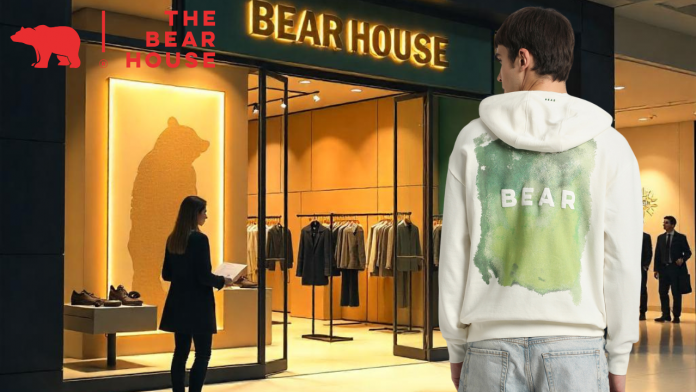
Bear House Clothing has secured ₹50 crore in Series A funding, with JM Financial India Growth Fund III leading the round.

0
Image of the bear house
Bear House Clothing has secured ₹50 crore in Series A funding, with JM Financial India Growth Fund III leading the round.

The fresh capital will fuel the brand’s offline expansion, provide working capital support, and enhance its marketing and branding efforts. Based in Bengaluru, Bear House specializes in men’s apparel and accessories and has built a strong presence in the direct-to-consumer space.

Continue Exploring: “Kuch Nahi Hoga”—Anupam Mittal Challenges This Dangerous Mindset in Policy Bazaar’s New Ad

This marks the eighth investment by JM Financial India Growth Fund III. Commenting on the deal, Siddharth Kothari, Managing Director – Private Equity at JM Financial, said, “Bear House has carved out a niche for itself with its distinct design approach and D2C model. With the growing appetite for premium, fashion-forward menswear in India, we see immense potential for Bear House to emerge as a leading name in the category.”

Continue Exploring: Lahori Beverages Nears ₹450 Crore Fundraise as Valuation Soars to ₹2,500 Crore – A New Challenger in India’s Booming Drinks Market

Harsh Somaiya, co-founder of Bear House, expressed optimism about the partnership, stating, “This investment and collaboration with JM Financial India Growth Fund III will propel our growth, enabling us to scale operations and solidify our market presence.”

Advertisement

4700BC Teams Up with Blinkit & Navjot Singh Sidhu to Make Popcorn India’s Go-To Cricket Snack—Executed in Just 9 Days!

0
image of Navjot Singh Sidhu

For years, 4700BC has been on a mission to change the way Indians snack. From making popcorn a must-have for travel—whether on flights, trains, or road trips—to redefining caramel popcorn as a dessert, the brand has consistently pushed boundaries in an industry dominated by traditional munchies like chips, namkeen, and nachos.

But why should popcorn take a backseat when it comes to cricket-watching snacks? That’s the latest challenge Chirag Gupta, founder of 4700BC, and his team have taken on. With ready-to-eat popcorn becoming more accessible, the brand is working hard to make it a staple alongside other game-time favorites.

Continue Exploring: Lahori Beverages Nears ₹450 Crore Fundraise as Valuation Soars to ₹2,500 Crore – A New Challenger in India’s Booming Drinks Market

Enter Navjot Singh Sidhu and a Bold Collaboration with Blinkit

To drive this message home, 4700BC teamed up with Blinkit for an exciting campaign featuring none other than cricketing legend Navjot Singh Sidhu. Known for his high-energy personality and iconic catchphrases, Sidhu is the perfect face to bring this movement to life.

In his signature “fatafat khatakhat” style, Sidhu delivers the message loud and clear—popcorn isn’t just for movies. It belongs at the cricket table too!

From Idea to Execution in Just 9 Days

Pulling off a campaign of this scale in under nine days is no small feat, and Chirag made sure to acknowledge the teams that made it happen.

A special shoutout went to the Blinkit team, including Sulabh Vij and Rahul Prasad, for their seamless collaboration in making the campaign a reality. Meanwhile, 4700BC’s in-house marketing team—Nikunj Verma, Ravisha Sarupria, and Kushagra Tomar—worked tirelessly to execute the idea from concept to launch in record time.

Continue Exploring: “Kuch Nahi Hoga”—Anupam Mittal Challenges This Dangerous Mindset in Policy Bazaar’s New Ad

Changing Snacking Habits, One Popcorn Bag at a Time

This isn’t just about one campaign—it’s part of 4700BC’s long-term vision to build new consumption habits in India. By positioning gourmet popcorn as a versatile, everyday snack, the brand continues to disrupt the industry and challenge traditional choices.

With cricket season in full swing, one thing’s for sure: Popcorn is officially in the game.

Advertisement

Wendor Secures ₹21 Crore Funding from Elanpro to Scale AI-Powered Vending—Plans 10 Experience Centers Across India

0
Image of wendor
Wendor Secures ₹21 Crore Funding from Elanpro to Scale AI-Powered Vending—Plans 10 Experience Centers Across India

Wendor, an AI-driven smart vending startup, has secured $2.5 million (₹21 crore) in seed funding, with Elanpro leading the round. The investment includes ₹5 crore in equity and ₹16 crore in debt, giving Wendor not just capital but also access to Elanpro’s extensive logistics and service network across India.

What’s Next for Wendor?

With this fresh infusion of funds, Wendor is doubling down on AI-powered vending, advanced computer vision, and global expansion. The company is looking to refine its real-time inventory tracking and develop camera-based product and quantity detection systems—critical for boosting operational efficiency and reducing losses.

Continue Exploring: Lahori Beverages Nears ₹450 Crore Fundraise as Valuation Soars to ₹2,500 Crore – A New Challenger in India’s Booming Drinks Market

Another big move in the pipeline is the launch of ten experience centers in metro and Tier-1 cities. These hubs will allow consumers and businesses to explore Wendor’s cutting-edge vending technology firsthand, including AI-driven product recognition, automated inventory tracking, and smart refrigeration systems.

Wendor’s Rise in Retail Automation

Founded in 2021 by Lakshit Anand, Wendor has quickly become a major player in India’s automated retail space. Its compact, cashless vending machines operate on a cloud-based management system, allowing seamless transactions through digital payments and mobile integrations.

Continue Exploring: “Kuch Nahi Hoga”—Anupam Mittal Challenges This Dangerous Mindset in Policy Bazaar’s New Ad

The startup’s AI-powered demand forecasting helps businesses analyze consumer behavior and optimize their product offerings, creating a data-driven retail experience.

A Growing Footprint: From Government Offices to Historic Landmarks

Wendor has already made a mark in high-profile locations. Its vending machines can be found at:

• Rashtrapati Bhawan and other government offices

• The Taj Mahal and Fatehpur Sikri, in partnership with Uttar Pradesh State Tourism and Agra Development Authority

• Hospitals like Apollo and Fortis

• Major brands including Coca-Cola, Amul, Nivea, and Unilever

Why This Matters

Vending technology is evolving rapidly in India, and Wendor is at the forefront of this shift. By combining AI, automation, and seamless digital transactions, the company is reshaping how people shop for everyday essentials—whether at tourist destinations, corporate offices, or healthcare facilities.

With Elanpro’s backing and a strong lineup of industry collaborations, Wendor is well-positioned to scale its footprint and take smart vending mainstream.

Advertisement

Kusha Kapila’s UnderNeat Raises ₹8-10 Crore from Fireside Ventures and Ghazal Alagh—Can It Disrupt India’s Shapewear Market?

0
Image of Kusha kapila
Kusha Kapila’s UnderNeat Raises ₹8-10 Crore from Fireside Ventures and Ghazal Alagh—Can It Disrupt India’s Shapewear Market?

Kusha Kapila’s newly launched shapewear brand, UnderNeat, has secured early-stage funding from Fireside Ventures, with Mamaearth co-founder Ghazal Alagh also coming on board as an investor, sources told Moneycontrol.

While the exact amount remains undisclosed, the seed funding round is estimated to be between ₹8-10 crore, giving UnderNeat a solid financial boost as it enters the Indian shapewear market—an industry that has remained relatively untapped.

UnderNeat’s Rapid Rise

The brand, which officially launched on March 30, has already gained serious traction. Within just 48 hours, it amassed 1.76 lakh Instagram followers, leveraging Kapila’s 4.1 million-strong digital presence to generate buzz.

Continue Exploring: Lahori Beverages Nears ₹450 Crore Fundraise as Valuation Soars to ₹2,500 Crore – A New Challenger in India’s Booming Drinks Market

Co-founder Vimarsh Razan confirmed that the funding round had been completed but declined to reveal the final investment figure or details of the participating investors.

Why Investors Are Betting on UnderNeat

UnderNeat is entering a market with huge potential but little competition. While shapewear is a booming industry globally, Indian brands have largely overlooked it. With Kapila’s strong influence and a growing consumer base eager for inclusive and functional fashion, the brand is well-positioned to make a mark.

Backed by Fireside Ventures—known for funding consumer-centric brands like Mamaearth, Boat, and Vahdam—UnderNeat is poised for aggressive growth. Ghazal Alagh’s involvement further strengthens its credibility, especially given her experience in scaling direct-to-consumer (D2C) brands.

Continue Exploring: “Kuch Nahi Hoga”—Anupam Mittal Challenges This Dangerous Mindset in Policy Bazaar’s New Ad

What’s Next?

With fresh capital in hand and an already engaged audience, UnderNeat’s next steps will likely involve expanding its product line, strengthening its supply chain, and solidifying its position as India’s go-to shapewear brand. The buzz is real—now, all eyes are on how UnderNeat delivers.

Advertisement

Zomato Fires 600 Employees Without Warning—Deepinder Goyal’s Company Bets on AI as Blinkit’s Losses Mount

0
Image of Zomato
Zomato Fires 600 Employees Without Warning—Deepinder Goyal’s Company Bets on AI as Blinkit’s Losses Mount

Zomato, led by Deepinder Goyal, has reportedly laid off 600 customer support associates, just a year after hiring them, according to a report by Moneycontrol.

The move comes as the company struggles with slower growth in food delivery and mounting losses at its quick-commerce arm, Blinkit. To streamline operations and reduce costs, Zomato is ramping up its reliance on AI-driven automation, replacing human agents with chatbots and automated responses for customer support.

What Happened to the Zomato Associate Accelerator Program?

In 2023, Zomato launched the Zomato Associate Accelerator Program (ZAAP), which brought in around 1,500 entry-level employees to handle customer service. The program promised opportunities for career progression into roles across sales, operations, supply chain, and category management.

Continue Exploring: Lahori Beverages Nears ₹450 Crore Fundraise as Valuation Soars to ₹2,500 Crore – A New Challenger in India’s Booming Drinks Market

However, a majority of these associates were on fixed-term contracts, and instead of being absorbed into the company, their contracts were simply not renewed at the end of their tenure.

According to the report, affected employees were given just one month’s salary as severance and were allegedly let go without prior warning. Zomato cited performance-related issues, including low punctuality, as the reason for the dismissals.

Employees Speak Out: ‘We Were Blindsided’

Several former employees took to Reddit to share their frustration, describing the layoffs as abrupt and unfair.

Continue Exploring: “Kuch Nahi Hoga”—Anupam Mittal Challenges This Dangerous Mindset in Policy Bazaar’s New Ad

One ex-employee claimed he was fired despite meeting all performance targets. He said his only fault was an average tardiness of 28 minutes over three months, which he insists was never flagged as an issue before termination.

“There was no feedback, no warning—just an email saying I was out. Zomato didn’t care about our hard work, the results we delivered, or the effort we put in.”

Another dismissed worker alleged that over 500 employees were let go in a similar fashion, calling the experience “dehumanizing.”

“We were promised promotions, better salaries, and job security. We worked harder, put in extra hours, and believed in the company. And then, just like that, they fired us—no explanation, no accountability.”

Zomato’s Growing Dependence on AI

The layoffs align with Zomato’s broader shift toward automation. The company is increasingly relying on AI-powered systems to handle customer complaints, order tracking, and dispute resolutions, reducing the need for human intervention.

While automation may improve efficiency, critics argue that it comes at the cost of job security and fair employment practices.

What’s Next?

With Blinkit bleeding cash and food delivery demand stagnating, Zomato appears to be in cost-cutting mode. The question now is—who’s next?

Advertisement

Gaurav Taneja’s BeastLife Hits ₹50 Crore GMV in Just 11 Months—Shutting Down Doubters with Hard Numbers

0
Image of beastlife
Gaurav Taneja’s BeastLife Hits ₹50 Crore GMV in Just 11 Months—Shutting Down Doubters with Hard Numbers

As the financial year draws to a close, BeastLife, founded by Gaurav Taneja, has shared some impressive growth figures. In just 11 months, the brand has achieved:

• ₹30 crore in Net Sales Value (NSV)

• ₹35 crore in Gross Sales

• ₹50 crore in Gross Merchandise Value (GMV)

These numbers are more than just milestones; they are a testament to the brand’s relentless drive, strategic execution, and unwavering focus on delivering value.

Success That Speaks for Itself

For any business, especially one in the competitive fitness and lifestyle space, growth is never linear. There are hurdles, doubters, and constant market fluctuations. But as Gaurav Taneja rightly puts it, “Let the results speak louder than the doubts.”

Continue Exploring: Lahori Beverages Nears ₹450 Crore Fundraise as Valuation Soars to ₹2,500 Crore – A New Challenger in India’s Booming Drinks Market

BeastLife’s numbers highlight a brand that not only understands its audience but also delivers what they need. Whether it’s through premium-quality products, strong community engagement, or a deep-rooted connection with fitness enthusiasts, the company has built a solid foundation.

The Power of Focus

One of the biggest takeaways from this achievement is the importance of focus. In an age where distractions are endless and skepticism is high, staying committed to the vision is what truly drives success. The journey of BeastLife is proof that when you put in the work, the results follow.

Continue Exploring: “Kuch Nahi Hoga”—Anupam Mittal Challenges This Dangerous Mindset in Policy Bazaar’s New Ad

What’s Next for BeastLife?

With such an impressive trajectory, the big question is: What’s next? Given the pace at which BeastLife is growing, the brand is likely gearing up for bigger expansions, product innovations, and an even stronger market presence.

For now, as the numbers roll in, one thing is clear—BeastLife isn’t just another brand. It’s a movement.

Advertisement

Goldman Sachs Makes Bold Bet on HAL & Zomato, Snaps Up 6 Million Shares Amid Market Shake-Up

0
Image of goldman sachs
Goldman Sachs Makes Bold Bet on HAL & Zomato, Snaps Up 6 Million Shares Amid Market Shake-Up

In a significant market move, Goldman Sachs (Singapore) Pte snapped up shares of Hindustan Aeronautics Ltd (HAL) and Zomato in block deals on March 28, as per stock exchange filings. The seller in both transactions was Kadensa Master Fund, signaling a strategic realignment in these stocks.

Goldman Sachs Increases Stake in HAL

The global investment firm purchased 385,774 shares of Hindustan Aeronautics Ltd at an average price of ₹4,176.25 per share, mirroring the exact quantity offloaded by Kadensa Master Fund. On the same day, HAL’s stock closed at ₹4,176 on the BSE, up 0.35% from the previous session.

Continue Exploring: Lahori Beverages Nears ₹450 Crore Fundraise as Valuation Soars to ₹2,500 Crore – A New Challenger in India’s Booming Drinks Market

HAL has been on a strong upward trajectory, surging over 35% in the last month, fueled by key developments such as the launch of GE’s light aircraft engine supplies and the signing of two new defense contracts with the Ministry of Defence on March 28.

Goldman Sachs Bets on Zomato Despite Profit Drop

Alongside its HAL investment, Goldman Sachs also picked up 6,007,412 shares of Zomato at an average price of ₹199.50, with Kadensa Master Fund again being the seller. Zomato’s stock closed slightly higher at ₹201.50 on the BSE after the deal.

This investment comes despite Zomato’s Q3 FY25 net profit plunging 57.24% to ₹59 crore, a steep decline from ₹138 crore in the same quarter last year. However, the company’s revenue skyrocketed 64% to ₹5,405 crore, up from ₹3,288 crore in the previous year, showcasing strong topline growth even as profitability faces headwinds.

Continue Exploring: “Kuch Nahi Hoga”—Anupam Mittal Challenges This Dangerous Mindset in Policy Bazaar’s New Ad

With these purchases, Goldman Sachs appears to be doubling down on India’s aerospace and digital commerce sectors, reinforcing confidence in HAL’s defense contracts and Zomato’s long-term market expansion.

Advertisement

Hooters Files for Bankruptcy: Sells 100 Locations, Original Founders Take Back Control

0
Image of hooters
Hooters Files for Bankruptcy: Sells 100 Locations, Original Founders Take Back Control

Hooters, the restaurant chain famous for its wings and waitresses in bright orange shorts, has filed for bankruptcy—but it’s not disappearing anytime soon.

The company announced Monday that it’s restructuring and plans to sell all 100 of its company-owned restaurants to two franchisee groups that already run locations in Tampa and Chicago. Together, these groups operate about a third of Hooters’ franchised locations in the U.S., according to the announcement.

Continue Exploring: Lahori Beverages Nears ₹450 Crore Fundraise as Valuation Soars to ₹2,500 Crore – A New Challenger in India’s Booming Drinks Market

Like many other casual dining chains—including BurgerFi and Red Lobster—Hooters has struggled with rising costs and shifting consumer habits. The company has also faced legal challenges over workplace discrimination claims. Last year, it shut down several locations, citing higher expenses for food and labor.

Hooters expects to emerge from Chapter 11 bankruptcy in three to four months. CEO Sal Melilli framed the move as a necessary step to stabilize the company’s finances while continuing to provide the food and experience fans expect.

The bankruptcy filing, made in a Texas court, is a common strategy for businesses looking to reorganize their debts rather than shut down completely. Hooters says it will continue operating during the process but is reviewing its locations, meaning some may still close.

Continue Exploring: “Kuch Nahi Hoga”—Anupam Mittal Challenges This Dangerous Mindset in Policy Bazaar’s New Ad

Private equity firms Nord Bay Capital and TriArtisan Capital Advisors bought Hooters in 2019, but now the original founders are stepping back in as part of the buyer group. Neil Kiefer, CEO of franchisee group Hooters Inc., criticized past ownership, saying they lacked real ties to the brand. In an interview with Bloomberg, Kiefer also hinted at plans to make Hooters more family-friendly as part of its comeback strategy.

Advertisement