If you’ve been struggling with dull and damaged hair, you know how frustrating it can be to find a solution that works. While there are plenty of hair care products on the market that claim to repair and restore hair health, many of them only offer temporary relief.
However, there is a new solution that promises to revive your hair from the inside out. COSMIX Healthy Hair supplement is a dietary supplement that contains a blend of essential vitamins and minerals that support hair health and growth.
Let’s take a closer look at how COSMIX Healthy Hair supplement can help you achieve healthy, shiny, and strong hair:
COSMIX Healthy Hair supplement contains a blend of essential vitamins, minerals, and amino acids that are known to support hair health and growth. The key ingredients in the supplement that help hair include biotin, zinc, vitamin C, vitamin E, and amino acids. Biotin is particularly beneficial for strengthening hair and reducing hair loss, while amino acids are the building blocks of hair and can help repair damaged hair strands. Vitamin E is a potent antioxidant that can help protect the scalp from damage, and vitamin C can also support scalp health. Zinc is important for the healthy growth of hair follicles and can help prevent hair loss.
COSMIX Hair and Health Supplement help the hair in following ways:
Contains key vitamins and minerals for hair health
COSMIX Healthy Hair supplement is packed with a range of vitamins and minerals that are essential for healthy hair growth. These include biotin, zinc, vitamin C, and vitamin E. Biotin, in particular, is known for its ability to strengthen hair and reduce hair loss.
Promotes healthy scalp
A healthy scalp is crucial for healthy hair growth, and COSMIX Healthy Hair supplement contains ingredients that support scalp health. Vitamin E, for example, is a potent antioxidant that can help protect the scalp from damage.
Helps repair damaged hair
If your hair has been damaged by heat styling, chemical treatments, or environmental factors, COSMIX Healthy Hair supplement can help repair the damage. The supplement contains amino acids, which are the building blocks of hair, and can help repair damaged hair strands.
Easy to use
One of the best things about COSMIX Healthy Hair supplement is that it’s easy to use. Simply take two capsules per day with a meal, and you’ll be on your way to healthier, shinier hair.
Adding a hair supplement to your daily routine can be an effective way to promote healthy hair growth, repair damaged hair, and support overall hair health. If you’re looking for a high-quality hair supplement, consider trying COSMIX Healthy Hair supplement. With its blend of essential vitamins, minerals, and amino acids, it can help you achieve the healthy, shiny, and strong hair you’ve been dreaming of. Remember, it’s important to take care of your hair from the inside out, and a quality hair supplement like COSMIX Healthy Hair can be an excellent addition to your hair care routine. Give it a try today and see the difference it can make for your hair!
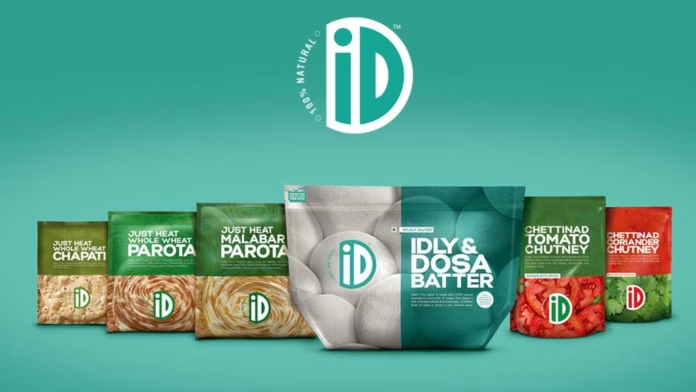
In a bid to expand its reach in the North and West regions, iD Fresh Foods is planning to introduce smaller pack sizes of its well-known idly/dosa batter and heat-and-eat parottas.
The company was reported to have achieved sales of over INR 500 crore in FY23, as compared to INR 382 crore in the previous fiscal year, according to Gandh’s estimates. The fresh batter category, which accounted for 35% of sales in FY22, has further strengthened its position as the star performer, with its share increasing to 37%.
Rahul Gandhi, CMO, iD Fresh Food, said, “We are trying to introduce smaller size packets because a lot of people in the North and West haven’t tried the batter yet. We are planning to launch 500gms dosa batter and parotta packets with two to three parottas in it.”
The company is present in stores across 45 cities. On the planned geographic expansion, the spokesperson said, “We are planning to expand three-fold. One is that we are going deeper into our large cities, adding more outlets in Delhi, Mumbai, Bengaluru, Chennai, and Hyderabad. The second geographic expansion we are undertaking is going to be Tier 2 cities like Chandigarh, Lucknow. We will be taking the e-commerce route there because it is more viable for a fresh food brand like us.”
While the brand has entered the UK and US markets, there is still potential to introduce more products in these regions, as explained by him.
In 2023, the brand is set to launch multiple product and packaging innovations in both India and Dubai.
Delivery Hero, the German online food ordering and delivery company, has predicted single-digit percentage growth in gross merchandise value (GMV) for 2023. This forecast follows a strong start to the second quarter and an expectation of continued growth acceleration throughout the year.
This year, the Berlin-based company anticipates a growth rate of 5% to 7% in constant currency for its gross merchandise value (GMV).
Delivery Hero experienced a growth surge due to the pandemic, but now the company is concentrating on achieving long-awaited profitability. This shift in focus comes as investor confidence in the rapidly expanding but largely unprofitable sector begins to dwindle.
“We still see enormous potential to keep driving profitability for many years to come,” Chief Financial Officer Emmanuel Thomassin said in a statement, as the company seeks to increase customer base and expand its business beyond food delivery services.
Delivery Hero reported a first-quarter gross merchandise value (GMV) of €11.2 billion ($12.39 billion), which represents a 2.1% increase in constant currency. This figure aligns with analysts’ estimates, as per the company’s compiled consensus.
Delivery Hero has confirmed its full-year outlook, which predicts a core profit (EBITDA) margin to gross merchandise value (GMV) exceeding 0.5%.
Reflections Cafe, a fast-casual American/Continental restaurant, has collaborated with BBFT, a leading franchise and growth consultancy, to open two new outlets in Lajpat Nagar & Rajouri Garden. This comes after the successful launch of their restaurants in Malviya Nagar, Delhi and Mohali, Punjab.
Located in the bustling markets of Lajpat Nagar and Rajouri Garden in Delhi NCR, the outlets are situated amidst numerous shops, restaurants and tourists. The Lajpat Nagar branch, positioned across from Lajpat Nagar Metro station, features a cozy indoor area with Instagram-worthy decor, and can accommodate more than 40 guests. It is the perfect spot to enjoy delicious, fresh American-Continental cuisine.
The cafe boasts a neutral color scheme with touches of beige, natural lighting, classical black, floral artwork, and white zigzag strip flooring. The Rajouri Nagar outlet is a double-story establishment with shaker style walls, bold elements, vibrant decor, and an elaborate mix of prints and patterns. Along with its unique ambiance, lighting, and decor, the cafe offers a one-of-a-kind experience with a retail restaurant format that covers an area of 1600 square feet.
BBFT (Building Brands for Tomorrow) is a top-tier consultancy that specializes in franchising and business growth strategies. Their primary focus is to aid founders in scaling their businesses from start to finish.
The journalists were given a first-hand experience of Qla's exceptional cuisine with the 7 Course Menu, which is just the tip of the iceberg
Qla recently hosted a delightful gathering for food journalists from the Delhi-NCR region, offering them an opportunity to savor the delectable new menu. Boasting a variety of savory entrees and sweet, creative desserts, the menu is designed to please every taste bud.
The renowned European dining restaurant Qla, located in Mehrauli, Delhi, was founded by Mr. Ranjan Chopra, alongside Ms. Shharyu Chopra, who serves as the Co-founder, Managing Director, and CEO. Both share a passion for all things artistic, and strive to create experiences that resonate with their patrons’ hearts and lives. Through their visionary leadership, the couple has built a thriving business that provides exceptional culinary experiences to diners from across the globe.
Qla offers a tranquil setting for those seeking a quiet moment with their loved ones or wishing to admire Delhi’s panoramic skyline with a touch of history while relishing the delectable European cuisine. The spacious rooftop restaurant is perfect for hosting grand events, while the cozy downstairs area offers an intimate ambiance to savor quality food while being serenaded by the sounds of soft laughter and hushed whispers, creating an enchanting atmosphere that makes your time at Qla all the more special.
Utilizing fresh ingredients and innovative flavor combinations, each dish on the menu is expertly crafted to showcase the finest of European cuisine available in town. Whether it’s regional delicacies or inventive takes on traditional favorites, the menu offers an array of tempting options that you wouldn’t want to miss.
Crafted with meticulous care and attention to detail, the 7 Course Menu is a tantalizing masterpiece that promises to tantalize even the most discerning taste buds. Boasting an impressive selection of delectable dishes, each course offers a unique culinary experience, from the appetizing starters to the indulgent desserts. The menu is thoughtfully designed, based on thorough research, to ensure a delightful variety of flavors and a truly exquisite dining experience.
However, the 7 Course Menu is just a teaser of the culinary wonders that await at Qla. With a plethora of delightful dishes in store, the menu is merely a preview before the final unveiling of the Summer Course Launch Menu. The journalists were given a first-hand experience of Qla’s exceptional cuisine with the 7 Course Menu, which is just the tip of the iceberg.
Attendees were treated to an array of delicious food, making it difficult to choose just one favorite. The feedback from all the journalists who attended the event was overwhelmingly positive, with many commenting on the delicious food, generous hospitality, and thoughtfully assembled giveaway hampers.
Apart from all, they were delighted to have the founder’s presence, Mr. Ranjan Chopra and Ms.Shharyu Chopra. Everyone was amazed to know about their immense knowledge and experience in the sector. Mr. Ranjan engaged everyone in meaningful conversations by taking the time to understand their interests and tapping into topics that were engaging and relevant to them.
The diners departed with content hearts and satisfied appetites, owing to the exceptional culinary experience that exceeded their expectations. The culinary team had surpassed themselves by crafting a menu of heavenly delights that tantalized the taste buds and left every diner with a feeling of utmost satisfaction.
The campaign strives to encourage all women to embrace their lives with unshakeable self-assurance, genuineness, and fortitude.
Pepsi has introduced its latest brand campaign, “Rise Up, Baby!” which showcases actress Samantha Ruth Prabhu as the company’s newest brand ambassador.
The company states that the campaign’s objective is to inspire women to pursue their passions and unyielding convictions and challenge the societal norms that have been imposed on them. The campaign depicts common situations that Indian women face regularly, such as being scrutinized for not getting married by a particular age, being criticized for working late or assuming a proactive leadership role.
Speaking on the campaign, Saumya Rathor, Category Lead, Pepsi Cola, PepsiCo India, said, “Pepsi has always strived to reflect the synergy of the younger generation. Through our last two campaigns, we aimed to portray the irrepressible spirit of the youth as they rise above societal norms. For this campaign, our focus was to offer an empowering campaign for the women of India and pay a tribute to their unwavering self-belief and self-confidence.”
Commenting on the campaign, Director Punit Malhotra, said on the TVC, “I am looking forward to directing the new Pepsi film, which has been a creative and exciting project from start to finish. Pepsi is a brand that is known for its iconic campaigns and cutting-edge marketing strategies, and I am honored to join them as they introduce the powerhouse that is Samantha Prabhu. She has been a wonderful collaborator in this project, embodying the spirit of Pepsi with her hard work and dedication. I am excited to have worked with such a dynamic team, and I am confident that this new film will make a lasting impression with audiences everywhere.”
Moreover, the phrase “Rise Up Baby” pays tribute to the liberated women who refuse to let others determine their value, and instead choose to lead their lives according to their own beat. The campaign strives to encourage all women to embrace their lives with unshakeable self-assurance, genuineness, and fortitude.
Actor Samantha Ruth Prabhu, said, “I strongly believe that women should always follow their hearts, shattering the stereotypes that society has set for us. The campaign, was therefore, even more special for me as it exemplifies the unshakable and persistent spirit of the women of this generation while inspiring them to wear their quirks on their sleeves. I am truly excited to be associated with Pepsi and cannot wait for fans to get inspired by the campaign and ‘Rise Up, Baby!.”
The new 360-degree campaign will be promoted extensively across multiple platforms, including television, digital media, outdoor advertising, and social media.
Carlsberg, the third-largest beer producer in the world, announced that it contested the assessment of Khetan Group, its partner, in the sale of its complete 33% interest in Carlsberg South Asia Pte Ltd (CSAPL) for $744 million.
At the put option valuation of $744 million, Khetan Group issued a formal notice to sell its complete 33% share in CSAPL, the holding firm for Carlsberg’s operations in India and Nepal.
“The Carlsberg Group has disputed the put option valuation and the two parties have agreed to refer the issue to arbitration. We cannot comment any further on the timing of the outcome,” Ulrica Fearn, Chief Financial Officer at Carlsberg, told investors during its earnings call.
Carlsberg and its partner Khetan Group have been embroiled in a boardroom conflict over the last few years due to concerns raised by their auditor about financial misconduct, such as incorrect payments, embezzlement, and kickbacks from customers.
Carlsberg has encountered significant disputes regarding the shareholders’ agreement with CSAPL Holdings Pte Ltd (CSAPLH), its partner in CSAPL, the holding company. Carlsberg possesses a 66% stake, whereas CSAPLH owns the remaining share in the holding company.
In February of this year, Carlsberg had stated that the transaction could potentially conclude in 2023, provided that any disputes raised by shareholders were resolved and regulatory approvals were obtained within the specified timelines.
Carlsberg is the third-largest beer producer in India, trailing behind United Spirits and Ab InBev, and commands roughly 18% of the total beer market. Nevertheless, a considerable portion of its sales is attributed to its powerful beer lineup, primarily Tuborg.
The firm stated that following the acquisition of the stake, it would evaluate the Indian enterprise and introduce a range of worldwide brands.
Sainsbury's has projected a profit range of £640-£700 million for the fiscal year 2023-24, surpassing the analysts' mean prediction of £631 million.
Sainsbury’s, the British supermarket chain, has commenced its new financial year with significant momentum despite the uncertain outlook for consumer spending. The company has predicted a profit outcome that exceeds market expectations.
The inflation in the UK has been surging for over a year, and it has outpaced the growth of salaries for almost all employees, putting pressure on Britons.
In March, official data from the UK revealed that food prices had risen by 19.1% compared to the same month in the previous year, marking the most significant increase since August 1977. Furthermore, industry data indicates that grocery inflation was 17.3% in April.
On Thursday, Simon Roberts, the CEO of Sainsbury’s, informed reporters that the company has consistently raised its prices less than its primary competitors. As a result, the supermarket’s customers have paid “less than half the headline rate of inflation”.
With a 15% share of the UK’s grocery market, Sainsbury’s is attempting to balance the escalating expenses of procuring products from suppliers and keeping its customers from shifting to budget-friendly retailers such as Aldi and Lidl. Additionally, the company is facing elevated employee wage expenses.
Sainsbury’s underlying pre-tax profit for the year ending on March 4 was £690 million ($861 million), which was at the upper end of its guidance but a decline from £730 million in the previous year (2021-22).
Sainsbury’s revenue increased by 5.3% to £31.5 billion, with like-for-like sales in the fourth quarter rising by 7.8%.
Sainsbury’s has projected a profit range of £640-£700 million for the fiscal year 2023-24, surpassing the analysts’ mean prediction of £631 million.
“It’s a really strong set of numbers,” said one top 50 shareholder, particularly highlighting Sainsbury’s free cash flow of 645 million pounds.
Sainsbury’s stocks dropped by 0.6% at 11:33 GMT, but have surged by 30% since the beginning of the year. Bestway, the owner of Costcutter, has acquired a 4.47% stake in Sainsbury’s, but it has denied having any intentions to initiate a takeover bid.
Earlier in April, Tesco, the market leader, posted a 6.3% drop in annual profit and predicted a flat outcome for 2023-24, while in March, Asda, the third largest supermarket, reported a 24% decrease.
Despite performing well against its traditional competitors, Sainsbury’s is still losing market share to discounters as they continue to open new stores, according to monthly industry data.
Sainsbury’s invested over 560 million pounds in the two years leading up to March 2023, financed by cost savings, to maintain competitive prices and this has affected its profit. The supermarket is matching Aldi’s prices on hundreds of crucial items and utilizing its Nectar loyalty program.
The pre-tax profit for the year 2022-23, as required by law, decreased by 62% to 327 million pounds due to the impact of asset impairments. Despite this, a dividend of 13.1 pence per share, consistent with the previous year, will be distributed. (Conversion rate: $1 = 0.8012 pounds)
Dabur, the Indian company specializing in fast-moving consumer goods, has announced its intention to invest an additional INR 9.68 billion in Nepal.
On Thursday, the Investment Board Nepal and Dabur Nepal Pvt. Ltd. signed a memorandum of understanding to implement capacity building and product diversification projects using the private investment model. The agreement covers the construction, operation, and management of these projects.
While the Investment Board Nepal had granted approval for Dabur’s additional investment in February of last year, the MoU was not signed until Thursday.
According to a press statement released after the signing ceremony, Sushil Bhatt, CEO of the Investment Board Nepal, and Harkirat Singh Bedi, Business Head at Dabur Nepal, signed the MoU on behalf of their respective parties. Nepal’s Minister for Industry, Commerce and Supplies, Ramesh Rijal, was also in attendance.
Prior to the outbreak of the Covid pandemic, the Indian multinational company had expressed its intention to invest further in Nepal. However, due to the prolonged Covid wave in Nepal and India, the investment proposal was put on hold.
According to the proposal, Dabur Nepal, which produces a range of beverages, beauty, and healthcare products in Nepal, plans to expand its capacity and diversify its product offerings.
Following the signing of the MoU, Bedi expressed his satisfaction with the decision to allocate a portion of the company’s accumulated capital towards expanding its capacity and diversifying its product range in Nepal.
The Investment Board Nepal is a special entity established by the government of Nepal with the mandate to approve and facilitate investments above INR 6 billion in the country.
In accordance with this regulation, Dabur Nepal obtained permission from the Investment Board. Based on available data, Dabur Nepal’s contribution to Nepal’s export trade amounts to 5.35%. Dabur International Limited owns 97.5% of the company, while the remaining 2.5% is owned by a Nepali partner.
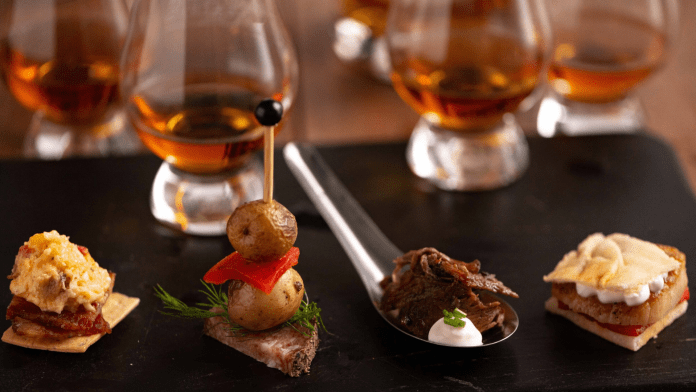
Whiskey is a classic drink enjoyed by millions of people around the world. It is a distilled alcoholic beverage that is made from various grains such as barley, corn, rye, and wheat. Whiskey is aged in barrels, which gives it its distinctive taste and aroma.
Whiskey is a versatile drink that can be enjoyed on its own, but it can also be paired with various foods to enhance its flavor. In this article, we will explore 10 delicious whiskey pairings that will amp up your whiskey experience.
Understanding Whiskey and its Varieties
Before we dive into the whiskey pairings, it’s essential to understand the different types of whiskey. There are four main types of whiskey:
Bourbon – made from a minimum of 51% corn and aged in new, charred oak barrels
Rye – made from a minimum of 51% rye and aged in oak barrels
Scotch – made in Scotland from malted barley and aged in oak barrels
Irish – made in Ireland from a combination of malted and unmalted barley and aged in oak barrels
There are also other types of whiskey, such as Canadian whiskey, Japanese whiskey, and wheat whiskey, but these are not as well-known as the four main types. Each type of whiskey has its own unique taste and aroma, and it’s essential to understand these differences when pairing whiskey with food.
Pairing Whiskey with Food
Pairing whiskey with food is a delicate balance. The goal is to enhance the flavor of both the food and the whiskey without overpowering either. When pairing whiskey with food, consider the following:
Match the intensity – Pair light-bodied whiskeys with light foods and full-bodied whiskeys with heavier foods.
Match the flavor – Pair whiskey with foods that have complementary flavors. For example, pair a sweet whiskey with a sweet dessert.
Contrast the flavor – Pair whiskey with foods that have contrasting flavors. For example, pair a smoky whiskey with a sweet and spicy dish.
Consider the age – Pair older whiskeys with foods that have bold flavors, as the whiskey will have a more subtle taste.
These 10 Delicious Whiskey Pairings are-
1. Smoky Whiskey and Grilled Meat:
If you’re a fan of smoky whiskey, then you know that it pairs perfectly with grilled meat. The smoky flavor of the whiskey complements the charred flavor of the meat, creating a mouthwatering combination. You can pair smoky whiskey with grilled steak, pork, or even chicken. Try pairing a peaty Islay Scotch like Laphroaig with a juicy ribeye for an unforgettable meal.
2. Bourbon and Chocolate:
Bourbon is a popular whiskey that’s made in the United States. It’s a sweet and smooth whiskey that pairs perfectly with chocolate. The sweetness of the bourbon complements the bitterness of the chocolate, creating a perfect balance. You can pair bourbon with dark chocolate or even chocolate desserts like brownies or chocolate cake. Try pairing a smooth bourbon like Maker’s Mark with a piece of dark chocolate for a decadent treat.
3. Rye Whiskey and Spicy Foods:
Rye whiskey is a spicy and complex whiskey that pairs perfectly with spicy foods. The spicy flavor of the rye whiskey complements the heat of the spicy food, creating a bold and flavorful combination. You can pair rye whiskey with spicy dishes like chili, curry, or even hot wings. Try pairing a spicy rye whiskey like Bulleit Rye with a bowl of spicy chili for a delicious meal.
4. Irish Whiskey and Seafood:
Irish whiskey is a smooth and mellow whiskey that pairs perfectly with seafood. The light and fruity flavor of the Irish whiskey complements the delicate flavor of seafood, creating a refreshing combination. You can pair Irish whiskey with seafood dishes like fish and chips, shrimp scampi, or even oysters. Try pairing a light Irish whiskey like Jameson with a plate of fresh oysters for a refreshing and delicious meal.
5. Single Malt Scotch and Cheese:
Single malt Scotch is a complex and flavorful whiskey that pairs perfectly with cheese. The rich and smoky flavor of the Scotch complements the sharp and tangy flavor of the cheese, creating a perfect balance. You can pair single malt Scotch with cheese dishes like a cheese board or even mac and cheese. Try pairing a smoky single malt Scotch like Lagavulin with a plate of aged cheddar for a delicious and sophisticated snack.
6. Blended Scotch and Smoked Salmon:
Blended Scotch is a smooth and mellow whiskey that pairs perfectly with smoked salmon. The light and fruity flavor of the Scotch complements the smoky flavor of the salmon, creating a delicious combination. You can pair blended Scotch with smoked salmon dishes like bagels and lox or even a smoked salmon salad. Try pairing a smooth blended Scotch like Johnnie Walker Black Label with a plate of smoked salmon for a delicious and refreshing meal. Japanese
7. Whiskey and Sushi:
Japanese whiskey has become increasingly popular in recent years, and for good reason. It’s known for its smooth, subtle flavors and aromas, which make it an excellent pairing for sushi. The delicate flavors of the whiskey complement the flavors of the sushi, while the slight smokiness of the whiskey can add depth and complexity to the dish.
When pairing Japanese whiskey with sushi, it’s important to choose a whiskey that is not too overpowering. Look for a whiskey that has a mild and smooth flavor, such as Suntory Toki or Nikka Coffey Grain. These whiskeys have a subtle sweetness and a slightly smoky finish that pair well with sushi.
8. Canadian Whiskey and Maple Syrup:
Canadian whiskey is often associated with its signature flavor profile, which includes a hint of sweetness. This sweetness makes it an excellent pairing for maple syrup, which is a classic Canadian ingredient. The sweetness of the whiskey and the syrup complement each other perfectly, creating a rich and delicious flavor combination.
To pair Canadian whiskey with maple syrup, try a whiskey like Crown Royal or Canadian Club. These whiskeys have a smooth and slightly sweet flavor that pairs well with the rich and complex flavors of maple syrup. Use the combination to top pancakes, waffles, or even ice cream for a decadent dessert.
9. Tennessee Whiskey and BBQ:
Tennessee whiskey is known for its bold and smoky flavor, which makes it an excellent pairing for BBQ. The smokiness of the whiskey complements the smoky flavor of the meat, while the sweetness of the whiskey can help balance out the spice of the BBQ sauce.
When pairing Tennessee whiskey with BBQ, look for a whiskey like Jack Daniel’s or George Dickel. These whiskeys have a bold and smoky flavor with a hint of sweetness that pairs perfectly with BBQ. Sip the whiskey while enjoying your favorite BBQ dishes for a flavor combination that is sure to impress.
10. Wheat Whiskey and Sweet Desserts:
Wheat whiskey is a relatively new category of whiskey, but it’s quickly gaining popularity. It’s made from a mash bill that includes wheat, which gives it a smooth and creamy flavor that pairs well with sweet desserts. The subtle sweetness of the whiskey can help bring out the flavors of the dessert, while the creamy texture can help balance out any richness or heaviness.
To pair wheat whiskey with sweet desserts, try a whiskey like Bernheim Original or Dry Fly Wheat Whiskey. These whiskeys have a smooth and creamy flavor that pairs well with chocolate, caramel, and other sweet desserts. Sip the whiskey alongside your favorite dessert for a delicious and indulgent treat.
Whiskey is a complex and diverse spirit that can be paired with a variety of foods to enhance its flavors and aromas. Whether you prefer Japanese whiskey with sushi or Canadian whiskey with maple syrup, there is a perfect pairing out there for everyone. By experimenting with different whiskey and food combinations, you can discover new and exciting flavor combinations that will take your whiskey experience to the next level. So why not try one of these delicious whiskey pairings today? Your taste buds will thank you.
We use cookies to ensure that we give you the best experience on our website. If you continue to use this site we will assume that you are happy with it.