Monday, December 22, 2025
Home Blog Page 1229

How consuming Just Jaivik’s organic neem tablets will help you fight acne

Just Jaivik neem tablets

Acne is a common skin problem that affects people of all ages, genders, and skin types. It occurs when hair follicles become clogged with oil and dead skin cells, leading to the formation of pimples, blackheads, and whiteheads. Acne can not only be painful and uncomfortable, but it can also be a major source of frustration and embarrassment. Fortunately, there are a variety of skincare products available in the market that can help prevent and treat acne, leaving you with clear, glowing skin. In this article, we will be discussing one such product that can help you combat acne and achieve the flawless skin you desire.

While there are dozens of expensive skin-care products out there full of chemicals that may do more harm than good to your skin, it is always better to stick to natural ways in our opinion, that too when an option is as cheap and readily available as Neem.

How Does Neem Help With Acne?

Neem is a natural ingredient that has been used in traditional medicine for centuries due to its anti-inflammatory, anti-bacterial, and anti-fungal properties. It is known to be highly effective in treating acne due to the following reasons:

Antibacterial Properties

Neem contains compounds like nimbidin and nimbin that have potent antibacterial properties. These compounds help to destroy the bacteria that cause acne, reducing inflammation and preventing further breakouts.

Anti-Inflammatory Properties

Neem also contains compounds like quercetin and beta-sitosterol that have powerful anti-inflammatory properties. These compounds help to reduce redness, swelling, and irritation associated with acne, making it an effective treatment for acne-prone skin.

Exfoliating Properties

Neem has natural exfoliating properties that help to remove dead skin cells and unclog pores. This helps to prevent the buildup of oil and bacteria that can lead to the formation of acne.

Regulating Oil Production

 Neem helps to regulate the production of sebum, the oil that is naturally produced by the skin. This helps to prevent the pores from becoming clogged and reduces the likelihood of developing acne.

While neem is very affordable and convenient to use, we agree on the fact that it is not the easiest to consume due to its bitter taste or apply directly on the skin or especially if you have skin conditions like acne or pimples that may irritate the skin.

Thanks to JustJaivik, for introducing a wonder in the name of Neem Tablets!

JustJaivik’s – Neem Tablets

JustJaivik’s neem tablets are a natural supplement that contains 100% pure neem extract. These tablets are made from the leaves of the neem tree, which is known for its medicinal properties and has been used in traditional medicine for centuries. The neem tablets are free from any synthetic additives or preservatives, making them safe and effective for regular consumption.

The neem tablets are packed with a range of health benefits, including improving digestion, promoting healthy skin, and supporting the immune system. They are particularly effective in treating acne due to the anti-bacterial, anti-inflammatory, and exfoliating properties of neem extract.

Consuming neem tablets regularly can help to reduce inflammation and redness associated with acne, prevent further breakouts, and promote clear, healthy skin. The tablets also help to purify the blood, removing toxins that can contribute to the development of acne.

JustJaivik’s neem tablets are easy to consume and come in a convenient packaging. They are suitable for people of all ages and can be taken as a daily supplement to support overall health and well-being. Overall, if you are looking for a natural and effective way to treat acne and improve your skin health, JustJaivik’s neem tablets can be an excellent addition to your daily routine.

So, if you want wonders on your skin, buy this product from: 

https://www.justjaivik.com/neem-tablets-600mg-60-tablets.html

Qty: 600gms or 60 tablets

Advertisement

Drinks companies in Norway impacted as 25,000 private-sector workers stage mass strike action over wages

0

On April 17th, unions representing employees across the private sector in Norway initiated a large-scale industrial action, leading to an estimated 25,000 workers going on strike over wage disputes.

Carlsberg and Royal Unibrew, both of which have operations in Norway, have confirmed that their production has been impacted by the ongoing industrial action.

According to the company, approximately half of Carlsberg’s workforce in Norway has participated in the industrial action.“This means that we cannot maintain our operations. All production and distribution of our products has therefore been shut down and will remain so for as long as the strike lasts,” a spokesperson said.

Royal Unibrew, a drinks group based in Denmark, has reported that 123 workers at its production sites, namely Hansa Bryggeri and Borg Bryggerier, are participating in the wage dispute led by the union.

“As a consequence of the strike, we have been compelled to cease the production with effect from this morning,” a Royal Unibrew spokesperson said.

Union officials have confirmed that around 110 workers of Coca-Cola Europacific Partners are also participating in the strike.

The Confederation of Norwegian Enterprise (NHO) represents all employers, while several unions, primarily The Norwegian Confederation of Trade Unions (LO) and Confederation of Vocational Unions (YS), are leading the ongoing strike.

It is estimated that today’s one-day strike involves around 25,000 workers in Norway, including those from the construction, food and drink, manufacturing, and technology industries. An additional 16,000 employees are expected to participate in further action, which is planned for April 21st.

Norwegian trade unions are advocating for a salary increase to improve the purchasing power of their members, who have been impacted by inflation. They argue that any offer that does not exceed or match the Norwegian headline inflation rate of 4.9% cannot be considered a wage increase.

Rejecting the NHO’s recent pay proposal, LO said, “The proposal that was put on the table would not have improved purchasing power for large groups of LO’s members. That’s why we said no. The low-wage groups would come off badly, and we could not agree to that.”

The unions have cautioned that the strike could potentially expand to involve around 200,000 workers.

Advertisement

Monde Nissin sets sights on B2B growth with new division for Quorn’s Mycoprotein ingredient

0
Mycoprotein

A new division has been established by Monde Nissin to offer the mycoprotein ingredient, the primary element found in their widely recognized Quorn brand, to other food manufacturers.

Marlow Ingredients, a company based in the UK, is launching a new business-to-business (B2B) arm that will provide mycoprotein to other companies. The initial focus will be on European markets, with plans to expand globally in the future.

According to the company, they have reached out to various potential partners to assess their interest and have received an enthusiastic response. They anticipate announcing their first customer within the next few months.

Marco Bertacca, the CEO of Marlow Foods, the Monde Nissin division that houses Quorn, said, “We recognise the urgent need for humanity to eat more sustainably. By making our mycoprotein available to others, Marlow Ingredients will play a pivotal role in helping us achieve one of our missions – to tackle climate change by making great-tasting food.”

When asked about the sales target the company has for Marlow Ingredients, a spokesperson said, “Year one for us is about raising awareness with other manufacturers about our incredible super protein”.

Monde Nissin recorded an impairment charge of 20.5 billion pesos ($365 million) on its meat alternatives business in 2022. While the company’s meat-alternative sales increased by 1% last year, they only saw a modest organic growth of 0.8%.

“The meat-free category, like most other sectors, has seen some challenges over the last 12 months. Inflationary pressures have led to changes in shopping behaviour, as many consumers try to tighten their belts and cut back on spending,” the spokesperson said.

According to the spokesperson, Quorn has been “bucking the trend” and has outperformed the category for ten consecutive months.

Bertacca said there is “huge potential for our mycoprotein”. He added, “Alongside the delicious meat-like texture and incredible nutritional and sustainable benefits it’s famous for, there’s exciting research happening into its ability to create more sustainable versions of other applications, such as dairy alternatives. Marlow Ingredients is initially focussed on building partnerships with food manufacturers, but the potential for the future is very exciting.”

Advertisement

Delhi authority refuses to renew Pernod’s license to sell liquor, citing violations and investigations

0
Pernod Ricard
With a 17 percent share, India is an important market for Pernod Ricard, where it competes against Diageo. (Representative Image)

Pernod Ricard, the French spirits giant, has been dealt another blow in a key growth market as New Delhi, India’s capital, has rejected its application to renew its liquor sale license. The decision was made due to ongoing investigations into the company, adding to Pernod Ricard’s challenges in the region.

According to an April 13 order from city officials, which was reviewed by Reuters and not previously disclosed, the decision to deny Pernod’s liquor sale license renewal was made after a review of the company’s application and “considerable documents” provided by Indian investigating agencies.

The decision to deny Pernod’s liquor sale license renewal was based on several allegations made by investigating agencies, including that the company provided false price information to generate illegal profits and supported retailers financially in exchange for promoting its brands, which goes against the rules. These allegations were cited in the order.

The 12-page order also stated, “Pernod Ricard India Private Limited and its employees had active involvement in the said criminal conspiracy.” The maker of Chivas Regal and Absolut vodka, which has denied any wrongdoing, declined to comment on Tuesday.

In March, Pernod Ricard informed a Delhi court that it had been incurring significant losses as its brands had been unavailable in the city for six months due to the delayed license renewal. The court had given the city a two-week deadline to reach a decision.

Pernod Ricard is entitled to file an appeal with senior officials of the Delhi government.

India is a crucial market for Pernod Ricard, where it competes with Diageo and holds a 17% share. Although the market share for New Delhi alone is unknown, industry insiders suggest that the city’s status as an urban tourist destination and a showcase market for premium brands makes it a crucial market for any liquor company.

In addition to other regulatory hurdles in India, Pernod Ricard is currently battling a tax demand of nearly $250 million over allegations of undervaluing imports.

For over two decades, Pernod Ricard has been present throughout India, where licenses to operate are granted on a state-by-state basis or, in this case, by the national capital territory. These licenses typically need to be renewed on a yearly basis.

Advertisement

Blinkit’s dark stores in Delhi-NCR resume operations after delivery executives’ strike

0
blinkit
blinkit

Blinkit, the quick commerce platform owned by Zomato, reported that its dark stores in the Delhi-NCR region that were disrupted by a strike staged by delivery executives had resumed operations partially on Monday. Additionally, a cluster of delivery executives held a meeting with the Labour Commissioner in Gurugram to converse about the platform’s revised payment system.

A Blinkit spokesperson said, “Almost all our stores across NCR are operational now. We continue to engage with all delivery partners to help them understand the new pay-out structure.”

Despite the platform’s efforts to address supply-side constraints and a large volume of orders, certain users in the region still experienced issues.

The operations of Blinkit’s dark stores in the Delhi-NCR region were impacted on April 12 when the delivery executives went on strike to protest against the new pay-out structure.

An ICICI Securities report on Zomato released on Monday said, “Given that at least 3-4 days’ sales have already been lost, this implies about 1 percent loss in revenue from Blinkit and about 0.15 percent of consolidated revenue for Q1FY24 already.” It added that the change in delivery fee payment structure at Blinkit indicates Zomato’s efforts to cut costs.

Organizations including CPIML Liberation, Federations of App-based Transport Workers, and All India Central Council of Trade Unions in Delhi expressed support for the delivery executives’ strike on Sunday. The executives claimed that the new pay-out structure would decrease their earnings.

Advertisement

Bournvita refutes social media influencer’s high sugar content claims, deems video ‘unscientific’

0
Bournvita
(Representative Image)

Mondelez India, the firm that produces the Bournvita health drink, dismissed allegations by social media influencer Revant Himatsingka claiming that the drink has a high sugar content. A representative for the company labeled Himatsingka’s video as “unscientific” and accused it of distorting the facts to create false and negative implications.

After receiving a legal notice from Mondelez India, the influencer removed the video. However, it had already spread widely across social media platforms. According to a statement from Mondelez India, the video caused “panic, anxiety, and a loss of trust in brands like Bournvita” as reported by PTI.

Bournvita dismissed the assertions made in the video, stating that its product has earned the trust of Indian consumers over the last 70 years due to its scientifically formulated composition that adheres to legal and quality standards.

“We would again like to reinforce that the formulation has been scientifically crafted by a team of nutritionists and food scientists to offer the best of taste and health. All our claims are verified and transparent and all ingredients have regulatory approvals. All the necessary nutritional information is mentioned on the pack for consumers to make informed choices,” said a Bournvita spokesperson.

“As we continued to witness an abnormal and unusual amount of traction on the post, we were constrained to take legal recourse to avoid misinformation. We also issued a statement to clarify and share the correct facts to allay the concerns of our consumers.” However, the company also clarified it had “no play in actions around the presenter’s Twitter account”.

The deleted video has been viewed by approximately 12 million individuals, with public figures such as Paresh Rawal and Kirti Azad sharing the video and raising questions about the brand.

In the video, Himatsingka, who identifies as a nutritionist and health coach, asserted that Bournvita contains sugar, cocoa solids, and a colorant that can cause cancer.

However, he deleted the video after the legal notice and posted a statement on Instagram saying, “I have decided to take down the video across all platforms after receiving a legal notice from one of India’s biggest law firms on April 13, 2023. I apologize to Cadbury for making the video. I did not plan or intend to infringe any trademark or defame any company nor do I have the interest or resources to participate in any court cases and I request MNCs to not take this forward legally.”

In its statement on April 9, Bournvita said, “We would again like to reinforce that the formulation has been scientifically crafted by a team of nutritionists and food scientists to offer the best of taste and health.

“All our claims are verified and transparent and all ingredients have regulatory approvals. All the necessary nutritional information is mentioned on the pack for consumers to make informed choices,” it added.

“Every serving of 20 gm of Bournvita has 7.5 grams of added sugar, which is approximately one and a half teaspoons. This is much less than the daily recommended intake limits of sugar for children,” said Mondelez India. 

Moreover, over Caramel Colour (150 C), Bournvita said it “is within permissible limits as per guidelines defined by regulations. All ingredients are safe, approved for use and within permissible limits as per the regulatory guidelines.”

In addition to Bournvita, the company possesses other well-known brands, including Cadbury Dairy Milk, 5 Star, Oreo Cookies, and Gems.

Advertisement

Apple CEO and Bollywood Icon Madhuri Dixit bond over a delicious bite of authentic Maharashtrian street food. Check out the pics!

0
Madhuri Dixit and Apple CEO

Street food is a beloved aspect of Indian cuisine and often, when hosting foreign visitors, we ensure they experience the authentic flavors of India by introducing them to dishes such as pani puri, pav bhaji, chaat, samosas, and more. Recently, during the launch of Apple’s retail stores in various Indian cities, Bollywood’s “dhak dhak” girl Madhuri Dixit treated Apple CEO Tim Cook to these delectable street foods.

Madhuri Dixit shared a picture on Instagram on Monday night, showing her and Tim Cook relishing Vada Pav at the popular Swati Snacks eatery. She accompanied the post with a caption, “”Can’t think of a better welcome to Mumbai than Vada Pav.’

She also posted the picture on Twitter and captioned it, “Can’t think of a better welcome than Vadapav on the table.”

To which, Tim responded in his retweet, “Thanks @madhuridixit for introducing me to my very first Vada Pav-it was delicious!”

Within no time, the post became viral and received 178k likes and over 900 comments on Instagram. Similarly, on Twitter, the post has earned 14.8k likes.

For those unfamiliar, Swati Snacks is a renowned sweet and snack store in Mumbai. As per reports, Mukesh Ambani is said to be fond of the sweets and snacks from this store.

Advertisement

Competitors capitalize as Blinkit riders continue strike across Delhi/NCR

0
blinkit
Around 1,000 Blinkit delivery executives in the National Capital Region have recently joined competing quick-commerce firms like Swiggy Instamart, Zepto, and BB Now. (Representative Image)

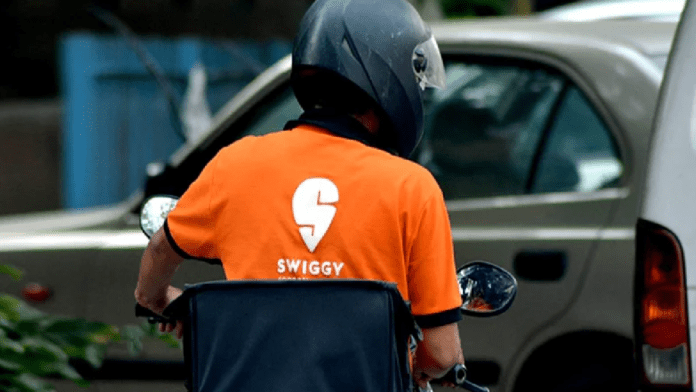
BigBasket, owned by Tata, Zepto backed by Nexus Venture Partners, and Instamart of Swiggy, have experienced an increase in orders in the Delhi-National Capital Region due to a strike by Zomato-owned Blinkit’s delivery personnel protesting against a change in their payout system.

The three quick-commerce platforms have witnessed a surge in daily orders ranging from 25% to 50%.

According to Hari Menon, the CEO of BigBasket, the company’s quick-commerce vertical, BB Now, experienced a surge of 46% in daily orders in Delhi and 61% in Gurugram and Noida on April 13th and 14th compared to the corresponding days in the previous month.

“Normally, we would have grown by 18% in the same period,” he told the press, adding that similar growth numbers were observed this week as well.

An industry leader stated that Zepto has experienced a 40% surge in orders, whereas two individuals affiliated with Swiggy claimed that Instamart’s daily orders have increased by over 25%. To cope with the high demand, Zepto has recruited more than 500 delivery personnel in Delhi-NCR, as per the industry executive.

A representative from Blinkit stated that almost all of its dark stores, which are used by executives to collect orders for delivery, had reopened on Monday evening. However, the Blinkit app indicated that several stores were unavailable across multiple areas in Gurugram, Delhi, and Noida. “We continue to engage with all delivery partners to help them understand the new pay-out structure,” the spokesperson said.

Blinkit announced earlier on Monday that it was closing down some of the dark stores in Gurugram and Delhi, citing the strike by its delivery executives. The executives are protesting against the payout structure, which they allege is causing a decline in their earnings and are demanding its rollback.

Multiple Blinkit delivery executives in Gururgam and Delhi reported receiving a message on the Blinkit delivery partner app, stating that certain stores were being permanently closed as no work had taken place there for the past 3-4 days. The message also mentioned that the registration of the delivery executives with the platform was being terminated.

Quick-commerce platforms differ from food delivery platforms in that gig-workers who deliver for them are limited to specific dark stores that they have partnered with, unlike food-delivery platforms where they can deliver across different localities.

Last week, delivery executives of Blinkit went on strike in Delhi, Gurgaon, Faridabad, Ghaziabad, and Noida in response to the company’s modification of the payout system. The previous flat rate of INR 25 per delivery (plus INR 7 during peak hours) was changed to a minimum of INR 15 per delivery along with a distance-based component, which led to the strike.

According to delivery executives in Delhi and Noida, some stores in these areas were gradually resuming operations as some riders returned to work and delivered orders during early morning and late-night hours, despite the ongoing strike. However, operations in these stores remained slow for most of the day.

In a statement early on Monday, a Blinkit spokesperson said, “Only Gurugram and Noida remain majorly affected currently. We are working with the authorities to ensure that those of our riders willing to work in these areas are allowed to work safely”.

ICICI Securities published a report on Monday projecting that Blinkit could face a 1% revenue loss during the April-June quarter due to the ongoing strike. As per the report, the impact on the parent company Zomato’s revenue is estimated to be 0.15%.

Read More: Zomato’s Blinkit to face Q1 FY24 revenue loss due to ongoing delivery executive strike: ICICI Securities

According to ICICI Securities, Zomato needed to modify the payout structure to control its costs. “We think the change in delivery fee structure indicates Zomato’s efforts towards cost control. In our view, this would allow Blinkit to increase the delivery radius for its existing dark stores and thus improve its network coverage with limited capex spends.”

“Given that the strike (at Blinkit) is happening in the national capital and has already garnered political attention, we think the company should try to resolve the issue at the earliest. This could be through a combination of clearer communication on the expected change in earnings for delivery executives and/or some concessions on the delivery fee,” it said.

Advertisement

Uttar Pradesh excise department breaks revenue record, surpasses INR 41 Crore mark in 2022-23 financial year

0

The excise revenue collection in Uttar Pradesh during the 2022-23 financial year is not only the highest in the state’s history, but it has also surpassed that of all other states in the country.

Compared to the previous fiscal year (2021-22) when the state registered a collection of INR 36,321 crore, the revenue during the 2022-23 financial year was 14% higher, totaling INR 41,250 crore.

According to officials, a noteworthy accomplishment in the past year was the absence of any fatalities in the state resulting from the ingestion of illicit alcohol.

An official stated that in the fiscal year 2017-18, the department initiated efforts to strengthen and enhance the flexibility of the excise policy in order to promote a more competitive market and increase revenue. During this period, Uttar Pradesh generated a revenue of INR 17,320 crore. The elimination of needless entry restrictions resulted in a rise in the number of brands of English liquor, beer, country liquor, and other alcoholic beverages, as per the official.

Benefiting from optimistic outlooks, the department accomplished the greatest compound annual growth rate in the nation over the last six years, attaining a mean annual growth of 15.5%.

Additional Chief Secretary, excise, Sanjay R Bhoosreddy said, “While revenue is one part, strong enforcement drives helped us in curbing bootlegging. The Russia-Ukraine war disrupted the supply of soda ash due to which a shortage of glass bottles persisted for three months last year. Manufacturing and supply of UP liquor (premium country liquor sold in glass bottles) came to a standstill, otherwise our revenues would have been slightly higher.”

According to the Excise Commissioner, Senthil C Pandian, the adoption of an end-to-end online system for approvals and compliance has increased transparency and enticed new firms and participants.

“Without the support from the top level in the government, bringing in reforms in the working of the department would not have been possible. All stakeholders can see the results now,” he said.

Half a decade ago, Karnataka led the country in revenue collection, accumulating INR 17,949 crore in the fiscal year 2017-18. By 2022-23, Karnataka is projected to generate INR 29,790 crore in excise duty. Meanwhile, Uttar Pradesh made a substantial leap from INR 17,320 crore to INR 41,250 crore during the same period.

Advertisement

Axis Bank follows PhonePe’s lead, set to launch ecommerce platform on ONDC

0
axis bank

Axis Bank joins the ONDC bandwagon, plans to launch ecommerce platform after PhonePe’s Pincode

Axis Bank is reportedly planning to launch a consumer-facing ecommerce platform on the Open Network for Digital Commerce (ONDC), as it jumps on the bandwagon of the network.

According to a report from MoneyControl, Axis Bank is set to launch a new ecommerce platform under its Grab Deals segment. Initially, the platform will offer groceries on the ONDC, but will eventually expand to include other segments.

As per the report, the ecommerce platform has been designed and will go live soon. It further stated that initially, the platform will be launched in select cities.

Axis Bank declined to comment on the matter.

It is worth noting that Axis Bank owns around 8% stake in ONDC. The bank is currently revamping the entire Grab Deals platform.

“The ONDC for groceries will still remain integrated even after Grab Deals goes live on app stores and going forward, the company might launch a separate app for the ONDC platform, too,” a source was quoted as saying. 

Just a few days ago, fintech unicorn PhonePe introduced a new application called Pincode on the ONDC, which aims to focus on hyperlocal commerce. This development follows closely on the heels of that announcement.

The ONDC platform was launched for beta testing in September of last year and has been dubbed as the UPI of the ecommerce industry. The platform is aimed at democratizing the ecommerce segment and is a government initiative.

The ONDC platform, supported by the Department for Promotion of Industry and Internal Trade (DPIIT), has been progressively expanding its reach to new cities and pin codes. Just last month, it entered the mobility space by partnering with Bengaluru-based auto booking app ‘Namma Yatri’.

According to ONDC CEO T Koshy, approximately 380 farmer producer organisations (FPOs) are at different stages of integration with the platform on the supplier side, with 80 FPOs already live on the platform. This was stated recently.

Among the companies and startups operating buyer-side apps on the ONDC are Paytm, PhonePe, IDFC, Mystore, Craftsvilla, and Spice Money.

It is worth noting that the ONDC platform is funded by a number of banks, including State Bank of India (SBI), Axis Bank, Kotak Mahindra Bank, HDFC Bank, ICICI Bank, and Punjab National Bank.

Advertisement