The company recorded a growth of 21.3% in total sales and 21.2% in domestic sales.
“I am pleased to share that we have continued to deliver robust sales growth this quarter, which is broad-based with a healthy balance of pricing, volume, and mix,” said Suresh Narayanan, Chairman and Managing Director, Nestle India. He added all product categories witnessed double-digit growth consecutively for the fourth quarter in a row.
“Confectionery, led by Kitkat and Munch, posted strong growth, supported by consumer-led campaigns, innovation, and engagement. Beverages turned in another quarter of robust growth and market share gains led by Nescafe Classic, Sunrise, and GOLD. Prepared Dishes and Cooking Aids delivered strong growth across all products in its portfolio. One can discern portfolio upgradation happening in this category,” Narayanan stated. Milk products and Nutrition continued its strong performance led by Milkmaid, the company said.
“Our out-of-home business continued to accelerate rapidly this quarter. We continued with portfolio transformation, continued expansion, route to market focussed on relevant geographies, channel prioritisation, and opening of new kiosks in key locations. Our strong performance in e-commerce continued with significant growth in quick commerce,” he noted.
According to Narayanan, the company has expedited its journey towards sustained growth in “Rurban” areas, along with maintaining strong momentum in metro and mega cities.
“Rural growth was also strong, secular, and robust, being volume-led, which gives greater confidence and impetus to our efforts to enhance our footprint,” he added. Meanwhile, exports also posted strong double-digit growth in global markets through both mainstream and ethnic channels.
Nestle India reported that it is observing initial indications of a decline in prices of edible oils, wheat, and packaging materials concerning the commodities outlook. However, it further added that the cost of fresh milk, fuels, and green coffee is expected to remain stable due to the ongoing rise in demand and fluctuations.
On April 12, the company’s board announced an interim dividend of INR 27.0 per equity share for 2023, resulting in a total payout of INR 2,603.2 million.
The #AdoptDontShop campaign will utilize an integrated marketing strategy, including digital platforms and advocacy efforts, to spread its message.
Bisleri Vedica, the Himalayan Spring Water brand, has recently introduced a new initiative named #AdoptDontShop. The goal of this campaign is to promote Bisleri Vedica’s values of compassion and kindness by advocating for animal welfare and giving a voice to those who cannot speak for themselves. Through this campaign, Bisleri Vedica has teamed up with PETA India to encourage animal lovers to consider adopting pets, particularly Indie dogs, which are equally lovable and charming as other dog breeds.
With the increasing incidence of urban individuals getting home pets, it is crucial to emphasize the importance of adopting Indie breeds, which are abundant in India. Indie dogs are well-suited to India’s tropical climate, low-maintenance, and hardy, as per expert studies. In addition, the campaign stresses the need to adopt Indie dogs from animal shelters to discourage unethical and inhumane pet breeding practices. By promoting the adoption of Indie dogs, animal lovers can contribute to reducing the use of cruel pet breeding methods and provide loving homes to these lovable and charming animals.
Commenting on the launch of the campaign, Jayanti Chauhan, Vice Chairperson, Bisleri International Pvt. Ltd., said, “Bisleri Vedica stands on the core philosophy of kindness and care. Through #AdoptDontShop, we aim to connect with the audience to expand on the narrative of loving all animals. Adopting a pet comes from a place of pure love and kindness, especially when you pick one from the street or shelter home. This cause is extremely close to me as I have been adopting pets since childhood. Through this campaign, we hope to strike a chord among the discerning audience, motivating them to adopt pets and not purchase them.”
The #AdoptDontShop campaign will utilize an integrated marketing strategy, including digital platforms and advocacy efforts, to spread its message. Brand ambassador Dino Morea has endorsed the adoption of furry companions, particularly Indie breeds, by offering advice and sharing his views in the latest issue of GQ India. The campaign’s objective is to increase awareness of the advantages of adopting Indie dogs and decrease unethical and inhumane pet breeding practices by encouraging people to adopt pets from shelters.
Brand Ambassador Dino Morea said, “Adopting pets, especially Indies, is the most heart-warming act. Indie dogs are the heartiest pets. They are low maintenance and more loving. There are many on our Indian streets, and we should take care of them. The idea of adopting a pet is because you want to share the love with that animal. So, why not adopt an Indie dog; they also make you a great human being.”
Commenting on the association, Sachin Bangera, Vice President of Celebrity and Public Relations PETA India, said, “People with the time, resources, love and patience can make an enormous difference by making a lifetime commitment to a cat or a dog adopted from an animal shelter or rescued from a perilous life on the streets. When you adopt from an animal shelter, you’ll not only save a life but also make a friend for life! PETA India is joining hands with Bisleri Vedica and Dino Morea urging people to help animals who are waiting in shelters and on streets to give them their loving homes.”
Bisleri Vedica’s partnership with PETA India will enable them to fund additional animal emergency services in New Delhi and Mumbai. The aim is to raise awareness of fostering homes for abandoned pets and create a collective consciousness of spreading the message of kindness towards animals.
Bisleri International Pvt. Ltd. has a legacy spanning over 50 years and has become one of India’s largest premium beverage companies. As the producer of the country’s highest-selling packaged drinking water, Bisleri adheres to a rigorous process that includes 114 quality tests and a 10-stage purification process. The company remains committed to its core value of providing consumers with pure, safe, and healthy drinking water.
Bisleri International boasts a strong presence, with 128 operational plants and a robust distribution network of over 6,000 distributors and 7,500 distribution trucks across India and neighboring countries. The company offers a diverse range of beverages suited for all occasions, including Bisleri Mineral Water, which promises goodness, trust, and purity, and Vedica Himalayan Spring Water, which provides a daily dose of health.
Additionally, Bisleri International has expanded its offerings to include a range of fun-filled refreshments, such as Limonata and Spyci, in multiple flavors. Customers can purchase these products, along with others, on Bisleri@Doorstep, the company’s e-commerce platform that ensures safe and uninterrupted delivery of its trusted brands to their doorstep.
At Bisleri International, the core values prioritize both growth and sustainability, emphasizing responsible practices throughout the business. Additionally, the company has taken on initiatives focused on supporting the community and protecting the environment.
Masqa has launched its first line of products, a portfolio of couverture chocolate products available in the form of bars, barks, and pebbles. (Representative Image)
Join Ventures, a company that specializes in direct-to-consumer (D2C) brands for celebrations, is expanding its portfolio with the launch of Masqa, a new D2C premium food brand in the F&B space.
Masqa, the new premium food brand from Join Ventures, has launched its first line of products, a portfolio of couverture chocolate products available in the form of bars, barks, and pebbles. The brand offers a variety of innovative flavors and fine culinary craftsmanship.
Masqa was established in December 2022 and boasts an assortment of chocolate products that feature timeless tastes found in milk chocolate bars, such as Classic Smooth and Chewy Crunch, as well as dark chocolate bars such as Dark Divine and Nutty Delight. Additionally, Masqa incorporates original flavors into their chocolates, including pink Himalayan salt, chili, and rose.
Commenting on the launch, Anuja Joshi, Co-founder, Masqa said, “With the need for diversity and the evolving preferences of customers, we at Masqa have embarked upon a journey to offer delectable chocolate products to cater to customers with an evolved taste.”
“The idea behind launching Masqa was to cater to an audience that appreciates richness, flavors, and textures of chocolates. Masqa, as a premium chocolate brand, aims to offer its patrons luxury and indulgence with every bite. At the same time, it encourages the consumers to try bold flavors of its offerings made of unique ingredients like chilli, Himalayan pink salt, blonde rose etc. Masqa’s vision for its consumers is to celebrate smaller moments and simplest pleasures of life by transforming chocolate consumption into an ethereal experience” she added.
By launching Masqa, Join Ventures demonstrates its firm commitment to bringing novel and superior products to the market.
Masqa’s latest selection will be accessible via their official website in the top 25 cities.
Jack Vereker (left) and Tom Bishop (right) in front of Sainsbury’s. (Photo credit: El Rayo)
El Rayo, a Tequila company operating in the UK, has partnered with Sainsbury’s to secure its first-ever listing at a major supermarket.
With its inception in 2019, El Rayo will now offer its Plata expression in 400 Sainsbury’s stores throughout the UK, priced at a recommended retail price of ÂŁ34.95 ($43.55). Notably, this Tequila will be the first at the supermarket to exceed the ÂŁ30 mark, according to El Rayo. The Plata variation is marketed to be consumed with tonic water, resembling the consumption of gin.
“There’s plenty to do there. We’ve only launched one SKU with them so obviously, it’ll be great to get a second SKU,” Co-founder Tom Bishop said regarding the partnership with Sainsbury’s.
“So, I think for us, the main message is just absolutely knock it out of the park with Sainsbury’s this year and see where that takes us.”
Bishop has outlined El Rayo’s plan for the upcoming year, emphasizing the significance of on-trade sales for the company.
“In terms of growth, those [on- and off-trade] are the two big focus channels for us – a combination of launching with Sainsbury’s and increasing distribution in the on-trade, both from a volume perspective but also from a footprint perspective.”
Additionally, El Rayo has recently introduced its products to Hammonds, a northern England-based beverage wholesaler, as well as two other wholesalers in Scotland. The Tequila brand is now available in more than 500 on-trade locations.
According to Bishop, El Rayo is currently offered through Amazon in Germany and via online retailer Tastillery outside of the UK. However, there are currently no definite plans to expand into additional international markets in the near future.
Regarding the concerns of high agave prices and potential supply chain disruptions within the rapidly growing Tequila market, Bishop mentioned that El Rayo has not been severely impacted.
“It’s been a challenge. I don’t think anyone in the Tequila category will tell you differently and, if they are, they’re probably lying,” Bishop said.
“It’s a challenge we’ve managed quite nicely as a brand. We probably came in at quite a nice time. I think there’s already been quite a significant increase, so, we could position the brand from a price perspective accordingly. And I think we’re probably not at the size where we’re massively overexposed.”
Bishop added, “Who knows what the next 12 months hold? I’m not going to sit here and say that it [price point] is set in stone because I don’t think anybody can but, at the moment, we’ve been able to resist any price increases, which potentially is not the same for every other brand, but we just feel quite passionately about our price point.”
At the start of this year, Bishop and co-founder Jack Vereker obtained an investment of ÂŁ870,000 and suggested that the company may seek additional funding around the same time next year.
Based on a report by GlobalData, it is anticipated that the Tequila and mezcal industry in the UK will experience a compound annual growth rate (CAGR) of 4.3% from 2021, leading to a market value of ÂŁ142.7m by 2026.
The company aims to finalize the setup of a 50,000-tonnes-per-annum french fries line and a 12,000-tonnes potato speciality line by December 2023. (Representative Image)
Himalaya Food International, a company in the frozen and canned food processing industry, is in the process of revitalizing its french fries business, as per the announcement made by its chairman on Monday.
To align with the potato season commencing in March 2024, the company aims to finalize the setup of a 50,000-tonnes-per-annum french fries line and a 12,000-tonnes potato speciality line by December 2023.
“These lines have the potential to add INR 700 crore to the top-line at full capacity,” said Himalaya Foods International Ltd (HFIL) Chairman Man Mohan Malik in a letter addressing shareholders.
Previously, HFIL had entered into a joint venture (JV) with Simplot USA. However, a disagreement arose between the two JV partners, and the matter was taken to arbitration in Singapore.
According to reports, the American JV partner has claimed a refund of USD 14 million in relation to the sale of the french fries line and potato specialty lines.
A ruling from the tribunal has mandated Simplot to return the equipment for both the french fries and potato specialty lines, while HFIL has been instructed to pay a sum of USD 3.96 million.
“Though we are confident to neutralise any claims raised by the failed JV partners due to their own repudiation of the Singapore award by defying the ‘time bound’ return of the machinery, we are geared up to generate and save funds for any adverse judgments,” he said.
In a one-time settlement (OTS) agreement, the company has resolved outstanding debts with a consortium of banks by paying a total of INR 82.80 crore.
“We have already paid INR 46.75 crore, including Rs 10 crore interim relief from the insurance company. We plan to pay the balance amount in the next four months and have aligned the balance claim amount from insurance and the proceeds from the sale of Rajasthan land to become debt-free company by October 2023,” he said.
At present, Himalaya Food International’s primary focus is to reinforce working capital, generate funds from non-core assets, and fulfill a backlog of export orders.
“French fries and other fried and frozen potato products have a great demand in India and worldwide. Gujarat has become the hub for the exports of potato-based products due to massive contract farming and suitable climatic conditions,” he said.
Instead of relying on traditional sources in Europe and North America, the entire South-East Asia region, along with Japan and the Middle East, is now procuring their french fries from Gujarat.
FMCG and beverage giant, Coca-Cola, reported that during Q1, it recorded almost 3 billion transactions in India. The majority of these transactions were driven by affordable single-serve packages and entry-level packs for at-home consumption, as stated in the company’s quarterly results announcement on Monday.
The beverage retailer not only utilized entry-level packs, but also implemented focused promotions on bulk packages to enhance its household penetration, as per available information.
In anticipation of the summer season, Coca-Cola announced that it had widened its reach by adding approximately 300,000 stores and about 40,000 coolers in India, in partnership with its bottling affiliates.
“The company grew its business in the first quarter in India by adding retailers, investing in cold-drink equipment, and offering the right products at the right price points to recruit consumers,” Coca-Cola said in its earnings statement.
In the Asia Pacific region, the FMCG giant observed a 10 percent surge in unit case volume, driven by China, India, and Australia. Nevertheless, the company reported a 15 percent decrease in its operating income in the same region, attributing it to elevated operating expenses.
“We are off to a great start,” said James Quincey, Chairman, and CEO, The Coca-Cola Company in an earnings call adding that while macro environment concerns remain, the company will focus on adapting to consumer needs and adding top-line growth.
The company’s net revenue increased by 5 percent, amounting to USD 11 billion, as reported.
TagZ, India’s largest popped chips maker, has partnered Rajasthan Royals cricket team to launch co-branded products and snack packs for this season, part of its wider strategy to expand its portfolio with innovative flavours.
As an official licensee partner of the Royals, TagZ has a launched Rajasthan Royals X TagZ hamper exclusively on ecommerce such as Swiggy, Instamart, Blinkit and Zepto. In addition, exclusive hampers with limited edition Royals merchandise such as Rajasthan Royals jerseys and beer mugs will be available exclusively online on TagZ’s official site www.tagzfoods.com
TagZ Foods, established in 2019 by Anish Basu Roy and Sagar Bhalotia, is India’s first brand to manufacture popped potato chips with 50% less fat, premium bar snacks, and a selection of international gourmet dips.
The Bengaluru-based TagZ Foods counts 9 Unicorns, Dexter Angels, Agility Ventures, Venture Catalysts, along with Namita Thapar, Ashneer Grover, Arjun Vaidya as it’s investors is planning expand its product line, production capacity and strengthen its distribution to other cities in the country.
The startup utilizes cutting-edge food technology to make snacking experiences such as potato chips that claim to have no cholesterol, no transfat, no artificial colors, or preservatives and centre-filled hemp cookies.
Commenting on the launch, Anish Basu Roy, Founder, TagZ, said, “TagZ represents the young consumers that are looking for better snacking options. As a challenger brand in the chips and wafers market, we believe Rajasthan Royals holds that special place amongst the cricket fans. The Royals also represent never losing without a fight, being resilient and TagZ being a GenZ brand resonates with these values. We are excited to partner with Rajasthan Royals and hope to provide its fans with the most royal snacking experience through our range of popped potato chips with 50% less fat, hemp cookies and gourmet dips.”
TagZ will also be launching its Rajasthan Royals co-branded masala and cream onion flavours in single-serve packs priced at INR 30 across its 5000 stores in top 20 cities.
Zameer Kochar, Chief Marketing Officer, Rajasthan Royals, said, “We are always trying to find innovative ways of engaging with our supporters and enhancing their matchday experiences. This association with India’s first and largest popped chips maker, Tagz, ensures that we are also promoting a healthy lifestyle amongst our fans given the wide range of co-branded products that are on offer which provides them with refreshing snacking options while they cheer for us.”
QR code menus have become a popular trend in the restaurant industry, especially during the Covid-19 pandemic, as they reduced the need for physical menus and promote touchless ordering. This was possibly the biggest opportunity for technology led players to contribute to one of the largest industries globally!!
While it did help the industry during the period, today, many restaurants in India are losing billions because of QR code menus.
Given the shift in the market tendencies in the last couple of years, the expectation has been that the world will become one digital ecosystem. While that is true, humans crave physical interactions. Touch and feel is an important part of our existence. While people adapted to various digital tools to tide over Covid, in the post-Covid world, as the dust settles people are back to their older ways of doing things. For the younger audiences some of this has stayed relevant, for people in their mid 30s, tier 2 & 3 India and beyond, they have continued to look for older world mechanics, like our dear old hard bound menu!!!
Ever since the industry took shape, we have been trained to deal with hard bound menus to make our food choices. A habit, which we continued to live with for the longest time. To believe that tech could disrupt this is a misconception that saw growth of many brands and believers in the tech world with little understanding of human behaviour.
The belief that the world will change forever is a misnomer.
Many organizations and their investors who believed that the shift is permanent are today struggling and looking to make most of their investments during Covid period sustainable.
The fundamental tendency of any large uneducated market is that many people in India are not familiar with QR codes. While companies like BharatPe have made the exercise very easy, when it comes to eating out the world looks for experience. Also the fact that scan or menus is not as seamless as payments, has lead to a disgruntled consumer.
Digital menus are an effort!!! Players offering these solutions do not believe in these theories. They believe the shift is permanent and here to stay!!!
The use of technology, while critical, is a difficult pill to swallow beyond payments. A change of habit which takes them away from how they have been designed to think and operate. The fact that companies like Zomato have cautiously chosen not to fiddle with the menus of any listed restaurant on the app is a reflection of the role all these small part play in the overall conversion cycle of a restaurant business. While this could look like a wrong move to the believers in the tech world, it’s a sharp reflection of observational brilliance and a conscious business call by the leadership. The fact that food is a creative experience, and the menu being the 1st step of engagement, any change in the basic engagement of the consumers behaviour can set a discomfort which could stay with the customer for a much longer time. The hero, which is the food, can lose its significance with a small push which the customer is not comfortable with.
Also the fact that many restaurants have not implemented the QR code menus correctly, constant issues with flipping the page, instructions on how to scan the code, lack of trained staff to help customers who are having trouble with the QR code menu has lead to frustration among customers and may deter them from returning to the restaurant.
Finally, some customers may simply prefer physical menus, as they find it easier to browse and compare items. This preference can result in a negative customer experience, which can harm the restaurant’s reputation and lead to a decrease in business.
While QR code menus can be a useful tool for restaurants, they can also lead to financial losses if not implemented correctly. Restaurant owners should consider their customer base and resources before implementing QR code menus and ensure that they provide clear instructions and staff training to avoid frustration among customers.
When it comes to achieving gym goals, we often focus on what exercises to do or how many reps to perform. However, one aspect that is often overlooked is diet. A proper diet is essential for achieving gym goals, whether it be muscle building, weight loss, or improved athletic performance. One diet that has been gaining popularity in recent years is flexitarianism. This article will explain what flexitarianism is, how it can help you achieve your gym goals, and the benefits of following a flexitarian diet.
What is Flexitarianism?
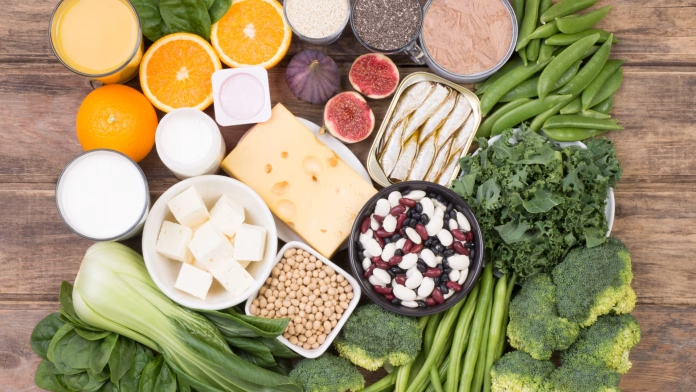
Flexitarianism is a plant-based diet that includes occasional consumption of meat and other animal products. The diet is primarily focused on plant-based foods such as fruits, vegetables, whole grains, and legumes, with small amounts of animal products added in for taste or nutritional benefits.
Flexitarians typically consume meat or animal products a few times per week, while the rest of their meals are plant-based. This diet is considered to be a flexible and sustainable approach to eating that promotes good health and well-being while also reducing environmental impact.
How Flexitarianism can Help you Achieve your Gym Goals
Flexitarianism can be beneficial for achieving gym goals in several ways, depending on your specific fitness objectives. Here are a few ways that flexitarianism can help you achieve your gym goals:
1. Flexitarianism for Muscle Building:
Muscle building requires a consistent supply of protein, and flexitarianism can provide that protein from both plant and animal sources. The high fiber content in plant-based foods can also aid in digestion and prevent bloating, making it easier to consume larger meals and achieve a calorie surplus for muscle gain.
In addition, the plant-based foods consumed in a flexitarian diet are often high in vitamins and minerals, which are essential for muscle recovery and overall health. For example, leafy greens are rich in iron, which is necessary for carrying oxygen to the muscles and promoting muscle growth.
2. Flexitarianism for Weight Loss:
Flexitarianism can also be beneficial for weight loss. Plant-based foods are often lower in calories than animal products, and the high fiber content can promote feelings of fullness, reducing the desire to overeat. A flexitarian diet can also promote healthy weight loss by encouraging a reduction in processed foods and refined carbohydrates, which can contribute to weight gain.
In addition, the high nutrient content in plant-based foods can help support an active lifestyle by providing energy and essential vitamins and minerals.
3. Flexitarianism for Improved Athletic Performance:
For athletes, a flexitarian diet can provide the necessary nutrients and energy to support training and competition. Plant-based foods are often rich in antioxidants, which can help reduce inflammation and support recovery after exercise.
Flexitarianism can also promote a healthy gut microbiome, which is essential for digestive health and nutrient absorption. The high fiber content in plant-based foods can promote healthy gut bacteria, which can improve nutrient absorption and support overall health and well-being.
Benefits of Flexitarianism:
1. Improved Nutrient Intake:
One of the main benefits of following a flexitarian diet is that it can improve your nutrient intake. Plant-based foods are rich in essential vitamins, minerals, and antioxidants that are important for optimal health and muscle growth. By incorporating more fruits, vegetables, legumes, and whole grains into your diet, you can ensure that your body is getting all the necessary nutrients it needs to function at its best.
2. Reduced Inflammation:
Eating a diet high in animal products has been linked to increased inflammation in the body, which can lead to a variety of health issues, including joint pain and chronic diseases. On the other hand, plant-based foods have been shown to have anti-inflammatory properties, which can help reduce inflammation and promote recovery after workouts.
3. Better Digestion:
Plant-based foods are also high in fiber, which is essential for good digestion. A diet rich in fiber can help regulate bowel movements, reduce bloating and constipation, and improve overall gut health. This can be particularly important for athletes who need to ensure that their digestive system is working efficiently to absorb all the nutrients they need to support muscle growth and recovery.
4. Lower Cholesterol:
Following a flexitarian diet can also help lower your cholesterol levels. Plant-based foods are naturally cholesterol-free, and studies have shown that reducing animal product consumption can lead to lower levels of LDL (bad) cholesterol in the body. This can be beneficial for athletes who need to maintain healthy cholesterol levels to prevent heart disease and other health issues.
5. Sustainable:
Finally, following a flexitarian diet can be more sustainable than a traditional omnivorous diet. Animal agriculture is a significant contributor to greenhouse gas emissions and environmental degradation. By reducing your meat consumption, you can help reduce your carbon footprint and support a more sustainable food system.
Adopting a flexitarian diet can be an effective way to support your gym goals. By incorporating more plant-based foods and reducing your intake of animal products, you can improve your overall health and fitness while still providing your body with the nutrients it needs to perform at its best.
A flexitarian diet can also be flexible and customizable, making it a sustainable and realistic approach for many people. However, it’s important to remember that every individual’s dietary needs and goals are unique, so consulting with a qualified nutrition professional can help ensure that you’re making the best choices for your specific situation. With the right approach, a flexitarian diet can be a valuable tool in achieving your fitness goals while also promoting a healthier lifestyle overall.
We use cookies to ensure that we give you the best experience on our website. If you continue to use this site we will assume that you are happy with it.