Founded by Pravas Chandragiri, a 20-year-old entrepreneur, Soptle is a SaaS-based B2B retail commerce platform designed to assist consumer goods companies with product distribution through its extensive network.
Soptle, a retail platform that focuses on fast-moving consumer goods (FMCG), has recently secured $1 million in funding. The investment round was led by Kube VC and We Founder Circle, and also included participation from Iceland Venture Studio (IVS), Nyra Ventures, the founders of Dunzo, Jar, Bijak, 888VC, and the managing partner of Rocketship.vc.
Kube VC and Dunzo founder Ankur Agarwal, who are existing investors, also took part in the funding round.
Soptle plans to utilize the funding to expand its network of retailers and manufacturing partners throughout India. The company aims to introduce new products and enhance its technology to enable local retailers and manufacturers to access larger markets and expand their services in various regions across India.
Pravas Chandragiri, Chief Executive and Founder of Soptle said, “Over the last two years, we have worked hard to bring together 80,000 kirana store owners and retailers across India on our platform who are now using our technology for their geographical expansion. We strongly believe technology can help us realise the potential of the FMCG industry.”
Founded by Chandragiri, a 20-year-old entrepreneur, Soptle is a SaaS-based B2B retail commerce platform designed to assist consumer goods companies with product distribution through its extensive network. The platform was launched in May 2022.
By offering a nationwide distribution network at zero fixed cost, Soptle empowers FMCG manufacturers to increase their revenue. At the same time, the platform enables retailers to access products with significantly higher margins, three to four times more than the average, along with financing options to grow their business.
“With this innovative, tech-led, manufacturer-centric and distribution-first model, Soptle can create a next generation B2B commerce platform that increases value realisation and income for manufactures. We are delighted to support Soptle which is enabling manufacturers better access to market and distribution of their product using Soptle’s strong tech infrastructure,” said Faiz Mayalakkara, partner at Kube VC.
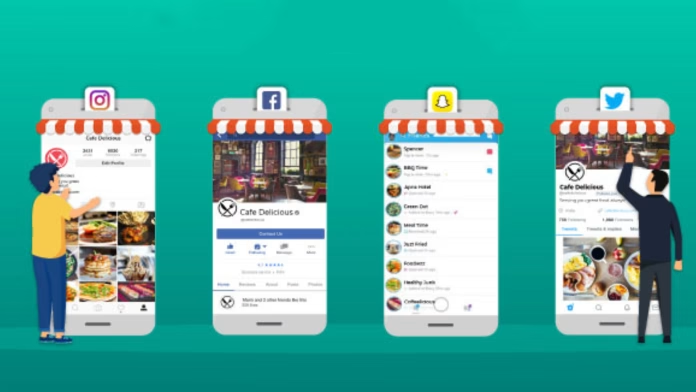
In today’s digital age, social media has become an essential tool for businesses to connect with their audience and promote their brand. The food industry is no exception, as restaurants, cafes, and other food businesses have turned to social media to reach a wider audience and showcase their products. However, with so many social media platforms available, it can be challenging to determine which one is right for your food business.
Social media has become an essential tool for businesses to reach their target audience and promote their products or services. In the food industry, social media can be especially effective in showcasing menu items, promoting new dishes, and engaging with customers. It allows businesses to share their brand story, connect with their audience on a personal level, and ultimately drive sales.
Understanding their social media preferences refers to identifying the social media platforms that your target audience uses the most. This is an important step because it helps you focus your social media efforts on the channels where your target customers are most active, which can lead to higher engagement and ultimately more conversions.
It’s also important to note that different social media platforms appeal to different demographics, so understanding your target audience’s age, gender, interests, and geographic location can help you determine the best platforms to use for your food business.
When choosing a platform, it’s important to consider how each platform aligns with your content goals. For example, if you want to showcase high-quality images of your food and restaurant, Instagram would be a good choice. If you want to provide helpful cooking tips and recipes, Facebook and Pinterest would be suitable options. If you want to engage with customers in real-time and provide updates on your restaurant, Twitter would be a good choice.
Altogether, it is a difficult and confusing decision that will always make you feel the Fear of Missing Out. Hence, we will discuss seven essential elements to consider when choosing the right social media platform for your food business.
1. Define Your Target Audience
The first step in choosing the right social media platform is to define your target audience. Who are you trying to reach? What age group do they fall into? What are their interests and hobbies? By understanding your target audience, you can determine which social media platforms they are most likely to use and tailor your content to their preferences.
2. Identify Your Goals
Before choosing a social media platform, you should identify your goals. Are you looking to increase brand awareness? Do you want to drive traffic to your website or physical location? Are you interested in generating leads and sales? Once you have identified your goals, you can choose a social media platform that aligns with your objectives.
3. Consider Platform Demographics
Different social media platforms have different demographics. For example, Facebook has a broad user base that includes all age groups, while Instagram is popular among younger generations. LinkedIn is ideal for B2B businesses, while TikTok is popular among Gen Z. By understanding the demographics of each platform, you can choose the ones that are most relevant to your target audience.
4. Evaluate Content Types
Social media platforms vary in the type of content they support. Instagram, for example, is a visual platform that supports photos and videos, while Twitter is text-based and limits the length of posts. Pinterest is ideal for businesses with visually appealing products, while LinkedIn is better suited for professional content. By evaluating the types of content supported by each platform, you can choose the ones that are most suitable for your food business.
5. Analyze Your Competitors
It’s always a good idea to analyze your competitors’ social media presence. Which platforms are they using? What type of content are they posting? How often are they posting? By analyzing your competitors, you can gain valuable insights into which platforms and content types are most effective in your industry.
6. Determine Your Budget
Social media platforms offer various advertising options, including paid ads, sponsored content, and influencer marketing. Before choosing a platform, you should determine your budget for social media marketing and evaluate the cost-effectiveness of each platform’s advertising options.
7. Monitor and Measure Results
Once you have chosen a social media platform, it’s essential to monitor and measure your results. Use analytics tools to track engagement, reach, and conversion rates. By analyzing your results, you can optimize your social media strategy and ensure that you are reaching your target audience effectively.
Selecting the right social media platform is crucial for the success of any food business. By understanding your audience, and the features of different platforms, and aligning them with your content goals, you can effectively reach and engage with your target customers. You can ensure that your social media strategy is effective and tailored to your business’s needs.
The video aims to portray a unique food delivery platform that is entirely developed by mothers. (Screengrab from video)
In a heartwarming tribute to mothers around the world, food delivery giant Zomato has rebranded itself as ‘Mazoto’ on the occasion of Mother’s Day. With a new brand video that showcases the selfless love and sacrifices made by mothers, the company aims to underscore the idea that ‘Ma’ always takes precedence. As families celebrate this special day dedicated to the most important woman in their lives, Mazoto’s gesture serves as a touching reminder of the unwavering bond between a mother and child.
The video aims to portray a unique food delivery platform that is entirely developed by mothers. The interface showcased in the video closely resembles Zomato, but with a distinct twist. Everything is “Mo(m)dified,” featuring exclusive promo codes like ‘CLEANROOM25’ for a generous 25% discount and a minimum order requirement of more than one roti.
Although the video maintains a lighthearted tone, it effectively communicates the profound warmth associated with a mother’s love language: food.
As a complement to the video, Zomato will be launching a captivating feature called “ChildGPT” that aims to take customers on an emotional journey, adding an extra layer of engagement to the platform.
Starting on Mother’s Day (May 14th), Zomato’s app will offer a special feature for a limited time. Customers will have the opportunity to participate by answering three easy questions, enabling them to create a delightful drawing and a short poem from the perspective of a toddler. This interactive activity invites users to tap into their imagination and express their creativity, providing a unique and heartfelt experience for both the users and their mothers.
Deepinder Goyal, Chief Executive Officer, Zomato said, “Mothers are special. To you, to me, to us all. The ‘Mazoto’ campaign is our ode to all mothers, and we wish them ‘Happy Mother’s Day’ in the style we love and enjoy.”
The FMCG conglomerate, Dharampal Satyapal Group (DS Group), is set to open the first exclusive brand outlet of Swiss chocolate brand Laderach in Delhi this July.
The boutique will be constructed as a premium store following the directives provided by Laderach headquarters.
Earlier this year, DS Group, the parent company of well-known brands like Pulse, Rajnigandha Silver Pearls, Chingles, and Paas Paas, formed a partnership to introduce the premium chocolate brand Laderach in India. DS Group will handle the repackaging and distribution of the Swiss-made products imported into the country.
Rajiv Kumar, DS Group’s Vice Chairman, said, “According to the reports, the per capita consumption of chocolates in India is too low as compared to the global standards. So, on similar lines chocolate consumption is expected to further grow in India.”
He emphasized that the luxury market in India is predicted to expand at a faster pace due to the rapid adoption of luxury.
Over the next two years, DS Group and Laderach intend to launch roughly 5-7 stores in key metropolitan cities across India. The brand will not only be available through exclusive outlets but will also be sold through shop-in-shops, e-commerce platforms, and airport stores targeting India’s premium audience.
In India, the retailer is also exploring opportunities in the corporate, wedding, and event gifting sectors for Laderach.
Without sharing any revenue targets, Kumar said, “Our focus is never primarily on the numbers. We will instead be focusing on brand building and distribution. The larger aim is to keep the exclusivity of the brand intact.”
DS Group has expanded its premium product portfolio in the market by adding Laderach to its brand lineup. The company’s existing premium brands consist of Le Marche, L’Opera, Uncafe, and Les Petits.
In regards to the strategy of selling a premium brand in a price-sensitive market like India, Kumar stated that price is not an issue for the company, and their aim is to provide the highest quality to their customers.
Citing the FMCG giant’s previous launches, he said, “We were the first ones to move the 50 paisa candy market to INR 1. Now everybody is selling at INR 1. In a way, we cater to the premium segment.”
According to Kumar, DS Group has plans to develop or introduce various categories that cater to all market segments, going beyond just the premium audience.
The company's Profit Before Exceptional Item and Tax stood at INR 428.06 crore. (Representative Image)
Colgate-Palmolive India Ltd, a leading FMCG company, announced a 2.27% drop in net profit to INR 316.22 crore for the fourth quarter that ended on March 31, 2023. This decline was primarily due to a one-time tax reversal. In the corresponding period last year, the company had reported a net profit of INR 323.57 crore. CPIL disclosed this information in a BSE filing.
During the quarter under review, the sales of the company rose by 3.9% to INR 1,341.69 crore, as compared to INR 1,291.21 crore in the corresponding quarter of the previous year.
The company’s Profit Before Exceptional Item and Tax stood at INR 428.06 crore.
“Excluding the impact of one-time tax reversal in the prior year quarter, the net profit grew by 8.5 per cent for the quarter,” it said.
CPIPL recorded a 2.82% rise in its total expenses during Q4/FY23, which amounted to INR 942.92 crore, compared to INR 917.01 crore in the same period the previous year.
In the March quarter, CPIL’s total income increased by 4.64% to reach INR 1,370.98 crore.
Commenting on the results Managing Director Prabha Narasimhan said, “The Company has delivered domestic growth of 5.4 per cent, with toothpaste delivering high single-digit growth despite continuing sluggish demand trends in the category, especially in rural.
“This has been driven by our strategy to increase consumption, innovation focussed on delivering high-quality science-led products and premiumisation. We remain fairly optimistic that the overall category growth will improve in the coming quarter,” she added.
CPIL’s net profit for the fiscal year ending March 2023 decreased by 2.89% to INR 1,047.14 crore, compared to INR 1,078.32 crore in the previous fiscal year.
In FY23, its sales rose by 2.39% to INR 5,187.86 crore, compared to the previous fiscal year.
CPIL’s board has sanctioned a second interim dividend of INR 21 per equity share with a face value of INR 1 for FY23. This brings the total dividend for FY23 to INR 39 per share.
On Friday, Colgate-Palmolive India Ltd’s shares closed at INR 1,626.30, indicating a 0.12% increase from the previous day’s closing price.
In a first for its kind in India, the state of Haryana is set to allow large offices to serve beer, wine, and ready-to-drink low-content alcoholic beverages within their premises from next month. The move has been hailed as “transformational” by some insiders in the alcobev industry.
Haryana’s council of ministers has given the green light to the state’s liquor excise policy for 2023-24. Under this policy, corporate offices in Haryana with a minimum covered area of 100,000 square feet in a single premises and at least 5,000 employees will be allowed to possess and consume alcohol.
From June 12 onwards, the policy will not only permit corporate offices in Haryana to serve alcohol, but also lower excise duty on mild beer, wine, and draught beer. Additionally, it will reduce the annual fee for bar licenses in restaurants, pubs, and cafes.
According to executives in the alcobev industry, the state’s decision will redefine the drinking culture in Gurgaon, which is home to some of the largest corporate offices in India.
“We will be working with large corporates to set up infrastructure and operate these licences,” said Rahul Singh, Founder of beer and pub chain Beer Cafe.
According to him, having “clear-cut guidelines” regarding the size of the office and the minimum number of employees would prevent the license from being misused.
“The reduction in annual fee for bar licences in restaurants, pubs and cafes will help our industry to bounce back stronger from the unprecedented pandemic infused disruptions,” Singh added.
AB InBev India’s Vice President of Corporate Affairs, Anasuya Ray, who heads the Indian unit of the world’s largest brewer responsible for the production of Budweiser beer, welcomed the decision to impose lower taxes on low-alcohol beverages like beer, as compared to hard spirits.
Maximum impact in Gurgaon:
“The policy will also improve ease of doing business in the state and enable consumers to opt for premium brands with improved retail access,” she said.
Industry executives have stated that the growth of the alcobev category is hindered due to heavy restrictions and multiple levels of taxation imposed by different states.
Although the policy applies to the state of Haryana, executives have noted that its maximum impact would be felt in Gurgaon, which houses a large cluster of multinational and domestic companies across various sectors such as technology and IT services, automobiles, consumer goods, and consultancy firms.
A senior executive from a prominent technology company based in Gurgaon mentioned that the new policy would particularly benefit offices where employees work in shifts and late hours. However, he preferred to remain anonymous as he is not authorized to speak on behalf of the company.
According to Ashish Kapur, the Founder of upscale bar chains Whisky Samba and Wine Company, the newly introduced excise policy in Haryana will boost the demand for the entire category of alcoholic beverages in the state.
“Reduction in excise on low-alcohol drinks and ready-to-drink beverages will fuel demand from young consumers and encourage so many newer entrepreneurial brands, as well as categories such as premium wines,” he said. “Also, lowering excise fee for bars will encourage people to drink in organised premises and hence will promote responsible drinking.”
Industry executives have appealed to other states to adopt the Haryana policy to encourage the consumption of alcoholic beverages in general.
“States have typically increased excise on liquor; that’s killing the ecosystem. What needs to be done is lower the excise duties and promote responsible drinking,” Kapur said.
The policy incorporates significant provisions for small-scale breweries, and mandates that caution signboards must be displayed in hotels, pubs, and restaurants serving alcoholic beverages.
Nita Kapoor, Chief Executive of International Spirits and Wines Association of India (ISWAI), said the policy needs to also include digitisation. “Digitisation is a key industry ask, especially with respect to label and pricing approvals. Currently, these are done manually and are time-consuming, leading to operational delays,” she said.
As per the policy, a canteen or eatery seeking a license must have a minimum area of 2,000 square feet, and the license will be granted upon payment of a fixed annual fee of INR 10 lakh.
Despite the increasing excise revenue year after year, the wining and dining scene in Uttar Pradesh appears to be on the decline. Over the past three years, the number of restaurants, bars, hotels, and clubs that serve alcohol has been consistently decreasing, which is contrary to the widespread belief.
During the fiscal year 2021-22, Uttar Pradesh had a total of 734 establishments serving alcohol. However, in the next fiscal year (2022-23), this number decreased to 711. Interestingly, in the current fiscal year, only 638 licenses have been granted to hotels, restaurants, and clubs that offer alcoholic beverages.
The excise department has reached out to stakeholders for their input, as rising operational and rental costs are not the only concerns. Obtaining a fire safety NOC has become a major hurdle, particularly after the tragic fire incident at a Lucknow hotel on September 5th of last year, which claimed four lives.
According to industry insiders, the cost of obtaining a license to set up a bar in Uttar Pradesh is significantly higher than in other states.
Starting from this fiscal year, the excise department has introduced a special category for issuing bar licenses. Under this category, a minimum license fee of INR 15 lakh is required for bars located within a 5-km radius of the municipal corporations governing Lucknow, Ghaziabad, Noida, and Greater Noida (governed by industrial authorities). Prior to the 2022-23 fiscal year, the fee for such establishments was INR 10 lakh.
As the department prioritized generating higher revenues, bar owners began to withdraw from the industry.
Owner of a microbrewery-cum-bar located in the Summit building of Gomtinagar, Lucknow, Himanshu Dhanuk said, “I am facing a double whammy of sorts. License fee has gone up substantially and so has the duty on brew produced in the microbreweries. Four bars have already shut down in the Summit building in the past few months and it is becoming financially unviable to continue business.”
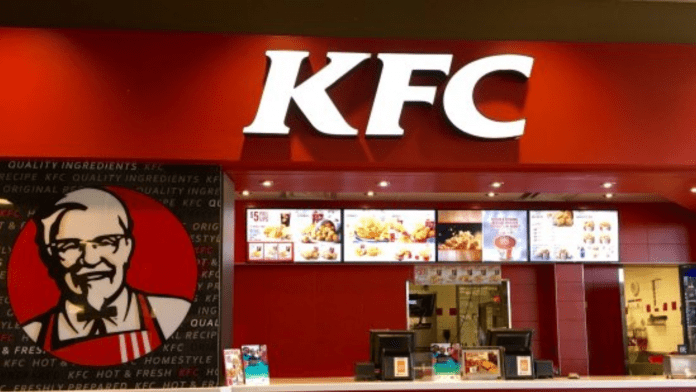
Sapphire Foods India, the company that runs KFC and Pizza Hut restaurants, reported a 57 percent drop in earnings for the fourth quarter on Friday. The decline was driven by higher expenses and intense competition, as well as a decrease in discretionary spending by consumers during this time.
According to an exchange filing, the franchisee of Yum Brands based in the United States reported that their profit before tax dropped to INR 122.8 million (equivalent to USD 1.50 million) in the quarter ended March 31, down from INR 285.9 million from the same period a year ago.
Consumers in the world’s most populous country have been feeling the inflation pinch in the last few quarters, as prices of essentials have shot up, leaving them with little money to spend on clothing and dining out.
During the fourth quarter, Sapphire Foods’ Pizza Hut restaurants experienced a 4 percent decline in same-store sales.
Jubilant FoodWorks, which operates Domino’s Pizza in India, is among the local players that Sapphire Foods’ pizza chain has been facing stiff competition from, similar to other countries.
To increase sales, Sapphire is ramping up its marketing efforts for Pizza Hut in the April-June quarter, which includes the launch of 10 new pizza varieties.
Sapphire witnessed success in its KFC business by increasing marketing efforts, which resulted in a 2 percent growth. The introduction of new menu items like popcorn-nachos, a bigger advertising budget, and partnerships with multiple celebrities in recent months contributed to this growth. As a result, Sapphire is now looking to replicate this success with Pizza Hut by launching new menu items and increasing marketing efforts.
As a result of Sapphire’s initiatives such as introducing new menu items and boosting marketing, the company saw a revenue from operations increase of almost 13 percent in the quarter, reaching INR 5.6 billion. Furthermore, Sapphire has been opening new restaurants to expand its business.
Despite the increase in revenue, Sapphire could not offset the impact of a 17 percent surge in total expenses.
Westlife Foodworld, a rival company that manages the McDonald’s fast-food chain in west and south India, announced a fourth-quarter profit increase that was lower than anticipated due to inflation earlier this week.
Sapphire’s shares, which operate restaurants not only in India but also in Sri Lanka and the Maldives, fell slightly and have declined almost 4 percent this year.
Roti is a staple food in many parts of the world, particularly in South Asia and the Caribbean. It is a flatbread made from wheat flour that is usually eaten with curries or used to make wraps. Rotis are a versatile food that can be eaten for breakfast, lunch, or dinner, and they are often served at special occasions and festivals.
However, it’s not uncommon to have leftover rotis after a meal. Many people simply toss them out, but there are actually many ways to use leftover rotis to transform your meals and reduce food waste. In this article, we will explore some mind-blowing ways to use leftover rotis in your cooking.
Leftover Rotis: Don’t Discard Them! Here’s Why
Many people believe that consuming stale food can be harmful to health and may even cause food poisoning. However, this is not always true, especially when it comes to food items made from wheat flour, such as roti or chapati. In fact, stale roti or baasi roti can offer more nutritional benefits than you might think. According to experts, leftover rotis can provide benefits for diabetes and digestion if consumed correctly. It is recommended to consume them within 12-15 hours of preparation and freeze them for best results.
Nutritionists suggest having leftover or stale rotis for breakfast. According to Shruti Sharma, a Bariatric Counselor and Nutritionist at Jaypee Hospital, it’s preferable to eat stale rotis with milk rather than subzi since milk has amazing properties.
If you’re planning to consume leftover food, it’s important to store it properly in airtight containers in the refrigerator and to consume it within a day or two.
Here are the 5 benefits of consuming leftover rotis:
Easier to Digest: Stale rotis are easier to digest compared to fresh ones. Leaving the rotis to sit for some time makes the starch in them more accessible to the digestive enzymes, making it easier for the body to break down the roti and extract its nutrients. This makes stale rotis a great option for those who have digestive issues or a sensitive stomach.
High in Fiber: Stale rotis are an excellent source of fiber, which is essential for maintaining a healthy digestive system and regulating bowel movements. Stale rotis contain more fiber than fresh rotis, as the starch in the roti begins to break down over time, creating more fiber. This makes stale rotis a great option for those who want to increase their fiber intake.
Low in Calories: Stale rotis may have a lower calorie count compared to fresh rotis. The process of the starches in the roti breaking down over time can lead to a reduction in calories. This makes baasi rotis a great option for those who are watching their calorie intake or trying to lose weight.
Rich in Resistant Starch: Resistant starch is a type of carbohydrate that resists digestion and can help regulate blood sugar levels. Freezing leftover rotis overnight can increase the amount of resistant starch in them, making stale rotis a great option for those with diabetes or those who want to regulate their blood sugar levels.
Versatile: Stale rotis can be used in a variety of dishes. They can be heated up and served with curry or used as a base for a wrap or sandwich. They can also be crushed into crumbs and used as a coating for fried foods. This versatility makes stale rotis a great option for those who want to experiment with different dishes or use up leftover rotis in creative ways.
Roti Chips
If you have leftover rotis that are starting to go stale, don’t throw them out just yet! You can easily turn them into crispy, flavorful chips that make a great snack or appetizer. Here’s how to make roti chips:
Ingredients:
Leftover rotis
Salt
Cooking oil
Instructions:
Preheat your oven to 350°F (180°C).
Cut the leftover rotis into bite-sized pieces.
Arrange the roti pieces on a baking sheet in a single layer.
Brush the roti pieces with a little cooking oil and sprinkle with salt.
Bake the roti chips for 10-15 minutes, or until they are crispy and golden brown.
Serve the roti chips with your favorite dip or enjoy them on their own.
Roti Pizza
Yes, you read that right – roti can be used to make delicious and unique pizzas! This is a great way to use up leftover rotis and add a new twist to your pizza night. Here’s how to make roti pizza:
Ingredients:
Leftover rotis
Pizza sauce
Shredded cheese
Your favorite pizza toppings (such as pepperoni, mushrooms, onions, etc.)
Instructions:
Preheat your oven to 400°F (200°C).
Spread pizza sauce evenly over the leftover rotis.
Sprinkle shredded cheese over the pizza sauce.
Add your favorite pizza toppings to the rotis.
Bake the roti pizzas for 8-10 minutes, or until the cheese is melted and bubbly.
Serve the roti pizzas hot and enjoy!
Roti French Toast
Do you love French toast for breakfast? Why not switch it up and use leftover rotis instead of bread? Roti French toast is a delicious and unique breakfast option that will add some variety to your morning routine. Here’s how to make roti French toast:
Ingredients:
Leftover rotis
2 eggs
1/4 cup milk
1 tsp vanilla extract
Cinnamon
Butter or cooking oil
Instructions:
In a shallow bowl, whisk together the eggs, milk, vanilla extract, and a pinch of cinnamon.
Heat a non-stick pan over medium-high heat and add a little butter or cooking oil.
Dip the leftover rotis in the egg mixture, making sure to coat both sides.
Place the rotis in the hot pan and cook for 2-3 minutes on each side, or until they are golden brown and crispy.
Serve the roti French toast with your favorite toppings, such as maple syrup, fresh fruit, or whipped cream.
Roti Chips and Salsa
Looking for a unique and tasty snack to serve at your next party? Roti chips and salsa are a perfect option! The roti chips add a unique twist to the traditional tortilla chips, and the salsa is a great way to use up any leftover vegetables you have in your fridge. Here’s how to make roti chips and salsa:
Ingredients:
Leftover rotis Salt Cooking oil 2-3 tomatoes, chopped 1 small red onion, chopped 1-2 jalapeno peppers, chopped 1 clove of garlic, minced Juice of 1 lime Salt and pepper to taste Fresh cilantro, chopped (optional)
Instructions:
Preheat your oven to 350°F (180°C).
Cut the leftover rotis into bite-sized pieces.
Arrange the roti pieces on a baking sheet in a single layer.
Brush the roti pieces with a little cooking oil and sprinkle with salt.
Bake the roti chips for 10-15 minutes, or until they are crispy and golden brown.
Meanwhile, prepare the salsa by mixing together the chopped tomatoes, red onion, jalapeno peppers, garlic, lime juice, salt, and pepper.
Let the salsa sit for at least 10 minutes to allow the flavors to meld together.
Serve the roti chips with the salsa and fresh cilantro (if using).
Roti Quesadillas
Quesadillas are a popular Mexican dish that typically consists of a tortilla filled with cheese and other ingredients, such as chicken, vegetables, or beans. But did you know that you can use leftover rotis to make a delicious and unique version of this classic dish? Here’s how to make roti quesadillas:
Ingredients:
Leftover rotis Shredded cheese Your favorite quesadilla fillings (such as cooked chicken, sautéed vegetables, or black beans) Cooking oil
Instructions:
Heat a non-stick pan over medium-high heat and add a little cooking oil.
Place one roti in the pan and sprinkle shredded cheese over half of the roti.
Add your favorite quesadilla fillings on top of the cheese.
Fold the other half of the roti over the fillings to create a half-moon shape.
Cook the roti quesadilla for 2-3 minutes on each side, or until the cheese is melted and the roti is crispy and golden brown.
Repeat with the remaining rotis and fillings.
Serve the roti quesadillas hot with your favorite toppings, such as salsa, sour cream, or guacamole.
Roti Bread Pudding
Bread pudding is a classic dessert that is typically made with stale bread, milk, eggs, sugar, and spices. But why not switch up the bread and use leftover rotis instead? Roti bread pudding is a unique and delicious dessert that is sure to impress your guests. Here’s how to make roti bread pudding:
Ingredients:
Leftover rotis 2 cups milk 2 eggs 1/2 cup sugar 1 tsp vanilla extract 1/4 tsp ground cinnamon 1/4 tsp ground nutmeg 1/4 tsp salt Cooking spray or butter
Instructions:
Preheat your oven to 350°F (180°C).
Cut the leftover rotis into small cubes.
In a large bowl, whisk together the milk, eggs, sugar, vanilla extract, cinnamon, nutmeg, and salt.
Add the cubed rotis to the bowl and stir to combine.
Spray a 9×13 inch baking dish with cooking spray or grease with butter.
Pour the roti mixture into the prepared baking dish.
Bake the roti bread pudding for 30-40 minutes, or until the top is golden brown and the pudding is set.
Let the pudding cool for a few minutes before serving.
Serve the roti bread pudding warm with whipped cream or your favorite topping.
As you can see, there are plenty of creative and delicious ways to use up leftover rotis. From crispy roti chips and flavorful salsa to cheesy roti quesadillas and sweet roti bread pudding, there’s something for everyone. So the next time you have some rotis sitting in your fridge, don’t let them go to waste! Give one of these recipes a try and enjoy a tasty meal or dessert that’s both unique and satisfying.
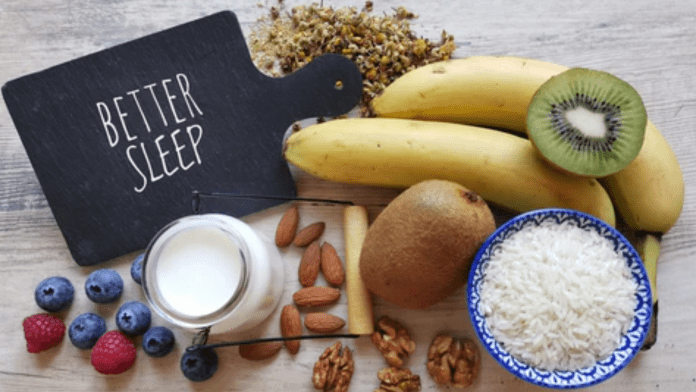
Getting a good night’s sleep is essential for overall health and well-being, yet many people struggle with falling and staying asleep. While there are numerous factors that can impact the quality of your sleep, such as stress and environmental factors, diet can also play a significant role. Certain foods contain nutrients that can help promote relaxation and sleepiness, while others can interfere with sleep.
Foods that are high in magnesium and tryptophan can help you in getting a sounder good night’s sleep!
If you finally chose to fix your sleep cycle, read on!
Foods that can Help you Get a Goodnight’s Sleep
Dark chocolate – Dark chocolate contains a compound called serotonin, which helps to regulate our sleep cycle. It also contains magnesium, which is known to relax muscles and reduce stress. Eating a small amount of dark chocolate before bed can help you relax and fall asleep faster.
Tart cherry juice – Tart cherry juice is high in melatonin, a hormone that helps to regulate our sleep cycle. Drinking tart cherry juice before bed has been shown to improve sleep quality and duration. It also has anti-inflammatory properties, which can help to reduce pain and inflammation that can disrupt sleep.
Leafy greens – Leafy greens like spinach, kale, and collard greens are rich in magnesium, which is known to promote relaxation and reduce stress. They also contain calcium, which helps the brain produce melatonin. Adding leafy greens to your diet can improve the quality of your sleep and reduce the time it takes you to fall asleep.
Banana – Bananas are a good source of magnesium and potassium, which help to relax muscles and reduce stress. They also contain tryptophan, an amino acid that is converted to serotonin in the brain. Eating a banana before bed can help you relax and fall asleep faster.
Oatmeal – Oatmeal is a complex carbohydrate that helps to stabilize blood sugar levels and promote relaxation. It also contains melatonin, which helps to regulate the sleep cycle. Eating a small bowl of oatmeal before bed can help you relax and fall asleep faster.
Walnuts – Walnuts are a good source of omega-3 fatty acids, which have been shown to improve sleep quality. They also contain melatonin and magnesium, which help to promote relaxation and reduce stress. Eating a handful of walnuts before bed can help you relax and fall asleep faster.
Fish – Fish like salmon, tuna, and halibut are rich in vitamin B6, which helps the body produce melatonin. They also contain omega-3 fatty acids, which have been shown to improve sleep quality. Eating fish a few times a week can help to improve the quality of your sleep.
Pineapple – Pineapple contains the enzyme bromelain, which has anti-inflammatory properties and can help to reduce pain and inflammation that can disrupt sleep. It also contains serotonin, which helps to regulate the sleep cycle. Eating a small amount of pineapple before bed can help you relax and fall asleep faster.
Cereal – Cereals like whole grain cereal or oat cereal are a good source of complex carbohydrates, which help to stabilize blood sugar levels and promote relaxation. They also contain melatonin, which helps to regulate the sleep cycle. Eating a small bowl of cereal before bed can help you relax and fall asleep faster.
Chamomile tea – Chamomile tea is a natural sedative that has been used for centuries to promote relaxation and reduce stress. It contains apigenin, an antioxidant that binds to certain receptors in the brain that help to promote sleepiness. Drinking a cup of chamomile tea before bed can help you relax and fall asleep faster.
Pumpkin seeds – Pumpkin seeds are a good source of magnesium, which helps to promote relaxation and reduce stress. They also contain tryptophan, an amino acid that is converted to serotonin in the brain. Eating a handful of pumpkin seeds before bed can help you relax and fall asleep faster.
Therefore, getting a good night’s sleep is essential for our overall well-being. There are various factors that can impact our sleep quality, including stress, anxiety, and diet. By incorporating certain foods into our diet, we can improve our chances of getting a better night’s sleep. Dark chocolate, tart cherry juice, leafy greens, bananas, oatmeal, walnuts, fish, pineapple, cereal, chamomile tea, and pumpkin seeds are all great options to include in your diet to promote better sleep. Remember, a healthy diet and lifestyle, combined with good sleep habits, can help you wake up feeling refreshed and ready to take on the day. Sweet dreams!
We use cookies to ensure that we give you the best experience on our website. If you continue to use this site we will assume that you are happy with it.