Burger Singh, the largest ‘Made-in-India’ burger chain in India, has revealed its expansion strategy for Madhya Pradesh. With the opening of three new outlets in Bhopal, the business aims to become the primary destination for desi burger lovers in the city. These plans will help meet the rising demand for Burger Singh’s flavourful burgers and solidify its standing in the region’s food industry. Across Madhya Pradesh, the brand expects to establish 22 new locations in multiple cities, offering its signature flavours and unique gourmet offerings. Burger Singh has two outlets operational at DB City Mall and HDB Plaza in Bhopal.
In line with these expansion plans, the company is also recruiting 50 employees including skilled chefs, enthusiastic front-of-house staff, and efficient operations personnel in Bhopal. Burger Singh prides itself on providing a diverse selection of tasty, desi and extravagant burgers.
Rahul Seth, Co-founder of Burger Singh, said, “We are proud to be India’s first and largest homegrown burger chain. As a brand, we constantly seek to evolve and provide customers with innovative and exciting options. Our commitment to quality, affordability, and convenience has made us a trusted choice not just for fast food lovers across the country but also for budding entrepreneurs who want to become a part of the Burger Singh story.”
Burger Singh takes pride in its extensive menu, offering a variety of flavourful and indulgent burgers that cater to diverse tastes and preferences. With a perfect blend of Indian and international flavours, Burger Singh continues to redefine the burger experience, setting itself apart from the competition.
The new Burger Singh outlets in Bhopal are scheduled to open in the coming months, and the brand looks forward to welcoming customers to experience their mouthwatering burgers.
Kabir Jeet Singh, Founder and CEO at Burger Singh, said, “Expanding our footprint in Bhopal and Madhya Pradesh is an exciting milestone for Burger Singh.”
“We have been overwhelmed by the response and love from the people of Bhopal, and are thrilled to bring our gourmet burgers to even more locations. Our focus remains on delivering flavourful experiences and creating a lasting bond with our customers.” he added.
The food and beverage (F&B) market in India has been steadily expanding over the years and is on track to reach a staggering valuation of $156.25 billion by 2026. Alongside homegrown players, numerous foreign brands have also discovered ample opportunities in India’s thriving market.
Throughout the past year, numerous Indian companies have established collaborations with foreign counterparts, aiming to introduce fresh food and beverage (F&B) brands into India. One of the latest examples involves the lifestyle division of Reliance Industries, Reliance Brands, which has joined forces with the renowned international coffee chain Pret A Manger, with the objective of introducing the brand to the Indian market.
In recent years, a wave of direct-to-consumer (D2C) startups has emerged, entering the F&B industry and challenging established players. These startups have made a significant impact across various F&B categories, ranging from kids’ snacks to alcoholic beverages to ready-to-cook food.
Let’s explore a range of emerging F&B startups that are determined to shake up the Indian market.
F&B Direct-to-Consumer (D2C) Brands Revolutionizing the Indian Consumer Market
Investors: Mumbai Angels, NB Ventures, Dholakia Ventures, Jalaj Dani Family Office, Ashutosh Valani, Priyank Shah, Ravi Shroff, Ravi Nigam, Ashwini Deshpande, Jorge Fernandez Vidal, AkshayGurnani, Titan Capital, Archana Priyadarshini, Gaurav Ahuja, Amit Chaudhary, Aman Gupta, Sameer Mehta, Harsh Vakharia, Jorge Fernandez Vidal
Headquarters: Mumbai
WickedGud specializes in the sale of pasta, noodles, malted beverages, and various other snacks, which are available for purchase through its website and various ecommerce marketplaces. As stated on its website, all of WickedGud’s products are completely vegan and incorporate plant-based protein as an essential component.
In April, WickedGud successfully raised $1 million in funding from a group of investors including Mumbai Angels, NB Ventures, Dholakia Ventures, Jalaj Dani Family Office, Ashutosh Valani and Priyank Shah from Renee Cosmetics, Ravi Shroff from Excel Industries, Ravi Nigam from Tasty Bite, Ashwini Deshpande from Elephant Design, and others.
Before that, WickedGud had successfully raised $340,000 in its pre-seed funding round, with investments coming from Titan Capital, Archana Priyadarshini from Point One Capital, Gaurav Ahuja from Chrys Capital, Amit Chaudhary from Lenskart, and several others.
The startup specifically caters to customers within the age bracket of 26 to 42 years, aiming to capture their preferences and needs. It states that the average order value of its customers amounts to INR 450.
DropKaffe, a beverage startup, offers a range of products under the brand SLAY Coffee. These include ready-to-drink cold coffee, fresh coffee beans, coffee powders, and gourmet foods. The company sells these products through its website as well as its own chain of cafes.
As stated on its LinkedIn page, the startup has established a widespread presence in more than 160 locations across 19 cities in India.
Back in 2016, the parent company of the startup successfully secured $550,000 in a funding round. The round was led by Kanwaljit Singh from Fireside Ventures, with participation from Srini Anumolu and Meena Ganesh of GrowthStory, Apurva Salarpuria from Salarpuria Group, Sidharth Pansari from Primac, Rahul Gidwani, Hitesh Oberoi from Naukri, Nirupa Shankar from Brigade Group, and Bhupen Shah, among others.
The venture proudly serves a customer base of over 500,000 across 20 cities throughout the country.
TagZ is involved in the production and distribution of various items such as chips, chocolates, dips, and chees dribblin. Notably, the company recently seized an opportunity to present its products and business concept to investors on the renowned television show Shark Tank India.
In addition, TagZ successfully raised funds through a consumer stock option plan (CSOP), allowing customers to invest a minimum of INR 5,000 in exchange for equity. The response to the CSOP exceeded expectations, as it was oversubscribed by an impressive 250%.
Before this milestone, TagZ secured an undisclosed sum of investment during its pre-Series A funding round. Prominent investors in this round included Venture Catalysts, Dharamveer Chouhan from Zostel, Dhruv Toshniwal from The Pant Project, and Loy Halder from Goldman Sachs, among other notable contributors.
During the fiscal year 2021-22, TagZ achieved a revenue of INR 15 crore. The startup proudly asserts its successful service to more than 30 million consumers and the sale of over 50 million packets of chips since its establishment.
Eat Better, an organic food startup, offers a variety of healthy snacks through its website and various e-commerce platforms. These snacks include delectable options such as coffee and almond laddoos, hazelnut chocolate laddoos, as well as vanilla and cacao laddoos, among other enticing choices.
The startup operates a manufacturing facility in Jaipur and proudly maintains a team of over 50 female employees.
During the month of March 2022, the company secured INR 5.5 crore in seed funding. The primary objectives for utilizing this funding include strengthening the team, expanding the range of offerings, and developing robust marketing and distribution channels.
The funding round saw participation from a range of notable investors, including Java Capital, Mumbai Angels, Shiprocket Ventures, CapierCapital, and Plan B Capital.
Previously, the company proudly reported a remarkable revenue growth of over 10 times between October 2020 and March 2022.
Happilo is a renowned brand specializing in healthy snacks, offering a wide range of products including nuts, dried fruits, seeds, and dry roasted snacks. The company operates a manufacturing unit located in Yeshwantpur, Bengaluru. To reach customers across the country, Happilo adopts an omnichannel approach, utilizing various sales channels for product distribution.
Happilo takes pride in offering products that are non-GMO verified, gluten-free, vegan, and fat-free. Additionally, the startup recognizes the financial needs of its customers and provides the option of EMI (Equated Monthly Installment) payment plans for those unable to pay for products in a single transaction.
In February, Happilo successfully raised $25 million from Motilal Oswal Private Equity to fuel its business expansion, enhance its offerings, and pursue potential acquisitions. Prior to this, the company had secured $13 million from A91 Partners as part of its funding endeavors.
The company has experienced significant growth, expanding over four times in the last 24 months. With ambitious goals, it aims to achieve a revenue milestone of INR 2,000 crore within the next four years.
Chaayos, an F&B brand, offers a diverse range of tea varieties and pre-packaged food products through both offline and online marketplaces. Leveraging cutting-edge technologies like artificial intelligence and the Internet of Things (IoT), this innovative startup delivers a unique and modern experience to its customers.
Previously, it was stated that 45% of its revenue is generated through online tea deliveries. The company currently manages a total of 190 retail outlets spread across six cities in India.
In June of the previous year, the company successfully raised $53 million in its Series C funding round. The funds are intended to support the development of technological infrastructure and facilitate the expansion of its operations.
Its capitalization table comprises a range of prominent investors, including Alpha Wave Ventures, Elevation Capital, Think Investments, Tiger Global, SAIF Partners, InnoVen Capital, Pactolus, as well as Ola founder Bhavish Aggarwal and Ankit Bhati, among others.
The company had envisioned establishing an additional 100 retail outlets by the conclusion of 2022.
Coolberg
Founded In: 2016
Founders: Pankaj Aswani, Yashika Keswani
Investors: RB Investments, India Quotient, Ashish Goenka, Indian Angel Network
Headquarters: Mumbai
Coolberg is a renowned non-alcoholic beverage brand known for its assortment of flavors. It offers a selection of non-alcoholic beers in seven delightful varieties, including cranberry, peach, ginger, malt, strawberry, mint, and cranberry.
It distributes its non-alcoholic beers through both its online platform and offline distribution channels. Presently, the brand has established its presence in several regions, including India, Africa, Maldives, Bhutan, and Nepal.
Yashika Keswani, Cofounder of Coolberg, had earlier said, “The Indian beverage market is witnessing an interesting transformation with an increased demand for new flavours. All our variants are unique, refreshing and new to the market. Our R&D team is strong and keeps a close eye on consumer needs.”
During its Series A funding round in 2019, Coolberg successfully secured $3.5 million in investment. The funding came from prominent investors such as RB Investments, India Quotient, Ashish Goenka from Suashish Diamonds, and Indian Angel Network. Before this round, the company had also received an undisclosed amount of funding from India Quotient and Indian Angel Network’s inaugural fund.
Dogsee Chew
Founded In: 2015
Founders: Bhupendra Khanal, Sneh Sharma
Investors: Mankind Pharma, Sixth Sense Ventures
Headquarters: Bengaluru
Dogsee Chew specializes in providing vegetarian dog treats that are not only natural but also of human-grade quality and rich in protein. These treats are crafted from yak milk cheese, carefully made by the residents of villages located in Nepal, Sikkim, and Darjeeling.
Earlier this year, the startup successfully raised $6.7 million in its Series A funding round. The funding came from notable investors including Mankind Pharma and Sixth Sense Ventures.
In November 2021, the company received a significant investment of $7 million in its pre-Series A funding round, with Sixth Sense Ventures among the participating investors. Presently, the company has established its presence in more than 30 countries.
iD Fresh Food
Founded In: 2005
Founders: PC Musthafa, Abdul Nazer, Shamsudeen TK, Jafar, Noushad TA
iD Fresh Food specializes in selling a range of ready-to-make food products, including dosa and idli batter, as well as rice rava idli batter, among other offerings. These products are made available in both domestic and international markets.
The company has established its presence in more than 45 cities worldwide, including prominent locations such as Mumbai, Bengaluru, Pune, Hyderabad, and Dubai, among others.
The Bengaluru-based D2C startup recently made an announcement regarding its seventh round of Employee Stock Ownership Plans (ESOPs). This round is valued at INR 46 crore and will benefit a total of 27 employees within the organization.
“In the coming months, we are excited to augment our 2,000+ workforce as we explore new markets and continue to create new opportunities for a diverse set of professionals, while actively creating a more inclusive workplace,” Musthafa said while announcing the ESOPs.
In January, the startup successfully raised $68 million in its Series D funding round, with NewQuest Capital Partner and Premji Invest among the key investors. With this latest funding, the company has raised a total of $104 million from a combination of individual and institutional investors.
Jade Forest provides a diverse range of non-alcoholic beverages to customers through its website, various e-commerce marketplaces, and last-mile delivery platforms. The pricing of its products falls within the range of INR 80 to INR 85.
In 2021, the company successfully raised $1 million from the Mumbai Angels Network. Prior to this, it secured $250,000 in its seed funding round with participation from notable angel investors including Gaurav Kapur, Rohan Abbas, Ashish Tulsian, and AngelList India.
The company’s products hold certification from the US FDA, ensuring their quality and adherence to regulatory standards. Over the past two years, the company has experienced significant growth and expanded its presence to 23 cities across India.
Jimmy’s Cocktails offers an extensive range of cocktail mixers, featuring flavors such as gin cherry sour, bloody mary, lime margarita, and mango chili mojito, among other tempting options.
In April, Jimmy’s Cocktails successfully raised $1.8 million in its pre-Series A funding round. The investment came from a group of esteemed investors, including Roots Ventures, 7Square Ventures, Vishesh Khurana from Ship Rocket, Varun Alagh from Mama Earth, Keki Mistry from HDFC, and others.
During that time, the startup proudly announced that it had sold more than 6 million cocktails in the initial three months of 2022.
In the fiscal year 2021-22, the company achieved a remarkable threefold increase in revenue, showcasing its substantial growth. Notably, approximately 40% of its revenue was generated from cities in Tier 2 and Tier 3 categories, highlighting the brand’s strong presence and success in these markets.
Kapiva Ayurveda
Founded In: 2015
Founders: Ameve Sharma, Shrey Badhani
Investors:Vertex Ventures, Fireside Ventures, 3one4 Capital
Headquarters: Mumbai
Kapiva Ayurveda specializes in offering a wide range of ayurvedic products aimed at various health benefits. These products cater to areas such as boosting immunity, enhancing digestion, strengthening the body, and managing diabetes, among other wellness goals.
In October 2021, Kapiva Ayurveda received an undisclosed amount of funding from renowned Bollywood actor Malaika Arora. Additionally, the company appointed her as its brand ambassador, further strengthening the association between the brand and the popular personality.
The startup reported a revenue of INR 40 crore in the financial year 2020-21. Since its inception, the company has successfully sold over 8 lakh ayurvedic products and has garnered a substantial user base of 3.5 lakh customers.
Lahori, a brand dedicated to traditional Indian beverages, offers its delightful concoctions nationwide. Presently, the brand features four distinct flavors of Indian drinks, namely Zeera (cumin), Nimboo (lemon), Kacha Aam (raw mango), and Shikanji (lemonade).
Archian Foods, the parent company of Lahori, operates a state-of-the-art fully automated manufacturing facility. Spanning an impressive 1,50,000 square feet, the facility has the capacity to produce nearly 1 million bottles. Accredited by esteemed organizations such as FSSAI, ISI, HACCP, RoHS, and Make In India (offered by GeM), Archian Foods ensures that its manufacturing unit adheres to stringent quality and safety standards.
In January, Lahori received a significant investment of $15 million from Verlinvest, a Belgium-based investment firm. This investment was made in exchange for a minority stake in the company, showcasing the confidence and support Verlinvest has in Lahori’s potential.
Licious
Founded In: 2015
Founders: Abhay Hanjura, Vivek Gupta
Investors: Amansa Capital, Kotak PE, Axis Growth Avenues AIF – I, Nithin Kamath, Nikhil Kamath, Aman Gupta, Haresh Chawla, Temasek, Brunei Investment Agency, 3one4 Capital, Bertelsmann India Investments, Vertex Growth Fund, and Vertex Ventures
Headquarters: Bengaluru
Licious is a renowned brand that offers a wide range of high-quality meat and seafood products, including prawns, kebabs, mutton, and more. What sets Licious apart is its comprehensive end-to-end supply chain management, which covers the entire journey of the products, from procurement and processing to the final delivery to customers. This ensures that customers receive the freshest and finest products from start to finish.
In March, the foodtech unicorn successfully raised $150 million in funding from prominent investors such as Amansa Capital, Kotak PE, Axis Growth Avenues AIF – I, Nithin and Nikhil Kamath of Zerodha, Aman Gupta from boAt, and Haresh Chawla from True North. This substantial investment further strengthens the company’s position and paves the way for its continued growth and expansion.
Previously, in October 2021, the company successfully secured a funding of $52 million. During the financial year 2020-21, it achieved an impressive annual revenue of INR 1,000 crore and expanded its operations to encompass 14 cities across India. Notably, its customer base surpassed 2 million during the fiscal year 2020-21.
MasterChow, a direct-to-consumer (D2C) brand, provides a range of convenient food options including ready-to-cook noodles, dipping sauces, and sticky rice, among other delectable offerings.
MasterChow successfully secured a funding of $1.2 million in May from prominent investors including Anicut Capital, WEH Ventures, and Fluid Ventures.
Before this recent funding, MasterChow had successfully raised approximately $462,000 in its seed funding round from WEH Ventures and a group of angel investors. During that time, the startup boasted an impressive growth rate of 10 times over the previous 12 months, and its products were delivered to over 17,000 pin codes throughout India.
At present, MasterChow has a workforce of 25 employees, and it has plans to expand its corporate team in the coming 12 months.
Nourish You specializes in offering nutritious breakfast food products and snacks to consumers through its website and various e-commerce platforms such as Flipkart, BigBasket, Amazon, and others. Its range of products caters to the needs of health-conscious individuals seeking nourishing options for their daily meals.
In addition to direct consumer sales, the startup also engages in exporting its food items to several countries including Singapore, Nepal, Kenya, Dubai, Mongolia, and Maldives. Among the export-worthy products offered are quinoa flour, chocolate and banana muesli, and cranberry walnut mix, which have gained popularity among international customers.
Previously, the startup revealed that it possessed extensive quinoa and chia farms spanning across 5,000 acres in Rajasthan, Karnataka, and Madhya Pradesh. These agricultural assets contributed to the reliable and sustainable supply of quinoa and chia, key ingredients used in their products.
In January 2023, the startup successfully raised $2 million in seed funding. The funding will be utilized to support various initiatives including research and development activities, brand marketing efforts, and strengthening the distribution network and market presence of the company.
Paper Boat
Founded In: 2010
Founders: Neeraj Kakkar, Niraj Biyani
Investors: Sequoia Capital, Hillhouse Capital Group, GIC, Advent International, Trifecta Capital, Sofina SA, A91 Partners, Catamaran, Footprint Ventures
Headquarters: Gurugram
Paper Boat offers a delightful range of fruit-based beverages inspired by Indian flavors. Their diverse selection includes refreshing drinks such as aam panna (raw mango), rose tamarind (tamarind juice), chili guava (guava juice), jaljeera (spicy and tangy lemonade), and many more.
In August, the startup successfully secured a funding round of $50.1 million from Lathe Investment Pte Ltd, a sovereign fund owned by GIC.
During that period, the company maintained its presence in metro cities, Tier-2 cities, and beyond. In the fiscal year 2021-22, it reported a revenue of INR 243 crore while incurring losses of INR 64 crore. Comparatively, in the previous fiscal year ending March 2020, the company recorded a revenue of INR 231 crore and losses of INR 100 crore, as reported by Tofler.
Samosa Singh
Founded In: 2016
Founders: Nidhi Singh, Shikhar Veer Singh
Investors: Fireside Ventures, AL Trust, AET Fund, She Capital, Equanimity Investments, ANME
Headquarters: Bengaluru
Samosa Singh, a food snack brand, offers a delectable range of Indian snacks including aaloo samosa, kachori, pani puri, matar kulcha, and more. These flavorful treats are made available to customers through the convenience of cloud kitchens and kiosks, ensuring easy access and enjoyment of these traditional snacks.
It had earlier shared that its manufacturing unit has the capacity to produce 25,000 food items on a daily basis.
In 2020, the startup raised $2.7 million (INR 17 crore) in a Series A funding round to enhance the capacity of its central kitchen located in Bengaluru. She Capital took the lead in this funding round.
As of March 2020, its presence extended to more than 25 locations in Hyderabad and Bengaluru. The company asserts that it has established 100 cloud kitchens in key cities across South India.
Slurrp Farm
Founded In: 2016
Founders: Meghana Narayan, Shauravi Malik
Investors: Anushka Sharma, Investment Corporation of Dubai, Fireside Ventures
Headquarters: Delhi
Slurrp Farm is a brand that specializes in nutritious snacks designed specifically for children. They provide a diverse range of cereals, milk mixes, and snacks, including convenient ready-to-mix pancakes, cakes, dosas, noodles, and pastas, among other options. To introduce their products to new customers, they offer trial packs of these items.
Wholsum Foods, the parent company of Slurrp Farm, distributes its products through its official website and various e-commerce marketplaces. At present, the company has established a strong presence in India, the UAE, the US, and the UK, catering to customers in these regions.
During the fiscal year 2021-22, it recorded an annual revenue rate (ARR) exceeding INR 50 crore and experienced a remarkable growth of 10 times between June 2020 and December 2021. Looking ahead, the company has set its sights on reaching a revenue milestone of INR 500 crore by the year 2025.
In the month of April, the D2C brand Slurrp Farm gained the endorsement of Bollywood actress Anushka Sharma. Prior to this collaboration, Slurrp Farm had successfully raised $7 million in funding from the Investment Corporation of Dubai and Fireside Ventures. Furthermore, they had also secured $2 million in a Series A funding round led by Fireside Ventures.
Storia
Founded In: 2017
Founders: Vishal Shah
Investors: Sixth Sense Ventures
Headquarters: Mumbai
Storia provides customers with a diverse selection of processed fruit juices, coconut water, shakes, and beverage whitener options.
In its Series A funding round in 2021, Storia secured a substantial investment of $6 million from Sixth Sense Ventures. As of now, the company has established its presence in 33 cities across India, serving customers through a network of 50,000 retail outlets.
During the announcement of its Series A funding round, the startup expressed its intentions to embark on several strategic initiatives. These included the introduction of new product offerings, expansion of its distribution network, and venturing into the realm of packaged food.
TenderCuts, a direct-to-consumer (D2C) brand, specializes in offering an extensive range of meat and seafood products. Their diverse selection includes chicken, mutton, seafood, marinades, pickles, eggs, as well as ready-to-cook options like cold cuts, sausages, kebabs, shawarmas, and more.
In 2021, TenderCuts successfully obtained approximately $4 million in a debt funding round led by Stride Ventures. Prior to this milestone, the company raised $15 million from Paragon Partners and Nabventures, and it also concluded a seed funding round amounting to $759,000 in 2017.
It implements an omnichannel marketing strategy to cater to its customers. With a presence in Chennai, Hyderabad, and Bangalore, the company serves its clientele through a network of 50 retail stores, ensuring a seamless and integrated shopping experience.
The Filling Station
Founded In: 2021
Founders: Mahua Ghosh, Suvankar Ghosh
Investors: NA (Not Available)
Headquarters: Mumbai
The Filling Station, a startup focused on healthy food snacks, offers a range of nutrient-rich products including laddoos, oil-free snacks, and nutrient-rich spreads, among others. These products are conveniently available for purchase through the company’s website as well as popular ecommerce marketplaces such as Amazon and Flipkart.
Their snacks are crafted using a variety of wholesome ingredients, including palm, oats, makhana, seeds, nuts, and date fruit. These nutritious components are thoughtfully incorporated into their snack offerings, ensuring a delightful and healthy snacking experience.
Mahua Ghosh, the Co-founder of the startup, possesses extensive expertise in the food industry, boasting 11 years of experience. She has previously worked with various fast food joints, cloud kitchens, and retail brands, honing her knowledge and skills in the field. Notably, the venture has received recognition from Startup India, an initiative by the Centre, as stated on their website.
The Whole Truth
Founded In: 2019
Founders: Shashank Mehta
Investors: Sequoia Capital India, Matrix Partners India, Sauce.vc, Kalyan Krishnamurthy, Sujeet Kumar, Ashneer Grover, Shashvat Nakrani
Headquarters: Mumbai
The Whole Truth offers a range of products including dark chocolate, muesli, protein bars, nut butters, and energy bars. These items are available for purchase through the company’s website as well as other popular ecommerce marketplaces.
In the month of July, the D2C snack brand successfully raised $6 million in its Series A funding round. The investment was led by prominent investors such as Sequoia Capital India, Matrix Partners India, Sauce.vc, Kalyan Krishnamurthy from Flipkart, Sujeet Kumar from Udaan, as well as Ashneer Grover and Shashvat Nakrani.
During that period, the startup proudly announced its remarkable growth of 12 times within the previous 18 months. Additionally, The Whole Truth revealed that 50% of its sales were generated through its own website, while the remaining portion came from various ecommerce marketplaces.
Presently, the company has set its sights on achieving an Annual Recurring Revenue (ARR) ranging from INR 90 crore to INR 100 crore by the year 2023.
Troo Good
Founded In: 2018
Founders: Raju Bhupati
Investors: OAKS Asset Management
Headquarters: Hyderabad
Troo Good provides a wide variety of snack bars and mixtures made with millet, peanut, chocolate, and dry fruits. In its first year of operation, the company achieved a revenue of INR 12 crore, which increased to INR 24 crore in 2019. Notably, the startup asserts that it is currently operating profitably before tax.
In November 2021, Troo Good successfully obtained a funding of $7.4 million from OAKS Asset Management, enabling them to amplify their business operations within the domestic market.
Additionally, the startup asserts that it is poised to surpass the INR 100 crore revenue milestone within the next 18 months.
True Elements
Founded In: 2013
Founders: Puru Gupta and Sreejith Moolayil
Investors: Marico, Maharashtra State Social Venture Fund
Headquarters: Bengaluru
True Elements specializes in offering a wide range of breakfast and snack foods that are based on millets, grains, and seeds. The company adopts an omnichannel marketing approach, distributing its products through multiple channels including its own website, ecommerce marketplaces, and physical brick-and-mortar stores.
In May, Marico, a consumer company, acquired a majority stake of 53.98% in HW Wellness Solutions, the parent company of True Elements. The exact financial details of the acquisition were not disclosed. Prior to this development, True Elements had successfully obtained a funding of INR 10 crore from the Maharashtra State Social Venture Fund in the previous year.
During the fiscal year 2021-22, True Elements achieved sales exceeding INR 54.3 crore, a significant increase from the INR 36.3 crore recorded in the preceding fiscal year.
Presently, True Elements offers a diverse range of over 70 products and boasts an extensive portfolio of over 200 stock-keeping units (SKUs). These products are available for purchase through a wide network of 12,000 retail outlets across India. Notably, the company asserts that it generates over 75% of its revenue through online distribution channels.
Twigly delivers freshly cooked food directly to consumers’ doorsteps through its user-friendly website and mobile app. Presently, the delivery service operates within the Delhi-NCR region, ensuring prompt and convenient access to their offerings. Their diverse menu includes delectable options such as burgers, pasta, grill platters, desserts, and a variety of beverages to cater to different tastes and preferences.
As per its founders, the startup draws inspiration from Sprig, a food delivery startup based in San Francisco. Sprig was known for its provision of freshly cooked meals to consumers. However, Sprig ceased its operations in 2017. The founders of the current startup have taken cues from Sprig’s model to shape their own venture.
In September 2018, Twigly was acquired by one of its competitors for an undisclosed sum.
Vahdam India
Founded In: 2015
Founders: Bala Sarda
Investors: Sixth Sense Ventures, IIFL, Mankind Group Family Office, SAR Group Family Office, Kris Gopalakrishnan, IIFL Asset Management, White Whale Ventures, Urmin Group
Headquarters: New Delhi
Vahdam provides a diverse selection of teas, encompassing a variety of types such as herbal, white, oolong, and iced teas, catering to customers in India as well as worldwide. In addition to their tea offerings, Vahdam also provides teaware and instant lattes to complement the tea experience.
During September 2021, the startup successfully raised INR 174 crore in its Series D funding round, with IIFL AMC’s Private Equity Fund leading the investment. Following this round of fundraising, the startup achieved a valuation of INR 700 crore.
At present, the startup asserts its global presence, operating in over 100 countries. Additionally, it achieved profitability in the fiscal year 2021, having generated a net revenue exceeding INR 160 crore.
Luxmi Tea Company has recently unveiled its first Makaibari flagship store, named The Tasting Room, at Netaji Subhash Chandra International Airport in Kolkata. According to a press release issued on Monday, this renowned tea retailer has established the store within the domestic terminal of the airport, covering an expansive area of 215 sq. ft.
Rudra Chatterjee, Managing Director, Luxmi Tea Group, said, “Though we have a store at the Bagdogra airport, this is our first major retail tea store in a metropolitan airport. We intend to open similar stores where people enjoy the finest tea,” said Rudra Chatterjee, managing director, Luxmi Tea Group.
“While visualizing how I wanted the store to be, I wanted people to get a small taste of a tea bungalow living room in the middle of a bustling airport. Now that it is up and running, it truly reminds me of how an estate manager would entertain guests at his Burra bungalow – warm, intimate yet spectacular,” added Chatterjee.
Makaibari tea estate, nestled in the picturesque Kurseong subdivision of West Bengal’s Darjeeling district, holds a prominent place among the region’s tea gardens. Not only does it produce exquisite tea, but it also boasts a store whose interior design is a splendid homage to Bengal’s architectural heritage and the captivating history of Makaibari.
Within its charming confines, the store at Makaibari tea estate presents an enticing array of tea blends, catering to the diverse tastes of tea enthusiasts. Moreover, it goes beyond the boundaries of tea alone, showcasing an exquisite collection of tea wares sourced from skilled local ceramists who have collaborated with Luxmi Estates. This collaboration infuses the store with a unique fusion of craftsmanship, celebrating the artistry of both tea and ceramics.
Luxmi Tea Group, headquartered in Kolkata, was founded in 1912 by PC Chatterjee as a courageous act of resistance against British colonial dominance. Its primary objective was to harness the power of tea as a catalyst for the Satyagraha movement. With a proud heritage, the company asserts ownership of vast estates encompassing 50,000 acres across both India and Africa.
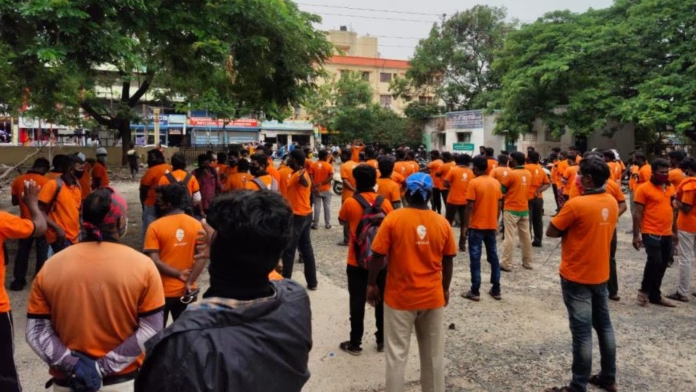
According to CITU, over 85% of the registered delivery partners abstained from work on Monday, and the protest will persist until Swiggy addresses their concerns. (Representative Image)
On Monday, certain areas of Chennai experienced disruptions in the delivery of food and groceries via online applications due to a strike initiated by gig workers who were advocating for improved pay and working conditions.
“For more than eight years, we continue to receive only around 5 for every kilometre we travel to deliver food. Besides this, the online apps, particularly Swiggy, has cut down incentives, communication and our travel allowances,” said Ramakrishna, General Secretary of food delivery employees wing of CITU.
In addition, there were reports of online apps providing false information regarding the distance between hotels and delivery points. For instance, while the app would indicate a 5 km distance, the actual distance could be more than 7 km. Despite complaints being lodged, fleet managers were observed to be unresponsive in resolving these issues, as per the source.
According to CITU, over 85% of the registered delivery partners abstained from work on Monday, and the protest will persist until Swiggy addresses their concerns. Even the delivery partners who were working refused to take orders due to the disrupted vehicular movement caused by the AIADMK protests. Consequently, consumers experienced delays of at least 45 to 60 minutes in receiving their lunch.
“Even after paying the surge fee of 35, the order reached us late,” said Sneha, a resident of Porur.
In response to numerous inquiries regarding delays, several restaurants decided to go offline after 12 noon. For example, in and around T Nagar, only 260 eateries were accessible for delivery on Monday afternoon. Typically, this locality offers a selection of over 380 restaurants for consumers to choose from.
Acknowledging the trouble, Swiggy in its official statement said, “There are some delays in deliveries reported in certain parts of Chennai. Our team on ground is actively working to resolve this. We are confident that our services will be normalised soon”.
Efforts to reach out to Zomato for comments proved unsuccessful.
In Ireland, a new law has been approved, making it mandatory for alcoholic drink products to prominently display comprehensive health warnings.
Health minister Stephen Donnelly signed the new legislation into law on Monday (22 May), which is scheduled to be enforced starting from May 2026. The legislation encompasses various requirements, including informing consumers about the hazards associated with alcohol consumption and disclosing the calorie content of the product.
While the specific wording for the labeling has yet to be finalized, the upcoming regulations will ensure that consumers are provided with on-pack warnings regarding the risks of consuming alcohol during pregnancy. Additionally, they will be informed about the connections between alcohol consumption, liver disease, and life-threatening forms of cancer.
Ireland proudly asserts itself as the first nation worldwide to implement such measures for alcoholic beverages.
“This law is designed to give all of us as consumers a better understanding of the alcohol content and health risks associated with consuming alcohol,” Donnelly said. “With that information, we can make an informed decision about our own alcohol consumption.
“Packaging of other food and drink products already contains health information and, where appropriate, health warnings. This law is bringing alcohol products into line with that.”
However, this decision puts Ireland on a potential collision course with its trading partners, both within and outside the European Union.
Thirteen EU member states, including Italy, France, and Spain, have formally requested the European Commission to examine whether the labelling requirements might infringe upon EU law.
In the meantime, ten nations, including the UK, the US, New Zealand, Australia, and Mexico, have filed complaints with the World Trade Organization.
Just last week, industry bodies such as The Brewers of Europe and Spirits Europe reiterated their opposition to the legislation, asserting that it would lead to the exclusion of other European brewers from the Irish market.
SpiritsEurope, a representative body for drinks companies including Pernod Ricard, the owner of the Jameson brand, expressed concerns that the move could “fragment” the internal market of Europe by deviating from harmonized labeling standards.
“It would appear that Ireland conducted an insufficient analysis of the proportionality of their particular policy choices on labelling, as other suitable, yet less restrictive options to trade clearly exist”, said the director general Ulrich Adam. “The Commission is bound to present new, harmonised labelling rules for alcoholic beverages soon.
“In such a situation, common practice has it that plans for deviating national rules should be paused.”
In January, the Canadian Government made a significant reduction to its alcohol consumption guidelines, advising individuals to limit their intake to a maximum of two alcoholic drinks per week. This decision was accompanied by the assertion that there is no safe level of alcohol consumption.
The country is also actively pursuing the implementation of health warnings for alcoholic beverage products.
On Monday, the Chief Minister of Odisha, Naveen Patnaik, ceremoniously unveiled ITC’s advanced facility for integrated manufacturing and logistics of consumer goods in Khurda.
In an appreciative gesture, Chief Minister Patnaik extended his congratulations to ITC’s CMD Sanjeev Puri and emphasized the importance of expanding the company’s footprint in the state, highlighting the promising opportunities for growth and progress.
Reiterating the state government’s dedication, he reaffirmed the commitment to transform Odisha into the upcoming industrial hub of the nation.
During his remarks, he underscored the significance of the Industrial Policy Resolution (IPR) 2022, emphasizing its role in propelling Odisha towards becoming a modern and advanced industrial state. The policy aims to attract investors by providing outstanding opportunities for sustainable business growth, while also fostering comprehensive socio-economic development for the people, thereby shaping a promising future for the state.
He highlighted the food processing sector as one of the key priority sectors identified in the Industrial Policy Resolution (IPR) 2022. Recognizing the importance of this sector, he emphasized that the establishment of ITC’s facility in Odisha signifies a noteworthy milestone for the state.
Situated across an expansive area of 35 acres, the facility is solely dedicated to accommodating seven distinct production lines. These production lines are specifically designed to cater to the manufacturing needs of renowned brands such as Aashirvaad atta, Yippee! noodles, Sunfeast biscuits, and Bingo! chips, making it a significant milestone for Odisha.
The inauguration ceremony witnessed the presence of notable attendees, including Jatni MLA Suresh Kumar Routray and Khurda MLA Jyotirindra Nath Mitra, alongside other esteemed individuals.
When it comes to choosing a drink, it can be overwhelming to navigate through a cocktail menu while feeling the pressure of a server’s gaze or watching your food delivery estimate climb higher. However, there’s nothing quite as soothing as sipping on a well-crafted alcoholic beverage that perfectly aligns with your tastes and preferences.
Whether you’re a fiery Aries or a compassionate Pisces, there’s a drink out there that resonates with your astrological identity. So, sit back, relax, and embark on a cosmic journey as we delve into the perfect drink choices for every zodiac sign.
Aries: Bold and Ambitious:
Aries individuals are known for their boldness and ambition. Their energy is vibrant and active, demanding a drink that matches their fiery nature. Vodka, the top-selling spirit in bars, is a perfect match for Aries, as it goes down quickly and effortlessly, just like their energetic spirit. For those Aries who prefer a more adventurous option, a Spicy Margarita provides a thrilling twist with its zesty flavors, catering to their impulsive side.
Taurus: Tranquil and Luxurious:
Taureans are all about indulgence and sensory experiences. They thrive in tranquil settings surrounded by soothing fragrances and sumptuous flavors. Champagne is the ideal choice for a Taurus, as its slow and steady effervescence perfectly aligns with their patient nature. Alternatively, a French 75, which combines the elegance of sparkling wine with a delightful twist, caters to their refined taste.
Gemini: Spontaneous and Curious:
Geminis are known for their spontaneous and unpredictable nature. With an unquenchable curiosity, they are constantly seeking new experiences. The lively and versatile nature of beer makes it an excellent choice for Geminis, who can explore a wide range of craft beers, IPAs, stouts, or porters to match their ever-changing moods. For a trend-conscious Gemini, a Summer Spritz provides a fashionable and fizzy option that perfectly suits their adaptable personality.
Cancer: Intuitive and Nurturing:
Cancerians are deeply intuitive and emotionally connected individuals. They thrive in nurturing environments and value their relationships with loved ones. A glass of rosé perfectly captures the emotional essence of Cancer, providing a calming and charming experience. When staying at home with friends, a refreshing pitcher of Sangria becomes the ideal choice for a cozy gathering, catering to their home-oriented nature.
Leo: Dazzling and Exuberant:
Leos are natural-born leaders who enjoy being in the spotlight. They exude confidence and love to make a statement. Whiskey, with its bold and daring flavors, is the perfect drink for a Leo, reflecting their desire to stand out and be seen. Additionally, an Espresso Martini, with its lavish and extravagant character, adds a touch of uniqueness to their drink choices, making it a perfect fit for a Leo’s larger-than-life personality.
Virgo: Practical and Meticulous:
Virgos are practical, rational, and systematic individuals who appreciate order and efficiency. Cognac, with its refined and sophisticated reputation, resonates with the discerning taste of a Virgo. Its complexity and uniqueness make it a perfect match for this sign, which is not easily accessible to everyone. On the other hand, a Vodka Soda provides a straightforward and no-nonsense option for a Virgo who appreciates simplicity and directness.
Libra: Balanced and Harmonious:
Libra energy is all about balance, harmony, and fairness. Librans seek equilibrium in all aspects of life, and their drink choices are no exception. A Gin and Tonic perfectly embodies the balanced nature of a Libra, with its harmonious blend of flavors and subtle spice. For a Libra with an eye for aesthetics and a love for art, a Mimosa becomes an ideal choice, as its elegant and straightforward composition captures the essence of this sign’s refined taste.
Scorpio: Mysterious and Intense:
Scorpios are mysterious and complex individuals, known for their deep emotional depths and psychic abilities. While they tend to keep their emotions hidden, they possess an intense and passionate nature. A Margarita, with its hidden potency and layered flavors, reflects the enigmatic qualities of a Scorpio. Similarly, Manhattan, with its solitary and brooding character, sets the perfect tone for this intense and introspective sign.
Sagittarius: Adventurous and Knowledgeable:
Sagittarians are curious seekers of knowledge, constantly in search of new ideas and experiences. They have a penchant for exploration and a love for diverse cultures. A Tiki Cocktail, with its intriguing backstory and vibrant presentation, aligns with the adventurous spirit of a Sagittarius. Alternatively, a Negroni, a classic Italian cocktail with its unique blend of flavors, satisfies their curiosity and allows them to experience the tastes of different cultures.
Capricorn: Ambitious and Disciplined:
Capricorns are ambitious and hardworking individuals who strive for success. They have a competitive spirit and believe in the power of perseverance and discipline. Mezcal, with its smoky and bold characteristics, represents the ambition and determination of a Capricorn. It’s a drink that commands attention and speaks to their solid mindset. A Dry Martini also appeals to Capricorns, offering a potent and straightforward option to help them unwind after a long day of pursuing their goals.
Aquarius: Humanitarian and Thoughtful:
Aquarians are known for their humanitarian nature and their desire to make the world a better place. They are healers and thinkers, often lost in their thoughts. Absinthe, with its distinctive flavor and practical associations, resonates with the practical and analytical mindset of an Aquarius. For those Aquarians who tend to overthink, a light and refreshing Paloma or tequila soda provides the perfect balance, allowing them to relax and keep their thoughts calm.
Pisces: Wise and Compassionate:
Pisces, being the final sign in the zodiac, possess wisdom, sensitivity, and compassion. They are dreamers and possess a unique perspective on life. Red wine, with its depth of flavors and creative essence, captures the essence of a Pisces, providing a warm and embracing experience. For those looking for a more mystical and magical option, the Foaming Fairy, an absinthe-based drink, offers a whimsical and otherworldly experience that resonates with the dreamy nature of a Pisces.
In the realm of mixology, there is a drink for every zodiac sign, perfectly tailored to their unique characteristics and energy. From the boldness of an Aries to the compassion of a Pisces, each sign can find a drink that resonates with their aura and enhances their cosmic experience. So, the next time you find yourself perusing a cocktail menu or hosting a gathering, consider embracing your sign’s unique aura and choosing a drink that aligns with your astrological identity. Cheers to quenching your thirst in cosmic style!
Old Delhi, with its bustling streets and rich history, is a treasure trove of culinary delights. From savory street food to aromatic spices, this vibrant part of the city has something to offer every food lover. One aspect of Old Delhi’s culinary scene that cannot be ignored is its love for desserts.
In Old Delhi, desserts hold a special place in the hearts and palates of its residents. The culinary traditions of this area are deeply rooted in the Mughal era, when the royal kitchens were known for their extravagant feasts and indulgent sweets. Over time, these delicacies made their way into the homes and street stalls of Old Delhi, becoming an integral part of its culinary heritage.
The locals of Old Delhi take great pride in their desserts, passing down secret recipes from one generation to the next. Many of these sweet treats are prepared using traditional techniques and age-old recipes that have stood the test of time. Each dessert tells a story, evoking memories of a bygone era and adding a touch of nostalgia to every bite.
In this article, we will explore seven mouth wat-ring delicacies that you must try when visiting Old Delhi, ensuring an unforgettable experience of pure dessert bliss.
Jalebi @ Old Famous Jalebi Wala
One cannot talk about desserts in Old Delhi without mentioning jalebi. These golden, syrup-soaked spirals of sweetness are a staple in the city. The Old Famous Jalebi Wala, located at Shop No. 1795, Dariba Corner, Chandni Chowk, has been serving delectable jalebis for over a century. The crispy yet juicy jalebis, served hot straight from the pan, are a testament to the skill and expertise of the cooks at this iconic establishment.
Where | Old Famous Jalebi Wala – Shop No.1795, Dariba Corner, Chandni Chowk
Call Them | +91 11 2325 6973
Timings | 8 AM – 10 PM
Shahi Tukda Near Jama Masjid
Shahi Tukda is a royal treat that originated in the Mughal kitchens. It is made by deep-frying bread slices until golden and then soaking them in a rich saffron-infused milk syrup. Near Jama Masjid, Gate No. 1, you can find some of the best Shahi Tukda in Old Delhi. The combination of crispy bread, creamy milk, and aromatic flavors makes this dessert a must-try for anyone exploring the culinary delights of Old Delhi.
Where | Near Jama Masjid, Gate No 1
Rabri Faluda @ Giani’s Di Hatti
Giani’s Di Hatti, located on Church Mission Road, Chandni Chowk, is renowned for its refreshing Rabri Faluda. Rabri Faluda is a delightful combination of thickened milk (rabri), vermicelli, rose syrup, and a variety of toppings such as nuts and cherries. The creamy texture of the rabri perfectly complements the sweetness of the rose syrup, creating a harmonious blend of flavors. Giani’s Di Hatti has been serving this heavenly dessert for generations, and it continues to be a favorite among locals and tourists alike.
Where | Giani’s Di Hatti – Church Mission Road, Chandni Chowk
Call Them | +91 11 2393 6174
Moong Dal Ka Halwa @ Churuwala Marwari Sweet
If you’re in the mood for a rich and decadent dessert, look no further than Moong Dal Ka Halwa. Churuwala Marwari Sweet, located in Kucha Mahajani, Chandni Chowk, prepares this delectable dessert with utmost perfection. Made from ground yellow lentils, ghee (clarified butter), sugar, and a generous amount of dry fruits, this halwa is a melt-in-your-mouth delight. The nutty aroma and the velvety texture of this dessert will leave you craving for more.
Where | Churuwala Marwari Sweet – 1194, Ground Floor, Town Hall, Kucha Mahajani, Chandni Chowk
Call Them | +91 9711 145 309
Daulat Ki Chaat @ Khemchand Adesh Kumar
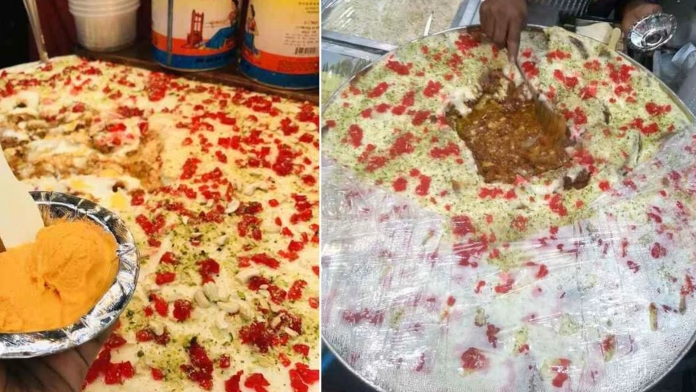
Daulat Ki Chaat, also known as Malai Makkhan, is a unique dessert that is exclusive to Old Delhi. It is made by churning sweetened milk for hours until it forms a frothy, cloud-like consistency. Khemchand Adesh Kumar, located in Kinari Bazaar, Chandni Chowk, is known for serving this ethereal dessert that literally melts in your mouth. Garnished with saffron, pistachios, and silver leaf, Daulat Ki Chaat is a true indulgence that shouldn’t be missed.
Where | Khemchand Adesh Kumar – Kinari Bazaar, Chandni Chowk
Kulfi @ Kuremal Mohanlal Kulfiwale
Kulfi, a traditional Indian frozen dessert, is a popular treat in Old Delhi, especially during the scorching summer months. Kuremal Mohanlal Kulfiwale, situated near Shop No. 526, Kucha Pati Ram, Sitaram Bazar Road, Chawri Bazar, is a legendary establishment that has been serving delicious kulfis for over a century. From classic flavors like malai (cream) and pistachio to innovative creations like paan (betel leaf) and fruit-filled kulfis, Kuremal Mohanlal Kulfiwale offers a wide range of options to satisfy your kulfi cravings.
Where | Kuremal Mohanlal Kulfiwale – Near, Shop No. 526, Kucha Pati Ram, Sitaram Bazar Road, Chawri Bazar
Call Them | +91 9810 540 106
Rabri Khurchan @ Pandit Gaya Prasad Shiv Charan
Concluding our desert trail in Old Delhi is Rabri Khurchan, a rich and creamy dessert that will leave you spellbound. Pandit Gaya Prasad Shiv Charan, located in Shop No. 34, Paranthe Wali Gali, Chandni Chowk, is renowned for its exceptional Rabri Khurchan. This dessert is made by continuously stirring sweetened milk until it thickens and forms layers of cream. Topped with saffron and dried fruits, every bite of this dessert is a burst of flavors and textures.
Where – Pandit Gaya Prasad Shiv Charan – Shop No. 34, Paranthe Wali Gali, Chandni Chowk
Call Them – +91 9873 682 978
Exploring the desserts of Old Delhi is an adventure for your taste buds. From the crispy jalebis to the creamy Daulat Ki Chaat, each dessert tells a story and reflects the rich culinary heritage of this historic city. Whether you’re a local or a visitor, indulging in these mouthwatering delicacies is a must-do experience.
So, the next time you find yourself in Old Delhi, take a break from the savory street food and embark on a journey of pure dessert bliss.
Courteney Cox, renowned for her role as Monica Geller in the hit TV show Friends, has not only captured the hearts of fans with her impeccable acting skills but has also been winning them over with her delectable culinary creations. Cox’s Instagram feed is a testament to her passion for cooking, filled with tantalizing recipes that cater to diverse palates, from vegans to meat lovers. And now, the actress has graciously shared a new recipe that is causing quite a stir on the internet – her cookie recipe.
Enthusiastic fans of the Friends star are eagerly anticipating the chance to recreate this mouthwatering treat in their own kitchens. With Courteney Cox’s step-by-step instructions, anyone can embark on a baking adventure and indulge in these scrumptious cookies. To ensure the utmost deliciousness, Cox collaborated with esteemed Chef Paul Cassell to bring you the irresistible ‘Chocolate Chunk With Maldon Sea Salt’ cookie, a recipe she claims to be the most divine she has ever tasted.
To create these heavenly cookies, you’ll need the following ingredients:
1 and 7/8 Cups Cake Flour
1 and 2/3 Cups Bread Flour
1 and 1/4 Teaspoons Baking Soda
1 and 1/2 Teaspoons Baking Powder
1 and 1/2 Teaspoons Kosher Salt
1/8 Teaspoon Nutmeg
1 and 1/4 Cups Unsalted Butter
1 and 1/4 Cups Light Brown Sugar
1 and 1/8 Cups White Sugar
2 Large Eggs
2 Teaspoons Natural Vanilla Extract
2 Cups Bittersweet or Semi-Sweet Chocolate Chunks or Discs
3/4 Cup Milk Chocolate Chunks
Chocolate Feves or Larger 1-Inch Chunks from a Bar
Maldon Sea Salt
Now, let’s delve into the preparation process:
Begin by combining the flours (or gluten-free flour if preferred), baking soda, baking powder, kosher salt, and nutmeg in a bowl. Whisk the dry ingredients together and set them aside.
In the bowl of a stand mixer, beat the unsalted butter and sugars on high speed for at least 4 minutes. This step ensures a creamy and fluffy texture for the cookies.
Add the eggs and natural vanilla extract to the bowl with the butter and sugars. Continue beating for an additional 2 minutes until the mixture is well combined.
Slowly mix the flour mixture into the butter mixture using the lowest speed on your mixer. Mix just until all the ingredients are combined. If there is still some flour visible, don’t worry. You can use a wooden spoon to finish mixing it in.
In a separate bowl, combine the dark and milk chocolate chunks. Then, using either a wooden spoon or your hands, gently incorporate the chocolate into the cookie dough.
Once the chocolate is evenly distributed throughout the dough, transfer it to a container or cover it with plastic wrap. Refrigerate the dough for a minimum of 36 to 48 hours. This extended chilling period enhances the flavor and texture of the cookies, resulting in a truly exceptional treat.
Preheat your oven to 350 degrees Fahrenheit.
Prepare a large baking sheet by lining it with parchment paper, ensuring easy removal of the cookies once baked.
Retrieve the dough from the refrigerator and use a scoop to measure out 4-ounce balls, which is approximately 1/3 cup in size.
Arrange the dough balls on the lined sheet pan, leaving a distance of 2 to 3 inches between each one. It’s important not to overcrowd the pan, as each cookie needs room to spread and bake evenly. A half sheet pan can accommodate around 4 cookies of this size.
Slightly press a larger chocolate chunk into the center of each dough ball, ensuring a delightful surprise of melty chocolate in every bite.
Place the sheet pan in the center rack of your preheated oven. Bake the cookies for approximately 19 minutes, or until they turn a beautiful golden brown and have a slightly darker light brown shade on top.
Once the cookies are done baking, allow them to cool for at least 15 minutes on the sheet pan. This resting period ensures they hold their shape and texture before transferring them to a cooling rack to cool completely.
When the cookies have cooled but the chocolate still retains its glossy appearance, it’s time to add the final touch. Sprinkle a few flakes of Maldon Sea Salt on top of each cookie, enhancing the flavor with a hint of salty goodness.
So, what are you waiting for? Grab your apron, gather the ingredients, and embark on a baking journey to create the most delightful cookies you’ve ever tasted. Thanks to Courteney Cox’s generosity in sharing her treasured recipe, you can now experience the joy of indulging in a delectable treat that will undoubtedly satisfy your sweet tooth. Happy baking!
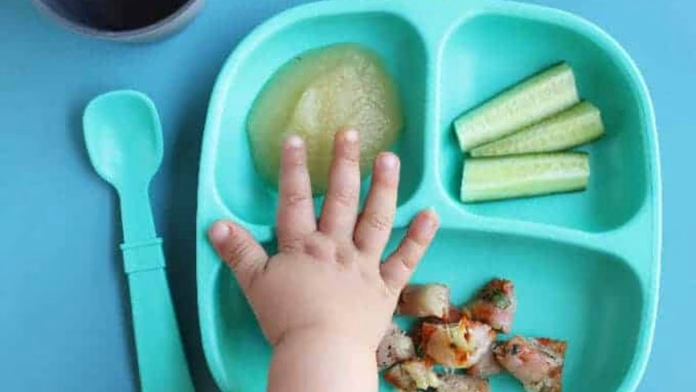
When it comes to feeding toddlers, mealtime can sometimes be a challenge. Their developing taste buds and unpredictable eating habits can make it difficult to ensure they receive the necessary nutrients.
However, by offering quick and no-fuss options, parents can simplify the process of sorting the toddler menu. These choices prioritize convenience and nutrition, allowing parents to provide their little ones with balanced meals without the fuss. From simple finger foods to wholesome combinations, these toddler-friendly options take into account the unique needs and preferences of this age group, making mealtime a more enjoyable and stress-free experience for both parents and toddlers alike.
Sooji Pancakes:
Sooji pancakes, also known as semolina pancakes, are a delicious and nutritious option for breakfast or as a snack for toddlers. These pancakes are made using semolina (sooji), yogurt, and a few basic ingredients. They have a soft and fluffy texture, making them easy for toddlers to eat.
Ingredients:
1 cup semolina (sooji/rava)
½ cup yogurt
¼ cup finely chopped vegetables (carrots, bell peppers, etc.)
1 teaspoon grated ginger
¼ teaspoon cumin seeds
Salt to taste
Water, as needed
Oil or ghee for cooking
Instructions:
In a mixing bowl, combine semolina, yogurt, grated ginger, chopped vegetables, cumin seeds, and salt. Mix well.
Gradually add water to the mixture and whisk until you get a smooth batter of pouring consistency.
Let the batter rest for 10-15 minutes.
Heat a non-stick pan or griddle over medium heat and lightly grease it with oil or ghee.
Pour a ladleful of batter onto the pan and spread it gently to form a pancake.
Cook until the bottom side turns golden brown, then flip and cook the other side until golden brown as well.
Repeat the process with the remaining batter.
Sabudana Khichdi:
Sabudana khichdi is a popular Indian dish made with tapioca pearls (sago), potatoes, and peanuts. It is a nutritious and filling option for toddlers, especially during fasting or as a light meal. Sabudana khichdi has a delicate texture and is mildly flavored, making it appealing to young taste buds.For this recipe you don’t even need that much efforts just some soaked sabudana, and fry or saute it you all classic veggies like potato, beans, carrots or anything that is good for you and the baby!
Pat A Potato:
“Pat a potato” refers to a simple and fun snack idea for toddlers that involves boiling small potatoes and allowing them to cool before being served. This activity allows toddlers to use their fine motor skills to pat and squish the potato with their hands, engaging their senses and promoting exploration of different textures.This recipe is an absolute no brainer, as most you need for it is just a potato. Just mash it up with cheese, spices and other veggies and you are good to go.
Paratha Pointers
Almost all Indian moms have a familiarity in the kitchen, on this one. It is nothing different from your regular Paratha!
Just, fill some lentils and veggies in the regular paratha dough and make it like how you make any stuffed paratha. Couple it up with a curd and your toddler will definitely love it!
We understand the trouble and amount of effort a new mother has to go through in order to learn parenting and so to make it a little bit easier, these easy recipes will come in handy in case you’re always in a fix on what to feed your toddler.
We use cookies to ensure that we give you the best experience on our website. If you continue to use this site we will assume that you are happy with it.