Fast&Up and EatFit, two prominent players in the Indian wellness industry, have recently joined forces through a strategic partnership. EatFit, which operates under Curefoods, a well-established cloud kitchen player in India, is the country’s largest healthy food platform. By teaming up, these industry leaders aim to tap into their combined audience base, expanding their reach and delivering even greater value to customers who aspire to embrace a healthier lifestyle.
The partnership, which begins this month and spans a year, is focused on making a lasting impact in the fitness and wellness industry, while also promoting the importance of a healthy lifestyle.
Fast&Up, renowned for its exceptional performance and daily nutrition solutions designed to enhance an active lifestyle, is committed to optimizing customer engagement and satisfaction through this strategic partnership. In this collaborative endeavor, Fast&Up will leverage the EatFit website to provide product sampling of its high-quality effervescent tablet, Fast&Up RELOAD, exclusively to EatFit customers. To commemorate this exciting launch, EatFit and Fast&Up will join forces on various social media platforms to captivate their respective audiences and foster a meaningful connection.
Vijayaraghavan Venugopal, Co-Founder, and CEO of Fast&Up said, “We are excited to partner with EatFit, a platform dedicated to delivering high-quality and healthy food options to its customers. Our collaboration aims to enhance customer experience and promote healthier lifestyles by offering top-notch products and exclusive discounts. Together, we aim to extend our reach and make a significant impact in the fitness and wellness industry.”
Gokul Kandhi, COO at Curefoods said, “Our intention behind this collaboration is to provide our customers with a comprehensive approach to their health and well-being. We are excited to partner with Fast&Up, as they share our dedication to promoting a healthier lifestyle. Through this partnership, we aim to offer our customers the opportunity to experience Fast&Up’s exceptional products, while Fast&Up customers can enjoy exclusive discounts on our website. Together, we strive to make a positive difference in the lives of our customers.”
Chhota Hazri Spirits is delighted to unveil an exciting addition to its lineup: Baagh, an innovative Indian craft gin that merges remarkable flavor with a powerful mission. Now available in the bustling markets of Mumbai and Pune, Baagh revolutionizes the conventional gin experience. Departing from the norm, Baagh takes a citrus-centric approach, harmonizing the lively essence of Nagpur orange with the refreshing notes of lime, all enhanced by delicate hints of spice.
Baagh is more than just a delightful gin; it embodies a profound purpose. A significant share of Baagh’s profits contributes to agrobiodiversity and re-wilding endeavors in Assam, achieved through a meaningful collaboration with The Balipara Foundation. Furthermore, the distillery actively supports local farmers by responsibly sourcing its ingredients, fostering a symbiotic relationship that benefits both the land and its communities. All these efforts align harmoniously with their captivating tagline, ‘No Planet No Party,’ encapsulating their commitment to environmental sustainability and celebration of life.
Baagh strives to enchant a diverse range of individuals, specifically urban individuals in their thirties, who are in search of a meticulously crafted gin that offers both approachability and pleasure. It harmonizes perfectly with uncomplicated tonic water or can be utilized to fashion personalized do-it-yourself cocktails, eliminating the necessity for specialized mixers or flavored tonics. Baagh proudly stands as an adaptable spirit in its own league.
The premium Indian alcohol market is currently witnessing a remarkable surge in growth, and at the forefront of this trend is the gin segment, boasting an impressive Compound Annual Growth Rate (CAGR) of 11 percent. Within this landscape, Baagh has strategically positioned itself to tap into this burgeoning market by offering a distinctive and purpose-driven product. Recognizing the evolving preferences of consumers who prioritize local, homegrown brands that align with their values, Baagh has successfully positioned itself as a brand that resonates with these discerning individuals.
Jatin Dev Bobb, CEO and Founder of Chhota Hazri Spirits, along with his founding partners Mohamed Rizwan and Manu Chandra, established the company in a post-Covid world. The name takes inspiration from the traditional refreshment consumed by troops stationed in Northern India during the 19th century, as well as the morning rituals followed in certain army regiments and boarding schools to this day.
Jatin Dev Bobb said, “We are thrilled to introduce Baagh to the Indian market, aiming to create a contemporary Indian gin that not only delivers exceptional taste but also prioritizes purpose alongside profit. In today’s world, creating a great product alone is no longer sufficient. At Chhota Hazri, we have always aspired to make a positive impact, regardless of scale. Our collaboration with The Balipara Foundation is a prime example, but our commitment extends far beyond that. By promoting agrobiodiversity and rewilding initiatives, we hope to spark meaningful conversations and raise awareness about programs like No Planet No Party. We will initially launch Baagh in Mumbai, the ‘taste’ capital of India, with plans to expand to five additional markets in the upcoming quarter.”
Mohamed Rizwan, Founding Partner and creative maven said, “In a world where brands often take themselves too seriously, we wanted Baagh to be a gin that is chic and fun. While our audience demands authenticity and craftsmanship, they also want to be part of a stylish world. Baagh is designed to resonate with this audience, from the moment they lay eyes on the bottle to when they hit the ‘Follow’ button on Instagram.”
Manu Chandra, one of India’s most renowned Chefs and a Founding Partner, shared, “Think of Baagh as the first sip of your weekend brunch or the early drink at a cozy bar, not a round at an unfamiliar club at 3 am. This gin is incredibly smooth and enjoyable to drink even on its own. Crafted with the Indian palate in mind, its delightful notes of fresh citrus and impeccable smoothness truly shine when paired with tonic and soda, accompanied by a refreshing citrus slice.”
Baagh is currently being offered at exclusive retail outlets, restaurants, and bars in Mumbai. The recommended retail price for Baagh is INR 1995.
Rebel Foods, a cloud kitchen startup known for its popular brands like Faasos, Behrouz Biryani, and Oven Story Pizza, has recently expanded its operations to Saudi Arabia. The company successfully launched two cloud kitchens in Riyadh, marking its entry into the Saudi market.
Rebel Foods stated that its expansion into the Saudi market further solidifies the company’s commitment to the Middle East, building upon its existing presence in the United Arab Emirates. The foodtech startup acknowledges the strategic significance of entering Saudi Arabia and aims to capitalize on the region’s potential.
Rebel Foods proudly asserts its status as India’s pioneering foodtech company to venture into Saudi Arabia.
With its cloud kitchen network, the company sets its sights on establishing a $100-million food delivery enterprise in Saudi Arabia within the next three years. Additionally, Rebel Foods plans to augment its presence in Riyadh by introducing over 60 internet restaurants while simultaneously extending its reach to other prominent cities in the country, including Jeddah, Dammam, and Khobar.
The kitchens in Riyadh are the result of a collaboration between KitchenPark, a Dubai-based company, and Kitch. Situated in Sulemaniya and Qurtoba, these kitchens will showcase popular brands such as The Messy Burger, Oven Story Pizza, Fricken’ Fried Chicken, and The 500 Calorie Project, all under the Rebel umbrella. Additionally, Behrouz Biryani, Faasos, and Mandarin Oak will be introduced in the near future.
Vishal Khithani, CEO, International Markets, Rebel Foods, said, “The Middle East or the MENA market is a key region for Rebel Foods and we are investing significantly to build our cloud kitchen network and to strengthen our brands.”
Khithani expressed the company’s dedication to fulfilling outstanding customer needs, emphasizing a strong emphasis on ensuring customer satisfaction.
“In addition to introducing iconic brands that resonate with the market, we are dedicated to serving multiple food missions as per the surging demand,” he added.
Established in 2011 by Jaydeep Barman and Kallol Banerjee, Rebel Foods operates a network of online restaurants encompassing 45 brands, with 4,000 cloud kitchens spread across various locations. The company’s operations span India, Indonesia, Singapore, Malaysia, Thailand, Bangladesh, the UAE, and the UK.
The company’s operating system comprises three essential components: comprehensive technology covering inventory and kitchen management, demand management, and fulfillment; supply chain capabilities for sourcing, storing, and ensuring the safe movement of raw materials in various forms; and culinary expertise and capabilities to meticulously break down menus into small, Standard Operating Procedure (SOP)-driven steps.
In the month of April, the company secured a debt funding of INR 75 crore ($9.1 million) from investors Northern Arc and Stride Ventures. This marked the fourth round of debt financing for the firm thus far.
With the prices of staple commodities reaching unprecedented heights, Indian households are making a significant change by switching from big boxes to small packets and sachets.
Due to tight kitchen budgets, consumers are altering their spending habits, leading to noticeable changes in the market. Instead of purchasing fresh tomatoes, people are opting for small cartons of tomato puree. Similarly, fresh ginger is being replaced with convenient single-use sachets of ginger paste, and loose cumin powder is being substituted with tiny 7-gram sachets.
Sukanya Sinha, a postgraduate student who lives in south Kolkata, said, “Since last week I’ve been using tomato puree in my cooking and its value for money.”
Tomato puree pouches are available in smaller packs of 200 gm, which cost just INR 25, she added.
The surge in prices of fruits, vegetables, and spices due to rainfall can be associated with behavioral changes. Tomatoes, for instance, have experienced a drastic price increase, reaching INR 100/kg. Cumin powder, previously priced at INR 550/kg just a month ago, has recently spiked to INR 800/kg. Likewise, ginger has also witnessed a remarkable surge in price.
The transition can also be attributed to the fact that these commodities are integral to the staple Indian diet.
“Cumin powder is an essential ingredient in most vegetarian and non-vegetarian Indian dishes. With its price soaring, I have started using sachet packs that are less expensive,” said Soma Dey, a homemaker residing on Canal West Road.
Until recently, various brands in the city offered cumin powder sachets priced as low as INR 5 for a 9 gm quantity. “Last week, all cumin powder sachets in my shop were sold out. The fresh lot that has arrived costs the same but the quantity is now 7 gm,” said Jai Prakash Gupta, who runs a grocery shop at Janbazar.
He further stated that there has been a notable decrease in the sales of loose cumin powder, accompanied by a corresponding surge in the demand for small sachet packs. Likewise, the availability of small ginger-garlic paste sachets has been dwindling rapidly, primarily due to the exorbitant prices of ginger.
A TOI report citing Janice Lee, director at a Chinese firm that has been making sauces and food products for eight decades, stated that the demand for tomato puree has hit unprecedented levels in recent days. An 800-gm pack of tomato puree pouch costs INR 60, which is way more economical than cooking with tomatoes. “We can maintain the price because we acquire the annual stock in winter when tomato prices are at their lowest,” she said.
“Small packs and sachets of spices and purees are almost always available at a lower price than the market rate of these products. It may be an innovative marketing policy by big companies. Also once habituated, customers tend to prefer sachets,” said Abhijit Nandy, who has a stationery shop in Bhowanipore.
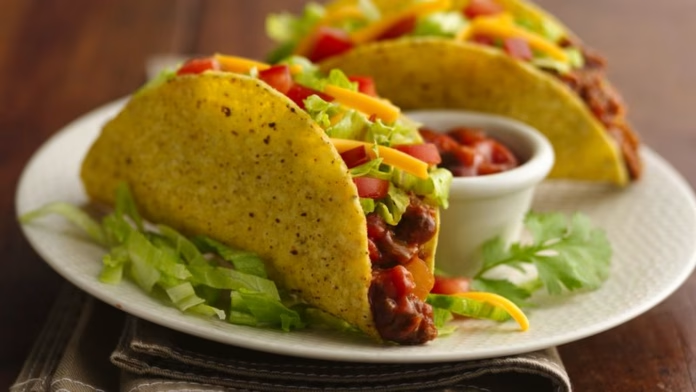
Yum! Brands, Inc. has recently revealed the appointment of Sean Tresvant as the Chief Executive Officer of the Taco Bell Division. Sean Tresvant will assume this role starting from January 1, 2024, and will report directly to David Gibbs, the Chief Executive Officer of Yum! Brands.
Tresvant, who currently serves as Global Chief Brand and Strategy Officer of Taco Bell, will succeed Mark King, who has announced his decision to retire at the end of 2023.
Taking on the role of CEO, Tresvant will undertake global responsibility for spearheading Taco Bell’s growth strategies, overseeing franchise operations, and ensuring the overall performance of the company.
“Sean is a visionary business leader and best-in-class brand builder who is driving transformative R.E.D. (relevant, easy, distinctive) sales-powering efforts, from omni-channel initiatives to digital customer touchpoints, to accelerate growth and further elevate and differentiate the Taco Bell fan and team member experience,” said Gibbs.
Tresvant joined Taco Bell in January 2022 as Global Chief Brand Officer. He was promoted to an expanded role as Global Chief Brand and Strategy Officer earlier this year, focused on developing perspective and ambition for long-term global growth.
As Global Chief Brand and Strategy Officer of Taco Bell, Tresvant has overseen the brand’s Strategy, Food Innovation, Architecture and Design and Global Communications functions as well as the Taco Bell International business. During his time with Taco Bell, Tresvant has set a powerful strategic framework that has created iconic moments within culture and driven massive awareness and buzz for the brand, including several high-profile celebrity partnerships and the return of the fan favorite Mexican Pizza. Prior to joining Taco Bell, Tresvant spent more than 15 years in leadership roles at Nike including Chief Marketing Officer of the Jordan Brand.
“The love our fans and team members have for Taco Bell is extraordinary and means we’re in a unique position to push the limits on culture and become a brand that inspires and enables the world to Live Más,” said Tresvant.
Following the clarification made by the Delhi Metro Rail Corporation (DMRC) regarding the allowance of commuters to carry two sealed bottles of alcohol on its network, the Noida Excise department has issued a cautionary advisory concerning metro stations under its jurisdiction.
According to officials from Noida, the existing rule allows for the import of only one unsealed bottle from the adjoining regions of Delhi or Haryana, whether it is through the metro or by road.
“Although the Delhi Metro has allowed commuters to carry two sealed bottles of liquor, the rules of the Uttar Pradesh Excise Department apply in its jurisdiction, irrespective of any changes in Delhi,” a senior Noida District Excise official said.
The officer further stated that the excise department will enhance its surveillance at metro stations and initiate legal measures against commuters found carrying more than one sealed liquor bottle from outside Uttar Pradesh (UP). Additionally, efforts will be made to educate and inform commuters about the excise regulations in UP, aiming to prevent any inconvenience.
If an individual is found carrying an excess quantity of liquor beyond the permitted limit into the jurisdiction, the official stated that legal action would be taken under Section 63 of the Excise Act. This particular section deals with penalties for unlawful import, export, transport, manufacture, possession, and sale of liquor, and it is considered a non-bailable offense.
The Delhi Metro Rail Corporation (DMRC) clarified on Friday that the carriage of alcohol was prohibited on the Delhi Metro until last year, with the exception of the Airport Express Line. The recent decision to allow alcohol across the entire network is part of the DMRC’s policy to establish uniformity in this regard.
The Delhi Metro has revealed that a committee consisting of officials from the CISF (Central Industrial Security Force) and the DMRC conducted a comprehensive review of the list of items permitted to be carried on trains.
While permitting the carriage of alcohol, the DMRC has appealed to passengers to maintain decorum during their travel. The DMRC has also issued a warning that individuals found behaving inappropriately or indecently under the influence of alcohol will face appropriate legal action.
According to analysts, the classification of aspartame, the artificial sweetener used in Diet Coke, as a possible carcinogen by the World Health Organization (WHO) will have only a minimal effect on Coca-Cola. This is due to the company’s extensive production scale. This assessment was made on Friday.
The recent classification of the widely-used additive by the cancer research division of the World Health Organization in July has prompted consumers, food companies, retailers, and restaurants to weigh their options. They must now decide whether to challenge the classification or seek alternative options for the additive.
However, analysts pointed out that Coca-Cola might have an easier time transitioning to a natural sweetener compared to other companies that rely on aspartame. This is because Coca-Cola’s low-calorie offerings, which utilize aspartame, constituted approximately one-third of its total sales volume in 2022.
“Coca-Cola has one of the best production and distribution systems globally… who have successfully navigated plenty of hurdles in the past, like sugar taxes and reformulations associated with that,” said Charlie Higgs, an associate partner at Redburn Ltd, a consumer staples research firm.
In previous times, beverage producers like Coca-Cola and PepsiCo have modified the composition of their ingredients to adhere to evolving policy shifts.
In 2012, these companies modified their cola manufacturing process by adjusting the caramel coloring to comply with the regulations of a California ballot initiative, which aimed to restrict people’s exposure to harmful chemicals.
According to Grzegorz Drozdz, a market analyst at Conotoxia Ltd, an investment firm, the transition away from aspartame could potentially impact Coca-Cola’s short-term profitability. However, Drozdz believes that the company’s extensive production history will prevent a significant decline in its long-term growth.
CFRA Research stated that PepsiCo could gain a competitive advantage over its rival, Coca-Cola, as it had already transitioned from aspartame to a combination of sucralose and acesulfame potassium. This move positions PepsiCo favorably compared to Coca-Cola in the ongoing shift away from aspartame.
In 2015, PepsiCo initially removed the additive aspartame from certain diet soda products in the United States. However, they reintroduced it in some products the following year. Then, in 2020, PepsiCo once again eliminated aspartame from their offerings.
Choko La, the renowned premium chocolate brand, has exciting news to share. They have just announced the much-anticipated inauguration of their seventh boutique store, located in the prestigious Select Citywalk, Saket. This expansion marks another milestone in Choko La’s journey to bring their exquisite handcrafted chocolates to chocolate enthusiasts in the area.
Situated on the ground floor, the newly opened store presents an extensive selection of gifting and celebration cakes, introducing a vital category to Choko La’s offerings. As a standalone boutique, it proudly showcases all of the brand’s signature product categories, encompassing chocolate gift hampers, bars, signature cakes, and freshly baked breads. Additionally, Choko La aims to cater to customers seeking occasion-specific personalized designer cakes, further enhancing their commitment to providing tailored delights for every celebration.
Vasudha Munjal Dinodia, Founder & CEO, Choko La, said, “I constantly strive to make Choko La the vehicle with which others can savour those moments too. For us at Choko La – quality, product innovation and customer centricity are the most important key pillars for long term success, something that I have learnt from my grandfather and father. Our new product and boutique launches are a testament to it. We are very happy and thrilled with our new store opening at Select Citywalk.”
Choko La has also expanded their cloud kitchens and has opened 12 new cloud kitchens across Delhi-NCR in Q1 and are opening another five by Q3. Globally, Choko La supplies to the USA and UK market and shall soon start supplying to Singapore, Canada, Germany and GCC, added Vibhu Mahajan, COO of the brand.
With many successful boutiques in Delhi, Gurgaon and Duty Free, Choko La is all set to reach a wider local and international audience with its new store launch.
An official from the food services stall in Bhagalpur, Bihar, made an announcement on Saturday, stating that they will exclusively serve vegetarian food during the month of Sawan. Beginning July 4, the provision of non-vegetarian food will be suspended.
Pankaj Kumar, the manager of the food services stall, informed news agency ANI about the decision, stating that the food will be prepared without the inclusion of onion and garlic. Additionally, fruits will be provided to the customers. Kumar emphasized that cleanliness will be meticulously maintained.
However, the Indian Railway Catering and Tourism Corporation (IRCTC) issued a statement to clarify the situation. According to the IRCTC, no instructions have been given to restrict the availability of non-vegetarian food during the month of Sawan or any specific date. They emphasized that all approved food items will remain accessible for passengers to purchase from the food unit as usual.
Sawan, alternatively known as Shravan, represents the fifth month of the Hindu lunar calendar and holds great significance as one of the holiest months in the Hindu religion. It is a period characterized by deep spiritual devotion, fasting, and jubilation observed by millions of Hindus throughout India and various other regions across the globe. Typically, Sawan falls between the months of July and August, coinciding with the onset of the monsoon season.
This year, Sawan will begin on July 4 and continue until August 31, lasting for a total of 59 days. What makes this year’s Sawan particularly noteworthy is the occurrence of eight Sawan Mondays or Somwars, instead of the usual four that take place each year. This phenomenon is happening after a gap of 19 years, adding a unique aspect to the month-long festivities and religious observances.
The fasting period for this year begins on July 10, which happens to be the first fasting Monday, and it concludes on August 28, which marks the last Monday fast of the period.
In addition to observing the Sawan Somwar fasts, another important aspect of this month is the Kanwar Yatra. This religious ritual involves devotees of Lord Shiva carrying small pots known as Kanwars and collecting water from holy rivers. Adorned in saffron-colored attire, the devotees embark on foot to visit sacred sites associated with Lord Shiva, symbolizing their unwavering devotion and dedication.
Are you tired of the same old snacks and looking for something new and exciting to elevate your binge game? Look no further than the exquisite flavors of Kerala! This beautiful coastal state in South India is not only known for its stunning landscapes and rich cultural heritage but also for its delectable cuisine. Kerala offers a wide array of snacks that are perfect for enjoying with a cup of tea or coffee. From crispy treats to sweet delights, these traditional snacks will take your taste buds on a delightful journey. So, let’s explore the world of Kerala’s snack culture and discover some mouthwatering treats that will surely satisfy your cravings.
Chatti Pathiri: A Culinary Masterpiece
One of the most unique and intricate snacks from Kerala is Chatti Pathiri. This dish is particularly popular among the Muslim population in the state and requires a certain level of culinary expertise to master. In Malayalam, “chatti” means “pot” or “pan,” and “pathiri” refers to the thin savory pancakes that are a staple in Keralan kitchens. To prepare Chatti Pathiri, you layer shredded spiced chicken between these thin pancakes, creating a savory pastry-like dish. The layered creation is then pan-roasted to perfection and served hot, offering a harmonious blend of flavors and textures.
Kuzhalappam: Crispy Cylinders of Delight
If you’re a fan of crispy snacks, Kuzhalappam is a must-try delicacy from Kerala. The name “kuzhal” translates to “barrel” in Malayalam, aptly describing the cylindrical shape of this deep-fried treat. Made with a combination of rice flour, cumin, black sesame seeds, and garlic, Kuzhalappam not only delights your taste buds but also provides immune-boosting benefits. Whether you enjoy it with a hot cup of tea or a refreshing cup of coffee, this savory snack is sure to satisfy your cravings.
Ottada: Fragrant Packages of Sweetness
Ottada is a unique snack from Kerala that combines the aroma of freshly burned banana leaves with the sweetness of coconut and jaggery. These sweet rice flour packages are wrapped in banana leaves, adding a distinct flavor to the dish. As you indulge in the delightful filling made of coconut, crunchy sweet rice, and chakkavaratti (jackfruit jam), you’ll find yourself craving for more. Ottada shares similarities with other Kerala snacks like elaada and kozhukatta, all of which showcase the state’s culinary diversity and creativity.
Orappam: The Perfect Blend of Crisp and Gooey
Orappam, also known as Vattayappam, is a traditional old-fashioned snack hailing from Kerala. This delectable treat is made with rice flour, coconut milk, and a sweetener such as jaggery or ordinary sugar. The result is a snack that offers a delightful contrast of textures. On the outside, Orappam is crispy, while on the inside, it is soft, mushy, and gooey. With its unique blend of flavors and its visually appealing appearance, Orappam is a must-have snack for anyone looking to explore the diverse culinary landscape of Kerala.
Arikadukka: Crispy Seafood Delight
For seafood lovers, Arikadukka is a snack that will leave you wanting more. This mouthwatering delicacy requires fresh mussels to be deep-fried after being coated in a mixture of salt, garam masala, turmeric, and chili powder. While the preparation may require a bit of effort, the end result is a crispy and crunchy paradise. Arikadukka showcases the influence of Kerala’s coastal geography on its culinary traditions, offering a delightful seafood snack that captures the essence of the region.
Unnakaya: A Ramadan Favorite
Unnakaya is a spindle-shaped snack that holds a special place in the hearts of the Muslim population in Kerala, particularly during the holy month of Ramadan. Originating from the northern regions of Kannur and Thalassery, Unnakaya is a year-round favorite that is enjoyed by people of all communities. This energy-packed snack is made with bananas, cashews, raisins, and rice flakes, creating a delightful combination of flavors and textures. Whether you’re celebrating Ramadan or simply looking to explore the diverse snack culture of Kerala, Unnakaya is a treat that should not be missed.
Sukiyan: Sweet Mung Bean Delights
Sukiyan is a typical Keralan evening snack that showcases the versatility of mung beans in creating delicious sweets. These deep-fried balls of cooked mung beans are sweetened with coconut and jaggery, offering a delightful balance of flavors. While Sukiyan shares some similarities with the popular South Indian snack called bonda, it stands out with its sweeter taste and unique combination of ingredients. Whether you have a sweet tooth or simply appreciate the flavors of Kerala, Sukiyan is a snack that will satisfy your cravings.
Neyyappam: Heavenly Ghee-Fried Delicacy
Prepare to indulge in the heavenly flavors of Neyyappam, a small sweet appam that is fried to perfection in ghee. These small globes of delight feature two traditional Keralan snack ingredients: coconut and jaggery. Neyyappam’s irresistible taste and aroma make it hard to resist, and you’ll find it difficult to stop at just one. With its crispy outer layer and moist, sweet interior, Neyyappam offers a sensory experience that exemplifies the culinary richness of Kerala.
Final Thoughts:
If you’re tired of the same old snacks and are looking to elevate your binge game, Kerala’s exquisite flavors are here to delight your taste buds. With a wide range of snacks that showcase the state’s cultural diversity and culinary expertise, Kerala offers a treasure trove of delights waiting to be explored. From savory treats like Chatti Pathiri and Kuzhalappam to sweet delicacies like Ottada and Unnakaya, each snack tells a unique story and brings forth the rich flavors of the region. So, the next time you find yourself craving a snack, why not embark on a culinary journey through Kerala and experience the magic of its exquisite flavors!
We use cookies to ensure that we give you the best experience on our website. If you continue to use this site we will assume that you are happy with it.