Friday, January 9, 2026
Home Blog Page 1050

Wardwizard Foods and Beverages takes center stage at India HoReCa Expo 2023 with QuikShef and Snack Buddy’s retail and HoReCa range

0
Wardwizard Foods and Beverages

Wardwizard Food and Beverages Ltd, a prominent company in the food and beverage sector, is pleased to announce its participation in the highly anticipated India HoReCa Expo 2023. This prestigious event, scheduled to run from July 5th to July 7th, 2023, will be held at the renowned Codissia Trade Fair Complex in Coimbatore, Tamil Nadu, India.

The India HoReCa Expo stands as a distinguished trade show exclusively designed for the Hotel, Restaurant, and Catering (HoReCa) industry, uniting professionals, suppliers, and key decision-makers from all corners of the nation. Wardwizard Food and Beverages Ltd is thrilled to announce its participation in this esteemed occasion, where they will proudly present an extensive collection of retail and HoReCa products, specifically highlighting QuikShef and Snack Buddy. The showcased range will encompass a diverse selection of Ready-to-Eat (RTE) products, frozen items, as well as a variety of sauces and condiments.

Being a BSE-listed company, Wardwizard Foods and Beverages Ltd is situated in the vibrant Village-Por, Vadodara, Gujarat. It is renowned for its distinct approach to the food industry, seamlessly merging the entrepreneurial spirit with the authentic essence of traditional Indian flavors. Wardwizard takes pride in its extensive range of products, encompassing frozen foods, ready-to-eat meals, beverages, spices, and condiments.

Speaking on the participation in India HoReCa Expo 2023, Sheetal Bhalerao, Chairperson, and MD of Wardwizard Foods and Beverages Ltd., said, “We are pleased to showcase our wide range of offerings at India HoReCa Expo 2023. It serves as an excellent platform for us to present our renowned QuikShef and Snack Buddy brands, along with the launch of our exciting wide range of HoReCa products. We are eager to introduce our innovative and high-quality products to the attendees, and we look forward to exploring new business opportunities. With this, the company is prepared to enter a new market and will soon make a variety of its products available in Coimbatore.”

Wardwizard Food and Beverages is dedicated to providing exceptional convenience, allowing customers to indulge in delectable meals without the need for extensive preparation. With a wide variety of options available, the QuikShef offerings cater to diverse palates, ensuring there is something for everyone. The addition of Snack Buddy sauces brings an extra element of excitement and flavor to any dish. Furthermore, the introduction of the HoReCa range showcases the company’s ongoing commitment to delivering innovative and top-notch products to the industry.

By participating in the India HoReCa Expo 2023, Wardwizard Food and Beverages endeavors to establish meaningful connections with industry professionals, foster new partnerships, and broaden its business horizons. The company eagerly anticipates contributing to the event’s success and is enthusiastic about a fruitful exhibition experience.
Advertisement

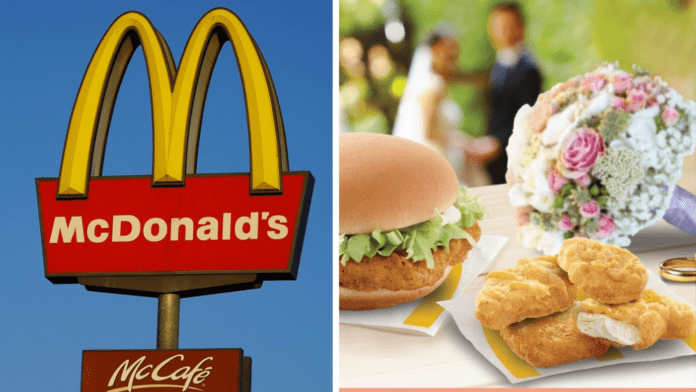
McDonald’s makes historic change to menu, introduces affordable wedding catering package under £200

0
McDonald's

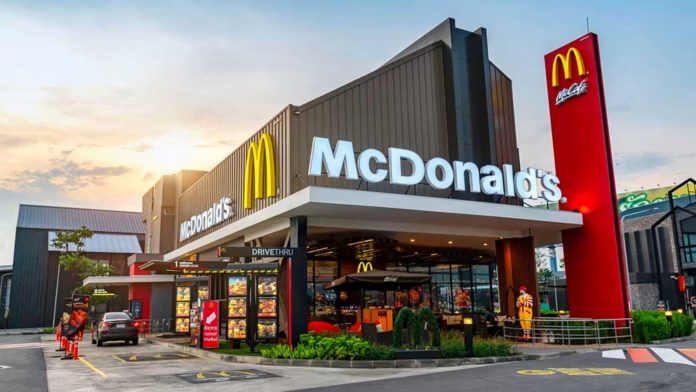
McDonald’s has recently introduced a groundbreaking addition to their menu by offering an affordable wedding catering package priced at under £200. This remarkable deal enables the newlyweds to indulge in a variety of McDonald’s favorites during their wedding breakfast. Options include 100 chicken burgers and 100 boxes of McNuggets or 100 cheeseburgers and 100 chicken fingers, providing a delightful feast for the happy couple and their guests.

The wedding feast has been launched in Jakarta, Indonesia – but it could be expanded across the world if successful.

Rizki Haryadi, from McDonald’s Indonesia, said, “There are other service options as well, where we can also provide food stalls at an additional cost. The wedding package is not for holding a wedding at a McD store, but only for food, such as catering with prices starting from £185 with a minimum purchase of 200 products.”

Accompanied by the slogan, “Make wedding moments unforgettable,” the minimum order requirement for the wedding feast is set at 200 pieces.

McDonald’s Indonesia is not the first to explore the wedding industry. In Hong Kong, couples have the unique opportunity to tie the knot in restaurants.

Introduced in 2011, the “Happiness Party” packages encompass a comprehensive range of elements such as invitations, balloons, and cake. The package entails a two-hour venue rental, equipment, food, and comes at a cost of only £300 (2,999 Hong Kong dollars).

Considering the staggering average wedding cost of £30,000 in the UK, a McWedding might not be a bad choice for lovebirds looking to tie the knot.

Advertisement

Coffee shops outshine quick service restaurants in India: Millennials opting for cafe experiences over fast food

0
Cafe
(Representative Image)

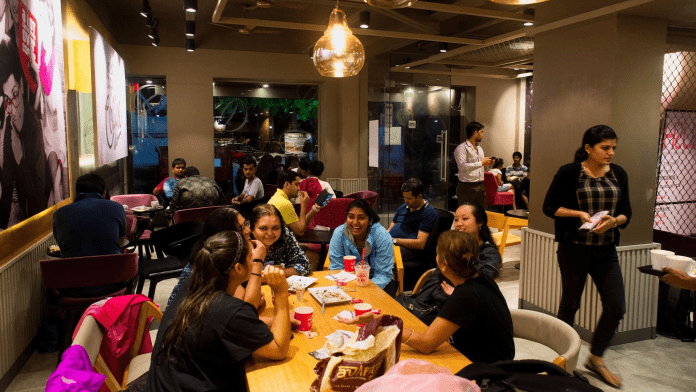
Cafe chains in India are witnessing a notable surge in growth, outpacing quick service restaurants (QSR), as indicated by executives and analyst reports. This shift can be attributed to the changing preferences of younger, aspirational consumers who are increasingly opting to gather and spend time in cafes, despite the relatively higher prices on the menu.

Large chains such as Tata Starbucks, Costa Coffee, and Barista have recognized India as a top growth market, capitalizing on its flourishing coffee culture. With double-digit growth rates, these established players are thriving in the Indian market. Joining the wave of success are new global entrants like British chain Pret a Manger and Canadian chain Tim Hortons, eager to tap into the country’s coffee-loving population. Moreover, the emergence of new-age specialty coffee chains like Blue Tokai, Third Wave, and Slay further exemplifies the robust coffee culture that is fueling the industry’s growth in India.

“We have achieved sales and transaction numbers exceeding our expectations, indicating strong demand,” said Tarun Jain, chief executive of Tim Hortons, which is in its first year of India operations.

Tim Hortons has entered India in partnership with AG Cafe, a joint venture entity owned by fashion and retail conglomerate Apparel Group, and investment manager Gateway Partners. It expects to set up 120 stores by 2026.

Tata Starbucks, which crossed sales of INR 1,000 crore in 2022-23, identified India as among its core growth markets during a management commentary after its fourth quarter earnings. The joint venture between the Tata Group and Starbucks opened 71 new stores last fiscal, its fastest annual expansion, taking the overall store count to 333.

“Tata Starbucks is looking to rapidly expand its presence in the coming years; we are looking to enhance relevance for more segments of consumers,” said Sunil D’Souza, Managing Director of Tata Consumer Products.

Despite its higher pricing compared to competitors such as Cafe Coffee Day and Costa Coffee, the company is experiencing rapid growth.

According to industry executives, cafes that position themselves as social gathering spots or even alternative workspaces outside the home are successfully attracting younger audiences and contributing to the thriving cafe culture.

This trend is also benefiting packaged coffee players.

“New coffee shops are coming up, the cafe culture is evolving,” Philipp Navratil, Head of Nestle’s coffee strategic business unit, said in a recent interview. “India is now among the fastest-growing coffee markets for Nestle globally and offers a huge opportunity for penetration-led growth, both through in-home and out-of-home consumption.”

Cafe chains have also become appealing to investors.

In January, Blue Tokai Coffee Roasters secured $30 million in a funding round primarily led by A91 Partners, while Third Wave Coffee Roasters received a $20 million investment from WestBridge Capital last year. Additionally, global chains like Cinnabon and Carvel are actively expanding their presence through local partnerships.

Coffee Day Enterprises, the operator of the popular homegrown Cafe Coffee Day chain, experienced a significant 75% year-on-year increase in revenue in FY 23. However, the chain had to reduce its store count to 469 outlets during the year due to high debt and alleged mismanagement of funds.

Statista Research estimates that the coffee cafe franchise market in the country is valued at INR 5,000 crore, with a steady growth rate of 8-9% per year.

In contrast, the Quick Service Restaurant (QSR) industry, which has a significantly larger estimated market value of $16.72 billion, approximately INR 1.38 lakh crore, in 2023 according to market research firm Research and Markets, is experiencing a slowdown due to mounting growth pressures.

The majority of Quick Service Restaurant (QSR) chains in the country have witnessed either stagnant same-store sales growth or a decline of approximately 5-6% in the past two reported quarters.

Advertisement

Zomato’s Indonesian subsidiary PTZMI starts liquidation process, no significant impact expected on turnover

0
Zomato Gold
Zomato (Representative Image)

Food delivery and restaurant-discovery platform Zomato Limited’s wholly owned subsidiary PT Zomato Media Indonesia (PTZMI) has begun the process of liquidation, the Gurugram-based startup has told exchanges.

According to Zomato’s red herring prospectus in July 2021, PTZMI, a company based in Indonesia, has been inactive in terms of business operations. In a filing on July 5, it was mentioned that the liquidation of PTZMI would not have a notable effect on Zomato’s turnover or revenue. This is because PTZMI is not deemed a significant subsidiary of the company.

In accordance with listing regulations, Zomato has furnished the required financial information of PTZMI for the previous fiscal year, which concluded on March 31, 2023. As per the provided details, PTZMI recorded a turnover of zero and made no contribution to Zomato’s overall turnover. The net worth of PTZMI was reported as INR 1.5 crore, constituting 0.01 percent of Zomato’s net worth.

The liquidation process of PTZMI is expected to be completed within the next 12 months, subject to required approvals, the food aggregator said.

Detailed information regarding the sale or disposal, including the agreement date, consideration received, buyers’ details, and related party transactions, is not applicable in this case.

On July 5, the Zomato stock closed 1.07 percent down on the National Stock Exchange at INR 74.

Advertisement

Delhi government seeks public feedback on draft policy for independent food outlets

0
food outlet
(Representative Image)

The Delhi government has sought public feedback on its draft policy concerning independent food outlets in the national capital. The purpose of this initiative is to gather input from the public regarding the proposed policy, which aims to streamline licensing norms and support the growth and expansion of these establishments.

The policy was announced in the Rozgar Budget 2022-23 by the then Finance Minister Manish Sisodia.

The deadline for public feedback is set for July 20th.

According to the draft, the government has taken a stance to formally recognize independent food outlets as a separate entity. The reason behind this decision is that most of the government’s stakeholder departments currently lack a designated category specifically addressing “Independent Food outlets” within their policy framework.

“The term ‘independent food outlet’ shall include other similar terminology such as cloud kitchen, ghost kitchen, dark kitchen, base kitchen, satellite kitchen and virtual kitchen etc.,” it said.

“‘Independent food outlet’ shall mean those outlets that operate independently in any commercial or industrial space without any of its products being sold to consumers on-site,” the draft mentions.

Specifying the definition of independent food outlets, the draft specified that all food/products of such outlets should be invariably delivered to the consumers by way of delivery personnel. However, outlets that are attached to dine-in restaurants or takeaway establishments should not be specified as independent food outlets.

The Delhi government’s Department of Industries has been mandated to develop a single-window portal for licensing and compliance under the recently notified start-up policy.

The single-window portal will serve as an online platform for streamlining the process of obtaining licenses and permissions for establishing and operating independent food outlets within the National Capital Territory of Delhi.

The policy proposes for removal of the requirement of a fire NOC while stressing that a ‘no fire NOC’ should be required for the establishment and operation of independent food outlets in industrial and commercial locations for covered areas below 250 square metres.

The policy envisions 24X7 operations for such outlets.

The Labour Department will examine and bring suitable amendments to permit round-the-clock operations for independent food outlets.

It proposes the adoption of a computerised inspection management system, which may provide random assignment of inspections, wherever necessary.

“The concerned department shall carry out a risk-based assessment in a time-bound manner by determining the need and periodicity of inspections ensuring transparency,” the draft said.

The Delhi government will also develop independent food outlets if a need is felt for the development of such a facility in any industrial/commercial area, through the Delhi State Industrial and Infrastructure Development Corporation Ltd. (DSIIDC).

It states that these facilities shall be of plug-and-play in nature with all the common infrastructures being provided at the complex. These facilities shall be allowed to operate on a rental basis and subsidised if required.

In addition, some other ancillary facilities such as common infrastructure, food testing labs, temperature-controlled warehousing, docking & storage facility, chilling station, co-working office space etc. may also be developed, it said.

The Department of Industries will be the implementing agency for all reward and incentive schemes under the policy except for the development of infrastructure, with all independent food outlets having to register themselves with the implementing agency under this policy before claiming any benefits of the policy.

It also provides for the creation of an empowered committee headed by the Minister of Industries comprising representatives of all concerned departments.

The committee shall conduct meetings once in three months and evaluate the policy periodically and modify, amend or relax any provision thereof, to ease the operations of independent food outlets with the approval of the Minister of Industries, GNCTD.

It shall take all measures to resolve the grievances and any major issues faced by the industry and any difficulty in implementation of the policy, the draft policy said.

According to government officials, currently, around 20,000 cloud kitchens and independent food outlets are operating in different parts of Delhi. Approximately, four lakh people are working with or associated with these establishments in some way.

Advertisement

WHO releases comprehensive guidelines to protect children from unhealthy food marketing

0
Junk food
(Representative Image)

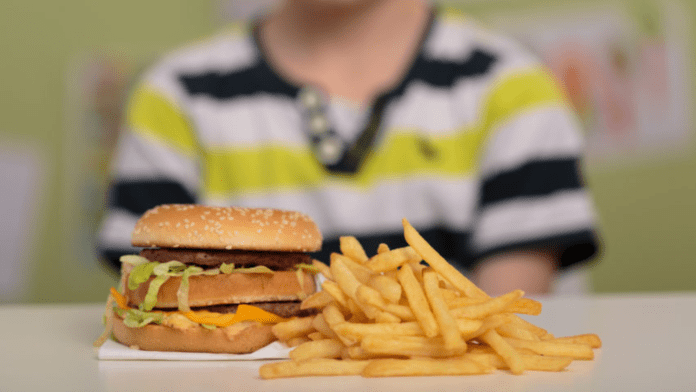
The World Health Organization (WHO) has released guidelines outlining policies designed to safeguard children from the detrimental impact of unhealthy food.

WHO urges countries to implement comprehensive mandatory guidelines to protect children of all ages from the marketing of foods and non-alcoholic beverages high in saturated fatty acids, trans-fatty acids, free sugars and/or salt (HFSS).

WHO recommendations are based on recent evidence, including how food marketing negatively impacts children’s health, eating behaviour, and other food-related attitudes and beliefs. 

Policies to Restrict Food Marketing

It is also very significant to restrict the power of food marketing to persuade, which involves the use of cartoons and techniques that are appealing to children. The policies restricting food marketing are most effective if they are:

  • Mandatory to implement
  • Protecting children of all ages
  • Classify foods to be restricted from marketing based on the government-led nutrient profile model
  • Sufficiently comprehensive to minimise the risk of migration of marketing to other age groups.

According to Dr. Francesco Branca, the Director of the Department of Nutrition and Food Safety at the World Health Organization (WHO), the aggressive and persuasive marketing of food and beverages high in saturated fatty acids, trans-fatty acids, free sugars, and/or salt (HFSS) is a significant factor contributing to unhealthy dietary choices.

“Calls to responsible marketing practices have not had a meaningful impact. Governments should establish strong and comprehensive regulations,” Dr Francesco added.

The WHO emphasises adapting guidelines to the local contexts of WHO regions and member states. Local consultations are mandatory for the adoption of recommendations and adaptation to the country’s context, protecting public health policy-making from undue influence by real, perceived or potential conflicts of interest.

The policies of WHO protect children from the harmful impact of food marketing and implement a comprehensive policy approach to enable a supportive food environment.

The WHO guidelines assist governments in developing a healthy food environment and facilitating healthy dietary decisions, establishing lifelong healthy eating habits, improving dietary quality and decreasing the risk of noncommunicable diseases worldwide.

Advertisement

Food crisis looms in Manipur as ethnic violence impedes farming

0
farming
(Representative Image)

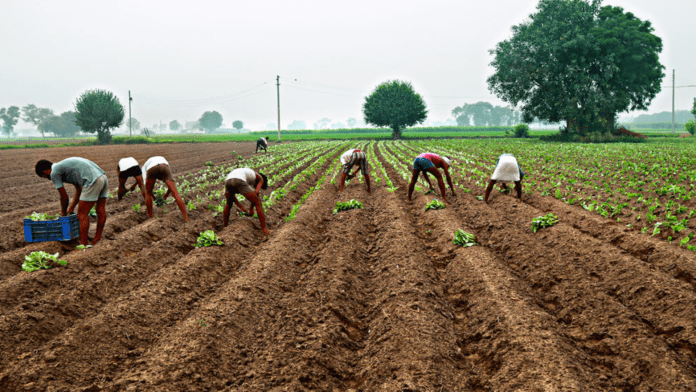
Agriculture has been affected in Manipur as many farmers are unable to tend to their fields due to the ongoing ethnic violence, and if the situation does not improve, food production in the northeastern state will be affected, a senior official said on Wednesday.

According to the Director of the Department of Agriculture, N Gojendro, a significant loss of 15,437.23 metric tonnes has been incurred until June 28 due to farmers’ inability to cultivate approximately 5,127 hectares of agricultural land.

“If the farmers are unable to cultivate paddy this monsoon season, the loss will increase by the end of July. The department has, however, readied fertilisers and seeds that can be harvested in a shorter period of time and required lesser amount of water,” he said.

There are around 2-3 lakh farmers in the state cultivating paddy on 1.95 lakh hectares of agricultural land.

Thoubal district has the highest yield per hectare in the state, he said.

Farmers fear that there might be a shortage of locally grown ‘Meitei Rice’, leading to price rise next year, if farming is not carried out in full swing in all areas by the end of this month.

While some farmers in the outlying areas of Imphal are tending to their fields despite fear of being shot at by militants from the nearby hills, many are abstaining from farming in the peak season for fear of their lives.

Thokchom Milan, a farmer from Moidangpokpi area in Bishnupur district, which has seen many such happenings, said, “Incidents of firing on farmers from bunkers of militants on hilltops has paralysed paddy cultivation in the periphery of Imphal Valley.”

“Some of us go to the fields with fear in our hearts but we have to cultivate else we will go hungry an entire year,” he said.

The 40-year-old farmer said lesser food production this year will mean shortages and higher prices of ‘Meitei Rice’ next year.

Sabit Kumar, another farmer in Moirang Khunou in the same district, said, “Sowing and cultivation of the indigenous variety of rice is done in June and July, while harvesting are done five months later in November-end.”

“Adding to our woes is the rainfall deficiency this year. Last year, heavy rain had flooded paddy fields in May-end, whereas this year, there has been less rain. The scorching sun dries the ground, making cultivation difficult,” he said.

‘Meitei Rice’ needs a lot of water for cultivation. It has high starch and carbohydrates.

Chief Minister N Biren Singh had earlier said that 2,000 state forces have been deployed in sensitive areas to patrol and provide security to farmers during cultivation.

Advertisement

McDonald’s plans aggressive expansion in South Korea, aiming for 25% increase in locations by 2030

0
mc Donalds food
McDonald's (Representative Image)

McDonald’s Corp., the leading global operator of fast-food restaurants, has announced plans to expand its presence in South Korea by 25% in response to growing competition within the domestic burger industry. Simultaneously, the company remains committed to finding a strategic partner to facilitate the sale of its business in the country.

According to CEO Kim Kiwon, HanGook McDonald’s Co., the South Korean unit of the global food service giant, has set a target to operate 500 restaurants in the country by 2030. As of the end of 2022, the South Korean unit of McDonald’s had a total of 399 locations, as reported in its filing to the national financial regulator.

After successfully launching three outlets in the first half of the year and two in the previous year, the South Korean unit of McDonald’s is gearing up to open five new locations in the second half. Additionally, the company has plans to open a total of 30 restaurants by the year 2030.

“We will accelerate the opening of new restaurants to ramp up customer contact points,” Kim told reporters in her first public appearance since she took office in May last year.

Kim stated that the anticipated expansion is expected to contribute to the eventual profitability of McDonald’s South Korean unit.

Despite recording a growth in sales by 14.6% to a record 994.6 billion won, the company faced an operating loss for the fourth consecutive year, with a deficit of 27.8 billion won ($21.4 million) in 2022. In the first half of this year, sales, including those from franchise stores, saw a 9.7% increase, amounting to 623.4 billion won.

“Higher sales and investments are more essential than immediate profitability,” Kim said. “We need to cut investments in products and services for a turnaround in the near term, but that is not a long-term goal of McDonald’s. We must maintain growth by increasing stores.”

McDonald’s South Korean unit also tried to attract customers with localized menus, given growing competition in the local premium burger market.

“Value for money is important to McDonald’s, but we need a proper strategy for markets with rapid changes such as South Korea,” Kim said.

McDonald’s continues to seek a sale of the South Korean operation to a strategic partner, given the importance of the business growth.

Its talks for the sale with Dongwon Industries Co., the holding company of South Korea’s top seafood company Dongwon Group, failed earlier this year.

“The sale is not only for profits,” Kim said. “We are looking for a strategic partner for the growth and development of HanGook McDonald’s.”

Advertisement

Italian food company Porta raises CAD 10.5 Million in Series A funding round

0
Porta
Porta

Porta, a traditional Italian food company based in Canada, recently revealed its successful completion of a Series A funding round, amassing CAD 10.5 million (equivalent to approximately $7.935 million).

Porta emerged in 2021 as a fresh endeavor, brought to life through a collaboration between Terroni, an Italian restaurant brand based in Canada, and BrandProject, a venture capital fund. The funding for this venture was spearheaded by Terroni, along with its parent company Gruppo Terroni, BrandProject, and the Toskan Family Trust (TTFT).

Following Porta’s successful expansion into nearly 100 specialty grocery stores across Ontario, Canada, the funding acquired will be utilized to further fuel its retail growth and bolster its thriving direct-to-consumer operations.

Jason Cassidy, Founding General Nanager at Porta, said, “Our business continues to evolve into an omnichannel CPG company. This funding will allow us to continue to innovate on new product categories, expand into new markets and invest in strategic shopper and trade marketing initiatives.”

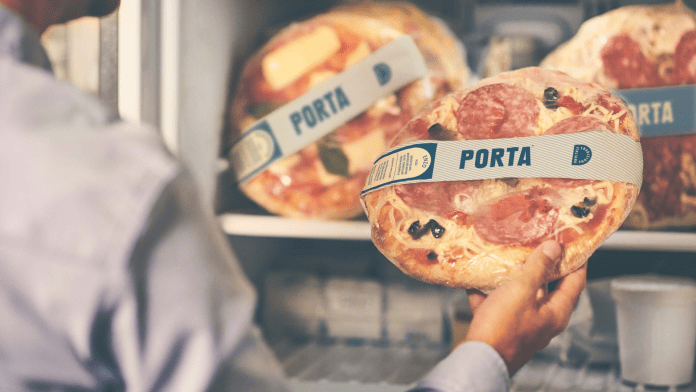
Porta presents genuine frozen ready meals crafted with high-quality Italian ingredients and locally-sourced components, ensuring an authentic dining experience. These delectable meals are conveniently prepared and can be savored in just 15 minutes or even less.

Cosimo Mammoliti, CEO of Gruppo Terroni, commented, “Our mission is to make every cook feel like a chef and we do that by making it easier to access, order and cook the best that Italy has to offer right in your home.”

Brett Toskan, President of TTFT, added, “Porta offers something unique to Canadians, which has allowed it to quickly differentiate itself from other home meal solutions. As an investor, we’ve been impressed by the rich history and passion for product quality that the Terroni team has, and by the strong team they have brought together. We look forward to supporting Porta in its continued growth.”

Advertisement

Adani Wilmar records impressive 25% YoY volume growth in Q1FY24 driven by surge in demand

0
adani
Adani Wilmar (Representative Image)

Adani Wilmar on Wednesday reported a 25 percent year-on-year volume growth during the quarter ending June 30, mainly on account of robust consumer demand in edible oils and foods.

According to a regulatory filing, Adani Wilmar stated that the sales of branded products in the edible oils and foods category have significantly outperformed the overall sales of their respective segments.

However, the sales in value terms declined 15 percent YoY following a sharp decline in the edible oil prices, the company added.

The volume of the edible oil business experienced a significant 25 percent year-on-year growth during the quarter. This expansion can be attributed to robust consumer demand and the favorable comparison to the corresponding quarter in FY23, which had a weaker performance.

Adani Wilmar further said that the food and FMCG segment recorded a revenue growth of 30 percent during the first quarter of this fiscal compared to last year, crossing INR 1,000 crore.

This was the eighth consecutive quarter with 20 percent year-on-year volume growth in the food segment and 30 percent in the FMCG segment, it said.

Both urban and rural areas have witnessed strong demand, the company said, adding that the oil and foods continued to grow at a rapid pace in the alternate channels (e-commerce, MT, eB2B among others) and recorded around 50 percent year-on-year volume growth for the quarter.

The company said it continued its focus on expanding the distribution of both oil and food products in the general trade channel.

The sale of branded products to HoReCa (hotels, restaurants and catering) clients continued to grow strongly during the first quarter of this fiscal with distribution expansion in more cities and acquisition of new client accounts, the company added.

The industry essentials business grew by 20 percent YoY by volume in the first quarter of FY24.

However, the revenues declined by 15 per cent YoY due to steep correction in prices of oleo and castor products, which together contribute around 70 percent of this segment’s revenue.

The strong volume growth was primarily driven by good crush operations and exports of animal feed products, the company added.

Shares of Adani Wilmar on Wednesday closed at INR 406.95, down 0.20 percent, on the BSE.

Advertisement