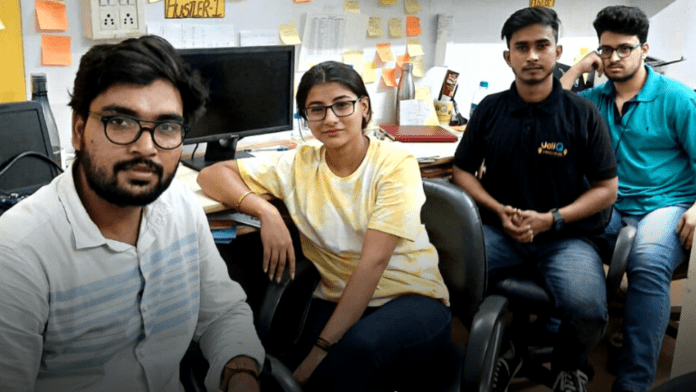
UcliQ, a B2B marketplace specializing in chicken and seafood, has successfully raised INR 0.7 crore ($85K) in an angel funding round. The funding was led by EvolveX Accelerator as part of its second cohort. Notably, Vamsi Udayagiri, the Founder of HESA, also participated in the funding round.
According to a press release, UcliQ plans to utilize the funds to extend its reach and enhance its overall impact in the market.
Founded in 2019 by Sameer Malik, UcliQ is a revolutionary platform that transforms meat supply chains. It provides a transparent and secure digital marketplace connecting buyers and sellers, including HoReCa (hotels, restaurants, and cafes), manufacturers, wholesalers, brands, and other businesses. By offering logistics and leaving digital footprints, UcliQ ensures reliable, standardized, and high-speed supply chains, while simultaneously tackling inefficiencies and reducing food wastage in the poultry, mutton, fish, seafood, live chicken birds, and ready-to-eat categories.
UcliQ’s initial target was to cater to approximately 1,200-1,400 HoReCa businesses in Delhi/NCR. However, the company has now raised its ambitions and aims to expand its reach to 20,000-25,000 businesses in Delhi/NCR, Bengaluru, and Hyderabad within the next 12 months. In this pursuit, UcliQ envisions achieving an estimated revenue of INR 15 crore during this period.
EvolveX Accelerator, Founded by We Founder Circle in 2021, stands as a prominent force in providing high-impact acceleration to early-revenue startups from various sectors. This dynamic program offers a wide array of benefits, including one-on-one mentorship sessions with handpicked angel investors and industry experts, upfront funding of $20K, and an impressive $200K worth of credits. With these resources at their disposal, startups have the opportunity to flourish and reach new heights of success.
Dunzo, backed by Reliance and Google, revealed on Thursday that it has seamlessly integrated its seller app with the state-supported Open Network for Digital Commerce (ONDC).
During the pilot phase of the ONDC network, the Bengaluru-based company, Dunzo, successfully integrated its B2B logistics arm, Dunzo For Business (D4B). Now, with its latest integration, 1,500 local merchants will be able to join the network within a week. Looking ahead, Dunzo aims to onboard an impressive 20,000 merchants from various sectors such as food, grocery, pharmaceuticals, and more, in the next 45 days.
Established by the Department for Promotion of Industry and Internal Trade (DPIIT), ONDC stands as a non-profit platform offering an alternative to conventional online shopping. It stands apart from being a mere app, functioning as a facilitative platform with the intention of bringing about a transformative impact on digital commerce.
Dalvir Suri, Dunzo’s Co-Founder and Head of Dunzo Merchant Services, said, “It’s been less than two weeks since we’ve been live on the network, and we’ve already hit peak order volumes of more than 3000 a day for groceries and other essential items through our local merchants.”
“We have merchant partners who’ve also seen a 3-fold increase in their daily orders. Very soon India’s e-comm landscape will be marked by pre-ONDC and post-ONDC days, and we are happy to be one of the first to participate in this Network and drive this change,” he said.
Dunzo’s announcement comes a day after a stakeholder consultation meeting on e-commerce policy, during which Commerce Minister Piyush Goyal urged companies like Amazon, Flipkart, Swiggy, and Zomato to integrate with ONDC.
Reports indicate that the department of consumer affairs has recently requested data on seller patterns and private labels from quick commerce players, aiming to gain insights into their business models.
T Koshy, Managing Director, and Chief Executive Officer, ONDC, said, “In a country like ours, where small and medium businesses keep the heart of commerce beating, any real progress must include them — that’s the core mission of ONDC Protocol. With Dunzo’s integration as a seller app, we will see thousands of new local merchants come online and grow their business while giving customers more choice and convenience.”
Upon joining D4B, local merchants will be granted automatic access to join ONDC, as per Dunzo’s announcement. The company will extend its technological resources, customer support, and last-mile logistics delivery assistance to facilitate their participation in the network.
As per reports, Dunzo is grappling with a severe cash crunch, resulting in a reduction of its operations’ scale and the deferral of salaries for more than 50 percent of its employees.
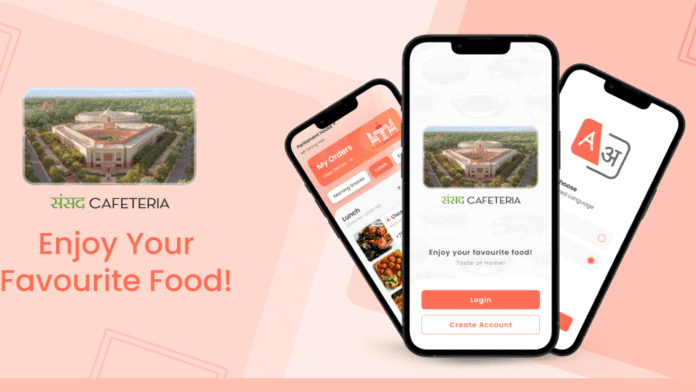
Members of Parliament (MPs) will soon have the convenience of utilizing a cutting-edge mobile app to place food orders from the Parliament canteen. This innovative app will enable them to have their selected dishes delivered directly to their seats or prepared for take-away as per their preference.
According to two officials familiar with the matter, the Indian Tourism Development Corporation (ITDC) has recently conducted a “soft launch” of the Sansad Cafeteria app at Parliament. Following its successful trial with Parliament staffers a few weeks ago, the app is set to be officially launched for all Members of Parliament, Parliament officers, and staff. This new app promises to enhance their Parliament experience, offering a more convenient and improved way to access the cafeteria services.
The management of the Parliament canteen falls under the responsibility of ITDC, a public sector undertaking (PSU) operating under the administrative purview of the Union Ministry of Tourism.
“The primary objective of the app is to provide this facility to MPs/officers/staff of Parliament, etc. to be able to order and get their choice of food delivered to their desired place or picked-up from a particular ITDC canteen/kitchen within the Parliament,” the official cited above said.
“They will also be able to select the choice of canteen/kitchen to order from. The menus for all canteen/kitchen will be listed with filter options to select from a particular food category like snacks, breakfast, brunch, lunch,” the official added.
Within the Parliament complex, multiple canteens and kitchens will be available for users to choose from.
The app’s menu will feature a range of breakfast options, such as sandwiches, puri sabzi, poha, and masala dosa. For lunch, users can choose from items like mini thali, shahi paneer, chicken curry, kadhi pakoda, and jeera rice, among others. Despite the Parliament canteen no longer being subsidized since 2021, the prices on the app will remain affordable. For instance, fish and chips will be available for just over INR 100, and dosa for INR 30, as confirmed by the mentioned officials.
“MPs will be able to use the app (available for both Android and iOS) in a way that their desired food item can be delivered to their location of choice within the Parliament premises,” the official said.
According to the second official, MPs will have the flexibility to choose their preferred mode of payment, and they will also be able to track the real-time progress of their order, from preparation to delivery.
“MPs who wish to pick their order themselves will be notified to get the order picked up from the pickup location. They will be able to select the building they want their food to be delivered within the Parliament premise. The building options shall be pre-defined as PH (for Parliament House), PHA (for the annexe), and PLB (for the library block),” the official said.
In 2020, ITDC assumed control of the Parliament canteen, taking over from Northern Railways, which had been catering to Parliamentarians for approximately 52 years.
The retail prices of wheat and rice have seen another increase in July, reaching INR 29.59 per kilogram and INR 40.82 per kilogram, respectively. This update was brought to the attention of Parliament on Wednesday by Minister of State for Consumer Affairs, Food, and Public Distribution, Sadhvi Niranjan Jyoti. In her written reply to the Lok Sabha, she highlighted that the prices of these essential commodities are in a state of constant flux, and the government is closely monitoring the situation to ensure the welfare of the consumers.
According to the statement, the average retail price of wheat in January stood at INR 31.58 per kg. However, this price decreased to INR 28.74 per kg in May. Subsequently, in July, the average retail price of wheat experienced another increase and reached INR 29.59 per kg.
Likewise, in the case of rice, the average retail price has risen from INR 38.09 per kg in January to INR 40.82 per kg in July.
The minister mentioned that the government has implemented several measures at different intervals to increase domestic supply and stabilize the prices of essential food commodities.
Among these steps, they encompass releases of wheat and rice under OMSS(D) from the buffer to mitigate price surges, the imposition of wheat stock limits, vigilant monitoring of stocks declared by entities to curb hoarding, and implementing restrictions on exports of these commodities, she added.
In response to a similar inquiry, Minister of State for Consumer Affairs, Food, and Public Distribution, Ashwini Kumar Choubey, stated that the retail prices of rice, wheat, and atta have witnessed year-on-year increases of 10.5 per cent, 5.2 per cent, and 8.5 per cent, respectively.
Regarding vegetables, it was reported that the all-India average retail price of potatoes is approximately 12 per cent lower than the price recorded last year. However, the price of onions has seen an increase of about 5 per cent compared to the previous year, he said.
The price of tomato has increased in recent weeks on account of a combination of factors like crop seasonality, white fly disease in Kolar, instantaneous arrival of monsoon rains in northern part of the country, which adversely affected tomato crops in Haryana and Himachal Pradesh, and logistics disruptions in isolated areas due to heavy rains, he added.
In order to check the current increase in prices of tomato and make it available to the consumers at affordable prices, the minister said the government has started the procurement of tomatoes under Price Stabilisation Fund (PSF) and is making it available at a highly subsidised rate to consumers.
Konscious Foods specializes in crafting frozen plant-based seafood tailored for both retail and foodservice channels.
Konscious Foods, a recently established alternative seafood venture in Canada, has successfully secured C$26 million ($19.5 million) in seed funding to accelerate the expansion of its distribution network.
Founded in Vancouver this year, Konscious Foods is the brainchild of Chef and Entrepreneur Yves Potvin, renowned for his Gardein meat-free brand. In 2014, Potvin sold Gardein to Pinnacle Foods, which, in turn, was acquired by another major US food industry player, Conagra Brands, in 2018.
Additionally, Yves Potvin established Yves Veggie Cuisine, which was acquired by the prominent US food company, Hain Celestial, in 2001.
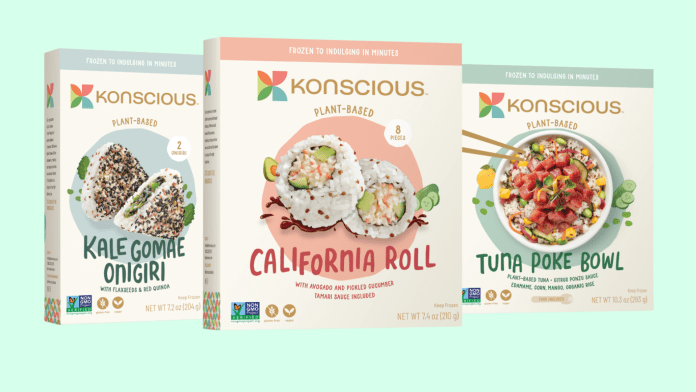
Konscious Foods specializes in crafting frozen plant-based seafood tailored for both retail and foodservice channels. Their product range includes delectable offerings such as sushi rolls, Japanese-style onigiri stuffed rice snacks, and poke bowls—a popular raw fish-inspired dish.
“This investment validates our excitement about the demand – and critical need – for seafood made from plants,” Potvin said in a statement. “With the rising demand for fish, and subsequent overfishing crisis, we feel it is crucial to have better-for-you, better-for-the-world seafood options that don’t sacrifice taste or texture.”
Potvin stated that the raised funds will be allocated towards extending distribution networks in both the US and Canada, supporting marketing initiatives, and enhancing operations at their Vancouver-based manufacturing facility. Notably, Konscious Foods has already successfully secured listings in various Whole Foods Market stores.
The funding for Konscious Foods was contributed by various investors, including Protein Industries Canada, a not-for-profit organization focused on plant-based initiatives, along with Zynik Capital and the Walter Group investment company. Additionally, there were other undisclosed investors who participated in the funding round.
Pierre Somers, the chairman and CEO of the Walter Group, said, “The products offered by Konscious Foods represent a significant shift in the plant-based food space. It proves that meat-alternatives do not need to be highly processed, filled with unnatural ingredients or cost more than the incumbent products.”
Those credentials are shared by another alternative-seafood business, Aqua Cultured Foods in Chicago. The company is producing fish, shrimp and scallops through a microbial fermentation process but has yet to launch commercially.
According to Anne Palermo, the Co-Founder and CEO of Aqua Cultured Foods, their seafood alternatives are characterized as “clean label” and “better-for-you” products, boasting a minimal ingredient list that resonates with consumers who are increasingly wary of highly processed foods.
GOPIZZA India, the esteemed South Korean pizza brand renowned for its perfectly sized pizzas for one, is thrilled to announce the launch of its most awaited Korean menu available across all outlets and on delivery apps – Swiggy and Zomato, starting at INR 150.
Say annyeonghaseyo to GOPIZZA’s new menu ranging from mouth-watering K-Starters to their heavenly Ramyun bowls, available with scrumptious pastas and of course, their authentic Korean pizzas that are sure to hit the spot! Whether you’re looking for an appetising light bite, a grab-and-go snack, or something wholesome and filling, GOPIZZA has got you covered as all of these delicious items are available in both vegetarian and non-vegetarian options.
When indulging in K-dramas, it’s impossible to ignore the captivating scenes of characters savoring steaming hot Ramyun bowls. If you find yourself craving authentic Ramyun to satiate your hunger, look no further than the Korean Ramyun Noodles – a flavorful and traditional spicy noodle soup straight from Korea. This generous bowl brings together chewy noodles, vibrant veggies, and a delectable broth with a fiery kick that will undoubtedly leave you yearning for more.
For those who adore cheese, GOPIZZA India also offers the delightful Korean Cheese Ramyun Noodles – a timeless Korean favorite. Prepare yourself for a burst of creamy, cheesy goodness harmoniously blended with tantalizing spices, making it an irresistible treat.
Prepare to groove to the infectious beats of K-Pop as you treat yourself to the mouthwatering magic of Korean pizzas. Much like the mesmerizing performances of K-Pop idols, these pizzas are a visual delight with artistically crafted toppings that blend traditional Korean spices with a modern twist.
Among their delightful creations is the Korean Jonmataeng Volcano Pizza, featuring a generous drizzle of chogochujang – a sweet and savory chili paste, spread over the pizza. Topped with red onions and crunchy capsicum, this pizza is a fiery delight. For a complete experience, it comes with a side of marinated potato wedges or succulent roasted chicken.
If you’re seeking a milder option with a touch of creaminess, look no further than the Korean Jonmataeng Creamy Pizza. This unique creation combines the richness of yum yum sauce with the goodness of pizza, resulting in a harmonious symphony of hot and creamy flavors. Enhanced with black olives, crunchy onions, and fresh white mushrooms, this pizza is perfect for those who love Korean cuisine with a preference for gentle heat.
The new range of K-Starters, including the Korean Yangnyum Spicy Chicken Wings, Korean Yangnyum Spicy Chicken Pops, and Korean Yangnyum Spicy Wedges, has the ability to whisk diners away to the bustling streets of Seoul. By infusing a Korean twist into well-loved favorites like Chicken Wings and Chicken Pops, these appetizers are expertly coated in an authentic Yangnyeom hot sauce. This sauce, a harmonious blend of heat, sweetness, and umami, orchestrates a fiery symphony of flavors that captivates the taste buds.
Complementing this gastronomic experience are the delectable Fire Cream Pastas, a delightful addition to the new menu. These pastas boast a creamy fiery sauce that strikes a flawless balance between silkiness and spicy warmth. Melding the culinary best of Asia and Italy, these dishes satiate Asian-Italian cravings in one seamless culinary encounter. Each creation on this new menu stands as a testament to the artistry of fusion cuisine, promising to transport diners on a truly international and flavorful adventure.
Mahesh Reddy, CEO, GOPIZZA India, shared his excitement for the new Korean menu, “I am absolutely certain that this carefully crafted new Korean menu that serves the perfect balance between Korean flavours and the Indian palate will be an enchanting hit with our audience. From the spicy, crunchy appetisers to the steaming, soulful Ramyun bowls, this new menu will lead our eaters straight to the streets of Myeongdong – the street food mecca of Seoul. The flavours have been flown in from South Korea, preserving the authenticity of every dish on this Korean menu. Offering options of both veg and non-veg throughout the new menu of Ramyun bowls, pizzas, starters, and pasta, we wholeheartedly believe that there is Korean goodness in store for everyone.”
For those seeking pizza perfection, GOPIZZA India emerges as the ultimate haven. Firmly anchored in a dedication to premium ingredients, inventive flavors, and culinary mastery, GOPIZZA, a distinguished Korean brand, reignites the essence of traditional pizza through unparalleled Korean-infused interpretations. With their adeptness at reshaping pizza norms, each slice becomes an invitation to partake in a groundbreaking pizza revolution, one tantalizing bite after another.
GOPIZZA has earned renown for its distinctive offerings – single-person, oval-shaped, fire-baked pizzas that delight customers with both speed and affordability. With a remarkable presence of 200 outlets spanning South Korea, Singapore, Indonesia, India, Hong Kong, and upcoming ventures in Thailand, Malaysia, and the USA, the brand has carved a global path.
Presently, GOPIZZA boasts 30 outlets across Bengaluru, Hyderabad, and Anantapur, with plans underway to open its inaugural store in Chennai, Delhi-NCR, Pune, and Mumbai in the near future. Ambitious aspirations drive the brand to achieve 70 outlets by the close of 2023 and a remarkable milestone of over 100 stores by the conclusion of FY-2024.
Underscoring its commitment to customer experience, GOPIZZA will soon unveil its proprietary in-house technology. The groundbreaking ‘GOVEN,’ an automatic pizza oven, alongside the ‘GOBOT,’ a collaborative robot, and the ‘AI Smart Topping Table,’ ensure consistent and timely delivery of standardized quality and service across all outlets, further enhancing the brand’s standing as a leader in the single-serving pizza realm.
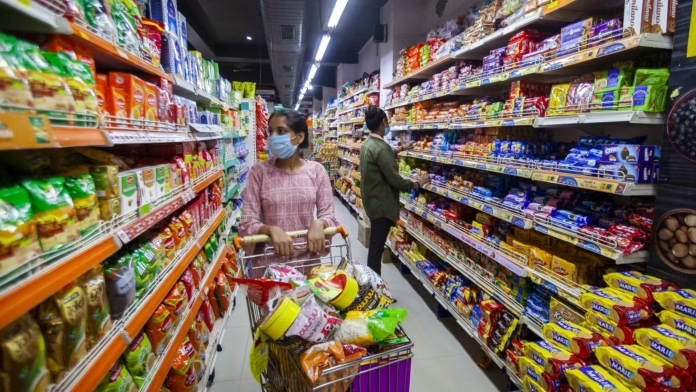
In July, sales of daily essentials and groceries exhibited a sequential recovery from June as retailers replenished their stocks in preparation for Independence Day and the upcoming festive period. However, these sales figures showed a year-on-year decline due to adverse effects from unseasonal rains.
According to Bizom, which monitors kirana sales, the fast-moving consumer goods (FMCG) market experienced a 3% month-on-month expansion. However, in July, it recorded a 0.5% decline compared to the same period last year.
“Similar to last quarter, we continued to see improving demand trends for our core categories but remain cautiously optimistic. Rural areas have started to come back and the north has started to come back. I am keeping my fingers crossed because of two reasons; one, it’s still not recovered trends and it’s dependent on what happens with the whole monsoon and El Nino effects,” Sunil D’Souza, Managing Director at Tata Consumer, told investors.
The main factors impacting consumer goods sales were a 7% decrease in commodities sales due to price cuts and a 23% decline in beverage sales caused by a cooler summer season.
“We are seeing stocking picking up pace for home care and packaged foods as we build into the festival season. Also, EL Nino fears seem to have reduced with the heavy rains seen in this month as that should also help during the sowing season, which, in turn, could help ensure stronger rural demand,” said Akshay D’Souza, chief of growth and insights at Mobisy Technologies, which owns Bizom.
Hindustan Unilever cited Nielsen data revealing that after experiencing a double-digit decline, the volume in the rural market turned positive in the June quarter, in contrast to the contraction witnessed in the same period the previous year. Despite this improvement, the market growth on a two-year compound annual growth rate (CAGR) basis remains slightly down, with rural volume declining by 4%.
“Looking at demand from a consumer lens, we should be mindful that consumers are still facing high levels of cumulative inflation. As you saw earlier, due to pipeline stocks, they are consuming higher-priced inventory and hence, the volume recovery will continue to be gradual,” Ritesh Tiwari, chief financial officer at HUL, said at its earnings call.
In the first half of the month, electrical goods, including air-conditioners and refrigerators, experienced a notable 10% decline in sales, despite witnessing high demand initially. However, the situation changed when torrential rains and floods in certain regions adversely affected footfalls and overall sales. It’s worth noting that in June, these goods had enjoyed a significant surge in sales, with a remarkable 30% increase.
Coca-Cola Europacific Partners intends to pursue the acquisition of its counterpart, Coca-Cola Beverages Philippines, a fellow bottler.
A “letter of intent” has been signed between the UK-based group and Philippines conglomerate Aboitiz Equity Ventures to collaborate on the acquisition of Coca-Cola Beverages Philippines (CCBPI).
According to the proposed arrangement, Coca-Cola Europacific Partners would hold a 60% ownership stake in the business, while the remaining share would be held by the power-to-financial services group, Aboitiz Equity Ventures.
As per the proposed agreement, the valuation of CCBPI stands at $1.8 billion, based on a debt-free and cash-free approach.
CCEP has already established its presence in Indonesia, having acquired complete ownership of its local business from The Coca-Cola Co. earlier this year. Additionally, a previous deal with Coca-Cola Amatil two years ago provided CCEP with assets in markets such as Australia and New Zealand. The Indonesian and former Coca-Cola Amatil assets are now consolidated under a division named API within CCEP.
Damian Gammell, CCEP’s chief executive, said the acquisition of CCBPI “would be a natural next step for CCEP, creating a more diverse footprint within our existing API business segment, support Indonesia’s transformation journey and underpin our strategic mid-term objectives”.
In a stock-exchange filing, CCEP said the transaction is still subject to conditions, including due diligence – described as “well underway” – and regulatory approval. The deal, if completed, is expected to be finalised around the end of 2023.
Nevertheless, CCEP said its proposed new asset was “a successful business with attractive profitability and growth prospects”.
Presenting data given by CCBPI’s management, CCEP said the business sold around 650m unit cases in its 2022 fiscal year, generating revenues of approximately $1.7bn. It gave no comparative figures for a year earlier. The business, based in Makati in metro Manila, the capital of the Philippines, has 19 factories.
CCBPI accounts for 43% of the non-alcoholic RTD market in the Philippines and 69% of the sparkling segment, CCEP added, citing Nielsen data.
The planned transaction was announced alongside CCEP’s first-half financial results.
Revenue was up 8.5% at €8.98bn ($9.87bn), or by 10.5% when excluding the impact of exchange rates.
Operating profit jumped 21% to €1.17bn. On a comparable and constant-currency basis, operating profit grew 13%.
Profit after tax increased 26.5% to €854m, or by 16.5% on an underlying basis.
Shares in CCEP, up more than 11% so far this year, were down 0.17% in early trading at €57.40 at 08:22 BST.
The Kraft Heinz Company has set a commendable goal for 2023, as they announce their determination to reduce the use of virgin plastic in their global packaging portfolio by 20% by 2030. This ambitious step is a testament to their commitment to sustainability and reducing reliance on fossil fuels. By pursuing this initiative, they aim to eliminate approximately 100 million pounds of virgin plastic, which is equivalent to the weight of nearly five Eiffel Towers. Such decisive actions will undoubtedly pave the way for more sustainable product packaging options in the future.
This objective is a natural progression of the company’s previous efforts to minimize plastic usage and achieve their comprehensive packaging targets. Among these pursuits are the ambitions to attain 100 percent recyclable, reusable, or compostable packaging by 2025, as well as the commitment to achieve net-zero greenhouse gas (“GHG”) emissions by 2050, with a midpoint reduction of emissions by 2030. Through these ongoing investments and commitments, the Kraft Heinz Company demonstrates its dedication to sustainable practices and environmental responsibility, positioning itself as a leader in the pursuit of a greener future.
“To achieve our ESG goals, including to reach net-zero GHG emissions, we can’t continue to do things as we have in the past,” said Rashida La Lande, executive vice president, Global General Counsel, and chief sustainability and corporate affairs officer at Kraft Heinz. “We are investing in innovative technologies and partnerships that are critical to helping us redesign packaging, eliminate unnecessary plastic, increase our use of recycled content, and influence the adoption of reuse models. This is one more way we’re renovating our product portfolio to not only offer more sustainable options but to deliver on our consumer expectations.”
Replacing virgin plastic with recycled content:
Kraft Heinz is expanding upon its ongoing collaboration with the U.S., Canada, and U.K. Plastic Pacts, aiming to enhance the integration of recycled materials in its packaging. The company’s objective is to incorporate post-consumer recycled content into 15% of its U.S. PET rigid plastic packaging collection by the year 2025.
KRAFT Real Mayo and MIRACLE WHIP plan to transition packaging to 100% recycled content in the United States beginning in 2024 in an effort to eliminate approximately 14 million pounds of virgin plastic.
HEINZ moved to 30% recycled content in most of its bottles in Brazil, the U.K., and Europe.
HEINZ partnered with specialists in the U.K. to create recyclable HEINZ Beans Snap Pots from soft plastics that were returned to Tesco by consumers. The recyclable pots are food-safe and made with 39% recycled plastic.
Material elimination or reduction:
Kraft Heinz is identifying packaging solutions that use less plastic, such as eliminating unnecessary plastic components.
SHAKE ‘N BAKE removed its plastic “shaker” bag from its signature packaging last year to help eliminate 900,000 pounds of plastic waste annually. Effective across its full product portfolio, this was the brand’s first step toward a more sustainable future and an easy way for consumers to make a difference.
HEINZ launched an eco-friendly multipack paperboard sleeve to replace plastic shrink-wrap in the U.K., eliminating more than 1 million pounds of plastic in 2022.
Exploring material alternatives:
Kraft Heinz is also exploring the use of alternative materials like fiber-based packaging with the hope that these cutting-edge innovations could be used for other packaging formats in years to come.
HEINZ announced a pilot with Pulpex in 2022 to develop a paper-based, renewable and recyclable bottle made from 100 percent sustainably sourced wood pulp for HEINZ Tomato Ketchup – a first in the sauce category. The company is currently testing the prototype to assess performance before bringing the bottle to the market.
NABOB coffee in Canada replaced its non-recyclable flexible plastic coffee bags with recyclable canisters made from 80 percent paper fiber from renewable resources this year. This change is estimated to eliminate approximately 2.5 million plastic bags annually.
Guided by its core value, “We do the right thing,” Kraft Heinz is fully committed to reducing its operational footprint and making a positive environmental impact. These initiatives act as a driving force for future endeavors, as the company seeks to expedite innovation and growth through strategic partnerships.
During an interview, Vikram Grover, the Managing Director of NourishCo Beverages, a subsidiary of Tata Consumer Products, stated that while local FMCG brands may have experienced rapid growth compared to national brands over the past year, they are ready to face any competition with their unique and distinct products.
“The problem (of local competition) magnifies if companies sell the same products. We have a combination of differentiated products, great value, national advertising at scale and investments in distribution muscle, which is difficult to emulate,” he said.
According to a report by Kantar last week, the volume growth of regional and local brands surpassed that of national ones in the 12-month period ending on 30th April. The volumes of regional and local brands experienced a significant growth of 12.7%, while national brands only grew by 8.2% during the same period.
“We believe we have a potent mix of levers to help us overcome any such competition,” Grover said.
Tata NourishCo, known for its sales of Himalayan mineral water, Tata Gluco Plus functional drinks, Fruski juices, and honey, is now venturing into the premium spices category. Under the Himalayan brand, the company is introducing Kashmiri saffron, which Vikram Grover described as potentially the world’s most expensive spice.
“Given the adulteration prevalent in the category, there is a trust deficit in the saffron category in India and lack of awareness among consumers. We are addressing this with our product,” he said.
India’s total saffron demand is roughly estimated to be 100 tonnes per year, with domestic production accounting for 13 tonnes of Kashmiri saffron.
The company has plans to expand into other areas under the Himalayan franchise, but they will exclusively focus on premium offerings.
“The attempt is to move beyond the water space. But we will get into spaces within the guardrails of premiumisation and purity,” he said.
Functional beverages continue to be a niche category, unlike the mass entry-level segment where major players like Bisleri, Coca-Cola’s Kinley, and PepsiCo’s Aquafina engage in competition.
In FY23, NourishCo recorded net sales of INR 621 crore. Initially established as a joint venture between Tata Consumer Products and PepsiCo, a renowned beverages and snack foods maker, the company underwent changes in 2020 when the Tatas acquired PepsiCo’s stake in NourishCo. Since then, the Tata group has expanded its premium beverages portfolio within the NourishCo brand.
Grover said the company sees “a lot of scope to convert consumers to branded beverages and expand distribution”.
During the quarter ending June 30, 2023, Tata Consumer Products, a subsidiary of the Tata Group, announced a notable year-on-year increase of 22.1 percent in net profit, amounting to INR 337.7 crore. Within the same quarter, the packaged beverages business showed a 2 percent growth in revenue and a 3 percent increase in volume. The coffee business reported a substantial 21 percent growth, while the India foods business witnessed impressive revenue growth of 24 percent.
Earlier this year, the company revealed a business reorganization plan, consolidating Tata Coffee’s plantation business into Tata Consumer Products Foods and Beverages division.
We use cookies to ensure that we give you the best experience on our website. If you continue to use this site we will assume that you are happy with it.