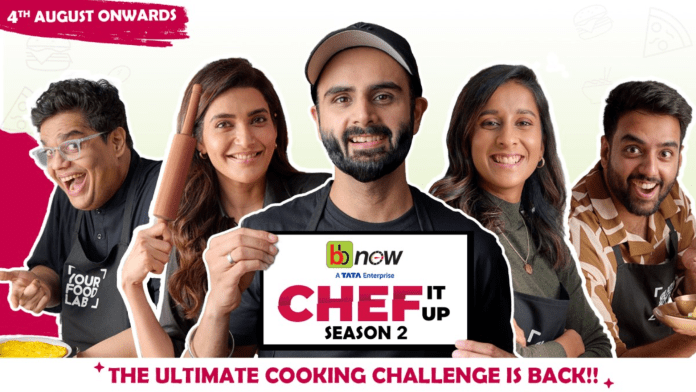
After the incredible triumph of Chef It Up Season 1, the acclaimed chef and culinary sensation, Sanjyot Keer, is elated to unveil the much-awaited Chef It Up Season 2. This time around, Chef Sanjyot Keer is joining forces with a star-studded lineup of his talented celebrity and creator friends, including Jemimah Rodrigues, Karishma Tanna, Yashraj Mukhate, and Tanmay Bhat. Together, they are set to deliver an electrifying cooking challenge like never before, all in collaboration with India’s leading online supermarket, BigBasket’s bbnow.
Chef It Up Season 2 promises an exhilarating and captivating experience as guests take on the ultimate cooking challenge. The task at hand is to recreate one of the most popular dishes from Chef Sanjyot’s acclaimed enterprise, ‘Your Food Lab.’ But here’s where the excitement kicks in – Chef Sanjyot will be right there, cooking the same dish alongside them, yet remaining unseen to the contestants. Their culinary prowess will be put to the test as they must rely solely on Chef Sanjyot’s verbal instructions to complete the task. Can they rise to the occasion and truly ‘Chef It Up’? Get ready for a gripping culinary journey filled with surprises and delicious creations!
The debut season of Chef It Up garnered immense praise for its inventive format and mouthwatering recipes. Now, in the upcoming season, the excitement is set to soar to unprecedented levels with the introduction of a distinctive guest lineup. Every episode will showcase a one-of-a-kind cooking challenge, pushing the contestants’ skills and creativity to the limits, resulting in a truly delightful experience for both participants and viewers alike.
Chef Sanjyot Keer, Founder of Your Food Lab and Digital Content Creator, said, “I am incredibly excited to collaborate with Tanmay, Jemimah, Karishma and of course, Yashraj for Chef It Up Season 2. It’s a fresh and challenging concept that will not only test their cooking abilities but also create an entertaining and fun experience for the audience. When brands like BigBasket’s bbnow come aboard to support unique content creation ideas, our job as digital content creators becomes so much more exciting and worthy of the effort!”
Commenting on this collaboration, Anand Bhaskaran- Head – Digital Marketing & Marketing Communications, BigBasket said, “When the opportunity presented us to collaborate with Your Food Lab and Chef Sanjyot Keer, it just clicked. We felt Chef Sanjyot’s focus on excellence, combined with the fun vibe of the show, would resonate with the digitally native audience that’s core to bbnow. We hope the audience will have as much fun watching the show as we did making it.”
In an exciting collaboration, Chef It Up Season 2 has found a brand partner in BigBasket, India’s top online supermarket. This partnership is a treat for all food enthusiasts, cooking aficionados, and fans of the guests. Together, they promise to deliver a thrilling and mouth-watering experience that will captivate everyone’s taste buds.
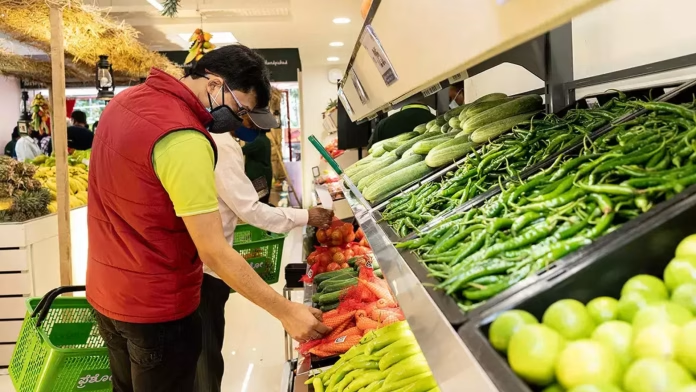
Their unwavering dedication to providing quality and fresh ingredients perfectly complements the essence of the show, making them the ideal partner for this thrilling culinary journey.
Wipro Consumer Care & Lighting, a rapidly expanding global FMCG company, is delighted to unveil the inauguration of its state-of-the-art Research and Innovation hub in Bengaluru. Situated at the sprawling Wipro House campus in Koramangala, this cutting-edge center reflects Wipro’s unwavering dedication to propelling its Foods Business to new heights.
Wipro Consumer Care and Lighting announced its foray into the Foods Business in 2022, and since then, has made planned acquisitions with Nirapara and Brahmins in the spice and ready-to-eat category, aiming to solidify its position in its core markets down south. Wipro plans to grow organically with its food brand in the works, and keeping that in mind, the R&D facility aims to accelerate innovation and product development for the Foods Business.
Commenting on this latest development, Vineet Agrawal, CEO of Wipro Consumer Care & Lighting and MD of Wipro Enterprises, said, “With the ever-changing consumer preferences and an increasingly competitive market landscape, investing in research and innovation is paramount for us as we step into the highly competitive foods business. The establishment of this state-of-the-art Food Research and Innovation centre reaffirms our dedication to delivering high-quality and innovative food products to consumers across our markets.”
“Wipro Foods Business Research and Innovation centre is a testament to our commitment to promoting innovative, healthy and tasty foods”, added Anil Chugh, President – of Foods Business. “We envision this centre to become a hub for collaborative ideation, where the consumer is at the centre of developing tasty products. We thus have a one of its kind integrated research facility which includes a sensory unit, a state-of-the-art kitchen and a high-end analytics lab – all under one roof.
The establishment features top-tier infrastructure, complete with a state-of-the-art Innovation hub encompassing a dedicated sensory laboratory, research facility, advanced culinary workspace, and a highly skilled ensemble of food scientists, researchers, chefs, and specialists. This hub will prioritize the conception and advancement of novel food items, commencing with the snacks category, thereby enriching and diversifying our comprehensive food product lineup.
Furthermore, the Research and Innovation center will foster collaborations with nearby universities, research institutions, and technology partners to harness the most recent breakthroughs in the food industry. By integrating sustainable and environmentally conscious practices into product development, we aim to create food offerings that are not only innovative but also responsible towards our planet.
Wipro Consumer Care and Lighting, a division of Wipro Enterprises, stands as one of India’s most rapidly expanding FMCG enterprises. Their extensive business portfolio encompasses personal wash products, toiletries, facial care items, home care products, electrical wire devices, domestic and commercial lighting, seating solutions, and a recent foray into the Foods business. With more than 10,000 dedicated employees and an impressive 52% representation of women employees worldwide, Wipro Consumer Care holds a strong brand presence, commanding substantial market share in both India and Southeast Asia. Additionally, the company’s reach is steadily growing across Africa and the Middle East, aided by an impressive 51% of its revenue derived from international ventures.
On Friday, Devyani International reported a significant 84% decrease in its net profit for the June 2023 quarter, amounting to INR 11.75 crore. This is in stark contrast to the INR 73.84 crore profit the company had reported in the same period the previous year.
The revenue from operations in the April-June quarter of FY23 reached INR 846.63 crore, indicating a substantial 20% year-on-year (YoY) growth. This compares to the INR 704.72 crore revenue achieved in the corresponding period of the previous year.
The decrease in net profit was driven by a significant 24% increase in total expenses, which amounted to INR 793.16 crore in Q1FY24. This is in contrast to the total expenses of INR 636.58 crore recorded in the corresponding quarter of the previous financial year.
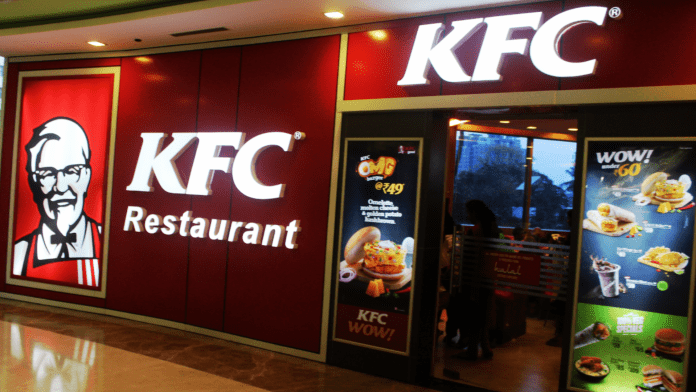
The company reported a 12% increase in sales quarter-on-quarter (QoQ) in its filing to the exchanges. According to the filing, the core brands, namely KFC (INR 516 crore, 16% QoQ), Pizza Hut (INR 184 crore, 8% QoQ), and Costa Coffee (INR 32 crore, -2% QoQ), maintained stable revenues during the mentioned quarter.
The EBITDA increased 14.6% to INR 173.4 crore, which was up 14.6% QoQ. This resulted in an EBITDA margin of 20.5%, with a profit before tax (PBT) of INR 13 crore. “The consolidated PBT got impacted because of significant currency devaluation in Nigeria.
After normalization, the Profit Before Tax (PBT) amounted to INR 60.3 crore for the quarter, in comparison to INR 41.2 crore in the previous quarter.
“I am pleased to share that we have started the new fiscal year on a healthy note, despite facing challenges from a difficult macro environment and depressed consumer spending. We are going to be opening 275 to 300 stores during the current fiscal year, as we continue working towards our ambitious target of reaching 2,000 stores by 2026,” a media statement said, quoting Ravi Jaipuria, Non-Executive Chairman of Devyani International.
On Vaango, its south Indian cuisine brand, Jaipuria said that it was shaping up well with 52 stores.
Post announcement, shares of the company fell nearly 4% to INR 186.
McDowell’s No.1 Soda has now stepped into the metaverse through “Yaariverse,” an immersive platform that transports customers to a realm of interactive zones featuring extraordinary concerts and captivating content experiences.
Yaariverse is an innovative and boundless realm that revolutionizes the way audiences and their friends, known as “yaars,” nurture friendships. Through this platform, they can forge deeper connections in ways never before imagined.
Ruchira Jaitly, Vice-President, Marketing & Portfolio head, Diageo India, said, “Yaariverse represents a ground-breaking step for McDowell’s No1 Soda, as we foray into the metaverse and redefine how consumers engage with our brand. We were among the first FMCG brands to have leveraged the unlimited possibilities of the Metaverse when we hosted a Holi bash & concert in 2022. We have come a long way from there and now bring to consumers a whole universe that promises unforgettable experiences and a lot more.”
Yaariverse breathes life into a virtual reality platform, offering revellers the chance to fully immerse themselves in thrilling concerts and captivating content experiences within the metaverse. It’s a one-of-a-kind opportunity for users to engage and interact with an exciting digital world like never before.
“We are excited to partner with Diageo and McDowell’s No1 Soda in shaping the future of immersive experiences. The Yaariverse seamlessly integrates the real and virtual worlds. We believe it will bring a unique and unforgettable dimensional experience to how consumers engage and connect with their friends,” added Neeraj Roy, MD & Founder, Hungama Digital Media.
Diageo India stands as the foremost beverage alcohol company in the country, operating under the umbrella of the renowned global leader, Diageo Plc. The company is dedicated to crafting, marketing, and distributing an exceptional array of premium brands, including renowned names like Johnnie Walker, Black Dog, Black & White, VAT 69, Antiquity, Signature, The Singleton, Royal Challenge, McDowell’s No1, Smirnoff, among several others.
Amid the spotlight on soaring tomato prices caused by supply shortages, government data reveals that the prices of all food items, except potatoes, have also experienced significant spikes.
This week, the food and consumer affairs ministry informed the Parliament that over the past year, tur dal prices witnessed a substantial increase of 28%, with rice following closely at 10.5%. Additionally, urad dal and atta also experienced an 8% rise each in their prices. As of Thursday, the average retail price of rice stood at INR 41 per kg, compared to INR 37 a year ago.
The ministry has linked the increase in tur dal prices to a decline in domestic production. According to the third advance estimate of the agriculture ministry for the 2022-23 crop year, tur dal production is projected to be 34.3 lakh tonnes, significantly lower than the 42.2 lakh tonnes recorded during the previous crop year.
Earlier, Kaushik, a member of the Agricultural Produce Marketing Committee (APMC), informed PTI that vegetable wholesalers are grappling with losses due to a substantial decline in the sales of tomatoes, capsicum, and other seasonal vegetables.
As reported by the price monitoring cell of the consumer affairs ministry, the average retail price of tur dal on Thursday stood at INR 136 per kg, a notable rise from INR 106.5 per kg observed last year. Similarly, the price of urad dal has also seen an increase to INR 114 per kilo from last year’s INR 106.5.
As per the ministry’s statement, the all-India average retail price of potatoes is approximately 12% lower than the previous year, while the price of onions has seen an increase of about 5% compared to a year ago.
On tomato prices, the ministry said, “The prices of tomato has increased in recent weeks on account of a combination of factors like crop seasonality, white fly disease in Kolar, instantaneous arrival of monsoon rains in northern part of the country which adversely affected tomato crops in Haryana and Himachal Pradesh and logistics disruptions in isolated areas due to heavy rains.”
According to government data, the average price of tomatoes on Thursday reached INR 140 per kilo, marking a significant increase from INR 34 per kilo last year. Among different regions, Bulandshahr in Uttar Pradesh recorded the highest tomato price at INR 257 per kg, while it was being sold at INR 213 per kilo in Delhi and INR 157 per kilo in Mumbai.
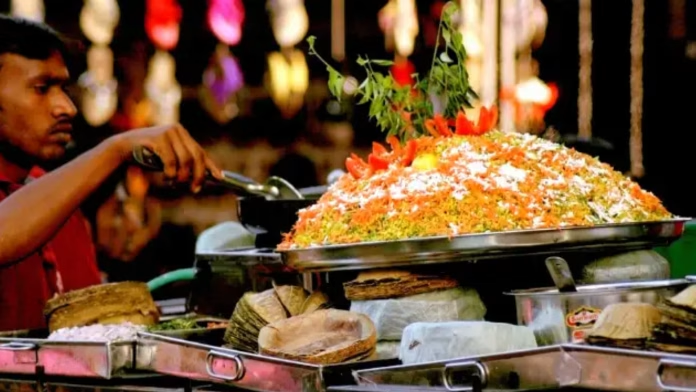
The State government has plans to establish clean street food hubs in Chennai, Kancheepuram, and Tiruvallur districts in the near future. Similarly, hubs of a similar nature will be introduced in Chengalpattu, Nagapattinam, and Coimbatore districts. To facilitate this initiative, local authorities in these selected districts will allocate suitable land for the establishment of these food hubs, which will be operated in compliance with stringent food safety standards.
The Greater Chennai Corporation has pinpointed specific locations within the city to set up the food hubs.
Every hub will consist of a cluster of 20 or more food vendors who will sell their products only after meeting essential hygiene and sanitation standards.
The hubs will be recognised by the local body as a clean street food hub based on an audit.
Construction of the food hubs at Elliot’s Beach is scheduled to commence soon. Additionally, locations like Mamallapuram in Chengalpattu district, Avadi in Tiruvallur district, and Velankanni in Nagapattinam district have been identified for similar food hubs in other parts of the State.
Satheesh Kumar, Designated Officer, Food Safety Department, Chennai, said more than 50 vendors in Chennai will receive training in cooking and storing of food.
“The food should not be unhygienic. The vendors should focus on proper disposal of waste,” said Dr. Satheesh Kumar.
Most food vendors do not follow any standard operating procedure with regard to hygiene.
Many public health issues have been reported by residents after consuming food sold by these vendors.
Based on the hygiene rating of the stalls at the food hubs, the government will set up similar hubs in more districts.
Haldiram’s, the renowned Indian brand known for its delectable sweets and snacks, is gearing up to commemorate the joyous festival of Teej with a delightful campaign that aims to bring the “Sweetness of Relationships” to the celebrations. The campaign, titled “Rishton Ki Mithas, Haldiram’s Ke Sath,” serves as a tribute to the timeless customs of Teej, rejoicing in the advent of the monsoon season and the cherished connections of love and togetherness.
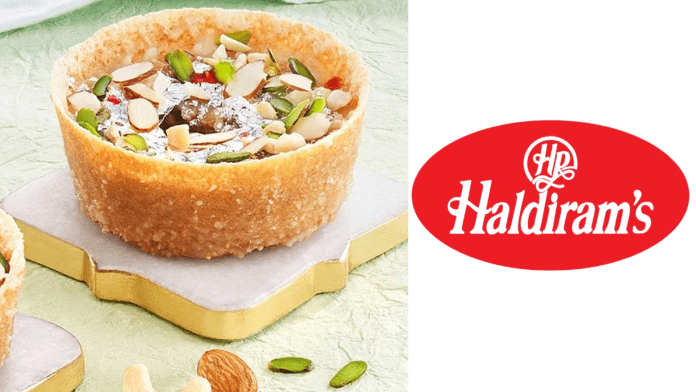
Haldiram’s Teej campaign captures the spirit of the time-honored cultural celebration through an enticing assortment of Ghevar, catering to a wide array of tastes. Indulge in the delightful flavors of Malai Ghevar, Kaju Cream Ghevar, Kesar Ghevar, Plain Ghevar, Rose Ghevar, Khas Ghevar, Kalakand Ghevar, Kesar Malai Ghevar, and more. Each Ghevar variant embodies the genuine taste and expertise for which Haldiram’s is renowned.
Speaking about the launch of Teej Campaign, Divya Batra, Head of Marketing, Haldiram’s, said, “Teej is the festival of love, joy, and tradition. At Haldiram’s, we aim to bring in this joy into our offerings, and our diverse range of Ghevar flavours is a perfect reflection of the diversity and richness of Indian culture. With our Teej campaign, we invite everyone to celebrate the festival with their loved ones and experience the authentic flavors of India.”
Kailash Aggarwal, President – Retail QSR- Haldiram’s, said, “As we celebrate Teej, we also celebrate the strong bonds of relationships that unite us all. Haldiram’s has always been a part of people’s lives during festivals, and we are honored to be a part of their special moments. Our exclusive Ghevar range, known for its authentic taste, and specially designed gift boxes, ensuring hygiene and freshness, are crafted to make this Teej even more memorable for our cherished customers.”
The Ghevar boxes by Haldiram’s are also available on Swiggy and Zomato.
Food delivery applications have seamlessly woven into the fabric of our daily lives, offering unparalleled convenience and solace to those seeking a respite after a taxing day. Nevertheless, picture the excitement that would ensue if your food order arrived not by the hands of a delivery agent on a bike but instead through the futuristic innovation of a drone. This spectacle recently captivated the online community when a viral Instagram video showcased precisely that – a food delivery orchestrated by a drone.
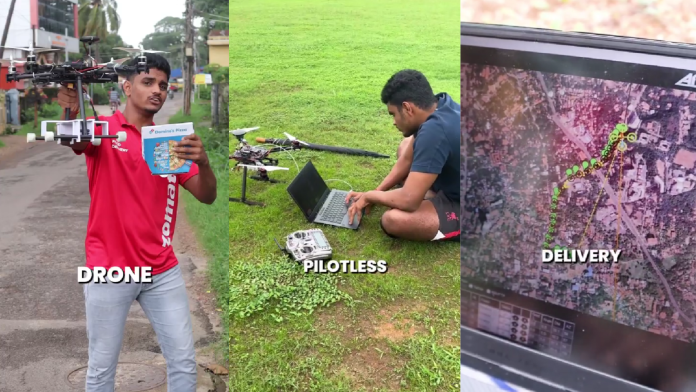
Sohan Rai, a prominent tech content creator, took up the role of a food delivery agent for Zomato, but with a visionary twist. Recognizing the challenges traditional delivery personnel face, like navigating through traffic jams and locating elusive addresses, Sohan identified an opportunity to leverage his expertise in drones to revolutionize the food delivery landscape. He embarked on a daring mission to construct his very own autonomous drone, engineered to soar the skies sans a pilot. The undertaking was ambitious, entailing multiple iterations and repairs, but Sohan remained resolute in his determination to bring his vision to fruition.
Having completed the drone’s construction and programming, Sohan ingeniously integrated a sophisticated dropping mechanism to ensure the safe delivery of food. To put his creation to the test, he procured a delectable pizza from Pizza Hut, carefully securing it onto the drone. The delivery destination was approximately 1.5 kilometers away, and with precision, Sohan programmed the drone to follow a meticulous path that would lead to a direct drop-off at the customer’s compound. All set for the daring expedition, the autonomous drone gracefully soared into the skies, commencing its thrilling journey to deliver the pizza. A second drone accompanied closely, capturing every moment of this groundbreaking process on camera. The mission was an astounding success as the pizza reached its destination promptly and with utmost safety.
In the caption of this post, Sohan wrote, “Being a huge enthusiast of drones, I wanted to put my skills into use and build an autonomous drone which could deliver a pizza directly to a home, without having a pilot. Here, I have built the drone with a lot of Jugaad, and it would be a lot better when it is commercial.”
Since its upload on 31st July, the Instagram reel has become an online sensation, drawing a substantial amount of attention. With over 7 million views, surpassing a million likes, and accumulating thousands of comments, the video has captivated a massive audience and continues to do so.
“Man. This is so cool!!!”, wrote one person.
“Excellent work,” commented another
“Nice… but while trying to solve the problem of the delivery guy.
You kind of killed his job.” pointed out one user.
A person wrote, “Me: Thanks for pizza and drone.. ok. Bye.”
Another jokingly asked, “What if the customer chose cash on delivery?”
Sohan’s groundbreaking experiment serves as a shining example of the potential technology holds in the domain of food delivery. Although the commercial feasibility of drone deliveries necessitates further fine-tuning, his creation has ignited a thought-provoking discussion about the possibilities for future advancements in this field.
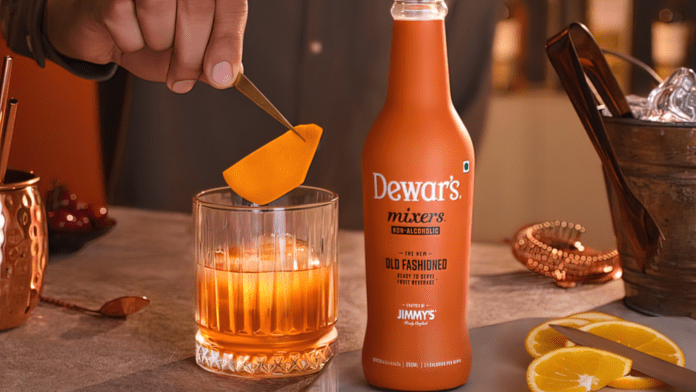
DEWAR’S is proud to announce the launch of ‘The New Old Fashioned’ mixer in India, bringing forth the epitome of a premium whisky cocktail experience. Developed in collaboration with the leading cocktail mixer brand Jimmy’s, this ready-to-serve premium mixer is perfectly tailored to meet the evolving preferences of the new-age consumers. Enriched with a delightful array of flavors, it offers a hassle-free way to elevate your at-home whisky-drinking moments, delivering a truly premium service like never before.
With its roots tracing back to the early 19th century, the Old Fashioned cocktail holds a significant place in history and remains a globally cherished whisky concoction. Adding a modern flair to this classic favorite, the new mixer offers a contemporary rendition of the timeless Old Fashioned. Packaged elegantly in 250 ml glass bottles, each accommodating up to 4 cocktails, this innovative twist is brought to you by DEWAR’S.
Presently, this exciting innovation can be acquired through drinkjimmys.com and prominent retail outlets in over 20 cities. The brand has plans to further its reach by extending its presence to quick commerce platforms in the near future. As the year unfolds, the availability of these mixers is slated to expand nationwide, ensuring that consumers all across the country can partake in the enjoyment of this remarkable product.
In recent years, the drinking preferences of whisky enthusiasts have undergone a remarkable transformation. According to the 2023 Bacardi Cocktail Trends Report, a noteworthy 30% of consumers now prioritize purchasing drinks based solely on their curiosity about unique flavors, indicating a growing fascination with experimentation. Moreover, the DIY mixology trend has surged, with a significant 37% of consumers reveling in the art of crafting cocktails at home.
This changing landscape has revolutionized the whisky experience, moving beyond the traditional consumption of whisky neat or on the rocks. The surge in consumers’ adventurous spirit has propelled the popularity of whisky highballs. Interestingly, modern consumers also hold a special fondness for nostalgic elements, offering a brilliant opportunity to captivate their desires by reintroducing the classic old-fashioned with a modern twist through the launch of this innovative mixer.
The confluence of evolving preferences and nostalgia-driven trends paves the way for exciting avenues to engage the whisky-drinking audience in captivating and novel ways. Embracing these dynamics allows brands like DEWAR’S to meet the needs of the contemporary consumer and present them with an extraordinary whisky cocktail experience.
Commenting on the latest innovation by DEWAR’S, Vijay Dev, Category Lead – Global Whiskies, Bacardi said, “Today’s whisky consumers’ curiosity is leading to a departure from conventional whisky norms. Their sense of curiosity has fuelled the growing popularity of unique and refreshing whisky cocktails. With the launch of our premium mixer, DEWAR’S aims to cater to the exploratory spirit of these modern whisky lovers, offering them a quick and innovative way to indulge in the timeless taste of an Old Fashioned. We are excited to provide a platform for these curious consumers to delve into the world of whisky and discover new dimensions of flavor, all from the comfort of their own homes.”
Talking about the collaboration with DEWAR’S, Ankur Bhatia, Founder and CEO of Radiohead Brands, said, “The at-home cocktail culture in India is growing fast and Jimmy’s has been at its forefront. This New Old Fashioned is one of the most complex mixers we have co-created especially for DEWAR’S. It took us over a year to perfect the blend – using four different types of bitters blended with orange zest, cherry, cinnamon, and aromatic cloves – for a perfect at-home Old Fashioned cocktail experience. We are truly excited to partner with DEWAR’S, one of the world’s leading alcobev brands, and bring this mixer to consumers across the country.”
Shares of Zomato Ltd witnessed a wave of upward revisions in target prices from multiple brokerages as the company achieved profitability for the first time. Nevertheless, despite this notable milestone, many brokerages opted to retain their current stock ratings. This positive shift in financial performance has garnered significant attention and confidence from investors and analysts alike.
Motilal Oswal Securities projects a 28 percent surge in the stock target to reach INR 110 per share, surpassing the current market price. JM Financial is even more optimistic, anticipating a 37 percent leap in the stock value over the next 12 months, targeting INR 115 per share. Citi has also revised its target price upward from INR 84 to INR 115, reflecting their increased confidence in the company’s potential. Similarly, Morgan Stanley has raised its target price to INR 115 from INR 85 per share, aligning with the positive sentiment surrounding the stock’s future performance.
Goldman Sachs has raised its target price for the stock to INR 100, up from the previous INR 82. Meanwhile, Jefferies India is even more optimistic, setting a target price of INR 130, a substantial increase from INR 100. Kotak anticipates the stock price to reach INR 105 within the next year, compared to its earlier target of INR 95. HSBC, on the other hand, has raised its target price by 20 percent, now valuing the stock at INR 102. These revisions in target prices indicate growing confidence in the company’s future performance and potential for growth.
On August 3, Zomato reported a net profit of INR 2 crore in the first quarter of the current financial year. The company also revealed revenues of INR 2,416 crore, which marked a significant 70.9% increase compared to the previous year. This growth was attributed to the recovery in demand, aided by cooling inflation, and the continued success of the food delivery platform’s loyalty program. The positive financial results demonstrate the company’s resilience and the effectiveness of its strategies in adapting to market conditions and retaining customer loyalty.
JM Financial’s use of the term ‘stellar’ to characterize Zomato’s earnings might be an understatement considering the enormity of the achievement. The firm’s prior confidence in the Street estimates being overly conservative proved well-founded, as the actual extent of Zomato’s earnings surpassing expectations was truly remarkable and exceeded all anticipations. The brokerage firm’s decision to retain Zomato as its top pick within its listed internet coverage reflects the company’s exceptional performance and potential for further growth.
“Baking in the results and the guidance, even with a decent margin of safety, suggests Zomato is a rare play on both growth as well as profitability. While the stock has moved up 35 percent since March-quarter results, we expect the momentum to sustain, as at CMP, the market is largely capturing value attributable to only its FD business, whereas significant value unlocking is waiting to happen in Blinkit,” JM Financial said in a note.
Jefferies acknowledges that Zomato’s journey since its IPO has been a rollercoaster ride, marked by noteworthy highs and lows. However, the company has achieved a remarkable milestone by attaining adjusted-EBITDA and consolidated PAT positivity much sooner than anticipated, surpassing their own projections. This resounding success firmly puts to rest any doubts about Zomato’s ability to generate ‘respectable’ profits, solidifying the company’s position as a robust and promising player in the market.
Moreover, the outstanding results further bolster the credibility of Zomato’s management team and showcase their strong execution capabilities. This newfound confidence in the management bodes well for Blinkit, a division that was previously underestimated or even perceived negatively by many investors. As a consequence of these favorable developments, Jefferies has substantially revised their EBITDA projections, reflecting the growing optimism surrounding Zomato’s overall performance and potential for future growth.
Zomato witnessed an 11.4 percent expansion in the gross order value (GOV) of its food delivery, reaching INR 7,318 crore. Additionally, the average monthly transacting users surged by 5.4 percent, totaling 17.5 million.
Meanwhile, Blinkit, another division of Zomato, experienced a sequential growth of about 5 percent in its GOV, amounting to INR 2,140 crore. Simultaneously, the average order value (AOV) for Blinkit increased to INR 582, marking an impressive 11.5 percent rise compared to the previous quarter. These figures demonstrate the company’s ongoing efforts to enhance its business and further solidify its position in the market.
“We remain positive and expect long-duration 15 percent GOV (Gross Order Value) growth in food delivery, though we see significant upside from the quick commerce business (Blinkit), which could be as big as the FD business ahead with commensurate unit economics,” HSBC said in its latest note.
Nomura Research, Dolat, and Macquarie Research have revised their target prices downward. Nomura now projects a target price of INR 60, a significant 37 percent reduction from its earlier target of INR 87. Dolat has also decreased its target price to INR 65, reflecting a 25 percent decline. Meanwhile, Macquarie has maintained its underperformance rating and retained the target price at INR 55 per share, aligning it with the current market price. These adjustments in target prices reflect the varying outlooks of the respective brokerages on the stock’s future performance.
Zomato’s outlook is brimming with optimism as the company foresees a remarkable growth trajectory for its adjusted revenue, targeting a rate of +40 percent over the next couple of years. This expected growth is set to fuel the continued improvement of contribution margin (CM) and adjusted EBITDA margin, showcasing the company’s commitment to sustained progress and financial success.
According to Nomura’s projections, Zomato’s core food delivery business is expected to achieve a Compound Annual Growth Rate (CAGR) of approximately 20 percent during the FY24-25 period, with a contribution margin (CM) ranging between 7 percent to 7.5 percent. While Nomura acknowledges that Zomato is progressing well towards achieving its EBITDA margin target of 4-5 percent (as a percentage of Gross Order Value) earlier than anticipated, the brokerage remains skeptical about the company’s ability to maintain a double-digit CM in the face of sustained high growth in the long term.
“Transacting user growth momentum in both food delivery (+0.9mn QoQ in a seasonally strong quarter) and quick commerce (flat) was below estimates. We note lack of clarity from the management on the bottom-up growth drivers for the core food delivery business. Further, if a bulk of the growth guidance is driven by Hyperpure, Going Out, or Blinkit, this would unlikely be value-accretive,” said Macquarie in its latest report.
We use cookies to ensure that we give you the best experience on our website. If you continue to use this site we will assume that you are happy with it.