Thursday, January 15, 2026
Home Blog Page 1009

The Shocking Truth: Why Eating at Your Desk Could Be Secretly Sabotaging Your Productivity!

0
Eating at Your Desk

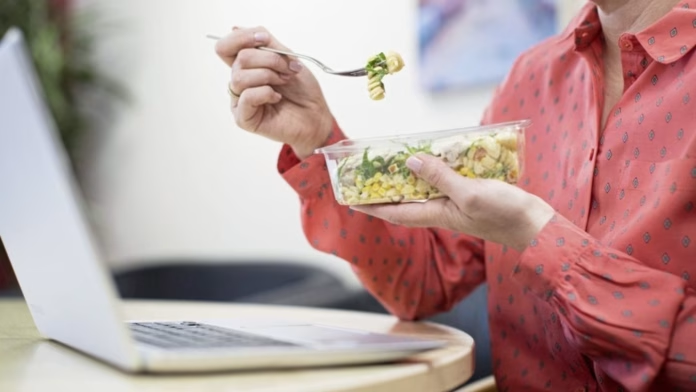
In the fast-paced modern work environment, employees are constantly seeking ways to maximize their productivity. One common habit that many professionals have adopted is eating at their desks during lunch breaks or snack times. While this practice may seem convenient and time-saving, it is essential to acknowledge that it could be doing more harm than good. This article delves into the surprising consequences of eating at your desk and how it might be secretly sabotaging your productivity.

1. Physical and Mental Health Impacts:

Eating at your desk may lead to numerous physical and mental health issues, ultimately affecting productivity. Firstly, sitting for prolonged periods without breaks can contribute to a sedentary lifestyle, which has been linked to various health problems, including obesity, heart disease, and diabetes. Additionally, eating at your desk might lead to mindless munching, causing overeating and unhealthy dietary choices.

Moreover, neglecting to take a proper lunch break away from your workspace denies your mind the chance to rest and recharge. Stepping away from your desk and engaging in a change of scenery can improve focus, creativity, and mental well-being. By forgoing this much-needed break, you might find yourself experiencing a decrease in attention span, decision-making abilities, and problem-solving skills.

2. Hygiene and Food Safety Concerns

Eating at your desk can also raise hygiene and food safety concerns. The workplace environment is often a breeding ground for germs and bacteria, and your desk may harbor numerous contaminants accumulated over time. Combining the workspace with food consumption can increase the risk of foodborne illnesses and infections, impacting your health and productivity.

Furthermore, the proximity of electronic devices to your food can lead to cross-contamination, potentially damaging expensive equipment and disrupting your workflow. A clean and separate eating area away from the workspace is crucial for maintaining both personal hygiene and the overall cleanliness of the workplace.

3. Social Isolation and Collaboration

Eating at your desk can contribute to social isolation and hinder collaboration among colleagues. Lunch breaks provide valuable opportunities for co-workers to interact, share ideas, and build relationships beyond work-related tasks. By isolating yourself at your desk during meal times, you miss out on the chance to network and bond with colleagues, potentially limiting your professional growth and development.

In workplaces that encourage communal eating spaces or communal kitchen areas, team members can engage in casual conversations that may lead to innovative ideas and problem-solving strategies. Eating together can also foster a sense of camaraderie and team spirit, essential for a productive and harmonious work environment.

4. Reduced Productivity and Efficiency

Contrary to the perception of saving time, eating at your desk can lead to reduced productivity and efficiency. When you multitask by eating while working, your attention becomes divided, leading to decreased focus and quality of work. This habit may lead to more mistakes, requiring additional time to correct errors, ultimately elongating the time needed to complete tasks.

Additionally, the brain needs regular breaks to maintain optimal performance. Working continuously without a designated lunch break can result in mental fatigue and burnout, leading to a decline in productivity over time. Taking a proper lunch break away from your desk allows you to return to work with a refreshed mind and increased energy levels, boosting overall productivity.

5. Impact on Work-Life Balance

Eating at your desk blurs the boundaries between work and personal life, leading to an unhealthy work-life balance. When you fail to step away from your work environment during meal times, it becomes challenging to detach from work-related thoughts and stressors. This lack of separation can lead to increased anxiety, difficulty in relaxing outside of work hours, and ultimately, decreased overall life satisfaction.

A healthy work-life balance is crucial for maintaining productivity and preventing burnout. Creating clear boundaries by taking designated breaks and stepping away from your desk during lunch can help you recharge mentally and emotionally, leading to increased productivity during work hours and a more fulfilling personal life.

Final Thoughts:

While eating at your desk might seem like a practical solution for saving time, the consequences on productivity, health, and well-being are far more significant than anticipated. From physical and mental health impacts to reduced efficiency and hindered collaboration, this seemingly innocuous habit could be secretly sabotaging your productivity.

To enhance productivity and overall well-being, it is essential to adopt healthier habits, including taking regular breaks, maintaining proper hygiene, and fostering social interactions during meal times. By prioritizing your health and creating a healthy work-life balance, you can unleash your full potential and achieve greater success in both your professional and personal life.
Advertisement

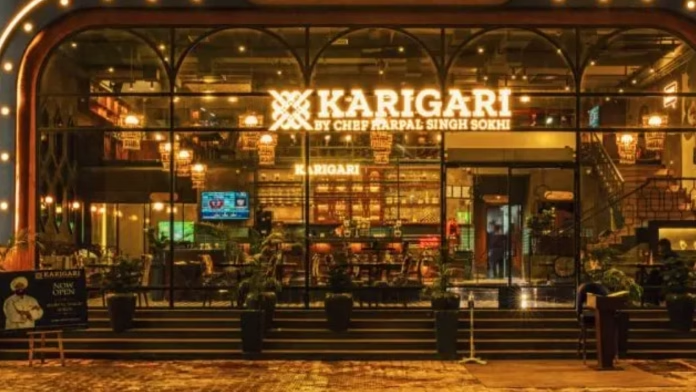
Chef Harpal Singh Sokhi’s Karigari goes global: 10 new outlets across India, Dubai and London expansion by 2024

0
karigari
Karigari

Chef Harpal Singh Sokhi’s renowned culinary venture, Karigari, is all set for a significant expansion as they unveil their ambitious plans. The company is now geared up to inaugurate 10 new outlets, strategically located in diverse cities across India.

Furthermore, Karigari has set its sights on achieving a global presence by 2024, with plans to establish its delectable, internationally inspired Indian cuisine in Dubai and London. This expansion aligns perfectly with the company’s trajectory of growth, aiming to cater to a wider audience and share their immensely popular culinary delights on an international scale.

Karigari demonstrates its strong dedication to introducing the rich tapestry of Indian cuisine to a broader spectrum of food enthusiasts by strategically inaugurating 10 additional outlets across various cities in India.

Through these new ventures, Chef Harpal Singh Sokhi endeavors to create a dining experience that seamlessly blends the time-honored cooking techniques of India with contemporary flavors, resulting in a truly memorable culinary journey.

“We are eager to start a vast expansion adventure and share the delectable tastes of Indian food with more people. Karigari is poised to dazzle cuisine lovers globally with its ten future sites throughout Indian cities and wants to develop a presence in Dubai and London by 2024. We continue to provide exceptional dining experiences while maintaining our constant dedication to innovation, quality, and authenticity.” said Yogesh Sharma and Manish Sharma, Founders.

Karigari, under the guidance of Chef Harpal Singh Sokhi, aims to mesmerize culinary enthusiasts around the globe by showcasing the true essence of Indian cuisine on an international stage.

Karigari is venturing into an ambitious expansion endeavor, fuelled by a substantial investment of INR 30 Crore. This considerable financial support will pave the way for the establishment of numerous new outlets, all while maintaining the brand’s unwavering dedication to innovation, quality, and authenticity.

As Karigari continues its growth, its primary objective is to generate job opportunities and make positive contributions to the local economies of the cities it operates in. A strong emphasis is placed on delivering exceptional dining experiences, further solidifying its commitment to both the community and culinary excellence.

Advertisement

Swiggy rolls out second tranche of ESOP liquidity programme worth $50 million

0
Swiggy
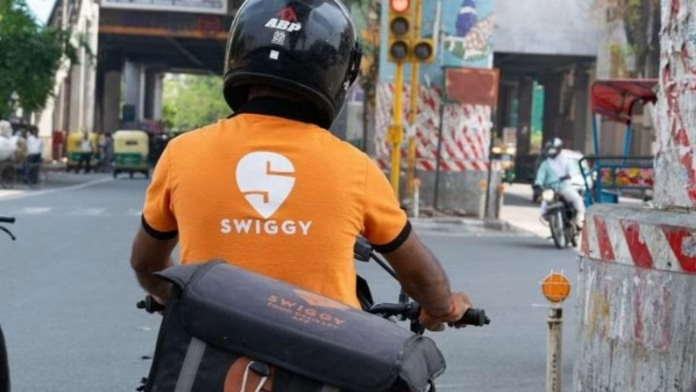
Swiggy delivery executive (Representative Image)

In a blog post on Monday, July 24th, the foodtech giant Swiggy announced the launch of the second tranche of its committed Employee Stock Option Plan (ESOP) liquidity programme valued at $50 million.

Under the planned liquidity programme, Swiggy employees, including those from Dineout, which was acquired by Swiggy last year, will have the opportunity to avail liquidity of up to $50 million against their Employee Stock Option Plans (ESOPs). It is estimated that over 2,000 employees will be eligible to participate in this programme.

Swiggy had introduced the ESOP liquidity programme back in 2021, and as of 2023, it has completed two tranches. The first tranche was launched in June 2022, with a value of $23 million, and it provided benefits to approximately 900 employees. This marks Swiggy’s fourth liquidity event since 2018.

Girish Menon, Head of HR at Swiggy, said, “Two years ago, Swiggy announced a one-of-its-kind ESOP program to enable consistent wealth creation for employees through two distinct liquidity events in 2022 and 2023.”

“Our team is Swiggy’s most valuable asset, and we are happy that macroeconomic conditions notwithstanding, we’re able to keep our commitment of sharing Swiggy’s success and growth through these wealth creation opportunities,” he added.

As of March 2023, the foodtech giant revealed that it achieved EBITDA positivity in its food delivery business. Additionally, Swiggy announced the successful integration of Dineout with its main product.

Read More: Swiggy’s strategic initiatives pay off as food delivery business turns profitable

Swiggy also entered India’s food and grocery retail market by venturing into an acquisition deal with LYNK Logistics, a well-known FMCG retail distribution company. Retaining its autonomy, LYNK will continue to operate independently post-acquisition. The company plays a pivotal role in facilitating the growth of FMCG brands by providing access to its vast network of over 100,000 retail stores situated across eight prominent cities in India.

Read More: Swiggy acquires LYNK Logistics to tap into lucrative food and grocery retail market

“With this acquisition, Swiggy enters India’s food and grocery retail market, which is amongst the world’s largest and fastest-growing, estimated to be more than $570 Bn in size and expected to grow at 8% year-on-year,” the company said.

The ESOP liquidity initiative introduced by Swiggy emerges amidst a trend of prominent startups facilitating wealth generation opportunities for their employees.

One notable example is Flipkart, which is distributing $700 Mn among its numerous employees. Some employees who hold ESOPs (Employee Stock Ownership Plans) at the e-commerce giant are eligible for this payout due to the separation of fintech decacorn PhonePe from Flipkart. As a result of this separation, the value of the ESOPs has experienced a significant surge, prompting Flipkart to initiate the payout to eligible employees.

During the previous week, Paytm, the fintech giant, granted an additional 1.7 million ESOPs as part of its ESOP program, which was originally introduced in 2019.

Advertisement

Rising milk costs to impact hotel and bakery food prices

0
Bakery
Bakery (Representative Image)

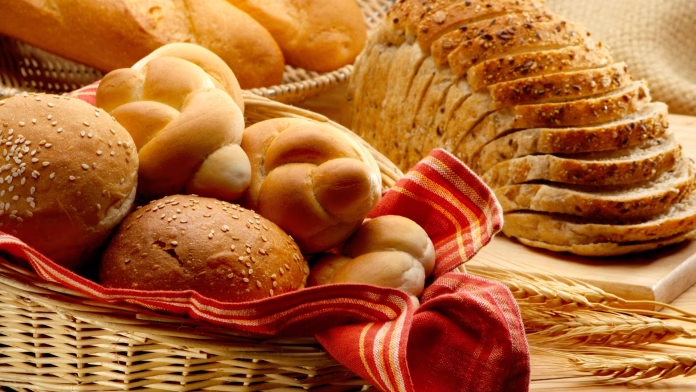
The impending rise in milk prices, scheduled for August 1, is expected to lead to an increase in the cost of dining out in hotels and purchasing bakery products. In response to the escalating prices of essential ingredients such as dal, rice, and vegetables, hoteliers and bakeries have already raised their food prices.

According to BS Bhat, the chairman of Beekays brand, there is a strong possibility of bread prices soaring in the near future. He foresees bakers being compelled to raise the prices of their bakery items due to the significant reliance on milk as a fundamental ingredient in many of their products. Additionally, milk plays a vital role in the preparation of cream, further contributing to the potential price increase.

“Already bread and bun prices have been increased considering that wheat, electricity and labour costs have gone up. Milk will further push up these prices,” Bhat explained.

Bakers argue that increasing their product prices is inevitable due to limited flexibility imposed by the regulations of the Food Safety and Standards Authority of India (FSSAI). As an illustration, they highlight the requirement that milk bread must contain a minimum of 6 percent milk.

Due to the surge in the prices of dal and vegetables, hotels have raised the costs of certain food items. Moreover, with the increasing prices of milk and dairy products, there is a strong possibility that the prices of other food items may also experience an upward trend.

PC Rao, president, Bruhat Bengaluru Hotel Association, said the hotels may increase food prices by 10 percent. “Increasing the food price will be based on the hotel standards. We can neither increase the prices too much nor run in losses by not hiking the food prices at all. Our main focus will be on not losing our customers. Our price increase will also be in such a way that the middleclass customers need not burn their pockets.”

As per insiders within the hotel industry, numerous hotels are contemplating raising the price of a cup of coffee or tea, transitioning from INR 12 to INR 15. Additionally, those establishments that currently charge INR 15 for a cup of tea may further increase it to INR 17.

Advertisement

Zomato’s shares soar as company initiates liquidation of Portugal-based subsidiary

0

Zomato Limited saw a 1.12 percent increase in the morning trade on July 24. The surge came after the renowned food delivery platform disclosed its decision to commence the liquidation process for its wholly-owned subsidiary based in Portugal.

In an after-market-hour filing on July 21, Zomato Limited stated that Zomato Media Portugal, its subsidiary, was not considered a material component. Consequently, the liquidation of this subsidiary would have no impact on the turnover or revenue of the food aggregator. Despite this disclosure, the company did not provide a specific reason for the decision to liquidate the subsidiary, which currently remains inactive in terms of business operations.

As of 10:02 am, Zomato’s shares were trading at INR 81.60 on the National Stock Exchange, exhibiting a 1.62 percent increase from the previous day’s closing price. Notably, the company’s shares have witnessed a substantial 33 percent gain since the beginning of the year.

Starting from January 1, Zomato has taken steps to commence liquidation proceedings for five of its subsidiaries and also de-registered one subsidiary. These subsidiaries were located in Indonesia, New Zealand, Australia, Jordan, and Portugal. Despite these actions, Zomato Limited has reassured that its revenue and turnover will remain unaffected by the liquidation process.

Read More: Zomato’s Indonesian subsidiary PTZMI starts liquidation process, no significant impact expected on turnover

According to brokerage firm Motilal Oswal, they have assigned a “buy” rating to the stock with a target price of INR 80, indicating a potential upside of 24 percent for the stock.

“With dominant market share and strong growth in the food delivery business and Hyperpure, we expect Zomato to report a strong 36 percent revenue CAGR over FY23-25,” said Motilal Oswal in a May 22 report.

Hyperpure functions as a B2B platform specialized in providing kitchen supplies to hotels, restaurants, and catering businesses.

In FY23, Zomato experienced a significant 65 percent surge in revenue, reaching INR 7760 crore. However, the food aggregator managed to narrow its net loss by 19 percent compared to the previous year, bringing it down to INR 971 crore. During the same period, the Earnings Before Income Tax Depreciation and Amortisation witnessed a decline of 2212 basis points, settling at 6.81 percent.

Advertisement

India’s rice export ban triggers panic buying among NRIs in the US

0
rice1
Rice (Representative Image)

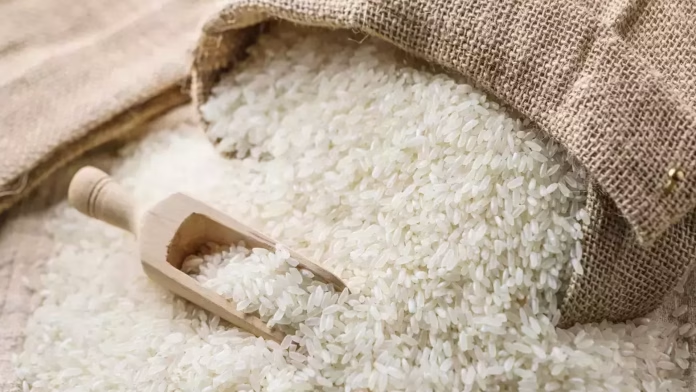
The recent prohibition on rice exports by India has triggered a significant increase in the cost of this essential commodity, causing apprehension among Non-Resident Indians (NRIs) residing in the United States (US). Consequently, numerous NRIs are now opting to purchase numerous rice bags from their local grocery stores in anticipation of a potential scarcity and subsequent rise in prices.

The ban’s repercussions are reverberating through the substantial NRI community in the US. Concerns about rice availability and pricing have prompted a surge in demand as NRIs rush to secure this crucial commodity. Local grocery stores have witnessed a notable upswing in rice bag sales, with some customers opting to buy in bulk to prepare for potential uncertainties.

According to a report by The Times of India, the rice ban has sparked panic buying among the Telugu population in North America, Europe, and West Asia, driven by concerns over potential rice shortages. As a consequence, Indian grocery stores in these regions are witnessing long queues of customers. The report also mentioned that a 9kg bag of rice is currently being sold at $27.

Major cities like Texas, Michigan, and New Jersey have experienced instances of panic buying. In response to the increased demand and concerns over rice scarcity, certain stores in these cities have implemented sales limits, allowing customers to purchase only one rice bag each.

In response to multi-year high domestic prices caused by unpredictable weather conditions jeopardizing rice production, India, the world’s leading rice exporter, has recently taken the measure of banning all exports of non-basmati white rice. While this decision aimed to stabilize prices within the country, it has had ripple effects on the global rice market and triggered concerns about potential inflationary pressures.

Read More: India prohibits non-basmati white rice exports amidst supply concerns

Being a staple food for over 3 billion people globally, rice holds immense importance, especially in Asia, where nearly 90 per cent of its water-intensive cultivation takes place. However, the recent export ban imposed by India, a major player responsible for 40 per cent of the world’s rice exports, has had a significant impact on the global supply chain. The Asian rice trade has temporarily halted as traders assess the implications of this ban, with predictions of substantial price increases in the near future.

Read More: India’s rice export ban expected to improve domestic supplies and modestly impact retail prices, says CRISIL

Advertisement

Indian whiskey stays on top despite rising wine and gin consumption

0
whisky under 8000
(Representative Image)

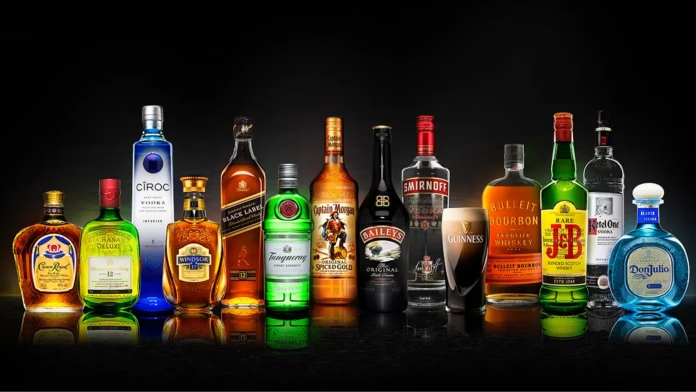
In spite of the growing popularity of wine and gin consumption in recent times, whiskey continues to reign supreme in the Indian liquor market, particularly in the affordable under INR 750 per bottle segment.

According to the most recent data from the global agency IWSR, whiskey dominates nearly two-thirds of spirits sales in India. Among the various whiskey brands, a staggering 85% of the market share is currently held by 10 domestic brands, which primarily operate in the lower price range.

Currently, imported whiskey accounts for approximately 3.3% of the total whiskey market share in India. Projections indicate that this share is expected to increase to 3.7% by the year 2027. Despite this growth, the data highlights that Indian-made whiskey will continue to dominate the market, with a substantial hold of over 96%, even after an estimated 3.8% growth over the next five years.

The most recent figures demonstrate a remarkable recovery for the business, as it successfully rebounded from the impact of the Covid-19 pandemic. Notably, Vodka has experienced a robust resurgence with a remarkable 34% increase in sales. This impressive growth can be attributed to the popularity of flavored varieties, which have been a significant driving force behind the surge in demand.

India ranks as the fifth largest market globally for alcoholic beverages, with an estimated total worth of approximately $53 billion. Over the coming five years, domestic consumption is anticipated to play a significant role in driving the industry’s growth. Among the various segments, ready-to-drink beverages have emerged as the fastest-growing category, experiencing an impressive surge of nearly 40% in the previous year. Projections indicate that this segment will continue to expand at double-digit rates over the next five years.

The wine segment is expected to be the second fastest-growing category, with a projected growth rate of 6.6%. It is worth noting that nearly one-fifth of the wine consumed in India comes from imports. Following wine, spirits are anticipated to grow at a rate of 3.7%, while beer is expected to experience growth at a rate of 2.7%, according to data from IWSR.

Although specific figures are not currently available, it is expected that imported wine from countries like Australia and the European Union might gain a larger market share due to the existing free trade agreements. Conversely, in the whiskey sector, where the UK is actively pursuing tariff reductions, the domestic industry is expected to play a crucial role in driving growth.

This is despite some of the imported whiskeys seeing a rapid rise, although it has come over a small base.

“There is a growing trend of new whiskeys being explored by Indian consumers. While scotch leads, the new players on the table are Irish, US, Japanese and Canadian whiskies. And of course, Indian Single Malts too,” said Nita Kapoor, CEO, International Spirits & Wines Association of India.

Advertisement

Coffee Day Global enters bankruptcy proceedings following NCLT’s decision

0
Coffee Day
Cafe Coffee Day (Representative Image)

According to sources familiar with the matter, Coffee Day Global, the company behind the Cafe Coffee Day chain in India, has been granted corporate insolvency by the Bengaluru bench of the bankruptcy court. The National Company Law Tribunal (NCLT) issued an oral order last week, accepting the petition filed by IndusInd Bank and admitting the unlisted company for corporate insolvency proceedings.

The tribunal has not yet uploaded a comprehensive order as of now.

Coffee Day Global, a subsidiary of the publicly listed Coffee Day Enterprises, was established by the late VG Siddhartha. His tragic demise by suicide in 2019 sent shockwaves through the business community, leaving many in disbelief.

As of March 31, 2022, based on the most recent annual report, the company possesses a noteworthy debt of INR 67.3 crore owed to IndusInd Bank. According to an individual familiar with the matter, the company’s admission to the tribunal occurred when attempts to reach a one-time settlement agreement between the company and IndusInd Bank failed. Despite attempts to seek clarification, Coffee Day Group remained unresponsive to comment requests.

According to information available on the NCLT website, it was observed that IndusInd Bank had engaged Skanda Legal as their legal representation, while Coffee Day Global had enlisted Tatva Legal as their counsels.

As per the FY22 annual report of Coffee Day Global, an unlisted entity, it possesses 495 Cafe Coffee Day outlets spread across 158 cities and operates 285 CCD Value Express kiosks. Furthermore, the company has successfully installed 38,810 coffee vending machines in various corporate workplaces and hotels, according to the same report.

As of March 2022, the company carries a total debt of INR 960 crore, comprising bank loans and inter-corporate deposits amounting to INR 119 crore owed to Tanglin Development, a group entity.

Advertisement

Shilpa Shetty-backed Kisankonnect launches India’s first digital farmers market for urban consumers in Mumbai and Pune

0
Kisankonnect
Shilpa Shetty

Kisankonnect, a fully integrated ‘farm-to-fork’ company, has taken a significant step towards bridging the gap between farmers and consumers by introducing ‘Aapka Apna Farmers Market’ on its innovative app. The driving force behind this transformative initiative was none other than Shilpa Shetty Kundra, a devoted practitioner of wellness, who sought to connect 5,000 farmers from Maharashtra directly with the discerning consumers of Mumbai and Pune.

Kisankonnect, a three-year-old start-up, has successfully developed an advanced, technology-enabled supply chain for fresh agricultural produce, catering to over 3 Lac urban consumers through its innovative App and Farm Stores. The company prides itself on adopting ‘Responsible Agriculture Practices,’ which encompass soil improvement techniques, the use of eco-friendly bio-fertilizers instead of harmful chemicals, and providing farmers with scientific agronomy inputs to optimize crop growth. Notably, Shilpa Shetty-Kundra has recently made an investment in this promising start-up.

Read More: Kisankonnect, the omni-channel ‘farm-to-fork’ startup, receives funding boost from Shilpa Shetty Kundra

Vivek Nirmal, Founder and CEO of Kisankonnect said, “Eliminating middle-man has helped us to reduce wastages and offer fair price to the farmers, as well as, the consumers. At Kisankonnect, we have passion to work with our soil, our farmers and produce safe fruits and vegetables for our loyal consumers. We have built traceability for the vegetables we source for our consumers using our proprietary tech’ Kisan-Trace’, which gives full information of the farm, farming practices and its growing location to our consumers on the App, even before buying the same. Farmers have seen better productivity through scientific interventions through our Agri-Clinics”.

Co-founder and Chief Business Officer Nidhi Nirmal of Kisankonnect added, “In today’s world, consumers have become highly conscious of what they consume. Knowing the farmer from which the food comes directly is matter of great confidence about quality of the produce. As a mother, it is important for me whether what I’m buying for my family are leafy vegetables grown on sewage water near railway tracks, or I’m getting it from a known source, who ensures the produce is harvested from healthy plants.”

“Shilpa Shetty Kundra also expressed concern about trusting the source and nutrition of vegetables in our daily diet. The partnership aims to connect responsible farmers practicing ethical farming with conscious consumers in Mumbai and Pune. These consumers care about what they consume and want the produce conveniently delivered directly from the farm to their homes. We see our customers love and trust Kisankonnect and prefer buying more from our farmers,” she added.

Advertisement

United Spirits reacts to tax hike with 14-17% surge in liquor prices in Karnataka

0
unitedspirits
(Representative Image)

United Spirits, the largest liquor company in the country, has announced that the prices of its brands will witness a surge of 14-17% in Karnataka. This decision comes in response to the state government’s recent announcement to impose a 20% hike in additional excise duty (AED) on Indian-made liquor (IML) starting from August.

Despite having the highest tax rate on liquor in the country, Karnataka remains the largest alcohol-consuming state in India, accounting for 18% of the nation’s total sales with an impressive annual sales figure of 68.4 million cases.

“This was not a welcome tax increase. The tax rates in Karnataka are already much higher. A 20% tax increase, in effect means that MRP of our brands will likely go up in the range of 14 to 17%. So, they become even more expensive in the state than they were already,” Hina Nagarajan, managing director at USL, told investors. “It’s too early to call out the impact on demand but our experience suggests there is generally a negative impact when prices go up.”

During the past few quarters, there has been a challenging situation for mass-priced segments, mainly due to inflation, even with a notable consumer shift towards premium products. For USL (United Spirits Limited), the popular segment experienced a 12% decline in volume growth. However, despite this, the company managed to achieve an overall 6% volume expansion.

In India, the liquor industry faces the influence of several state governments, which either control liquor retailing or wholesale distribution, or sometimes both. Taxes play a significant role in contributing to the state and central government revenues. Approximately more than 50% of the retail price of liquor goes towards VAT (Value Added Tax) and excise duty. For instance, the excise revenue generated from liquor sales in Karnataka reached around INR 30,000 crore in the fiscal year 2022-23.

Advertisement