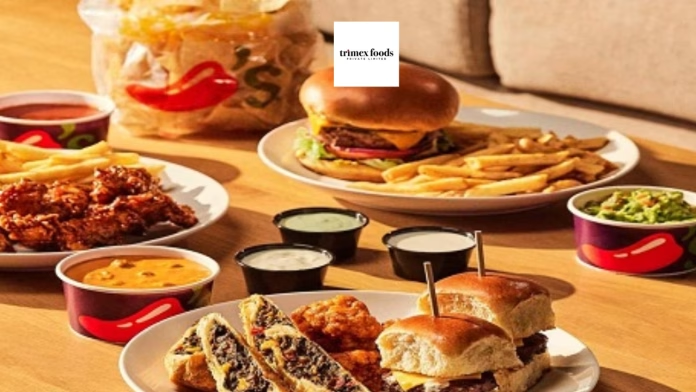
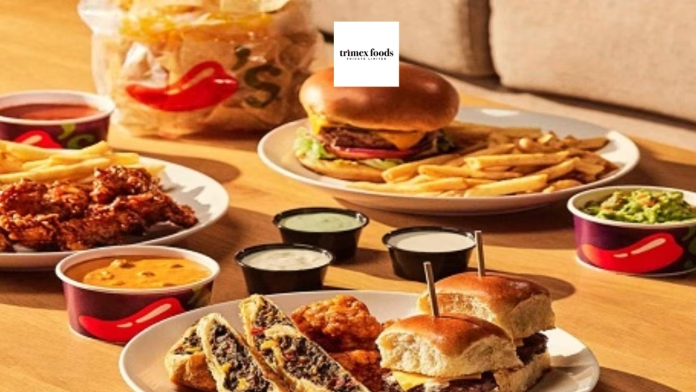
Trimex Foods, the master franchisee for global restaurant brands Chili’s Grill & Bar, Cinnabon and Paul Bakery in India, has initiated discussions to bring in an external investor through a minority stake sale. People familiar with the process said the company has appointed EY to run the transaction and is in conversations with multiple private equity funds and family offices. The proposed deal is expected to value the business in the range of ₹700 crore to ₹800 crore.
Founded in 2019, Trimex has built a portfolio of more than 50 outlets across India and Sri Lanka. According to filings accessed via Tracxn, the company reported revenue of ₹206 crore in FY24 and has recorded rapid improvement in operating performance over the past few years. The group employs close to 1,800 people across its markets.
Trimex holds development and expansion rights for Chili’s Grill & Bar in India, Sri Lanka and Bangladesh. The brand is owned globally by Dallas based Brinker International. The company also operates over 20 Cinnabon stores in India, serving desserts and beverages, and has a growing presence for French bakery chain Paul with more than seven locations nationwide.
Sources said the fresh capital will be used to fund a faster rollout of new restaurants and strengthen backend capabilities such as supply chain, training and store operations. Trimex has outlined plans to take its network to over 200 outlets by 2030, with a focus on metro markets as well as high potential tier two cities.
The move comes at a time when investor interest in food service, cafes and dessert chains remains strong. Recent transactions in the sector include consolidation among quick service restaurant operators and large private equity bets on bakery and dessert brands. Industry estimates suggest India’s food services market is on track to grow from ₹5.69 lakh crore in FY24 to ₹7.76 lakh crore by FY28, driven by younger consumers, rising eating out frequency and deeper reach of delivery platforms.
Bengaluru based petcare platform Supertails has secured $30 million in a fresh funding round led by Venturi Partners, with participation from Nippon India Alternative Investments and Titan Capital Winners Fund. The round also saw continued backing from Fireside Ventures, RPSG Capital Ventures, Sauce VC and Saama Capital.
The company said the new capital will be deployed to scale its physical clinic network, widen the reach of at home veterinary services and strengthen fulfilment infrastructure as demand for organised pet services rises across urban centres. A portion of the funds will also go into building deeper personalisation tools on the app and supporting veterinarians through training and technology.
Founded in 2021 by Varun Sadana, Aman Tekriwal and Vineet Khanna, Supertails operates a mobile led platform that brings together pet food, healthcare products, accessories and services under one roof. The app lists more than 30,000 products, including pharmacy items, and connects pet parents with a growing network of veterinarians for consultations, vaccinations and preventive care at home.
Supertails currently runs rapid delivery services in Bengaluru and plans to extend this model to other large cities over the next year. The company has also entered adjacent categories such as fresh pet meals and daily essentials, and now works with over 500 brands. Its veterinary network spans more than 100 professionals, including specialists and teleconsultation partners.
With this round, Supertails has raised about $51 million since inception, including earlier seed, Series A and Series B investments. The latest fundraise reflects rising investor interest in India’s petcare market, which is seeing higher spending on premium nutrition, healthcare and convenience led services.
As competition intensifies with players such as Heads Up For Tails, Wiggles and Petzzco expanding their footprints, Supertails is betting on a hybrid model that blends digital commerce, fast delivery and clinical services to build a nationwide petcare platform.
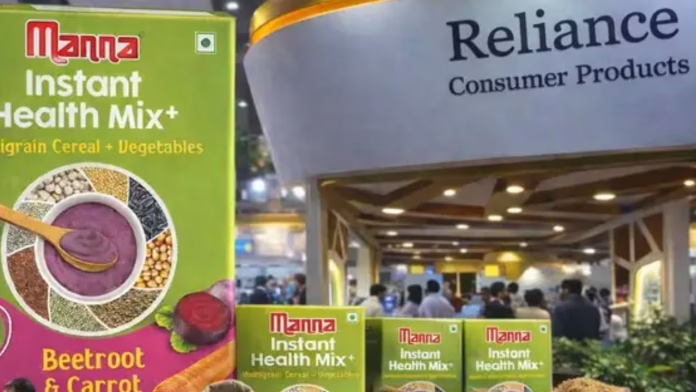
Reliance Consumer Products Limited, the FMCG arm of Reliance Industries, has acquired Tamil Nadu based Southern Health Foods Private Limited, bringing the regional health foods brand Manna into its growing foods and staples portfolio. The transaction marks Reliance’s latest push to deepen its presence in nutrition focused packaged foods, a category seeing steady demand across urban and semi urban markets.
Southern Health Foods has spent over two decades building Manna into a recognised name in South India, with strong traction in Tamil Nadu and neighbouring states. The brand is best known for millet flours, multigrain mixes, health drinks and baby food products, along with a wider range spanning oats, breakfast cereals and dry fruits. The company operates in segments that have seen faster shelf growth as households look for alternatives to refined staples and sugar heavy foods.
For Reliance Consumer Products, the acquisition strengthens its foods platform that already houses brands such as Udhaiyam, Independence and SiL. Manna is expected to form the backbone of a dedicated health foods and millet vertical within the group’s FMCG play. Executives at RCPL said the brand will be scaled nationally using Reliance’s distribution reach, sourcing network and in house research capabilities, with the goal of expanding availability beyond the South in phases.
Industry estimates point to packaged millet and multigrain foods growing at double digit rates as awareness around nutrition and traditional grains rises. Reliance’s entry into this space through a known regional player reduces the time needed to build trust in categories such as baby foods and health mixes, where credibility is key to repeat purchases.
Post acquisition, Manna is expected to see wider placement across modern trade, general trade and e commerce channels under RCPL’s sales network. The company plans to broaden the product range and invest in packaging upgrades and pricing strategies to make health focused staples more accessible across price points.
The move underlines Reliance Consumer Products’ broader strategy to build scale in everyday food categories while adding nutrition led brands that can travel across regions and formats.
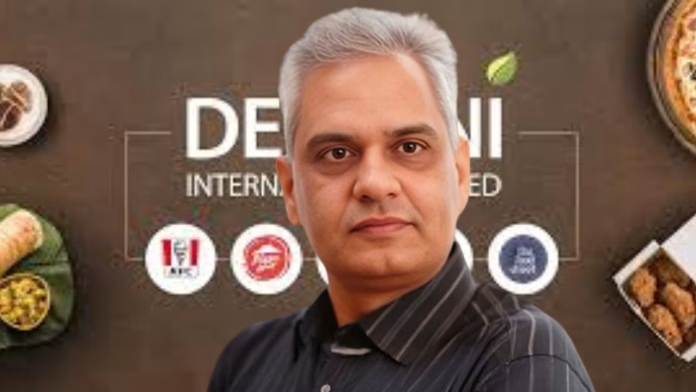
Devyani International Ltd., one of India’s largest quick service restaurant franchise operators, has announced a leadership transition at the top, appointing Manish Dawar as President and Chief Executive Officer with effect from April 1, 2026. Dawar, who currently serves as Chief Financial Officer and whole time director, will take charge as the company moves into its next phase of expansion and integration.
The board has accepted the transition plan of outgoing chief executive Virag Joshi, who will step down from the executive role and continue with the company as a non executive director. Alongside this change, Anupam Kumar, currently Executive Vice President for Finance, will be elevated to Chief Financial Officer, ensuring continuity in financial stewardship during a period of strategic realignment.
Dawar brings over 30 years of operating and financial leadership experience across consumer, telecom and manufacturing businesses. His previous stints include senior roles at Vodafone India, Vedanta, Reckitt Benckiser and Reebok. At Devyani International, he has been closely involved in key milestones over recent years, including the company’s public market debut and the scaling of its franchise portfolio across India and international markets.
The leadership reshuffle comes as Devyani prepares for a proposed merger with Sapphire Foods in a transaction valued at around $934 million. If completed, the combined entity is expected to emerge as one of the most influential operators of global quick service restaurant brands in the region, with a larger store network, stronger bargaining power with brand owners and deeper reach across tier one and tier two cities.
Devyani operates and develops several international food service brands in India, with a portfolio spanning quick service dining, cafes and casual formats. The company has continued to expand its footprint through new store additions and selective acquisitions, while also investing in supply chain capacity and digital ordering platforms.
The board said the leadership transition is aimed at maintaining execution continuity while sharpening focus on scale, operational discipline and long term growth as the company enters a consolidation phase in the food service sector.
India’s department store chain Shoppers Stop has announced a change at the top of its finance function, appointing Pankaj Chaturvedi as Chief Financial Officer with effect from April 1, 2026. He will take over from Karunakaran Mohanasundaram, who has led the company’s finance operations since 2018 and will step down to explore opportunities outside the organisation.
Chaturvedi joins Shoppers Stop from Saregama India, where he currently serves as CFO. His career spans more than two decades across consumer and telecom businesses, with senior finance leadership roles at Vodafone India and Reliance Jio. The company said his experience in managing large balance sheets, capital allocation and business transformation will support Shoppers Stop as it navigates a challenging retail environment.
The leadership change comes at a time when organised retail in India is facing uneven demand and tighter discretionary spending. Fashion and lifestyle retailers, in particular, have seen slower footfalls across malls and high streets over the past two quarters, while competition from online platforms and quick commerce has intensified pressure on margins.
Shoppers Stop reported a sharp decline in profitability in the December quarter, with net profit falling 69 percent year on year, reflecting softer demand and higher operating costs. The company has been working on a mix of cost control, inventory rationalisation and sharper private label focus to protect margins, while continuing to invest in store upgrades and digital channels.
Industry executives say finance leadership will play a key role as retailers balance expansion with cash discipline in a cautious consumer cycle. Shoppers Stop operates a network of department stores across major Indian cities and derives a growing share of revenue from beauty, private labels and omnichannel sales.
Chaturvedi’s appointment is expected to bring continuity in financial oversight as the company recalibrates growth plans, manages working capital cycles and responds to shifting consumer spending patterns.
Gurugram based children’s nutrition brand Slurrp Farm has secured Rs 30 crore in an extended Series C round from Scarlet Ventures, marking its first significant fundraise in nearly two years. The investment values the company at an estimated Rs 810 crore post money, reflecting a sharp step up from its last reported valuation of around Rs 510 crore in early 2024.
Regulatory filings with the Registrar of Companies show that Wholsum Food Private Limited, the parent entity of Slurrp Farm, issued 1,04,457 Series C1 preference shares to Scarlet Ventures at Rs 2,872 per share. Post allotment, the investor holds roughly 3.7 percent equity in the company. The capital is earmarked to strengthen long term financial reserves and support the brand’s next phase of expansion in India’s fast growing kids nutrition market.
Founded in 2016, Slurrp Farm has built its portfolio around millet led food formats for children, including porridges, breakfast mixes, pancake and dosa blends, baked snacks and ready to cook meals. The brand has benefited from rising demand for clean label packaged food among young parents, as well as policy level support for millet consumption. Celebrity investor and brand ambassador Anushka Sharma has also helped widen consumer awareness over the past few years.
The company has raised close to $18 million to date from institutional backers such as Fireside Ventures, Raed Capital and the Investment Corporation of Dubai. In January 2024, Slurrp Farm raised Rs 60 crore in a Series C round.
Financially, the business continues to scale at pace. In FY25, operating revenue rose to Rs 95.6 crore from Rs 72.5 crore a year earlier, a growth of over 30 percent. Losses widened to Rs 32.7 crore as the company stepped up spends on distribution, brand building and new product development.
The fresh capital is expected to back deeper retail reach, faster new product launches and a stronger presence across quick commerce and modern trade.
Pet nutrition startup Benny’s Bowl has closed a $1.4 million Pre Series A funding round led by Atomic Capital, marking a fresh capital infusion into India’s fast growing companion animal care market. The company plans to channel the funds into product development, nutrition research and wider distribution as it looks to scale beyond its current core offerings.
The brand said a significant share of the capital will be directed towards building new functional product lines, including cat food, protein supplements and meal toppers. These categories are aimed at strengthening formulation standards and improving everyday diet outcomes for pets. Benny’s Bowl will also invest in clinical nutrition and in house research to improve ingredient quality and nutrient delivery across its portfolio.
Alongside product expansion, the company is preparing a wider push across both digital and physical retail. It plans to deepen its footprint in metro cities while increasing availability in Tier I and Tier II markets through marketplaces, specialty pet stores and modern trade. A portion of the funding will also support consumer awareness efforts around balanced diets, ingredient transparency and the role of functional nutrition in long term pet health.
Founder Akshay Gupta said the brand has seen strong momentum over the past year, with revenue doubling in the last 12 months and repeat customers contributing about 85 percent of sales. The company is targeting an annual run rate of Rs 100 crore by the next financial year, backed by portfolio expansion and higher offline reach.
Atomic Capital’s managing partner Apoorv Gautam said the Indian pet nutrition segment remains under served despite rising pet ownership and higher spending on care. He noted that most growth to date has come from marketplaces, while few brands have built depth across everyday nutrition and functional needs.
Benny’s Bowl recently introduced clinical nutrition products focused on gut health, allergies, renal care, skin and coat health and weight management. The next phase will include protein supplements and a fresh cat food range, as the brand looks to build a broader nutrition platform for pet parents across urban India.
ACPL Exports, a long established silver jewellery manufacturer and exporter based in Agra, has entered the direct to consumer space with the launch of its own brand, TrueSilver. The move marks the company’s shift from a largely export driven business to building a consumer facing retail brand with an omnichannel footprint in India and overseas markets.
The company has set an initial revenue target of ₹100 crore for TrueSilver in the near term and aims to scale the brand to ₹250 crore within the next two to three years. Retail expansion will play a central role in this plan, with ACPL targeting up to 100 exclusive brand outlets across key Indian cities. The brand’s leadership expects the consumer business to account for 30 to 40 per cent of the group’s overall revenue over time.
TrueSilver has launched with a catalogue of nearly 900 designs across women, men and children, with women’s jewellery forming more than 80 per cent of the range. The focus is on daily wear silver jewellery backed by certified purity, modern styling and pricing positioned for regular purchase. Online price points currently range from ₹2,000 to ₹5,000, while average ticket sizes in physical stores are expected to move towards ₹7,000 to ₹8,000 as the retail network expands.
The brand has adopted a digital first approach in its opening phase and is live on its own website as well as leading marketplaces such as Amazon India and Myntra. Physical stores are being planned initially in metro markets including Delhi, Mumbai, Bengaluru and Kolkata. Each store will span around 700 to 800 square feet with an estimated investment of about ₹50 lakh per outlet. The company expects individual stores to reach operating break even within four months.
ACPL Exports currently ships to more than 37 countries, with nearly half of its export revenue coming from the United States. TrueSilver is also expected to explore international markets such as the US, UK and UAE as the brand scales its retail presence.
Global edible oil markets have entered a phase of sustained or “structural” volatility, driven by shifting trade dynamics, biofuel mandates, and constrained supply growth, according to Sudhakar Desai, president of the Indian Vegetable Oil Producers’ Association (IVPA).
Speaking at the UOB Kay Hian Conference in Kuala Lumpur, Desai said geopolitical realignments have altered global trade corridors, compressing arbitrage opportunities and increasing the transmission of energy prices, currency movements, and policy shocks into edible oil markets. As a result, even small changes in duties, mandates, or trade flows are now triggering outsized price movements across the supply chain.
Providing a global outlook, Desai said production of the four major vegetable oils is estimated at 208.4 million tonnes in the 2025–26 season, only marginally higher year-on-year. While output of palm oil and rapeseed oil is expected to rise, sunflower oil production remains constrained, keeping global supply balances tight. This limited growth, he noted, leaves markets vulnerable to weather disruptions and policy changes, intensifying competition between oils and leading to unstable price spreads. Sunflower oil continues to command a premium in global markets.
Biofuel mandates have emerged as a key structural driver of prices. Indonesia’s biodiesel programme alone absorbs around 14 million tonnes of palm oil annually, while biofuel policies in the United States continue to anchor global soybean oil price expectations. Desai said edible oils are increasingly functioning as energy-linked strategic inputs rather than purely food commodities, raising the price floor and strengthening their correlation with crude oil and policy cycles.
India’s domestic edible oil production is projected at 9.6 million tonnes in the 2025–26 oil year, covering only about 40% of national consumption. This reinforces the country’s dependence on imports estimated at around 16.7 million tonnes. Of this, palm oil imports are expected to account for 8–8.5 million tonnes, soybean oil 5–5.5 million tonnes, sunflower oil 2.8–3 million tonnes, with around 200,000 tonnes of other oils, including zero-duty imports routed through Nepal.
Desai said India’s import basket remains highly sensitive to inter-oil price differentials, particularly between palm and soybean oil. A shift of just $50–60 per tonne in price spreads can lead to large-scale reallocation of import volumes, highlighting the lack of stickiness at the bulk oil level. Palm oil imports have already declined from more than 10 million tonnes in 2021–22 to around 8 million tonnes, as sustained premiums and competition from soybean and sunflower oil alter market share dynamics. Refining margins, he added, remain under pressure, limiting demand momentum.
On trade policy, Desai said recently concluded free trade agreements and bilateral arrangements with partners such as the United States, the European Union, Australia, the UAE, and SAFTA members have become integral to pricing and sourcing decisions. These agreements directly influence landed cost structures, arbitrage flows, and refining economics. He added that further clarity on potential tariff concessions or quota mechanisms for US soybean oil would provide additional market direction.
Sharing his price outlook, Desai projected Malaysia’s palm oil production at 19.9 million tonnes, compared with 20.2 million tonnes last year, and Indonesia’s output at 51.8 million tonnes, up slightly from 51.2 million tonnes. Slow progress in replanting in both countries is likely to keep near-term supplies tight, supporting prices until March 2026. However, sustained premiums over soybean oil are expected to cap palm and sunflower oil consumption in India. Benchmark palm oil prices are likely to remain range-bound but policy-driven, with trading expected in the 4,000–4,400 range during April–June and 4,200–4,600 during July–September. Sunflower oil prices are expected to stay elevated until the next production cycle.
B2B e-commerce firm Udaan reported a sharp reduction in losses for the financial year ended March 31, 2025, even as its revenue declined following an exit from select business verticals, according to its latest financial disclosures.
For FY25, Udaan’s consolidated revenue stood at ₹4,561.4 crore, down from ₹5,706.6 crore in FY24, marking a year-on-year contraction of nearly 20%. The decline in topline reflects the company’s portfolio rationalisation efforts as it scaled back operations in non-core segments.
Despite the revenue drop, the company made significant progress on profitability. Udaan’s consolidated loss narrowed by nearly 37% to ₹1,055.4 crore in FY25, compared with a loss of ₹1,674.1 crore in the previous year. This translates into an improvement of over ₹618 crore year-on-year.
The reduction in losses was supported by lower expenses across multiple cost heads, including purchases of traded goods, employee costs, finance charges, and other operating expenses. The company has been tightening costs while reworking its operating structure to improve efficiency.
Commenting on the performance, Vishnu Menon, senior vice president–strategy at Udaan, said FY25 marked an important step in the company’s journey towards sustainable growth. He noted that the transition to a regional cluster-based operating model over the past six quarters helped reduce core EBITDA burn by around 40%, even as the company exited select verticals as part of a broader portfolio realignment.
Udaan has been restructuring its business to focus on fewer, stronger regional clusters, a move it says has improved unit economics and operational discipline. The company believes this model has strengthened its operating foundation and positioned it for more resilient growth.
In terms of fundraising, Udaan raised $114 million in Series G equity funding in June last year from M&G Investments and Lightspeed Venture Partners, providing it with additional capital to support its restructuring and long-term strategy.
We use cookies to ensure that we give you the best experience on our website. If you continue to use this site we will assume that you are happy with it.