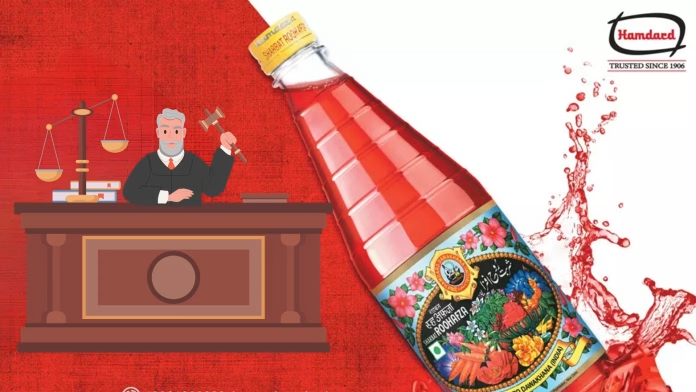
The Supreme Court has determined that Hamdard’s iconic beverage Rooh Afza should be treated as a fruit drink, making it eligible for a reduced VAT rate of 4%. The judgment rebuffed the Uttar Pradesh commercial tax department’s push to class the product under a higher tax category.
Ruling and immediate effect
The top court’s decision means Rooh Afza will attract the lower tax slab reserved for fruit-based drinks. For consumers and retailers, the ruling could translate into smaller price increases than would have followed from a higher levy.
Hamdard, the maker of Rooh Afza, stood to benefit immediately from the classification — the company will now be taxed at the 4% rate applied to fruit-derived beverages rather than the steeper bracket sought by the state tax authority.
Basis of the court’s decision
The bench concluded that the core composition of Rooh Afza is derived from fruit ingredients, a determining factor in assigning tax treatment. The court dismissed arguments by the Uttar Pradesh commercial tax department that the drink belonged in a different category attracting a higher tax.
Neither the ruling nor public filings suggest the court relied on procedural errors by the tax authority; rather, the classification hinged on the product’s ingredient profile and the statutory definitions that govern VAT categories.
Industry impact
This decision could set a practical precedent for other concentrated syrups and fruit-based beverages seeking lower VAT treatment. Manufacturers may be encouraged to present detailed composition data and labeling to support favorable tax classification. For the beverages sector, the ruling may spur a wave of re-examinations of tax positions, influencing pricing strategies and competitive dynamics between traditional fruit syrups and carbonated or artificially flavored drinks.
State tax departments could face downward pressure on collections from items reclassified as fruit-based, prompting closer scrutiny and potentially more litigation as authorities test the boundaries of statutory definitions.
Risks and uncertainties
The ruling’s scope is tied to the specifics of Rooh Afza’s composition and the legal arguments presented; it does not automatically guarantee the same outcome for every syrup or beverage with fruit elements. Tax authorities may respond by tightening classification criteria or launching fresh assessments under different legal theories.
There is also potential for administrative friction as states reconcile the decision with existing assessments and revenue targets. The outcome could unleash short-term uncertainty for retailers and distributors while tax officials adapt to the implications of the judgment.
Overall, the Supreme Court’s finding narrows the tax exposure for Rooh Afza and signals that ingredient-based classifications will play a decisive role in VAT disputes within the beverage industry.