Wednesday, January 28, 2026
Home Blog

Start following Kiara Advani’s simple yet powerful morning ritual for glowing skin

Have you ever stopped to marvel at Kiara Advani’s radiant and flawless skin? In the exquisite glamour that is Bollywood, Kiara Advani stands out not just for her acting genius but also for her luminous and healthy skin. Amidst the overwhelming myriad of options surfaced by the beauty industry, this simple yet transformative ritual is not only a fad, but the cornerstone of her radiance.


The secret might be simpler than you think. It’s not a gruelling workout or a 10-step skincare routine; it’s a simple cup of warm water, with a slice of lemon in it. Kiara’s morning habit of indulging in warm water infused with the zest of fresh lemons has become a conscious choice rooted in her approach to holistic well-being. The actress recommends this refreshing elixir not only for its skin-enhancing benefits but also for the multiple benefits it has in improving your overall health and vitality.  

 

Hansa Yogendra, Director of The Yoga Institute in one of her videos on the health benefits of lemons mentioned, “Drinking one glass of lemon water every day in the morning will benefit you for a lifetime”.  Her claim can further be supported by a research published in the Journal of Science and Technology which reveals that “It is a healthy appetiser and helps to treat diseases with digestive aids. Lemon does not disclose any adverse effects, according to literature, but it is used all over the world as a traditional medicine”. Vitamin C, which is abundantly present in lemons, fights toxins and increases collagen production in the body, both of which help in treating acne as well as tightening the skin and reducing fine lines and wrinkles. While lemons are famously known for their Vitamin C component, not many people are aware of their Potassium-rich skin, which is an important mineral for nervous stimulation as well as maintaining blood pressure. Here are a few more benefits of adding lemon water to your everyday diet:- 

  • Immediately soothes muscle cramps
  • Peptin in lemons makes us feel fuller, thereby, helping in weight loss
  • Boosts immunity by stimulating the production of White Blood Cells in the body
  • Removal of kidney stones 
  • The lemon peel when infused in water for 30 minutes, activates its bioactive compounds which boost immunity and prevent our bodies from cellular damage
  • It also helps in the release of digestive enzymes which help in better absorption of nutrients

 

This simple kitchen hack has proudly made its way into the celebrity wellness circuit. Not only Kiara Advani but also Alia Bhatt, Deepika Padukone, Kriti Sanon, and Malaika Arora have this one drink in common at the break of dawn.

Here are 3 ways, you can incorporate the lemon water glow into your morning routine:- 

  1. Warm ginger lemon tea- Boil a glass of water with crushed ginger. When its done, squeeze a lemon into your glass and have it warm. To enjoy it in place of your morning tea, you may add a teaspoon of honey to it.
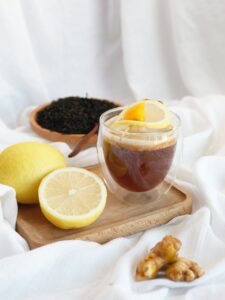
2. Ginger lemon shot – Take an inch of ginger root, and one squeezed lemon. Add enough water to blend it (3-4 tablespoons) in a blender, and have it as a morning shot.

3. Lemon-infused detox water- Cut up slices of one lemon and add it to your water bottle. Have 1-2 glasses of lemon water in the morning, and keep having the rest throughout the day. 

While lemon water offers a myriad of health benefits, it’s crucial to exercise moderation. One lemon a day is a healthy limit, and people with gastroesophageal reflux disease should be cautious about excessive lemon juice intake. As with any dietary rituals, balance is key to ensuring you enjoy the advantages without overdoing it. 
LVMH Succession Question Rattles Investors as Bernard Arnault Keeps Future Plans Under Wraps

0

As LVMH prepares to announce its annual results, a growing section of shareholders is voicing unease over an issue that has lingered for years but is now gaining urgency: who will eventually succeed Bernard Arnault at the helm of the world’s largest luxury group.

Arnault, 76, has led LVMH for nearly four decades and continues to oversee a sprawling $350 billion empire that includes more than 70 brands such as Louis Vuitton, Dior, and Tiffany. While all five of his children hold senior roles across the group, the chairman and chief executive has not named a successor, nor has he outlined a public transition plan. Last year, LVMH extended the age limit for its combined CEO and chair role to 85, reinforcing the perception that Arnault intends to stay firmly in control.

Several institutional investors say the absence of clarity has started to weigh on confidence. Fund managers at firms including Deutsche Bank’s DWS and Edmond de Rothschild describe succession planning at LVMH as opaque, warning that prolonged uncertainty could translate into a governance discount on the stock. Some investors argue that what was once a distant concern has become a material risk as the group’s scale and complexity continue to grow.

Arnault has played down the issue in public comments, suggesting it is not an immediate priority. LVMH, for its part, maintains that succession plans exist for both long-term continuity and unexpected events, though it does not disclose details.

Corporate filings from a 2022 restructuring offer limited insight. Control of the Arnault family holding structure is set to pass to a vehicle equally owned by his five children, with major decisions requiring a majority. Governance experts note that such arrangements can invite internal friction, particularly in large second-generation family businesses.

For now, markets remain focused less on who might take over and more on the fact that no roadmap has been shared. As Arnault continues to delay the conversation, investors say the question is no longer hypothetical but increasingly central to LVMH’s long-term narrative.

Advertisement

Cava Athleisure in Talks to Raise Rs 35 Crore as D2C Fitness Wear Brand Eyes Next Growth Phase

0

Direct-to-consumer athleisure brand Cava Athleisure has entered discussions to raise around Rs 35 crore in a new funding round, according to people familiar with the matter. The round is expected to see participation from Marico’s family office Sharrp Ventures, along with other investors. If completed, this would mark Cava’s largest capital raise to date.

The proposed funding comes nearly two years after the brand last raised capital. In January 2024, Cava secured approximately Rs 8–10 crore from investors including Spring Marketing Capital. The company and Sharrp Ventures declined to comment on the ongoing discussions.

Founded by sisters Ria and Shreya Mittal when they were just 20 and 18 years old, Cava was born out of a personal need. Regular workouts exposed a gap in the Indian market for premium, functional athleisure that balanced performance with everyday wearability. Drawing on their family’s three-decade-long experience in garment manufacturing, the founders built Cava as a brand focused on comfort, confidence, and clean design, while maintaining technical functionality.

Cava operates in an increasingly crowded athleisure market that includes players such as Cult.fit, Boldfit, and BlissClub, though it remains smaller in scale compared to these established brands. The company primarily targets urban consumers and Gen Z audiences, many of whom discover the brand through social media platforms where fitness, lifestyle, and fashion content continue to gain traction.

According to data from Tracxn, Cava reported revenues of around Rs 2 crore in FY24. Industry observers say the brand has seen improved traction since then, driven by rising health awareness, increased participation in fitness activities, and growing acceptance of athleisure as everyday wear.

The fresh capital, if finalised, is expected to support product expansion, brand building, and deeper penetration across digital channels. As India’s D2C fashion and fitness ecosystem matures, early-stage brands like Cava are increasingly looking to scale with institutional backing while competing in a market shaped by fast-moving consumer preferences and social-led discovery.

Advertisement

Quick Commerce Ads Surge in India as Brands Shift Budgets from Amazon and Flipkart to Blinkit, Zepto, Instamart

0

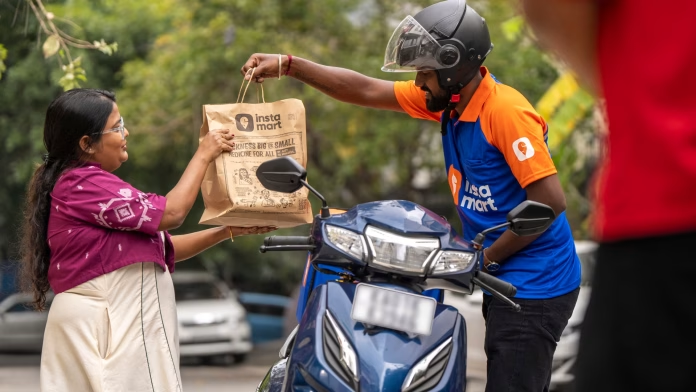
India’s digital advertising landscape is seeing a clear reordering as quick commerce platforms steadily pull ad budgets away from traditional e-commerce giants. Brands across FMCG, food, wellness, and personal care are reallocating a significant share of their marketing spends to Blinkit, Zepto, and Swiggy Instamart, drawn by stronger conversion rates and faster sales outcomes.

Industry executives and media buyers say some brands have moved as much as 50 to 55 percent of their digital advertising budgets to quick commerce channels over the past year. The reason is simple. Consumers opening these apps are not browsing casually. They arrive with a clear purchase need, often for daily essentials, and complete transactions within minutes. This high intent translates into lower acquisition costs and quicker attribution of sales.

Data from advertising agencies tracking retail media shows that quick commerce advertising in India is now valued at over ₹5,800 crore, or roughly $700 million. That figure has grown about 40 percent in just six months and has nearly doubled over the past three years. By comparison, Amazon India and Flipkart together still account for an estimated ₹14,000 crore in retail media revenue, but their growth is slower.

Brands like Wellbeing Nutrition and Plum Goodness have cited higher returns on ad spend and faster product movement on quick commerce platforms, particularly for repeat purchase categories. Large FMCG players are also using these apps to push new SKUs and drive immediate off take in metro markets, treating sponsored listings as digital shelf space with instant impact.

While Amazon and Flipkart continue to lead on reach, discovery, and high value purchases, quick commerce is carving out dominance in everyday consumption. Marketing teams increasingly see the platforms as complementary rather than competing channels. One builds awareness at scale, the other converts intent into sales almost instantly.

With faster delivery shaping consumer behaviour, advertisers expect quick commerce to claim a larger share of digital budgets over the next two to three years, especially as platforms invest further in targeting tools and retail media capabilities.

Advertisement

Dhun Wellness Raises $4 Mn to Expand Luxury Urban Wellness Network Across Major Indian Cities

0

Mumbai-based luxury wellness startup Dhun Wellness has secured $4 million, around INR 36.6 crore, in a fresh funding round led by SRF Ltd and Havells India, marking a key milestone in the brand’s national expansion plans. The round also drew participation from a group of prominent angel investors, including Arushi Aayush Agrawal of Inspira Global, Saama Capital founder Ash Lilani, Tracxn cofounder Abhishek Goyal, Genesis Luxury founder Sanjay Kapoor, and several others.

The capital infusion will be deployed to scale Dhun Wellness beyond Mumbai, with planned launches across Pune, Hyderabad, Bengaluru and Ahmedabad. The company is also preparing to open a physical centre in the Delhi NCR region, which is expected to serve as a major hub for its next phase of growth.

Alongside geographic expansion, Dhun Wellness intends to invest a portion of the funds into strengthening its clinical and longevity-focused offerings. This includes deepening its preventive wellness programs, enhancing therapy protocols and building stronger operational systems across locations to ensure consistency and quality as the network grows.

Founded in 2023 by Mira Kapoor, Dhun Wellness began as a rejuvenation-focused concept designed for urban consumers seeking structured, personalised wellness solutions. The brand positions itself at the intersection of traditional therapies and modern longevity practices, offering treatments that span regenerative facials, Ayurvedic healing, and curated wellness experiences.

Its flagship centre in Bandra, Mumbai, which opened in May 2025, serves as the blueprint for future locations. The facility caters to a growing base of urban clients looking for long-term wellness support rather than episodic spa services.

With increasing interest in preventive health and longevity among Indian consumers, Dhun Wellness is aiming to build a multi-city luxury wellness platform that combines science-backed practices with experiential care. The latest fundraise signals investor confidence in the brand’s vision to create a scalable, premium wellness ecosystem tailored for India’s urban markets.

Advertisement

Milky Mist to Invest ₹1,130 Crore in Maharashtra for Large-Scale Dairy Processing Facility

0

Milky Mist Dairy Food Ltd is set to deepen its manufacturing footprint with a planned investment of ₹1,130 crore in Maharashtra, marking one of the company’s largest capacity expansion initiatives to date. The dairy major has entered into a memorandum of understanding with the Maharashtra government to establish a new milk processing and dairy products manufacturing facility in the state.

The agreement was formalised on the sidelines of the World Economic Forum Annual Meeting in Davos, in the presence of Maharashtra Chief Minister Devendra Fadnavis. The proposed facility will be designed to handle 10 lakh litres of milk per day in its initial phase, with infrastructure in place to scale processing capacity up to 25 lakh litres per day as demand grows.

According to company disclosures, the plant will come up on a 48.15-acre land parcel to be allotted by the Maharashtra Industrial Development Corporation. Once operational, the project is expected to generate direct employment for nearly 800 people, contributing to both industrial development and local job creation in the region.

The Maharashtra investment forms part of Milky Mist’s broader strategy to strengthen its supply chain and expand production closer to key consumption markets in western India. The company is known for its integrated dairy operations and value-added product portfolio, which spans cheese, curd, paneer and other processed dairy offerings.

Milky Mist currently operates a fully automated dairy processing facility in Perundurai, Erode district of Tamil Nadu, which serves as its primary manufacturing base. The new Maharashtra plant is expected to complement this setup and support the brand’s next phase of growth.

The expansion comes at a time when Milky Mist is preparing for its public market debut. The company has already filed a draft red herring prospectus with the Securities and Exchange Board of India for an initial public offering aimed at raising approximately ₹2,000 crore.

With rising demand for branded dairy products and increasing focus on capacity-led growth, the Maharashtra project positions Milky Mist to scale operations while improving distribution efficiency across western and central India.

Advertisement

Babai Tiffins Raises Rs 10.5 Crore on Bharat Ke Super Founders to Scale Andhra QSR Footprint

0

Andhra-focused quick service restaurant chain Babai Tiffins has raised Rs 10.5 crore in funding through the entrepreneur-led television platform Bharat Ke Super Founders, hosted by actor and investor Suniel Shetty. The funding comprises Rs 8 crore in equity for a 10% stake and Rs 2.5 crore in debt, providing the brand with growth capital as it looks to expand its organised presence in the regional Indian food segment.

Founded in 2021, Babai Tiffins is building a structured QSR model around authentic Andhra-style cuisine, a category that remains largely dominated by unorganised eateries. The startup positions itself as a scalable alternative to traditional outlets, often describing its ambition as becoming the Rameshwaram Cafe equivalent for Andhra food. Its menu focuses on familiar, everyday dishes tailored for consistency, speed and repeat consumption.

Currently, the brand operates three outlets in Bengaluru, a market it sees as a strong testing ground due to its diverse consumer base and high acceptance of regional formats. Over the next 18 months, Babai Tiffins plans to double its footprint to six locations, using the fresh capital to support outlet expansion, kitchen infrastructure and operational systems.

The company is led by co-founders Ravi and Shriram. Ravi’s background spans an agricultural upbringing, a corporate stint at Infosys and a transition into entrepreneurship, shaping the brand’s focus on process-led execution. The founders see the informal food economy as their primary competition and believe there is significant opportunity to formalise regional cuisines through standardisation and branding.

Bharat Ke Super Founders is positioned as a founder-first investment platform that blends capital with mentorship. Unlike traditional pitch shows, it emphasises business fundamentals such as scalability, operational depth and long-term value creation. Investments on the show include both equity and structured debt, aimed at supporting startups beyond early-stage visibility.

With this raise, Babai Tiffins joins a growing list of regional food brands seeking to build national relevance by bringing local flavours into organised formats.

Advertisement

Ranbir Kapoor Appointed Brand Ambassador for PNG Jewellers to Drive National Expansion

0

PNG Jewellers has named actor Ranbir Kapoor as its new brand ambassador, marking a significant step in the heritage jewellery house’s plans to deepen its national footprint. The association comes into effect from January 2026 and is aimed at strengthening the brand’s connection with consumers across age groups while reinforcing its long-standing reputation for trust and craftsmanship.

Founded in 1832, PNG Jewellers traces its roots to Maharashtra and has steadily expanded its presence across India and select international markets. The appointment of Kapoor signals a renewed focus on national visibility as the brand balances its legacy with the aspirations of a younger, modern audience. Known for his wide appeal and credibility across generations, Kapoor brings a blend of contemporary relevance and inherited legacy that aligns closely with the brand’s positioning.

Saurabh Gadgil, chairman and managing director of PNG Jewellers, said the association reflects shared values and a common outlook. He noted that Kapoor represents a seamless mix of tradition and modernity, mirroring the brand’s own journey of evolving over decades without losing sight of its roots. According to Gadgil, the partnership is designed to go beyond endorsements and play a role in shaping long-term brand storytelling as PNG Jewellers scales its retail ambitions nationwide.

While the collaboration is not tied to the launch of a specific jewellery collection, it is expected to support the company’s broader growth strategy through brand-led initiatives, campaigns and consumer engagement efforts. Kapoor’s reach among Hindi film audiences and his strong recall value are seen as key drivers in expanding PNG Jewellers’ appeal beyond its core regional markets.

Commenting on the association, Ranbir Kapoor said the brand’s emphasis on trust, values and generational legacy resonated strongly with him. He added that being associated with a jewellery house that honours tradition while looking ahead felt like a natural fit.

With this move, PNG Jewellers is positioning itself to strengthen its relevance in a competitive jewellery market, linking timeless craftsmanship with contemporary Indian aspirations.

Advertisement

Troovy Raises $5 Million in Series A Funding Led by Fireside Ventures, Sharrp to Scale Clean-Label Snacking Business

0

Clean-label snacking startup Troovy has secured $5 million in a Series A funding round, marking its next phase of scale as demand rises for healthier, family-focused food options. The round was led by Fireside Ventures and Sharrp Ventures, with continued backing from existing investors Spring Marketing Capital and Veltis Capital, underlining sustained confidence in the brand’s growth trajectory.

Based in Gurugram, Troovy plans to deploy the fresh capital to widen its distribution footprint across e-commerce, quick commerce and direct-to-consumer channels, while accelerating product launches across adjacent clean snacking categories. The company is also working toward building a Rs 100 crore revenue business over the next few years, according to people familiar with its plans.

This funding follows a Rs 20 crore pre-Series A round raised in May 2025, also led by Fireside Ventures, and an earlier seed round in 2023. The back-to-back raises reflect strong momentum in the business. Over the past five months, Troovy reports a five-fold increase in sales, driven largely by repeat purchases and deeper penetration among urban households with children.

Founded in 2021 by Mansi Baranwal and Aditya Mukherjee, Troovy positions itself at the intersection of clean labels and everyday snacking. Its portfolio spans chips, puffs, cookies, spreads, sauces and multi-millet milk mixes, all designed to avoid refined sugar, maida, palm oil, preservatives and artificial additives. The brand’s products are developed through multiple testing cycles to ensure taste consistency while meeting clean ingredient benchmarks.

Troovy currently sells through major online marketplaces as well as its own website, with quick commerce emerging as a growing contributor to sales. The company is now exploring deeper use of ingredients such as millets, dals, grains, nuts and vegetables to expand its range and cater to evolving consumer preferences.

As families increasingly scrutinise ingredient lists and seek better-for-you alternatives without compromising on familiarity or taste, Troovy is positioning itself to capture a larger share of India’s fast-growing healthy snacking market.

Advertisement

P&G Acquires Clean Digestive Health Brand Wonderbelly to Expand OTC Wellness Portfolio

0

Procter & Gamble has acquired clean digestive health brand Wonderbelly in a deal whose financial details have not been disclosed, according to a LinkedIn post shared by the company. The acquisition marks P&G’s latest move to strengthen its presence in the fast-growing over-the-counter wellness and digestive care segment, where consumer demand is increasingly shifting toward cleaner formulations and transparent ingredient labels.

Founded in 2023 by brothers Lucas Kraft and Noah Kraft, Wonderbelly entered the market with a clear proposition: modern, clean-label alternatives to legacy digestive remedies such as antacids and gas relief products. In a category long dominated by brightly coloured, synthetic-heavy formulations, the brand differentiated itself through products that are non-GMO and free from dyes, artificial sweeteners, and titanium dioxide, an additive that has drawn regulatory and consumer scrutiny globally.

Despite being a relatively young company, Wonderbelly scaled rapidly across major US retail channels. Its digestive health products are stocked at large-format and pharmacy retailers including Walmart, Target, CVS, and Kroger, giving the brand nationwide visibility within a short period of time. The retail footprint, combined with its focus on everyday digestive concerns, helped position Wonderbelly as a credible challenger in the OTC space.

The startup had attracted backing from a roster of consumer and growth-focused investors, including Loft Growth Partners, Silas Capital, Elizabeth Street Ventures, AF Ventures, and L Catterton, among others. The participation of established consumer investors underscored confidence in the brand’s positioning and its ability to disrupt a traditionally conservative category.

For Procter & Gamble, the acquisition aligns with its broader strategy of expanding into premium and wellness-oriented segments within personal health care. By bringing Wonderbelly into its portfolio, P&G gains access to a younger brand with modern aesthetics, clean formulations, and strong retail traction, at a time when shoppers are increasingly questioning ingredient safety and efficacy.

While neither company has shared integration plans, the deal signals continued consolidation in the digestive health market, as global FMCG players look to acquire innovation rather than build it from scratch.

Advertisement

Haldiram’s Appoints Rajiv Singh as VP Marketing & Growth to Accelerate QSR Expansion

0

Haldiram’s has made a senior leadership addition as it scales up its quick service restaurant ambitions, appointing Rajiv Singh as Vice President and Head of Marketing and Growth for its QSR business. The move signals the company’s intent to sharpen brand visibility, accelerate store-led growth and deepen consumer engagement across India’s rapidly expanding organised food services market.

Singh brings more than ten years of experience spanning FMCG, retail, direct-to-consumer and food technology businesses. Before joining Haldiram’s, he was part of ITC’s food-tech and cloud kitchen venture, where he helped shape the company’s entry into emerging digital food formats and contributed to building its early growth engine. His career also includes stints at Happilo International, Blackberrys Menswear, Cheil Worldwide, Spencer’s Retail and Intex Technologies, where he worked across brand strategy, digital marketing, retail expansion and strategic partnerships.

Over the years, Singh has built a reputation for operating at the intersection of legacy consumer brands and new-age platforms. His work has covered brand positioning, consumer acquisition, D2C growth models, omnichannel marketing, portfolio planning and new product launches. This blend of experience is expected to support Haldiram’s as it balances its heritage brand equity with the demands of a modern QSR customer.

The appointment comes at a critical phase for Haldiram’s, which has been increasing its focus on the QSR format alongside its core packaged foods business. The organised QSR market in India has been growing steadily, driven by urbanisation, higher discretionary spending and changing eating habits. Industry estimates suggest the segment will continue to expand at a healthy pace over the next few years, attracting both domestic and global players.

With Singh leading marketing and growth, Haldiram’s is expected to place stronger emphasis on consumer-led innovation, digital-first outreach and scalable store expansion. The company aims to leverage its strong brand recall while building a sharper, more contemporary QSR identity suited to India’s evolving food service landscape.

Advertisement