Tuesday, February 17, 2026
Home Blog

Start following Kiara Advani’s simple yet powerful morning ritual for glowing skin

Have you ever stopped to marvel at Kiara Advani’s radiant and flawless skin? In the exquisite glamour that is Bollywood, Kiara Advani stands out not just for her acting genius but also for her luminous and healthy skin. Amidst the overwhelming myriad of options surfaced by the beauty industry, this simple yet transformative ritual is not only a fad, but the cornerstone of her radiance.


The secret might be simpler than you think. It’s not a gruelling workout or a 10-step skincare routine; it’s a simple cup of warm water, with a slice of lemon in it. Kiara’s morning habit of indulging in warm water infused with the zest of fresh lemons has become a conscious choice rooted in her approach to holistic well-being. The actress recommends this refreshing elixir not only for its skin-enhancing benefits but also for the multiple benefits it has in improving your overall health and vitality.  

 

Hansa Yogendra, Director of The Yoga Institute in one of her videos on the health benefits of lemons mentioned, “Drinking one glass of lemon water every day in the morning will benefit you for a lifetime”.  Her claim can further be supported by a research published in the Journal of Science and Technology which reveals that “It is a healthy appetiser and helps to treat diseases with digestive aids. Lemon does not disclose any adverse effects, according to literature, but it is used all over the world as a traditional medicine”. Vitamin C, which is abundantly present in lemons, fights toxins and increases collagen production in the body, both of which help in treating acne as well as tightening the skin and reducing fine lines and wrinkles. While lemons are famously known for their Vitamin C component, not many people are aware of their Potassium-rich skin, which is an important mineral for nervous stimulation as well as maintaining blood pressure. Here are a few more benefits of adding lemon water to your everyday diet:- 

  • Immediately soothes muscle cramps
  • Peptin in lemons makes us feel fuller, thereby, helping in weight loss
  • Boosts immunity by stimulating the production of White Blood Cells in the body
  • Removal of kidney stones 
  • The lemon peel when infused in water for 30 minutes, activates its bioactive compounds which boost immunity and prevent our bodies from cellular damage
  • It also helps in the release of digestive enzymes which help in better absorption of nutrients

 

This simple kitchen hack has proudly made its way into the celebrity wellness circuit. Not only Kiara Advani but also Alia Bhatt, Deepika Padukone, Kriti Sanon, and Malaika Arora have this one drink in common at the break of dawn.

Here are 3 ways, you can incorporate the lemon water glow into your morning routine:- 

  1. Warm ginger lemon tea- Boil a glass of water with crushed ginger. When its done, squeeze a lemon into your glass and have it warm. To enjoy it in place of your morning tea, you may add a teaspoon of honey to it.
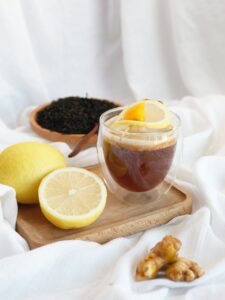
2. Ginger lemon shot – Take an inch of ginger root, and one squeezed lemon. Add enough water to blend it (3-4 tablespoons) in a blender, and have it as a morning shot.

3. Lemon-infused detox water- Cut up slices of one lemon and add it to your water bottle. Have 1-2 glasses of lemon water in the morning, and keep having the rest throughout the day. 

While lemon water offers a myriad of health benefits, it’s crucial to exercise moderation. One lemon a day is a healthy limit, and people with gastroesophageal reflux disease should be cautious about excessive lemon juice intake. As with any dietary rituals, balance is key to ensuring you enjoy the advantages without overdoing it. 
Mondelez Names Ziad Abla as Saudi Arabia MD to Drive Next Growth Phase

0

Global snacking major Mondelez International has appointed Ziad Abla as managing director for its Saudi Arabia operations, reinforcing its leadership bench in one of its key Middle East markets.

Abla, a company veteran with more than 25 years of experience across the Middle East, Africa, Turkey and other emerging markets, will now lead strategy and operations for Mondelez Arabia in the Kingdom.

In his new role, Abla will focus on accelerating category growth, strengthening commercial execution, enhancing supply chain performance and building organisational capabilities. The mandate also includes advancing local talent development and aligning business priorities with Saudi Arabia’s Vision 2030 agenda.

Prior to this appointment, Abla served as managing director for Gulf & Developing Markets, where he delivered double-digit growth and market share gains. During that tenure, he also expanded digital commerce initiatives and strengthened integration between commercial and supply chain functions.

The appointment signals Mondelez’s continued commitment to Saudi Arabia as a strategic growth market within its global portfolio, as the company looks to deepen its presence in the region’s evolving snacking landscape.

Advertisement

‘Not Satisfied’ With India Growth, L’Oréal Rolls Out Revised Strategy: CEO

0

French beauty major L’Oréal has acknowledged that its performance in India has fallen short of expectations, with global CEO Nicolas Hieronimus stating that the company is “not satisfied” despite recording high single-digit growth in 2025.

Speaking during the company’s fourth-quarter earnings call last week, Hieronimus said India currently contributes roughly 1% of L’Oréal’s global turnover, making it a relatively small market in the company’s portfolio.

“India is not meeting expectations, and we have a new setup there starting this year,” Hieronimus said, adding that the group has revised its strategic plan for the country and is investing both financially and in talent to accelerate growth.

Growth without market share gains

While the company posted high single-digit growth in India, it did not gain meaningful market share. According to Hieronimus, the lack of share gains reflects organisational transition rather than category weakness.

“We had high single-digit growth, but we did not gain a lot of market share, if any,” he said, attributing the situation partly to the restructuring of leadership and operations.

L’Oréal last year appointed Jacques Lebel as India country manager and introduced a new leadership team to steer its next phase of growth. Hieronimus said he remains “optimistic and ambitious” that performance will improve in 2026.

Revised strategy and category focus

The company has identified dermatological beauty as a major opportunity in India. Under its L’Oréal Dermatological Beauty (LDB) division, the group recently launched brands such as CeraVe and La Roche-Posay in the market.

“These brands are starting very well, but they are still very small,” Hieronimus said, signalling scope for expansion.

L’Oréal also maintains strong positions in categories such as hair care and hair colour, with brands like Garnier leading in select segments. However, the CEO emphasised that the company needs to be “more ambitious” overall in the Indian market.

To strengthen its local capabilities, L’Oréal has invested in manufacturing and technology infrastructure. It recently announced the opening of its first dedicated Beauty Tech centre in Hyderabad, aimed at developing digital platforms and AI-led solutions for its global operations.

Long-term potential

Hieronimus noted that India, as one of the fastest-growing major economies with rising disposable incomes and an expanding millennial consumer base, presents long-term opportunity for the beauty category.

“Today, India is roughly one per cent of our turnover, which is very small. So it can only go up,” he said.

L’Oréal India, a wholly owned subsidiary operating since 1994, markets 26 brands across mass, professional and luxury segments. These include L’Oréal Paris, Garnier, Maybelline New York, NYX Professional Makeup, Kérastase, Lancôme and Yves Saint Laurent, among others.

The company operates manufacturing facilities in Chakan (Maharashtra) and Baddi (Himachal Pradesh), along with research and innovation centres in Mumbai and Bengaluru.

As it recalibrates its India strategy with fresh leadership and increased investment, L’Oréal is positioning the market as a priority geography in its global growth roadmap, with expectations of stronger momentum from 2026 onward.

Advertisement

Valentine’s Day Powers Quick Commerce Surge as D2C Brands Ride Last-Minute Gifting Wave

0

Valentine’s Day is fast emerging as a high-impact sales event for India’s quick commerce platforms, as last-minute gifting and occasion-led shopping drive sharp spikes in demand across categories.

Platforms such as Zepto, Blinkit, Flipkart Minutes, and Swiggy Instamart created dedicated Valentine’s sections on their apps days before February 14, featuring curated gifting categories, promotional bundles and brand offers.

The strategy paid off.

Swiggy Instamart reported a 10x growth in orders for jewellery, greeting cards and plush toys during Valentine’s week. At 11:59 am on February 14, chocolates recorded a peak of 1,042 orders per minute, marking the highest per-minute spike ever logged by the platform on the occasion.

Flipkart Minutes clocked a 7x year-on-year growth in sales, with order peaks observed between 9–10 am and 7–8 pm on February 14. Demand extended beyond metros to smaller cities including Ranchi, Siliguri, Ludhiana and Dehradun, indicating deeper penetration of quick commerce into non-metro markets.

Industry experts note that while the festive season from Raksha Bandhan to Diwali remains the largest revenue window for online platforms — recording over ₹1.24 lakh crore in gross merchandise value in 2025 with 30% year-on-year growth — smaller occasions are gaining strategic importance.

“After Diwali, events like Valentine’s Day, Christmas and Raksha Bandhan are becoming key events for quick commerce,” said Renu Bisht, founder of D2C advisory firm Commercify360. She added that quick commerce enables last-minute purchases, making it particularly attractive for direct-to-consumer (D2C) brands.

Flowers, chocolates and more

Across platforms, flowers, chocolates and curated gift packs emerged as the top-selling categories. But growth extended well beyond traditional gifting.

Amazon India reported strong demand in categories such as fragrances, jewellery, beauty, fashion, electronics and gift cards, particularly among consumers aged 18 to 35.

D2C brands also capitalised on the momentum. Gifting platform Floweraura recorded a 32% year-on-year growth during February 13–14, with flowers leading sales. Jewellery brand Palmonas saw higher sales compared to last year, with most orders falling in the ₹1,000–₹1,400 price band.

Sexual wellness brand Mymuse reported a 60% year-on-year growth on quick commerce platforms, driven by demand for massagers, accessories and card games. The category itself grew over three times year-on-year on Instamart, reflecting changing consumer behaviour and increased comfort with online purchases.

In beauty and personal care, Gurugram-based fragrance brand Bla Bli Blu recorded an 80–85% sales uptick during the Valentine’s period across channels, including a sixfold rise on quick commerce platforms. The brand complemented its online push with offline experiential marketing to drive discovery.

Occasion-led commerce on the rise

Quick commerce platforms are increasingly curating event-specific sections to drive impulse purchases. For instance, during major sporting events, curated “match-ready” or “game-on” zones offer snacks, beverages and merchandise tailored to viewing occasions.

Analysts say FMCG brands continue to account for the bulk of order volumes and revenue, but D2C brands are gaining greater visibility and share during event-led spikes. As geographic coverage expands and delivery timelines shorten, quick commerce is becoming a primary channel for time-sensitive purchases.

Valentine’s Day, once considered a minor retail event compared to India’s traditional festivals, is now proving to be a meaningful revenue opportunity — reinforcing the growing role of quick commerce in reshaping occasion-driven consumption patterns.

Advertisement

Shadowfax Bets Big on Quick Commerce, Repositions as D2C-First Logistics Platform

0

India’s logistics market is undergoing a structural shift. For nearly a decade, scale in ecommerce delivery was built around servicing large marketplaces at high volumes and low margins. Throughput mattered more than experience, and bulk contracts drove growth.

That model is now evolving — and Shadowfax is repositioning itself at the centre of the change.

After years as a marketplace-first logistics partner, the publicly listed company is pivoting toward same-day delivery, D2C brands, hyperlocal commerce and premium shipments. Management has identified quick commerce and direct-to-consumer logistics as the next major growth drivers.

In its latest earnings commentary, the company said Shadowfax Prime — its same-day and next-day fulfilment arm — is now its fastest-growing vertical. Two years ago, D2C volumes were negligible. Today, they account for early-teen market share and continue to expand at triple-digit year-on-year growth rates.

Moving closer to brands and consumers

Shadowfax’s strategy reflects a deliberate downstream shift — moving closer to brands, sellers and end consumers rather than relying primarily on large enterprise marketplace contracts.

D2C, B2C and SME clients offer 20–25% higher yields compared to enterprise marketplace customers. As this mix increases, revenue realisations improve and margins follow. In a sector historically characterised by thin profitability, that shift materially changes the economics.

The company describes the transition as an evolution. Large anchor clients helped build nationwide serviceability and infrastructure. With that foundation in place, Shadowfax is expanding toward smaller sellers and independent brands.

The Shadowfax Prime strategy

The company’s D2C playbook operates across three layers.

At the core is Shadowfax Prime, focused on mass-market D2C brands seeking faster fulfilment. The company is onboarding new clients across more than 100 cities and building self-serve onboarding flows that allow even micro sellers — including social commerce merchants — to begin nationwide shipping within minutes.

Second, the acquisition of CriticalLog has brought over 500 premium D2C brands onto the platform. These include jewellery, luxury apparel and electronics sellers — segments that require specialised handling and tighter operational controls. High-value, time-sensitive shipments have traditionally been underserved, but demand is rising as premium ecommerce expands.

Third, Shadowfax is expanding into volumetric deliveries. The company has built an annualised business of roughly ₹50 crore in large parcels and appliances, despite currently servicing only a fraction of its PIN codes for volumetric shipments. White goods logistics is expected to roll out in FY27, opening another higher-ticket revenue stream.

Same-day as standard

Same-day and next-day delivery are no longer premium features. They are increasingly baseline expectations across categories.

What began with groceries has now expanded to baby products, apparel, gourmet food and specialty retail. Shadowfax sees vertical quick commerce emerging across multiple consumer categories, driving demand for faster logistics infrastructure.

The company currently operates across more than 15,000 postal codes, supported by ongoing investments in sort centres, last-mile networks and gig rider orchestration. As density improves, routing efficiency increases and per-shipment costs decline.

Technology-led operating leverage

Unlike asset-heavy logistics operators, Shadowfax has prioritised a technology-first model. Rather than owning vehicles, the company focuses on gig network orchestration through AI-driven routing and clustering algorithms. The system optimises rider earnings per day rather than per shipment, improving partner productivity and reducing overall delivery costs.

This model creates operating leverage as network density grows. Partner expenses — the company’s largest cost component — have begun declining as a percentage of revenue, and management expects further efficiency gains as scale improves.

IPO flexibility and growth outlook

The IPO has provided capital and flexibility to onboard new marketplace clients and expand quick commerce integrations. Management expects revenue to grow at 25–30% annually over the next few years, driven by D2C growth, hyperlocal quick commerce and volumetric logistics.

Long-term EBITDA margins are guided toward the early teens, with expansion expected as higher-yield segments scale.

A broader industry transition

Shadowfax’s pivot mirrors a larger transformation within India’s startup ecosystem — from scale-driven contracts toward precision-led, margin-accretive growth models. Logistics players are diversifying beyond marketplace dependence, seeking direct relationships with brands and smaller sellers.

From Instagram entrepreneurs shipping their first order to luxury merchants promising same-day fulfilment, the demand for speed is reshaping retail infrastructure.

Shadowfax is positioning itself not merely as a delivery partner, but as a core enabler of India’s instant economy — betting that quick commerce will redefine how goods move across the country in the decade ahead.

Advertisement

Unilever’s Ice Cream Arm Bets Big on India, Eyes Turnaround as Market Set to Surge

0

India could overtake the United States to become the world’s largest ice cream market within the next two decades, according to Unilever’s demerged ice cream business, which is currently in turnaround mode in the country.

Peter ter Kulve, CEO of The Magnum Ice Cream Company, told investors that while the company holds a strong position in India, the business has struggled over the past two decades. “It lost significant market share, profitability was flat, and last year it was in decline. We are in a turnaround mode,” he said, noting that India is already the world’s largest dairy market.

Unilever, the world’s largest ice cream maker with brands such as Magnum and Ben & Jerry’s, trails dairy major Amul, which dominates India’s roughly $5 billion ice cream category.

The renewed focus on India comes as Hindustan Unilever Limited (HUL) prepares to list its demerged ice cream business, Kwality Wall’s (India), on local stock exchanges. HUL recently secured listing and trading approvals from the BSE and the National Stock Exchange of India, with the stock set to debut on February 16.

Unilever’s chief financial officer Abhijit Bhattacharya said the group has also secured approvals to list its Indian ice cream business locally ahead of schedule and plans to complete the acquisition of the unit in the first half of the year, subject to regulatory clearances.

The global demerger of Unilever’s ice cream division was designed to give the business greater operational autonomy, enabling faster decision-making and sharper local market strategies. India is central to that strategy.

Ter Kulve compared India’s current ice cream landscape to China in the early 1990s or Turkey in the late 1980s — markets characterised by low per capita consumption but strong economic growth. He said rising incomes and urbanisation are driving consumption not only in metro cities but also in secondary and tertiary towns, making India the biggest long-term growth opportunity in the global ice cream industry.

India contributes over 14% of Unilever’s global sales, although the bulk of revenue in the country still comes from soaps, detergents and personal care products. Ice cream, however, operates in a structurally different environment. Unlike developed markets dominated by large supermarket chains, India’s distribution relies heavily on small neighbourhood stores, many of which require freezer infrastructure and dedicated cold-chain investments.

Last year, HUL announced plans to separate its ice cream division into a standalone listed company by the end of FY26, aiming to unlock value and allow the business to compete more aggressively in high-growth markets.

As Kwality Wall’s prepares for its market debut, Unilever’s standalone ice cream arm is positioning India at the centre of its global growth narrative — betting that rising consumption and improving infrastructure will power its comeback in one of the world’s fastest-expanding consumer markets.

Advertisement

Kwality Wall’s to Debut on February 16 After HUL Secures Exchange Approvals

0

Hindustan Unilever Limited (HUL) has received listing and trading approvals from the BSE and the National Stock Exchange of India for its demerged ice-cream business, clearing the way for Kwality Wall’s (India) to list on the exchanges on February 16.

The approval covers 2,34,95,91,262 equity shares and marks the formal culmination of HUL’s first major portfolio separation in recent years.

The demerger of the ice-cream vertical became effective from December 1, with December 5 fixed as the record date to determine eligible shareholders. Under the scheme, shareholders received one share of Kwality Wall’s for every one share of HUL held as of the record date. With exchange approvals now in place, these shares will begin trading next week, creating India’s first pure-play listed ice-cream company.

The spin-off is part of HUL’s broader strategy to unlock value by separating a capital-intensive and seasonal business from its core FMCG operations. The ice-cream division includes brands such as Cornetto, Magnum, Feast and Creamy Delight and operates one of India’s largest cold-chain networks, with more than two lakh cabinets across the country.

Following the demerger, The Magnum Ice Cream Company will acquire a 61.9% stake in Kwality Wall’s from the Unilever Group, providing the standalone entity with global strategic backing.

Brokerage estimates suggest a potential valuation of ₹50–55 per share, implying around 5x EV/sales. This is lower than HUL’s broader FMCG multiple, reflecting the seasonal nature and relatively lower margins of the ice-cream business. While the recent reduction in GST on ice cream from 18% to 5% is expected to support affordability and volume recovery, the standalone entity faces profitability pressures.

Kwality Wall’s reported an EBITDA margin of 7.1% in FY25, which slipped to breakeven in the first half of FY26. Analysts have indicated that clarity on capital expenditure plans, manufacturing investments and cash position will be key triggers for margin improvement. Peers such as Vadilal and Havmor currently operate at higher margin profiles.

For HUL, the separation sharpens its focus on core categories including home care, personal care, beauty and foods. In Q3FY26, the company reported 2.8% year-on-year revenue growth with underlying volume growth of 4%, while EBITDA margin stood at 23%. Management has reiterated its guidance of maintaining margins in the 22–23% range.

The market debut of Kwality Wall’s will now serve as a test of investor appetite for a standalone ice-cream play, while marking a significant shift in HUL’s portfolio strategy.

Advertisement

HUL Buys Out OZiva in ₹824 Crore Deal, Exits Wellbeing Nutrition Stake

0

Hindustan Unilever Limited (HUL) has acquired the remaining 49% stake in Zywie Ventures, the parent company of plant-based nutrition brand OZiva, for ₹824 crore, taking full ownership of the business.

At the same time, the FMCG major has exited its 19.8% minority stake in Wellbeing Nutrition maker Nutritionalab Private Limited, selling it to USV Private Limited for ₹307 crore.

Completing the OZiva buyout

HUL had first acquired a 51% stake in OZiva in December 2022 for ₹264 crore, with a pre-agreed roadmap to purchase the remaining stake after three years. The latest transaction completes that plan, giving HUL full control of the fast-growing health and wellness brand.

Since the initial acquisition, OZiva has scaled rapidly, reaching approximately ₹480 crore in revenue in 2025, delivering a 130% CAGR over the past two years, according to the company. HUL said growth was driven by portfolio expansion and synergies unlocked through its distribution and ecosystem capabilities.

Priya Nair, CEO and Managing Director of HUL, said the move reflects the company’s strategy of making “fewer, bigger bets” in high-growth categories. “By taking full ownership of OZiva, we are doubling down on this exciting space to unlock the next phase of growth,” she said, adding that HUL intends to leverage its strengths in science, distribution and market development to scale purpose-led brands.

Exit from Wellbeing Nutrition

HUL also divested its minority stake in Wellbeing Nutrition, which it had acquired in 2022 for around ₹70 crore. The exit aligns with the company’s sharper portfolio focus within the health and wellness segment.

The deal underscores HUL’s intent to consolidate its presence in high-growth consumer categories while rationalising smaller investments.

Health and wellness push

HUL formally entered the health and wellness category in 2023, positioning it as a long-term growth engine. The full acquisition of OZiva signals increased confidence in the segment, which has seen rising consumer demand for plant-based, clean-label and performance-driven nutrition products.

Broader business update

Separately, HUL reported that total sales rose 4% to ₹15,614 crore in the December quarter, while net profit declined 15% to ₹2,590 crore. The company said demand trends showed early signs of recovery, supported by policy measures.

HUL also announced organisational changes under its ‘Unified India’ strategy. Business unit heads will now report directly to the CEO to improve agility and speed, with each unit having a dedicated chief marketing officer. Additionally, Unilever will establish a unified India R&D organisation aimed at accelerating innovation and execution.

With full ownership of OZiva and a streamlined portfolio approach, HUL is positioning itself for deeper play in India’s expanding health and wellness market.

Advertisement

Nykaa Takes Over Kiehl’s India Ops in Exclusive L’Oréal Luxe Deal

0

Beauty retailer Nykaa has signed an exclusive distribution agreement with the L’Oréal Luxe division in India to take over the end-to-end operations of premium skincare brand Kiehl’s in the country.

The move deepens Nykaa’s decade-long partnership with L’Oréal and marks a strategic expansion of its role — from retail partner to full-scale distribution and operations manager for the brand in India.

Under the agreement, Nykaa will oversee Kiehl’s entire India business, including its existing and upcoming exclusive brand outlets, the direct-to-consumer website (Kiehls.in), digital platforms, and multi-brand retail distribution. The brand will also be integrated across Nykaa’s omnichannel ecosystem, spanning its online marketplace and physical retail network.

The transition is not expected to disrupt current operations. Kiehl’s standalone stores and consumer touchpoints will continue to function as usual during the handover.

Kiehl’s operates in the premium skincare segment, known for science-led formulations and dermatologist-backed positioning. With the new structure, the brand is expected to leverage Nykaa’s customer base, logistics infrastructure, and faster delivery capabilities in select cities.

The partnership comes at a time when India’s beauty and personal care market is witnessing accelerated growth, particularly in the luxury and high-performance skincare categories.

L’Oréal Luxe India’s portfolio includes global beauty brands such as Lancôme, Yves Saint Laurent and Kiehl’s. Executives from both companies said the agreement aims to strengthen their collaboration and scale Kiehl’s footprint in India’s expanding luxury beauty market.

Advertisement

Nykaa Takes Over Kiehl’s India Ops in Exclusive L’Oréal Luxe Deal

0
Nykaa Takes Over Kiehl’s India Ops in Exclusive L’Oréal Luxe Deal

Beauty retailer Nykaa has signed an exclusive distribution agreement with the L’Oréal Luxe division in India to take over the end-to-end operations of premium skincare brand Kiehl’s in the country.

The move deepens Nykaa’s decade-long partnership with L’Oréal and marks a strategic expansion of its role — from retail partner to full-scale distribution and operations manager for the brand in India.

Under the agreement, Nykaa will oversee Kiehl’s entire India business, including its existing and upcoming exclusive brand outlets, the direct-to-consumer website (Kiehls.in), digital platforms, and multi-brand retail distribution. The brand will also be integrated across Nykaa’s omnichannel ecosystem, spanning its online marketplace and physical retail network.

The transition is not expected to disrupt current operations. Kiehl’s standalone stores and consumer touchpoints will continue to function as usual during the handover.

Kiehl’s operates in the premium skincare segment, known for science-led formulations and dermatologist-backed positioning. With the new structure, the brand is expected to leverage Nykaa’s customer base, logistics infrastructure, and faster delivery capabilities in select cities.

The partnership comes at a time when India’s beauty and personal care market is witnessing accelerated growth, particularly in the luxury and high-performance skincare categories.

L’Oréal Luxe India’s portfolio includes global beauty brands such as Lancôme, Yves Saint Laurent and Kiehl’s. Executives from both companies said the agreement aims to strengthen their collaboration and scale Kiehl’s footprint in India’s expanding luxury beauty market.

Advertisement

Duty-Free Boost for Indian Garments Using US Cotton Under Interim Trade Pact

0
Duty-Free Boost for Indian Garments Using US Cotton Under Interim Trade Pact

India will receive concessional duty access for garments made using American yarn and cotton under the proposed interim trade agreement with the United States, Commerce and Industry Minister Piyush Goyal said on Thursday.

The benefit will mirror the arrangement currently available to Bangladesh, allowing Indian garment manufacturers to import US-origin raw materials, process them domestically, and re-export finished products to the US at concessional or zero duty.

“Whatever Bangladesh has got, India will also get in the final agreement,” Goyal said on the sidelines of a startup event, adding that the framework for the first phase of the India-US bilateral trade agreement has been finalised and is expected to be implemented in March.

No quota on cotton imports

Under the proposed arrangement, there will be no quota on the import of US cotton and yarn for re-export-linked manufacturing. Indian companies using American raw materials to produce garments for shipment back to the US will receive duty-free access, similar to the US-Bangladesh reciprocal trade pact.

The US-Bangladesh agreement allows tariff-free exports of apparel and textiles to America if manufacturers use US-produced cotton or man-made fibre inputs. Washington also lowered reciprocal tariffs on Bangladesh to 19% from 20%, narrowing the tariff gap between India and Bangladesh.

Bangladesh, the world’s second-largest garment exporter, is one of India’s key competitors in the US textile and apparel market, alongside China and Vietnam.

‘No impact on Indian farmers’

Goyal emphasised that the proposed provisions would not adversely affect Indian cotton farmers. He noted that the US has limited cotton production and exports about $5 billion worth annually, while India’s cotton export target stands at $50 billion.

“Only those items that India already imports and which will not hurt farmers in any way have been opened in a calibrated manner,” the minister said. He added that 90–95% of agricultural produce remains outside the scope of the US trade deal.

Products such as dairy, poultry, rice, wheat, soybean, maize, fruits, vegetables, ethanol, tobacco, meat, pulses and millets are not part of the agreement, he said.

According to Goyal, the trade pact will help expand India’s exports not just to the US but also to other developed markets including the EU, UK, Switzerland, Norway and Australia. “The ₹5 lakh crore we export today can grow to ₹10 lakh crore,” he said.

Broader trade push

Goyal also said India’s trade agreements now cover nearly 70% of global GDP and that recently signed free trade agreements are opening developed markets to Indian industries, including medical devices, at concessional duties.

He urged industry stakeholders to provide suggestions on enabling startup founders to retain greater equity ownership and called for expanded infrastructure for sectors such as medical technology and data centres.

On clean energy and digital infrastructure, the minister said India is positioning itself as a competitive destination with round-the-clock renewable power availability, aiming to strengthen its standing in global supply chains.

The interim trade agreement with the US is expected to provide further clarity once finalised, with detailed provisions to be reflected in the fine print.

Advertisement