Wednesday, December 24, 2025
Home Blog

Start following Kiara Advani’s simple yet powerful morning ritual for glowing skin

Have you ever stopped to marvel at Kiara Advani’s radiant and flawless skin? In the exquisite glamour that is Bollywood, Kiara Advani stands out not just for her acting genius but also for her luminous and healthy skin. Amidst the overwhelming myriad of options surfaced by the beauty industry, this simple yet transformative ritual is not only a fad, but the cornerstone of her radiance.


The secret might be simpler than you think. It’s not a gruelling workout or a 10-step skincare routine; it’s a simple cup of warm water, with a slice of lemon in it. Kiara’s morning habit of indulging in warm water infused with the zest of fresh lemons has become a conscious choice rooted in her approach to holistic well-being. The actress recommends this refreshing elixir not only for its skin-enhancing benefits but also for the multiple benefits it has in improving your overall health and vitality.  

 

Hansa Yogendra, Director of The Yoga Institute in one of her videos on the health benefits of lemons mentioned, “Drinking one glass of lemon water every day in the morning will benefit you for a lifetime”.  Her claim can further be supported by a research published in the Journal of Science and Technology which reveals that “It is a healthy appetiser and helps to treat diseases with digestive aids. Lemon does not disclose any adverse effects, according to literature, but it is used all over the world as a traditional medicine”. Vitamin C, which is abundantly present in lemons, fights toxins and increases collagen production in the body, both of which help in treating acne as well as tightening the skin and reducing fine lines and wrinkles. While lemons are famously known for their Vitamin C component, not many people are aware of their Potassium-rich skin, which is an important mineral for nervous stimulation as well as maintaining blood pressure. Here are a few more benefits of adding lemon water to your everyday diet:- 

  • Immediately soothes muscle cramps
  • Peptin in lemons makes us feel fuller, thereby, helping in weight loss
  • Boosts immunity by stimulating the production of White Blood Cells in the body
  • Removal of kidney stones 
  • The lemon peel when infused in water for 30 minutes, activates its bioactive compounds which boost immunity and prevent our bodies from cellular damage
  • It also helps in the release of digestive enzymes which help in better absorption of nutrients

 

This simple kitchen hack has proudly made its way into the celebrity wellness circuit. Not only Kiara Advani but also Alia Bhatt, Deepika Padukone, Kriti Sanon, and Malaika Arora have this one drink in common at the break of dawn.

Here are 3 ways, you can incorporate the lemon water glow into your morning routine:- 

  1. Warm ginger lemon tea- Boil a glass of water with crushed ginger. When its done, squeeze a lemon into your glass and have it warm. To enjoy it in place of your morning tea, you may add a teaspoon of honey to it.

2. Ginger lemon shot – Take an inch of ginger root, and one squeezed lemon. Add enough water to blend it (3-4 tablespoons) in a blender, and have it as a morning shot.

3. Lemon-infused detox water- Cut up slices of one lemon and add it to your water bottle. Have 1-2 glasses of lemon water in the morning, and keep having the rest throughout the day. 

While lemon water offers a myriad of health benefits, it’s crucial to exercise moderation. One lemon a day is a healthy limit, and people with gastroesophageal reflux disease should be cautious about excessive lemon juice intake. As with any dietary rituals, balance is key to ensuring you enjoy the advantages without overdoing it. 
Zomato Partners With Amazon Pay to Offer Up to 5% Cashback on Every Food Order

0

Zomato has entered into a strategic partnership with Amazon Pay to deepen customer engagement by offering assured rewards on every food order placed through the platform. The collaboration allows users to earn Zomato Money on transactions made using Amazon Pay Balance, adding a fresh incentive layer to everyday food ordering.

Under the arrangement, customers paying via Amazon Pay Balance will receive 3 percent Zomato Money on orders placed from Monday to Friday, while weekend orders on Saturdays and Sundays will earn a higher 5 percent reward. The earned Zomato Money can be used across the platform, strengthening repeat usage and loyalty.

The partnership reflects Zomato’s broader push to build a payments and rewards ecosystem that goes beyond delivery convenience. Rahul Gupta, Vice President of Product at Zomato, said the company is focused on making food ordering more valuable for users by integrating trusted payment partners. He added that collaborations such as this align with Zomato’s long-term goal of expanding access to quality food while improving the overall user experience.

Amazon Pay sees the tie-up as a way to increase the utility of its balance offering in daily consumption categories. Vikas Bansal, CEO of Amazon Pay India, said the integration enables customers to use their Amazon Pay Balance for food orders while receiving instant cashback benefits, reinforcing the platform’s focus on simple and rewarding digital payments.

Linking Amazon Pay with Zomato has been designed as a seamless process. Users can connect their Amazon Pay Balance by visiting the payment settings through the app’s side menu or by selecting the linking option during checkout. Once linked, the applicable offer can be chosen from the offer section before completing the payment.

The move comes at a time when food delivery platforms are increasingly leaning on partnerships and loyalty-driven features to retain users in a competitive market. For both Zomato and Amazon Pay, the alliance strengthens their presence in high-frequency transactions while offering tangible value to millions of urban consumers who order food online regularly.

Advertisement

Biryani Tops Swiggy Orders in 2025 as Burgers, Pizza and Dosa Drive India’s Food Delivery Boom

0

India’s appetite for convenience-led dining continued to grow in 2025, with biryani, burgers, pizzas and dosas emerging as the most ordered food items on Swiggy, according to the company’s annual consumption report released this week.

The findings are part of the tenth edition of Swiggy’s “How India Swiggy’d” report, which analyses ordering patterns and food preferences based on millions of transactions recorded on the platform over the year. Biryani retained its position as the country’s most popular dish, clocking 93 million orders in 2025. Burgers followed with 44.2 million orders, while pizzas saw 40.1 million orders. South Indian staple dosa rounded off the top four with 26.2 million orders, underlining the continued demand for both indulgent and traditional comfort foods.

The report also points to a growing interest in regional and hyperlocal cuisines. Orders for Pahari food surged ninefold over the past year, while Malabari, Rajasthani, Malvani and other regional cuisines nearly doubled in volume. Swiggy noted that consumers are increasingly seeking flavours rooted in local traditions, even when ordering online.

Meal timing trends reflected a strong preference for evening dining, with dinner orders nearly 32 percent higher than lunch orders, suggesting that food delivery remains a key convenience for end-of-day meals.

Global flavours also found increasing favour among Indian consumers. Mexican cuisine recorded 16 million orders during the year, while Tibetan dishes crossed 12 million orders. Korean food, driven by growing awareness and pop culture influence, logged 4.7 million orders, indicating steady traction beyond metro markets.

Swiggy said the data highlights how Indian food habits are evolving, blending familiarity with experimentation. While iconic dishes such as biryani continue to dominate order volumes, the rise of regional and international cuisines points to a more diverse and adventurous consumer palate shaping the country’s food delivery landscape.

Advertisement

Bikaji Foods Unveils New Brand Logo to Blend Rajasthani Heritage With Future Growth

0

Bikaji Foods International Ltd has rolled out a refreshed brand logo as it looks to sharpen its visual identity while preparing for the next leg of growth in India and overseas markets. The update is positioned as a design-led exercise that balances the company’s legacy with its ambitions to appeal to a younger and more diverse consumer base.

The new logo draws inspiration from Bikaji’s origins in Rajasthan, incorporating a shield-like form that reflects strength and continuity. Design cues reference regional elements such as traditional headgear and the desert landscape, signalling authenticity while adopting a cleaner and more contemporary aesthetic. The company said the refreshed identity is intended to improve brand recognition across both physical retail shelves and digital platforms, where competition for consumer attention has intensified.

Deepak Agarwal, managing director of Bikaji Foods International Ltd, said the identity refresh mirrors the company’s broader focus on modernisation as it expands its footprint. He added that while the core values of the brand remain unchanged, the updated look better represents Bikaji’s scale, reach and evolving consumer profile.

The company clarified that the change is purely visual and does not involve any alteration to its legal name, ownership structure or contractual arrangements. Existing operations, partnerships and obligations remain unaffected.

Bikaji Foods is currently the third-largest ethnic snacks player in India, with a presence across 28 states and seven union territories. Its product portfolio spans bhujia, namkeen, sweets, papad, western-style snacks and ready-to-eat items. Beyond the domestic market, the company exports its products to more than 40 countries, catering to both the Indian diaspora and international consumers seeking traditional flavours.

The identity refresh comes at a time when established food brands are increasingly reworking their visual language to stay relevant amid changing consumption patterns and growing competition from regional and direct-to-consumer players. For Bikaji, the new logo is positioned as a bridge between its cultural roots and its future growth ambitions, as it continues to scale distribution, strengthen recall and deepen engagement with the next generation of consumers.

Advertisement

Vixar Bets Big on Desserts, Acquires 45% of Belgian Waffle Co at ₹1,700 Crore Valuation

0

Vixar’s acquisition of a 45 percent stake in Belgian Waffle Co marks one of the most significant transactions in India’s quick service restaurant space this year. The deal values the dessert focused brand at ₹1,700 crore and brings together long term institutional capital and a consumer brand that has quietly built scale across the country.

Along with Vixar, the round also sees participation from Vallabh Bhansali and HDFC AMC, underlining strong confidence in Belgian Waffle Co’s business fundamentals and growth visibility. From a niche waffle startup, the brand has evolved into a nationwide QSR player with hundreds of outlets across malls, high streets and transit locations. Its focus on affordability, consistency and compact store formats has helped it expand rapidly without burning excessive capital.

The ₹1,700 crore valuation reflects more than just store count. Belgian Waffle Co has benefited from high repeat consumption, strong unit economics and a menu that travels well across formats including dine in, takeaway and delivery. Desserts as a category have also seen steady demand even during periods when discretionary spending has softened.

For Vixar, the investment signals a clear bet on scalable Indian food brands with strong operational discipline. With fresh capital and experienced investors on board, Belgian Waffle Co is expected to accelerate expansion, deepen its presence in smaller cities and potentially diversify formats while keeping its core product intact.

This transaction also highlights a broader trend in Indian food services where established QSR brands are attracting late stage capital at meaningful valuations. As competition intensifies and consumer preferences evolve, deals like this reinforce the value of brands that combine simplicity, speed and consistency. Belgian Waffle Co now enters its next phase with both scale and strong financial backing firmly in place.

Advertisement

Ranveer Singh and Nikunj Biyani’s SuperYou Raises Rs. 63 Crore as Protein Snacks Power Toward Rs. 200 Crore ARR

0

SuperYou, the fast growing protein focused snacking brand co founded by entrepreneur Ranveer Singh and Nikunj Biyani, has raised Rs. 63 crore in a Series B funding round jointly led by V3 Ventures and existing investor Rainmatter. GCCF also participated in the round, reinforcing investor confidence in the brand’s scale and long term vision.

Launched with the idea of making everyday snacks healthier without compromising on taste, SuperYou has quickly carved a space for itself in India’s crowded FMCG market. The brand is best known for its protein bars, peanut butter and breakfast products that aim to bridge the gap between nutrition and indulgence. Its sharp branding and clear positioning have helped it connect strongly with urban consumers looking for better alternatives to traditional packaged foods.

As of December 2025, SuperYou is reportedly operating at an annual revenue run rate of around Rs. 200 crore, a significant milestone that reflects both strong demand and consistent execution. The company has seen rapid traction across online marketplaces, quick commerce platforms and its own direct to consumer channels, while also expanding its offline footprint in modern retail.

The fresh capital will be used to deepen distribution, invest in product innovation and strengthen supply chain capabilities. A portion of the funds will also go towards building brand recall at a national level as competition in the protein and better for you segment intensifies.

For investors like V3 Ventures and Rainmatter, SuperYou represents a rare combination of scale, category momentum and a founding team that understands both brand building and operations. As Indian consumers increasingly seek functional foods that fit into busy lifestyles, SuperYou appears well placed to ride the next phase of growth in the country’s evolving food and beverage landscape.

Advertisement

Asian Footwears Deploys In-House AI Tool AsianGPT to Boost Dealer Sales by Up to 30%

0

Asian Footwears has taken a decisive step toward data-led retail execution with the rollout of AsianGPT, a proprietary artificial intelligence platform designed to improve distribution efficiency and enhance dealer profitability across its nationwide network.

Developed in-house, the AI engine draws on more than two decades of historical sales data to generate demand forecasts at a highly localised level. By analysing product categories, styles, colours, size curves, gender preferences and regional buying patterns, AsianGPT helps distributors make sharper inventory decisions tailored to specific markets. The company said early adopters of the tool have already reported revenue growth of 25 to 30 percent, driven by faster inventory churn, reduced dead stock and tighter working capital cycles.

Unlike conventional forecasting systems, AsianGPT is built to guide day-to-day commercial decisions for dealers. It recommends optimal product mixes, predicts replenishment quantities and flags emerging demand trends, enabling partners to respond quickly to shifts in consumer preferences. This has proved particularly useful in a category such as footwear, where fashion sensitivity and seasonal demand can significantly impact sell-through.

Beyond the dealer network, the AI platform is also being deployed internally to strengthen Asian Footwears’ supply chain. Insights generated by the system are being used to refine production planning, improve allocation across regions and reduce lead times, helping the company balance availability with cost efficiency.

Aayush Jindal, chief executive officer of Asian Footwears, said the initiative reflects a broader push to combine scale with intelligence. He noted that empowering distributors with actionable data was central to sustaining growth in an increasingly competitive footwear market. The company is simultaneously investing over ₹100 crore to expand manufacturing capacity and deepen its retail footprint, ensuring that digital capabilities are matched with physical scale.

AsianGPT is part of Asian Footwears’ wider digital transformation agenda, which focuses on technology-led execution rather than discount-driven growth. By embedding predictive analytics into its distribution backbone, the company is positioning itself to improve partner economics while responding faster to changing market demand.

Advertisement

Kriti Sanon Invests in Supply6, Joins D2C Nutrition Startup as Brand Ambassador

0

Bollywood actor Kriti Sanon has joined Bengaluru-based D2C nutrition startup Supply6 as an investor and brand ambassador, marking the company’s latest push to strengthen its connect with urban, health-focused consumers. The association signals a growing shift in celebrity participation from endorsements to early-stage equity partnerships in India’s wellness and consumer brands.

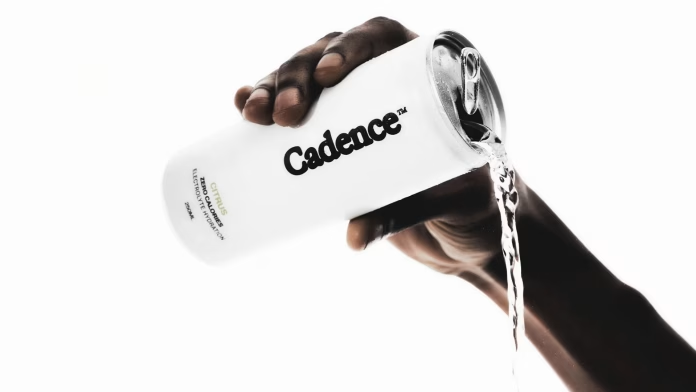
Founded in 2019 by Vaibhav Bhandari and Rahul Jacob, Supply6 operates in the daily nutrition and hydration segment, positioning itself around building consistent, foundational health habits rather than short-term supplementation. The company’s portfolio currently includes three core products: Supply6 360, a once-a-day nutritional sachet combining vitamins, minerals, probiotics and superfoods; a zero-sugar electrolyte mix aimed at daily hydration; and protein wafers positioned as a functional snack.

According to investor disclosures, these products together generate annual revenue of around ₹36 crore, supported by a repeat purchase rate of approximately 45 percent. Supply6 initially launched in India and has since expanded its footprint to the US market, selling through its own website, large e-commerce platforms such as Amazon, and quick commerce channels including Blinkit.

Sanon’s association comes months after the startup raised $1.1 million in a pre-seed funding round led by Zeropearl VC, with participation from CRED founder Kunal Shah, Renee Cosmetics cofounders Ashutosh Valani and Priyank Shah, and XYXX founder Yogesh Kabra. In 2024, Supply6 had also onboarded former South African cricketer AB de Villiers as an investor and brand ambassador.

The company operates in India’s fast-expanding dietary supplements market, which is projected to grow to $62 billion by 2033, registering a compound annual growth rate of about 13 percent, according to industry estimates. This growth has intensified competition among startups such as OZiva, MuscleBlaze and BeastLife, all vying for consumer trust in a crowded category.

For Sanon, the investment builds on her broader entrepreneurial journey, following earlier ventures in beauty and fitness. For Supply6, the partnership adds visibility and credibility as it looks to scale in a market where awareness, trust and consistency are key drivers of long-term growth.

Advertisement

Quick Commerce Ad Costs Squeeze FMCG Margins, Profits Near Kirana and Modern Trade Levels

0

India’s quick commerce boom is entering a more complex phase for FMCG companies, as the channel’s once-attractive profitability begins to thin under the weight of rising advertising costs. What started as a high-margin, premium-led sales avenue is now delivering returns closer to those seen in kirana stores and organised retail, according to senior industry executives.

Quick commerce platforms have increasingly leaned on advertising as a key revenue lever, auctioning prime digital shelf space, search rankings and high-traffic time slots. With consumers making purchase decisions in under a minute on these apps, brands are compelled to pay more to remain visible. Executives say this pressure has sharply increased the cost of doing business, narrowing margins across categories.

Angshu Mallick, executive deputy chairman at AWL Agri Business, noted that brands outside the top three or four listings in price-sensitive categories risk losing relevance altogether. With shoppers typically spending just 30 to 40 seconds browsing, sustained visibility now demands higher marketing investments. Advertising spends on quick commerce platforms have nearly doubled during peak windows such as early mornings and early evenings, executives said.

As a result, margins in segments like biscuits and snacks have slipped to around 13 to 15 percent, broadly in line with modern trade. Premium products still command higher margins of 20 to 22 percent, but even these have dropped by three to five percentage points over the past three to six months.

Zydus Wellness chief executive Tarun Arora said quick commerce initially delivered superior margins due to premium product mix, faster inventory turns and lower distribution costs. That edge has reduced as platforms prioritise their own profitability and drive harder commercial negotiations with brands. Even so, he said the channel remains commercially viable given its strong sales momentum.

Despite margin compression, quick commerce continues to be the fastest-growing channel for FMCG companies including Hindustan Unilever, ITC, Dabur, Marico and Emami. For HUL, quick commerce sales doubled in the first half of the current financial year, even as general trade continues to account for the bulk of revenue.

As platforms monetise scale through advertising, FMCG firms are recalibrating their strategies, balancing growth against profitability in a channel that is no longer the easy margin win it once was.

Advertisement

Anushka Sen Joins NowYouKnow as Brand Ambassador and Investor to Power Social-First Food and Travel Discovery

0

Actor and digital creator Anushka Sen has come on board as the brand ambassador and investor for NowYouKnow (NYK), a social-first travel and food discovery platform that is positioning itself as an alternative to public ratings and anonymous reviews.

Founded in 2023 by siblings Krishna and Pia Shivdasani, NowYouKnow is built around a simple idea: people trust recommendations from those they actually know. The platform allows users to privately save, organise and share recommendations for restaurants, cafés, bars, hotels and local finds within their personal network, replacing scattered notes, screenshots and chat threads with a single, curated space.

The company said Sen’s association goes beyond a typical celebrity endorsement. Along with lending her face to the brand, she has also taken an equity stake, signalling long-term belief in the product and its direction. NYK believes Sen’s everyday behaviour around saving places, exchanging suggestions with friends and documenting food experiences mirrors how modern consumers discover places today, making her a natural fit for the platform.

Sen, who commands a large and engaged digital following, said travel and food are deeply tied to memory and emotion for her. She noted that recommendations among friends are frequent but often fragmented across apps. According to her, NYK stood out because it felt private, intuitive and rooted in trust rather than popularity metrics. She described the platform as community driven, designed around authentic opinions and personal taste rather than mass validation.

Krishna Shivdasani, co-founder and CEO, said discovery is inherently personal and that a single aggregated rating cannot reflect India’s diversity. He added that recommendations only carry value when the context and credibility of the person sharing them are understood. In his view, Sen’s digital presence, built on relatability and sincerity, aligns closely with NYK’s core philosophy.

As food and travel discovery increasingly shifts away from public reviews toward trusted social circles, NowYouKnow is betting on a model where authenticity, privacy and personal networks define how choices are made. Sen’s involvement strengthens that positioning as the platform looks to scale among young, digitally native users.

Advertisement

Nikhil Kamath and Kishore Biyani Launch The Foundery With a 90 Day Build or Break Model

0

Nikhil Kamath and Kishore Biyani have come together to launch The Foundery, a new residential startup programme designed to help early stage founders build real businesses in just 90 days. Positioned as a co founder factory, The Foundery is built around one clear idea. Execution matters more than theory.

Unlike traditional accelerators that rely heavily on pitch decks and classroom style sessions, The Foundery focuses on doing the work. Founders live and work on campus, taking ideas from concept to an investible business with constant operator led support. The aim is simple. Strip away noise, move fast, and build something that can survive in the real market.

The programme blends elements of a venture studio, a startup school, and an accelerator. Participants work closely with experienced operators and domain experts to validate ideas, build products, test demand, and structure companies from the ground up. Instead of chasing vanity metrics, the emphasis stays on fundamentals like customer insight, distribution, unit economics, and speed.

For Kamath, who has backed and built multiple internet first businesses, the model reflects a belief that India needs more builders who understand execution early. For Biyani, whose career spans decades of building consumer businesses, The Foundery is a way to pass on hard earned lessons that rarely make it into textbooks.

At a time when startup funding has become more selective, the timing feels deliberate. The Foundery is not trying to create the next hype cycle. It is trying to create founders who can build with discipline, clarity, and resilience.

If it works as intended, The Foundery could quietly shape a new generation of Indian startups. Not polished on day one, but grounded, tested, and ready for the long game.

Advertisement