Monday, December 22, 2025
Home Blog

Start following Kiara Advani’s simple yet powerful morning ritual for glowing skin

Have you ever stopped to marvel at Kiara Advani’s radiant and flawless skin? In the exquisite glamour that is Bollywood, Kiara Advani stands out not just for her acting genius but also for her luminous and healthy skin. Amidst the overwhelming myriad of options surfaced by the beauty industry, this simple yet transformative ritual is not only a fad, but the cornerstone of her radiance.


The secret might be simpler than you think. It’s not a gruelling workout or a 10-step skincare routine; it’s a simple cup of warm water, with a slice of lemon in it. Kiara’s morning habit of indulging in warm water infused with the zest of fresh lemons has become a conscious choice rooted in her approach to holistic well-being. The actress recommends this refreshing elixir not only for its skin-enhancing benefits but also for the multiple benefits it has in improving your overall health and vitality.  

 

Hansa Yogendra, Director of The Yoga Institute in one of her videos on the health benefits of lemons mentioned, “Drinking one glass of lemon water every day in the morning will benefit you for a lifetime”.  Her claim can further be supported by a research published in the Journal of Science and Technology which reveals that “It is a healthy appetiser and helps to treat diseases with digestive aids. Lemon does not disclose any adverse effects, according to literature, but it is used all over the world as a traditional medicine”. Vitamin C, which is abundantly present in lemons, fights toxins and increases collagen production in the body, both of which help in treating acne as well as tightening the skin and reducing fine lines and wrinkles. While lemons are famously known for their Vitamin C component, not many people are aware of their Potassium-rich skin, which is an important mineral for nervous stimulation as well as maintaining blood pressure. Here are a few more benefits of adding lemon water to your everyday diet:- 

  • Immediately soothes muscle cramps
  • Peptin in lemons makes us feel fuller, thereby, helping in weight loss
  • Boosts immunity by stimulating the production of White Blood Cells in the body
  • Removal of kidney stones 
  • The lemon peel when infused in water for 30 minutes, activates its bioactive compounds which boost immunity and prevent our bodies from cellular damage
  • It also helps in the release of digestive enzymes which help in better absorption of nutrients

 

This simple kitchen hack has proudly made its way into the celebrity wellness circuit. Not only Kiara Advani but also Alia Bhatt, Deepika Padukone, Kriti Sanon, and Malaika Arora have this one drink in common at the break of dawn.

Here are 3 ways, you can incorporate the lemon water glow into your morning routine:- 

  1. Warm ginger lemon tea- Boil a glass of water with crushed ginger. When its done, squeeze a lemon into your glass and have it warm. To enjoy it in place of your morning tea, you may add a teaspoon of honey to it.

2. Ginger lemon shot – Take an inch of ginger root, and one squeezed lemon. Add enough water to blend it (3-4 tablespoons) in a blender, and have it as a morning shot.

3. Lemon-infused detox water- Cut up slices of one lemon and add it to your water bottle. Have 1-2 glasses of lemon water in the morning, and keep having the rest throughout the day. 

While lemon water offers a myriad of health benefits, it’s crucial to exercise moderation. One lemon a day is a healthy limit, and people with gastroesophageal reflux disease should be cautious about excessive lemon juice intake. As with any dietary rituals, balance is key to ensuring you enjoy the advantages without overdoing it. 
Swiggy Instamart Tests Seller-Led Experiential Store in Gurugram, Marks First Offline Push in Quick Commerce

0

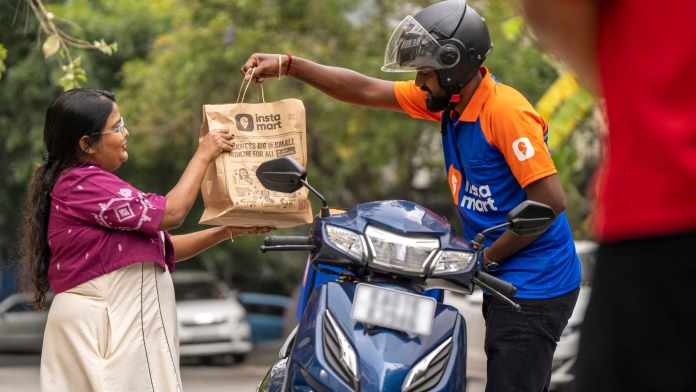
Swiggy’s quick commerce arm Instamart has begun testing an offline format with the launch of a compact experiential store in Gurugram, signalling a new approach to customer engagement in a category built almost entirely on app-led convenience. The pilot outlet, located at M3M 65th Avenue, marks Instamart’s first physical retail experiment and reflects how quick commerce players are reassessing discovery, trust and category depth as the market matures.

Unlike Instamart’s dark stores, which are designed purely for rapid fulfilment and stock thousands of products, the Gurugram outlet carries a sharply curated range of roughly 100 to 200 stock keeping units. The focus is on categories where physical inspection influences buying decisions, including fresh fruits and vegetables, pulses, select packaged foods, new product launches and offerings from emerging direct to consumer brands. Customers can walk in, browse and purchase on the spot, blending instant gratification with product confidence.

A key distinction of the model is its ownership structure. The store is seller owned and seller operated, functioning under the Instamart brand rather than as a Swiggy run retail outlet. Sales are settled directly with sellers, mirroring the platform’s marketplace approach while keeping the format asset light for Instamart. Industry sources estimate the store size at about 400 square feet, positioned close to residential clusters to encourage regular footfall.

The pilot comes at a time when India’s quick commerce sector is moving beyond speed alone. Platforms such as Instamart, Blinkit and Zepto are increasingly focused on improving unit economics, expanding high trust categories and building repeat usage. Consumer preferences are also evolving, with greater emphasis on quality assurance and product familiarity, particularly for perishables.

Swiggy has not outlined any formal plans for a wider offline rollout, positioning the Gurugram store as a test rather than a shift towards traditional retail. For industry observers, the experiment offers insight into how quick commerce companies may combine digital scale with selective physical touchpoints to deepen engagement, without materially increasing capital expenditure. Whether the format scales will depend on consumer response, seller viability and its ability to complement fast delivery networks effectively.

Advertisement

Under Armour targets ₹1,500 crore India retail revenue in five years with premium-led expansion strategy

0

Under Armour is preparing for its next phase of growth in India with a clear ambition to scale its retail business to nearly ₹1,500 crore over the next five years, driven by a premium positioning and an experience focused retail strategy. The brand, operated in India by Underdog Athletics, has stayed away from aggressive discounting and mass expansion, choosing instead to build equity through controlled distribution and consistent brand storytelling.

Since its India entry in 2019, Under Armour has grown at a compound annual rate of about 25 percent over the last three years. Retail value revenue stood at roughly ₹500 crore in FY25, providing a strong base for the next leg of expansion. According to Underdog Athletics managing director Tushar Goculdas, the strategy has remained unchanged from day one, with emphasis on performance credibility, premium design and in store experience rather than short term volume pushes.

Store level metrics underline the strength of this approach. A single 1,740 square foot outlet at Ambience Mall in Gurugram generated close to ₹1.5 crore in revenue in November alone. Select technology driven streetwear styles have seen faster than expected traction, with inventory originally planned for several months selling out within weeks. While performance apparel and footwear remain core, these limited additions have helped broaden appeal without diluting the brand’s athletic focus.

Footwear contributes around 35 to 37 percent of sales, apparel accounts for more than half, and accessories form the balance. Physical retail continues to anchor the business, generating about 60 percent of overall revenue. Women’s wear, currently a little over one fifth of sales, is steadily gaining ground.

Under Armour plans to open eight to ten new stores each year, expanding beyond its current presence in around 30 cities into select tier two markets as demand widens. With a calibrated digital strategy and long term sourcing opportunities emerging in South India, the brand is positioning itself for sustained, premium led growth in one of its fastest growing global markets.

Advertisement

FSSAI Clarifies Eggs Are Safe to Eat, Dismisses Cancer Risk Claims as Scientifically Baseless

0

India’s food safety regulator has moved to quell concerns around egg consumption, stating clearly that eggs sold in the country are safe and that claims linking them to cancer risk are unfounded and misleading.

The Food Safety and Standards Authority of India said recent reports suggesting the presence of carcinogenic substances in eggs have misinterpreted scientific and regulatory data, leading to unnecessary public anxiety. The authority reiterated that the use of nitrofurans, a class of antibiotics sometimes cited in such claims, is completely prohibited in poultry farming and egg production under India’s food safety regulations.

FSSAI officials explained that the country follows a strict monitoring framework under the Food Safety and Standards Regulations, which includes testing for contaminants, toxins and residues. An Extraneous Maximum Residue Limit of 1 microgram per kilogram has been prescribed for nitrofuran metabolites, not as a permissible level, but as a technical benchmark to support laboratory detection and enforcement. This threshold represents the lowest level that advanced testing systems can reliably identify and does not indicate any approval for use.

According to the regulator, the detection of trace amounts below this benchmark does not amount to a safety violation and does not pose a health risk. Instances where residues are detected are typically isolated, limited to specific batches and may arise from accidental contamination or feed-related factors. These cases do not reflect the overall quality or safety of India’s egg supply, officials said.

FSSAI also highlighted that India’s regulatory approach is aligned with global food safety practices. Both the European Union and the United States ban nitrofurans in food-producing animals and use similar reference limits as enforcement tools rather than health risk indicators. Variations in numerical thresholds across countries are linked to differences in analytical methods, not consumer safety standards.

The authority stressed that no credible national or international health body has established a link between routine egg consumption and cancer risk. Eggs continue to be recognised as a safe, affordable and nutritious source of protein for consumers across age groups, the regulator said, urging the public to rely on verified scientific guidance rather than speculative reports.

Advertisement

Varun Beverages to Acquire South Africa’s Twizza for ₹1,118.7 Crore, Expands African Footprint

0

Varun Beverages, PepsiCo’s largest franchise bottler outside the United States, has announced a definitive agreement to acquire South Africa based non alcoholic beverage company Twizza in an all cash transaction valued at ZAR 2,095 million, translating to an enterprise value of about ₹1,118.7 crore. The acquisition will be executed through Varun Beverages’ South African subsidiary, The Beverage Company Proprietary Limited, strengthening the group’s footprint in the region.

Twizza is a well established local beverage player engaged in manufacturing and distribution of its own portfolio of non alcoholic drinks. The company operates three manufacturing plants located in Cape Town, Queenstown and Middelburg, with a combined annual capacity of nearly 100 million cases. For the financial year ended March 31, 2025, Twizza reported turnover of ZAR 1,689 million, underlining its scale in the South African market.

According to Varun Beverages’ regulatory filing, the board has approved the acquisition of 100 percent of Twizza’s share capital. The transaction remains subject to customary regulatory approvals and is expected to be completed on or before June 30, 2026. Once closed, Twizza will become a step down subsidiary of Varun Beverages.

The company said the deal will allow its South African arm to deepen market penetration by leveraging Twizza’s manufacturing base and backward integrated facilities, which include multiple preform and closure lines across plants. The acquisition also complements Varun Beverages’ earlier purchase of The Beverage Company in March 2024, which expanded its presence across South Africa, Lesotho and Eswatini, along with distribution rights in several southern African markets.

Varun Beverages has been steadily building its international portfolio. In recent months, it signed agreements to acquire PepsiCo bottling operations in Tanzania and Ghana and expanded its snacks manufacturing and distribution presence in Morocco. In calendar year 2024, Varun Beverages recorded revenue of ₹20,007.7 crore and sold 1,124 million cases globally, reinforcing its position as a key growth partner for PepsiCo worldwide.

Advertisement

Gheelish Closes First Full Year Above 1.8 Million Dollars Riding Clean Ingredients and Rapid Retail Expansion

0

Gheelish, an organic salty snack brand focused on clean ingredients, is closing out its first full year in business with sales approaching 2 million dollars. The brand is expected to finish the year north of 1.8 million dollars in revenue, a notable milestone for a young company operating in the competitive better for you snack space.

Founded on the idea of simple, seed oil free snacks made with ghee, Gheelish has moved quickly from a niche concept to a nationally distributed product. In just twelve months, the company secured shelf space at major retailers including Sprouts, Hy Vee, Erewhon, Thrive Market, Gelson’s, Citarella, along with several regional grocery chains. This rapid expansion reflects growing consumer demand for snacks that prioritize ingredient transparency without compromising on taste.

The brand’s early traction comes at a time when the better for you snack category is drawing serious attention from strategic buyers. Recent acquisitions highlight the appetite for brands in this segment. Hershey acquired LesserEvil Snacks for 750 million dollars earlier this year, while Flowers Foods purchased Simple Mills for 795 million dollars. These deals underline the scale of opportunity for emerging players that demonstrate strong growth and brand loyalty.

Gheelish is backed by a diverse group of investors, including Gary and Mona Vaynerchuk, the Roschman Family Office, health influencer Hunter Stoler, Sweetgreen co founder Nic Jammet, and Entrepreneur Magazine Ventures. With solid early revenue, expanding distribution, and a category that continues to attract capital, Gheelish appears well positioned as it enters its next phase of growth.

Advertisement

Relaxo Bets Big on Premium Footwear as It Expands Spring Summer 2026 Portfolio to Drive Market Share Gains

0

Relaxo Footwear is sharpening its focus on premiumisation as it rolls out an expanded Spring Summer 2026 portfolio, signalling a clear intent to strengthen its position in India’s organised footwear market. The company is widening its product mix across categories while refreshing its retail strategy to better align with evolving consumer preferences.

The new collection places greater emphasis on design, comfort and higher value price points, as Relaxo looks to move beyond volume driven growth. By expanding its premium offerings, the footwear major aims to attract urban consumers who are increasingly willing to spend more on branded and lifestyle oriented products. This shift also reflects a broader trend in the footwear industry, where demand is gradually tilting towards differentiated and fashion forward ranges.

Alongside portfolio expansion, Relaxo is revamping its offline retail network to improve store experience and visibility. The company is focusing on better layouts, curated assortments and sharper merchandising to drive walk ins and conversions. Offline expansion continues to remain a key pillar, even as digital channels play a growing role in discovery and engagement.

The strategy comes at a time when near term demand conditions remain uneven, especially in mass segments. However, Relaxo believes that a stronger premium mix and broader portfolio will help offset volatility and support recovery over the coming quarters. By targeting higher margins and deeper consumer engagement, the company is aiming for more sustainable growth.

With its Spring Summer 2026 rollout reaching stores across channels, Relaxo is betting that premiumisation, wider choice and retail reinvention will help it defend market share while setting the stage for long term momentum in an increasingly competitive footwear landscape.

Advertisement

GABIT Acquires Clean Nutrition Brand Näck to Strengthen Data-Driven Wellness Platform

0

Health and longevity startup GABIT has taken a decisive step toward building a full-stack wellness platform with the acquisition of clean-label nutrition brand Näck, expanding its footprint beyond health monitoring into personalised nutrition and outcomes-based care. The company did not disclose the financial terms of the transaction.

Founded in 2022 by Gaurav Gupta and Arpana Shahi, GABIT has positioned itself at the intersection of health wearables, diagnostics and AI-driven coaching. Its flagship smart ring tracks a wide range of physiological indicators, including sleep quality, activity levels, stress patterns and nutrition-linked signals. The acquisition of Näck strengthens this ecosystem by adding clinically formulated supplements that can now be directly connected to user health data.

Näck, developed by a Sweden-based team, focuses on science-backed, clean-label supplements that meet international testing and quality benchmarks. As part of the integration, Näck’s portfolio will be distributed through GABIT’s platform, allowing users to align supplement intake with insights generated from wearables, blood diagnostics and metabolic assessments.

According to the company, the combined offering will enable users to observe how nutrition interventions influence measurable health markers over time, shifting supplements from a generic wellness add-on to a data-validated component of personalised care. GABIT currently tracks over 150 health indicators across its devices and digital platform, providing a broad base for linking consumption patterns with outcomes.

Founder Gaurav Gupta said the acquisition supports GABIT’s vision of making health decisions more objective and actionable. By bringing together tracking, guidance and nutrition within a single system, the company aims to help users understand what works for their bodies, rather than relying on broad wellness claims.

The move comes amid intensifying competition in India’s healthtech and wellness sector, where startups are racing to build integrated ecosystems that combine hardware, software and consumables. With Näck folded into its platform, GABIT is positioning itself as a differentiated player focused on closing the loop between data, intervention and results.

As consumers increasingly seek evidence-led health solutions, GABIT’s latest acquisition signals a shift toward measurable, personalised wellness at scale.

Advertisement

Shark Tank India–Backed Better Nutrition Launches India’s First XRF-Based Soil-to-Food Nutrient Verification System

0

Lucknow-based wellness startup Better Nutrition has taken a decisive step toward redefining food transparency in India with the launch of an advanced X-Ray Fluorescence testing system, becoming the first private company in the country to deploy the technology at scale for batch-level food verification.

Backed by Shark Tank India, the biofortified staples brand said the XRF-powered system allows it to analyse nutrient composition and detect contaminants in real time across its entire production cycle. The analyser generates a detailed nutrient profile in under 100 seconds, measuring more than 20 essential elements including iron, zinc, calcium, magnesium, manganese and boron. At the same time, it screens for over 10 potentially harmful heavy metals such as lead, cadmium and mercury.

The move addresses a growing concern among nutrition experts that commonly consumed staples like wheat, rice and pulses now contain significantly lower nutrient density compared to previous decades. Studies have shown declines of up to 70 percent in key micronutrients, contributing to what public health researchers describe as India’s persistent “hidden hunger”.

Founded in 2023 by Prateek Rastogi and Aishwarya Bhatnagar, Better Nutrition focuses on producing everyday staples such as atta, rice, millets and dals that naturally deliver up to twice the nutrient value of conventional alternatives. The company works with more than 20,000 farmers and supports a network of rural micro-entrepreneurs, integrating agronomy practices with scientific testing.

What sets the brand apart is its soil-to-food verification model. Nutrient levels are not merely claimed on packaging but measured and validated for every batch before products reach consumers. According to Rastogi, the technology enables precise tracking of both beneficial minerals and toxic elements, ensuring consistency, safety and accountability at scale.

Industry observers say the use of XRF technology, typically seen in mining or advanced laboratories, signals a shift in how packaged food companies may approach quality assurance in the future. Better Nutrition has drawn early backing from athletes and culinary professionals including PV Sindhu and MasterChef winner Pankaj Bhadouria, underscoring rising investor interest in science-led nutrition brands.

As India grapples with widespread micronutrient deficiencies despite food availability, innovations that link farming, testing and consumption could play a critical role in improving everyday diets.

Advertisement

Alimento Agro Foods Raises INR 52 Crore as IvyCap Ventures Backs Its Bet on India’s Fast Growing Convenience Food Market

0

Packaged food maker Alimento Agro Foods has raised INR 52 crore in a Series A funding round led by IvyCap Ventures, marking a strong vote of confidence in India’s evolving convenience food market. Founded in 2015 by Prateek and Mugdhaa Bhagchandka, the company has steadily built a portfolio that blends familiarity with modern consumption habits.

The fresh capital will be used to expand manufacturing capacity, strengthen its nationwide distribution network, and invest in product development across its brands. Alimento operates MOM Meal of the Moment, which focuses on instant home style meals such as dal chawal and rajma rice, aimed at urban consumers who want comfort food without the effort. Its other brand, Gimi Gimi, plays in the fast growing Korean inspired noodles segment, tapping into younger audiences influenced by global food trends.

Over the years, Alimento has positioned itself as a brand builder rather than a single product company. CEO Prateek Bhagchandka has spoken about creating a house of brands that stays rooted in cultural relevance while adapting to changing tastes. This approach has helped the company stand out in a crowded FMCG space where speed, taste, and recall matter equally.

The funding comes at a time when demand for packaged and ready to eat foods is rising across metros and smaller cities alike. With improved supply chains and increasing acceptance of premium convenience foods, startups like Alimento are finding room to scale alongside established players.

As it grows, Alimento will be competing with heavyweights such as ITC, Tata Consumer Products, MTR Foods, and iD Fresh Food. The new funding gives it the firepower to sharpen its brand presence and expand reach, as it looks to become a meaningful name in India’s packaged food landscape.

Advertisement

Coca-Cola India FY25 Profit Jumps 46% to ₹615 Crore, Revenue Crosses ₹5,000 Crore

0

Coca-Cola India delivered a strong financial performance in FY25, posting a sharp jump in profitability even as revenue growth remained steady, according to regulatory filings accessed via business intelligence platform Tofler. The Indian arm of the US-based beverage giant reported a consolidated net profit of ₹615.03 crore for the year ended March 31, 2025, marking a year-on-year increase of 46.3 percent.

Revenue from operations rose 7 percent to ₹5,042.56 crore, compared with ₹4,713.38 crore in FY24. Including other income, total income for the year climbed 7.7 percent to ₹5,171.48 crore. The improvement in bottom-line performance reflects tighter cost controls and operational efficiencies, even as the company continued to invest in its core brands across the country.

India remains Coca-Cola’s fifth-largest global market, supported by a broad portfolio that includes Coca-Cola, Thums Up, Sprite, Limca, Maaza and Minute Maid. During the year, the company saw moderation in certain expenditure lines. Advertising and sales promotion spending declined to ₹1,311.13 crore in FY25, down from ₹1,520.22 crore a year earlier, indicating a more calibrated approach to brand investments.

At the same time, royalty payments to parent company The Coca-Cola Company increased by 9.65 percent to ₹556.52 crore, reflecting higher brand usage and scale. Total expenses for the year rose marginally by 2.8 percent to ₹4,328.37 crore, while tax expenses increased 33 percent to ₹228.08 crore.

Coca-Cola India is a wholly owned subsidiary of Hong Kong-based Coca-Cola South Asia (India) Holdings Ltd and remains an unlisted entity. Separately, the group operates its bottling business through Hindustan Coca-Cola Beverages Pvt Ltd, in which The Coca-Cola Company recently divested a 40 percent stake to the Jubilant Bhartia Group.

The FY25 results underscore Coca-Cola India’s ability to expand profitability in a competitive beverage market, balancing disciplined spending with sustained demand across its flagship brands.

Advertisement