Wednesday, January 21, 2026
Home Blog

Start following Kiara Advani’s simple yet powerful morning ritual for glowing skin

Have you ever stopped to marvel at Kiara Advani’s radiant and flawless skin? In the exquisite glamour that is Bollywood, Kiara Advani stands out not just for her acting genius but also for her luminous and healthy skin. Amidst the overwhelming myriad of options surfaced by the beauty industry, this simple yet transformative ritual is not only a fad, but the cornerstone of her radiance.


The secret might be simpler than you think. It’s not a gruelling workout or a 10-step skincare routine; it’s a simple cup of warm water, with a slice of lemon in it. Kiara’s morning habit of indulging in warm water infused with the zest of fresh lemons has become a conscious choice rooted in her approach to holistic well-being. The actress recommends this refreshing elixir not only for its skin-enhancing benefits but also for the multiple benefits it has in improving your overall health and vitality.  

 

Hansa Yogendra, Director of The Yoga Institute in one of her videos on the health benefits of lemons mentioned, “Drinking one glass of lemon water every day in the morning will benefit you for a lifetime”.  Her claim can further be supported by a research published in the Journal of Science and Technology which reveals that “It is a healthy appetiser and helps to treat diseases with digestive aids. Lemon does not disclose any adverse effects, according to literature, but it is used all over the world as a traditional medicine”. Vitamin C, which is abundantly present in lemons, fights toxins and increases collagen production in the body, both of which help in treating acne as well as tightening the skin and reducing fine lines and wrinkles. While lemons are famously known for their Vitamin C component, not many people are aware of their Potassium-rich skin, which is an important mineral for nervous stimulation as well as maintaining blood pressure. Here are a few more benefits of adding lemon water to your everyday diet:- 

  • Immediately soothes muscle cramps
  • Peptin in lemons makes us feel fuller, thereby, helping in weight loss
  • Boosts immunity by stimulating the production of White Blood Cells in the body
  • Removal of kidney stones 
  • The lemon peel when infused in water for 30 minutes, activates its bioactive compounds which boost immunity and prevent our bodies from cellular damage
  • It also helps in the release of digestive enzymes which help in better absorption of nutrients

 

This simple kitchen hack has proudly made its way into the celebrity wellness circuit. Not only Kiara Advani but also Alia Bhatt, Deepika Padukone, Kriti Sanon, and Malaika Arora have this one drink in common at the break of dawn.

Here are 3 ways, you can incorporate the lemon water glow into your morning routine:- 

  1. Warm ginger lemon tea- Boil a glass of water with crushed ginger. When its done, squeeze a lemon into your glass and have it warm. To enjoy it in place of your morning tea, you may add a teaspoon of honey to it.

2. Ginger lemon shot – Take an inch of ginger root, and one squeezed lemon. Add enough water to blend it (3-4 tablespoons) in a blender, and have it as a morning shot.

3. Lemon-infused detox water- Cut up slices of one lemon and add it to your water bottle. Have 1-2 glasses of lemon water in the morning, and keep having the rest throughout the day. 

While lemon water offers a myriad of health benefits, it’s crucial to exercise moderation. One lemon a day is a healthy limit, and people with gastroesophageal reflux disease should be cautious about excessive lemon juice intake. As with any dietary rituals, balance is key to ensuring you enjoy the advantages without overdoing it. 
Deepinder Goyal Steps Down as Eternal CEO, Blinkit’s Albinder Dhindsa Takes Charge as New Chief Executive

0

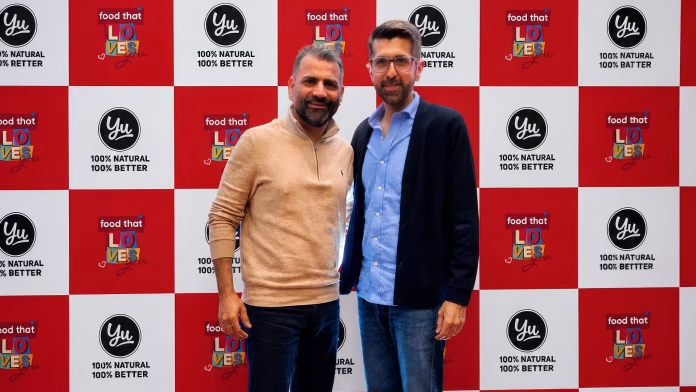
Eternal Ltd, the parent company of Zomato and Blinkit, has announced a significant leadership transition, with founder Deepinder Goyal stepping down from the chief executive role and moving into a board-level position. Subject to shareholder approval, Goyal has been appointed Vice Chairman and Director of the company for a five-year term, marking a shift from day-to-day operations to strategic oversight.

The board has named Blinkit CEO Albinder Singh Dhindsa as the new Chief Executive Officer of Eternal. Dhindsa will now lead the overall vision, product strategy, and execution across the group’s businesses, which include food delivery platform Zomato and quick commerce arm Blinkit.

The change comes at a time when Eternal is reporting strong financial momentum. For the third quarter ended December 31, 2026, the company posted a consolidated net profit of ₹102 crore, reflecting a year-on-year increase of nearly 73 percent compared to ₹59 crore in the same period last year. The performance was supported by growing demand for fast delivery services, particularly in the quick commerce segment.

Dhindsa brings long-standing experience within the Zomato ecosystem. Before founding Blinkit in 2013 along with co-founder Saurabh, he served as head of international expansion at Zomato, where he was responsible for building the company’s global footprint. Under his leadership, Blinkit has emerged as one of India’s leading rapid delivery platforms, playing a central role in Eternal’s growth story.

Goyal, who founded Zomato after a stint at Bain and Company, will continue to remain closely involved with the business through his new role on the board. His appointment as Vice Chairman signals continuity at the top, even as operational leadership passes to a new chief executive.

The restructuring reflects Eternal’s evolving priorities as it balances profitability, scale, and innovation across food delivery and quick commerce, two segments that continue to see intense competition and rising consumer demand in India’s digital economy.

Advertisement

BERO Valuation Crosses $100 Million After Paine Schwartz Partners Investment in Non-Alcoholic Beer Brand

0

Non alcoholic beer maker BERO has crossed a major milestone after securing fresh capital from global private equity firm Paine Schwartz Partners, pushing the company’s valuation beyond the 100 million dollar mark. The investment underscores growing investor confidence in the fast expanding non alcohol and wellness beverage segment, particularly among younger consumers seeking alternatives to traditional beer.

The investment was made through BetterCo Holdings, a newly launched investment platform backed by Paine Schwartz that focuses on scaling high growth brands across food, beverage and wellness. BetterCo Holdings was set up in November 2025 and has already built a selective portfolio that includes energy drink brand Lucky Energy and functional snack company Crisp. BERO is among its first beverage focused bets.

While the company has not disclosed the exact size of the investment, people familiar with the deal said the funding values BERO at more than 100 million dollars, placing it among a small group of non alcoholic beer brands globally to reach that level. The capital will be used to expand production capacity, strengthen distribution across key markets and invest in brand building, according to industry sources.

BERO’s existing backer Imaginary Ventures, which invested at an early stage, also participated in the round, signalling continued conviction in the brand’s long term growth story. Imaginary Ventures has previously backed several consumer focused brands in food, fashion and wellness.

Founded to tap into the rising demand for alcohol free social drinking, BERO has positioned itself at the intersection of taste, lifestyle and moderation. The brand has seen steady traction in urban markets, driven by changing consumer attitudes towards alcohol, health and fitness, as well as stronger retail and on trade presence.

Market analysts note that the global non alcoholic beer category has been growing at a faster pace than traditional beer in several regions, supported by innovation, improved taste profiles and premium positioning. With fresh institutional capital and a valuation north of 100 million dollars, BERO is now expected to accelerate its push in an increasingly competitive but rapidly maturing segment.

Advertisement

33&Brew Raises ₹20 Crore in Series A Funding Led by Optimistic Capital

0

Bengaluru’s craft beer scene has attracted fresh institutional capital with 33&Brew securing ₹20 crore in a Series A funding round led by Optimistic Capital, a sector-focused fund targeting India’s growing microbrewery market.

Optimistic Capital, which has launched a ₹200 crore fund dedicated exclusively to craft beer and allied operations, said it has deployed ₹30 crore so far. The remaining ₹170 crore is expected to be invested over the next three years across microbreweries, brewing infrastructure, bottling, and kegging facilities. The fund follows an owner-operator approach and is backed by investors from India as well as the Middle East and Africa.

Founded in 2024 by entrepreneur Karthik Chandrasekaran, 33&Brew is positioned as a concept-led microbrewery that blends craft beer with music culture. The Bengaluru-based outlet draws inspiration from vinyl records, referencing the 33⅓ RPM format, and allows patrons to select and play records during their visit. The brand aims to create a differentiated social experience that combines beer, food, and music.

The newly raised capital will be used primarily for construction and expansion, as 33&Brew looks to scale its footprint in a city that remains India’s most active microbrewery hub. The venue offers a range of in-house brewed beers alongside signature cocktails and a food menu designed with global influences. The culinary concept was developed in collaboration with chef Sabyasachi Gorai, known for his modern interpretation of Indian flavours.

Optimistic Capital said it plans to back at least two more microbreweries in Karnataka, with a particular focus on central Bengaluru. Future investments are also expected to involve collaborations with MasterChef winners and internationally recognised brewers.

Industry estimates suggest India’s craft beer segment continues to benefit from rising urban consumption, premiumisation trends, and demand for experiential dining. While regulatory hurdles remain, especially around licensing and distribution, Bengaluru continues to stand out as a testing ground for experimental brewing and differentiated hospitality concepts.

Advertisement

Dubai-Based Eat App Raises $10 Million, Acquires ReserveGo, Partners Swiggy to Scale Restaurant Tech in India

0

Dubai-based restaurant technology company Eat App is stepping up its India push after securing $10 million in fresh funding, acquiring a local reservations platform, and entering a commercial partnership with Swiggy. The latest Series B extension was led by PSG Equity through its portfolio firm Zenchef SAS, taking Eat App’s total capital raised to more than $23 million.

Founded over a decade ago, Eat App provides reservation, table management and guest data tools to restaurants. The company operates in more than 90 countries and works with over 5,000 restaurants globally. It currently generates close to $12 million in annual recurring revenue. India has emerged as one of its fastest-growing markets, with the platform now serving more than 2,000 restaurants nationwide.

The funding round comes at a time when India’s dine-in segment is drawing renewed focus from technology providers. Industry estimates peg the country’s food service market at over $85 billion by 2028, with dine-in contributing a significant share. Despite this scale, many restaurants continue to juggle reservations across multiple apps, leading to fragmented data and inefficiencies.

To strengthen its local footprint, Eat App has acquired ReserveGo, a Bengaluru-based reservation platform founded in 2022. ReserveGo was handling nearly five million reservations a month across more than 1,000 restaurants at the time of acquisition. Its founder, Vijayan Parthasarathy, previously built inResto, which was acquired by Dineout in 2015.

Eat App has also partnered with Swiggy to offer its solution to restaurants in India under the GroMax brand. While Swiggy will not be involved in product development, its sales teams will help distribute the offering and provide market feedback. The combined solution allows restaurants to consolidate bookings, manage capacity and access customer insights, while also promoting their outlets across Swiggy and social platforms.

With competition from global players such as OpenTable and SevenRooms, as well as Indian firms like Petpooja and Posist, Eat App’s growth in India will depend on its ability to show clear revenue impact for restaurant partners. The company believes its expanded toolkit and local integrations position it well for the next phase of growth.

Advertisement

Inspira Global to Acquire Controlling Stake in Burger King India Operator Restaurant Brands Asia

0

Restaurant Brands Asia Ltd, the master franchisee of Burger King in India and Burger King and Popeyes in Indonesia, is set for a change in ownership as Inspira Global moves in to acquire a controlling stake, marking the exit of private equity firm Everstone Capital from the business it has backed for over a decade.

Under definitive agreements announced on Tuesday, Inspira Global, led by entrepreneur Aayush Madhusudan Agrawal, will take over promoter control from QSR Asia Pte Ltd, which is majority owned by Everstone. The transaction is subject to shareholder and regulatory approvals, including clearance from the Competition Commission of India, and will be carried out in compliance with SEBI takeover norms.

The deal structure includes the acquisition of QSR Asia’s entire 11.26 percent stake in Restaurant Brands Asia for approximately Rs 460 crore. In addition, Inspira Global has committed to a substantial capital infusion, proposing around Rs 900 crore through a preferential allotment of equity shares and a further Rs 600 crore via warrants. These investments will trigger an open offer to public shareholders.

The acquisition will be executed through Lenexis Foodworks Private Limited, Inspira Global’s food and beverage platform, which operates more than 250 Chinese Wok outlets across over 45 Indian cities. The move significantly strengthens Inspira’s footprint in the quick service restaurant sector, adding established global brands to its portfolio.

Restaurant Brands Asia said its existing leadership team, operational framework and brand identities will remain unchanged. The company currently operates over 575 Burger King restaurants in India, making it one of the largest QSR networks in the country.

Industry observers view the transaction as a pivotal moment for the company, providing fresh long-term capital to support store expansion, operational efficiencies and margin improvement in a competitive foodservice market.

For Everstone, the deal represents the conclusion of a long investment cycle that began with the launch of Burger King in India more than 12 years ago. For Inspira Global, it signals a decisive bet on India’s fast-growing organised QSR sector, where scale, execution and patient capital are increasingly critical.

Advertisement

TeinPro Enters India’s Health Food Market With First Protein Bar Backed by Randeep Hooda

0

TeinPro has entered India’s fast-expanding health food and functional nutrition market with the launch of its first protein bar, marking the brand’s formal debut in the protein and energy foods segment. The company is backed by actor Randeep Hooda as a core investor, alongside founders Chinmay Barik, Raghav Gupta and Kshitij Shokeen, and is positioning itself at the intersection of fitness, everyday nutrition and lifestyle wellness.

The launch comes at a time when protein consumption in India is gradually moving beyond gym-centric use. TeinPro is targeting urban consumers who are looking for convenient nutrition options that fit into long workdays, recovery routines and daily energy needs rather than high-intensity athletic performance alone. The brand’s strategy reflects a broader shift in consumer behaviour, with growing demand for moderation, balance and long-term health benefits.

The protein bar has been developed with a clean-label approach. It contains no added sugar or preservatives and includes ingredients such as magnesium, zinc, antioxidants and ashwagandha, which are commonly associated with energy support, focus and metabolic health. TeinPro is positioning the product as suitable for multiple occasions, including between meals, post-workout, during extended office hours or as a healthier dessert alternative.

India’s protein bar segment remains relatively nascent compared to global markets but is gaining momentum. Industry estimates value the category at over USD 800 million, with projections suggesting it could cross USD 1.2 billion by the end of the decade. Growth is being driven by rising health awareness, urbanisation and the rapid expansion of e-commerce and quick-commerce channels.

TeinPro is entering a competitive space dominated by brands such as RiteBite Max Protein, Yoga Bar, The Whole Truth, HYP and established packaged food players. While many competitors focus on either performance nutrition or healthy snacking, TeinPro is attempting to differentiate itself through a lifestyle-first narrative that blends functional benefits with daily relevance.

The product is currently available across major online and quick-commerce platforms, including Amazon, Flipkart, BigBasket, Zepto, JioMart and Tata 1mg. The company plans to widen its offline retail presence over time to drive trials and visibility.

As competition intensifies, TeinPro’s ability to build brand recall, scale distribution and expand its product range will be critical to carving out space in India’s crowded but rapidly growing health food market.

Advertisement

Swiggy’s Push to Replace ‘Gig Worker’ With ‘Flexible Employment’ Sparks Fresh Labour Debate in India

0

India’s debate on platform labour has entered a new phase after Swiggy called for the retirement of the term “gig worker”, proposing instead a new classification it describes as “flexible employment”. The suggestion was made at the World Economic Forum in Davos in January 2026 by Rohit Kapoor, chief executive of Swiggy’s food marketplace business, and has since triggered a wider discussion on worker rights, regulation and accountability in the digital economy.

Speaking to global policymakers and industry leaders, Kapoor argued that delivery partners should be recognised as part of a distinct employment category, positioned alongside salaried jobs and entrepreneurship. According to Swiggy, this framework better reflects the nature of platform work, where individuals choose their hours, move between apps and enter or exit the workforce with ease.

The proposal comes at a sensitive moment. Across markets, the gig economy has increasingly been linked with income volatility and limited social protection. In India, platform labour is under sharper scrutiny as the government evaluates implementation of the Social Security Code and other labour reforms.

While companies say flexible employment preserves autonomy and choice, labour experts caution that the change may carry legal consequences. Recognising delivery partners as employees would trigger obligations such as provident fund contributions, paid leave and statutory insurance. A new label, critics argue, could help platforms distance themselves from these responsibilities without materially changing working conditions.

On the ground, delivery work often looks less fluid than advertised. Earnings tend to peak during high demand slots, pushing workers to stay logged in for long hours. Industry surveys suggest many partners work 10 to 12 hours a day, six days a week, a pattern closer to full-time employment than casual work. Income stability remains uncertain as incentive structures change and platform density increases.

Safety nets also remain limited. Insurance coverage is typically restricted to active delivery hours, with no paid leave or income support during illness or downtime. Career progression beyond delivery roles is rare.

Swiggy’s call for a third employment pillar highlights a broader policy challenge. As platform businesses scale, regulators must decide whether flexibility can coexist with minimum protections. The debate is likely to intensify as other companies adopt similar language, shifting focus from terminology to the substance of worker welfare.

Advertisement

United Spirits Q3 FY26 Profit Rises 25% to ₹418 Crore on Strong Premium Portfolio Performance

0

Diageo-controlled United Spirits Ltd posted a strong performance in the third quarter of FY26, reporting a sharp rise in profitability despite regulatory and policy challenges in key markets. The country’s largest spirits company reported a consolidated net profit of ₹418 crore for the October to December period, marking a year-on-year increase of nearly 25 percent compared with ₹335 crore in the same quarter last year.

Revenue from operations for the quarter stood at ₹7,942 crore, up 2.7 percent from ₹7,732 crore a year earlier. Total income grew at a similar pace to ₹7,993 crore, reflecting steady demand across most regions. Operating expenses rose modestly by 2.6 percent to ₹7,442 crore, indicating continued cost discipline even as the company invested in brand building and execution.

United Spirits reported a net sales value of ₹3,683 crore in the quarter, registering a growth of 7.3 percent. The company attributed this to strong traction in the higher end of its portfolio, although gains were partially offset by policy related disruptions in Maharashtra and the absence of a one time retail pipeline fill in Andhra Pradesh that had benefited the previous year’s numbers.

Earnings before interest, tax, depreciation and amortisation came in at ₹599 crore, an increase of 5.5 percent, largely driven by the company’s standalone operations. The Prestige and Above segment continued to anchor performance, accounting for around 90 percent of net sales and growing 8.2 percent year on year. In contrast, the popular segment contributed 8.7 percent of net sales and saw a decline of 4.6 percent.

Commenting on the results, Managing Director and CEO Praveen Someshwar said the company delivered a resilient quarter while navigating policy headwinds in one of its most critical markets. He added that sustained momentum in the rest of the country and at the premium end of the portfolio reinforces confidence in long term growth. United Spirits continues to invest behind brands such as McDowell’s, Royal Challenge, Signature, Johnnie Walker and Black Dog to strengthen its market position. Shares of the company closed marginally lower at ₹1,318.55 on the BSE following the results.

Advertisement

Cocoa Price Shock Pushes Indian Consumers to Candies as Local Brands Outpace Global Chocolate Makers

0

India’s confectionery market saw a clear shift in consumer behaviour in FY25 as soaring cocoa prices squeezed chocolate consumption and opened the door for local candy makers to gain ground over global giants. Companies such as Mars, Mondelez, Perfetti Van Melle and Hershey reported their weakest India performance since the pandemic, weighed down by higher input costs and aggressive competition from regional players.

Cocoa prices surged sharply in 2024 and early 2025, peaking near $12,000 per tonne compared to a long-term average of around $2,500. This forced multinational chocolate brands to raise prices or reduce pack sizes, making chocolates less affordable for price-sensitive consumers. As a result, shoppers gravitated towards cheaper alternatives, particularly sugar confectionery and hard-boiled candies.

Industry executives say hundreds of regional manufacturers capitalised on this opportunity by flooding local markets with low-priced candies, offering retailers higher margins and steep trade discounts. This intensified competition in general trade channels, directly impacting volumes for large multinational brands. Mondelez and Perfetti each reported a 2 percent decline in India sales during FY25, Hershey’s growth remained flat, while Mars saw only marginal growth of about 2 percent.

At the same time, domestic players scaled rapidly. Prayagh Consumer, which sells Cintu candies, crossed ₹900 crore in revenue with double-digit growth during the year. DS Foods expanded its Pulse candy brand to nearly ₹750 crore in sales, supported by strong distribution and flavours rooted in Indian tastes. Executives point to a broader shift in consumer preference towards familiar flavours and nostalgic formats, especially during periods of economic pressure.

India’s confectionery market is estimated at around ₹25,000 crore, split evenly between chocolates and sugar confectionery. While chocolate consumption per capita remains low at about 200 grams annually, demand has begun to stabilise in recent months as cocoa prices cooled to nearly $5,000 per tonne. With costs easing and pricing resetting, global players expect gradual recovery, even as local brands continue to strengthen their foothold.

Advertisement

Livspace Appoints Ex-Myntra CFO Abhishek Gupta to Lead Financial Strategy and Growth

0

Home interiors and renovation platform Livspace has strengthened its leadership bench with the appointment of Abhishek Gupta as Chief Financial Officer, a move that comes as the company sharpens its focus on scale, governance and long term value creation.

Gupta will be responsible for steering Livspace’s financial strategy, overseeing planning and controls, and supporting business transformation initiatives as the company expands its footprint in India and overseas markets. He will also play a central role in reinforcing corporate governance frameworks as the organisation matures.

With more than 20 years of experience across consumer, retail and digital-first businesses, Gupta brings a track record of building finance functions in high-growth environments. He joins Livspace from Myntra, where he served as CFO and was closely involved in managing financial discipline during phases of rapid expansion, technology investments and category diversification.

Before Myntra, Gupta held senior finance leadership roles at Flipkart, contributing to the ecommerce major’s scaling journey, and earlier worked with multinational companies including Unilever, Abbott and ITC. His career spans FMCG, healthcare, retail and online commerce, offering a blend of operational finance and strategic oversight.

Livspace founder and CEO Ramakant Sharma said the appointment reflects the company’s need for stronger financial depth as it moves into its next phase. As Livspace continues to build a more integrated home interiors platform, Sharma noted that financial clarity and execution will be critical to sustaining growth and improving unit economics.

A Chartered Accountant by training, Gupta is expected to work closely with the leadership team on capital allocation, cost structures and long-term planning. His appointment signals Livspace’s intent to professionalise further as competition intensifies in the home renovation and interiors space, driven by rising urban demand, increased digital adoption and greater consumer spending on home improvement.

Founded in 2014, Livspace operates across multiple cities and offers end-to-end home design and renovation solutions. The company has raised capital from global investors and continues to invest in technology, supply chain integration and design services to strengthen its market position.

Advertisement