Friday, December 26, 2025
Home Blog

Start following Kiara Advani’s simple yet powerful morning ritual for glowing skin

Have you ever stopped to marvel at Kiara Advani’s radiant and flawless skin? In the exquisite glamour that is Bollywood, Kiara Advani stands out not just for her acting genius but also for her luminous and healthy skin. Amidst the overwhelming myriad of options surfaced by the beauty industry, this simple yet transformative ritual is not only a fad, but the cornerstone of her radiance.


The secret might be simpler than you think. It’s not a gruelling workout or a 10-step skincare routine; it’s a simple cup of warm water, with a slice of lemon in it. Kiara’s morning habit of indulging in warm water infused with the zest of fresh lemons has become a conscious choice rooted in her approach to holistic well-being. The actress recommends this refreshing elixir not only for its skin-enhancing benefits but also for the multiple benefits it has in improving your overall health and vitality.  

 

Hansa Yogendra, Director of The Yoga Institute in one of her videos on the health benefits of lemons mentioned, “Drinking one glass of lemon water every day in the morning will benefit you for a lifetime”.  Her claim can further be supported by a research published in the Journal of Science and Technology which reveals that “It is a healthy appetiser and helps to treat diseases with digestive aids. Lemon does not disclose any adverse effects, according to literature, but it is used all over the world as a traditional medicine”. Vitamin C, which is abundantly present in lemons, fights toxins and increases collagen production in the body, both of which help in treating acne as well as tightening the skin and reducing fine lines and wrinkles. While lemons are famously known for their Vitamin C component, not many people are aware of their Potassium-rich skin, which is an important mineral for nervous stimulation as well as maintaining blood pressure. Here are a few more benefits of adding lemon water to your everyday diet:- 

  • Immediately soothes muscle cramps
  • Peptin in lemons makes us feel fuller, thereby, helping in weight loss
  • Boosts immunity by stimulating the production of White Blood Cells in the body
  • Removal of kidney stones 
  • The lemon peel when infused in water for 30 minutes, activates its bioactive compounds which boost immunity and prevent our bodies from cellular damage
  • It also helps in the release of digestive enzymes which help in better absorption of nutrients

 

This simple kitchen hack has proudly made its way into the celebrity wellness circuit. Not only Kiara Advani but also Alia Bhatt, Deepika Padukone, Kriti Sanon, and Malaika Arora have this one drink in common at the break of dawn.

Here are 3 ways, you can incorporate the lemon water glow into your morning routine:- 

  1. Warm ginger lemon tea- Boil a glass of water with crushed ginger. When its done, squeeze a lemon into your glass and have it warm. To enjoy it in place of your morning tea, you may add a teaspoon of honey to it.

2. Ginger lemon shot – Take an inch of ginger root, and one squeezed lemon. Add enough water to blend it (3-4 tablespoons) in a blender, and have it as a morning shot.

3. Lemon-infused detox water- Cut up slices of one lemon and add it to your water bottle. Have 1-2 glasses of lemon water in the morning, and keep having the rest throughout the day. 

While lemon water offers a myriad of health benefits, it’s crucial to exercise moderation. One lemon a day is a healthy limit, and people with gastroesophageal reflux disease should be cautious about excessive lemon juice intake. As with any dietary rituals, balance is key to ensuring you enjoy the advantages without overdoing it. 
Swiggy, Zomato, Blinkit Face December 31 Shutdown Threat as Gig Workers Call Nationwide Strike Over Pay and Safety

0

India’s gig economy could see major disruption on December 31 as delivery workers across foodtech and ecommerce platforms have called for a nationwide strike. The call has been issued by the Telangana Gig and Platform Workers Union, urging riders and drivers associated with companies like Swiggy, Zomato, Blinkit, Amazon and Flipkart to stay off the road on one of the busiest days of the year.

The protest is aimed at drawing attention to what workers describe as steadily worsening conditions in the platform economy. According to the union, delivery partners face unsafe working environments, unpredictable pay structures and growing pressure to meet aggressive delivery timelines. Many workers say incentive based earnings have become harder to achieve, while penalties and account blocks are imposed without clear explanations or due process.

A major point of contention is the rise of ultra fast delivery promises, including ten minute deliveries, which workers argue put their safety at risk. The union is demanding the immediate withdrawal of such models, along with the introduction of transparent wage calculations, mandatory rest breaks and basic social security benefits.

Gig workers are also protesting the lack of grievance redressal systems. Several riders claim their IDs are blocked arbitrarily, cutting off their only source of income overnight. The absence of insurance coverage and income protection has further intensified dissatisfaction within the workforce.

If participation is widespread, customers may experience delays or unavailability of delivery services on December 31. While platforms have not officially responded to the strike call yet, the protest highlights a growing tension between rapid growth expectations and the realities faced by the people powering these apps on the ground.

As India’s gig economy continues to expand, the strike underscores the urgent need for fairer policies that balance convenience with worker welfare.

Advertisement

Titan Launches ‘beYon’ to Enter India’s Lab-Grown Diamond Jewellery Market, First Store Opens in Mumbai

0

Titan Company is stepping into India’s fast-evolving lab grown diamond market with the launch of a new jewellery brand, beYon, signalling a calculated expansion beyond its traditional strongholds in watches and natural diamond jewellery. The Tata group-backed company will open the first exclusive beYon store in Mumbai on December 29, marking its formal entry into a category gaining traction among value-conscious and sustainability-aware consumers.

According to Titan, beYon has been designed to cater to modern lifestyle preferences, offering a curated selection of lab grown diamond jewellery aimed at everyday wear as well as occasion-led adornment. The brand will operate as a standalone retail format under the House of Titan and will focus on design-led collections that sit at the intersection of affordability, aesthetics and ethical sourcing. Following the Mumbai debut, Titan plans to add more beYon stores in Mumbai and Delhi in the near term as it tests consumer response and category depth.

The move comes as lab grown diamonds gather momentum in India. Over the past two to three years, demand has risen sharply as shoppers seek alternatives that are priced lower than mined diamonds while offering traceability and a smaller environmental footprint. Industry estimates suggest diamonds account for less than 10 percent of India’s overall jewellery market, leaving significant headroom for growth, particularly in organised retail.

Data from Wazir Advisors pegs the Indian diamond jewellery market at around $6.2 billion in 2025, with projections of reaching $8.6 billion by 2028, driven by a compound annual growth rate of 12 percent. Within this, lab grown diamonds currently represent a smaller segment valued at roughly $400 million, but are expected to expand to $600 million by FY28, growing at about 14 percent annually.

Titan’s entry also aligns with its broader strategy to strengthen its presence in studded jewellery, a category that has delivered higher margins and faster growth for organised players. Earlier this year, the company announced a long-term collaboration with De Beers Group, reinforcing its intent to build a diversified diamond portfolio across price points and consumer segments. With beYon, Titan is positioning itself early in a category that could reshape jewellery consumption patterns in urban India.

Advertisement

FSSAI Bars Herbal Infusions From Using ‘Tea’ Label, Orders Rebranding Across India

0

India’s food safety regulator has drawn a clear line on what can and cannot be called tea, a move that is set to reshape shelves across supermarkets and online marketplaces. The Food Safety and Standards Authority of India has directed food companies to stop using the word tea for beverages that are not derived exclusively from the Camellia sinensis plant, citing concerns around misbranding and consumer confusion.

In an advisory issued this week, the regulator said it had observed several products such as rooibos tea, herbal tea and flower tea being sold under the tea label despite having no connection to the tea plant. Under existing food standards notified in 2011, tea is legally defined as a product made solely from Camellia sinensis, the source of black, green, instant and region-specific varieties such as Kangra tea. Any plant based infusion or botanical blend falls outside this definition.

The clarification means brands selling chamomile, hibiscus, floral or detox infusions will need to rework product names, packaging and listings. Industry executives said the directive could trigger widespread relabelling and reclassification, especially on ecommerce platforms where herbal beverages are often grouped under the tea category.

The tea industry has welcomed the move, calling it long overdue. Bidyananda Barkakoty, adviser to the North Eastern Tea Association, said the directive would remove ambiguity for consumers and help protect the identity of Indian tea. He added that similar definitions are followed by global regulators, including the US Food and Drug Administration, which distinguishes traditional tea from herbal infusions.

While herbal drinks remain popular among health focused consumers for being caffeine free and soothing, the regulator stressed that perceived health benefits cannot justify inaccurate naming. According to FSSAI, using the word tea for unrelated products creates misleading associations and violates the Food Safety and Standards Act, 2006.

For consumers, the change is expected to bring clarity at the point of purchase. For companies, it marks a compliance challenge and a branding reset. As enforcement tightens, India’s beverage aisle is likely to see clearer distinctions between traditional tea and the growing universe of plant based infusions.

Advertisement

Bengaluru Tea Stall “ChatGPTea” Goes Viral, Showcasing How AI Culture Is Entering Street Life

0

A modest tea stall in Bengaluru has unexpectedly captured national attention, offering a telling snapshot of how technology jargon is filtering into everyday life. The shop, cheekily named “ChatGPTea”, has gone viral across social media platforms after users noticed the playful reference to the globally popular artificial intelligence chatbot, ChatGPT. What began as a local curiosity has now become a widely shared symbol of the city’s unique blend of street culture and tech influence.

Images of the signboard, written in both Kannada and English, first surfaced on Reddit’s r/Bengaluru forum. Within hours, the post gained hundreds of upvotes and sparked an animated comment thread filled with puns, comparisons to rival AI tools and praise for the shop’s creativity. Several users described it as a moment that could only belong to Bengaluru, a city where tech parks and tea stalls often exist side by side.

Commenters were quick to pinpoint the stall’s location, suggesting neighbourhoods such as Marathahalli, Electronic City and SG Palya, all areas known for their dense concentration of software professionals, startups and student communities. The humour resonated strongly with this audience, many of whom are deeply familiar with AI tools in their daily work lives.

The reactions ranged from lighthearted jokes to genuine appreciation. Some users quipped about preferring fictional alternatives like “PerplexiTea”, while others suggested different naming ideas such as “Chai GPT”. A recurring sentiment across comments was admiration for the simplicity and cleverness of the name, reflecting how even informal businesses are tapping into current cultural trends to stand out.

Beyond the laughs, the viral moment highlights a broader shift. Artificial intelligence, once confined to corporate boardrooms and research labs, is increasingly becoming part of public vocabulary. From memes and brand names to roadside signboards, AI terminology is finding its way into mainstream conversation.

For Bengaluru, often described as India’s technology capital, the popularity of “ChatGPTea” feels fitting. It underscores how deeply technology has permeated the city’s identity, not just in offices and innovation hubs, but also in its streets, humour and everyday rituals like a cup of chai.

Advertisement

Swishables Raises Near Seven-Figure Seed Round to Expand On-the-Go Oral Care Across Retail and Travel Channels

0

Swishables, a new-age oral care startup focused on portability and everyday convenience, has raised close to seven figures in a seed funding round backed by a mix of consumer brand builders, operators and institutional capital. The investor group includes entrepreneur Jason Cohen, DTC strategist Nik Sharma, food brand founder Ben Soffer, media personality Claudia Oshry, and Aurum Partners, a family office associated with the San Francisco 49ers.

Founded by Gulshan Kumar and Harry Meng, both former executives at sustainable bottled water brand PATH Water, Swishables is rethinking how consumers approach oral hygiene outside the home. The company’s core product is a compact, pre-filled liquid mouthwash rinse designed to fit easily into a pocket, bag or carry-on, eliminating the need for bulky bottles or access to a sink. The format is aimed at consumers who travel frequently, commute long hours or spend most of their day away from home.

The funding will be used to scale distribution, deepen retail partnerships and support upcoming launches across travel, convenience and digital commerce channels. Swishables is already listed online at Target and has established a strong presence in travel retail, with availability across 22 major US airports through operators such as OTG and WH Smith. This footprint positions the brand at high-traffic touchpoints where demand for hygiene and freshness products is consistently high.

The company is now preparing to expand its reach further in early 2026 through new partnerships with JetBlue Airlines, rapid delivery platform Gopuff and Kroger’s online wellness marketplace, Vitacost. These tie-ups are expected to strengthen Swishables’ access to both in-transit consumers and at-home shoppers looking for functional personal care products.

With rising awareness around personal hygiene and increasing demand for travel-friendly essentials, Swishables is positioning itself at the intersection of oral care, convenience and lifestyle. The startup’s early traction across airports and national retailers highlights growing consumer appetite for solutions that adapt to modern, mobile routines rather than traditional bathroom-bound habits.

Advertisement

Tiger Shroff Becomes Brand Ambassador for One Science Nutrition as the Company Pushes Verified Sports Nutrition in India

0

Actor and fitness icon Tiger Shroff has been announced as the new brand ambassador for One Science Nutrition, marking a strategic move for the sports nutrition company as it sharpens its focus on credibility and performance led storytelling. The partnership aims to push conversations around verified nutrition, informed supplement usage, and disciplined active lifestyles.

One Science Nutrition, often known as OSN, has built its portfolio around protein supplements, amino blends, and recovery focused products targeted at serious fitness enthusiasts. With the Indian sports nutrition market growing steadily, driven by gym culture, amateur athletes, and lifestyle focused consumers, the brand is looking to strengthen trust in a category that often suffers from misinformation and exaggerated claims.

Tiger Shroff’s association fits naturally with OSN’s positioning. Known for his intense training routines, martial arts background, and consistently lean physique, Shroff has cultivated a strong following among young consumers who view fitness as a daily discipline rather than a trend. According to the company, the collaboration will highlight the importance of choosing supplements backed by research and quality standards, instead of quick fixes.

The actor will feature across digital campaigns, product launches, and consumer outreach initiatives. OSN plans to use his influence to simplify nutrition conversations and encourage users to understand what goes into their supplements, from sourcing to formulation.

For Tiger Shroff, the partnership adds to his growing presence in the fitness and wellness ecosystem. While celebrities have long endorsed nutrition brands, audiences today look for alignment that feels earned. Shroff’s credibility comes from years of visible training and consistency, not just marketing appeal.

As competition heats up in India’s sports nutrition space, One Science Nutrition is betting that authenticity and education will set it apart. With a fitness first ambassador on board, the brand is positioning itself to connect more deeply with consumers who take their training and recovery seriously.

Advertisement

Instamart Data Reveals India’s 2025 Shopping Shift From ₹10 Orders to ₹4.3 Lakh Carts

0

India’s quick commerce carts stretched from pocket change to luxury splurges in 2025, according to Swiggy Instamart’s latest annual shopping analysis, offering a sharp snapshot of how consumer behaviour evolved over the year.

Based on orders placed between January and November, the data shows a striking spread in basket values. The smallest transaction recorded was a ₹10 printout ordered in Bengaluru, while the largest single cart touched ₹4.3 lakh in Hyderabad, driven by the purchase of three iPhones. Over the year, Instamart’s highest-spending customer placed cumulative orders worth more than ₹22 lakh, blending high-value electronics and gold coins with everyday groceries such as milk, eggs and fruit.

Daily essentials remained the backbone of demand. Milk consumption crossed four packets per second on the platform, reinforcing its role as a routine purchase. Paneer outpaced cheese by over 50 percent, while butter and spreads nearly matched cheese volumes, underlining preference for Indian kitchen staples. Late-night snacking also stayed strong, with masala-flavoured chips emerging as the most ordered night-time item across nine of the top ten cities.

At the same time, carts expanded beyond food. Protein products gained prominence, with bars, ready-to-drink shakes and high-protein yoghurts dominating the category. One Noida-based user alone spent ₹2.8 lakh on protein items during the year. Electronics also featured heavily, including a ₹2.69 lakh single order in Noida that bundled speakers, storage devices and a robotic vacuum cleaner.

Precious metals saw a noticeable spike, particularly during festive periods. Gold orders during Dhanteras jumped over 400 percent year on year. In Bengaluru, a Diwali cart included a one-kilogram silver brick priced at nearly ₹2 lakh, while a Mumbai customer bought gold worth over ₹15 lakh across multiple orders.

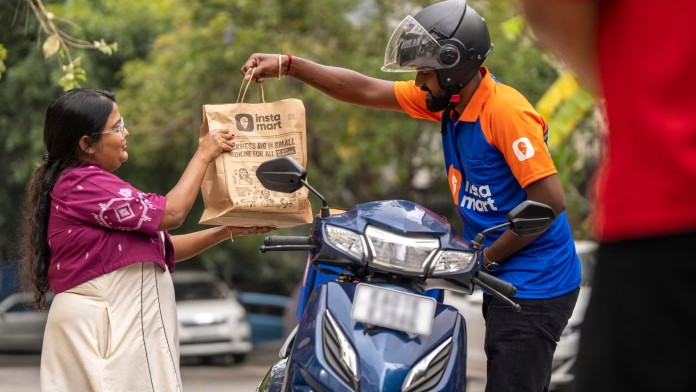
Speed remained a defining factor. Instamart logged instances of packaged foods reaching homes within two minutes and smartphones delivered in under three minutes in select locations. Ordering activity peaked during morning hours from 7 am to 11 am and again in the early evening, aligning with daily routines.

Growth was not limited to metros. Tier 2 cities recorded the fastest expansion, with Rajkot clocking a tenfold rise in orders, followed by Ludhiana and Bhubaneswar. Health and wellness categories surged in cities such as Bhopal, while heavy repeat usage was evident in Kolkata, Mumbai, Kochi and Gurgaon, where several users crossed 1,000 orders over the year.

Advertisement

Habanero Foods Enters the Ready to Eat Snacking Market With Nachos as It Expands Beyond Sauces and Dips

0

Habanero Foods has stepped into the fast growing ready to eat snacking space with the launch of its new Nachos range, marking a clear expansion beyond its core portfolio of sauces, dips, and wraps. The Bengaluru based gourmet food company is best known for bringing globally inspired flavours to Indian kitchens, and this latest launch reflects the same philosophy in a more accessible snack format.

With Nachos gaining popularity among urban consumers as an anytime snack, Habanero Foods sees this category as a natural extension of its brand. The company has positioned the product as a premium yet everyday offering, aimed at consumers who are looking for bold flavours and better quality ingredients rather than mass produced alternatives. The Nachos are designed to pair seamlessly with Habanero’s existing range of dips, encouraging repeat consumption across categories.

The move also signals Habanero Foods’ intent to deepen its presence in the retail segment. Ready to eat snacks continue to see strong demand across modern trade, quick commerce, and ecommerce platforms, especially among younger consumers and working professionals. By entering this space, the brand is tapping into a market that values convenience without compromising on taste.

According to the company, the Nachos have been developed keeping Indian palates in mind while retaining an international flavour profile. This balance has been central to Habanero’s growth story so far and continues with this launch.

As competition in the snacking category intensifies, Habanero Foods is betting on brand trust, flavour innovation, and cross category synergies to stand out. The Nachos launch is not just a product addition but a strategic step towards building a more rounded food portfolio for modern Indian consumers.

Advertisement

New Balance names Janhvi Kapoor as first Indian brand ambassador to boost India expansion

0

Global sportswear brand New Balance has named actor Janhvi Kapoor as its first-ever brand ambassador in India, a move that underlines the company’s growing focus on the country’s expanding fitness and lifestyle market.

The association signals a strategic push by New Balance to deepen its presence in India, where demand for premium sportswear is being driven by a young, fashion-aware population that increasingly blends performance wear with everyday style. Industry estimates place India among the faster-growing markets for global athletic brands, supported by rising disposable incomes and a stronger interest in health, wellness and athleisure.

Kapoor, who has steadily built her profile across cinema, fashion and fitness, said her association with New Balance stems from a shared belief in authenticity and self-expression. She noted that the brand’s emphasis on innovation and individuality aligns with her own approach to fitness and personal style, where confidence comes from staying true to oneself rather than following trends.

From New Balance’s perspective, the partnership is designed to go beyond a traditional endorsement. Radeshwer Davar, country manager for New Balance India, said the brand looks for collaborators who reflect its core values of originality, consistency and evolution. Kapoor’s influence among younger consumers, combined with her personal interest in fitness, makes her a natural fit as the brand looks to build stronger cultural relevance in India.

At a regional level, New Balance sees India as a key growth engine within the Middle East, Africa and India cluster. Stuart Henwood, senior director for the MEAI region, highlighted that Kapoor’s appeal and entrepreneurial mindset resonate with the brand’s long-term vision for the market. Her role, he said, will be central to strengthening New Balance’s connection with Indian consumers and expanding its footprint across both sport and lifestyle segments.

Going forward, the partnership aims to promote a more inclusive view of fitness and fashion, reflecting the aspirations of modern India, where performance, comfort and personal identity increasingly intersect.

Advertisement

Zomato Partners With Amazon Pay to Offer Up to 5% Cashback on Every Food Order

0

Zomato has entered into a strategic partnership with Amazon Pay to deepen customer engagement by offering assured rewards on every food order placed through the platform. The collaboration allows users to earn Zomato Money on transactions made using Amazon Pay Balance, adding a fresh incentive layer to everyday food ordering.

Under the arrangement, customers paying via Amazon Pay Balance will receive 3 percent Zomato Money on orders placed from Monday to Friday, while weekend orders on Saturdays and Sundays will earn a higher 5 percent reward. The earned Zomato Money can be used across the platform, strengthening repeat usage and loyalty.

The partnership reflects Zomato’s broader push to build a payments and rewards ecosystem that goes beyond delivery convenience. Rahul Gupta, Vice President of Product at Zomato, said the company is focused on making food ordering more valuable for users by integrating trusted payment partners. He added that collaborations such as this align with Zomato’s long-term goal of expanding access to quality food while improving the overall user experience.

Amazon Pay sees the tie-up as a way to increase the utility of its balance offering in daily consumption categories. Vikas Bansal, CEO of Amazon Pay India, said the integration enables customers to use their Amazon Pay Balance for food orders while receiving instant cashback benefits, reinforcing the platform’s focus on simple and rewarding digital payments.

Linking Amazon Pay with Zomato has been designed as a seamless process. Users can connect their Amazon Pay Balance by visiting the payment settings through the app’s side menu or by selecting the linking option during checkout. Once linked, the applicable offer can be chosen from the offer section before completing the payment.

The move comes at a time when food delivery platforms are increasingly leaning on partnerships and loyalty-driven features to retain users in a competitive market. For both Zomato and Amazon Pay, the alliance strengthens their presence in high-frequency transactions while offering tangible value to millions of urban consumers who order food online regularly.

Advertisement